
Contributed by Patrick Zheng ‘28
Every Wednesday, I come to the Peabody Institute to be in the company of pharaohs and emperors, not through books but from 2000-year-old coins held in the institute’s collections. I help to identify these coins and record observations into the Peabody’s catalogue system. I’m extremely fortunate to experience “living history” from these remnants of ancient Rome, Hellenistic Egypt, and the Byzantine world.
As the mass media of the ancient world, coins carried big messages. The images depicting rulers, gods, animals, or symbols were carefully chosen and deeply meaningful. Every coin has a story to tell about culture and politics. Together, they offer new perspectives on historical events that we thought we already understood.
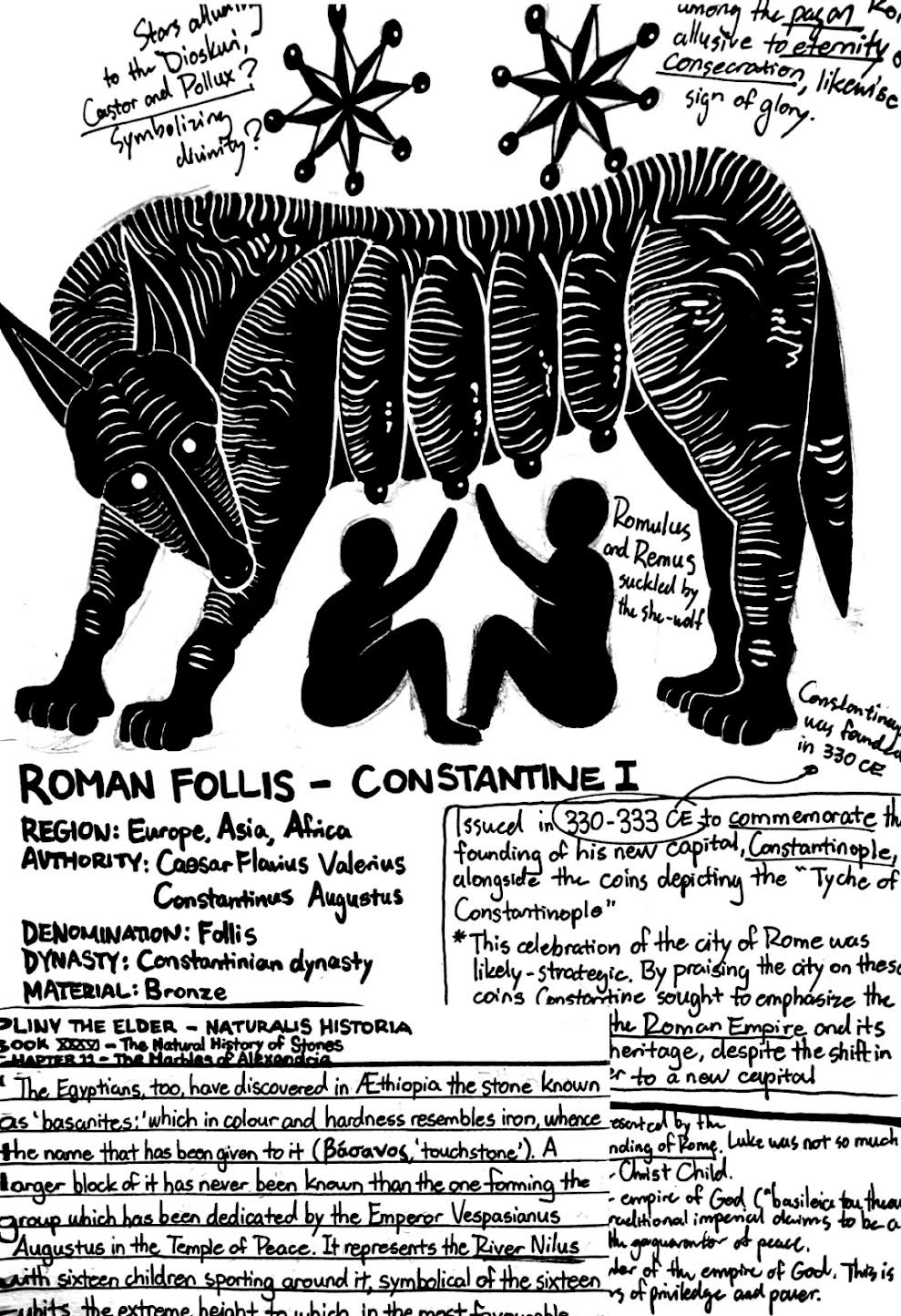
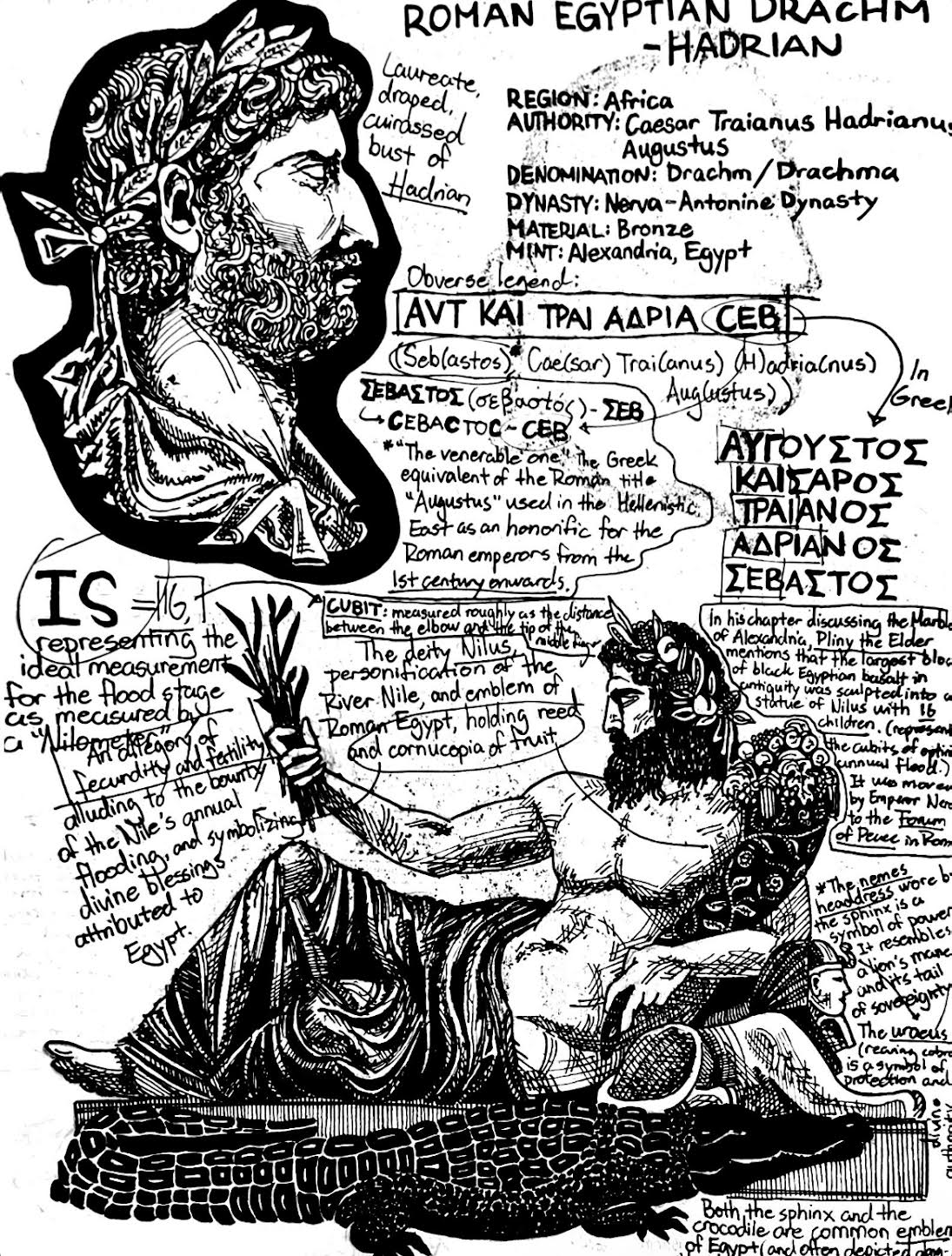
From my notes. Left: sketches and notes of a coin showing Rome’s foundation myth to commemorate Constantinople’s founding under Constantine (Rome reborn). Right: Roman coin minted in Egypt during Hadrian’s reign depicting the River Nile as a reclining deity.
I first became involved in this research when I met Dr. Elena Dugan, who teaches Religion and Philosophy at Phillips Academy Andover, and was researching Jewish coins that dated back 2,000 years. These coins were struck for only four years, 66-70 CE, during which time, the Jewish population in modern-day Israel rebelled against their Roman occupiers. Long after their war against the Romans and their eventual defeat, their cry of freedom endured as inscriptions on these coins, surpassing even the Romans themselves. Dr. Dugan quite literally held the legacies of these men and women in her hands. How extraordinary is that!
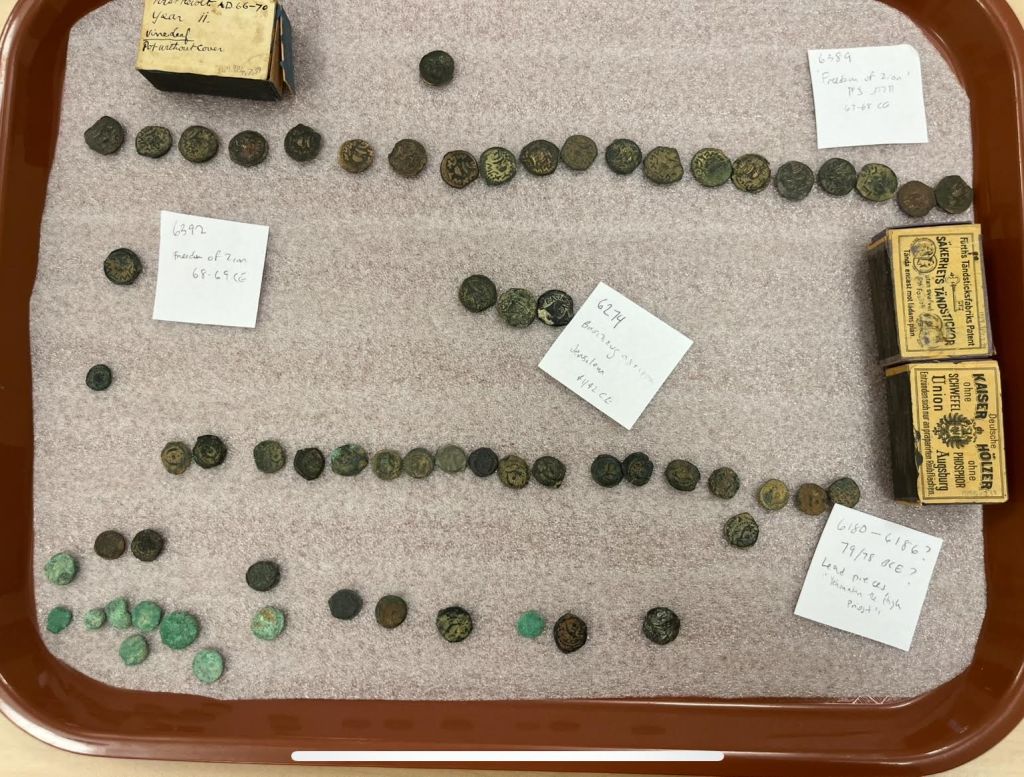
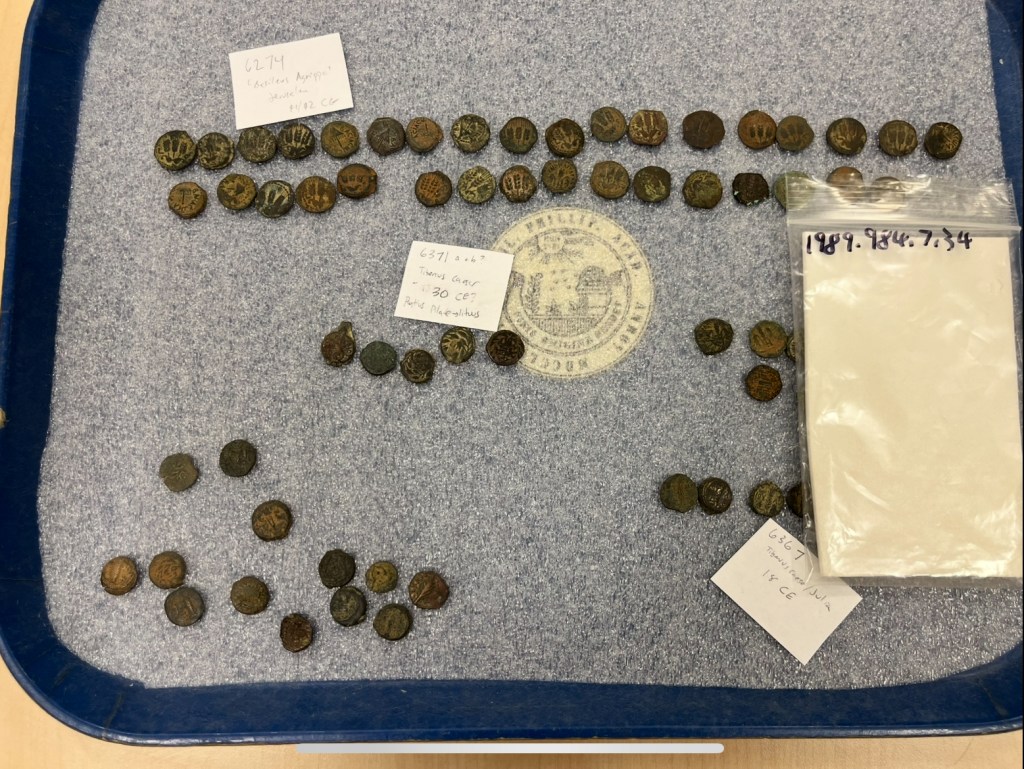
Top: Coins with inscriptions calling for the “Freedom of Zion,” along with coins minted during the times of King Herod Agrippa I and Yehonatan the High Priest. Bottom: Biblical coins of Pontius Pilate and Emperor Tiberius.
I would soon uncover such stories myself. Through Byzantine coins within the Peabody’s collections, I came to appreciate the story of Justinian, a Roman emperor bold enough to dream big. He dreamed of restoring the Roman Empire, which by his time was territorially less than half of its former glory. He dreamed of a reunified Mediterranean and the spread of Christianity. Fueled by determination, he led years of campaigns until the city of Rome was once again truly part of the empire.
But the dream didn’t last. Enemies in the East drew his attention away from Rome and the West, which was soon lost again. Any last hope was swept away by a devastating plague, which killed half of the Roman population (now every time I pick up one of Justinian’s coins, I feel an urge to wash my hands!). Rome’s wealth was drained, and Justinian lost his new territories as quickly as he gained them. In the end, he sadly died believing his dream had failed.
But it hadn’t. Though Justinian didn’t expand Rome’s borders, he redefined her identity. His image on coins, boldly facing his audience and clad in armor, was copied by every emperor who followed. He had inspired others to dream. Alongside his portrait appeared Christian symbols, marking Rome’s turn from her pagan past toward new ideals. Never again would she reach the heights Justinian had brought her to.
If all that remains of him and his dream are coins and a few lines in a textbook, then so be it. But let’s not forget them!
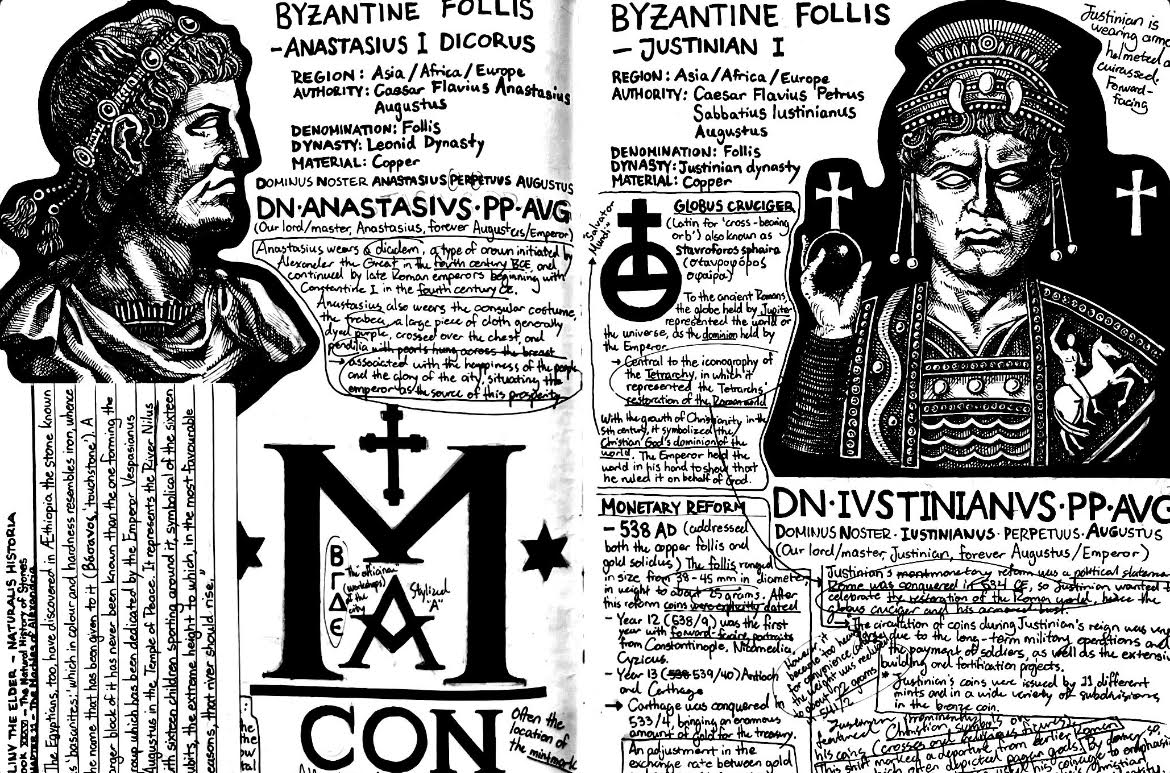
Left: Emperor Anastasius depicted in traditional imperial dress with a diadem and toga. Right: Depiction of Emperor Justinian facing the audience, fully in armor, and holding the globe and cross. While Anastasius followed strong traditions, Justinian was more than eager to distinguish himself.
This experience has strengthened my love for history. It has brought me closer to people in the distant past and their values. Their love of liberty. Their audacity to dream. These values stir a certain nostalgia in me, and suddenly, these people don’t feel so distant after all. Their worlds may have disappeared, but they are far from forgotten. It’s hard to believe that such an experience can come from objects that measure less than my pinky finger. But, after all, conveying messages is also a coin’s purpose, alongside economic ones.
This journey has truly expanded my curiosity and built my understanding of history. I’m incredibly grateful to the Peabody Institute for not only allowing an inexperienced ninth grader to interact with these priceless artifacts but also for patiently teaching me the research process, providing the right tools, and encouraging me to share my story.
What a highlight this has been as part of my school year! I’ll be sure to return on many more Wednesdays!
 The Peabody
This post makes readers think about the meaning behind everyday objects. It turns a simple coin into something interesting and educational.
LikeLike