
Contributed by Marla Taylor
Over the past couple of weeks, I have had the opportunity to welcome researchers back into the Peabody. Our first visitors were contractors from Ohio Valley Archaeology, Inc. – Brenda and Adam – who were conducting an Archaeology Overview and Assessment for the Cape Cod National Seashore. You may be asking yourself, ‘What does that mean and why did they come the Peabody Institute?’ Great questions!
Cape Cod is iconic within New England – pristine coastline, rich maritime history, vibrant arts community, fresh seafood, and a tangible connection with the Indigenous communities who have long inhabited the land. Home to the Wampanoag Nation – Mashpee Wampanoag on the mainland and the Wampanoag Tribe of Gay Head (Aquinnah) on Martha’s Vineyard as well as several other smaller communities – Cape Cod has been occupied for at least 10,000 years. Archaeological evidence of Native American presence on the landscape tells a rich story of life both before and after European contact.
The Peabody houses collections amassed by several amateur archaeologists and collectors who lived on Cape Cod – including Ross Moffett. Moffett (1888-1971) was born in Iowa but spent much of his adult life in Provincetown, MA. Best known as a painter, Moffett was one of the founders of the Provincetown Art Association and painted murals across the country. You can learn more about his art and career here, here, and here.
Moffett was also an early member of the Massachusetts Archaeological Society. He identified pre-contact archaeological sites all along the Cape, conducted excavations, and recorded his findings. He regularly corresponded with staff at the Peabody Institute throughout the 1950s and 60s and shared what he found. While Moffett’s practices were not unusual in the mid-twentieth century, but I definitely would NOT recommend this approach today!
Upon his death in 1971, the collection Moffett amassed (along with photos, notes, correspondences, and maps) was donated to the Peabody Institute.
The Cape Cod National Seashore was established by JFK in 1961 to protect the Outer Cape from overdevelopment and maintain existing stretches of pristine coastline. Moffett was an advocate for establishing the Seashore. In fact, most of the sites he identified on the Cape are on lands that are currently owned by the National Seashore. And that is where these researchers come back into the story.
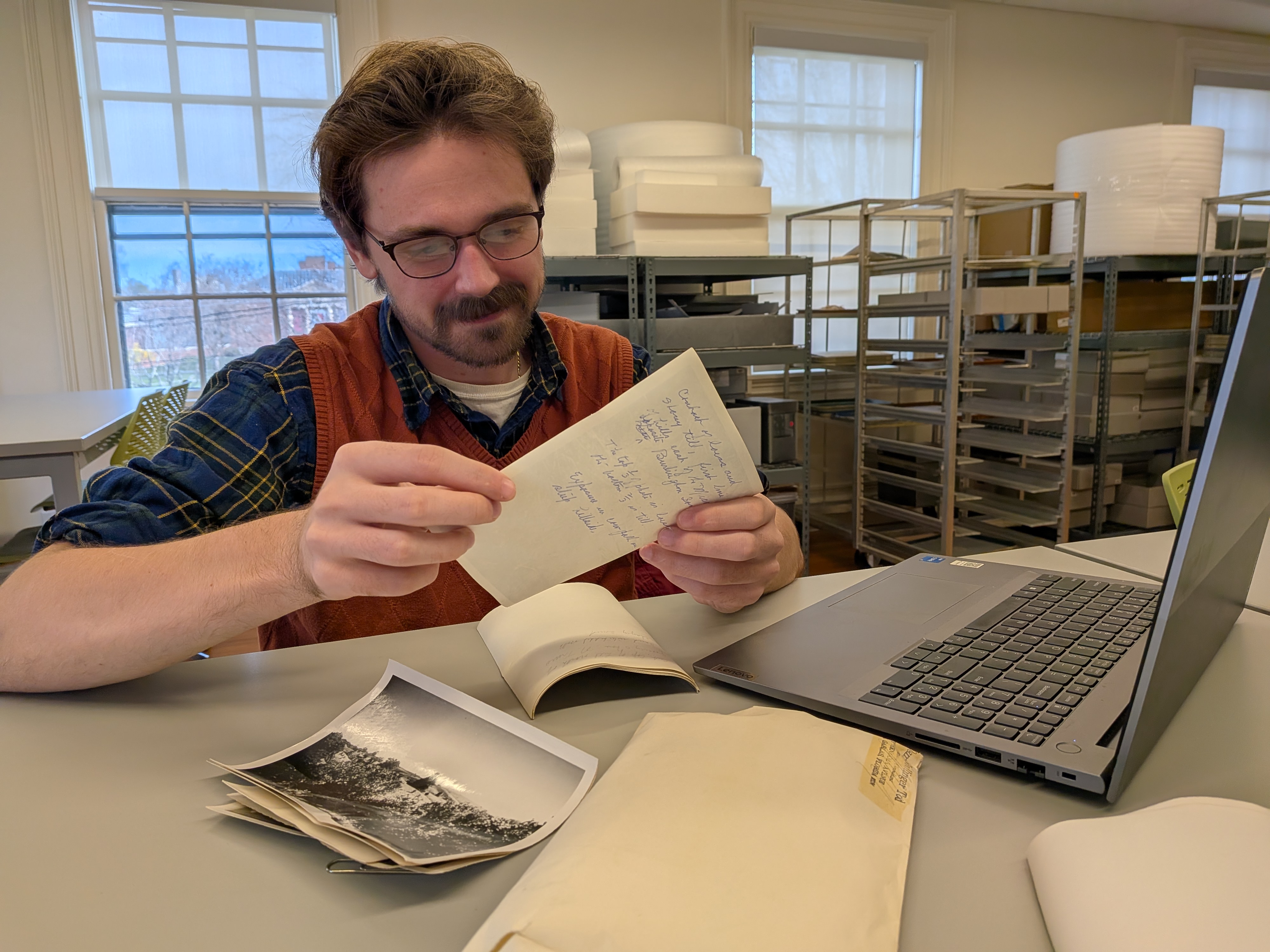
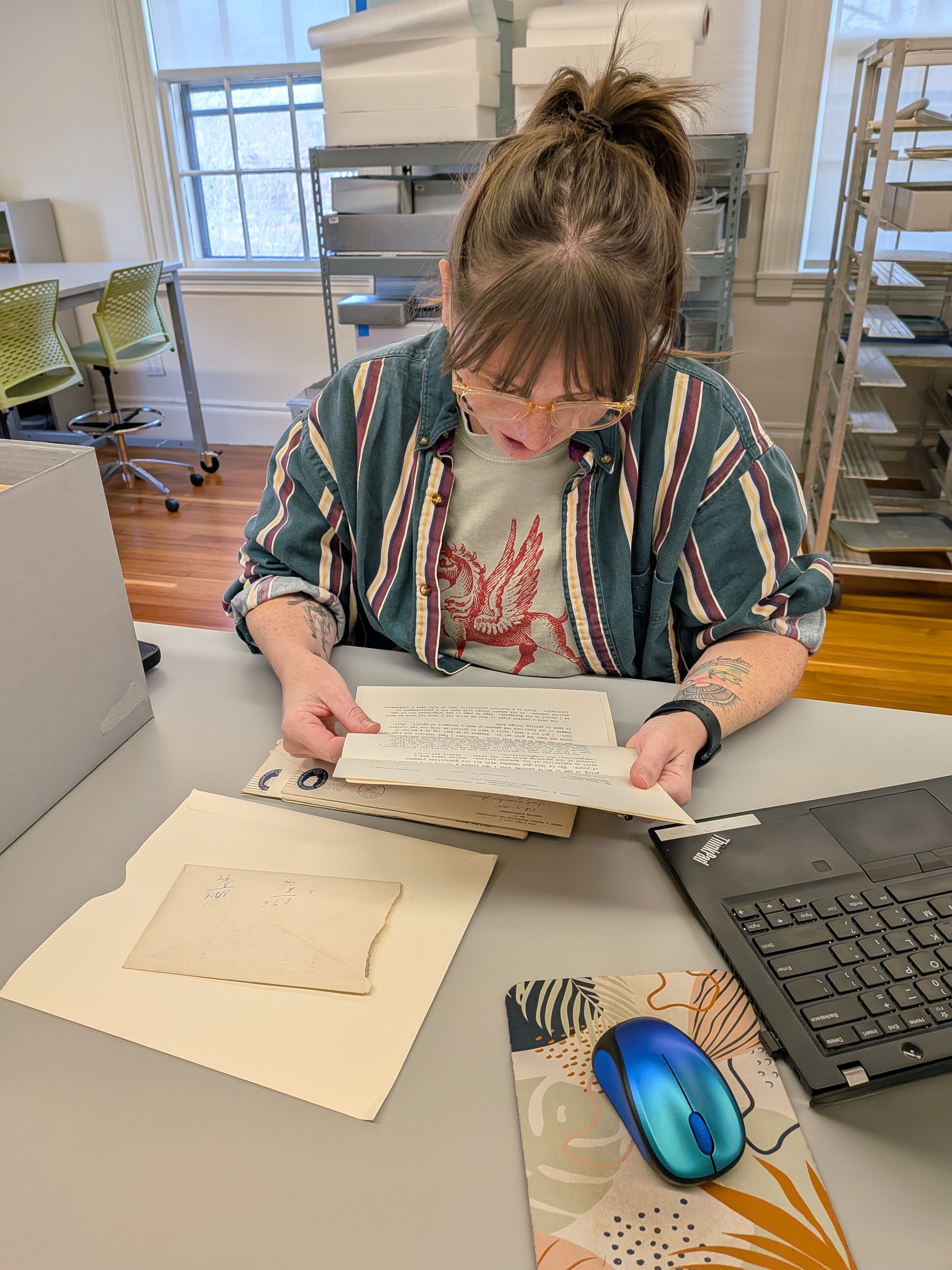
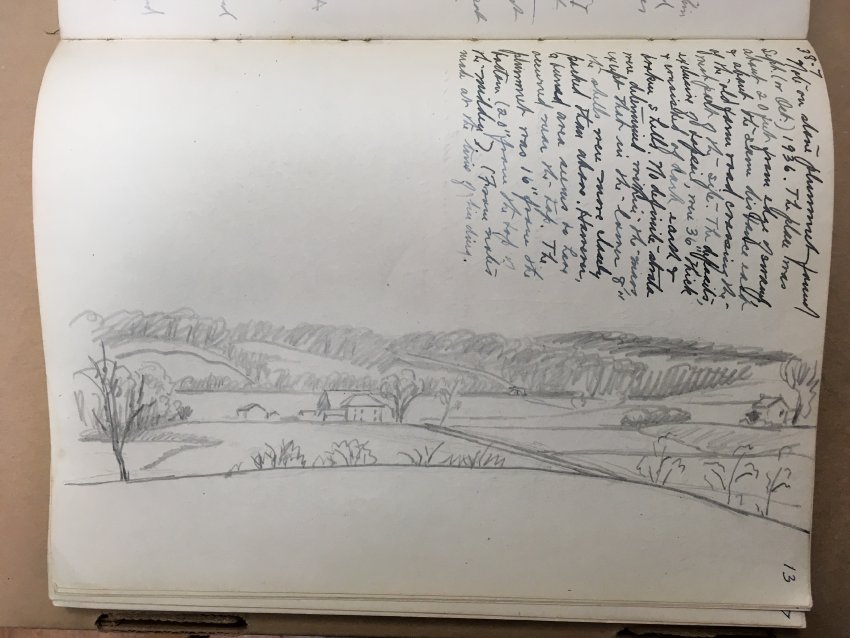
The National Seashore hired Brenda and Adam to engage with institutions in and around Massachusetts who hold archaeological material or information that was removed from lands that are currently owned by the National Park Service. A large park, like Cape Cod National Seashore, doesn’t usually have comprehensive or updated records of archaeological excavations from decades ago. However, in this case, Moffett’s archives and maps at the Peabody Institute were able to fill in a large part of the story. The information gathered from their visit will augment existing data and serve as a reference for future park employees.
It is also very helpful for the Peabody! Tying the historical maps to modern site names and designations will add context to collections and assist conversations with both researchers and Tribal representatives.
It was a pleasure to welcome researchers back to the Peabody and into our updated space. On a personal note, Brenda and I went to the same undergraduate program and it was a delight to revisit memories and stories of the people we knew in common. The Peabody’s new collections workspace in the Schmertzler Family Gallery North functioned exactly as we hoped and I am excited to welcome many more people in the future!

