Last week, the Peabody had the pleasure of hosting Dr. Paulette Steeves as she examined portions of the MacNeish collection. Dr. Steeves is currently a Lecturer of Indigenous archaeology and anthropology and the Interim Director of the certificate program in Native American Studies at UMass Amherst. Her research focuses on the peopling of the Western hemisphere, but not through the traditional Bering Strait theory.
Dr. Steeves uses indigenous theory and methodology to explore sites in the Americas that date back as far as 60,000 years ago. This is actually a big deal and an anti-establishment approach to the subject. Dr. Steeves is looking into the materials collected by Scotty MacNeish during his work in the 1960s in Peru and Mexico for additional evidence. MacNeish was also a proponent of the idea of early colonization and much of his collection has remained unanalyzed for decades.
Dr. Steeves was thrilled to see the collection and to meet MacNeish himself on her visit. We look forward to hosting her again for many research visits to come!
The bulk of the Peabody’s collection is stored in the basement. It has been challenging over the years to control the temperature and humidity in the basement – an essential factor in maintaining an artifact collection. A small fluctuation of both temperature and humidity is normal and expected as seasons change. However, extreme variation lead to damage – bone can become fragile, ceramics can develop weak-points, and even stone tools can become brittle.
For the past four years, I have been tracking the environment throughout Peabody and noticed these strong fluctuations. By taking readings of the temperature and humidity in all our storage spaces once an hour (through the use of a datalogger), I determined that the influx of outdoor air through these poorly sealed windows is large contributing factor. There is only one way to fix this.
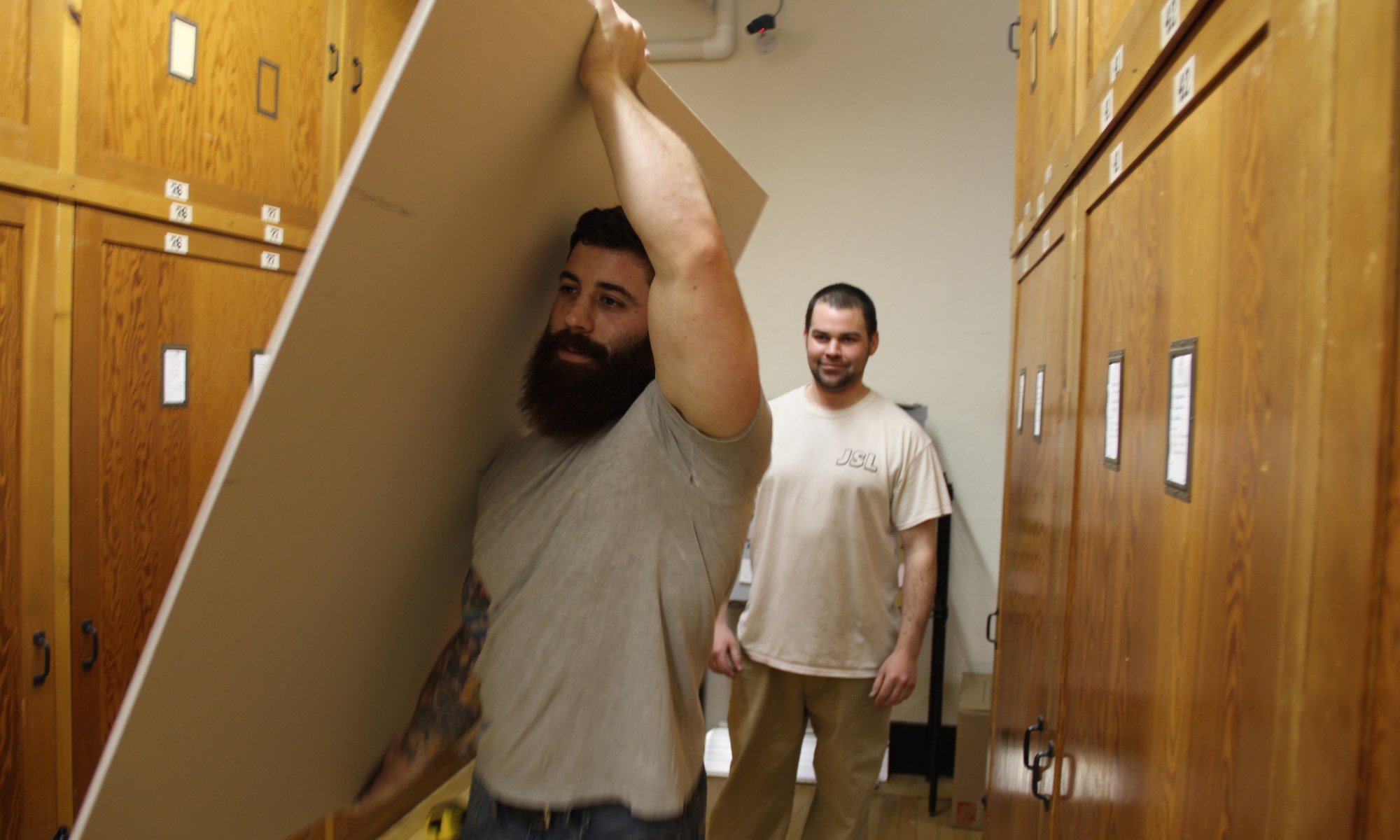
In collaboration with the Office of Physical Plant on campus, we are implementing a plan to mitigate some of this fluctuation. Contractors are working to seal the windows in the basement to stop outside air from sneaking into the storage.
This will stabilize the environment and lead to fewer changes in both temperature and humidity. The first step on the road to environmental control!
This blog represents the third entry in a blog new series –Peabody 25– that will delve into the history of the Peabody Museum through objects in our collection. A new post will be out with each newsletter, so keep your eyes peeled for the Peabody 25 tag!
Contributed by Marla Taylor
The unassuming and muddled looking object below is a piece of loosely formed breccia from Jacob’s Cavern in McDonald County, Missouri.
Breccia from Jacob’s Cavern
Breccia is a type of rock that is composed of broken fragments of other rocks that have been cemented together by a fine-grained matrix – this process can take thousands of years. While this piece is not yet solid rock, it is on the way. In this case, the matrix (or glue) is ash from thousands of fires that sustained life in the cavern for hundreds of years.
Acting on a tip from a local named E.H. Jacobs, Charles Peabody and Warren Moorehead traveled to Jacob’s Cavern in April of 1903 to examine the site. Upon arrival, they found a large rockshelter of limestone with hundreds of stalactites and stalagmites, and the floor was covered with a thick layer of fine ash up to 1.5 meters (nearly 5 feet) deep! This ash is most likely the direct result of untold numbers of small fires in the cavern to keep the occupants warm over the years of use.
Peabody and Moorehead excavated the thick layer of ashes in using a careful grid system and uncovered hundreds of artifacts. The stone tools were primarily projectile points and blades with relatively few large tools like axes. They also found a ‘considerable’ number of bone needles and awls. These small bone tools are essential in daily life to create, maintain, and repair clothing and other basic equipment. The sheer volume of ash and artifacts in the cavern indicates long-term occupation.
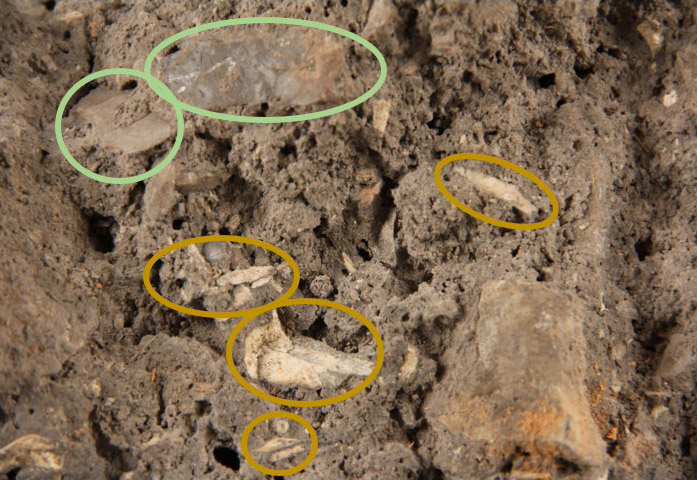
All evidence of human occupation – stone and bone tools, food debris – in the cavern was found in the layer of ashes and intermingled with breccia. And, most notably, many artifacts are visible within the breccia (see the photo below). This means that they were created, used, and discarded before the formation of the breccia and were left undisturbed for possibly thousands of years.
Detail of breccia with stone tools circled in green and bone fragments circled in yellow.
Peabody and Moorehead brought samples of the breccia and hundreds of collected artifacts back to the Peabody in 1903 while excavations continued by Mr. Jacobs for another couple years. Published in 1904, the report of their work became the first Bulletin published by the Department of Archaeology. The entirety of this report can be found here.
The work done by Peabody and Moorehead with Jacob’s Cavern became a foundation for later work at the Peabody. Explore and excavate a little-known site, bring the materials back to Andover for study, publish about that work, and provide invaluable new research and insight into the field of archaeology.
About six months in and the reboxing project is beginning to take off. With the help of students and volunteers, 52 drawers have been converted into 86 boxes. These first months have been spent ironing-out the kinks in the procedure and strategically identifying areas of the collection on which to focus.
The inventories produced from this project have already helped to identify areas of the collection for further attention and have made some objects available for education use.
Thanks to Catherine Hunter, Peabody Museum research associate, our full basketry collection of 329 is inventoried and described. In September, Catherine turned over 7 binders of material including research into known artists, glossaries, information on weaving techniques, and a basic description of each basket. This massive project took Catherine nearly a year!
The next phase is to photograph each of these gorgeous baskets and improve their storage and accessibility. Last week, Marla Taylor, Samantha Hixson, and Catherine took a trip to the Peabody Museum of Archaeology and Ethnology at Harvard University to examine their basketry storage. The visit was full of inspiration and incredibly helpful as we continue to work on this project.
Keep your eyes peeled for the inclusion of these amazing baskets in our online collection database!
Catherine Hunter with some of the Peabody’s baskets
Catherine Hunter, Samantha Hixson, and Marla Taylor visit the Harvard Peabody basketry collection.
As another school year begins, students on the lookout for a quiet place to study in the evening will have a new option. The Peabody is now hosting study hours every Thursday evening from 5pm-9:15pm.
We will also be collaborating with the peer tutoring program on campus to provide a calm space for focused study and learning.
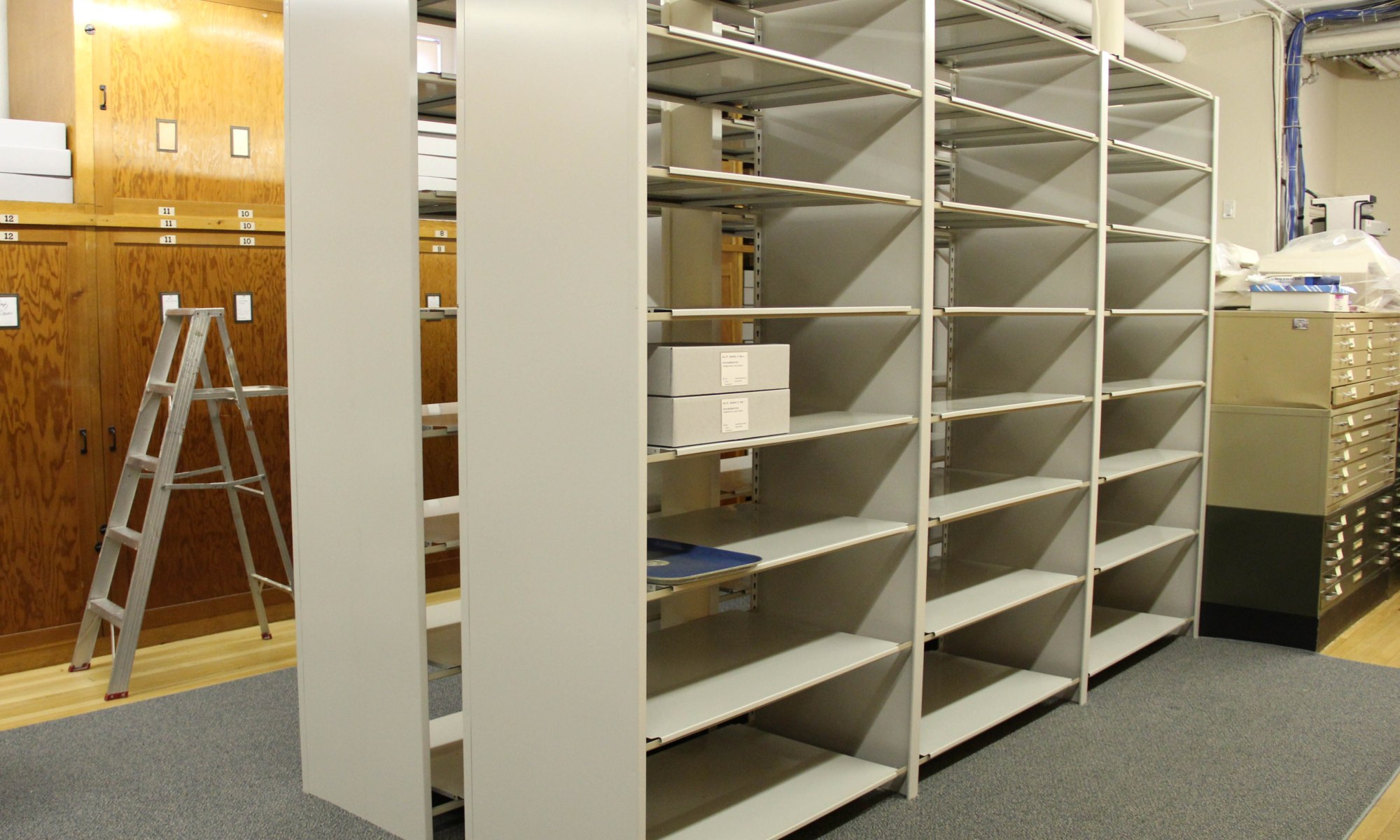
As I began working this summer on the reboxing project, it immediately became apparent that the artifacts needed room to grow sooner rather than later. Moving the objects from the wooden drawers into the boxes revealed just how heavy some of those drawers were – some too heavy to be supported by the new archival boxes.
What I needed was solid temporary shelving to support these materials. Donnegan Systems, Inc. of Northboro, Massachusetts to the rescue! Donnegan Systems has been consulting with us periodically to reimagine collections storage once all the artifacts have been boxed. They saw our need and offered some spare shelving that was taking up space in their warehouse. Delivered and installed in a single morning, these shelves will facilitate faster progress with the reboxing project.
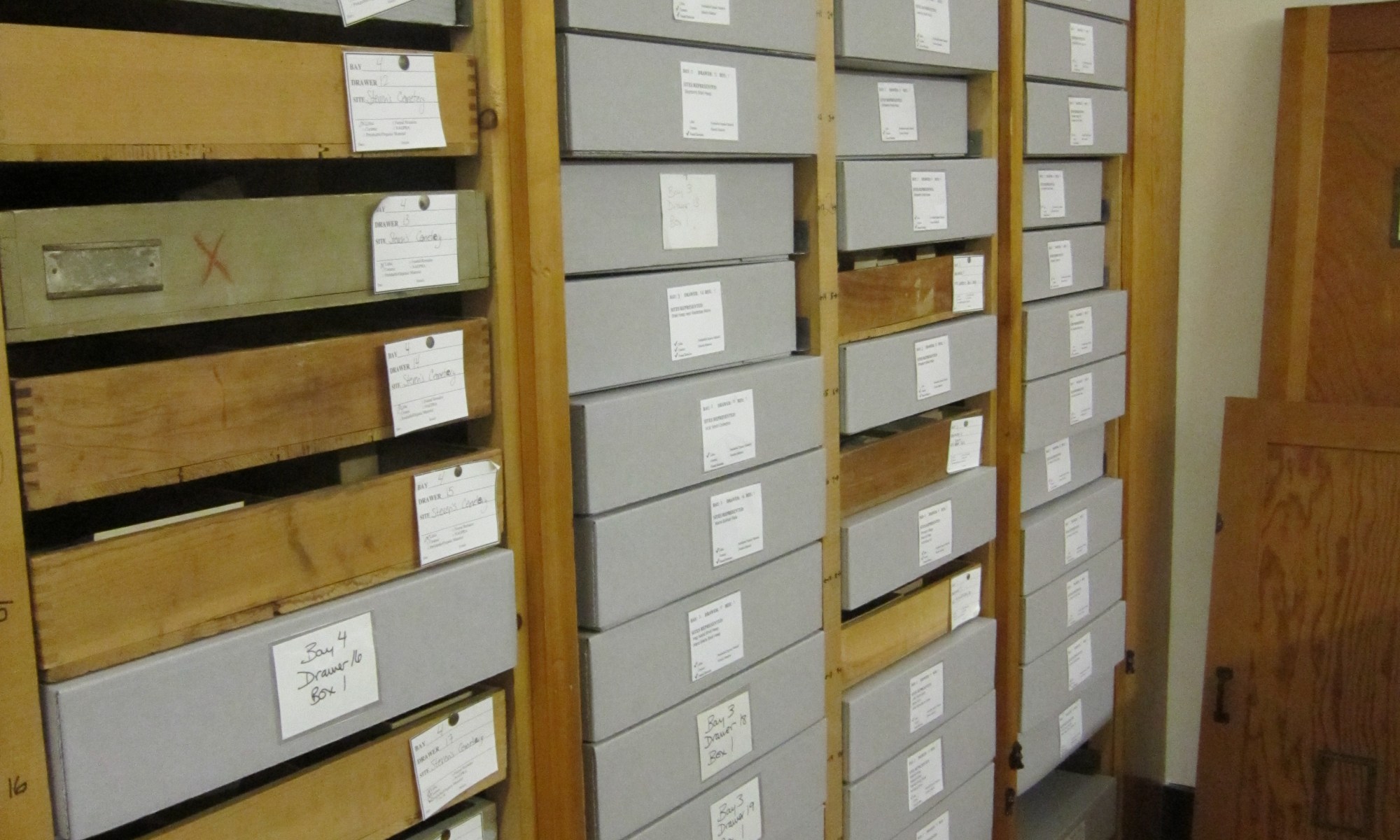
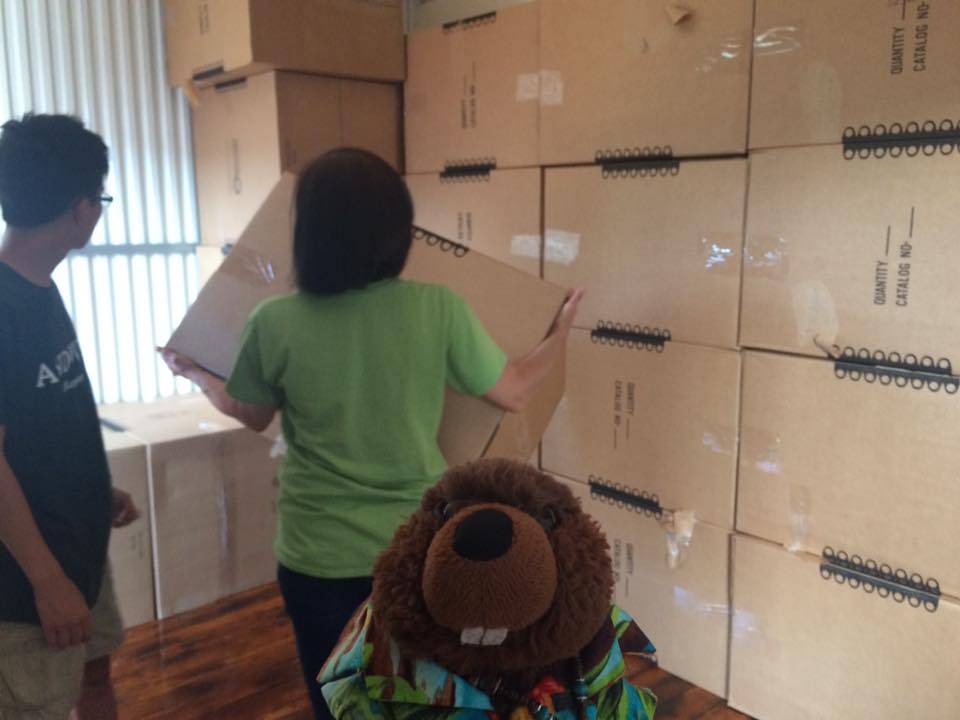
Fifteen-hundred custom archival boxes were delivered on Monday, July 25 to initiate the Peabody’s collections rehousing project. Unloading the truck and storing the boxes was hard work, but was an important first step toward completely rehousing and inventorying our large collection. The boxes were assembled to our specifications by Hollinger Metal Edge and are archival quality.
These boxes are made possible by a grant from the Abbot Academy Association, continuing Abbot’s tradition of boldness, innovation, and caring. They will be used to replace the old wooden drawers that have supported our collection for decades, and will provide protection and a long-term home for our artifacts.
A special ‘thank you’ goes out to Will Shahbazian and C. Woodrow Randall for their helping hands (and paws).
Embarking on a full inventory and rehousing of your museum collection is a daunting task. Transferring approximately 1,700 drawers into 3,000 archival boxes will take years of work. Fortunately for me, I have access to an invaluable resource – Phillips Academy students.
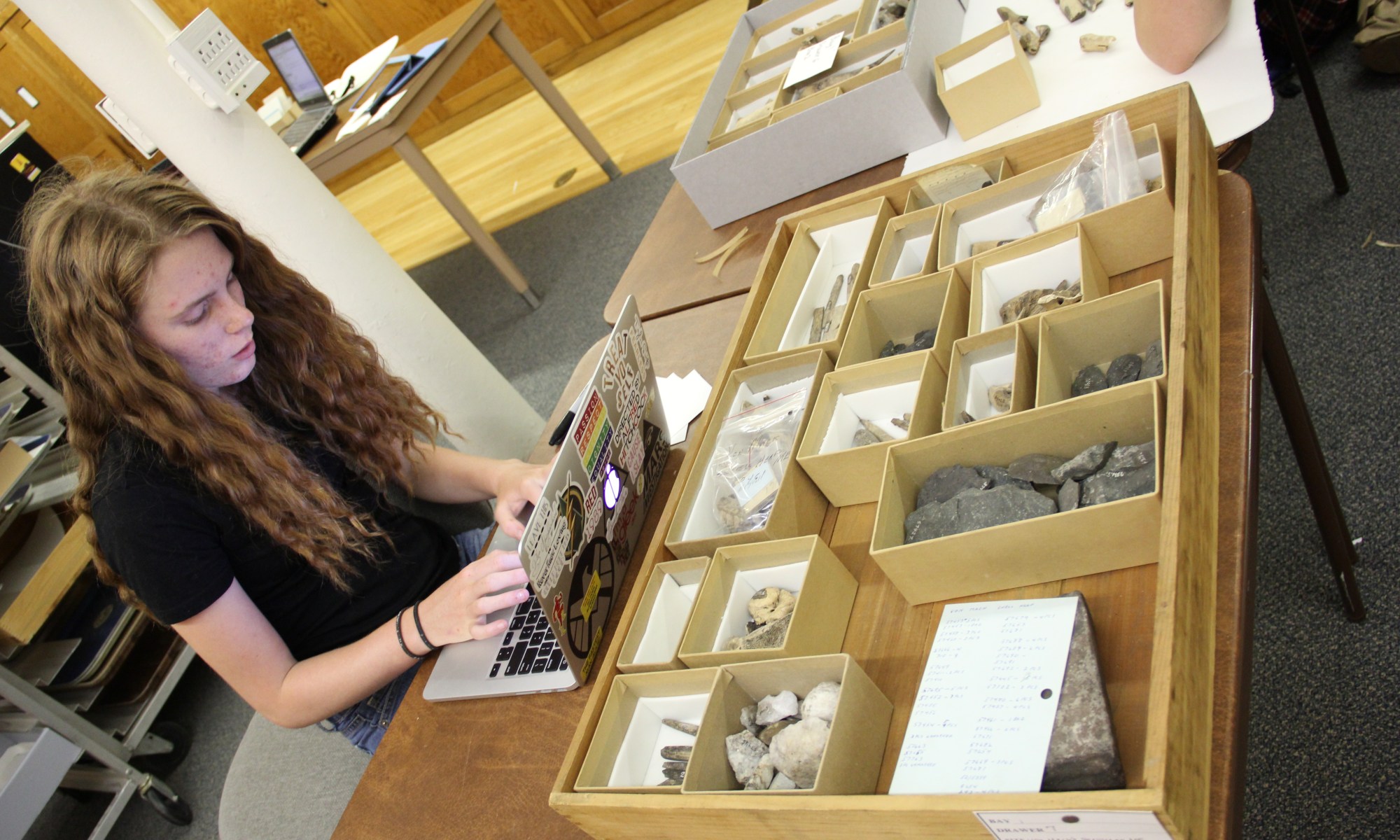
For a week in July, two Lowers (10th graders) came to the Peabody every day for four hours to fulfill their work duty commitment for the school year. I gave them a crash course in artifact identification and object handling techniques before they got down to business. As they worked through the meticulous process of inventorying everything in the collection, they made crucial observations that will improve my workflow. Together, these two students recorded the contents of twenty-nine drawers!
Work duty student inventorying a drawer
Work duty students will continue to be an essential work force as we move through the collection. I will share their progress and successes in the months and years to come.
Curator of Collections Marla Taylor and work duty students stand behind the empty boxes
Irene Gates recently joined the Robert S. Peabody Museum as Temporary Archivist.
Her position will focus on increasing access to the significant archival materials held by the museum, which include museum records dating from the early 20th century onwards, archaeological excavation records, photographs, and papers of individuals associated with the museum.
Irene received her MS degree in Library and Information Science with an Archives Management Concentration from Simmons College two years ago, and has since worked as a contract Processing Archivist for the City of Boston Archives and the Harvard Business School Baker Library Special Collections.
The Temporary Archivist position is supported by a generous grant from the Oak River Foundation of Peoria, Ill. to support work pertaining to the intellectual and physical control of the museum’s collections. We hope this gift will inspire others to support our work to better catalog, document, and make accessible the Peabody’s world-class collections of objects, photographs, and archival materials. If you would like information on how you can help please contact Peabody director Ryan Wheeler at rwheeler@andover.edu or 978 749 4493.
As she dives into the archives, Irene will share some of the gems she finds on the blog – keep your eyes peeled!
Irene with a small portion of the Peabody’s archival information.














 The Peabody