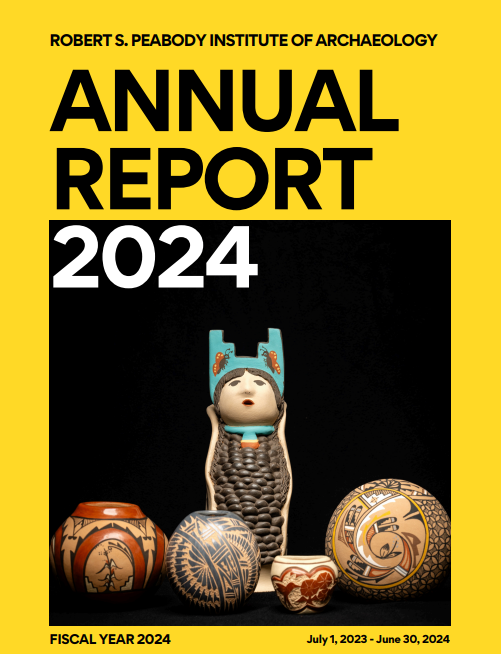
Our Peabody annual report for academic year 2023-2024 has just been released! This report features educational participation at the Peabody, building project updates, work duty, and more! In addition, our annual report features new acquisitions, institutional highlights, and workshops along with updates on our collection and NAGPRA work. Thank you to everyone who supported the completion of another wonderful year at the Peabody!
Hi, all. My name is Lainie Schultz, and I am the brand-new Curator of Education here at the Robert S. Peabody Institute of Archaeology. I come to this position from the George Peabody Museum of Anthropology (aka the Peabody Museum of Archaeology and Ethnology, or PMAE), where I was previously the Head of Teaching and Learning. It is also where my career in museums began, as an undergrad looking for a federal work-study position. At the time I just thought it would be a relatively painless way to make some money, but it turned out I genuinely cared about museums and the relationships they build with descendant communities. Who would have guessed?
This led me to graduate school in anthropology, and a few more museum stops along the way. In between stints at the PMAE I was introduced to the culture of morning and afternoon tea in the Repatriation Unit of the National Museum of Australia (sometimes the tea is coffee); was thrown into the world of First Nations humor during consultation visits at the Museum of Anthropology at the University of British Columbia (do you know how to pronounce Kwakwaka’wakw? Gitxaała? just bragging…); learned to throw a returning boomerang at Muru Mittigar Aboriginal Cultural and Education Centre (key word “throw.” darned thing never returned); pretended along with the Cultural Collections and Community Engagement section of the Australian Museum that our already well-worn office demountables were only “temporary” (humor came in handy there, too); marveled like the nerd I am at the Berndt Museum of Anthropology’s catalogue records (THEY ARE. SO. COMPLETE.); and stayed with family I didn’t know I had before while at Bunjilaka Aboriginal Cultural Centre (that had nothing to do with the cultural center, but it really meant a lot to me).
I don’t know what new experiences the RSPI will be throwing at me, but I am ready for it all.
PA Reunion Weekend only comes once a year and it is one Saturday that I don’t mind working. Now that I have been at the Peabody for over 16 years (gasp!), I am privileged to have forged connections with dozens of students over the years and I really love seeing them return as alumni.
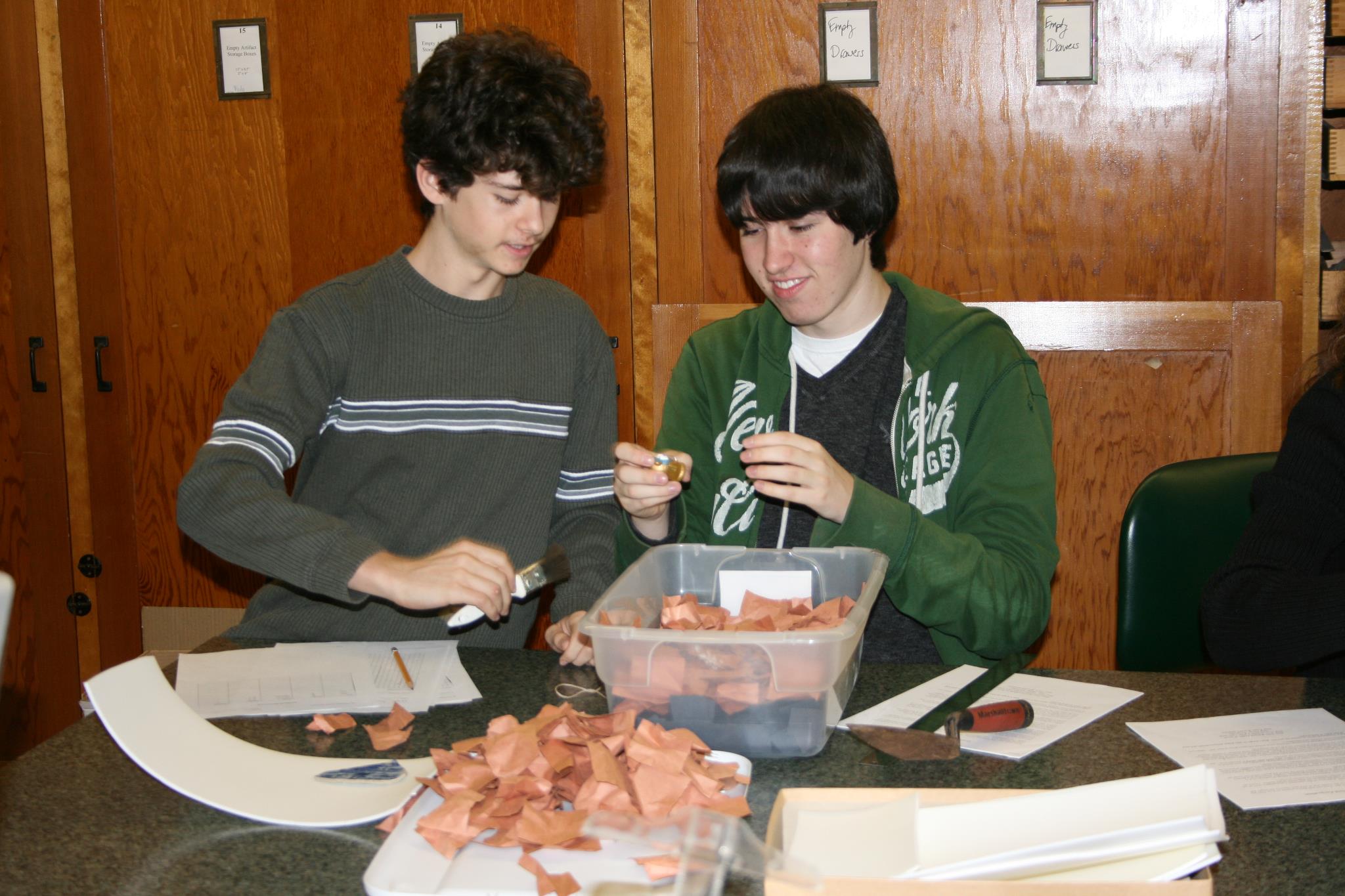
For anyone who doesn’t know, the Peabody Institute has long been a part of the Phillips Academy work duty program. PA students are required to do some type of work on campus during their time as part of their education. The Peabody has been one of those work venues for about 20 years now. While time requirements for work duty have shifted over the years, this has long been an important link between the Peabody and students. Running the work duty program was a primary focus of mine for 8-10 years and I really enjoyed getting to know the students.
Now, some of those students come back as adults and share their memories with me. Being a part of their PA experience and leaving any type of impact on them is truly one of the best parts of my job. I look forward to many more opportunities to connect!
It’s been a few months since we shared our last building update and so much has transpired since staff have been back in the Peabody. These last few months have been busy for the Peabody staff, as they worked on moving the collections, moving furniture back into the building from offsite storage, and organizing/cleaning the building to welcome Phillips Academy classes in the spring term.
The largest and most involved of these projects, is moving the collections from temporary spaces around the building to our newly renovated, sustainable, and secure collections space, putting all holdings in one place! This project is ongoing and requires a great deal of care as the collections team transport items to their new housing and mapping out how items’ locations are organized and tracked. We also are extremely grateful for our Peabody volunteers and work duty students who have helped with this project!
Creating new housing for collection itemsTracking locations in the new collection space
In addition to moving the collections, the Peabody is organizing our classroom spaces to welcome back students this term. With our furniture back onsite and in place, we are ready to have students back through our doors (just in time!) with classes starting this week!
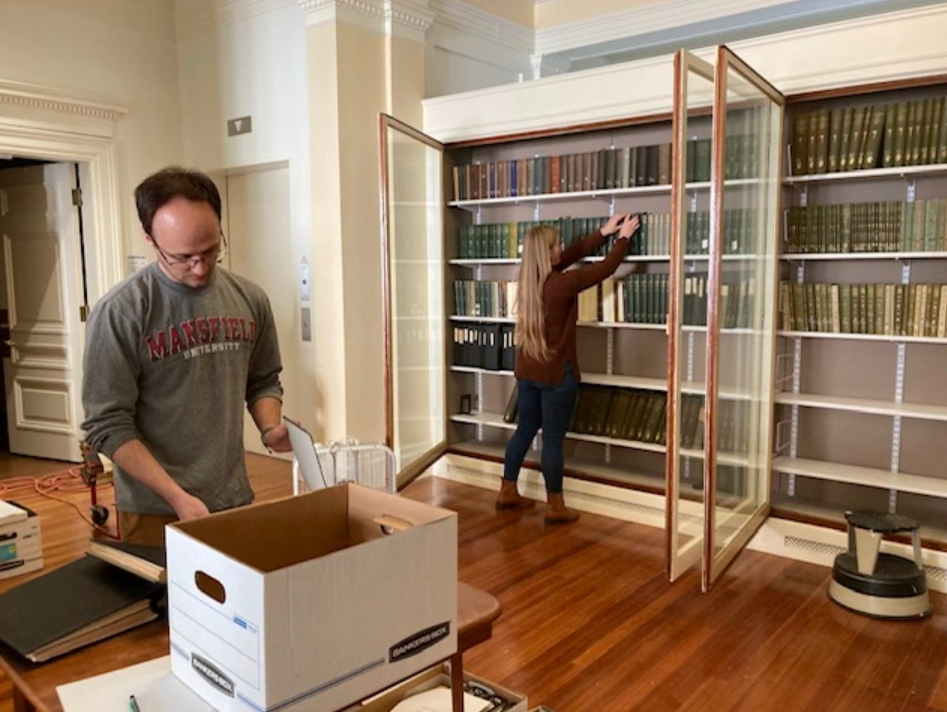
The Peabody library – now fully accessible – received a deep clean and is ready to serve as classroom and meeting space for students and out colleagues across campus.
Peabody staff returning books to shelves on the second floor landing.
With things returning to normal, we are only opening our doors at this time for Phillips Academy classes and events. This is a “soft opening” as we continue organizing our new collection spaces and preparing for our next round of building renovation. We will continue to keep the updates coming as we enter the warmer months of spring. Stay tuned for some exciting content from the Peabody to be shared on our social channels this PA Giving Day – Wednesday, March 27th!
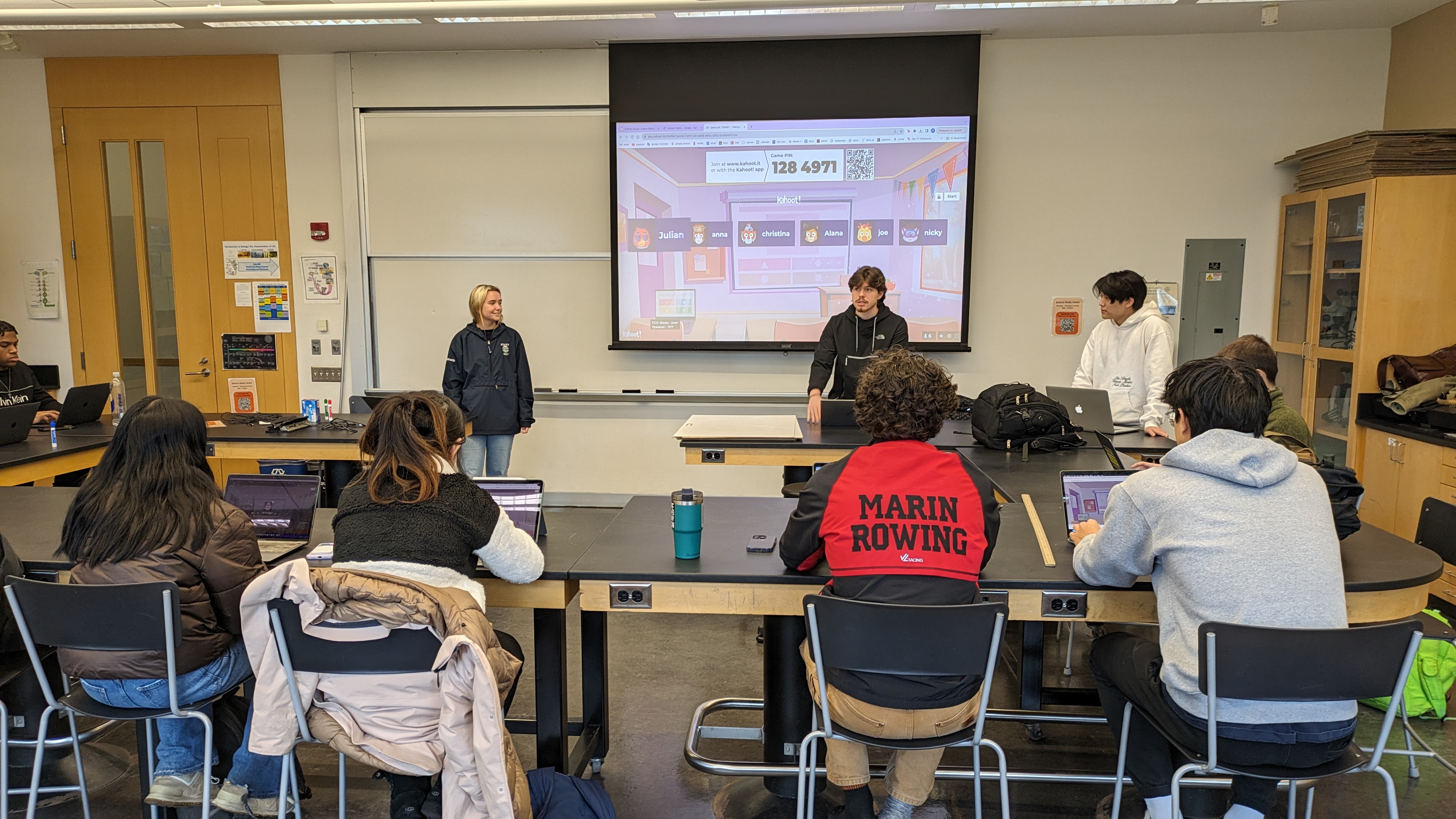
Human Origins students learn about the history of the atlatl, an ancient hunting and warfare device.
Mark your calendars! PA Giving Day is Wednesday, March 27, 2024! Last year the Peabody Institute garnered 60 gifts and $25,000 in match funds!
For those inspired to give early, please complete the PA Giving Day form here! Please be sure to select the “Peabody Institute of Archaeology” under the “designation” section. Any gift made in advance of the event will count toward PA Giving Day totals.
This year we hope to have more challenges, more social media posts, and even more support!
Bigfoot, ancient aliens, Homo naledi, Australopithecines, stone tools, painted pebbles, scientific racism, repatriation. How are these topics connected? Students in the senior science elective Human Origins find out. A lot of it has to do with the history of anthropology–the scientists that studied fossil humans also studied race. The two fields continue to influence one another, not always in the most positive ways. The course is divided into modules that explore science and pseudoscience, human biological evolution and the development of technology and imagery, and the concept of race and scientific racism.
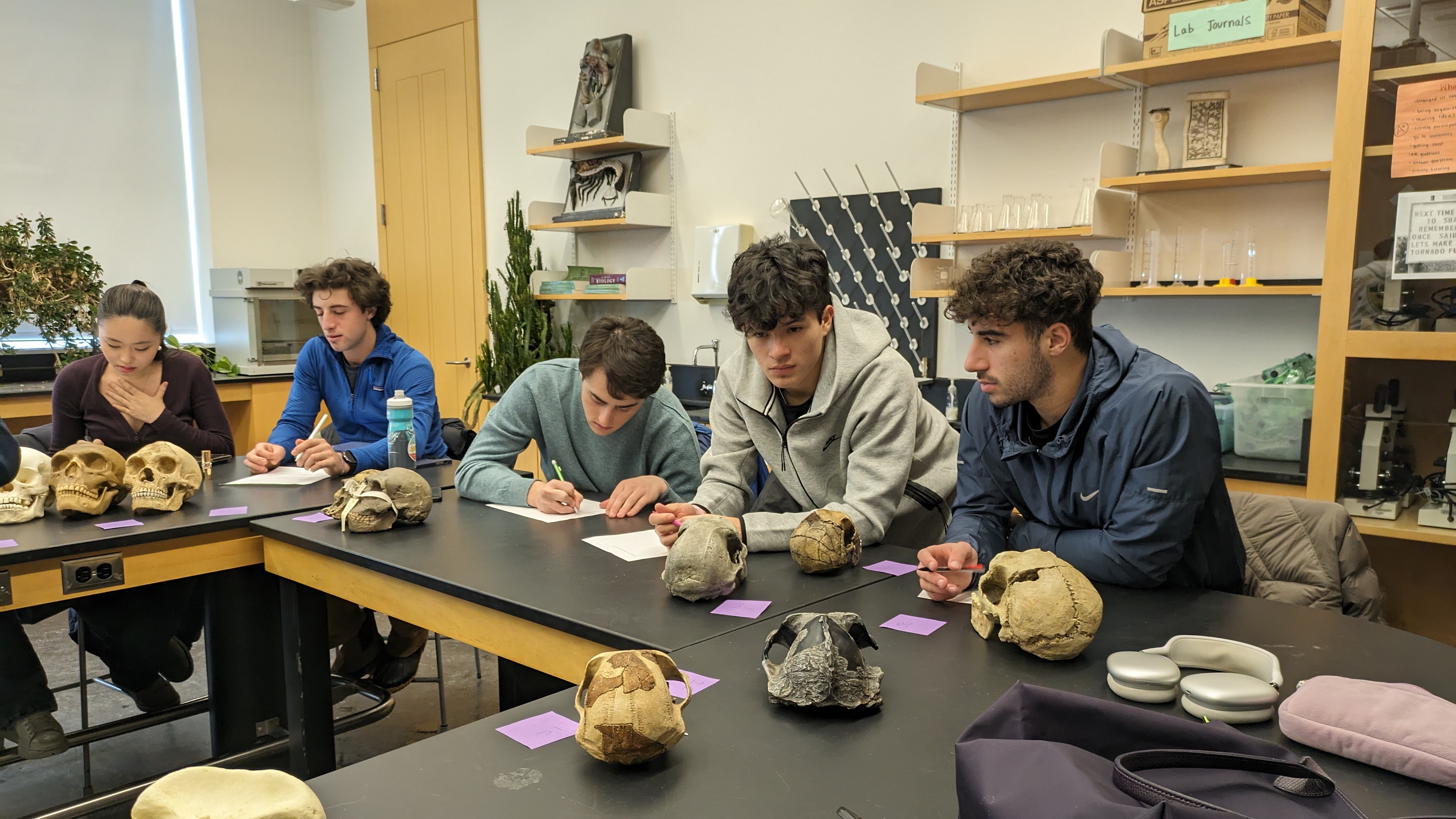
Human Origins students explore some of the Peabody Institute’s fossil human crania casts and models.
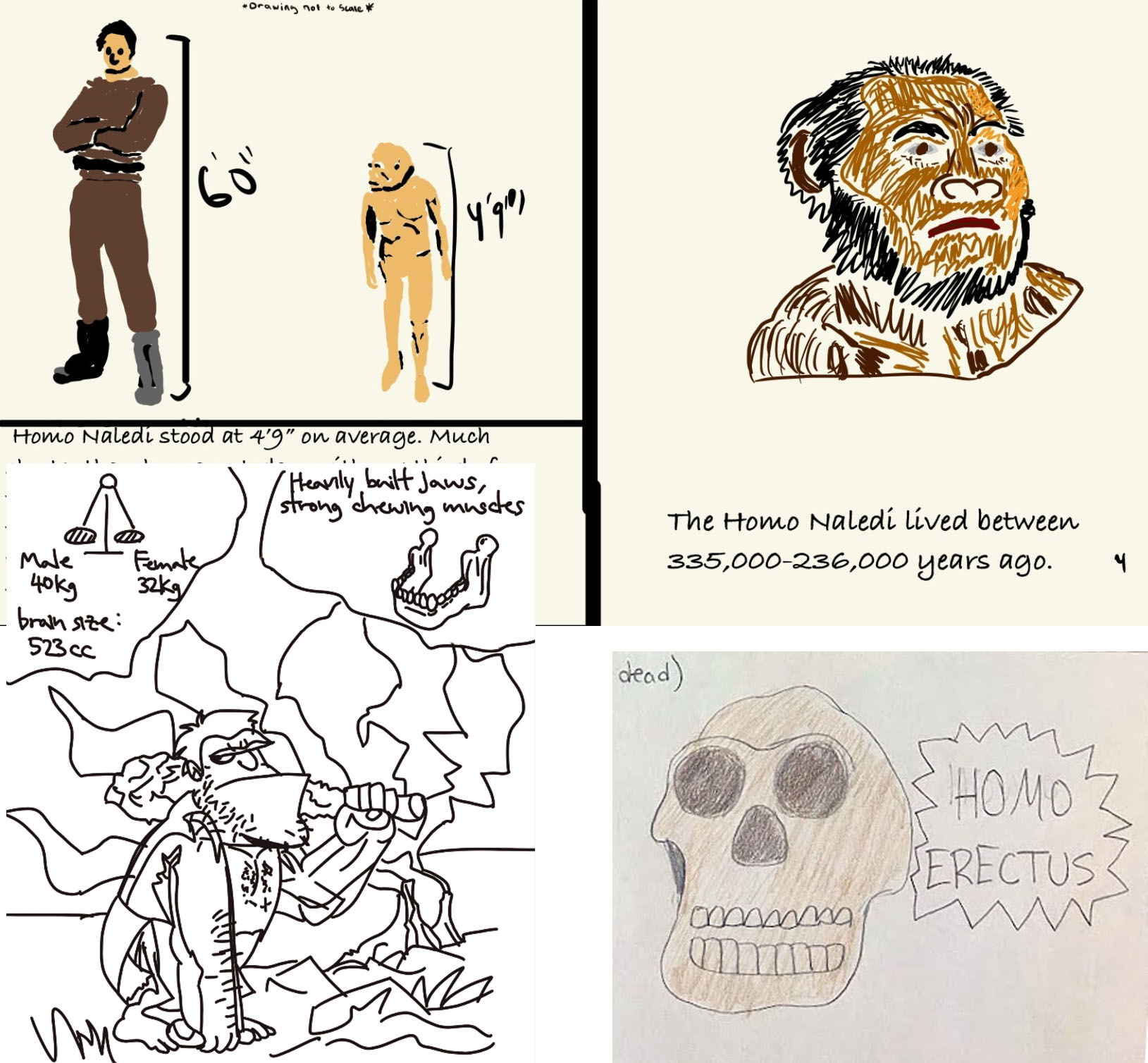
Some of my favorite assignments are team projects that involve producing a trailer for a new tv series on pseudoscience, a new comic pages project that focused on specific fossil humans, and Human Origins in the News, where student teams lead class. We just finished midterm, and I was wowed by the new comic pages assignment. I’ve wanted to develop a comics assignment and I’m really pleased with the results–student teams researched particular fossils and then developed a few comic pages in response to a series of prompts. Students are now making their own chipped stone tools and starting to plan their podcasts for the end of the term.
Human Origins students lead class during our “short period” on most Mondays with Human Origins in the News.
A couple of big changes this term include teaching during winter term–usually we’ve offered Human Origins in the fall–and we’ve been meeting the class in the Gelb science building, as Phase 1 of the Peabody Institute renovation wraps up. I’m really grateful to my colleagues in the science division for sharing the Gelb classroom with me. It will be nice to return to the Peabody Institute in the near future. We’ll at least be close-by next week when we explore the atlatl and throw spears on the Chandler-Wormley Vista!
A sample from the comic pages created by Human Origins students this term.
Last month, the Peabody Institute sponsored a day trip to Harvard University for Phillips Academy students. The 25th Annual Powwow was hosted by the Harvard University Native American Program (HUNAP). After a three-year hiatus due to the Covid-19 pandemic, the HUNAP program was able to welcome the return of their Powwow.
Flyer for HUNAP’s 25th Annual Powwow
This year’s theme for the HUNAP Powwow was Protect Indigenous Futures! The event was held on Orange Shirt Day, a national day of remembrance and reconciliation for victims of residential schools, which sought to separate Native children from their families and forcibly assimilate them. The Powwow honored survivors and victims of residential schools throughout Canada and the United States.
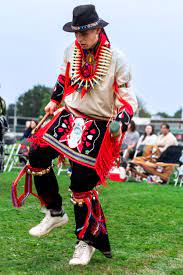
The Powwow ceremony is an Indigenous gathering with traditional dances and music held by Tribal nations from the New England area. The event welcomed hundreds of attendees from Harvard, neighboring Native communities, and the Greater Boston area.
Photos from the HUNAP Powwow Photos by Catherine Dondero and Courtesy of Harvard University
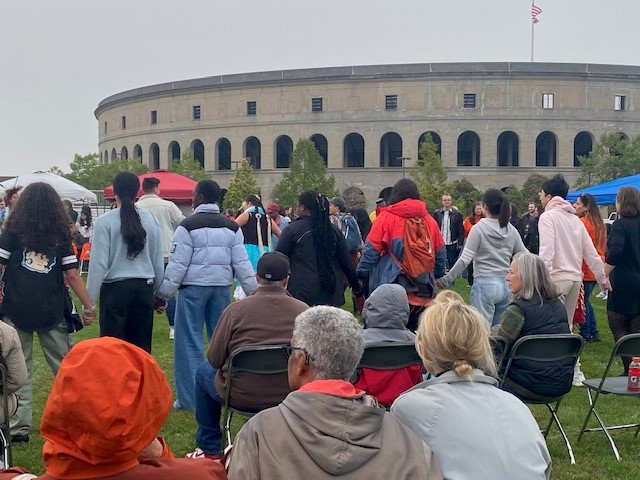
Students took part in community dances, which welcomed all event attendees into the arena to dance together. Many PA students took part in these community dances and got to experience the ceremony traditions first-hand.
PA students participating in community dances
This event was a wonderful opportunity for students to experience Indigenous cultural traditions and ceremonies. Students also had the opportunity to connect with Indigenous students, community members, HUNAP students, and Tribal nations from the Greater Boston area, New England, and those visiting from other parts of the United States and Canada.
Want to hear more about this event from the students’ perspective? Check out this article from Phillips Academy’s student paper, The Phillipian.
For more details about the HUNAP 25th Annual Powwow, explore this article from The Harvard Gazette and video coverage of the event by Harvard University.
Since the Peabody staff moved to the School Room in Abbot Hall, I’ve been fascinated by the history of Abbot Academy and what remains of the school’s campus. As we work in the very heart of the Abbot Academy campus, I can’t help but notice the many features and tangible details left since the merger of Abbot and Phillips in 1973.
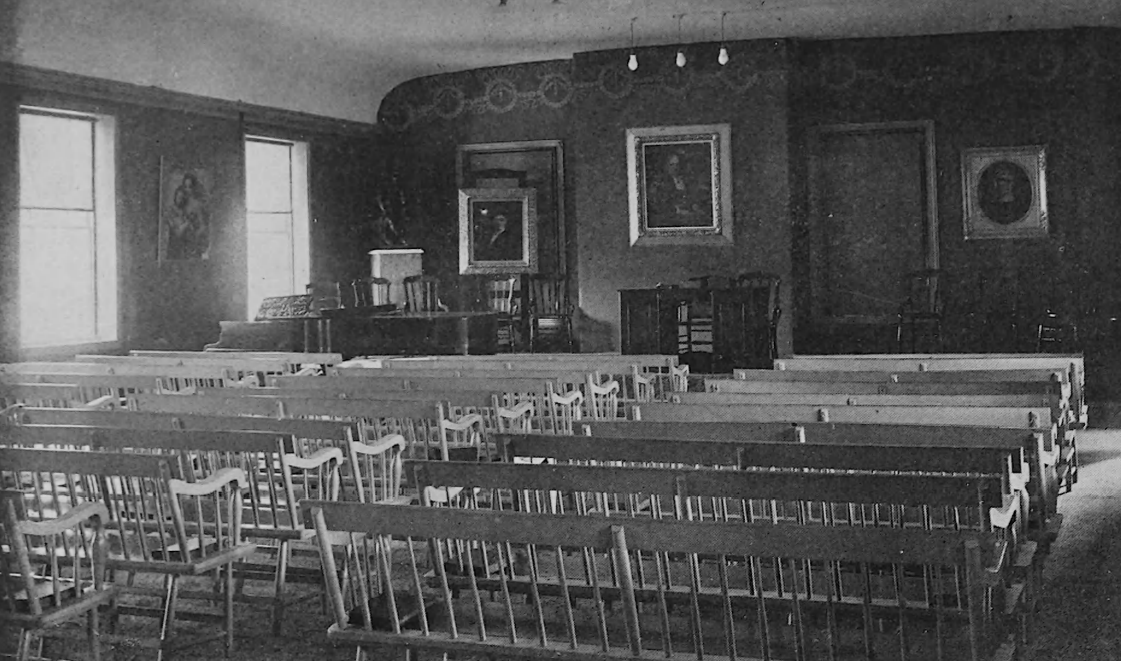
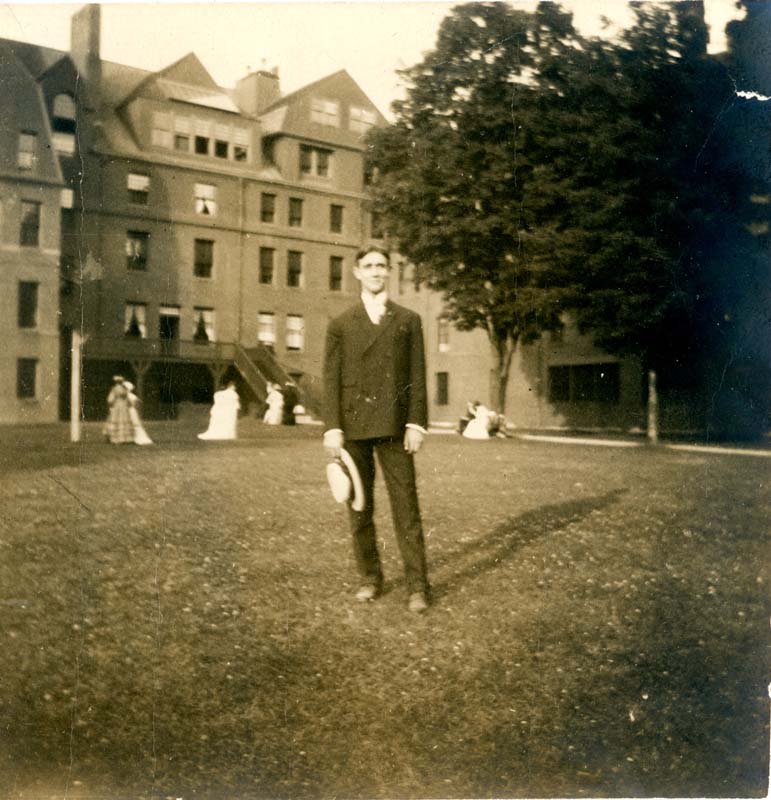
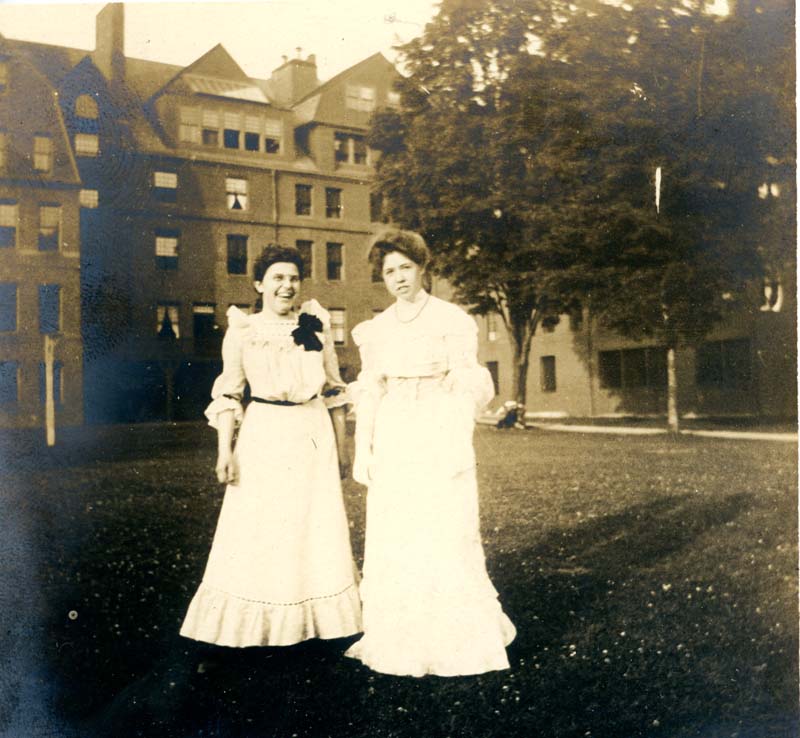
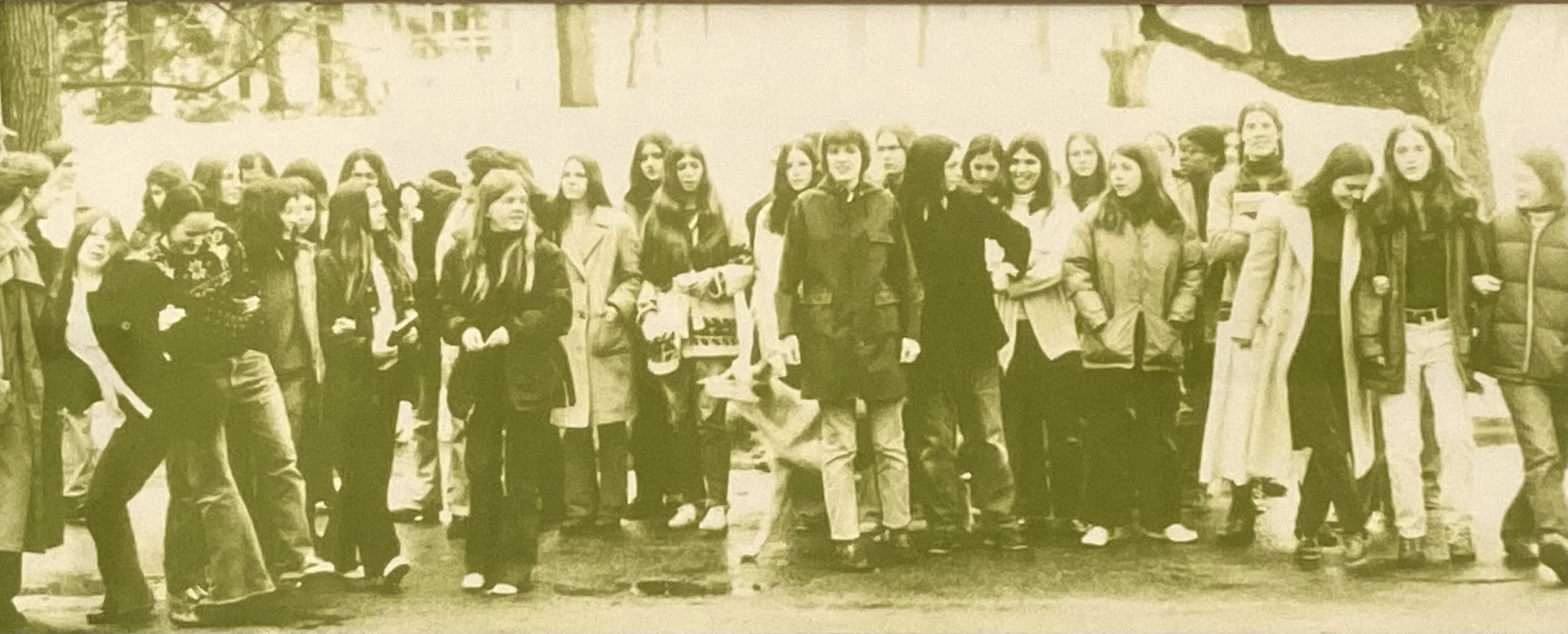
The very School Room in which our staff currently resides was once an assembly room for all the Abbot Academy students to gather, known as the “Hall” and later as the “Chapel.” Within this same building are many rooms with remnants of old chalk boards as well as photographs of Abbot students from throughout the school’s history. These photographs inspired this next entry of the Behind the Photograph blog series and although many do not have specific provenance or further information provided, they represent what life and education was like at Abbot Academy during a rapidly changing America.
The “Hall” at Abbot Hall, now known as the School Room, circa 1906.
Students gather in the “Chapel” at Abbot Hall, now known as the School Room, circa 1945.
Abbot Academy was one of the first educational institutions in New England for girls and women. Founded through the financial support of Sarah Abbot, the Academy opened in May 6, 1829 with seventy students and continued as an independent preparatory school for female boarding and day students until the merger of the two schools in 1973. Today the campus continues to be used by the combined school where many of its buildings and stories remain.
Sarah Abbot, Founder of Abbot Academy
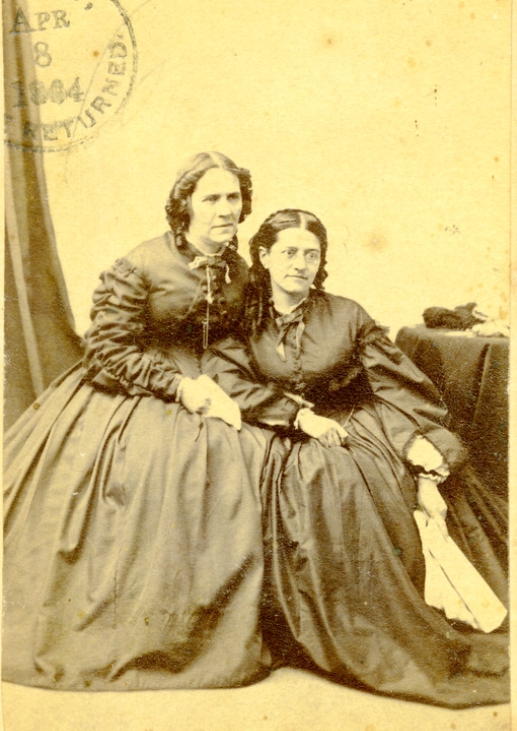
Although many were hesitant at its reception and Victorian society questioned the need to educate women, Abbot Academy quickly became an example of women’s accomplishment. Some believed its curriculum even surpassed the all-male Phillips Academy up the hill. One particular era of note was Abbot’s “golden age” under the McKeen sisters, headmistresses Philena and Phebe (Abbot Academy, 1859-1892).
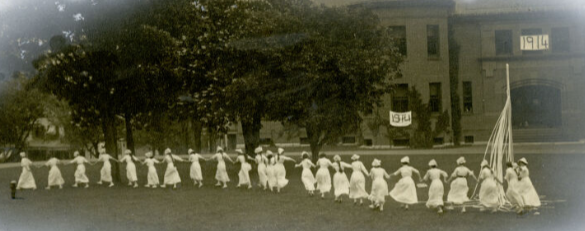
The sisters brought about many changes at Abbot including the expansion of buildings, strict schedules for students, world language classes, student involvement in the surrounding community, lecture opportunities, emphasis on art education, and so much more. The Abbot Circle was created with the construction of Draper Hall in 1890. Abbot Hall was also moved to frame the new grass plot. Activities such as commencement and winding the Maypole were staged on the lawn and became traditions for years to come.
The Abbot Circle, framed by Abbot Hall (left), Draper Hall (center), and the old Davis Hall (right), (1890-1892)
Abbot Academy Class of 1914 with Maypole on Abbot Circle
Draper Hall contained the parlors, library and reading room, music rooms, studio and infirmary, dining room, and student dormitories. Abbot Hall was later altered to make space for laboratories, an art studio, and an exhibition gallery.
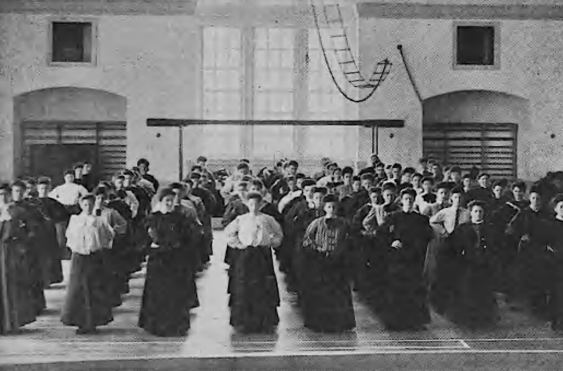
Many of the McKeen traditions continued, even after the sisters departed Abbot in 1892. In the early 1900s, McKeen Hall was built on the original site of Davis Hall. This new building was dedicated to the memory of the McKeen sisters and used as a study hall, classrooms, and gymnasium that doubled as an assembly room named Davis Hall.
Davis Hall (located in McKeen Hall) doubled as both a gymnasium and assembly space for students. At one point there was even an organ in the upper loft of the space! (1912-1925)
As Abbot faced new challenges such as the Great Depression and two World Wars, the school isolated itself, however, this only kept out new waves of change as women’s colleges and public schooling became a permanent fixture in American society. Students described these years as isolating, strict, and confining. Students had a rigid dress code, curfews, and could not speak to boys (especially those from Phillips Academy).
A Phillips Academy boy and Abbot Academy girls standing in the same place, but never together.
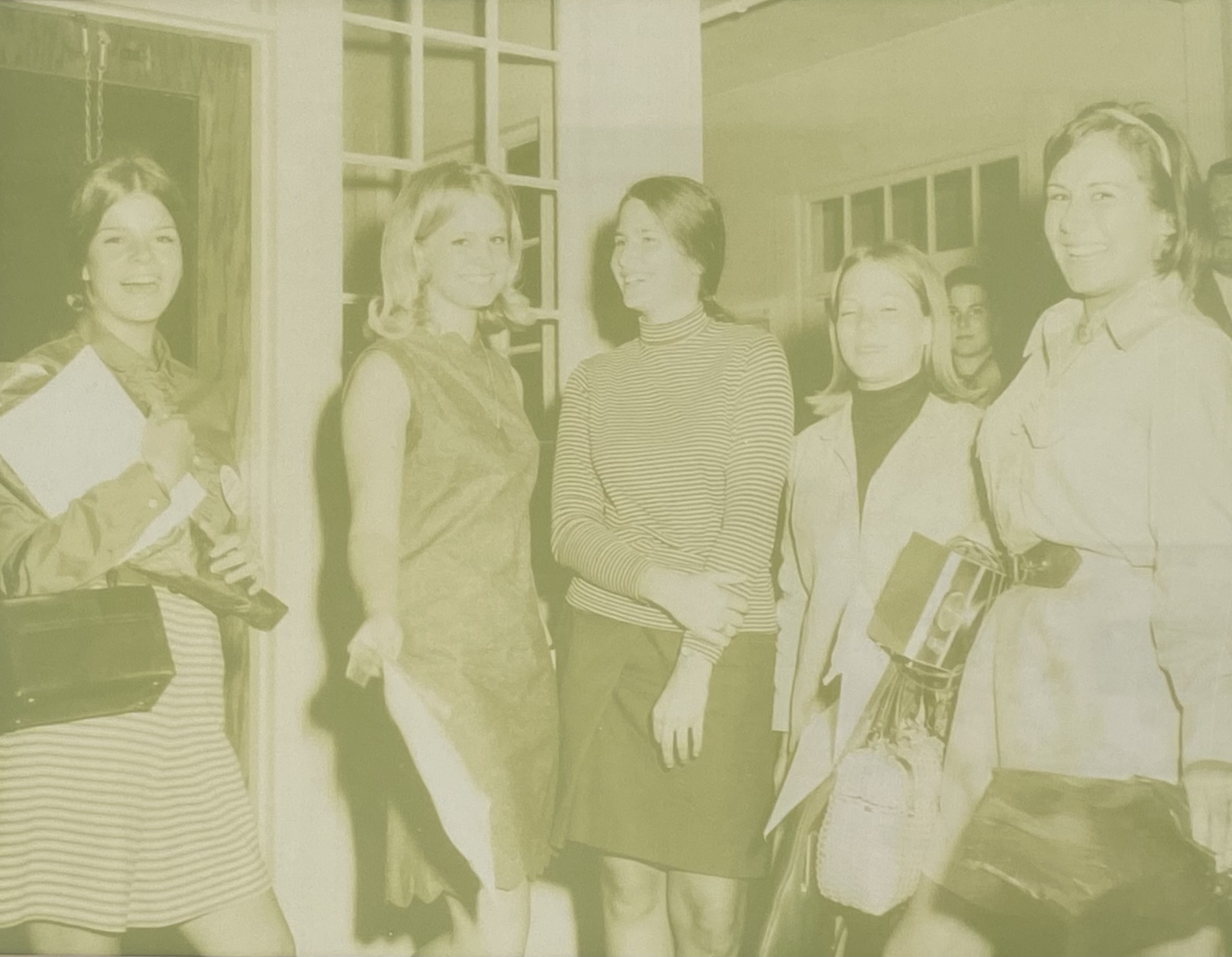
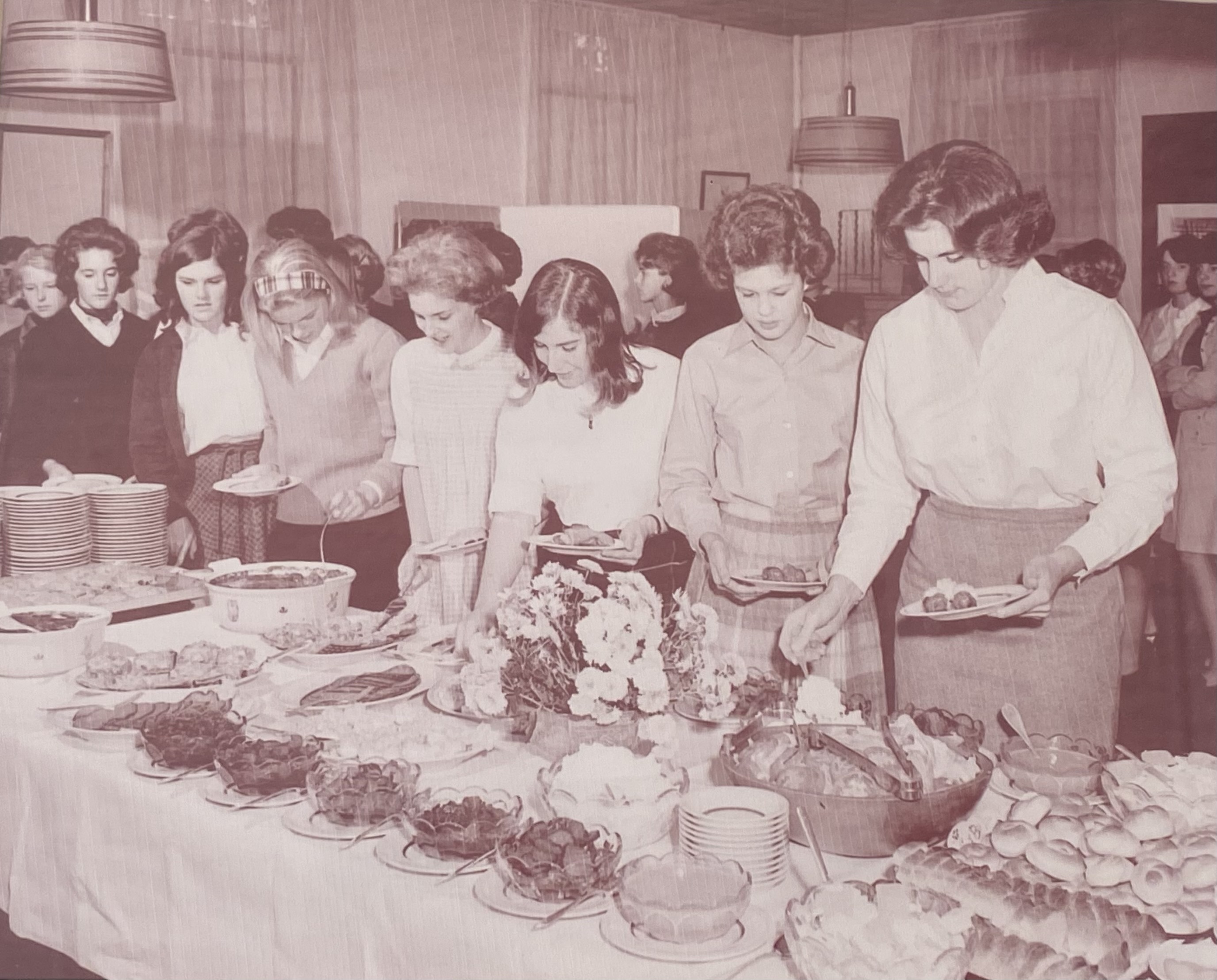
After World War II, the Academy experienced a jump in enrollment and opened its doors more widely to minority groups of women. As a result, the academic excellence of the Abbot school improved and applications to the school increased in the 1950s and 1960s. The strict rules of the past were gone by the 1960s, giving female students more independence and featuring more chaperoned dances and interactions with the Phillips Academy boys.
By the late 1960s, many colleges and universities were becoming coeducational institutions. As a result, along with other factors such as shared history and common activities, Abbot Academy and Phillips Academy merged on June 28, 1973. Many Abbot traditions were included in the combined school, such as Parents Weekend. The Phillips Academy headmaster at the time, John Kemper, believed the merger was “practical, ethical, and educationally sound.” The Peabody had already opened Richard “Scotty” MacNeish’s archaeology course to Abbot women as preparations for the merger were being made. This year, we celebrate 50 years of the Abbot Academy and Phillips Academy merger!
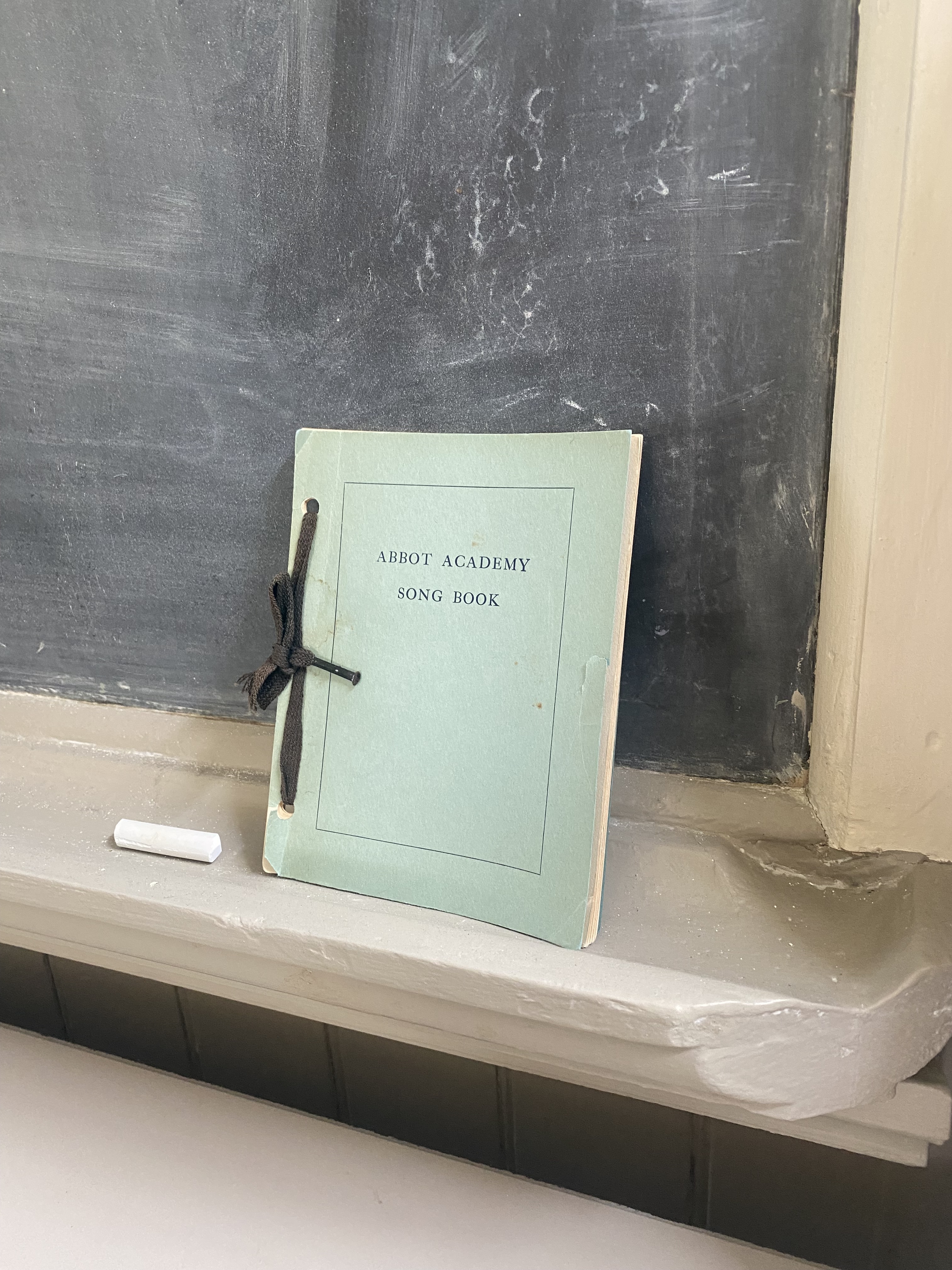
In additon to all the wonderful and candid photographs that decorate the walls in Abbot Hall, my favorite find was an Abbot Academy Song Book. This book is filled with a variety of school songs, marches, sport songs, serenades and salutes, rounds, parting hymn, and Bradford songs remembered by past Abbot Academy alumni. What really brought this find full circle for me was listening to past Abbot Academy alumni sing these songs during our 2023 reunion weekend.
There’s something special about the Abbot Academy campus and I’ve truly enjoyed calling this place home for the last several months. There is so much history here and I hope I provided a small glimpse of this history by sharing the photographs that adorn Abbot Hall.
For more photographs related to Abbot Academy and student life check out the Abbot Collections online archive here!
Additional Reading on the History of Abbot Academy
Academy Hill: The Andover Campus, 1778 to the Present. New York: Princeton Architectural Press, 2000.
Dominique, Robert A. Phillips Academy Andover, Massachusetts: An Illustrated History of the Property (including Abbot Academy). Wilmington, MA: Hampshire Press, 1990.
Roberts, Paige. “Abbot Hall, 1828-1829, at Phillips Academy.” Clio: Your Guide to History. December 5, 2019. Accessed June 22, 2023. https://theclio.com/entry/88419
This summer, 23 young archaeologists set out to investigate one of the first buildings constructed by Samuel Phillips Jr. after he founded Phillips Academy. During the first week of the Andover Summer program, the students of the Lower School’s Dig This course were introduced to the story of the Mansion House and the mysterious fire that destroyed it in 1887. According to primary accounts, the fire seemed to have started in two different places in the house. This account was made even more suspicious by sources that said the caretakers, Mr. and Mrs. Carter, had their bags packed the day of the fire and walked away with insurance money. With this interesting piece of information, the students were excited to uncover more clues about the Mansion House and the people who inhabited it. The students worked in groups of 3 to 4 at six excavation units. These units were spread across the site in areas that, using past excavation results and Ground Penetrating Radar maps, had a good chance of finding evidence of the Mansion House.
Figure 1. Commemorative Plaque of the Mansion House
The first day of excavations was met with enthusiasm, apprehension, and later exhaustion as the students realized how much work goes into opening a unit. Nonetheless, we persevered and by the end of the first week of excavations many groups had already finished Level 1. Some had even found glass and metal artifacts which, of course, created healthy competition between groups and motivated the students as they continued in the second week of excavations.
Figure 2. Two students working in Excavation Unit 1
During the second week, things got interesting. The students working in Excavation Unit 5 came across an 1802 “Draped Bust” Liberty penny which caused a ripple of excitement for both the students and the instructors. This coin gave an important terminus post quem (TPQ) for the level and showed the students how old the artifacts we were finding really were.
Additionally, in Excavation Unit 2 Level 2, a brick feature began to reveal itself in the northeast corner. This unit was placed near a 2018 excavation unit that uncovered part of a chimney, so it is likely these features were related and Unit 2 uncovered another part of the chimney which helps in understanding how large the chimneys would have been and the layout of the Mansion House. The images below show the brick feature when it began to be discovered in Level 2 and the brick feature in Level 3 before backfilling.
Figure 3. Brick feature in Excavation Unit 2 Level 2Figure 4. Brick feature in Excavation Unit 2 Level 3.
The third and final week of excavations supported the archaeological adage that you always find the most interesting stuff right before you’re going to leave a project. This week, two new features were discovered. One was in Excavation Unit 6, which was intended to find one of the foundational walls of the structure. This feature also included a brick, though it is unclear if it relates to another chimney of the house. There was also a large stone and some smaller stones found near it, though, likely not enough to constitute a foundational wall of the building.
Figure 5. Students working in Excavation Unit 6
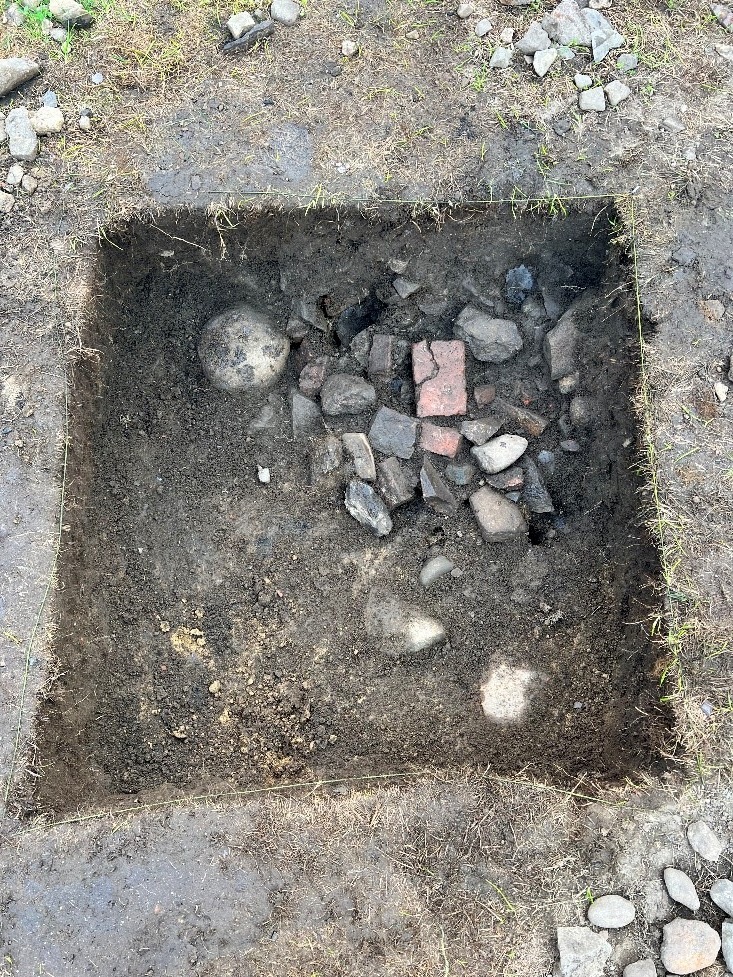
That being said, one of the biggest finds of the project included a huge rectangular stone with other large stones overlapping it. This feature was found in Excavation Unit 1 which was placed north of Excavation Unit 2 in the hopes of uncovering part of the foundation of the house. Given the size of the stone and the overlapping rock around it, it is pretty likely that this feature relates to the foundation or a wall of the Mansion House. On the last day of excavations this unit surprised us further by containing a large amount of metal artifacts in the southwest corner of the unit. A fork, a hinge, a handle, and a plethora of other artifacts were uncovered in the last level of this unit. We probably could have found more in the next level if we didn’t have to backfill the next day. This unit is definitely one to revisit in future years!
Figure 6. Stone feature in Excavation Unit 1 Level 3.
While neither unit contained a feature, Excavation Unit 3 and Excavation Unit 4 contained a lot of charcoal and mortar. Excavation Unit 3 specifically had extremely dark, somewhat ashy soil which was likely due to the fire. Ideally future Dig This! classes will uncover more of this ashy, dark soil and the data can be compiled to give a better understanding of how the fire destroyed the mansion house.
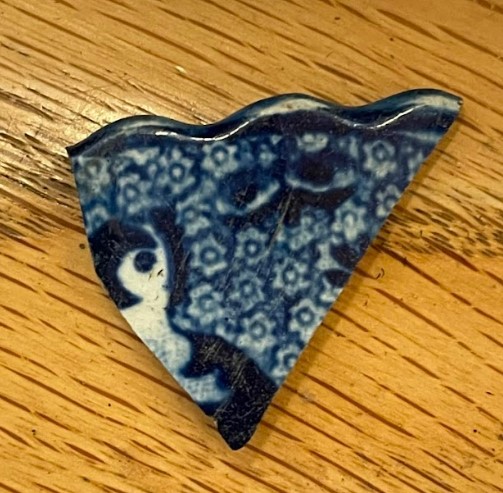
During the last week of the course, the students were busy washing their artifacts and picking a few to display at their end of the year exhibition. These artifacts included a locking mechanism, large nails, blue transfer print ceramics, a marble, a hinge, and a fork! All of the artifacts found during this summer’s course were transferred to the Peabody Institute to be cataloged and analyzed with the rest of the Mansion House artifacts.
Figure 7. Fork found in Excavation Unit 1Figure 8. Ceramic sherd found in unit 2.Figure 9. Locking mechanism found in unit 5.
Overall, the students had a great summer excavating the Mansion House and learning how to be archaeologists by following proper archaeological methods and recording techniques. I look forward to seeing what next summer’s Dig This class will find!
Hello, my name is Mike Agostino and I am a volunteer here at the Peabody Institute of Archeology. I am a recently retired scientist from the field of bioinformatics. My work in this field, for over 30 years, concerned the analysis of gene and protein sequences. I love the field so much that I am presently an instructor on the subject for the Harvard Extension School. I am also writing the second edition of a textbook I published on this topic more than 12 years ago.
Peabody volunteer, Mike, analyzes various projectile points in the Peabody collection.
As a resident of Andover, I frequently went past the Peabody and often wondered what treasures it held. When a good friend, Richard Davis, said he volunteered here and told me about the work, I immediately wanted to join him. To say this is a dream come true is not an exaggeration. I have always been interested in archaeology and spent many years looking down on the ground for the artifacts people said were all around us. But I never found any! To work with and learn about dozens, if not hundreds of specimens each day is amazing. As I hold these objects in my hands, I try to imagine their history: was it careful fabrication by an adult expert, or was it made during a learning period of a youngster? Was it used to bring home a meal, build a boat or dwelling, or for the creation of clothes? Did it come from local stone, or did it travel many miles to be found at a new locale? My imagination is further enhanced or tempered by the kind and knowledgeable staff of the Peabody who are training and patiently helping me identify what is in my hand. I have only been at the Peabody for less than two years and there is so much to learn!
After years as a scientist, I feel right at home with my principal responsibilities: the careful handling, description, cataloging, and storage of the specimens. Attention to detail is absolutely required and very satisfying. We record their identities, or best guesses because many are just fragments. The intact specimens are something to behold. Some arrowheads or axes are impossibly beautiful, and the precision of shaping and symmetry with such a hard material is just astounding. The skills of the people, past and present, are just amazing.
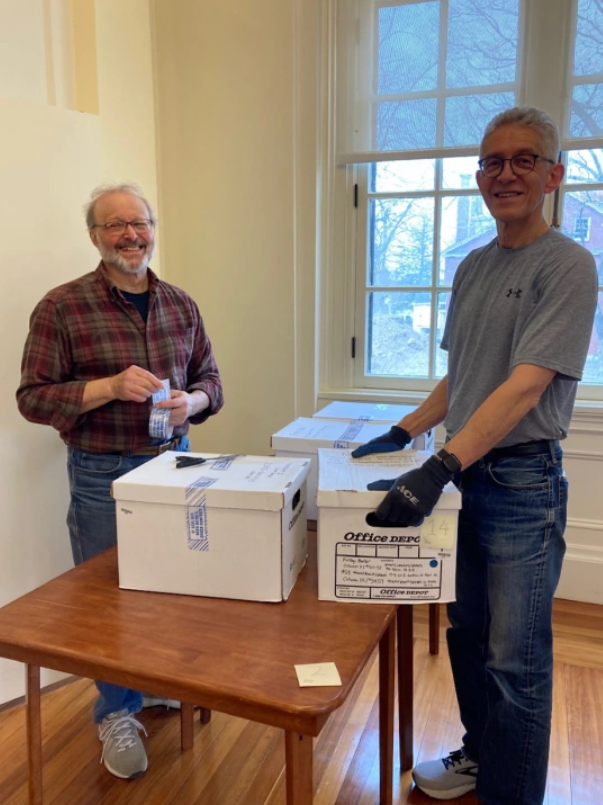
Peabody volunteers, Richard (left) and Mike (right), moving boxes for the Peabody’s building project.
I have also helped with activities associated with the huge renovation project of the building (for pictures and updates, see the blog postings by Marla Taylor). I am impressed with how everyone has remained calm considering hundreds of boxes, and specimens too large for boxes, had to be carefully moved up one or two floors from the basement to temporary locations elsewhere in the building. With the absence of an elevator, I helped move many boxes up the stairs out of harm’s way. My smart watch said I went up 80 flights of stairs one day! And I am only there one day a week, so the staff had a monumental challenge. We are now waiting for the renovations to be completed and then we will return the specimens to a much-improved setting. Even with the new elevator, reshelving hundreds of boxes won’t be easy, but I am looking forward to the project and the “new” institute.