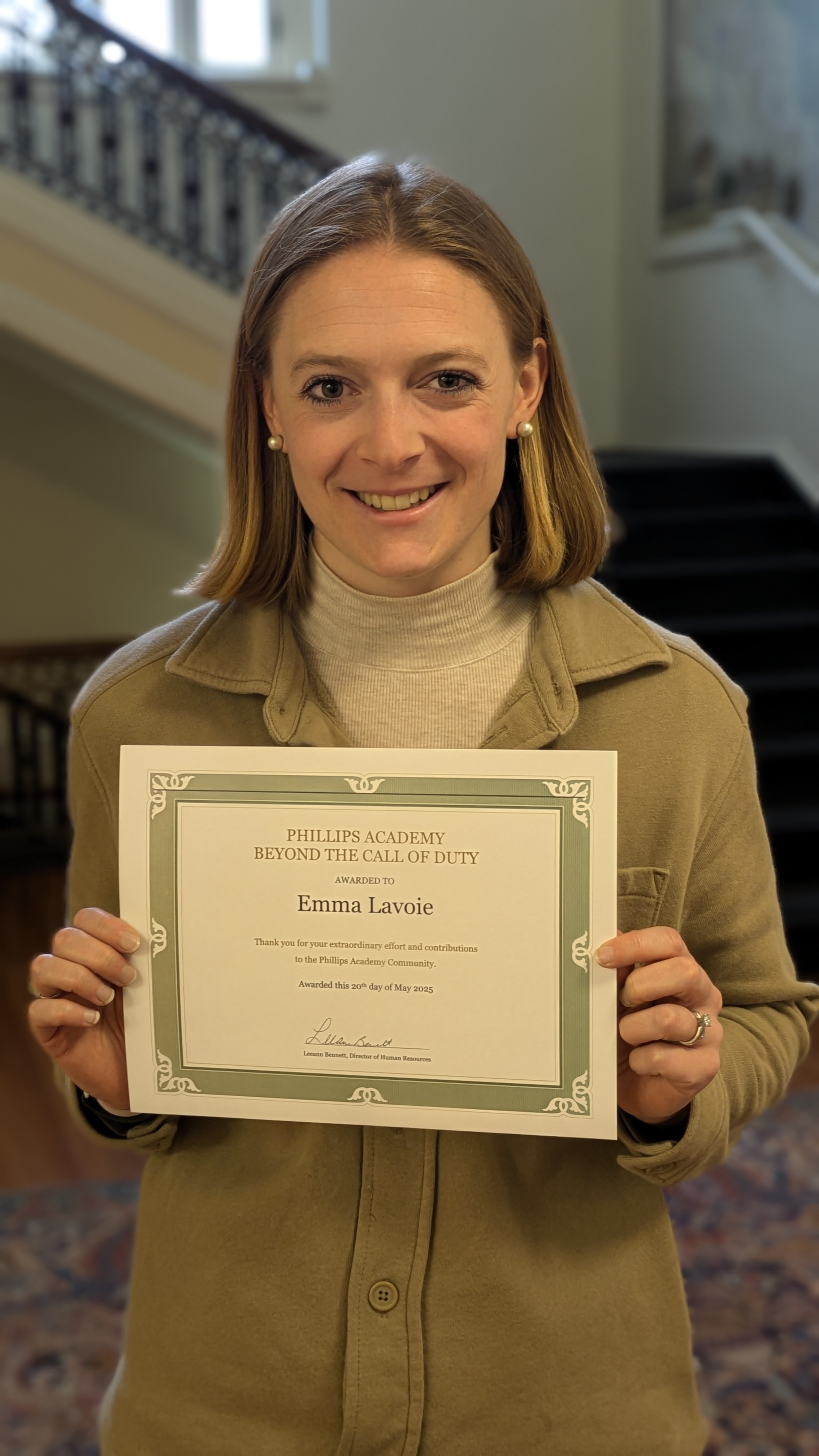
The Peabody’s own Emma Lavoie was recognized with Phillips Academy’s Beyond the Call of Duty Award at the spring staff and administrators award celebration on May 20!
Emma shows off her Beyond the Call of Duty Award.
The award announcement states, “The Beyond the Call of Duty Award is designed to acknowledge and celebrate staff who demonstrate exceptional support/customer service to colleagues within their own department, across campus, our students, parents or alumni. All nominees should embody the non-sibi spirit!”
This describes Emma precisely! Emma’s job title is staff assistant, responsible for business and communication here at the Peabody, but she does so much more–Emma has taught lessons and helped with lessons, produces beautiful communication and social media pieces, cataloged material culture, organizes travel for staff members and visitors, keeps us organized, networks with other programs and departments on campus, comes early or stays late to help with events (which she has often planned and organized), serves on the Phillips Academy staff council, and much, much more.
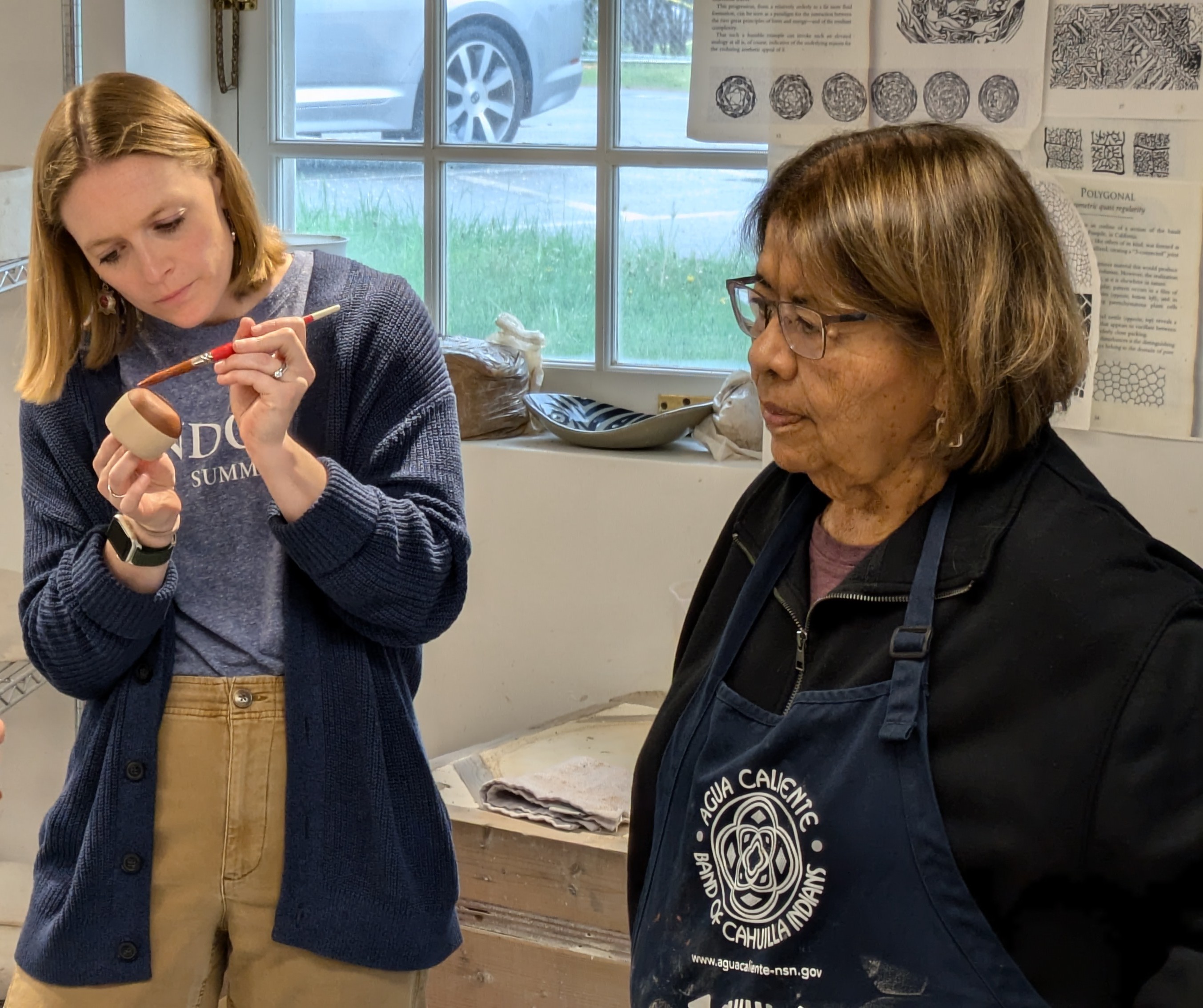
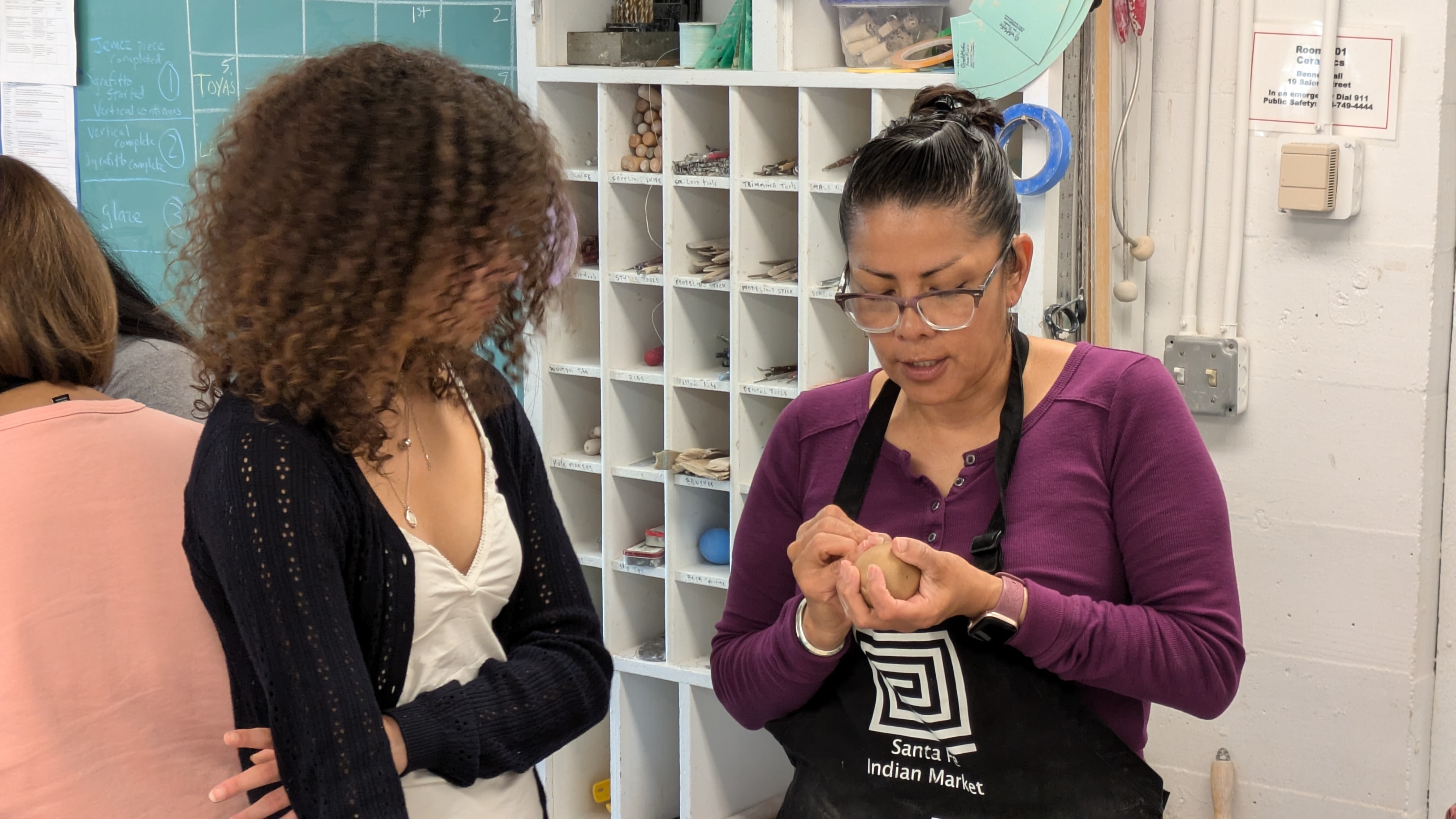
Emma decorating her ceramic creation under the watchful eye of Maxine Toya–Emma makes all the travel arrangements for visiting Native artists, like the Toya Family, Pueblo of Jemez.
Award recipients will receive two days added to their vacation bank as well as a gift of PA apparel from the Campus Closet.
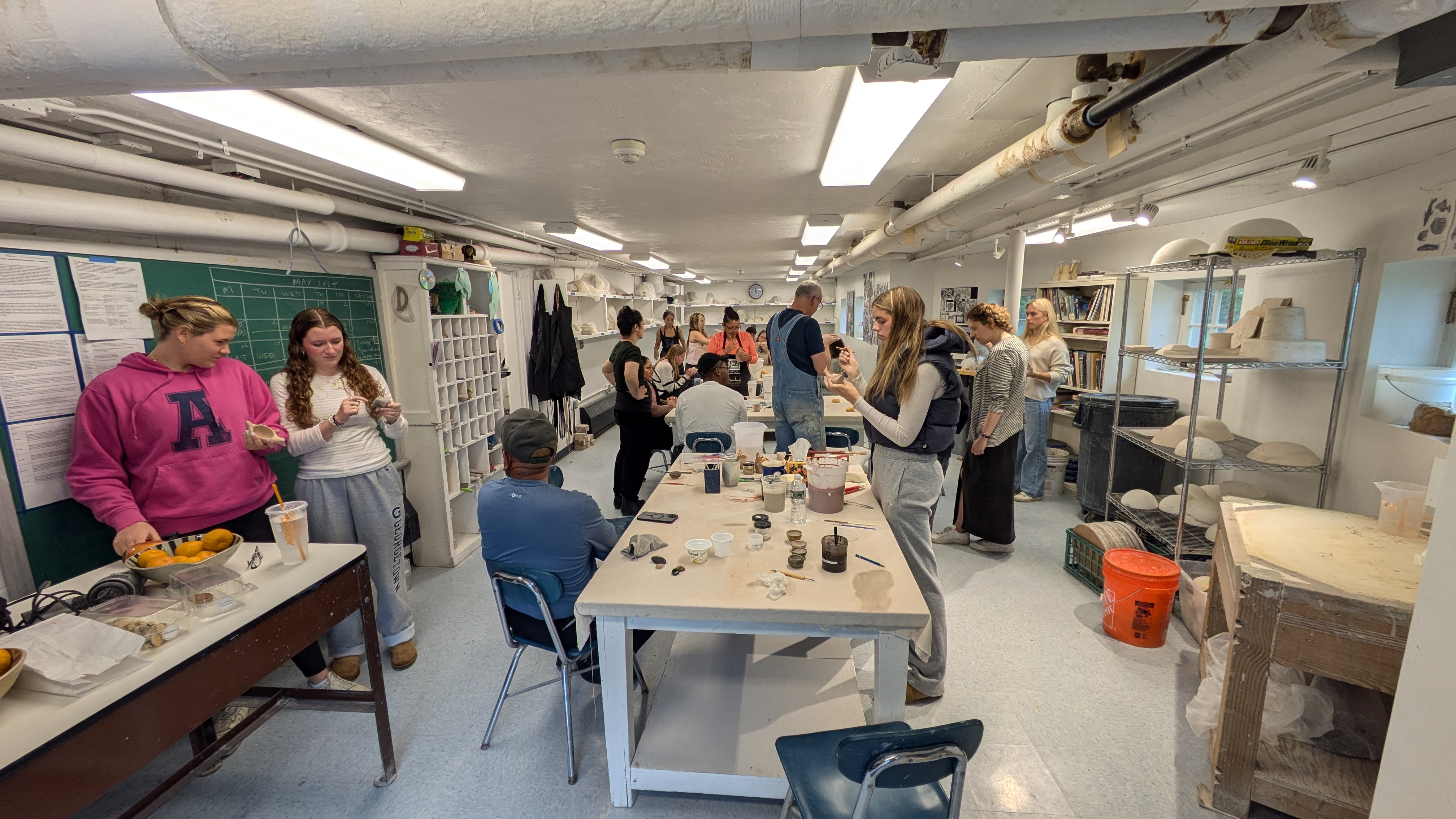
Ceramic students participating in pottery-making workshops
We were honored to have the Toya family back this Spring term for their annual visit to conduct week long, hands-on workshops on Pueblo pottery-making with Thayer Zaeder’s studio ceramic students.
Each year students have the opportunity to make their own pieces using native clays and temper from New Mexico and traditional decorative techniques of painting and polishing. The workshops culminate in a traditional Jemez firing.
Students walk away with an unforgettable keepsake of their time as well as a greater appreciation for contemporary Indigenous art and culture.
We are so grateful for all the time and expertise the Toya family has shared with PA students!
Check out this video by PA’s Communications team highlighting the Toya’s work on campus.
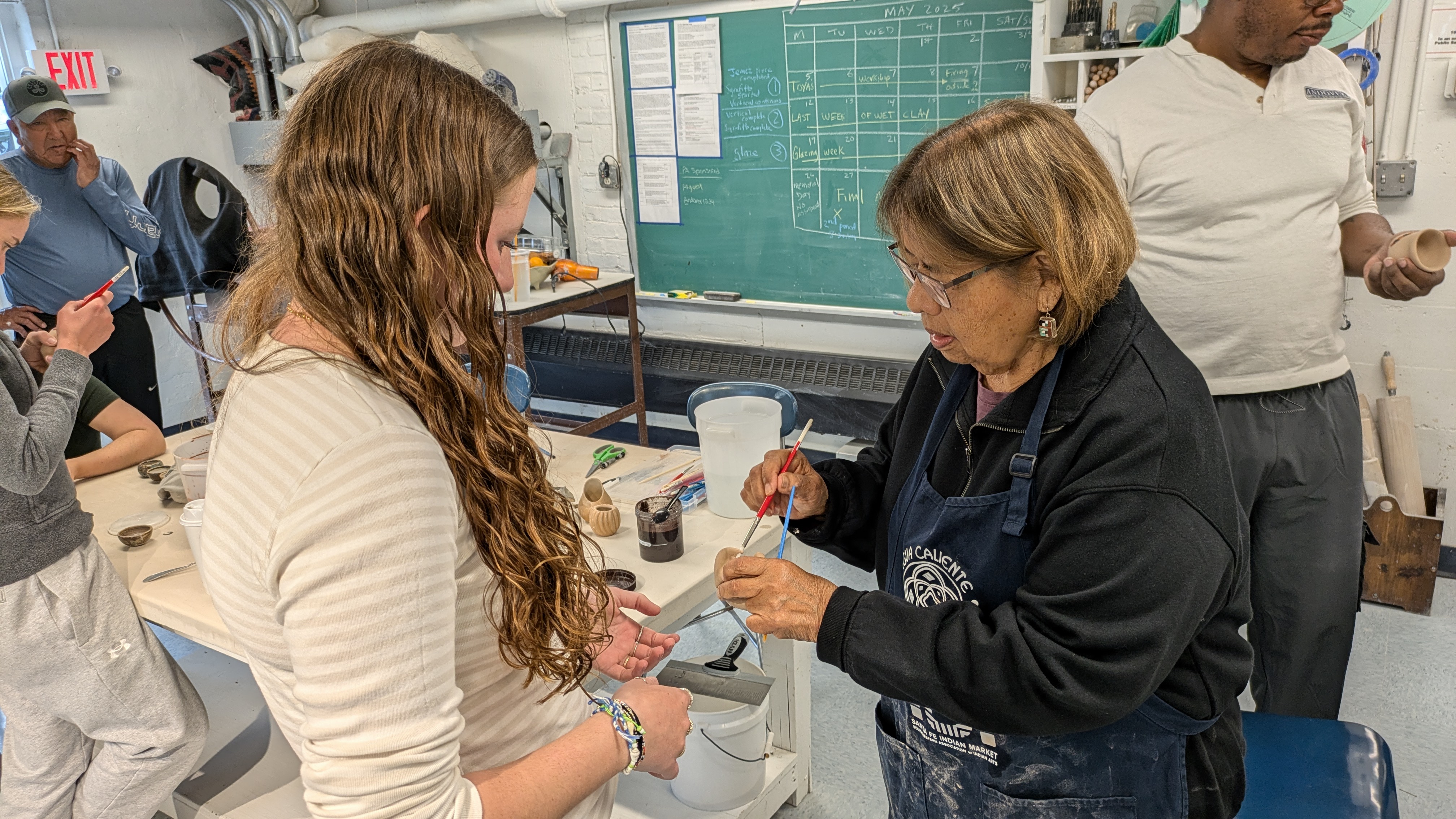
Maxine Toya working with a student on painting their piece.
Mia Toya working with a student on polishing their piece.
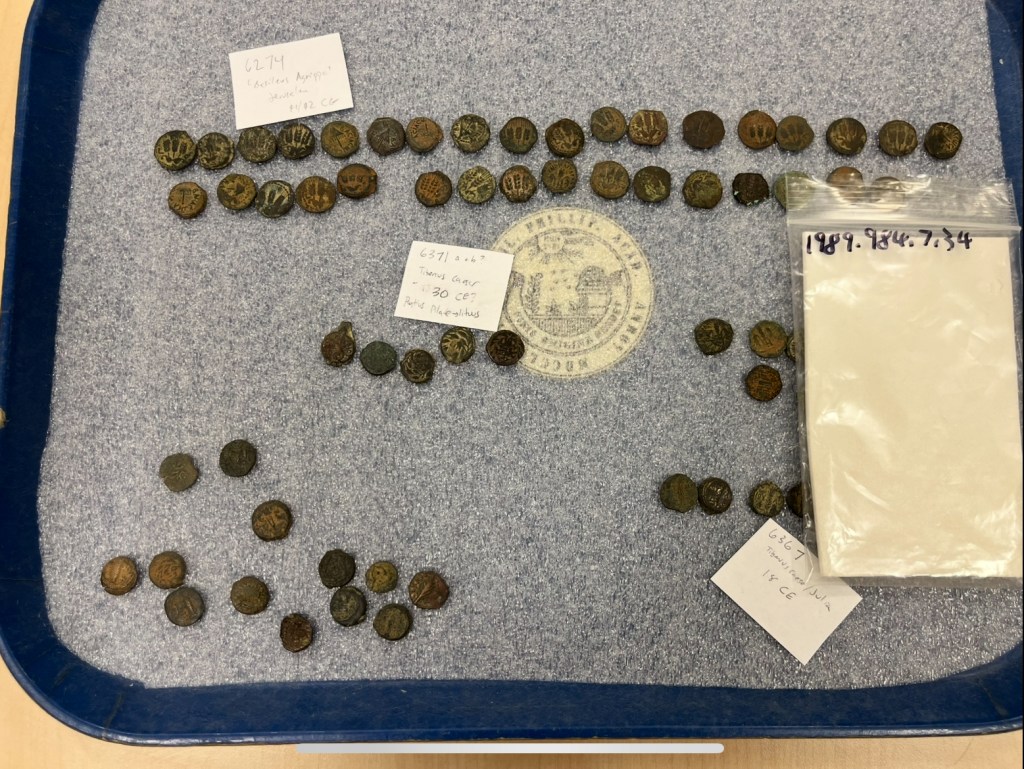
Every Wednesday, I come to the Peabody Institute to be in the company of pharaohs and emperors, not through books but from 2000-year-old coins held in the institute’s collections. I help to identify these coins and record observations into the Peabody’s catalogue system. I’m extremely fortunate to experience “living history” from these remnants of ancient Rome, Hellenistic Egypt, and the Byzantine world.
As the mass media of the ancient world, coins carried big messages. The images depicting rulers, gods, animals, or symbols were carefully chosen and deeply meaningful. Every coin has a story to tell about culture and politics. Together, they offer new perspectives on historical events that we thought we already understood.
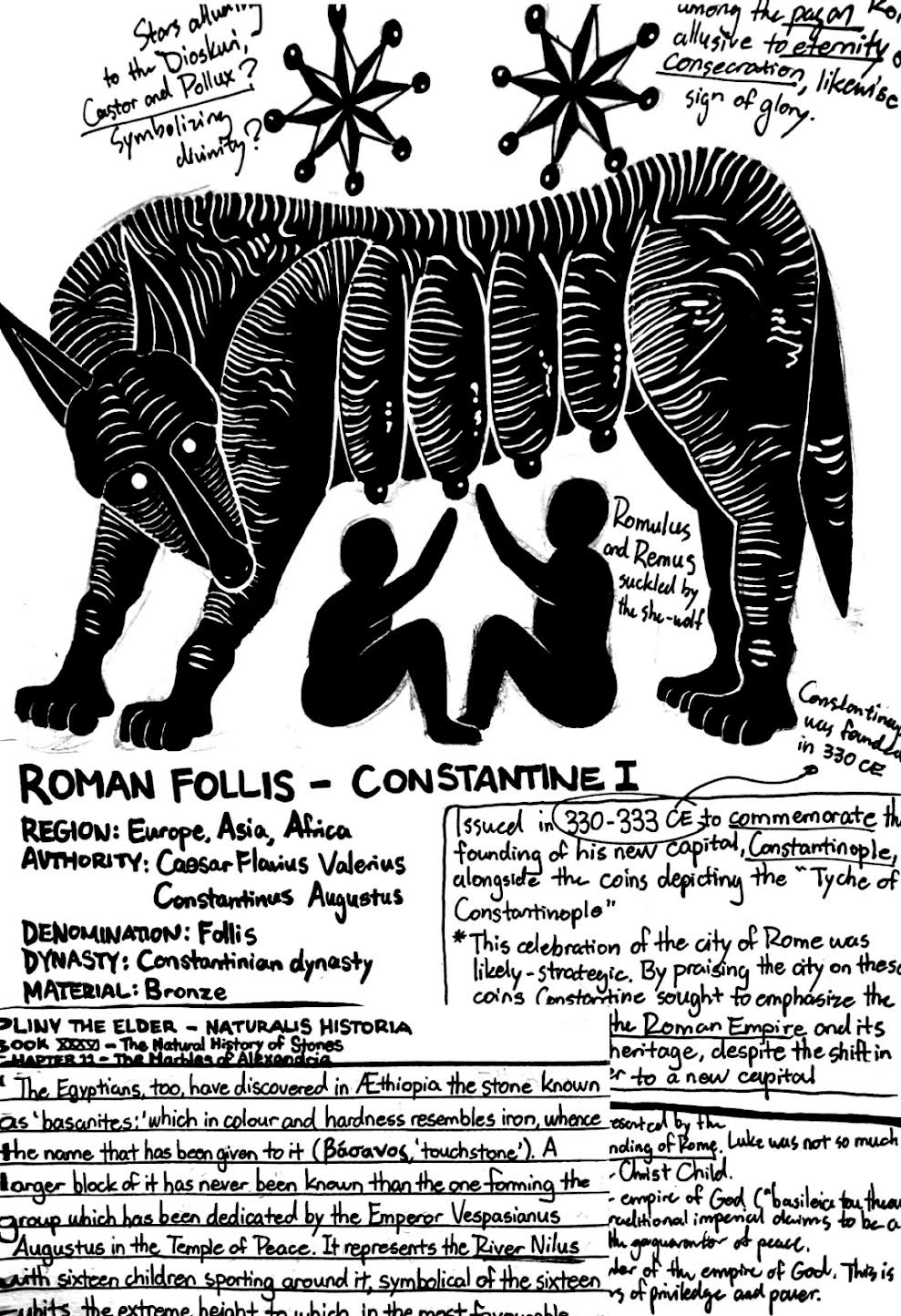
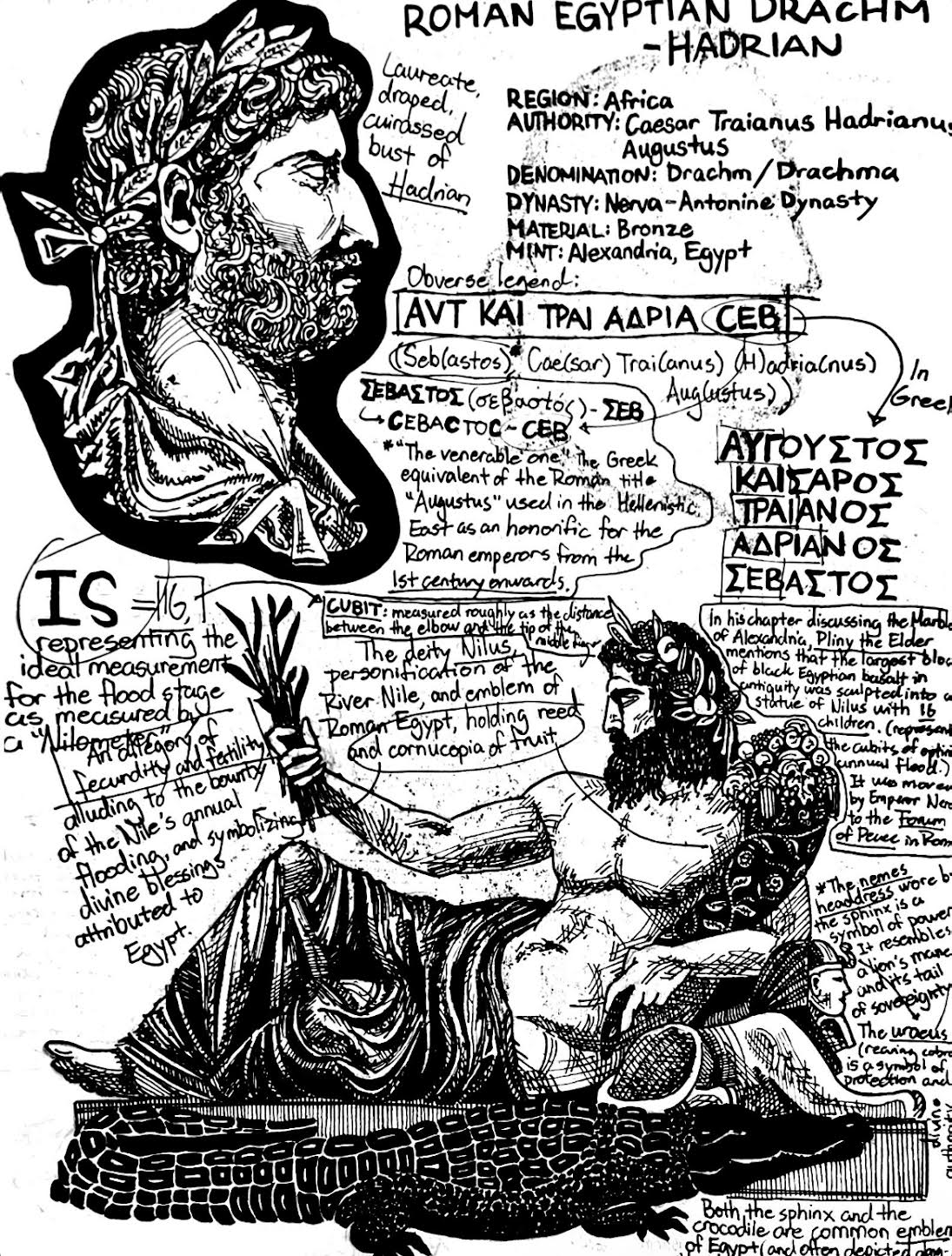
From my notes. Left: sketches and notes of a coin showing Rome’s foundation myth to commemorate Constantinople’s founding under Constantine (Rome reborn). Right: Roman coin minted in Egypt during Hadrian’s reign depicting the River Nile as a reclining deity.
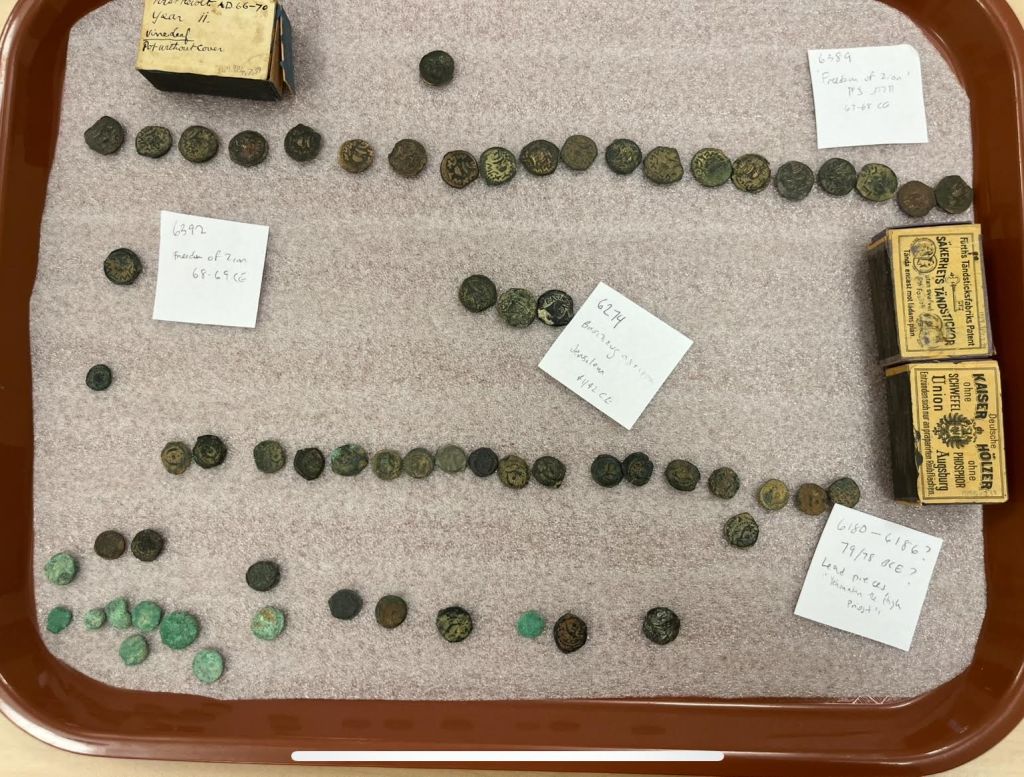
I first became involved in this research when I met Dr. Elena Dugan, who teaches Religion and Philosophy at Phillips Academy Andover, and was researching Jewish coins that dated back 2,000 years. These coins were struck for only four years, 66-70 CE, during which time, the Jewish population in modern-day Israel rebelled against their Roman occupiers. Long after their war against the Romans and their eventual defeat, their cry of freedom endured as inscriptions on these coins, surpassing even the Romans themselves. Dr. Dugan quite literally held the legacies of these men and women in her hands. How extraordinary is that!
Top: Coins with inscriptions calling for the “Freedom of Zion,” along with coins minted during the times of King Herod Agrippa I and Yehonatan the High Priest. Bottom: Biblical coins of Pontius Pilate and Emperor Tiberius.
I would soon uncover such stories myself. Through Byzantine coins within the Peabody’s collections, I came to appreciate the story of Justinian, a Roman emperor bold enough to dream big. He dreamed of restoring the Roman Empire, which by his time was territorially less than half of its former glory. He dreamed of a reunified Mediterranean and the spread of Christianity. Fueled by determination, he led years of campaigns until the city of Rome was once again truly part of the empire.
But the dream didn’t last. Enemies in the East drew his attention away from Rome and the West, which was soon lost again. Any last hope was swept away by a devastating plague, which killed half of the Roman population (now every time I pick up one of Justinian’s coins, I feel an urge to wash my hands!). Rome’s wealth was drained, and Justinian lost his new territories as quickly as he gained them. In the end, he sadly died believing his dream had failed.
But it hadn’t. Though Justinian didn’t expand Rome’s borders, he redefined her identity. His image on coins, boldly facing his audience and clad in armor, was copied by every emperor who followed. He had inspired others to dream. Alongside his portrait appeared Christian symbols, marking Rome’s turn from her pagan past toward new ideals. Never again would she reach the heights Justinian had brought her to.
If all that remains of him and his dream are coins and a few lines in a textbook, then so be it. But let’s not forget them!
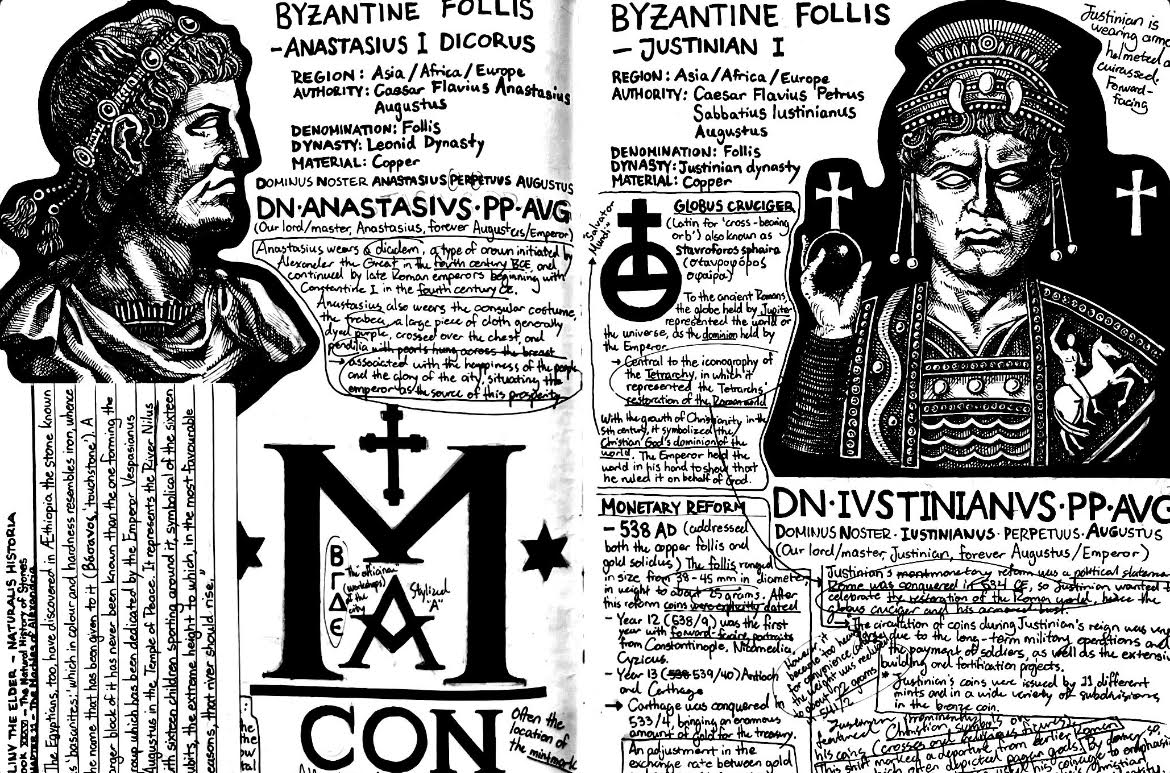
Left: Emperor Anastasius depicted in traditional imperial dress with a diadem and toga. Right: Depiction of Emperor Justinian facing the audience, fully in armor, and holding the globe and cross. While Anastasius followed strong traditions, Justinian was more than eager to distinguish himself.
This experience has strengthened my love for history. It has brought me closer to people in the distant past and their values. Their love of liberty. Their audacity to dream. These values stir a certain nostalgia in me, and suddenly, these people don’t feel so distant after all. Their worlds may have disappeared, but they are far from forgotten. It’s hard to believe that such an experience can come from objects that measure less than my pinky finger. But, after all, conveying messages is also a coin’s purpose, alongside economic ones.
This journey has truly expanded my curiosity and built my understanding of history. I’m incredibly grateful to the Peabody Institute for not only allowing an inexperienced ninth grader to interact with these priceless artifacts but also for patiently teaching me the research process, providing the right tools, and encouraging me to share my story.
What a highlight this has been as part of my school year! I’ll be sure to return on many more Wednesdays!
Last spring, I was new to Phillips Academy. I’d just arrived on campus, still figuring out where I fit in, still mapping the place out in my head. One thing that kept catching my eye was this mysterious building I passed every week on my way to the music department. It looked… important. But quiet. Tucked away. That building was the Peabody Institute.
It was mid-renovation then and closed to visitors, but every time I walked by, I’d find myself wondering what was inside. What kind of objects were hidden away behind those walls? What kind of people once used them? It sent me spiraling in the best way.
I started doing some research and realized that while the Peabody is this incredible institution with a deep collection of cultural material, it wasn’t very connected to student life. Almost hidden in plain sight. And that just felt like a missed opportunity. I wanted to find a way to change that.
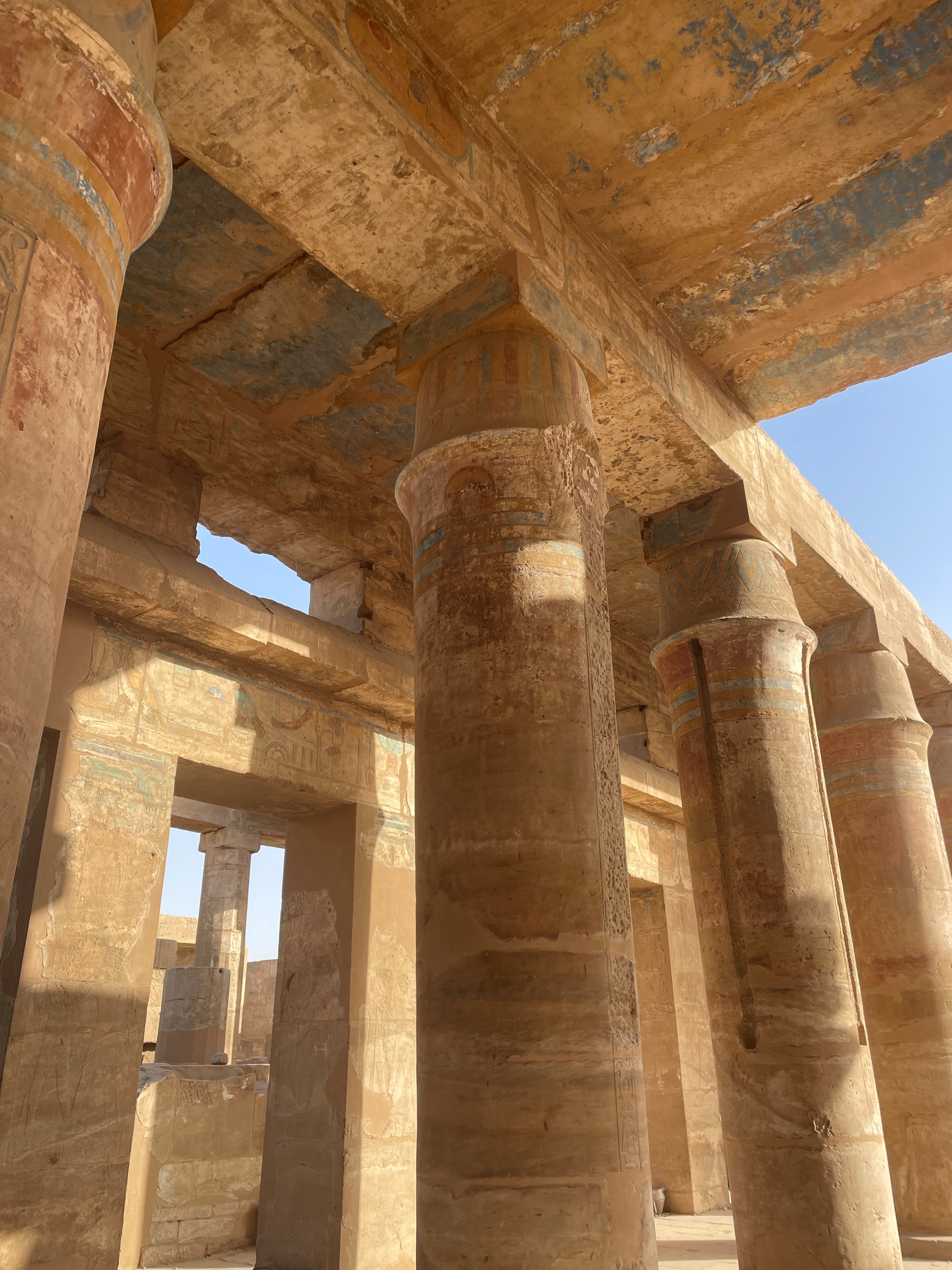
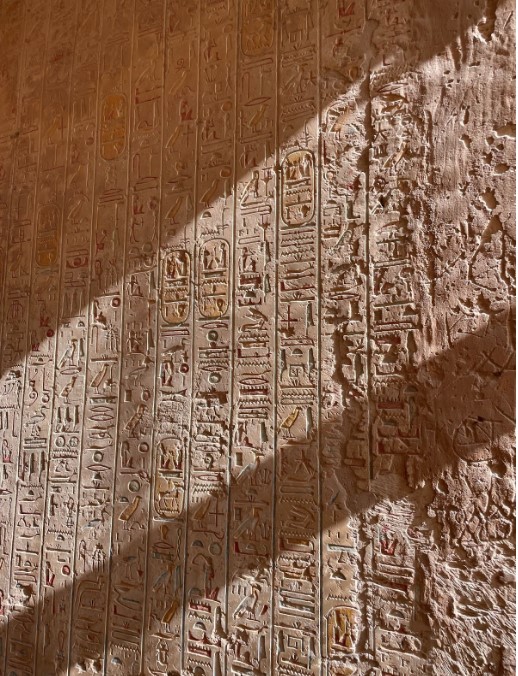
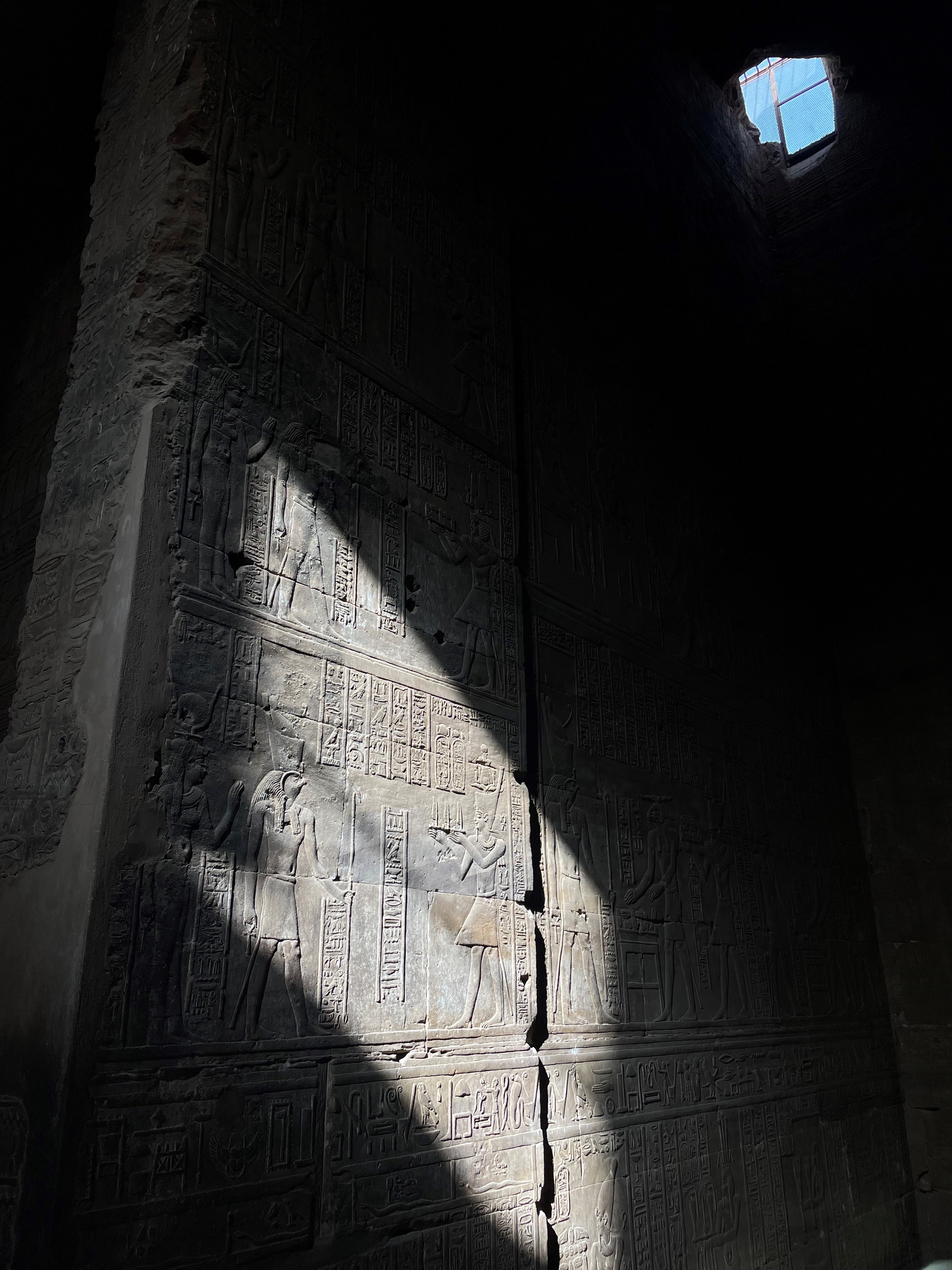
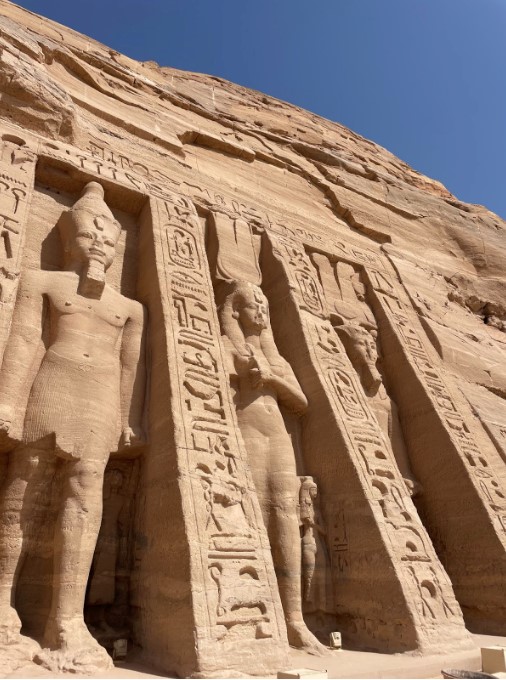
This idea took deeper root over the summer, especially after I visited Egypt. I’ve always been interested in anthropology, but that trip sparked something new in me: an obsession with archaeology. There’s something magical about holding, or even just seeing, an artifact that someone used hundreds of years ago. Imagining their life, their world, their hopes or rituals. In those moments, I feel connected to something bigger: a lineage of humans that came before and will come after. It feels like time folds in on itself.
So I reached out to the Peabody over the summer and asked if there was a way students could get more involved. We came up with the idea for a club, and when I returned to campus in the fall, I asked my friend Elliot Weir to help me lead it. That’s how the Andover Anthropological Society was born.
But the story doesn’t really start there. My fascination with culture and human behavior goes way back. I grew up in a family of nomads—the product of two people who seemed to be in constant motion. I’m an Armenian New Yorker, but I moved to Hong Kong when I was young, then to Miami, and spent years bouncing between Brazil, Europe, and the U.S. These days, my dad is based in Riyadh, so Saudi Arabia feels like another kind of home.
All this movement, this third culture existence, has taught me that “home” isn’t always a place. It’s a mindset, a perspective, a lens you carry with you. It’s made me deeply curious about how people live, how they think, and how history shapes identity. Whether it’s thinking about how Armenians process collective trauma, or how gender roles are shifting in Saudi Arabia, I’m drawn to the stories that sit under the surface. Anthropology, to me, is a way of making sense of it all.
And that’s what the Andover Anthropological Society is about. Yes, we work with artifacts. Yes, we meet weekly at the Peabody and dig into real collections and archival files. But more than anything, we’re trying to connect—to the past, to different worldviews, and to each other.
If you’re someone who finds joy in questioning things, in imagining the lives behind the objects, or in just getting a little lost in the mysteries of human culture, you’re always welcome. The Peabody may have looked quiet last spring, but it’s anything but.
Mortuary Temple of HatshepsutValley of the Kings
The Temple of EdfuTemple of Nefertari
Why some of our members joined:
“I decided to join the Andover Anthropological Society because studying anthropology yields a greater understanding of yourself and the world around you. In the same way that books can inform you on lives you’ve never lived, anthropology enables you to understand cultures you have never interacted with, providing perspective on your own culture and appreciation for others’.” – A.J. McQuide ‘26
“I am a junior [9th grader] from Miami, and I joined the Anthropological Society because I am interested in learning and understanding how human societies and cultures develop. I was inspired to join this club by my visit to my country-of-origin, Armenia. In Armenia, I traveled across the country visiting and seeing historical landmarks and ancient artifacts. This visit sparked a desire to understand what role these places and items played in my ancestors’ lives as well as other peoples’.” – Sebastian Djerejian ‘28
“I am an upper [11th grader] from North Andover. I knew that the Peabody was an amazing resource with many Native American artifacts that I had never seen before. I wanted to explore these collections through the Andover Anthropological Society.” – Elliot Weir ‘26
“In middle school we had a guest speaker come in to talk about how humans developed technologically, and to me that was such an interesting idea. How did we discover so much of what we know? So, for a long time, I have been interested in anthropology but hadn’t had any spaces to pursue it, which is why I was happy to join the anthropology club here at Andover.” – David Frahm ‘26
“I am a new upper [11th grader] from Verona, Italy. I joined the Anthropology club because I wanted to develop skills to be able to identify artifacts more efficiently. I’m especially interested in exploring how specific objects were used differently across the United States, and what they can reveal about the daily lives of the people who made and used them.” – Amelie Piergentili ‘26
“I am an upper [11th grader] from London, UK, and I am thrilled to say that I am a part of Andover Anthropology club. I frequently looked at the Peabody Museum as an incredible resource that I longed to explore – Anthropological Society gave this to me.” – Isabella Mazzi ‘26
“I am an upper from London, England and was always interested in History and discovering how we got to where we are now. I love connecting with different cultures and meeting new people interested in the same things I am so the Anthropology club offered an incredible way to do just this.” – Katerina Browder ‘26
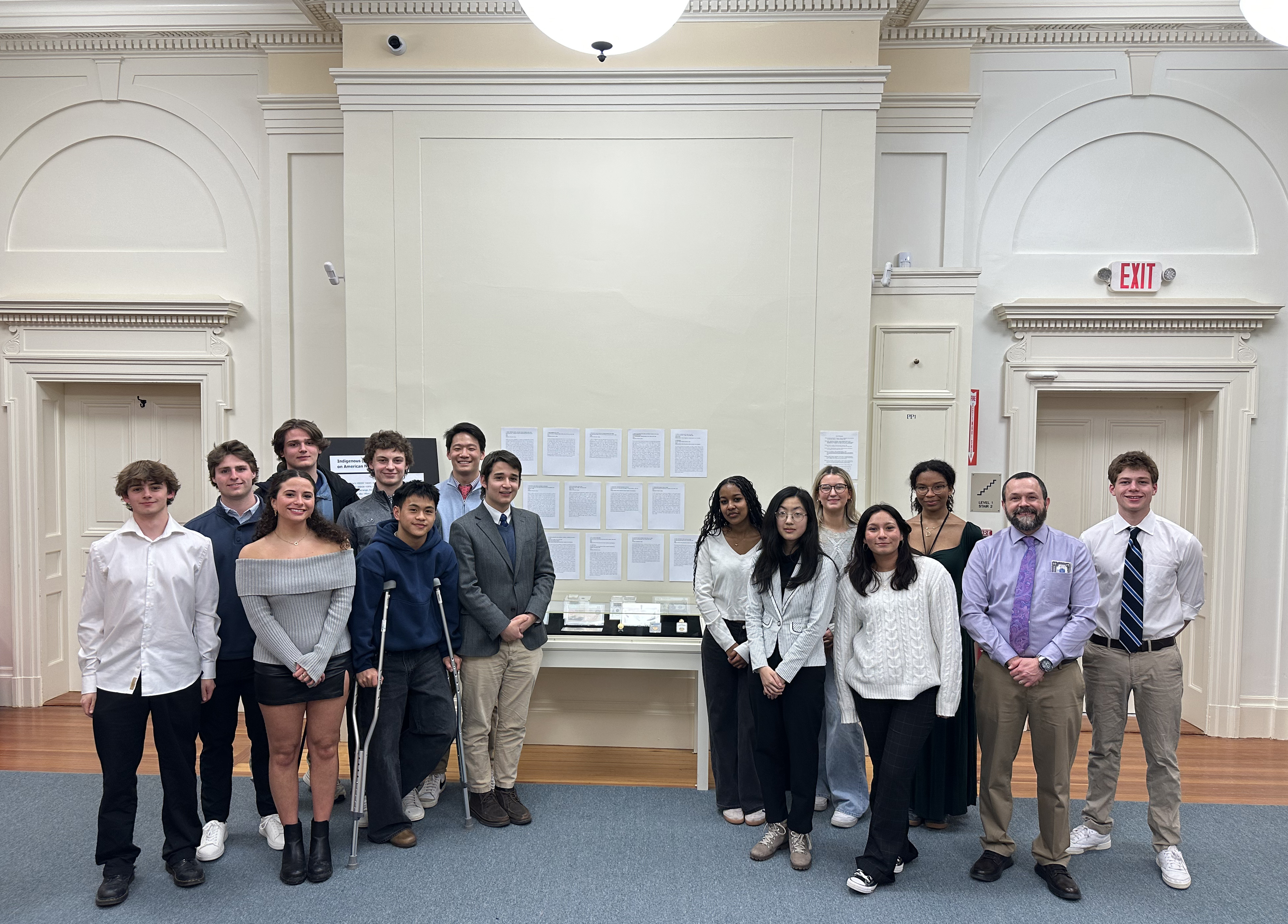
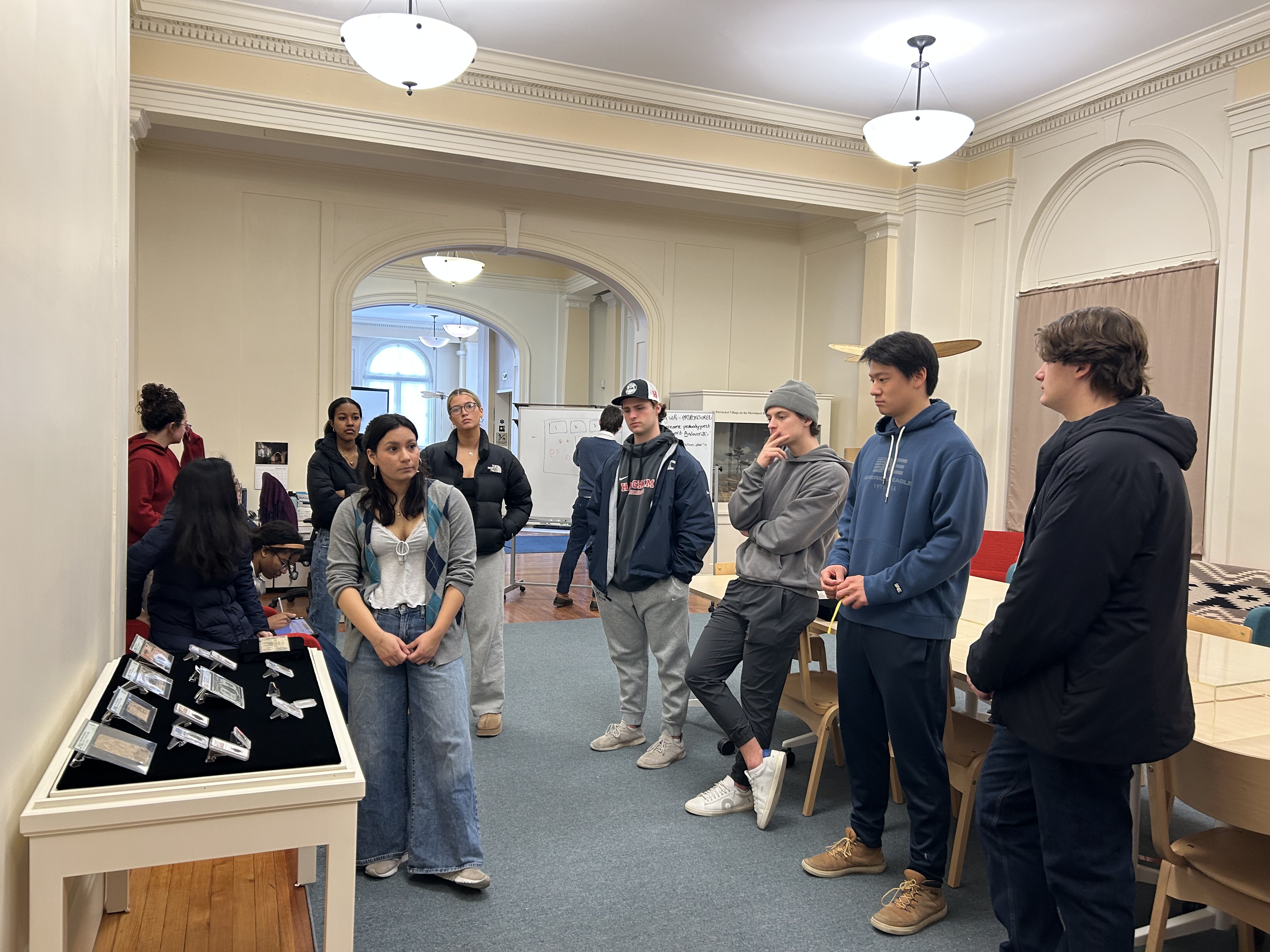
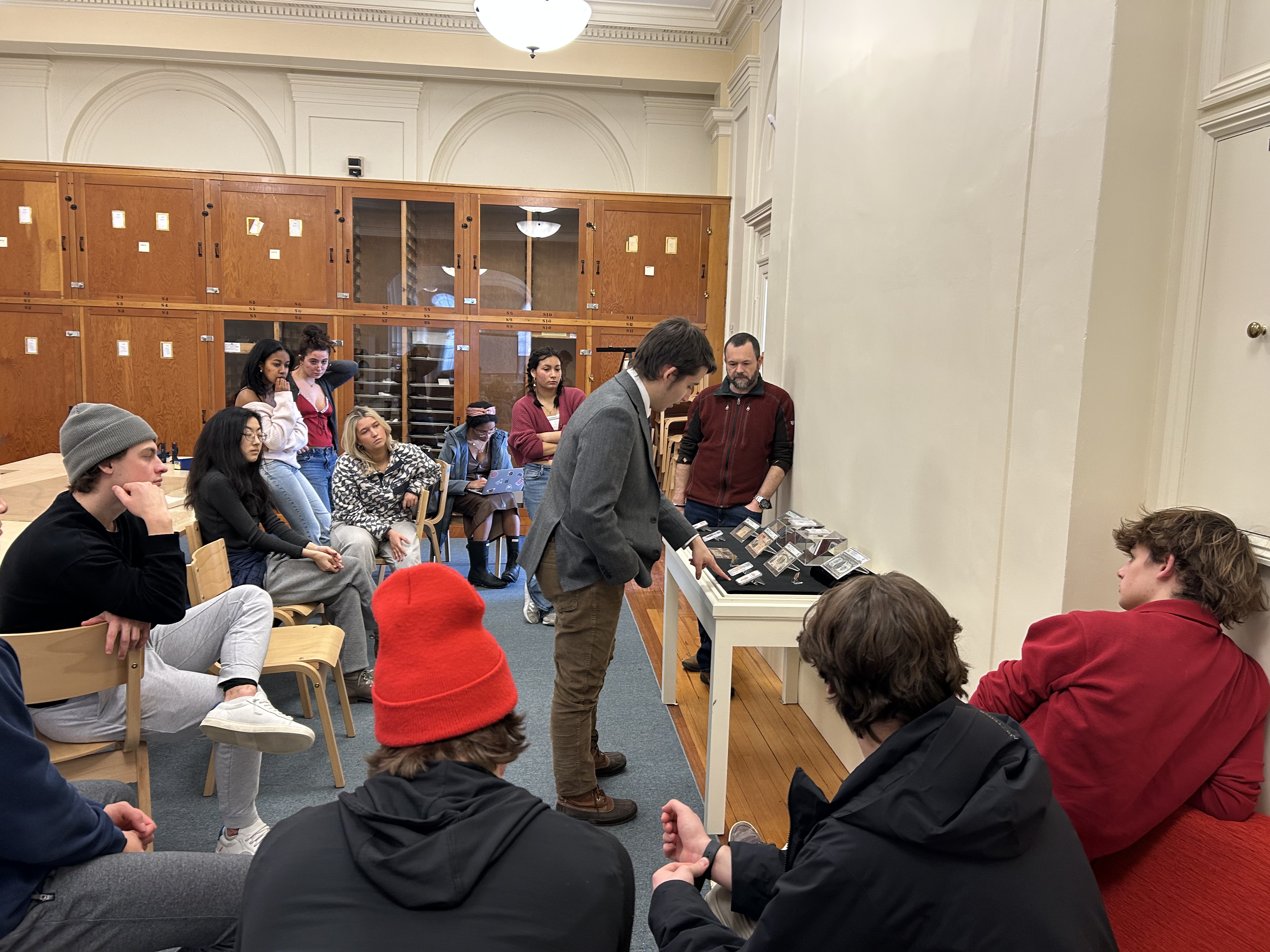
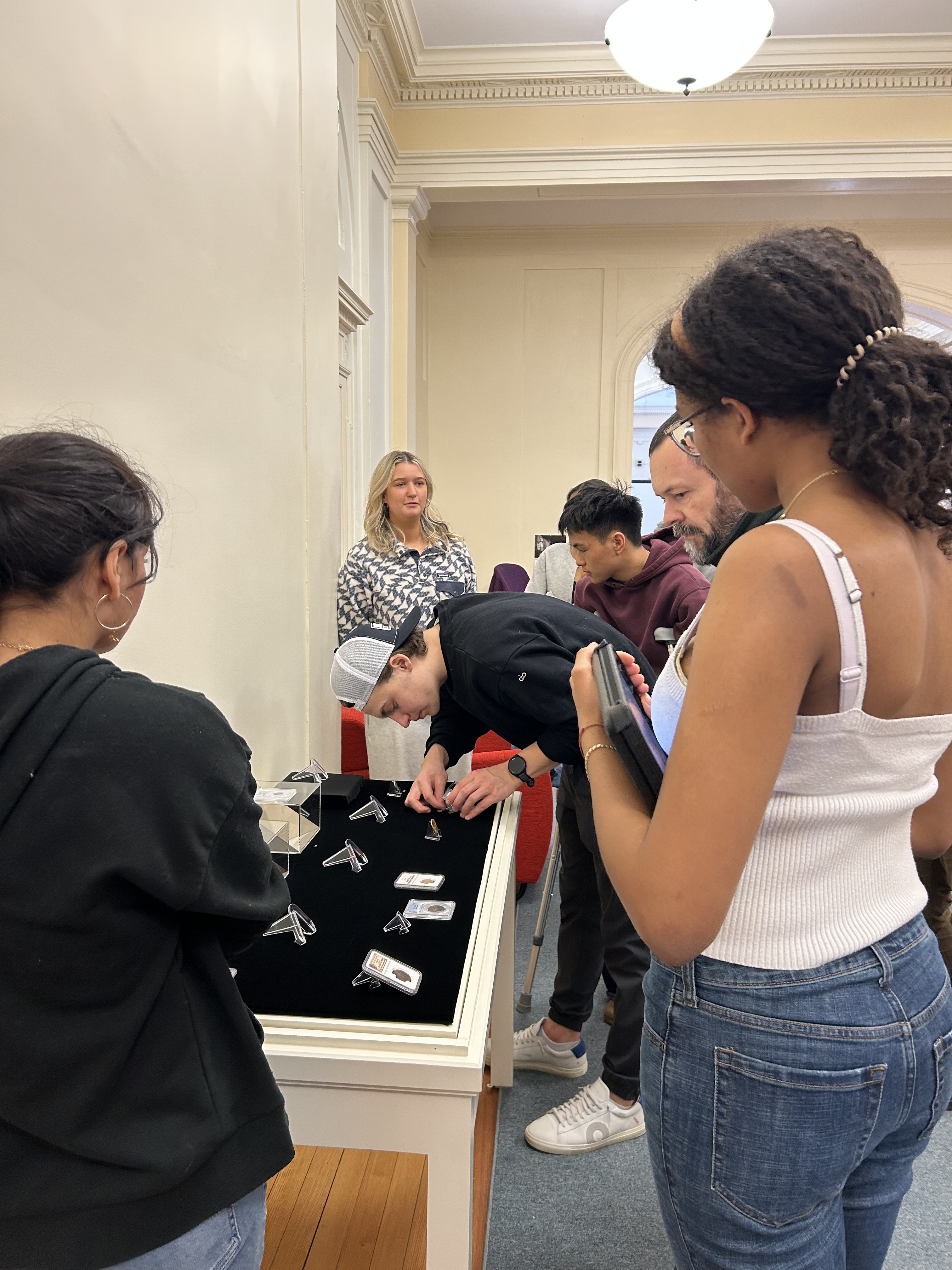
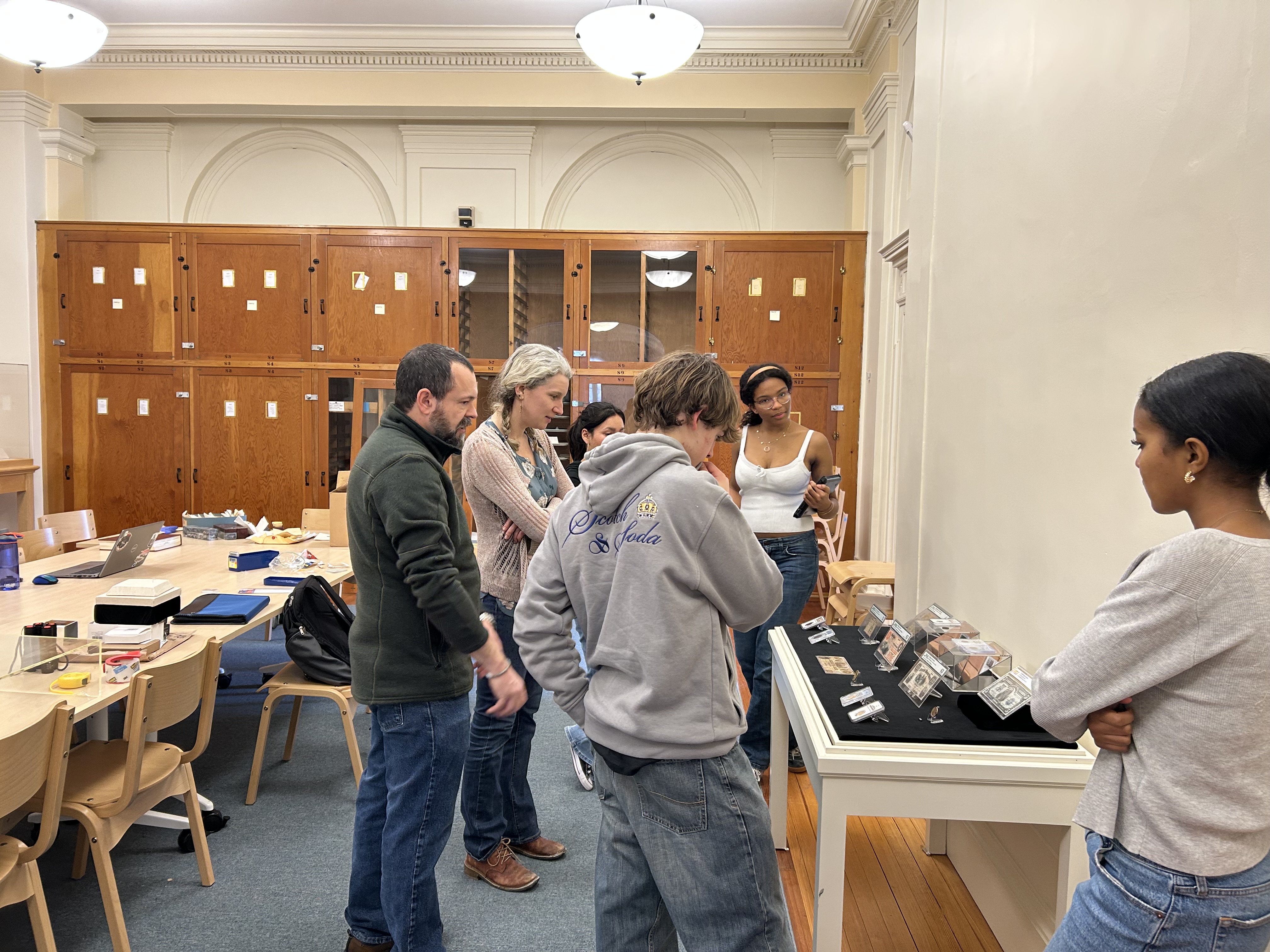
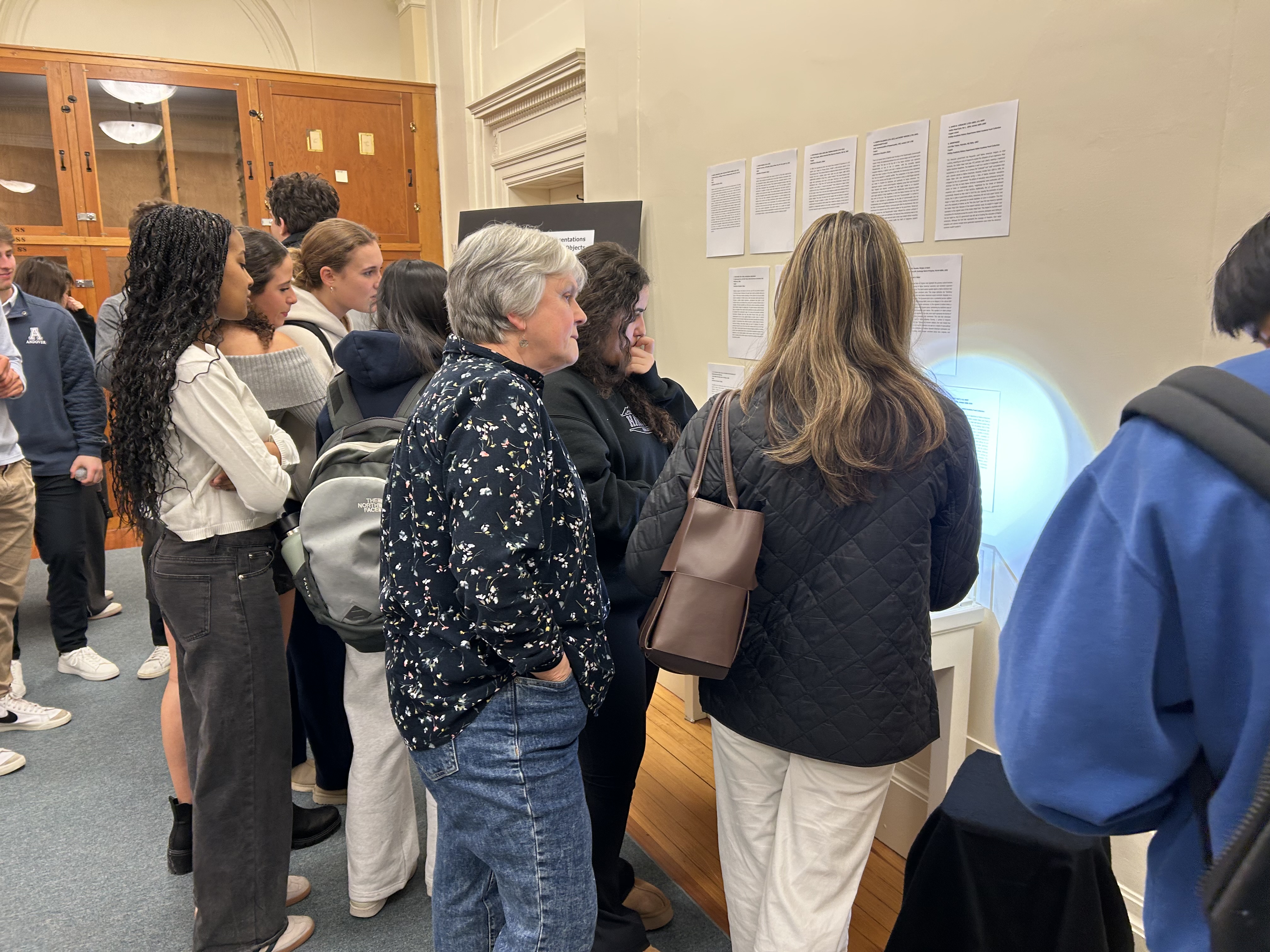
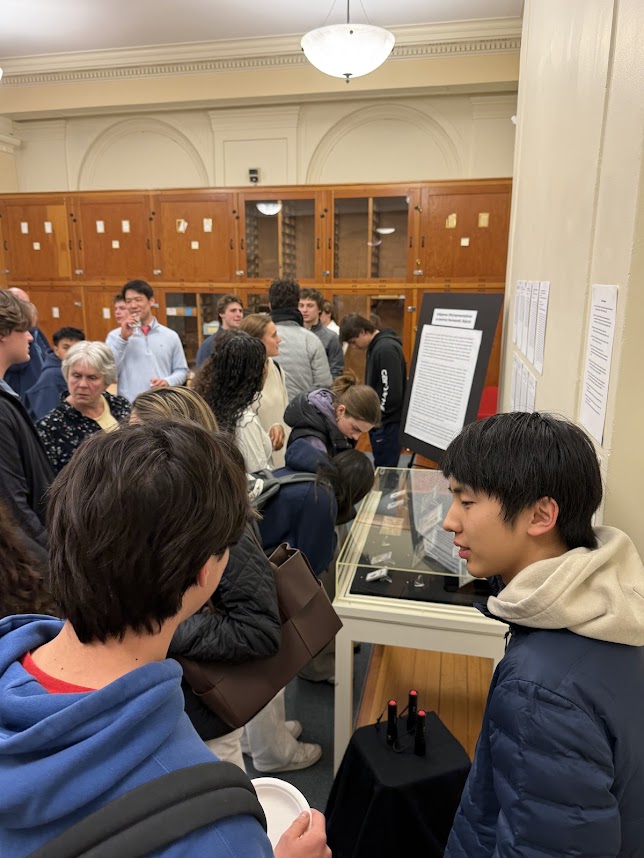
The Peabody Institute is currently host to the exhibit “Indigenous (Mis)representations on American Numismatic Objects,” displaying items from the History and Social Science department, the personal collections of Donny Slater, and the hard work of the students in his class HSS507: History in Your Pocket – American Stories, Ideals, and Economics as Told through Coins and Currency.
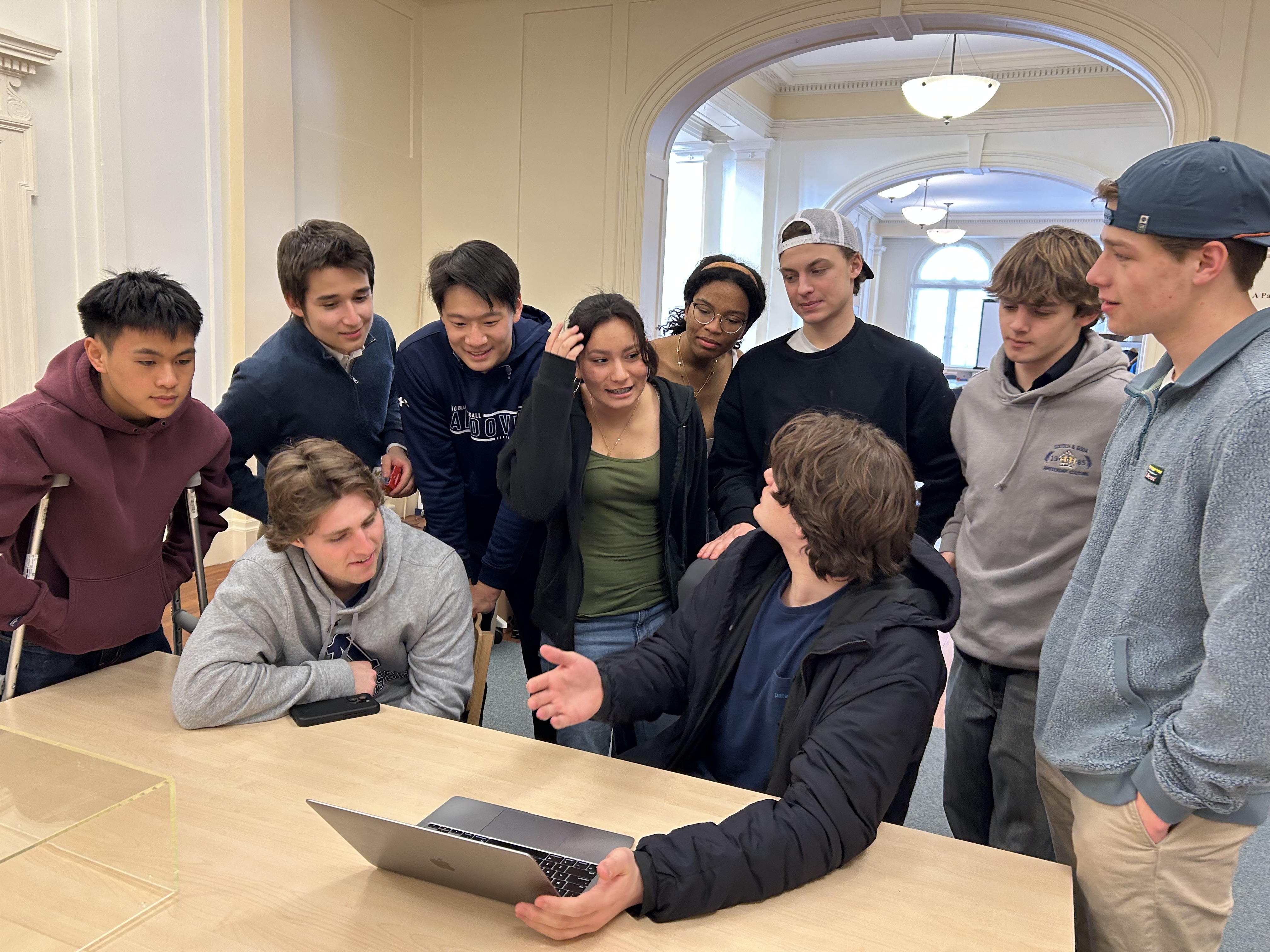
Combining historical investigation and close examination of the images depicted on American coins, bank notes, and tokens dating from 1744 to 2000, Donny’s students connected the use of Native American iconography on these objects of exchange to efforts to build a national identity that hid the violence of Westward Expansion at the country’s core, choosing this as the story they wanted to share with the Andover community. While the Peabody provided the class with the space and the display case, all the work of the design and installation came from the students themselves.
Everyone was deeply engaged in the process, and the results speak for themselves.
The exhibit will remain up through Alumni weekend, ending June 9, 2025.
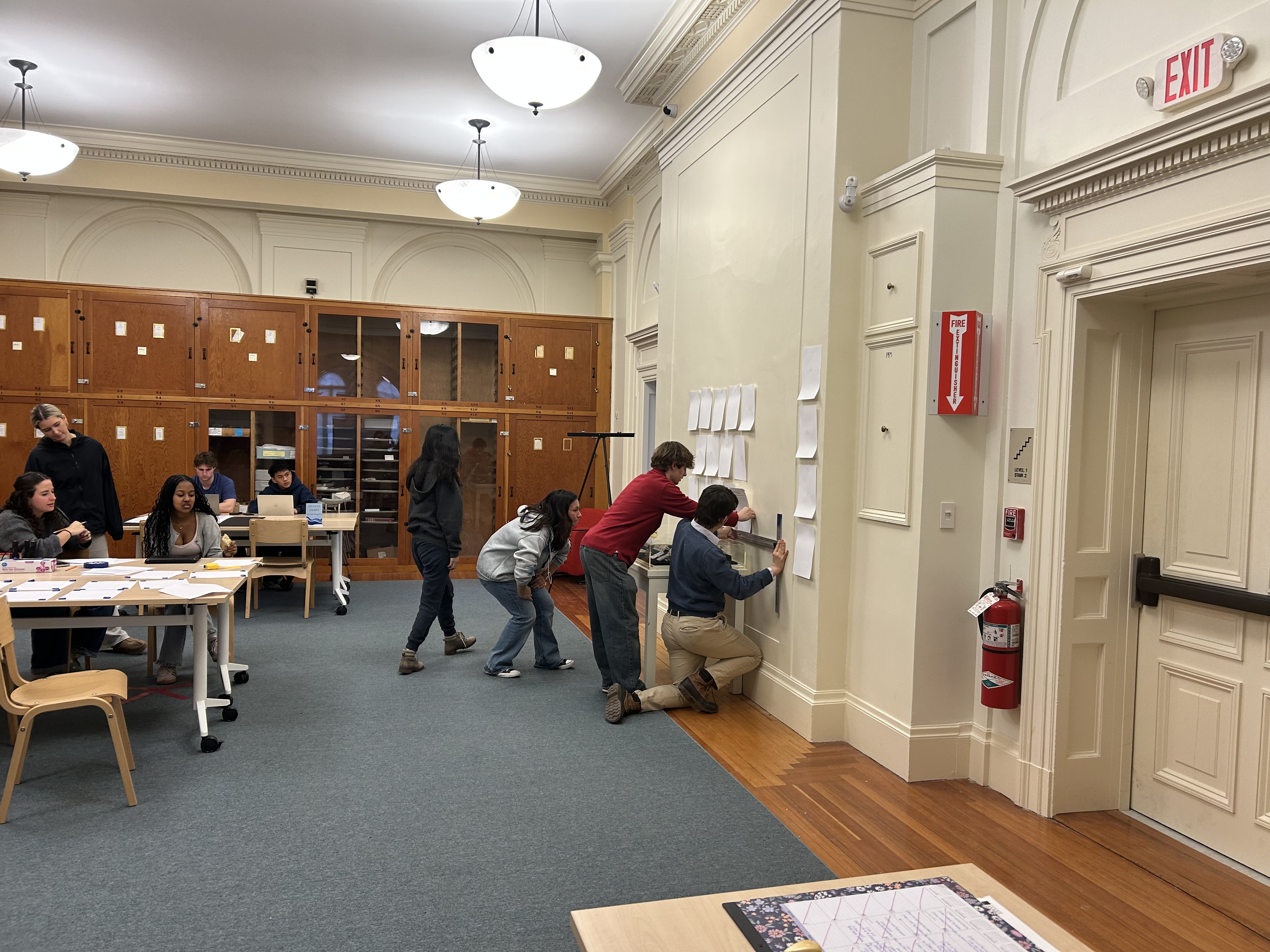
Pre-installation day 1: finding the layout to match the narrativePre-installation day 2: debating and finalizing arrangementInstallation day 1: setting the caseSelecting that just-right sans serif fontSharing with fellow-coin enthusiast Elena Dugan (PhilRel)Installation day 2: mounting labels and finishing touchesOpening night!
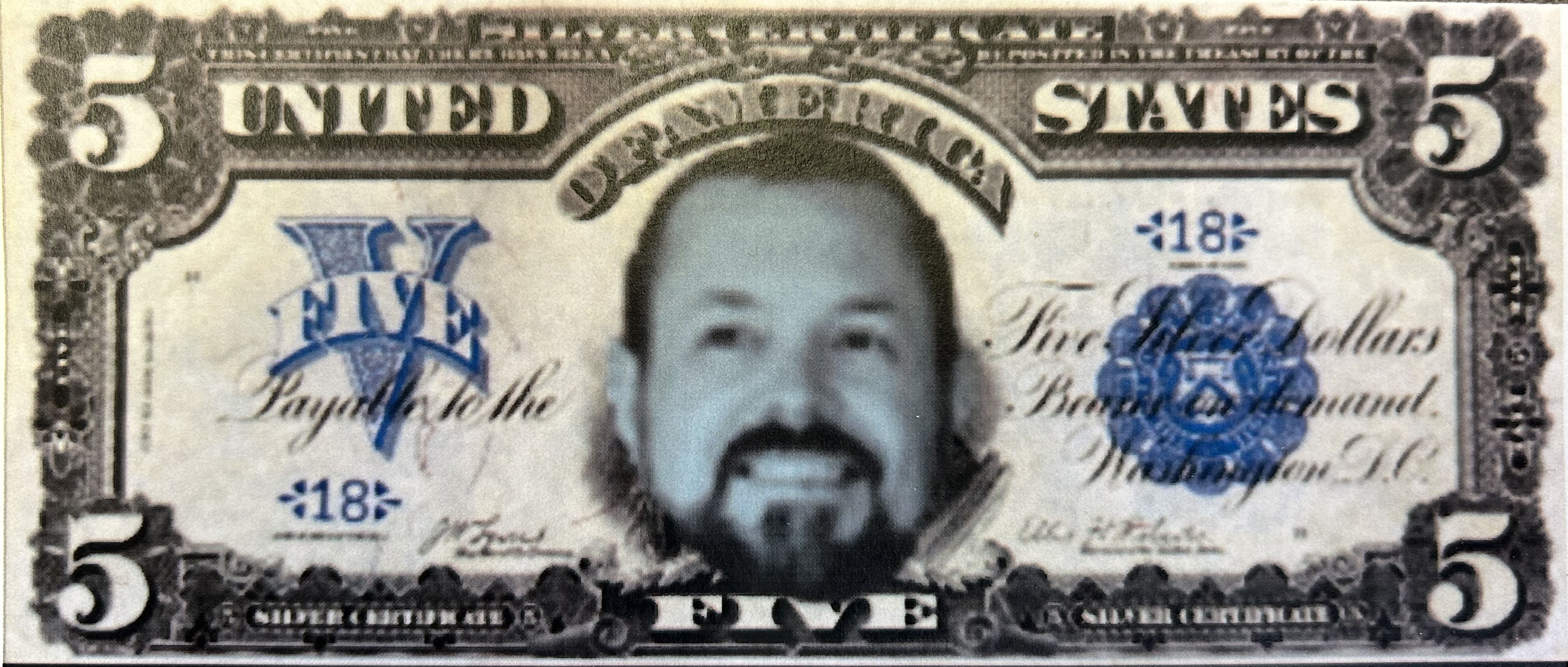
Student (Mis?)representations of Their Teacher Donny Slater
Mark your calendars! PA Giving Day is Wednesday, March 26, 2025!
PA Giving Day represents a critical milestone in our fundraising efforts for the Peabody. Last year we raised 65% of the Peabody’s annual support from 57 donors in just one day. This year our goal is to exceed previous success by engaging even more PA alumni and friends of the Peabody in this collective day of giving.
For those inspired to give early, please visit the PA Giving Day page here! Please be sure to select the “Peabody Institute of Archaeology” under the “designation” section. Any gift made in advance of the event will count toward PA Giving Day totals.
This year we hope to have more match challenges and even more support! Be sure to follow our social media on PA Giving Day for some inspiring posts from students who have been impacted by the Peabody.
A Dialogue Between Director for Advancement Initiatives, Jennifer Pieroni, and former Peabody Institute Work Duty student and current Peabody Advisory Board member, Ben William Burke ’11.
Archaeology isn’t just about uncovering and studying ancient items—at Andover, it’s about shaping a more informed, ethical, and engaged society. By learning archaeology, Andover students gain experiences to understand the world better, think critically, and contribute meaningfully to the future by better understanding the past.
At a recent Peabody Institute meeting, I met Ben William Burke ’11, whose enthusiasm for the Peabody was inspiring. As a new member of the Andover community, I wanted to understand why the Peabody had left such an indelible mark on Ben and why he continues to support it today.
By email, Ben shared: “As a work duty student at The Peabody, I received unparalleled access to its extensive collection and cultural immersion programs. These experiences brought me face to face with — and taught me the value of — perspectives different from mine. In those moments, I was challenged to understand before correcting, to empathize before judging, and to build on the past in a way that respects it.”
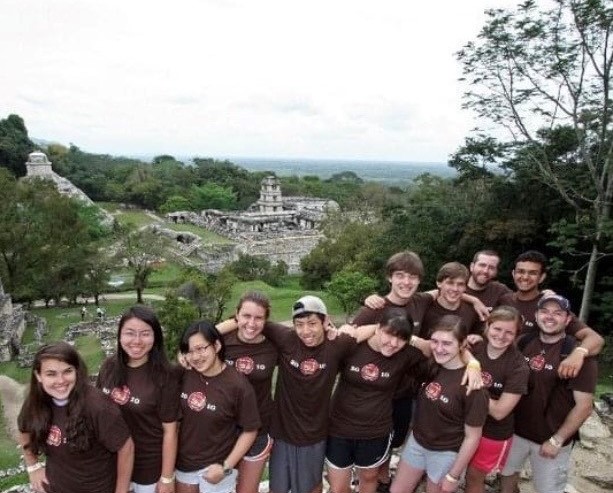
Ben Burke ’11 (Back row, third from the right) on the BALAM student trip. This was a multi-week cultural immersion and archaeological adventure through the greater Yucatán Peninsula sponsored by the Peabody Institute.
Today’s Andover students gain the transformational learning opportunity of being a part of an organization that leads in the field of repatriation and reflects Non Sibi by teaching students that archaeology is not just about personal discovery but about responsibility: to the past, to descendant communities, and future generations. Through hands-on study, students engage in meaningful, ethical work prioritizing respect over self-interest.
Ben noted, “There is not an avenue in my life that isn’t positively affected by The Peabody’s lessons in empathy and respect. I support The Peabody because I understand the value in learning to value other’s perspectives – especially when they are different from my own.”
Supporting the Peabody means investing in education that shapes responsible scholars and professionals. By supporting the Peabody with an annual gift, you can help elevate a place where teaching and learning are deeply connected to respect, collaboration, and cultural preservation. Join us in ensuring that the study of archaeology serves our Andover students and also society as a whole.
Among the newest student clubs on offer to the Phillips Academy community as of this term is the Andover Anthropological Society: a group of students of superior intelligence who recognized ahead of their peers that doing research with cultural materials is incredibly fun, and an excellent use of one’s free time.
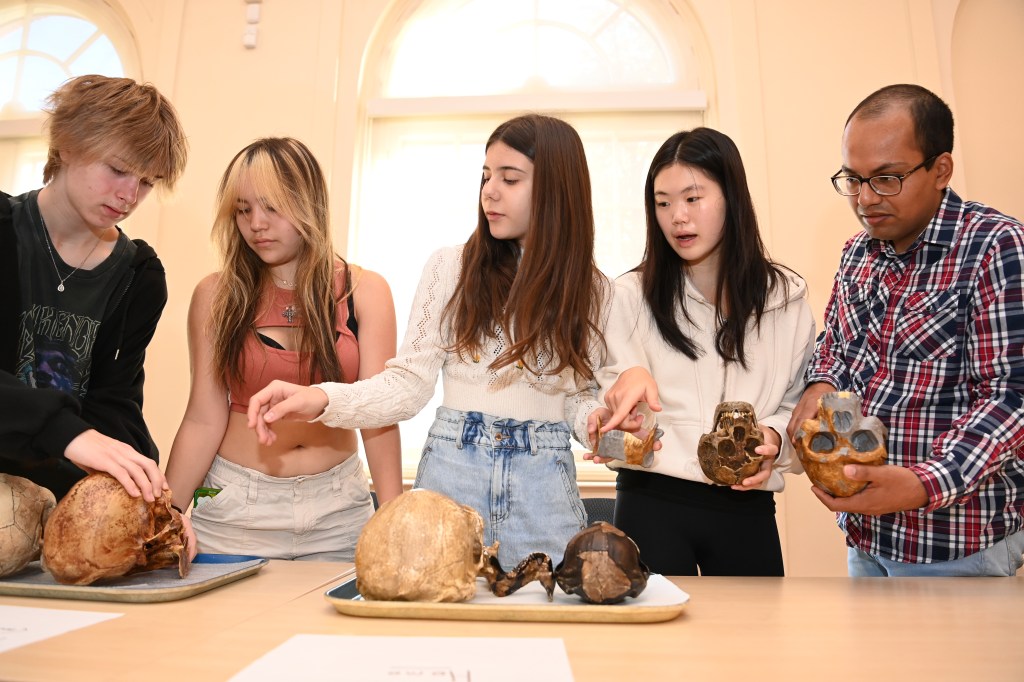
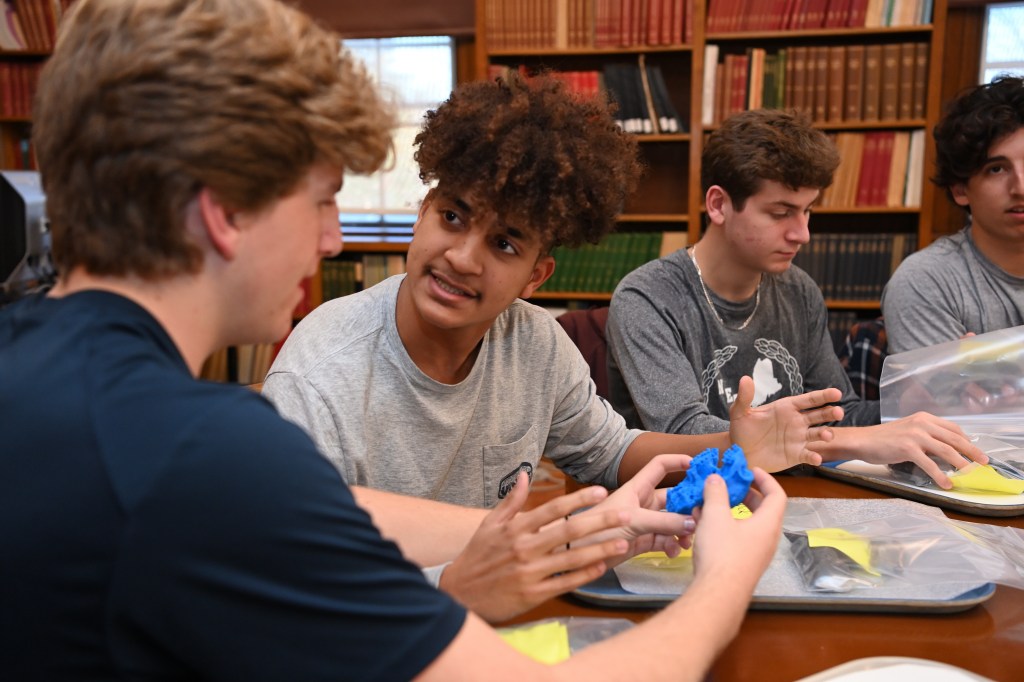
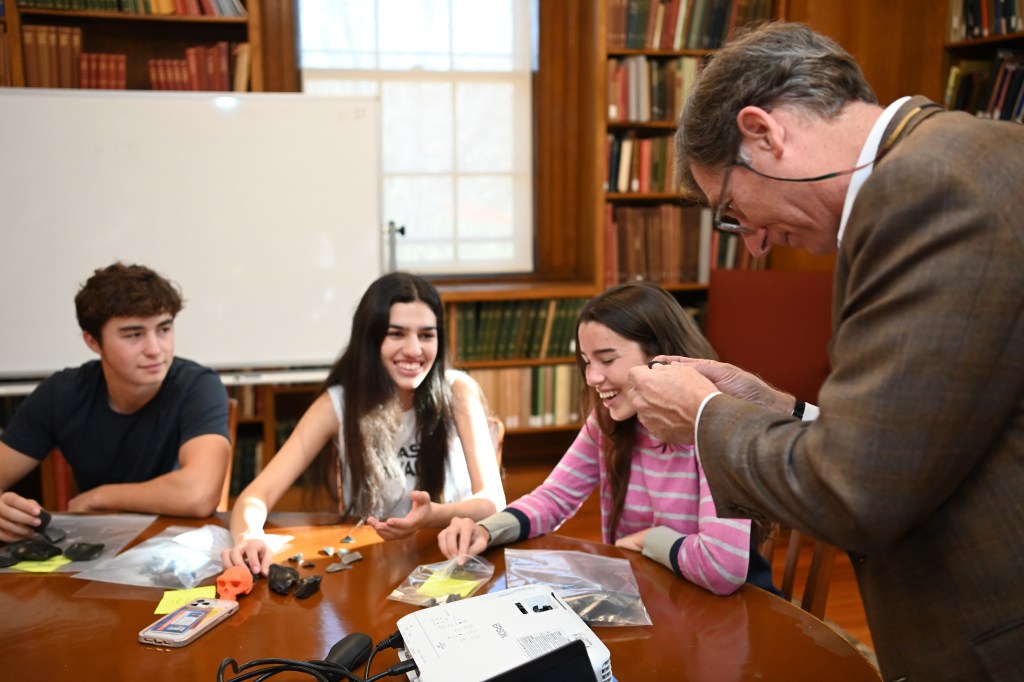
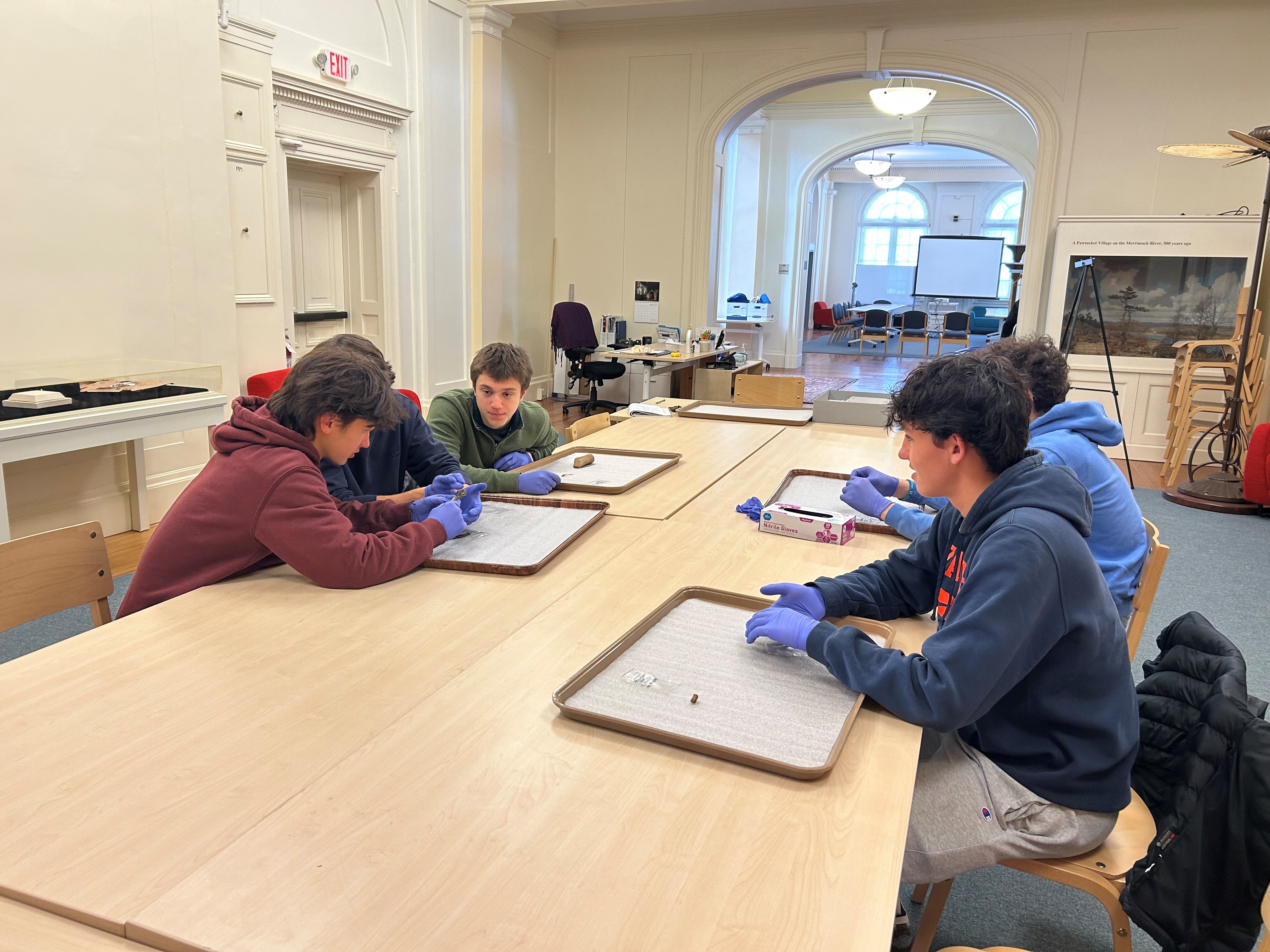
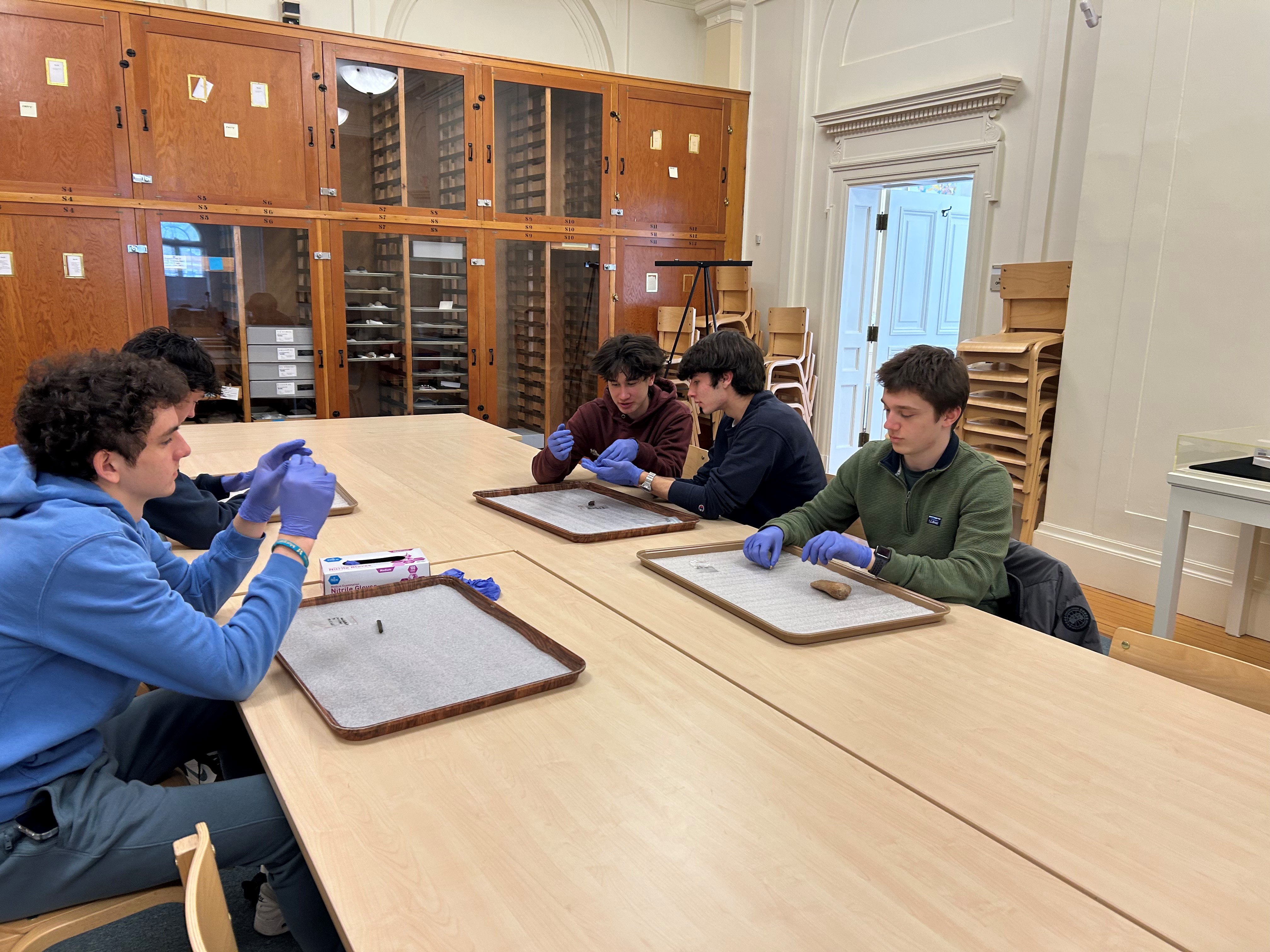
Now with a membership of ten, club members selected as their inaugural project an accession of Arctic materials surface-collected by Patricia Hume near Utqiagvik (previously Barrow), Alaska during six summers between 1959-1969, and donated to the Peabody Institute in 1998. Meeting weekly at the Peabody, so far the AAS has received collections handling training and begun to build direct experience doing close-looking analysis of cultural materials; perused the Pat Hume accession file and visited storage, doing archival research AND learning some basics of museum practice (I’m very efficient); learned about the Bureau of American Ethnology and delved into 20th century ethnographies from the region (thank you, OWHL reference librarians!); and started to explore various themes and approaches for their group project. These have included connecting collections to Iñupiaq language, exploring notions of gender and household structures, and questioning anthropological terms like “effigy” to build more robust interpretations of people’s material expressions of spirituality and religion – just to name a few.
AAS members closely examining “household” items from the Pat Hume accession and debating whether I was messing with them in my claims for what they were. [Not pictured: all the female members of the club. I promise it was just unlucky they had to leave before I could take any photos…]
Whichever direction(s) the club ends up taking, what they learn will enter into the Peabody’s database, enhancing our own understandings of these collections here and the ways in which we’ll be able to connect others to them in the future.
I happen to have the privilege of serving as faculty advisor for this club, and it has been a joy getting to know these students, and having them teach me about Iñupiat culture. Bookmark this blog and stay tuned to learn more about the AAS from the AAS itself!
For the past two years, the Peabody has been dealing with an endlessly noisy neighbor. Falls Music Center, a new home for music at Phillips Academy, has been under construction since early 2023.
The noise started early in construction as a massive mountain of dirt was excavated from the building site. Next came the drilling for the geothermal wells. We could feel the vibrations in the ground as the wells reached 500 feet deep in an effort to maintain PA’s commitment to sustainability. Alas, despite our repeated (yet playful) requests, we were not allowed to sift through the back dirt to look for pieces of Phillips Academy history.
Over the next months, the building rose behind us and carried all the sounds of construction as the steel frame went up and carefully crafted practice and performance spaces were built. Most spaces within Falls Music Center are acoustically separated to isolate noises and capture the most “live” sound possible. The sounds were a constant background to much of our work moving back into the Peabody after our building project.
My favorite discovery during the construction was that the window in the main stairwell of the Peabody looks directly into the glass stairwell of the Falls Music Center. I have to admit that more than once I tried to wave at the construction workers. Unfortunately, no one waved back.
Towards the end of 2024 the fences around Falls Music Center came down, the sidewalks were repaved, the grounds were cleaned up, and the sounds diminished. I can’t say that we have missed them, but we definitely notice their absence.
Now, Falls Music Center is open to students and I look forward to a new type of noise – the stray notes from the incredible student musicians and sound of increased student presence in our little corner of PA.
Last month we were delighted to welcome back Ramson Lomatewama to Phillips Academy Andover (PA) where he worked with students and campus community members in fused glass workshops.
Ramson Lomatewama is an award-winning Hopi glass artist, kachina doll carver, jewelry maker, and published poet from Hotevilla, Arizona. This is his second year working with the Peabody Institute to bring fused glass workshops to the PA campus community. Ramson has also participated in various virtual, and in-person talks at PA, sharing his poetry, art, and life stories with students and the broader public. You can view these virtual talks on our Peabody YouTube page.
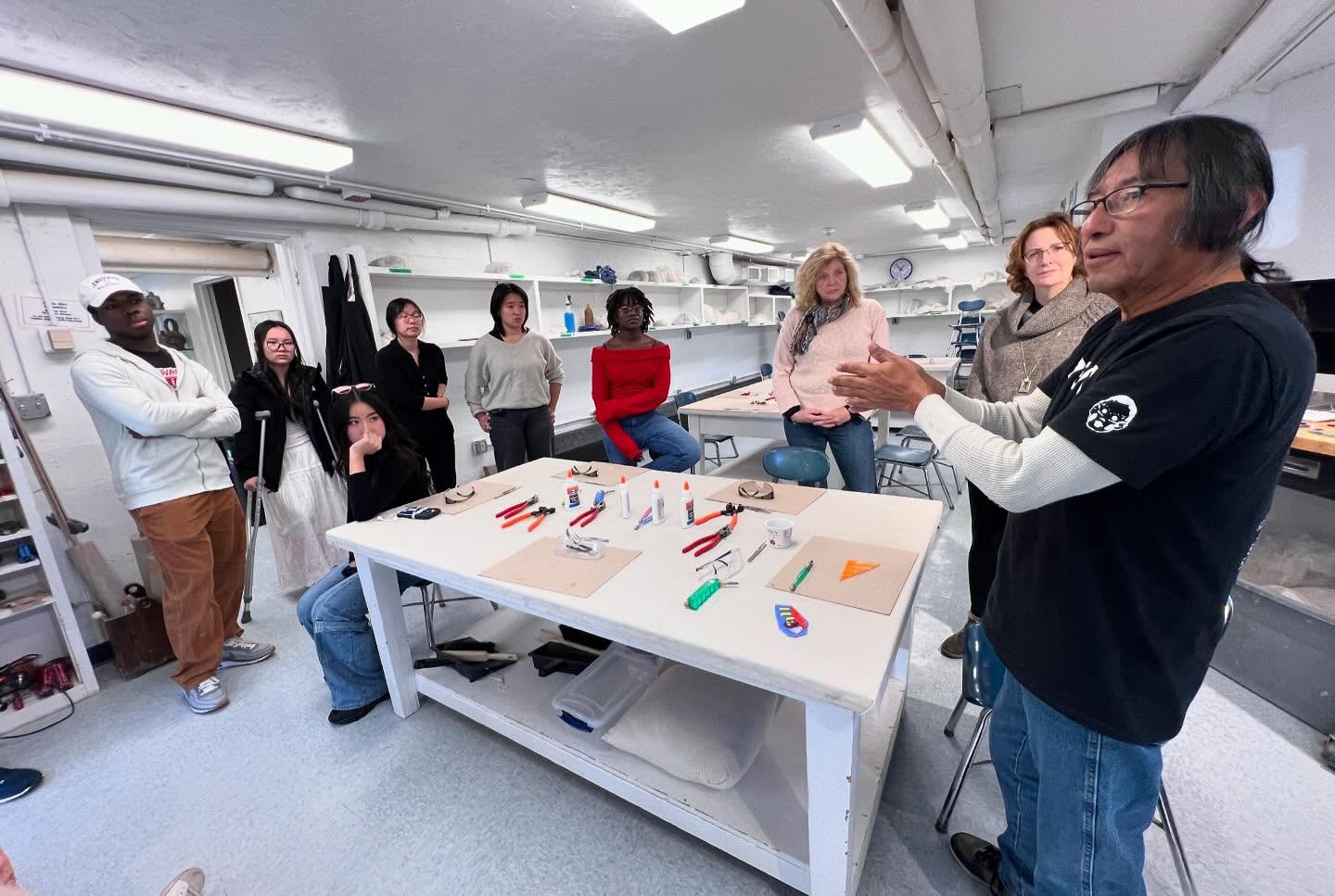
Ramson speaking to one of the fused glass community workshops.
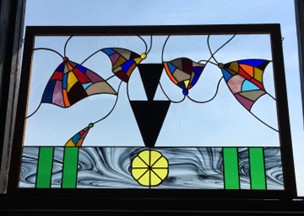
Ramson creates stained glass, blown glass, and fused glass art. Ramson’s glass art is viewed as “a contemporary expression of ancient and artistically rich people… evoking a beautiful, yet humbling mindscape which we all long to find.” He is the first hot glass artist from the Hopi Tribe. Ceremonies and cultural activities continue to play a major role in his life. He has showed works at the Santa Fe Indian Market, the Museum of Northern Arizona, Fusing Traditions, a traveling exhibition, and the San Diego Museum of Man (now known as the Museum of Us).
Stained glass artwork by Ramson Lomatewama.
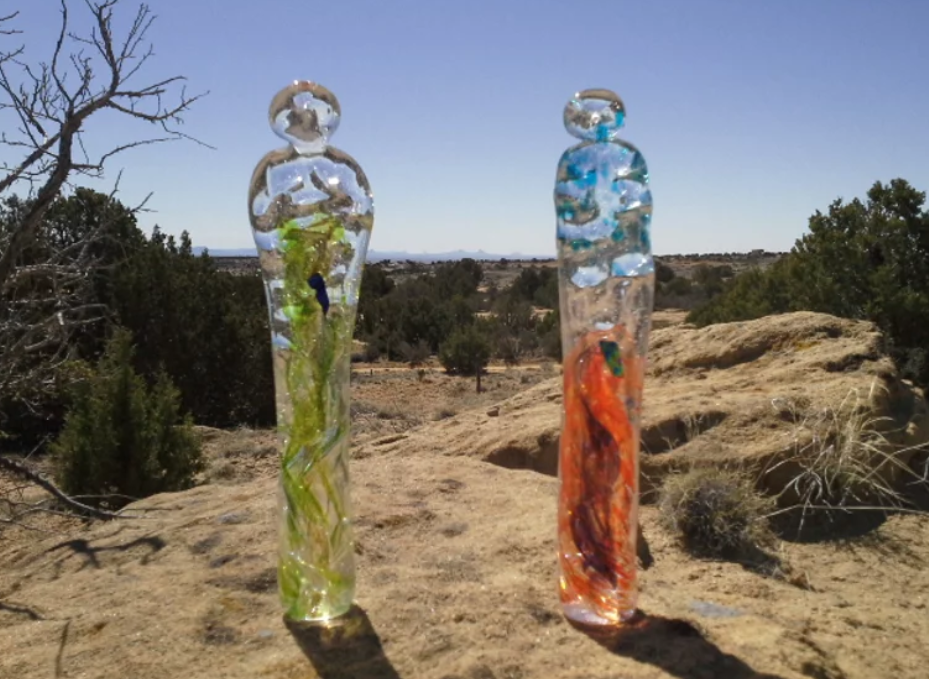
Blown glass ‘spirit figure’ sculptures by Ramson.
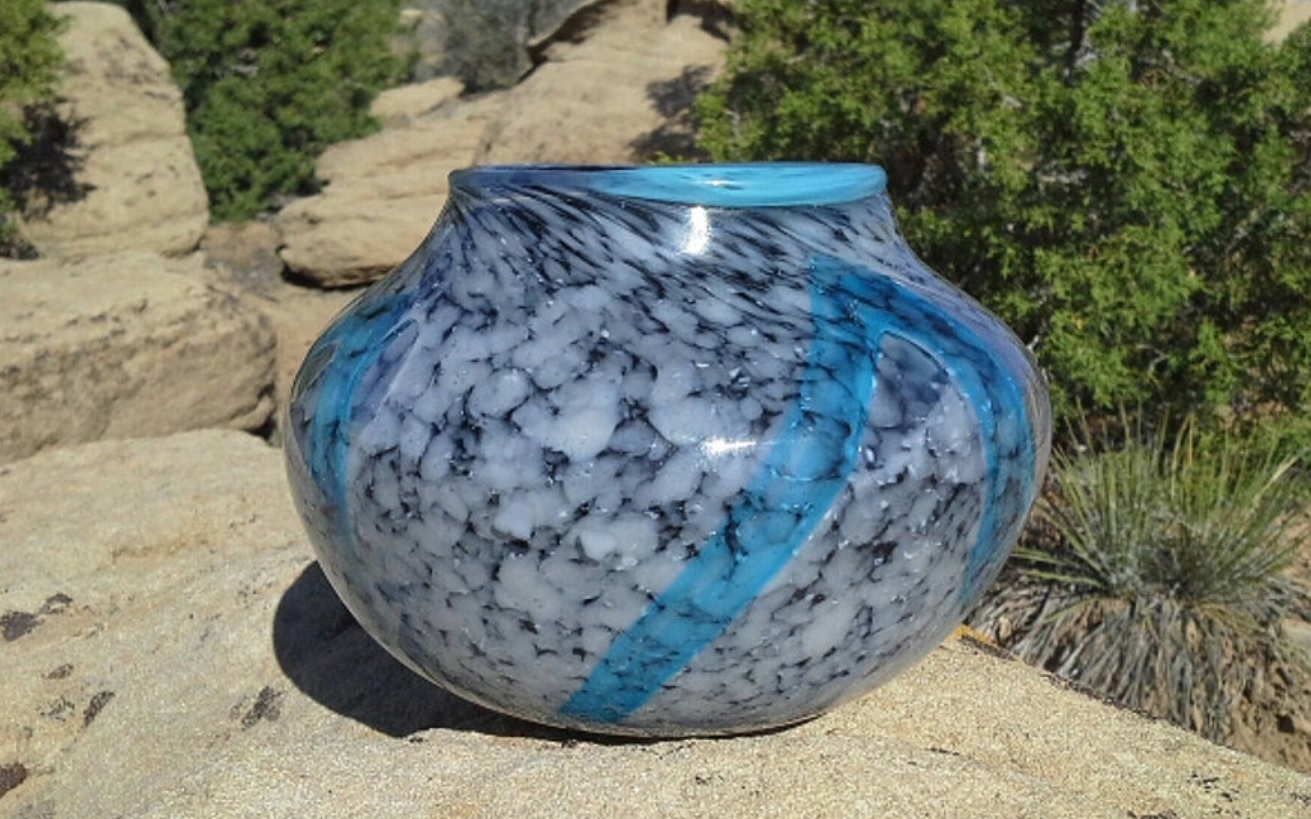
Blown glass vessel by Ramson.
Ramson is an educator on several levels. Early in his career, he was a middle school and high school teacher, and for many years, served as adjunct faculty at North Central College in Naperville, Illinois. Ramson also taught glass art for Hopitutuqayki (The Hopi School), an arts apprenticeship program located on the Hopi reservation. Ramson’s studio, Hotevilla Glassworks, is the first and only Hopi owned working glass studio. Check it out here!
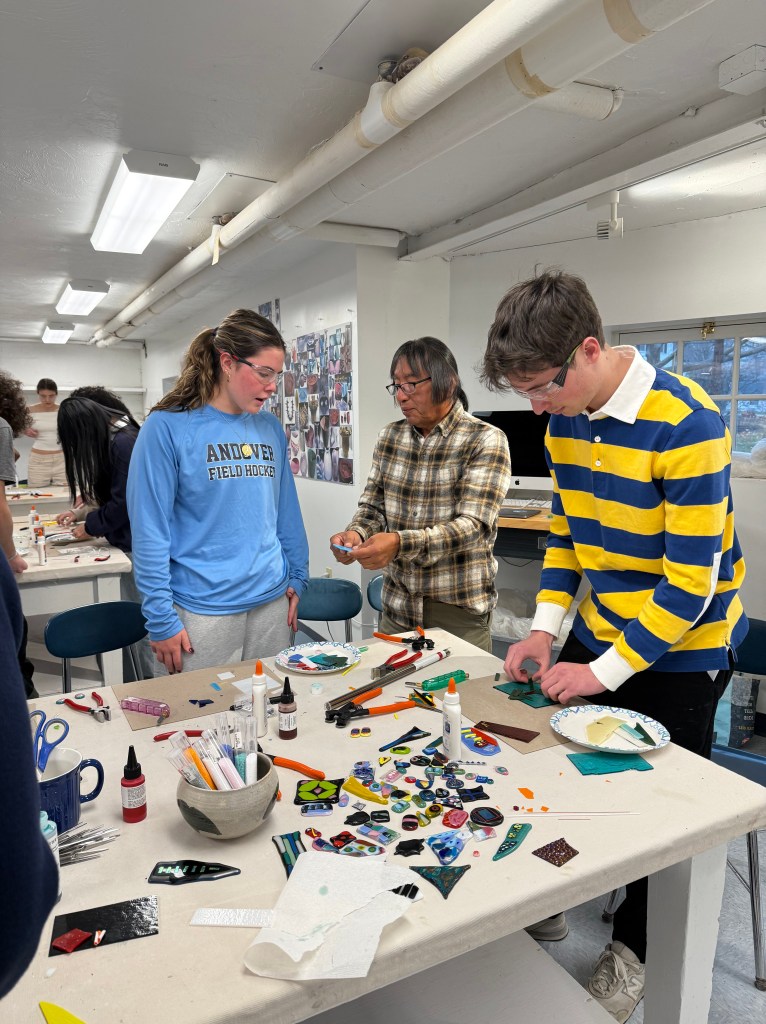
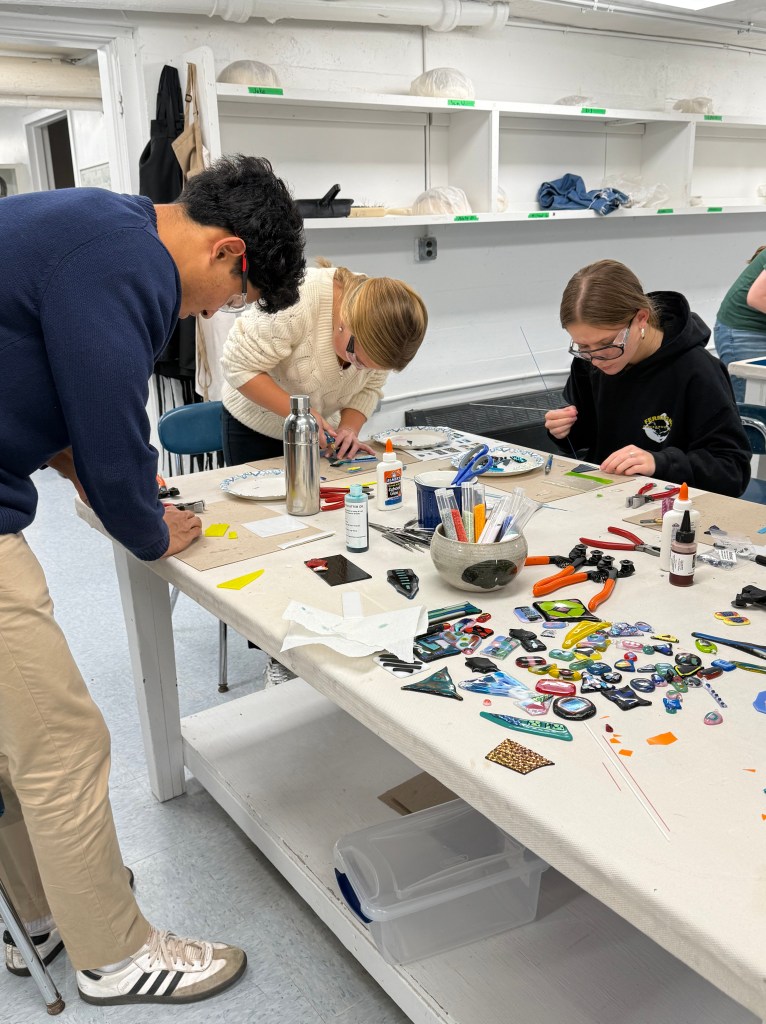
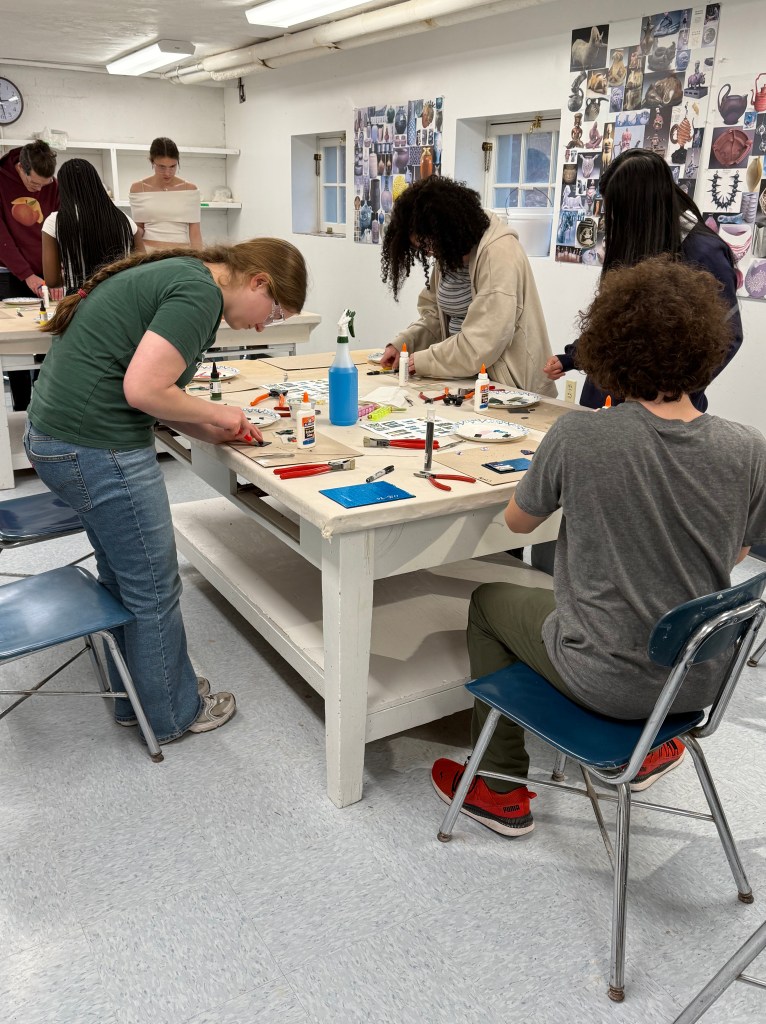
Students at work, creating their own fused glass pieces in their class workshops.
Working with fused glass seemed a little daunting at the beginning of the workshops, but a quick demonstration by Ramson with helpful instructions gave students the courage and motivation to dive in. The plethora of glass pieces to work with – stringers, millefiori, frit, swizzle sticks, dichroic, and ribbons – came in many shapes, textures, and colors. Students worked side by side creating their pieces of art, asking Ramson questions about his techniques and listening to stories about his life and art journey.
“Working with fused glass, you need to be prepared to forfeit control…” was Ramson’s important insight that would hold true from assembling our glass pieces to the final kiln firing of our pieces. No matter the shape or size of your glass piece – after firing – it would melt down to around 6mm thick. Ramson calls this the “6mm rule.” I found it best to go into a fused glass design with no plan, as your final product would tend to come out a little different from what you’d imagine… most of the time it would look even better!
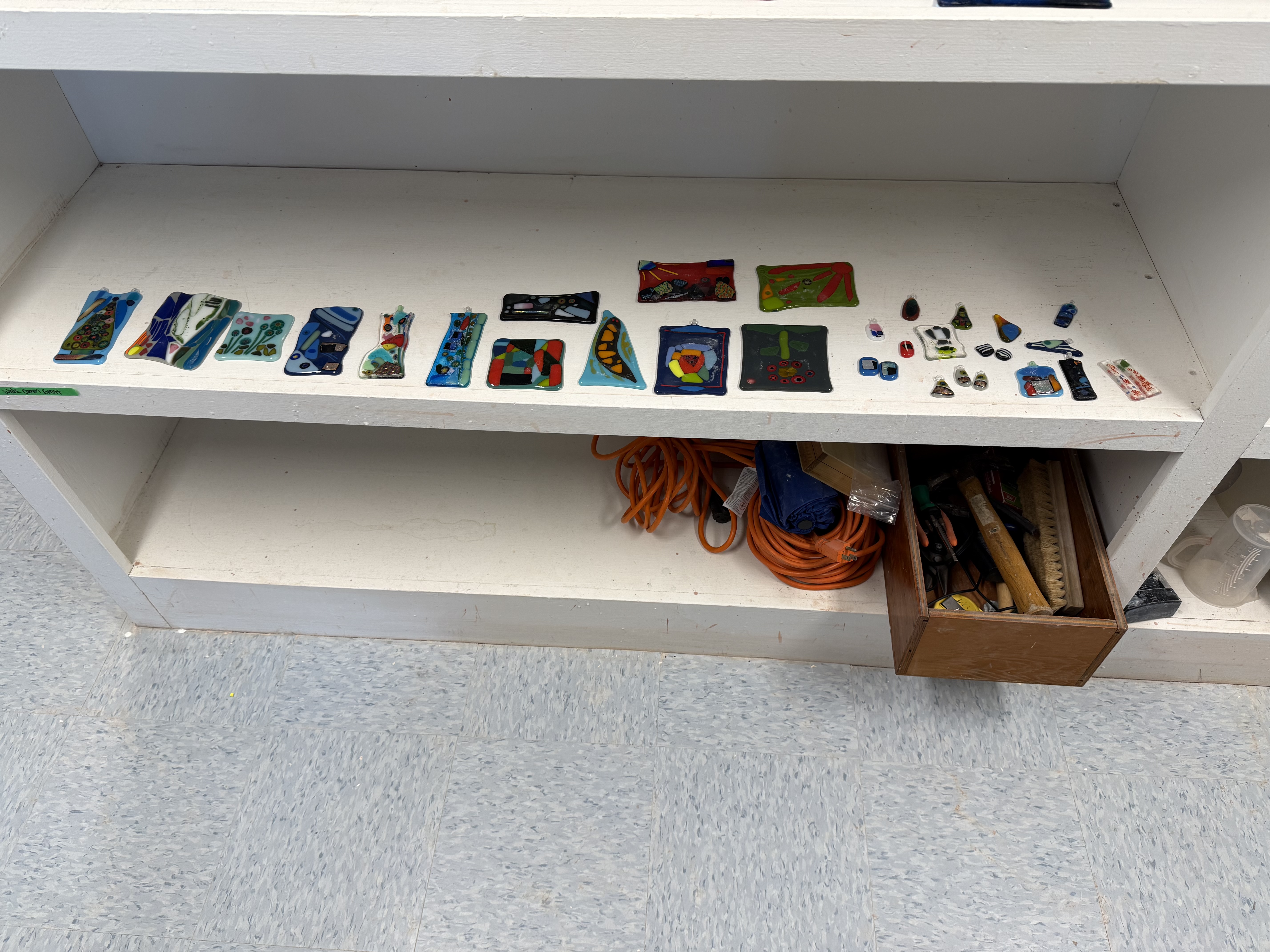
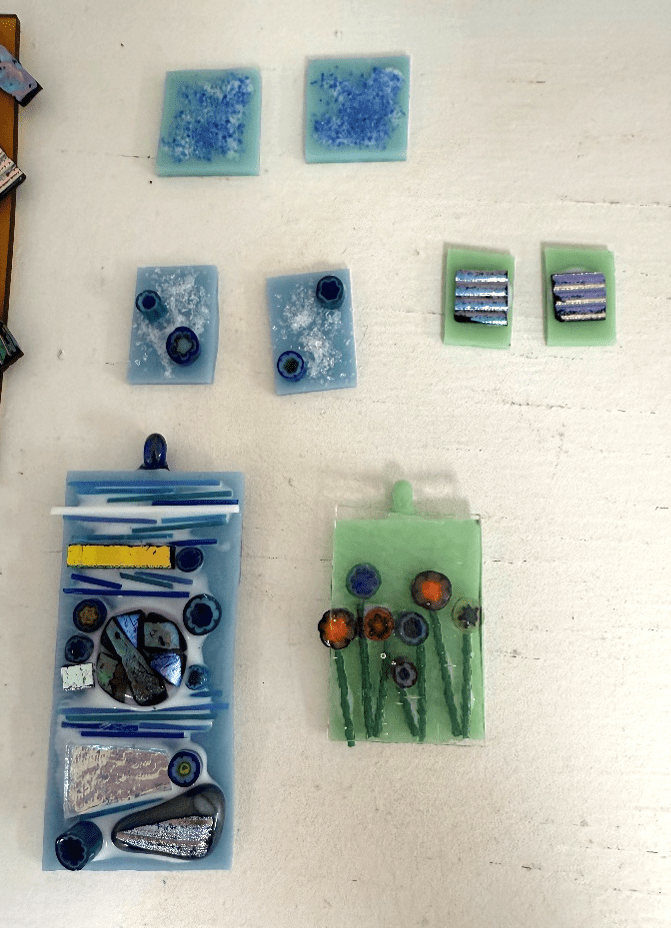
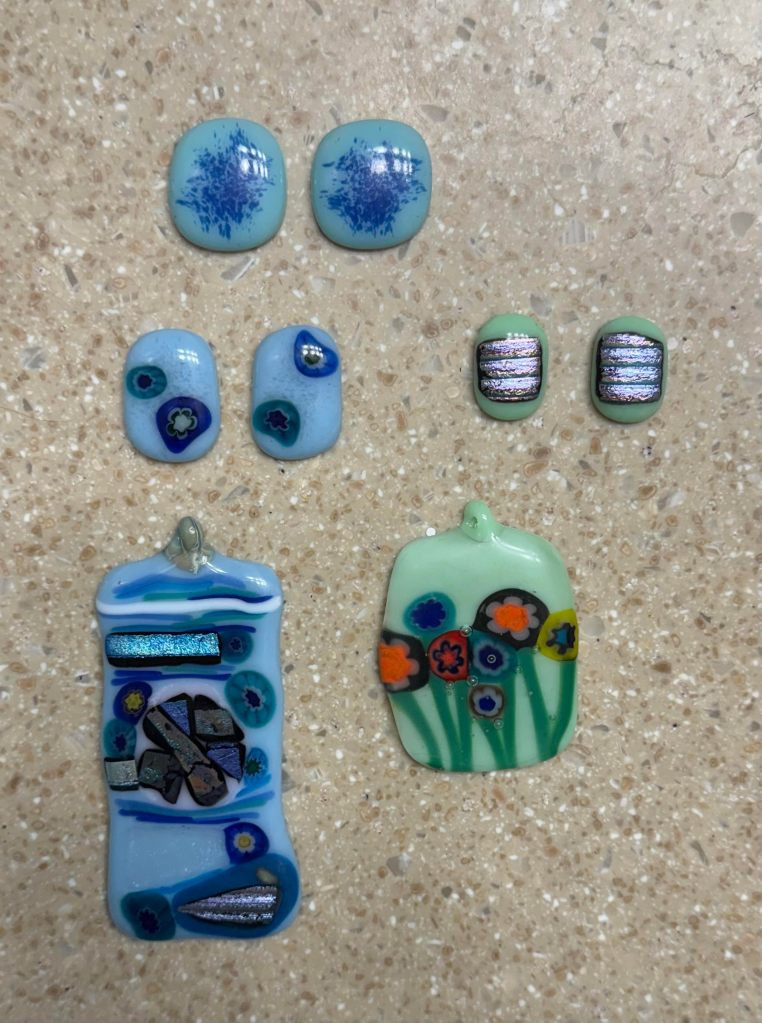
This year I created two pendants and (hopefully) some pieces to assemble into earrings. You can see my “before and after” photos of my glass pieces at the end of this blog. In the meantime, see below for some finished pieces by PA community members.
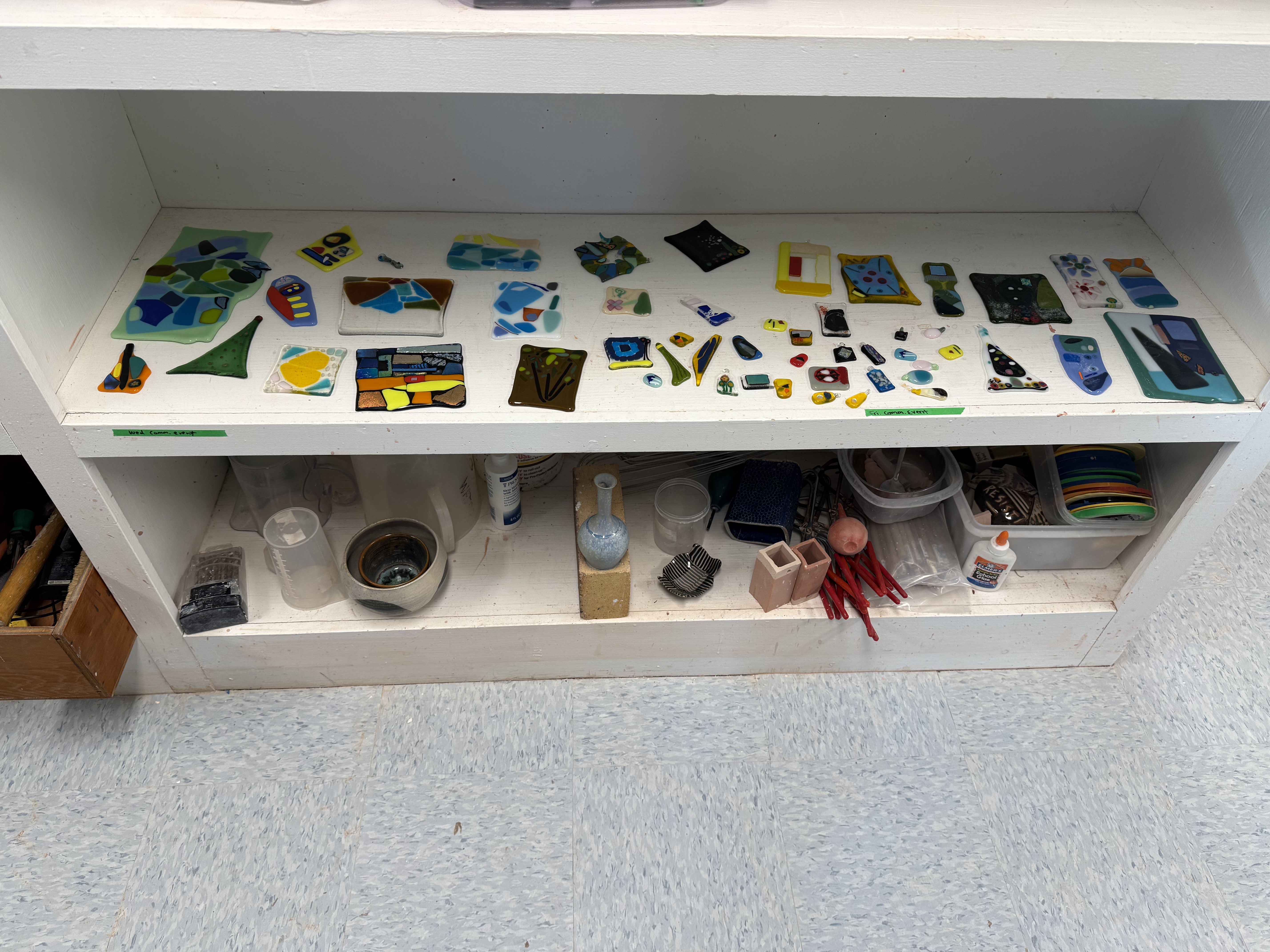
Finished fused glass pieces from the PA community workshops.
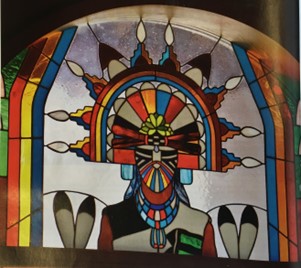
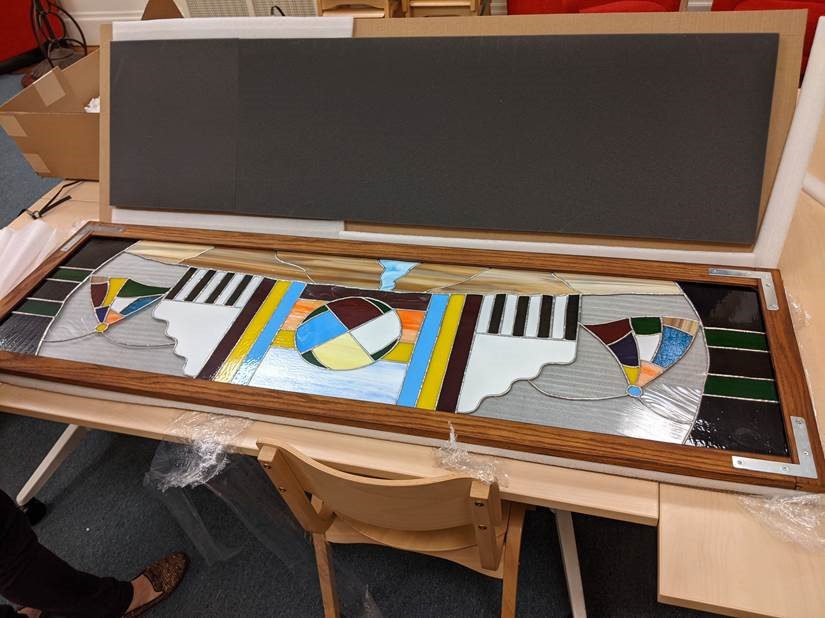
We are very fortunate to have acquired a stained-glass piece that Ramson created for the Peabody. We look forward to completing its installation in the Peabody’s front transom window once the next iteration of the building renovation is complete.
Ramson’s stained glass piece, commissioned by the Peabody.
We are very grateful for the time that Ramson dedicates to working with and educating our PA students and campus community! We hope to have him back next year! For more information about Ramson and the PA fused glass workshops, check out this article by the Andover Magazine (i.e. page spread #10-11, Digging Deeper article).