Sitting on my office shelf in a red binder is the Peabody disaster plan. No institution ever wants to use it, but it is essential to be prepared. Our plan is in need of its regular update, and fortunately for us, the Addison Gallery of American Art (also part of Phillips Academy) hosted a three-day seminar and full-scale emergency response disaster training for the protection of cultural assets in March. Over 100 people took part in the workshop, including several members of Peabody staff.
The workshop included presentations from conservators, companies who specialize in disaster clean-up, and organizations that can help think through the disaster plan with us. We learned the basics of painting conservation, how to mitigate water damage, how to dry/salvage wet books and papers, and how to identify and deal with pests in the collection. Training stations were presented so that we could try all of these methods ourselves and have the opportunity to ask specific questions relating to our own collections.
Triaging damaged books from the disaster scenario.
Faux smoke damaged gallery during disaster scenario
Packing damaged books from the disaster scenario.
Marla and Rachel prepare for a disaster
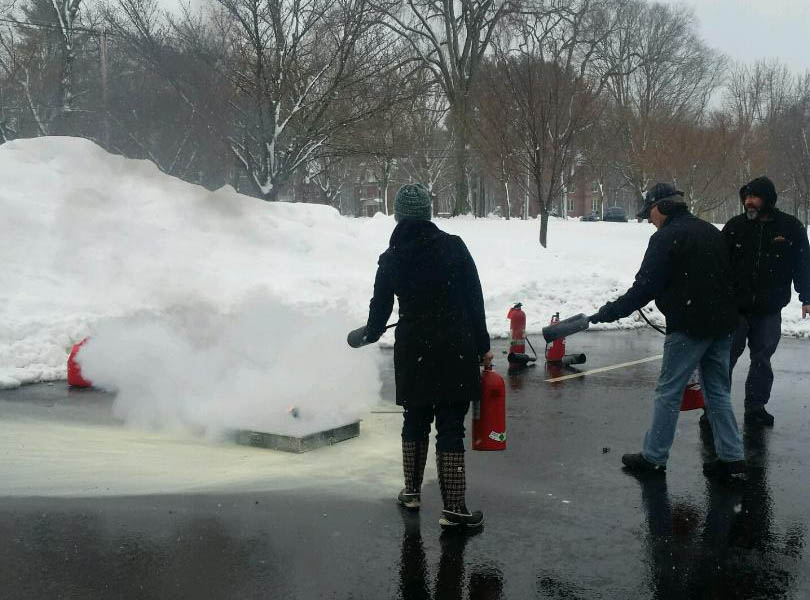
That’s me in the hat using the fire extinguisher
The big highlight for me was the triage scenario meticulously installed at the Addison. The Addison repainted one of their temporary galleries to appear smoke damaged, and they displayed pieces of art that had been previously damaged to replicate how fire damage may present itself in a museum. As a team, we were given only 10 minutes to remove the damaged artwork (without additional damage!), set up work flow to begin cleaning objects, and isolate the most damaged pieces. This was fun and realistic.
Now comes the hard work – applying all of this new knowledge to our own disaster planning process.
The emergency response and disaster planning workshop was generously made possible by a grant from the Abbot Academy Fund, continuing Abbot’s tradition of boldness, innovation, and caring.
We were fortunate to receive a generous gift from Phillips Academy trustee and Peabody Advisory Committee member Peter T. Hetzler MD, FACS (Class of 1972) in December 2017 that allowed us to purchase several important books to add to our library.
One of these is the very rare, privately published volume Birdstones of the North American Indian by Earl C. Townsend, Jr. Published in 1959, Townsend’s book was limited to 700 copies. A reprint edition was released in 2003 by Steven Hart, but these are also scarce and hard to find. Both the original edition and the reprint can be quite expensive, if you are lucky enough to find one. Townsend (1914-2007) was an attorney and founding member of the Indiana Archaeological Society, as well as an avid collector of Native American artifacts, cars, and artwork. According to Townsend’s obituary, he was honored by the Black River-Swan Creek Saginaw Chippewa Tribe with the name Senee Pen Eshee Na Na, meaning “Birdstone Man.”
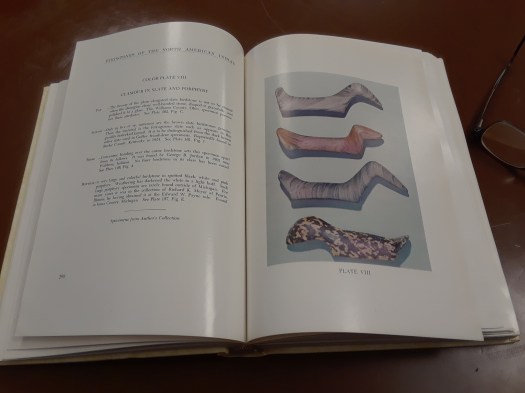
One of the color plates in Townsend’s Birdstones book, showing some of the variations in color and material found among this artifact type.
Townsend’s preface begins with a reference to Warren Moorehead, the Peabody’s first curator, who “spoke of the need for specialized volumes, each devoted to one particular form of prehistoric North American Indian relic.” Moorehead insisted that the province of archaeologists was the study of material culture and he urged his contemporaries to abandoned reconnaissance and site survey that were becoming more common in the first quarter of the twentieth century and hunker down on description and classification of artifacts. Moorehead published at least three volumes that highlighted objects, mostly those held by artifact collectors. His most expansive was the 1910 two volume The Stone Age in North America. Moorehead also published more detailed studies of particular artifact types, like his 1906 The So-Called “Gorgets,” an early bulletin of the Phillips Academy Department of Archaeology, and his 1899 The Bird-stone Ceremonial.
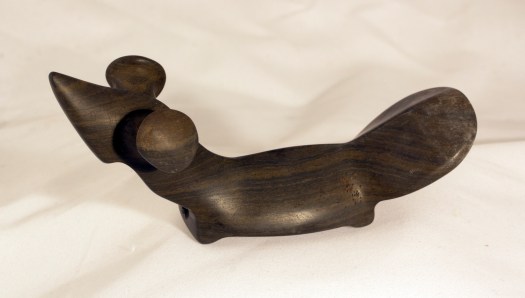
A magnificent example of a pop-eyed birdstone in banded slate, Warren County, Ohio.
Townsend’s 719-page book is nothing short of monumental, and depicts thousands of birdstones from public and private collections. He also covers the ideas about what these objects are, which are myriad and diverse, as well as how they were made, distribution patterns, cultural affiliations, and fraudulent specimens.
A selection of birdstones from the Peabody Institute collection. Note that some are broken and repaired.
So, what is a birdstone? As Townsend notes, this is not an easy question to answer, since there is no clear agreement on how they were used in antiquity. In terms of form, birdstones are often described as highly stylized depictions of birds. A variety of distinct forms are all described in detail by Townsend. The virtuosity of manufacture, incredible symmetry, and sculptural quality have often elicited comparison with modern art. Sizes range from an inch or two to larger examples that are five or six inches in length. A common feature is the presence of bi-conically drilled holes, one at either end of the birdstone’s base. These holes are often the site of breakage and repair. Most birdstones are made of banded slate, especially the greenish-gray banded Huronian variety, but other stones were used as well, including porphyry. Many have projecting eyes or ears. Few if any have come from secure archaeological contexts and most are known as field finds. Townsend’s distribution map indicates that the vast majority of birdstones in his sample come from areas around the southern margins of the Great Lakes, especially in Wisconsin, Michigan, Indiana, Ohio, New York, and Ontario. Cultural affiliations of birdstones vary across this area and include a number of Late Archaic and Early Woodland cultures like Glacial Kame and Red Ochre, circa 1500-500 BCE.
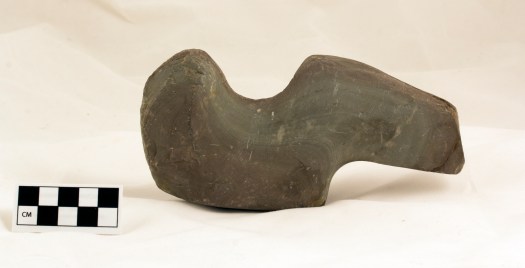
A birdstone preform, showing one stage in the manufacture process.
Townsend does a nice job of summarizing the diverse opinions on birdstones. The ideas range from Charles C. Abbott’s notion that they were worn as hair ornaments by women during maternity to use as a spear thrower (atlatl) counterweight. Other ideas include attachment to flutes or similar musical instruments, game pieces, hair or clothing ornaments, staff mounted religious symbols, and atlatl handle grips (Townsend’s preferred idea). Considering the diversity of forms, it seems likely that different styles were used in different ways and there are probably layers of meaning that we are unable to detect. Many contemporary archaeologists have accepted that birdstones are, in fact, associated with atlatls or spear throwers (for example, this is how they are described by David Penney in his essay on Archaic art in the 1985 exhibit catalog Ancient Art of the American Woodland Indians). Many articles about birdstones have been added to the literature since the 1959 publication of Townsend’s book, often proposing new ideas or offering further support or evidence for an existing hypothesis.
We were particularly excited to acquire a copy of Townsend’s Birdstones because the Peabody collections contain many examples of this enigmatic and interesting artifact. Only a few, however, are illustrated in Townsend’s book, including two from Ohio that had been salvaged after breakage (see Townsend 1959: Plates 76s and 77h). A few other fine examples from the Peabody are illustrated here.
It’s unlikely that we will unlock the secret of the birdstone anytime soon, however, we are immensely grateful to Peter Hetzler for his generous gift of the Earl Townsend book, which nicely complements our object collection!
The collections staff at the Peabody keep telling me that I can’t have a cat. Which I guess was fair, until I found out that all this time they have been hiding a jaguar in our basement!
A few weeks ago I was approached by Elizabeth Aureden, instructor in music, to design an interactive class for her Music 410 course, The Musical Brain. While looking through our collections for musical instruments, I learned from collections assistant Samantha Hixson that she had just found and catalogued some effigy rattles.
The objects were made of clay and painted a variety of colors, and some still rattled.
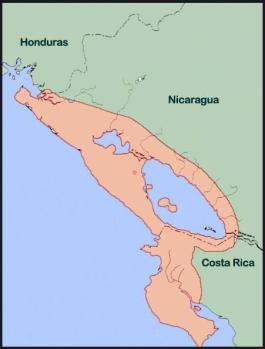
This new find seemed very promising and so I wanted to learn more about them. Research indicated that these objects were from the Nicoya Peninsula of Costa Rica and most likely date from AD 1000 – 1350.
Map showing the Nicoya cultural region. By Rodtico21 (Own work)[CC BY-SA 3.0 https://creativecommons.org/licenses/by-sa/3.0The parts we have are clearly broken and part of a much larger artifact. These are the remnants of the tripod legs of a rattle effigy vessel. Each of the three legs would have contained three clay balls and had openings on the side for the sound. When shaken a rhythmic sound can be heard.
Image of a complete vessel. Notice the holes in the side of the legs. By Daderot (Own work) [CC0], via Wikimedia CommonsThat’s pretty neat! But the story became even cooler as I found more information about this style of pottery.
The bowls were used to add a percussive sound to a ceremony. And the sound it made was not an accidental rattling sound, but rather a deliberate and meaningful one. When the bowl is shaken or moved about, and the clay balls rattle together, they create a deep, rumble. This sound is mimicking the low growl of an actual jaguar!!!!! Researchers have even noted that when the bowl is tilted and moving forward – like a jaguar lunging at prey – the sound is more prominent.
If your interest is now piqued about other objects from the Nicoya Peninsula, check out Dr. Rebecca Stone’s book, The Jaguar Within.
So next time you are at the Peabody be on the lookout, because you never know what other predatory animals might be lurking!!!
Scary lion from the 1995 movie Jumanji. Sometimes the Peabody seems like it’s playing its own version of the game Jumanji, with all the random artifacts that mysteriously present themselves to staff members.
Archaeologists are known as a creative and frugal bunch, and this is evident in the many ingenious ways that we have found to store artifacts and samples from recovery in the field to processing in the lab to long term storage on the museum shelf. Prior to the plastic bag, soil samples were housed in everything from feed sacks to paper bags. Glass food and condiment jars were a great way to keep charcoal samples, especially if you didn’t have a ready supply of tin foil. Metal, and then plastic, 35mm film canisters were highly prized for retaining tiny objects, like beads (the slightly opaque Fuji film canisters allowed a peek at the contents, unlike the black and gray Kodak canisters).
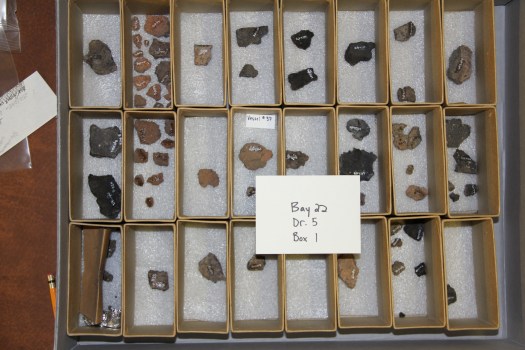
A selection of cigar boxes once used to house Peabody Institute collections. Note the site information and catalog numbers visible on some boxes.
Nothing, however, is more ubiquitous for storing artifacts than the classic cigar box. These sturdy wood or cardboard boxes with a built-in hinged lid were highly prized by generations of kids for storing marbles, coins, arrowheads, and other treasures. Perhaps it’s not surprising that as adults these boxes remained as the go-to storage solution. The Canadian Museum of History has a great interactive website about cigar boxes that explores the significance, history, art, and general usefulness of these containers. Much has been written too about cigar box guitars, which apparently go back to at least the 1840s through 1860s when cigars were first being stored and marketed in wooden boxes—see, for example, http://cigarboxguitars.com/about/history.
Food or sauce jars used to store soil samples from Richard “Scotty” MacNeish’s Tehuacan Archaeological-Botanical Project, 1960s.
The collections of the Peabody Institute are no exception, and vast numbers of stone points, tools, and pottery fragments were once kept in legions of cigar boxes. Most, if not all, our artifacts have been rehoused in cardboard boxes and now we are working on a massive rehousing and cataloging endeavor that will improve our intellectual and physical control over our collections (museum-speak translated as “we will have a better idea what we have and where it is”). Our current strategic plan, developed in 2014 and 2015 identifies this as one of our most important objectives, and one we plan to accomplish in the next few years.
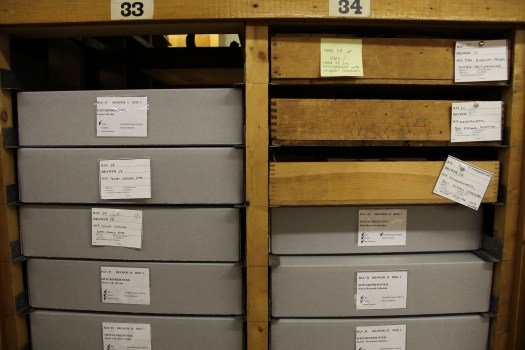
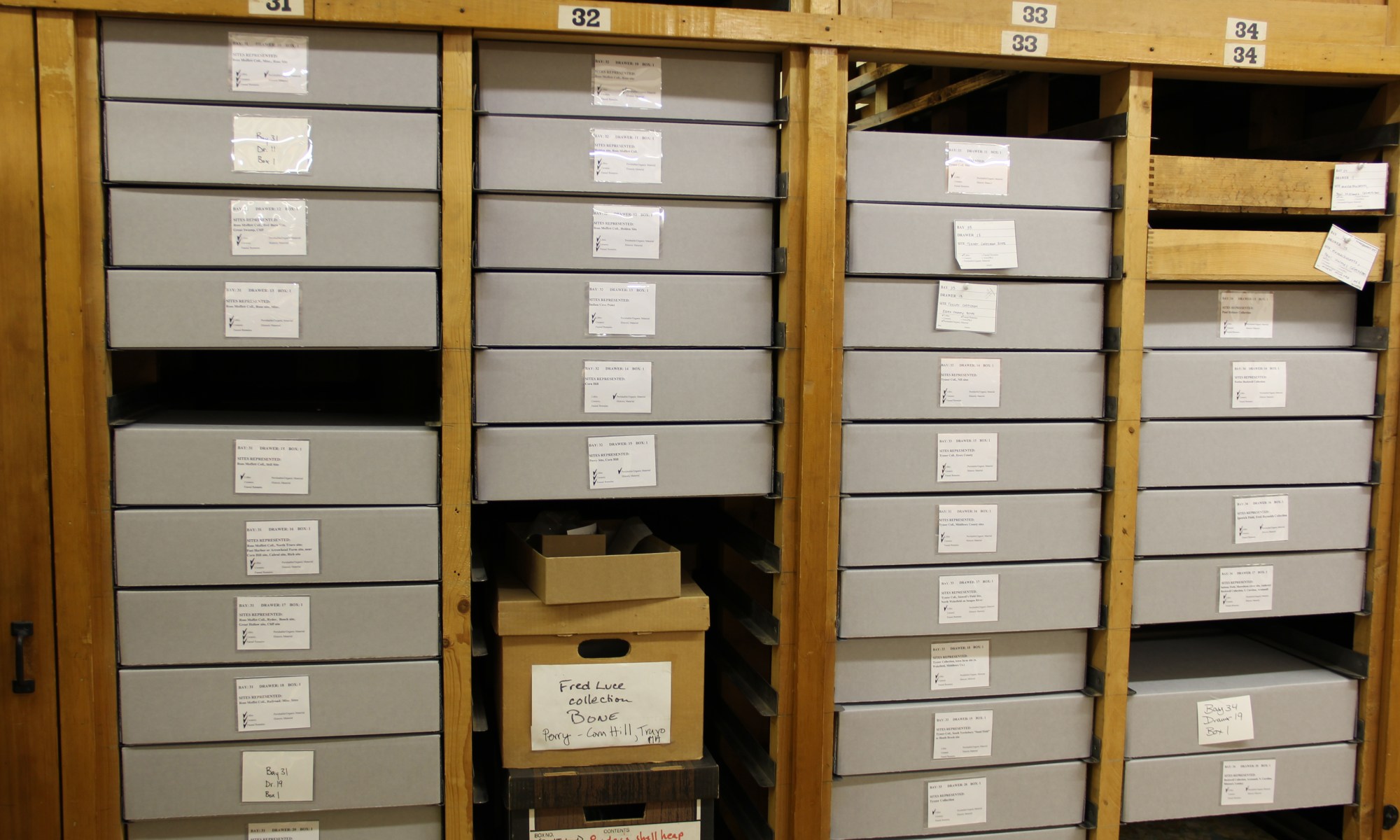
Side by side comparison of new archival storage cartons and older wooden drawers. Peabody collections personnel are transferring the collections to the new boxes with the help of students and volunteers.
There are, however, still a small collection of cigar boxes and other biscuit, cereal, and medicine boxes and tins that were once used to house objects and photographs. Handwritten labels, pasted over the decorative and distinctive cigar box art, identify sites and catalog numbers. A small collection of these boxes has been retained.
A groovy Zodiac shoe box from the late 1970s or early 1980s once housed a small, woven bag donated by Dorothy Byers. Note the two part accession/catalog number and other notes written on the lid.
A recent effort to address a backlog of objects awaiting cataloging turned up a groovy mid-twentieth century shoebox that contained a woven bag, apparently given to the Peabody by Dorothy Byers, widow of former director Douglas Byers (1903-1978). Byers worked at the Peabody from 1933 until his retirement in 1968, and served as director from 1938 through 1968. Zodiac was a brand of Encore Show Corp. and first debuted in the late 1970s and has had a recent revival. The woven bag—unfortunately bearing little information—has been rehoused and is now in storage. The shoe box is in my office.
The Peabody’s cataloging and rehousing project is made possible through a grant from the Abbot Academy Fund, continuing Abbot’s tradition of boldness, innovation, and caring, and the generous support of the Oak River Foundation, and Barbara and Les’ 68 Callahan. For information on how you can contribute to this project, please contact Peabody Institute director Ryan Wheeler at rwheeler@andover.edu or 978.749.4490.
Out of all the artifacts that I have worked with over the course of my career, one of my favorite types has always been historic ceramics. There are so many different ceramic types and beautiful decorative patterns that it’s easy to see why ceramics can often become collector’s items. Transferware has always been particularly interesting to me. Maybe it’s because there is such a wide array of images and scenery that can be depicted on this type of ceramic.
One of my previous jobs dealt heavily with colonial and antebellum artifacts, so transfer printed ceramic fragments would come through the lab on a regular basis. One of my favorite things to do there was to identify the specific patterns on the fragments as best I could. In order to do that I had many resources, including a Powerpoint with typologies found at the site and access to the Transferware Collectors Club website.
Last week, I decided to inventory a drawer which has historic ceramics in it. I rarely see historic ceramics here, so I figured it would be a good way to keep them fresh in my mind. When it came time to catalog the ceramics, I organized them in my workspace by colors, and then further broke these groups into design patterns.
Organizing ceramics!
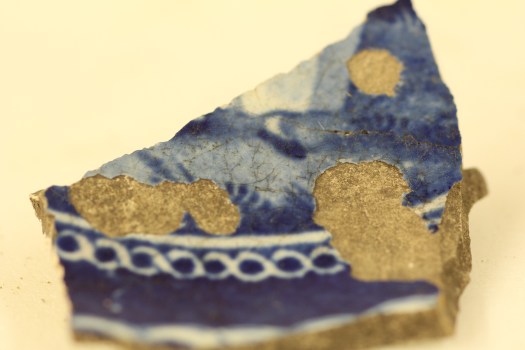
I had kept the aforementioned Powerpoint on a flash drive in case I ever ran into historic ceramics again. It was open on my computer while I was going through this particular drawer and it proved to be a valuable resource once again. I had a few fragments of transfer printed ceramics in front of me and noticed that even though they were tiny sherds, I was able to see that they contained images of grain, a foot, and a window with some shrubs.
The foot of a gleanerCeramic fragment with a window and shrubsCeramic fragment with gathered wheat
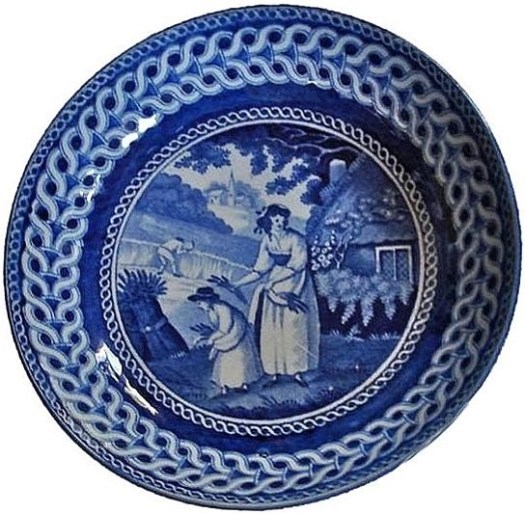
Going through the Powerpoint, I immediately recognized that these match up with a transfer pattern that is known as “Gleaners.” The rim pattern also was a dead giveaway, but that didn’t make it any less exciting to see that from a few tiny pieces of ceramic, I could get a vision of what the entire vessel once looked like!
An entire vessel with the “Gleaners” pattern.
Finding fragments of transfer printed ceramic is always exciting and can be like having pieces of a puzzle that you need to put together. Many antique transfer printing patterns are still used and reproduced to this day. If you have any in your possession, or know anyone else who does, I’d encourage you to look it up online and see what you can learn about something you might have once thought was just a cool decorative piece.
The Inventory Specialist position is supported by a generous grant from the Oak River Foundation of Peoria, Ill. to improve the intellectual and physical control of the institute’s collections. We hope this gift will inspire others to support our work to better catalog, document, and make accessible the Peabody’s world-class collections of objects, photographs, and archival materials. If you would like information on how you can help please contact Peabody director Ryan Wheeler at rwheeler@andover.edu or 978 749 4493.
A poorly known collection occupying several drawers at the Peabody Institute sheds a little light on the Taíno, the indigenous people of Puerto Rico and neighboring islands who met Christopher Columbus in 1492.
When Columbus landed in Hispaniola the Taíno population was perhaps in the millions and early records estimate that 85 percent of the population had been lost within a few decades. People lived in family groups, with some villages numbering 3,000 people. Native foods like fish, shellfish, birds, lizards, and other small animals augmented agricultural crops of cassava, yams, and other domesticates. A complex and elaborate religion included the worship of spirits called zemis, and like their neighbors in Mesoamerica, the Taíno played a ball game on a rectangular court that they called Batey. Hereditary chiefs and nobles ruled over commoners and slaves. The Taíno, however, soon succumbed to the Spanish conquest, but most of us recognize a handful of loan words in English that can be traced back to the Caribbean, including barbecue (barbacoa) and canoe (canoa).
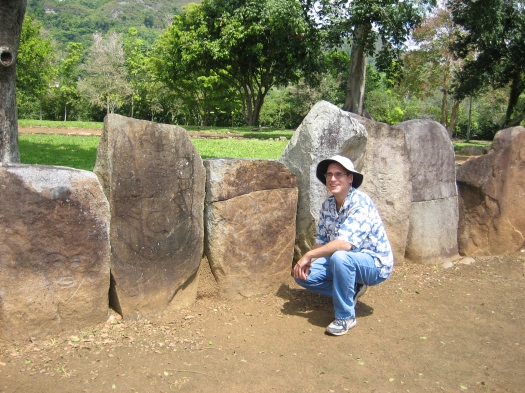
Ryan Wheeler at the Caguana Ceremonial Ball Courts Site in barrio Caguana, Utuado, Puerto Rico, 2006. The reconstructed ball court is lined with engraved stone slabs.
I got interested in the Taíno in 1999 when as an employee of the Florida State Archaeologist’s Office I conducted an investigation of the Miami Circle site in downtown Miami. Miami is a melting pot of people from Latin America and the Caribbean. Among those I met during my time in Miami were a group of folks from Puerto Rico who considered themselves living members of the Taíno tribe. Like most other archaeologist and anthropologists at that time I had learned that the Taíno were extinct—one of the first victims of European conquest and colonization of the Americas. My new friends shared that they had, however, preserved their language and culture, including many old songs which they were working to pass on to future generations. Over the next few years I met more Taíno people and several tribal members participated in my excavations near Lake Okeechobee in 2000.
Petaloid stone celts from Puerto Rico. Petaloid refers to the shape–resembling the petal of a flower. M. Eugene Verges Collection, Robert S. Peabody Institute of Archaeology.
Pottery adornos–many depicting animals–from Puerto Rico. M. Eugene Verges Collection, Robert S. Peabody Institute of Archaeology.
Faces on two of the zemis, M. Eugene Verges Collection, Robert S. Peabody Institute of Archaeology.
A large stone belt and three zemis or three-pointed stones from Puerto Rico M. Eugene Verges Collections, Robert S. Peabody Institute of Archaeology.
A 2011 Smithsonian.com article by Robert M. Poole recounts his search for modern day Taíno in New York and Puerto Rico with surprising results. Like my friends in Miami, many Puerto Ricans acknowledged indigenous ancestry. Many of my archaeologist friends were still skeptical, suggesting that cultural practices were based on ethnohistoric accounts left by the Spanish and that language was being recreated based on Julian Granberry’s 2005 book Languages of the pre-Columbian Antilles. By the early 2000s there were several Taíno groups that asserted cultural affiliation, including the Jatibonicu Taino Tribal Nation of Boriken, who were the folks I knew. DNA analysis by Juan C. Martínez-Cruzado—reported in 2003 and 2006—suggests that the archaeologists and anthropologists got it wrong. Based on an island-wide DNA survey, Martinez-Cruzado found that 61 percent of all Puerto Ricans have Amerindian mitochondrial DNA, 27 percent have African and 12 percent Caucasian. Martinez-Cruzado’s study also pointed to evidence for cultural survivals into modern times, including traditional fishing practices.
Two views of a three-pointed stone or zemi depicting an owl. M. Eugene Verges Collection, Robert S. Peabody Institute of Archaeology.
So, back to the Peabody collections. Preserved in several drawers are petaloid celts, adornos and sherds from ceramic vessels (many depict animals), three-point stones (also called zemis), and a very heavy stone belt (or yoke) that would have been worn during the ball game. Mela Pons Alegria, in an article in Archaeology magazine, explains that the three-pointed stone zemis “are the oldest and most abundant” form of Taíno art, and evolve from simple triangular carvings to elaborate effigy forms. Flat areas hint that these may have been attached to handles or staffs. We have little catalog information, but it appears that the collection was a gift from Eugene M. Verges. A little poking around on genealogical sites shows that Eugene Marcelin Verges II was born in 1889 in Arroyo, Puerto Rico and was a student at Phillips Academy in 1907—he’s listed in the catalog as being from Wellesley, Mass.—he died in 1970. Verges’ father was engaged in the sugar business and it seems likely that the Peabody collections from Puerto Rico were made by the Verges family and gifted to us in the first part of the twentieth century.
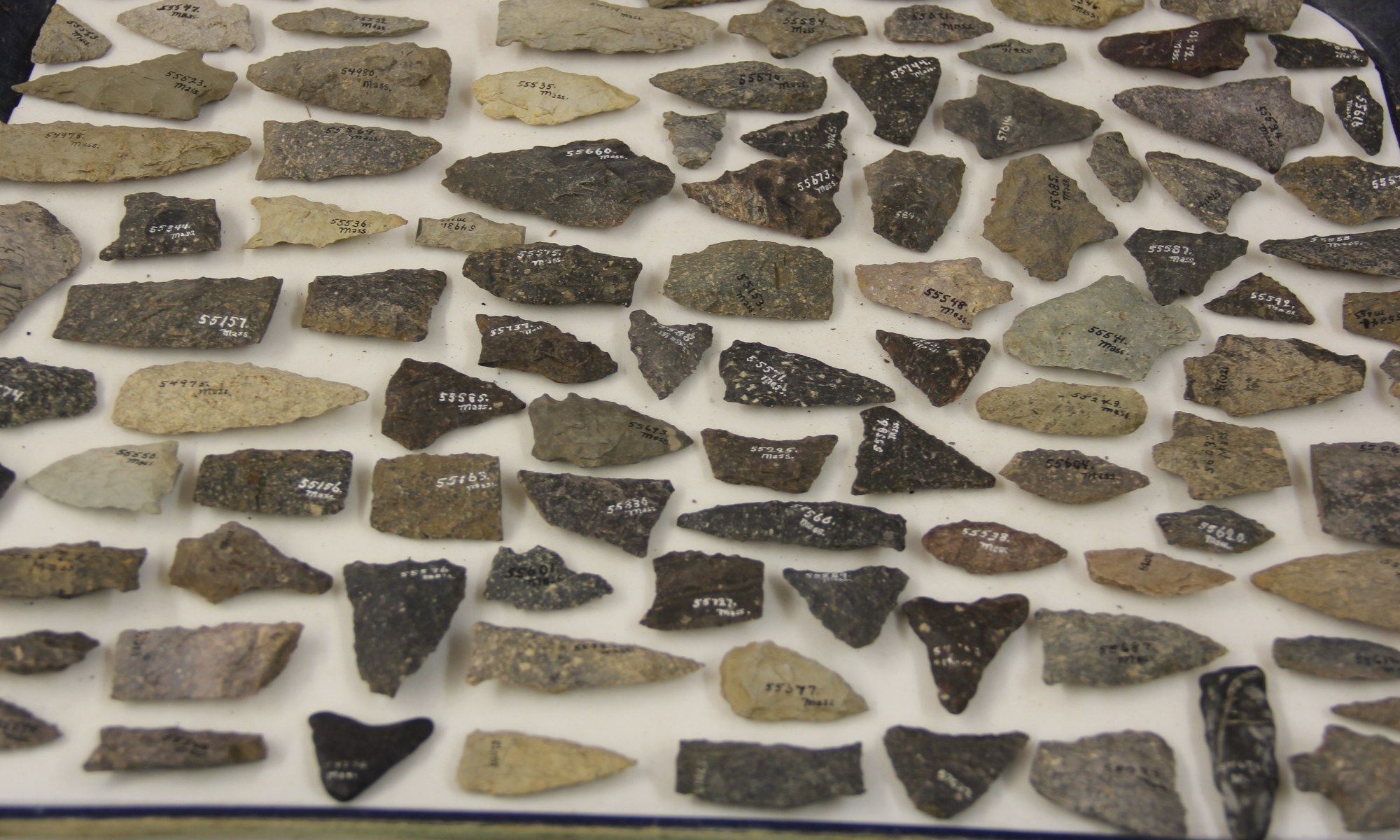
This job is awesome, but sometimes the material I work with can get pretty repetitive. I have been working on cataloging a bay full of artifacts from sites throughout Massachusetts. This allowed me to see what had been discovered throughout the state in which I now live. While there were a few ground stone tools, the vast majority of artifacts I cataloged were modified stone and bifaces. Drawer after drawer, box after box was filled to the brim with fragments of stone that had been worked by someone, but never fully formed into a usable tool such as a projectile point or a blade, and while it is still incredible to see these artifacts and be able to hone my skills identifying worked stone, it started getting very redundant.
A completed box of modified stone – more layers under the ethofoam
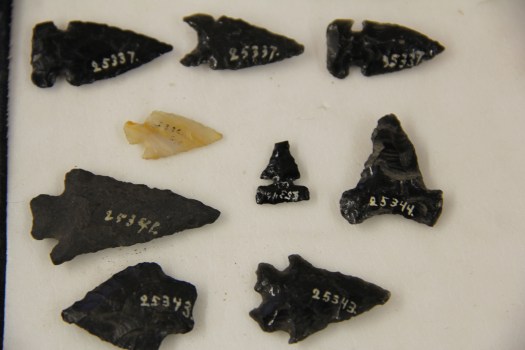
Luckily for me, when I need a change of pace, I can walk over to another bay and choose drawers from almost anywhere in North America. After cataloging hundreds, if not thousands, of modified stone fragments, I decided to take a break from the Northeast and I moved to a bay containing artifacts from Idaho, Kansas and Iowa. So far these drawers have been amazing! While there are still amorphous fragments of modified stone, the number of finished tools far outweighs them. This particular drawer has many finished projectile points.
Tiny projectile points!
Not only are they finished points, some of them are seriously tiny! A couple haven’t been much bigger than my pinky nail, and I have pretty small hands. It is incredible to see how small they are and think about the craftsmanship that must have gone into making such a tiny specimen. The level of precision and the skill that must have been required to craft these projectile points without them breaking must have been tremendous. Getting to see final products such as these has the power to make counting all the other fragments of modified stone worth it.
The Inventory Specialist position is supported by a generous grant from the Oak River Foundation of Peoria, Ill. to improve the intellectual and physical control of the institute’s collections. We hope this gift will inspire others to support our work to better catalog, document, and make accessible the Peabody’s world-class collections of objects, photographs, and archival materials. If you would like information on how you can help please contact Peabody director Ryan Wheeler at rwheeler@andover.edu or 978 749 4493.
In 1990 President George H. W. Bush (Phillips Academy Class of 1942) signed into law the Native American Graves Protection and Repatriation Act (NAGPRA). The passage of NAGPRA signaled a major shift in the relationship between Native Americans and museums, requiring that the latter inventory collections and identify human remains, funerary objects, sacred objects, and objects of cultural patrimony and contact the appropriate tribal groups to arrange repatriation. For tribal peoples this represented major human rights legislation.
Former Peabody director James Bradley and repatriation coordinator Leah Rosenmeier embraced the new law and worked diligently through the 1990s and into the early 2000s to identify NAGPRA collections, to determine tribal affiliations, and to ensure timely repatriation. Much of the focus during this time was on human remains and associated funerary objects. Major consultations include those that involved Alfred V. Kidder’s excavations at Pecos Pueblo in the early twentieth century, Warren Moorehead’s excavations at the Etowah and Little Egypt sites in Georgia, and excavations at sites in Maine.
Today the Peabody continues its commitment to working with tribes and indigenous peoples to ensure that ancestral remains, funerary objects, sacred objects, and objects of cultural patrimony are repatriated in a respectful and timely fashion. Much work has been done and much remains to be done.
The Peabody supports the United Nations Declaration on the Rights of Indigenous Peoples and is committed to the repatriation provisions outlined in that document. The United Nations Declaration on the Rights of Indigenous Peoples explicitly affirms that indigenous people have a right to repatriation of ceremonial objects and human remains.
We look forward to hearing from the representatives of tribes in the United States or indigenous groups abroad to answer questions, to schedule visits to view collections, to receive guidance on care and storage of collections, or to begin the consultation process. We also are happy to discuss NAGPRA and repatriation with staff members from other institutions. Please contact Peabody director Ryan Wheeler (rwheeler@andover.edu or 978 749 4493) to begin a conversation today.
Hi, my name is Rachel and I was hired in August as the Inventory Specialist at the Robert S. Peabody Institute of Archaeology. I am originally from upstate New York although for part of 2016 and the majority of 2017 I did work primarily in Virginia. For my first blog post I wanted to give a brief overview of my daily activities.
The main goal of the project I was hired to do is to conduct a complete inventory and rehousing of the collections at the Peabody. This is a task that has never been done before. Currently, the majority of the collections are housed in the wooden drawers that were brought into the Peabody in the 1930s. In each drawer, collections objects are housed in tan artifact boxes.
This is an example of what drawers look like before I work on them. All of these brown boxes hold artifacts.
Every day I take the objects out of the tan box and record information about them such as what the object is, what its catalog number is, how many there are and their current location. I then record all of this information into a Microsoft Excel spreadsheet, put the objects back into their tan box and put them into the new gray (or blue, depending on who is asked) archival box. Currently I am working on drawers containing collections from Massachusetts.
These artifacts have been rehoused and placed in a gray archival box rather than the original wooden drawer.
This type of work is something I have done since 2013 when I was a graduate student at SUNY Albany. It is work that I genuinely enjoy doing, which makes getting up in the morning and coming to the Peabody a whole lot easier. It is always amazing to handle various collections. Doing so has helped me to learn so much more than I ever thought I could about material culture from all over the United States. I know working at the Peabody will help push that knowledge even further. It’s such a great experience to be able to work on a collection from Massachusetts one day, then move to a collection from Ohio or Indiana or even the Yukon the next day.
The Inventory Specialist position is supported by a generous grant from the Oak River Foundation of Peoria, Ill. to improve the intellectual and physical control of the institute’s collections. We hope this gift will inspire others to support our work to better catalog, document, and make accessible the Peabody’s world-class collections of objects, photographs, and archival materials. If you would like information on how you can help please contact Peabody director Ryan Wheeler at rwheeler@andover.edu or 978 749 4493.
Dr. Laura Kelvin, a post-doctoral researcher from Memorial University of Newfoundland, visited the Peabody in October.
Dr. Kelvin is contributing to the Avertok Archaeology Project, a subproject of a larger collaboration between Memorial University and the Nunatsiavut Government representing the Inuit of Labrador – Tradition and Transition. This community-based archaeology program aims:
to locate, excavate and learn more about the original Inuit settlement of Avertok which underlies the present Hopedale community, and other nearby sites,
communicate findings to the community and use the research to facilitate knowledge transfer between youth and elders in Hopedale
to undertake a ground-penetrating radar survey of the Moravian Cemetery in order to identify the locations of all graves, enabling the community to properly mark and care for the cemetery.
During her visit to the Peabody, Dr. Kelvin examined the William Duncan Strong collection. Strong was part of the Rawson-MacMillian Sub-Arctic Expedition that the Field Museum in Chicago sent to northeastern Labrador in 1927-1928. In the early 1930s, Warren K. Moorehead (then Director of the Peabody) orchestrated a trade with the Field Museum to acquire approximately 350 artifacts from this expedition.
A drawer of material from Hopedale, Labrador.
Dr. Kelvin spent a week photographing all of these artifacts – even 3D scanning some! – for inclusion in a developing community archive of archaeological and traditional knowledge of the Hopedale area. She will record traditional community knowledge of the artifacts and provide local access to the images through the network. Follow the project on their facebook page!
Dr. Kelvin using the 3D scanner to document a bowl


















 The Peabody