Creating an Indigenous Collections Care Guide

Contributed by Marla Taylor

Nearly three years ago, I co-founded the Indigenous Collections Care (ICC) Working Group along with Laura Bryant, Anthropology Collections Steward and NAGPRA Coordinator for the Gilcrease Museum in Tulsa, OK. Along with Laura Elliff Cruz, Head of Collections at the Indian Arts Research Center (IARC) in Santa Fe, NM and other group members, the ICC has been working to create an accessible reference tool for professionals who interact regularly with Native American collections.

The ICC grew out of our desire to incorporate the collections care requests of Indigenous communities into our institutional practice and policy. The working group was formed in late 2020 and is composed of approximately 20 people (both Indigenous and non-Indigenous museum professionals and academics, Tribal Historic Preservation Officers, and NAGPRA coordinators) who actively participate in monthly meetings on the creation of an Indigenous Collections Care Guide.

The ICC Guide will not instruct museums on how to specifically care for each item, since protocols vary among communities, but will offer scalable considerations of culturally appropriate collections stewardship, with questions and talking points to address during consultation, and with templates and case studies for use in implementation, advocacy, and the creation of policies and procedures.

In order to facilitate robust review of the ICC Guide by tribal communities, the ICC partnered with an incredible institution, the School for Advanced Research (SAR) in Santa Fe, NM.

I am excited to share that SAR received an IMLS National Leadership Grants for Museums of $175,587 for the IARC’s creation of the Indigenous Collections Care Guide. to support the museum field with an accessible reference tool for museum professionals who interact regularly with Native American collections. The guide will provide museums with a framework to recenter collections stewardship practices around the needs and knowledge of Indigenous community members. At the conclusion of the project, 175 tribal community representatives and museum professionals will have had a voice in the development of the guide, which will be made freely available for tribal community representatives and museums of all sizes. The IMLS reported receiving forty-eight applications for this opportunity, and SAR was one of nineteen projects to receive funding.

You can see the announcement and learn more about the project here.

What does this mean for the Peabody Institute? Well, first it means that I will be super busy for the next few years! It also means that the Peabody Institute is continuing our leadership role in the broader museum and archaeological conversations around ethical collections stewardship and relationships with tribal communities.

I will keep you posted as work continues over the next few years!

School for Advanced Research

The School for Advanced Research (SAR), a 501(c)(3) nonprofit educational institution, was established in 1907 to advance innovative social science and Native American art. Its sixteen-acre residential campus sits on the ancestral lands of the Tewa people in O’gah’poh geh Owingeh, or Santa Fe, New Mexico. Visit sarweb.org

Institute of Museum and Library Services

The mission of IMLS is to advance, support, and empower America’s museums, libraries, and related organizations through grantmaking, research, and policy development.

The agency carries out its charge as it adapts to meet the changing needs of our nation’s museums and libraries and their communities. IMLS’s mission is essential to helping these institutions navigate change and continue to improve their services. Visit imls.gov
Peabody Volunteer Spotlight: Meet Mike

Contributed by Mike Agostino

Hello, my name is Mike Agostino and I am a volunteer here at the Peabody Institute of Archeology. I am a recently retired scientist from the field of bioinformatics. My work in this field, for over 30 years, concerned the analysis of gene and protein sequences. I love the field so much that I am presently an instructor on the subject for the Harvard Extension School. I am also writing the second edition of a textbook I published on this topic more than 12 years ago.

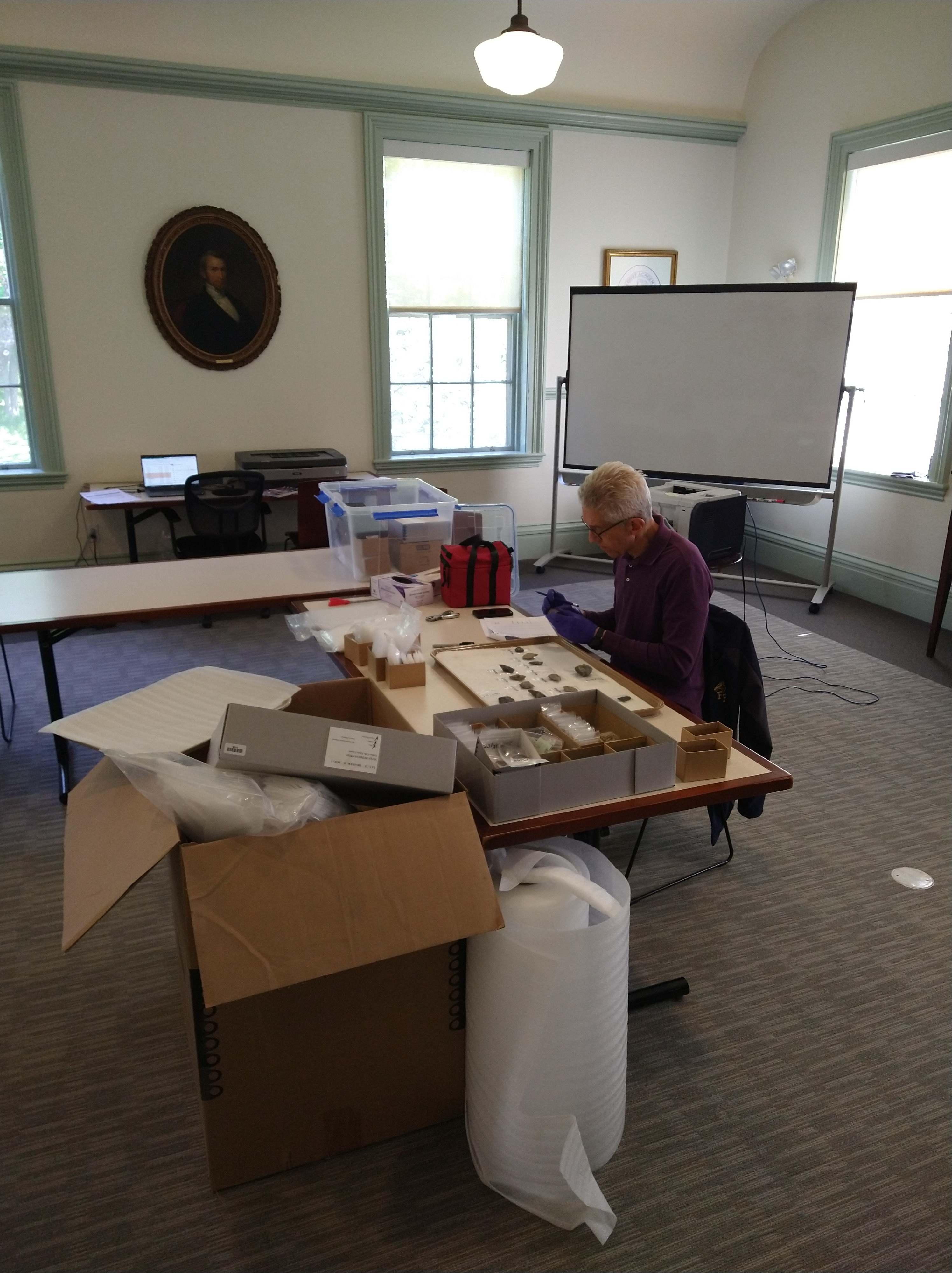
Peabody volunteer, Mike, analyzes various projectile points in the Peabody collection.

As a resident of Andover, I frequently went past the Peabody and often wondered what treasures it held. When a good friend, Richard Davis, said he volunteered here and told me about the work, I immediately wanted to join him. To say this is a dream come true is not an exaggeration. I have always been interested in archaeology and spent many years looking down on the ground for the artifacts people said were all around us. But I never found any! To work with and learn about dozens, if not hundreds of specimens each day is amazing. As I hold these objects in my hands, I try to imagine their history: was it careful fabrication by an adult expert, or was it made during a learning period of a youngster? Was it used to bring home a meal, build a boat or dwelling, or for the creation of clothes? Did it come from local stone, or did it travel many miles to be found at a new locale? My imagination is further enhanced or tempered by the kind and knowledgeable staff of the Peabody who are training and patiently helping me identify what is in my hand. I have only been at the Peabody for less than two years and there is so much to learn!

After years as a scientist, I feel right at home with my principal responsibilities: the careful handling, description, cataloging, and storage of the specimens. Attention to detail is absolutely required and very satisfying. We record their identities, or best guesses because many are just fragments. The intact specimens are something to behold. Some arrowheads or axes are impossibly beautiful, and the precision of shaping and symmetry with such a hard material is just astounding. The skills of the people, past and present, are just amazing.

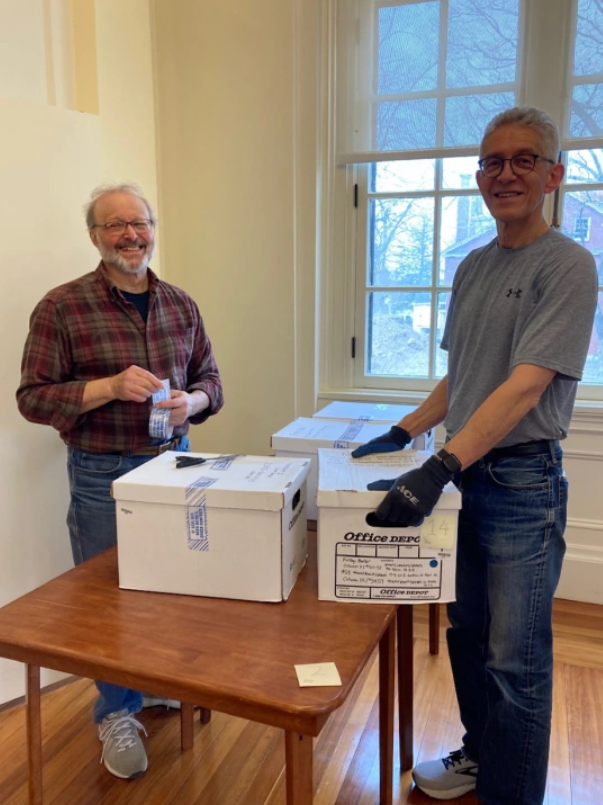
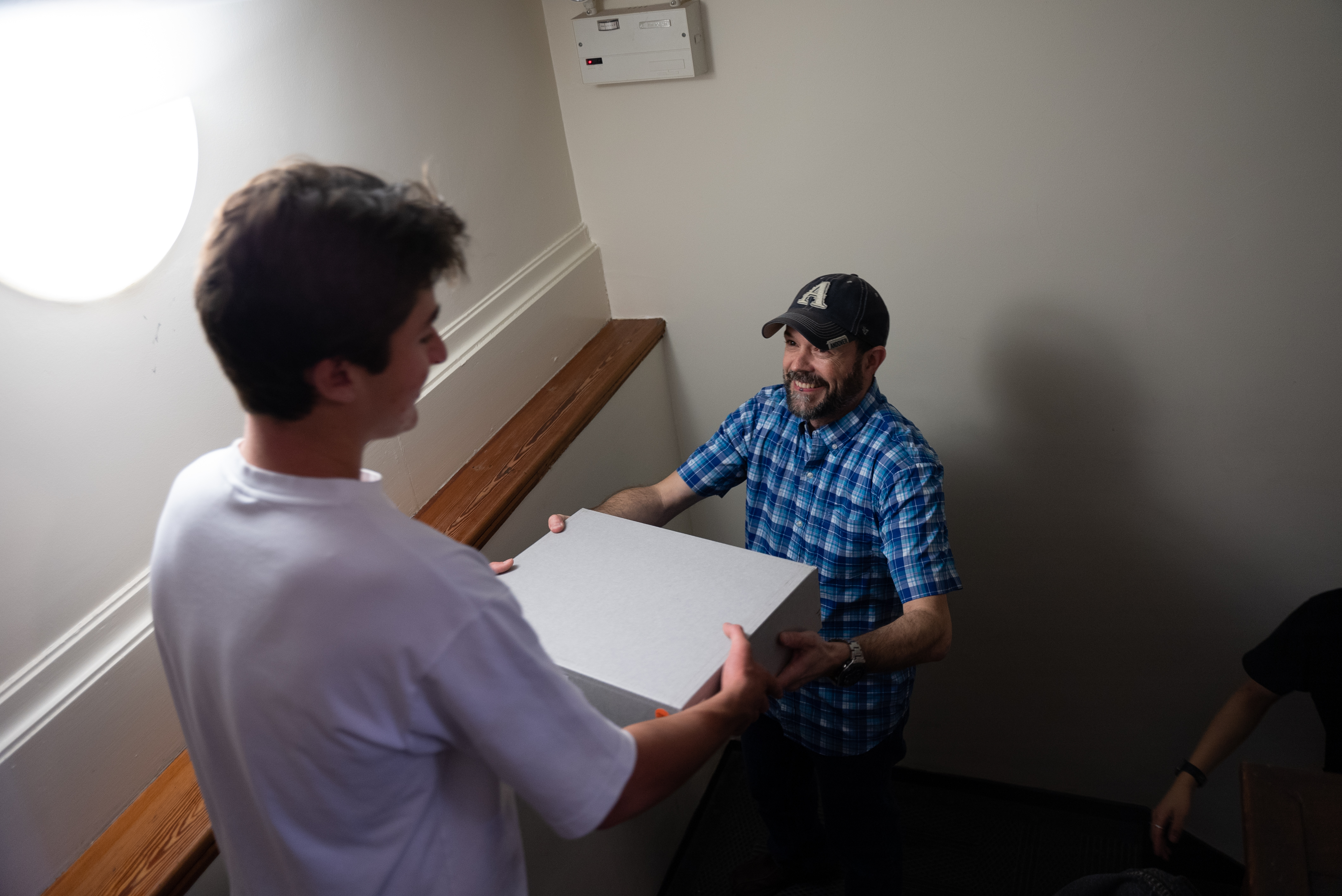
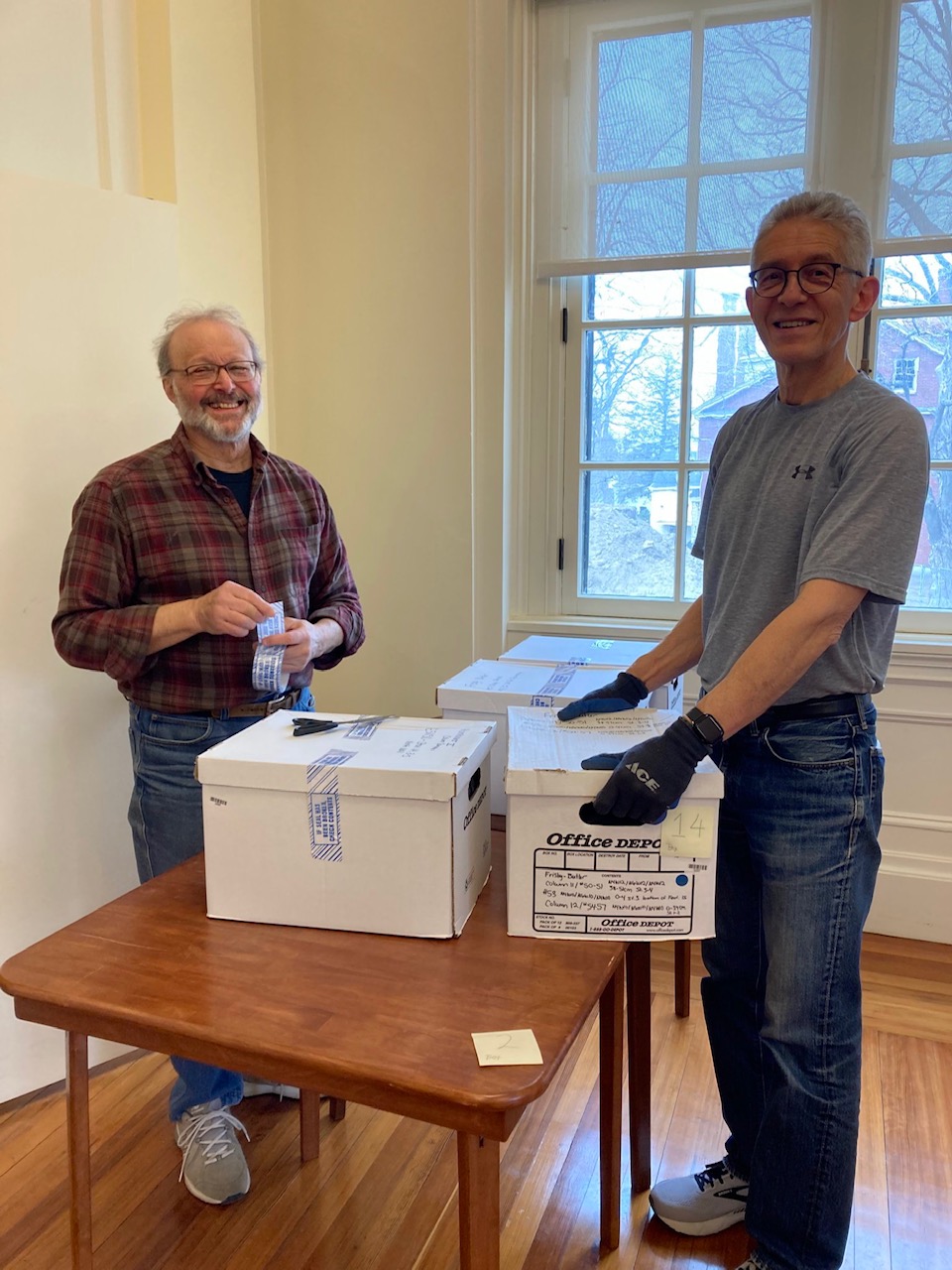
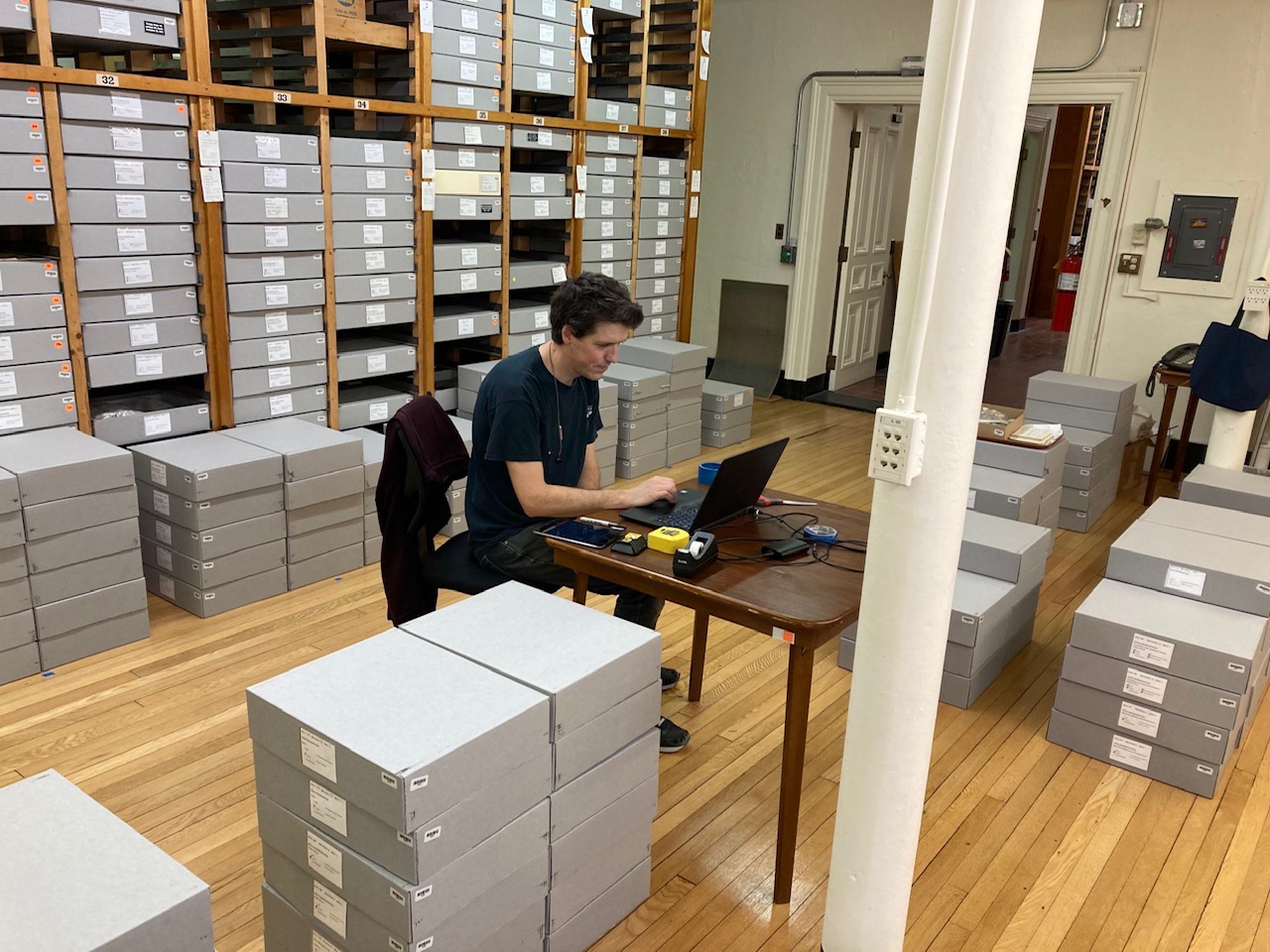
Peabody volunteers, Richard (left) and Mike (right), moving boxes for the Peabody’s building project.

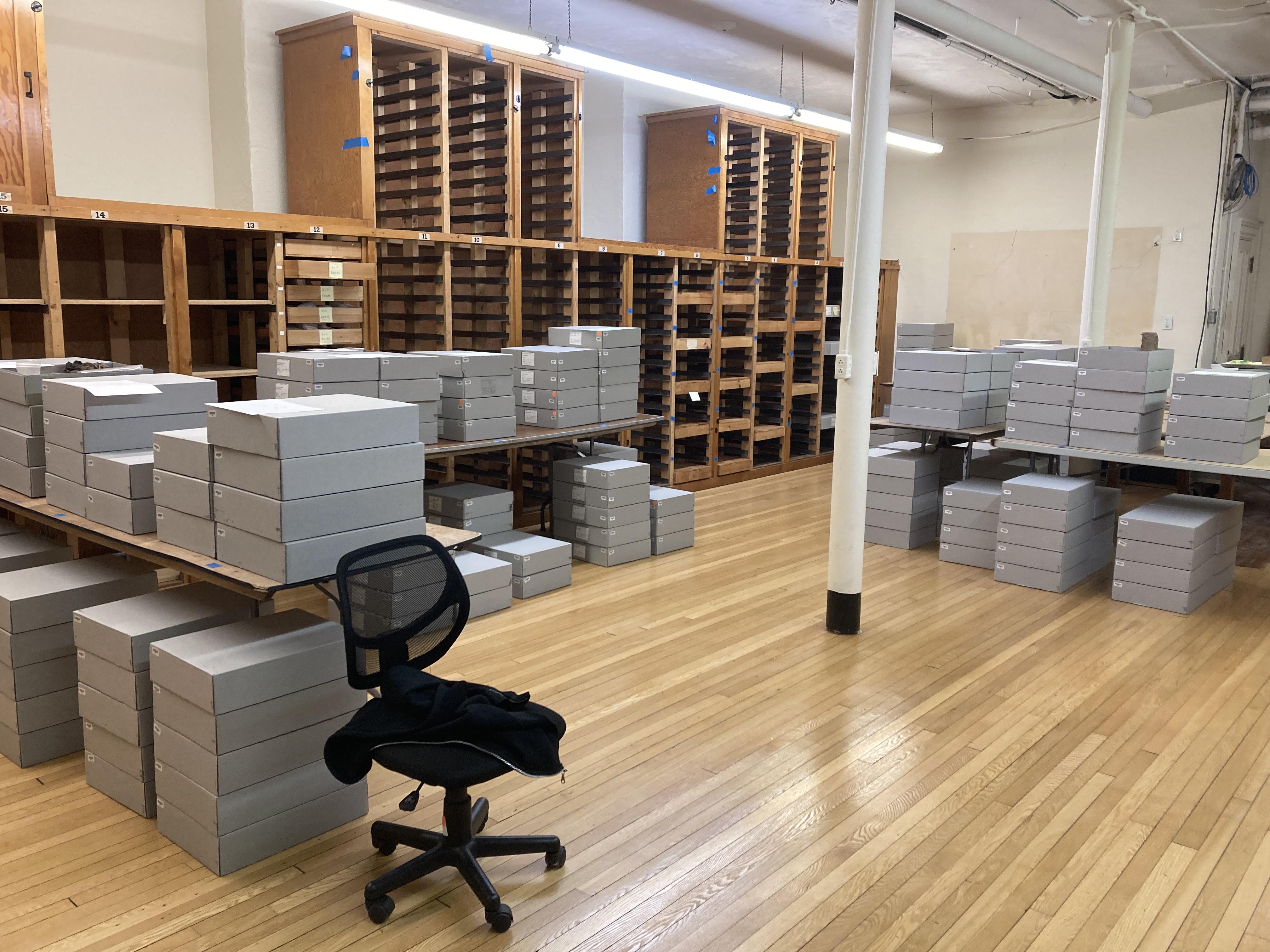
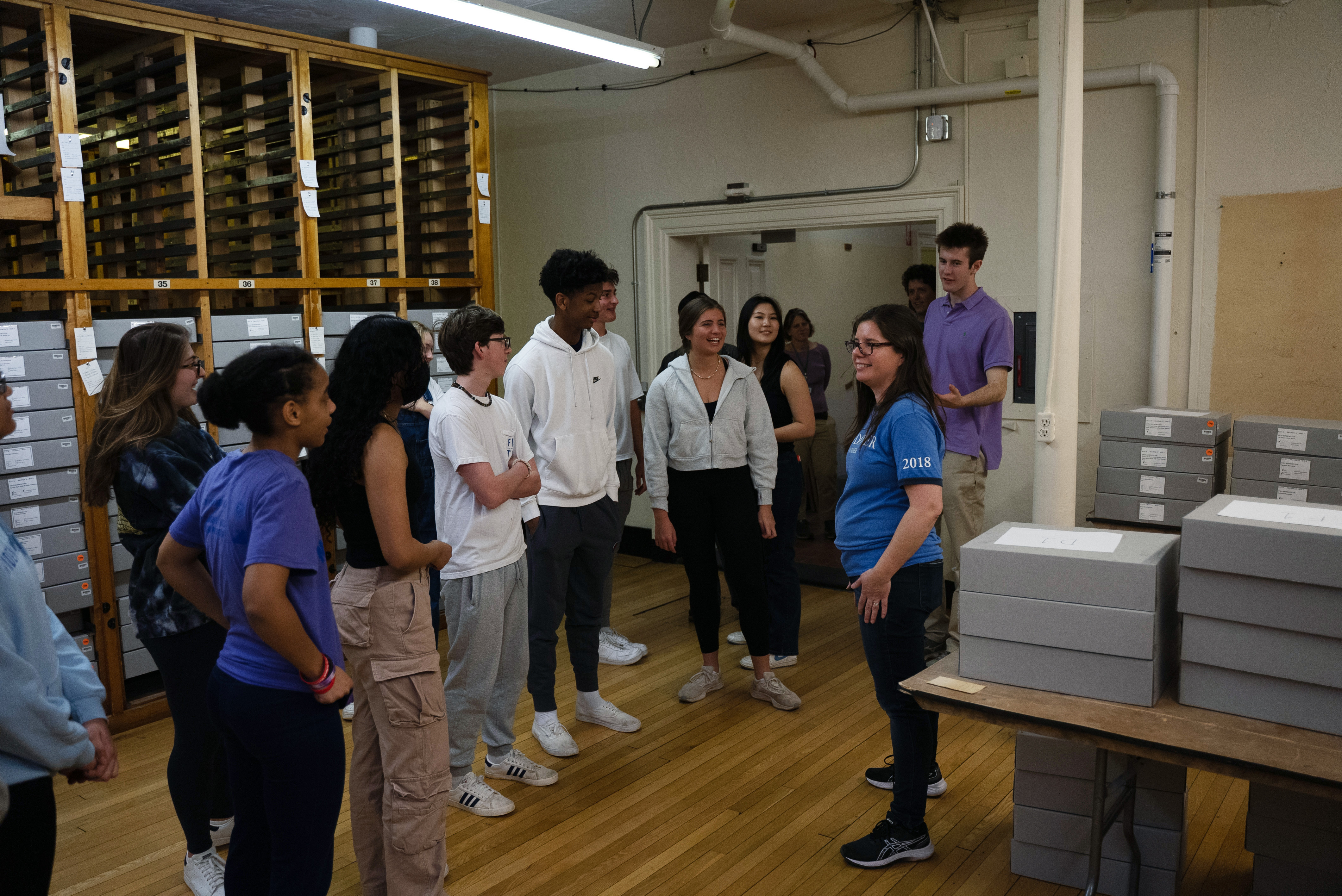
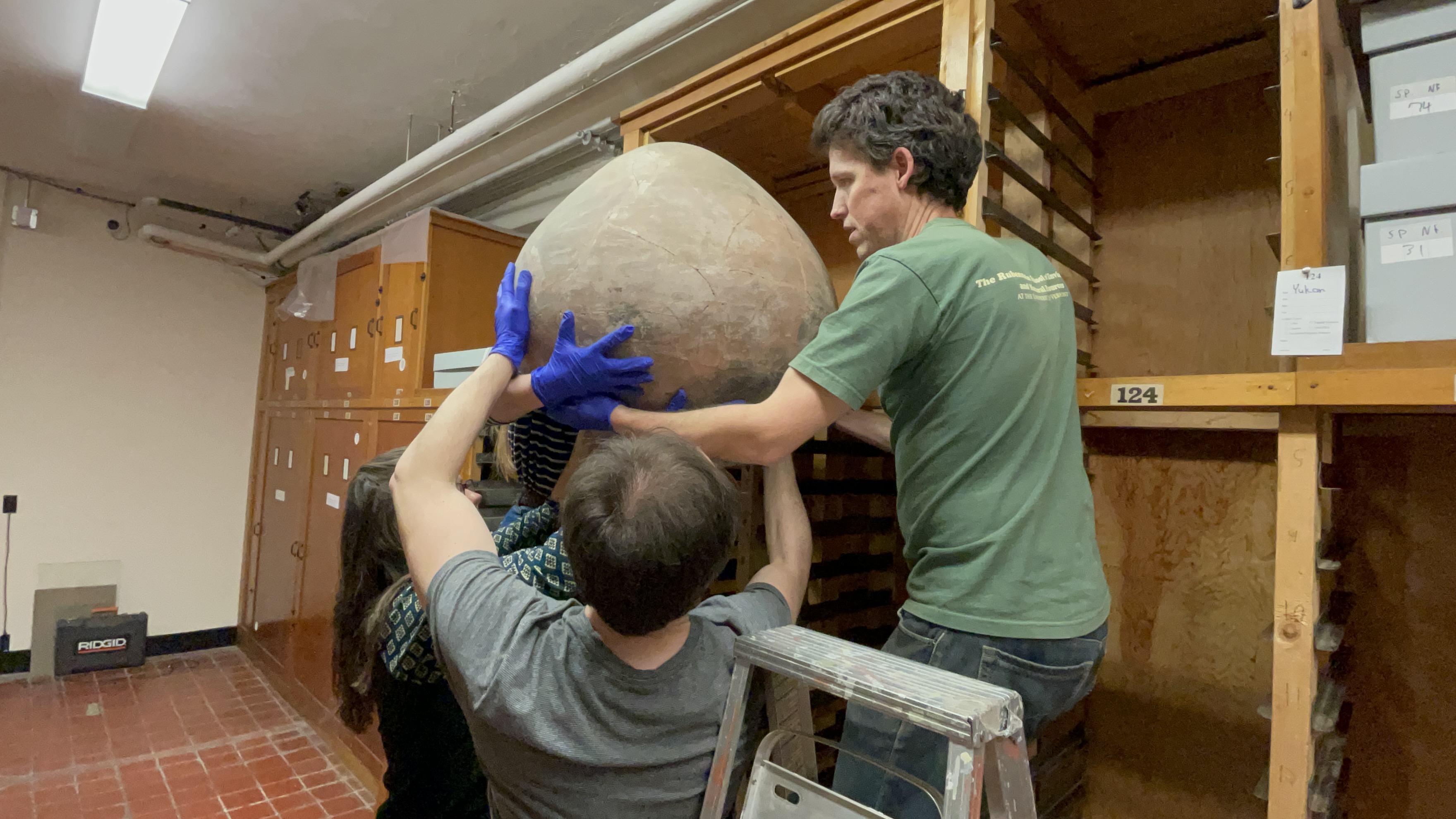
I have also helped with activities associated with the huge renovation project of the building (for pictures and updates, see the blog postings by Marla Taylor). I am impressed with how everyone has remained calm considering hundreds of boxes, and specimens too large for boxes, had to be carefully moved up one or two floors from the basement to temporary locations elsewhere in the building. With the absence of an elevator, I helped move many boxes up the stairs out of harm’s way. My smart watch said I went up 80 flights of stairs one day! And I am only there one day a week, so the staff had a monumental challenge. We are now waiting for the renovations to be completed and then we will return the specimens to a much-improved setting. Even with the new elevator, reshelving hundreds of boxes won’t be easy, but I am looking forward to the project and the “new” institute.

Building Progress Report

Contributed by Marla Taylor

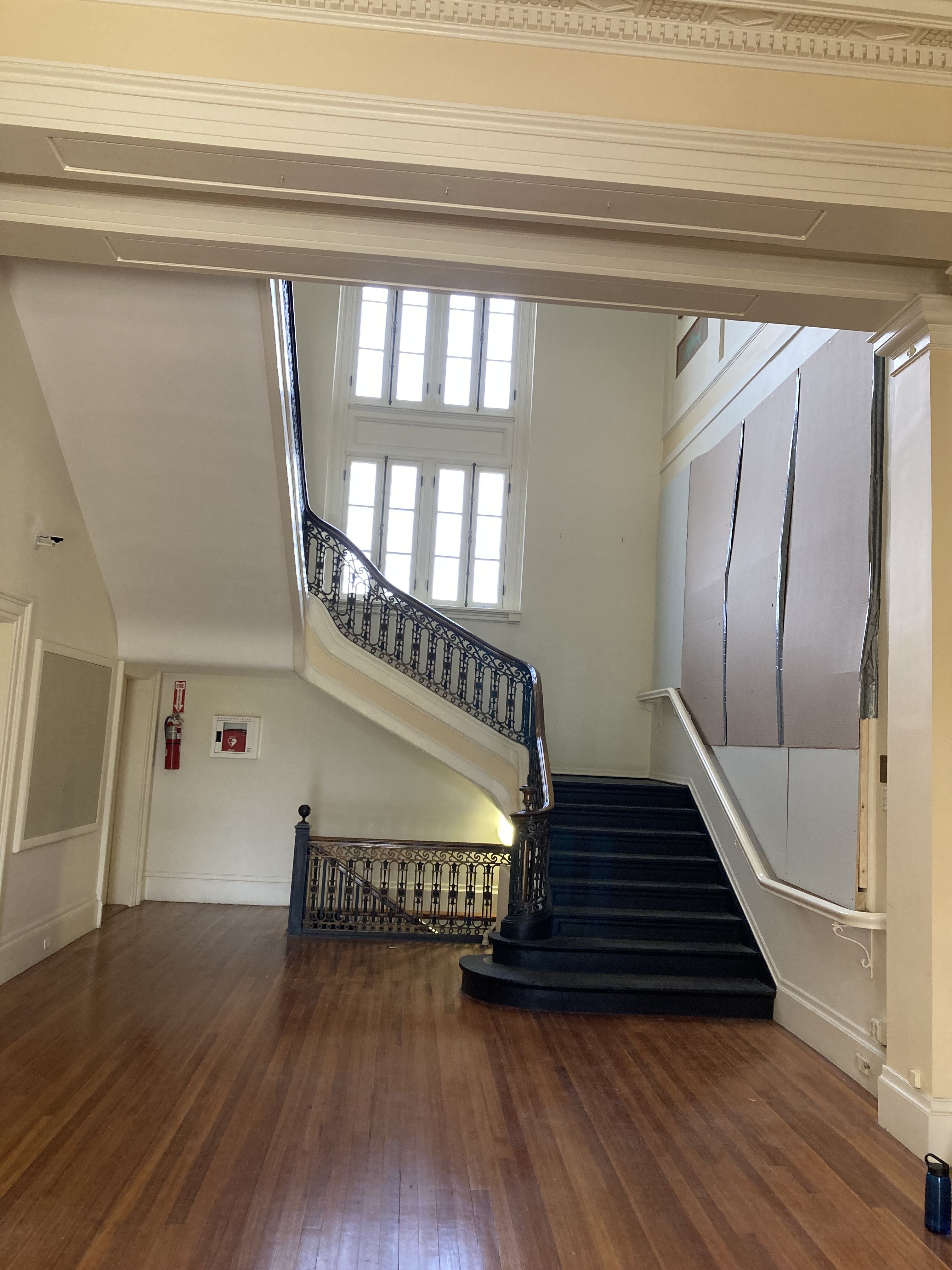
The Peabody building project has been active for over two months now and it is time for a brief progress report.

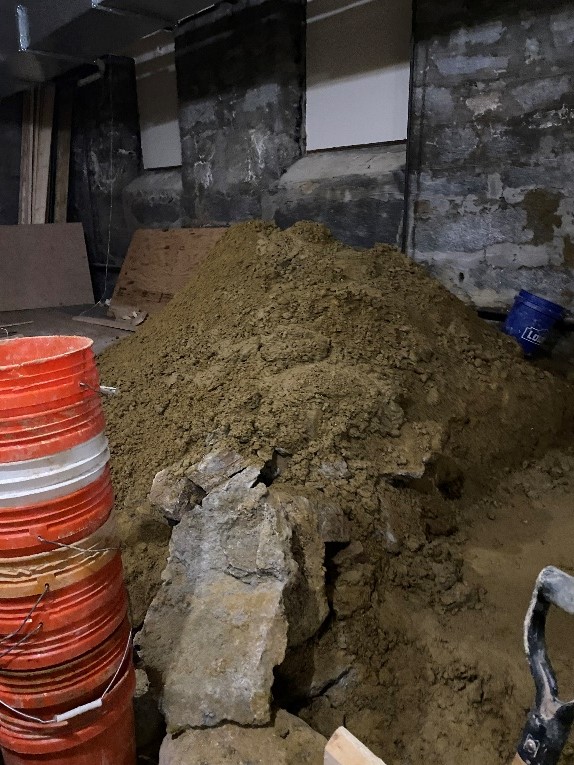
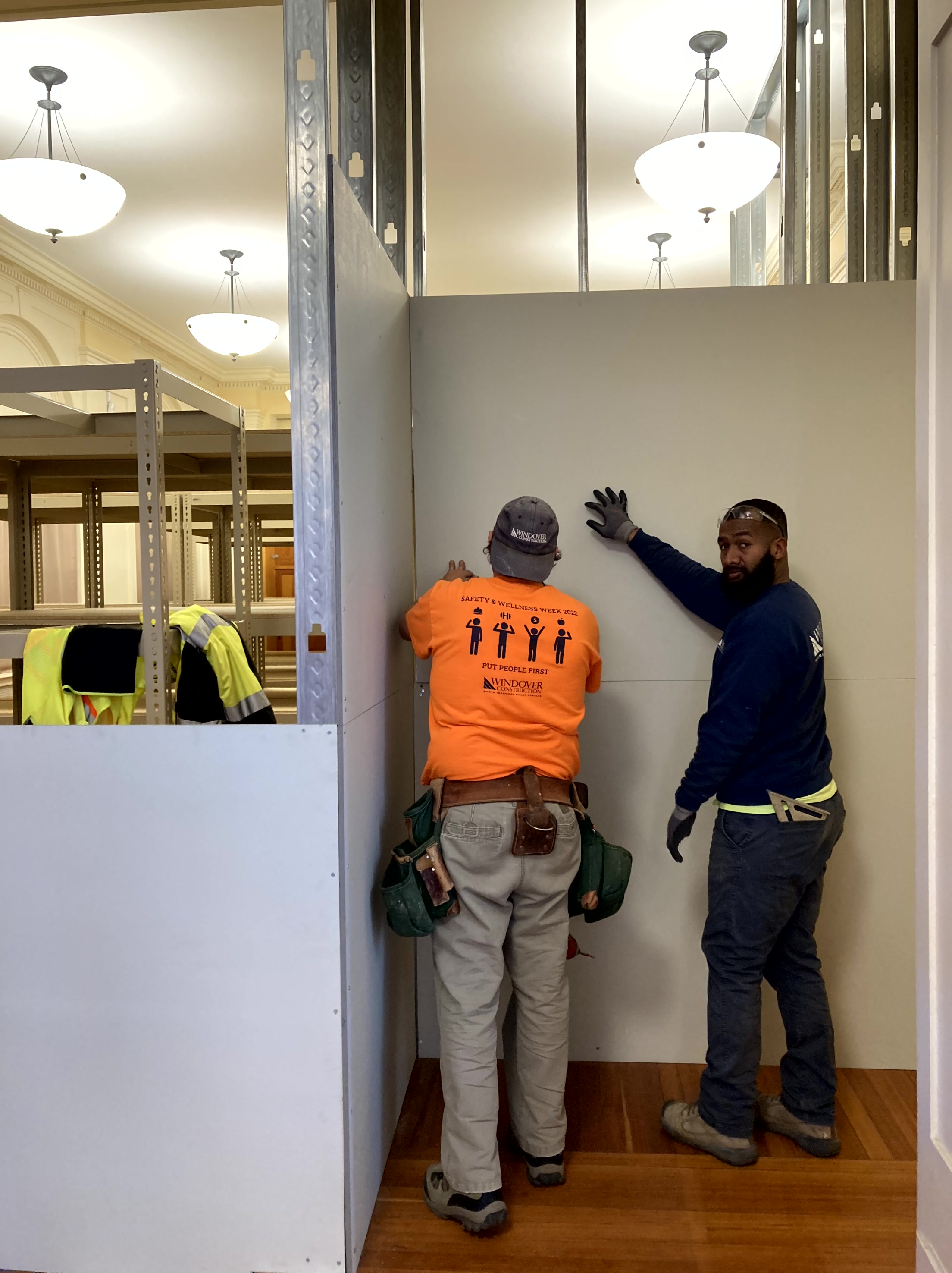
The biggest changes can be seen around the installation of the elevator.  A giant hole has been excavated in the basement.  Seriously, I had no idea how deep those shafts needed to go.  Steel support beams have been added on the first and second floors before the floors are removed. 

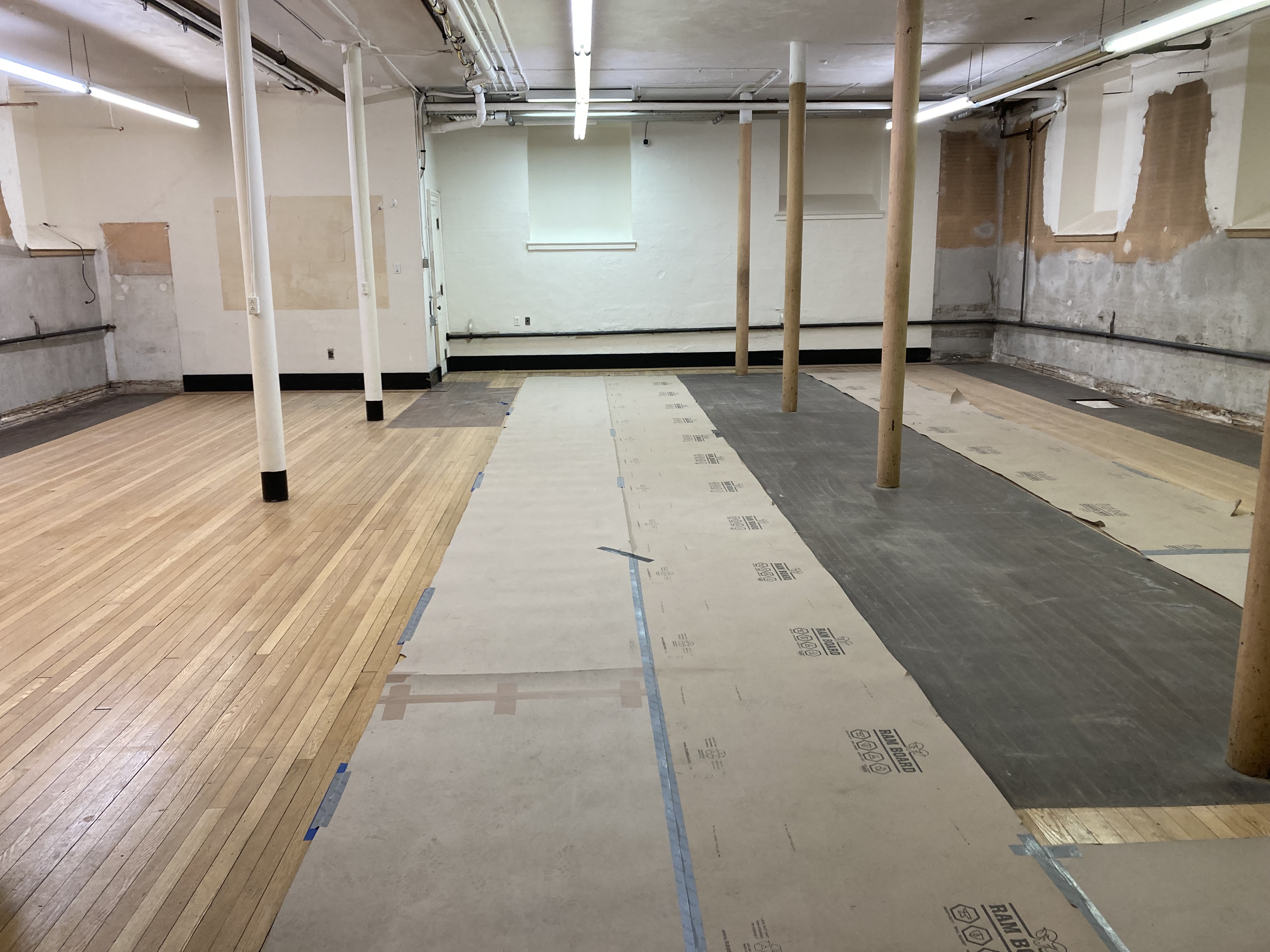
All the drywall on the exterior walls have also been removed to address any small leaks in the foundation.  Personally, I love the exposed foundation walls and was excited to learn that this appearance will be maintained. 

The latest work includes adding initial ductwork and systems support.

We appreciate everything the team has been doing and look forward to seeing this work continue!

This project will rely on philanthropic support from our donor community. To help advance this critical renovation, please contact Beth Parsons, director for museums and educational outreach, at 978-749-4523 or bparsons@andover.edu.

Volunteers are back at the Peabody!

Contributed by John Bergman-McCool

If you’re keeping track of the progress of renovations occurring at our building, you know that construction started last month, and that we are in our new temporary office space on campus. If you aren’t up to date on the project, read these two blogs out to see the changes that have already occurred (here and here).

Last week our non-student volunteers returned to duty. They were on a two-month hiatus while we figured out what projects they could assist with in our new space. With a month of our stay at the Abbot campus behind us, we decided it was time for the volunteers to come back and help carry out inventory clean-up. While the surroundings have changed, Mike and Richard picked right up where they left off.

Volunteer Mike rehousing items for inventory clean-up.

If you are interested in volunteering at the Peabody, you can contact me at jbergmanmccool@andover.edu. Currently we have limited capacity, but when we are back in our building in the fall, we’ll have a lot more space and the big job of moving the collection into our newly redesigned collection space.

Construction Begins

Contributed by Marla Taylor

It is finally happening – the Peabody Institute building project is underway!

It has been quite a whirlwind preparing for this project over the past months (planning began in earnest about a year ago).  

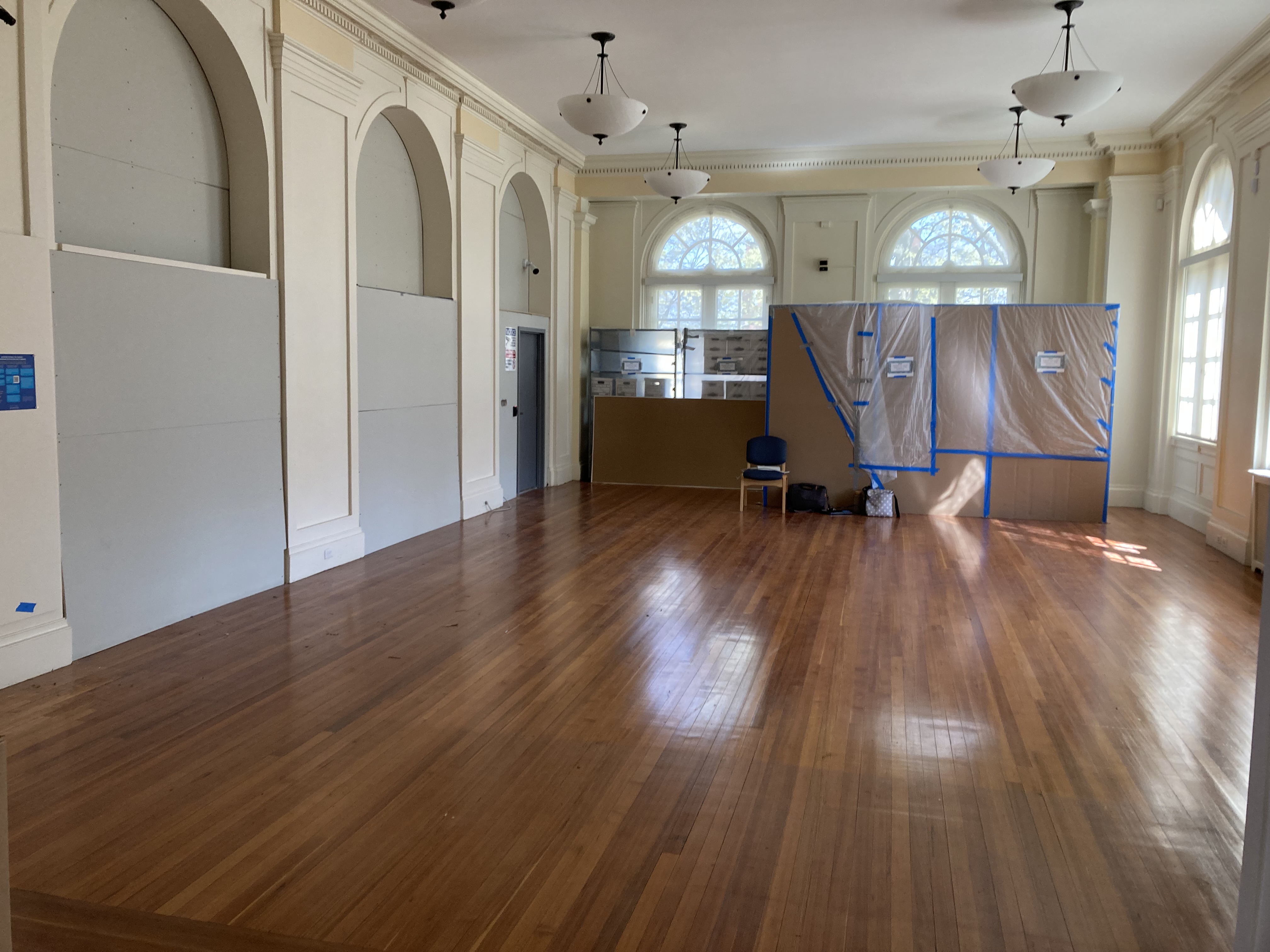
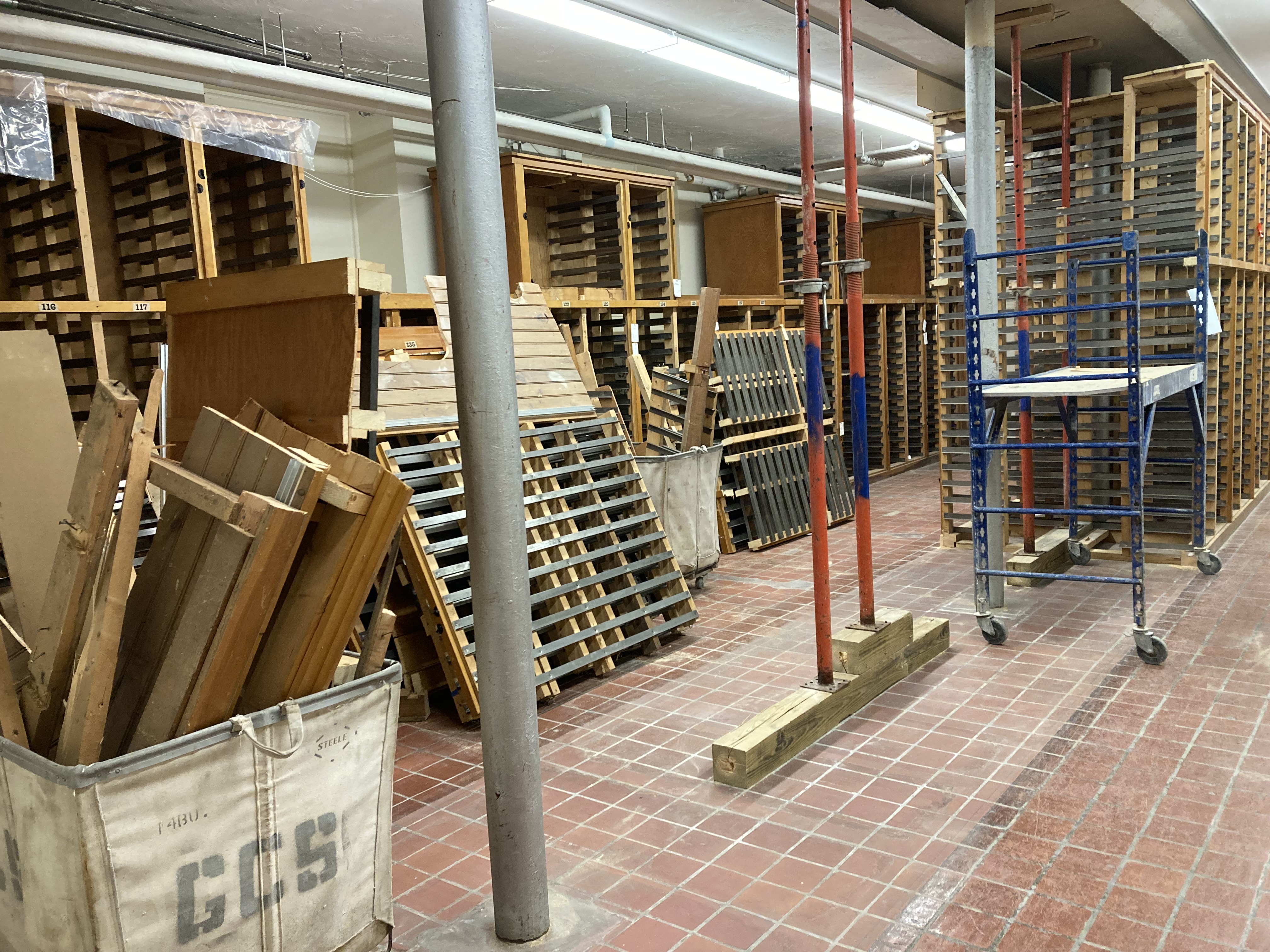
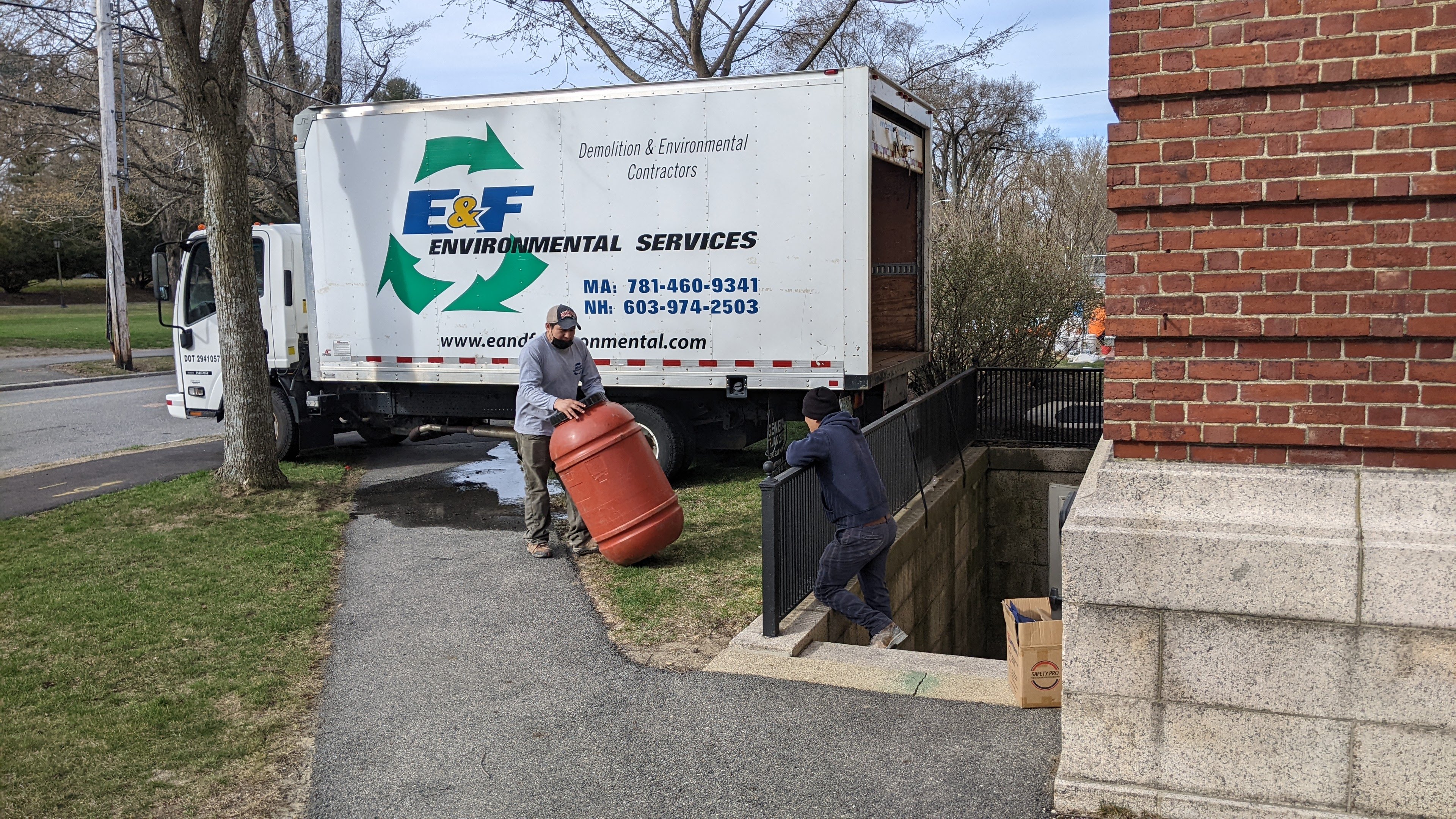
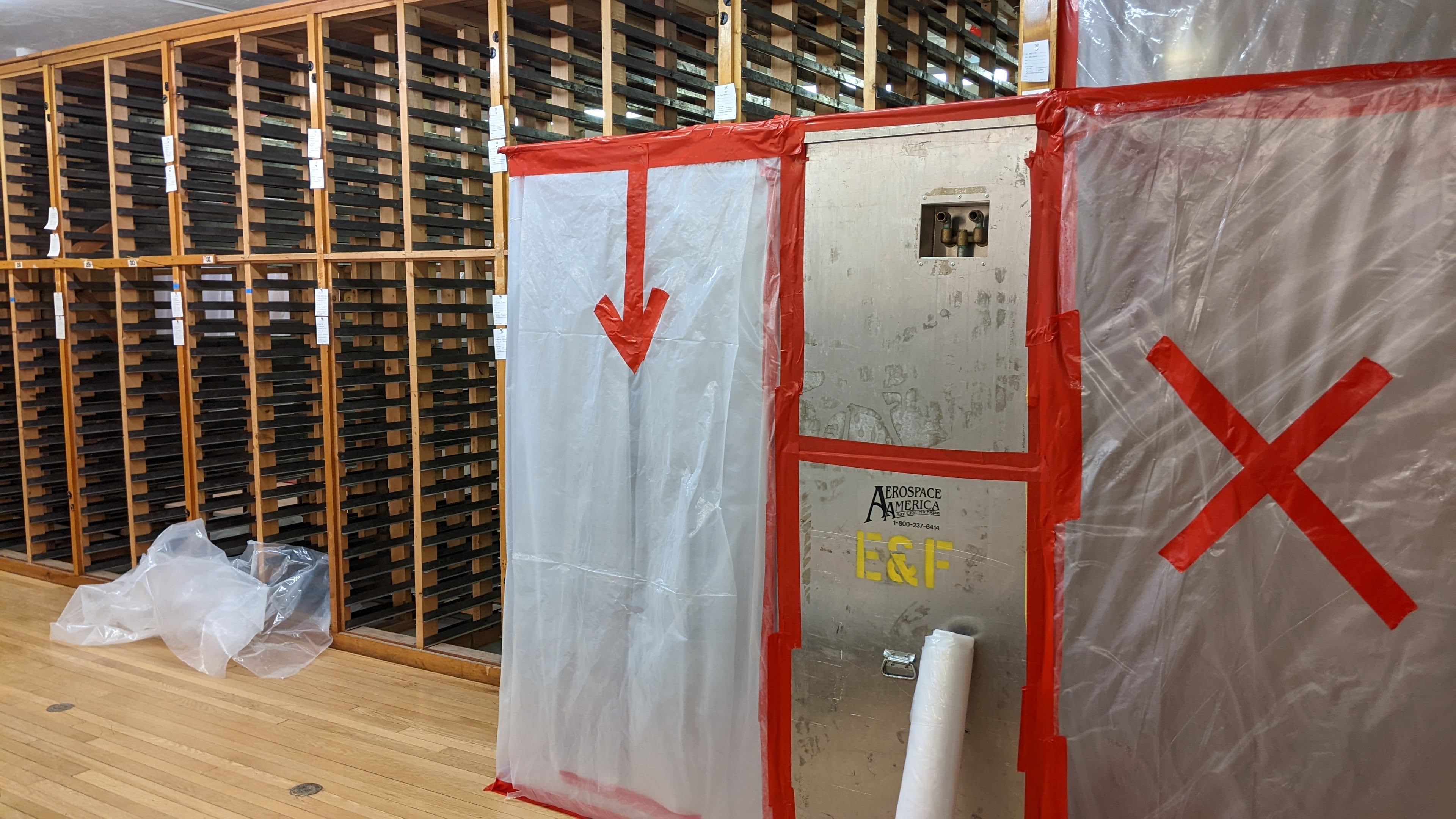
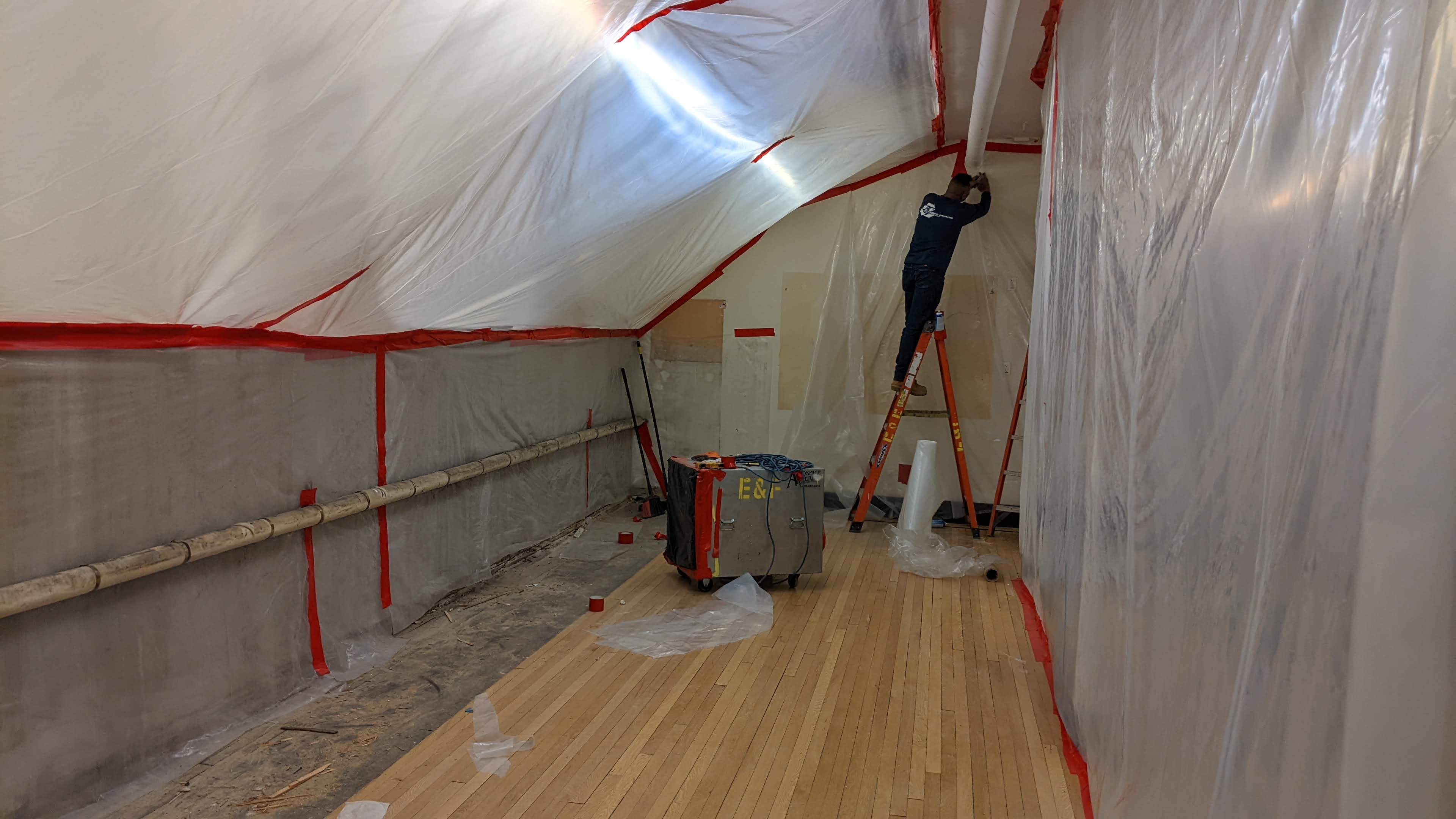
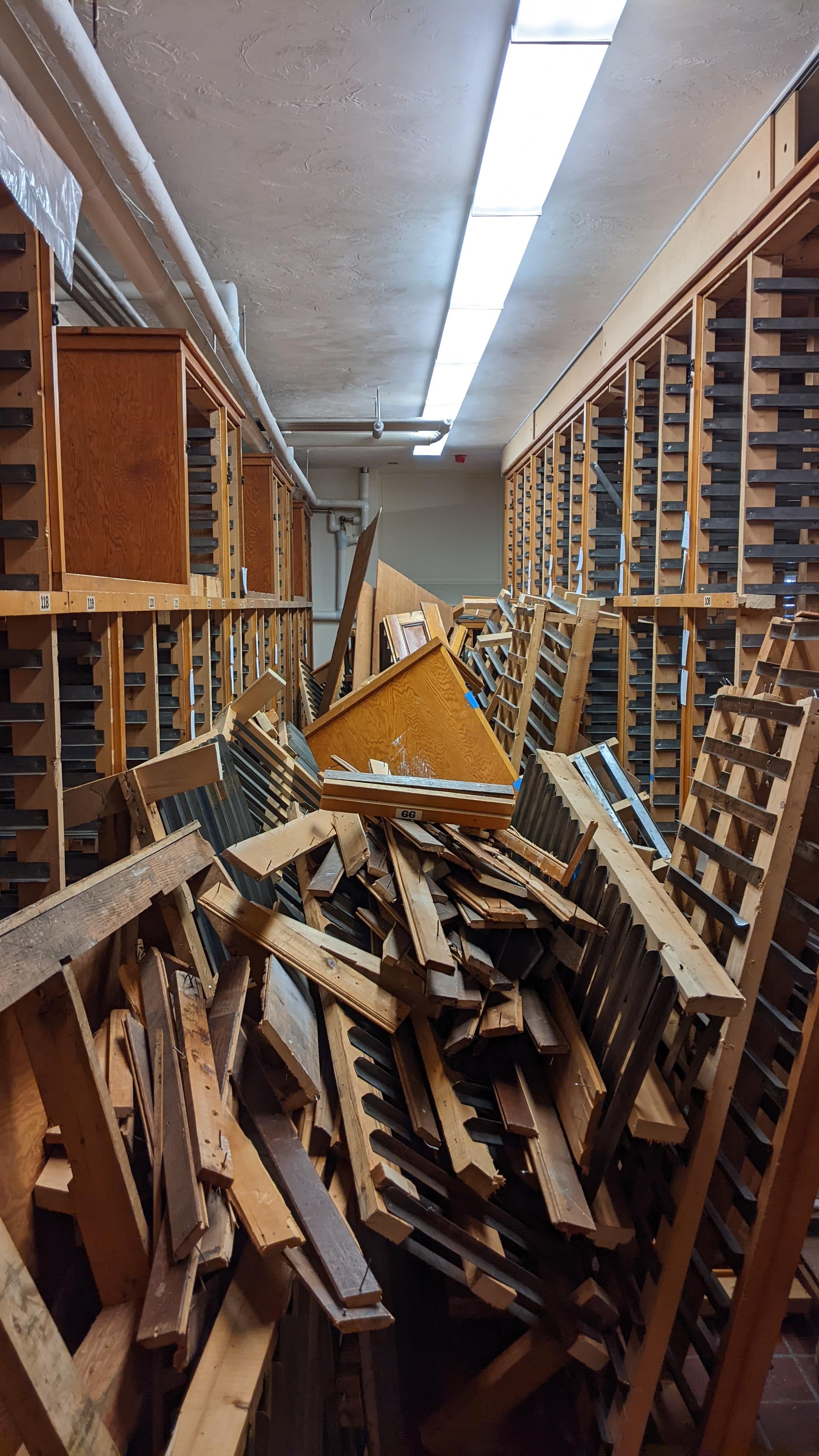
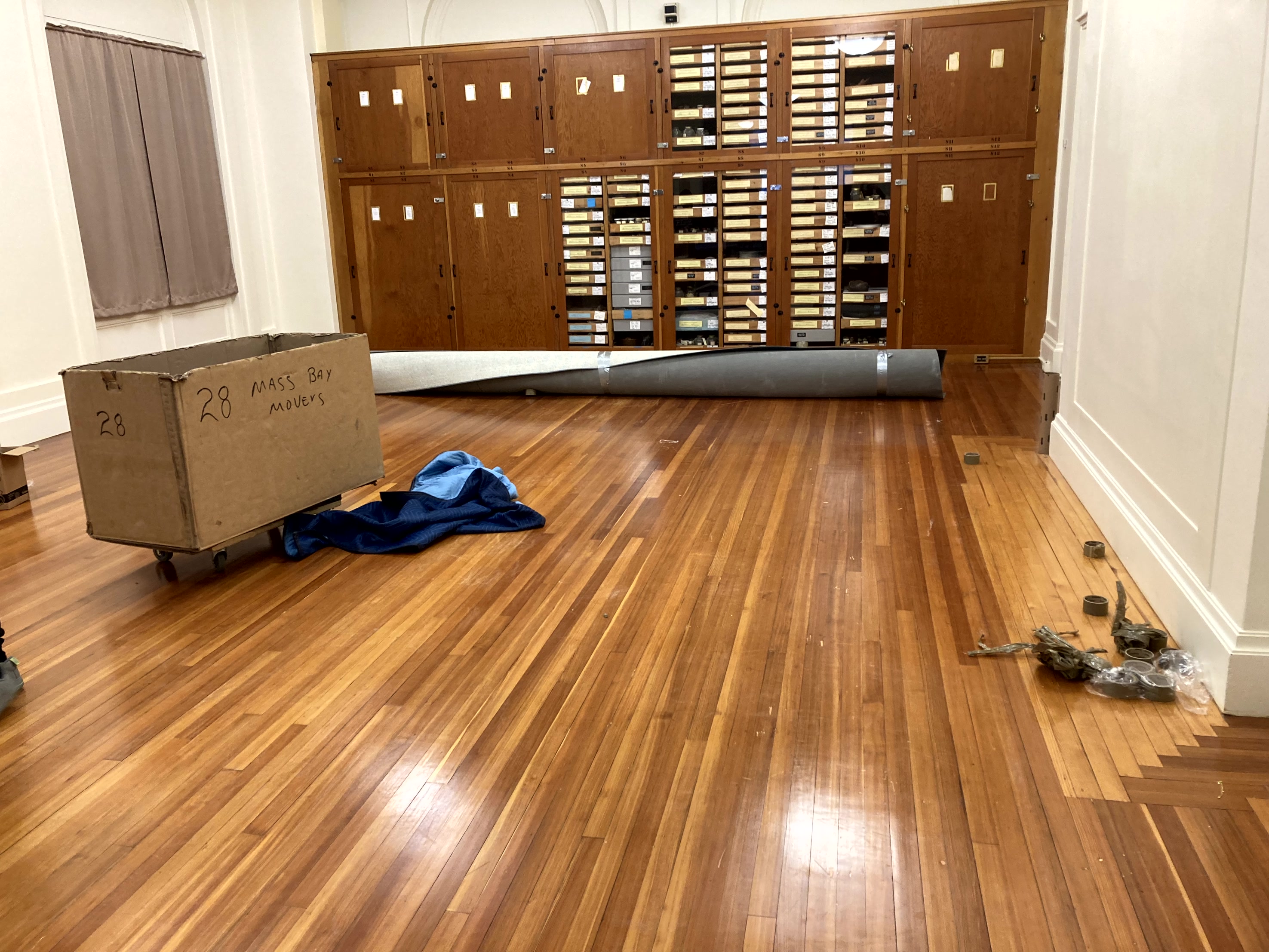
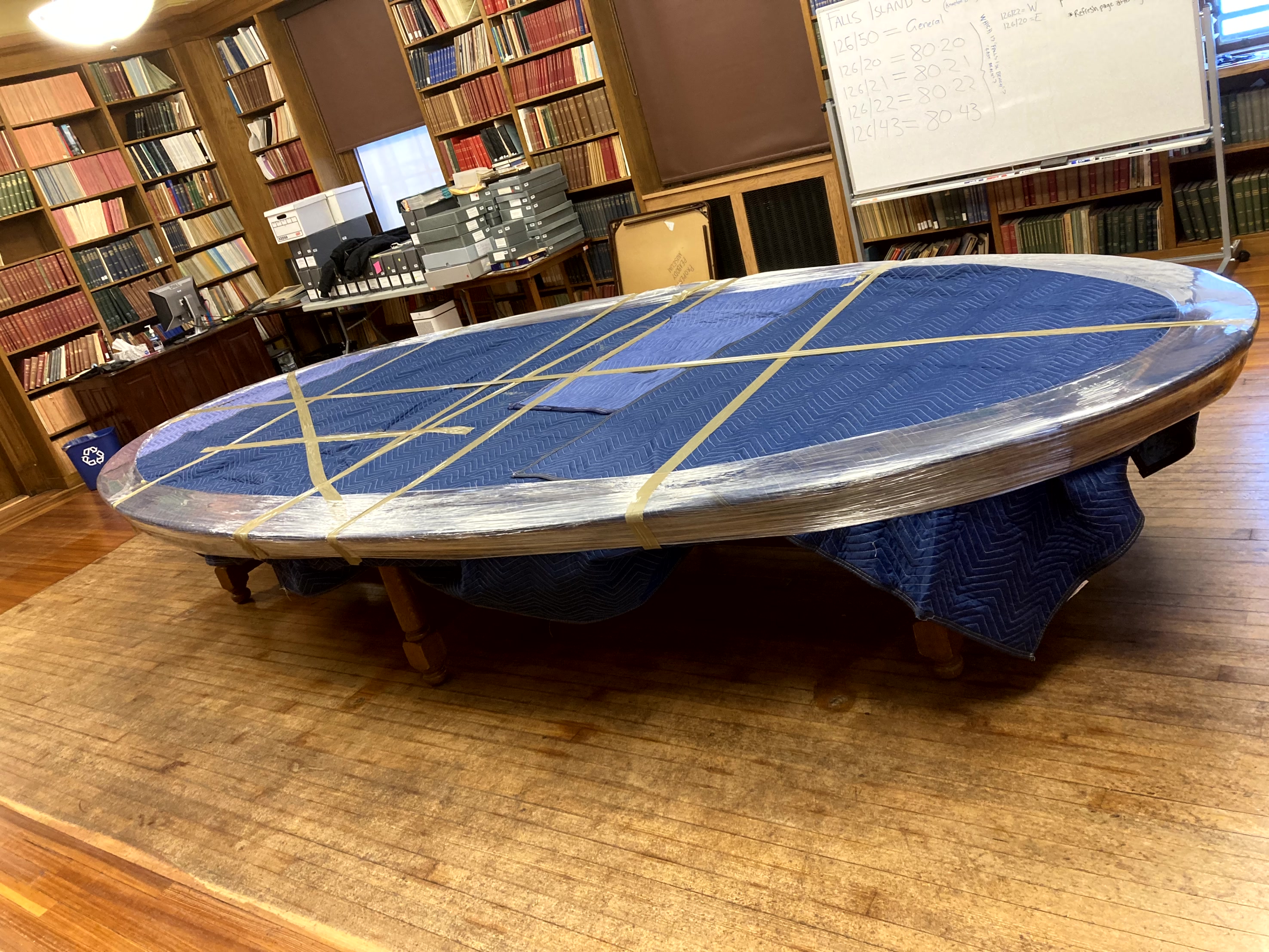
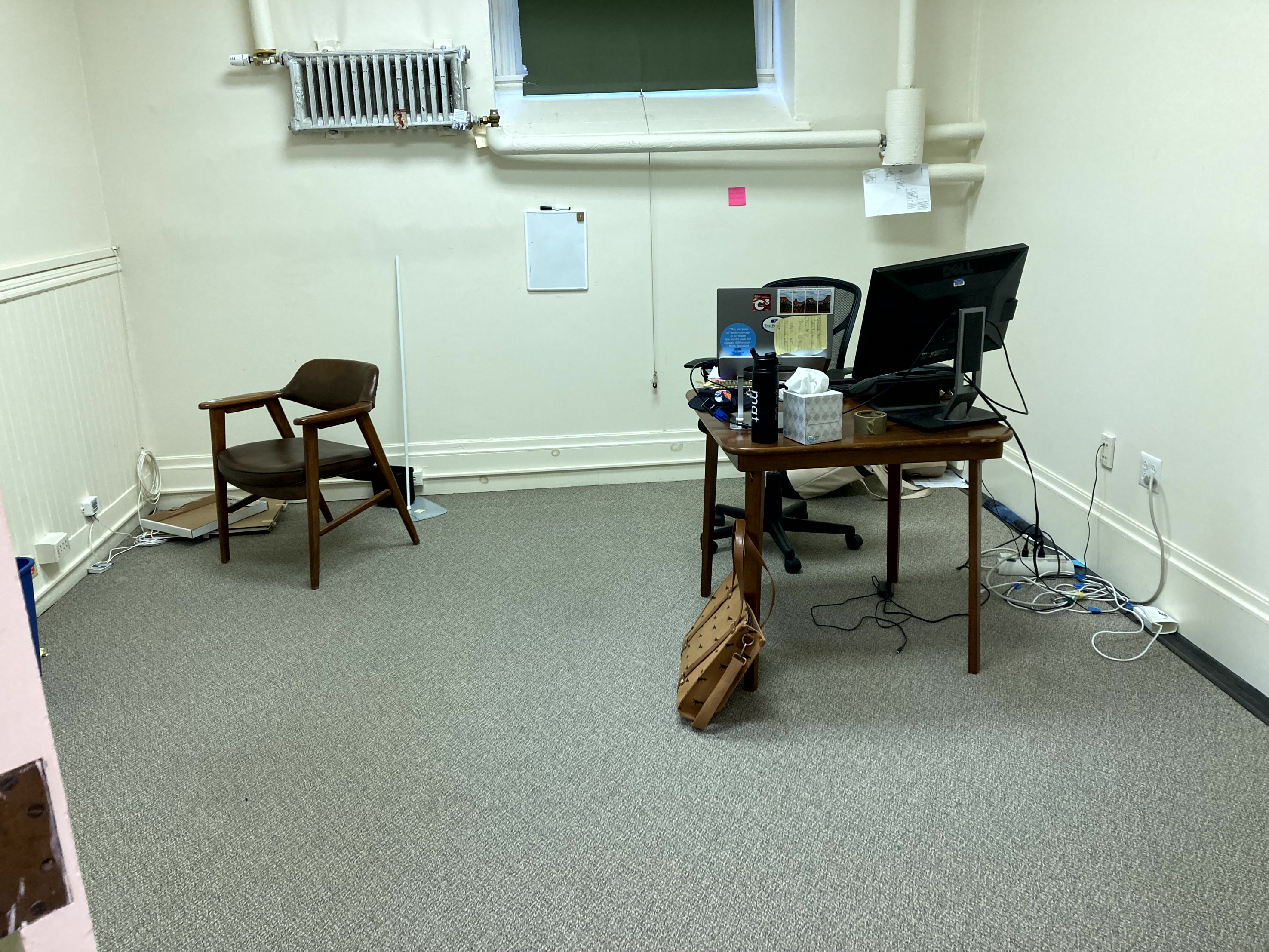
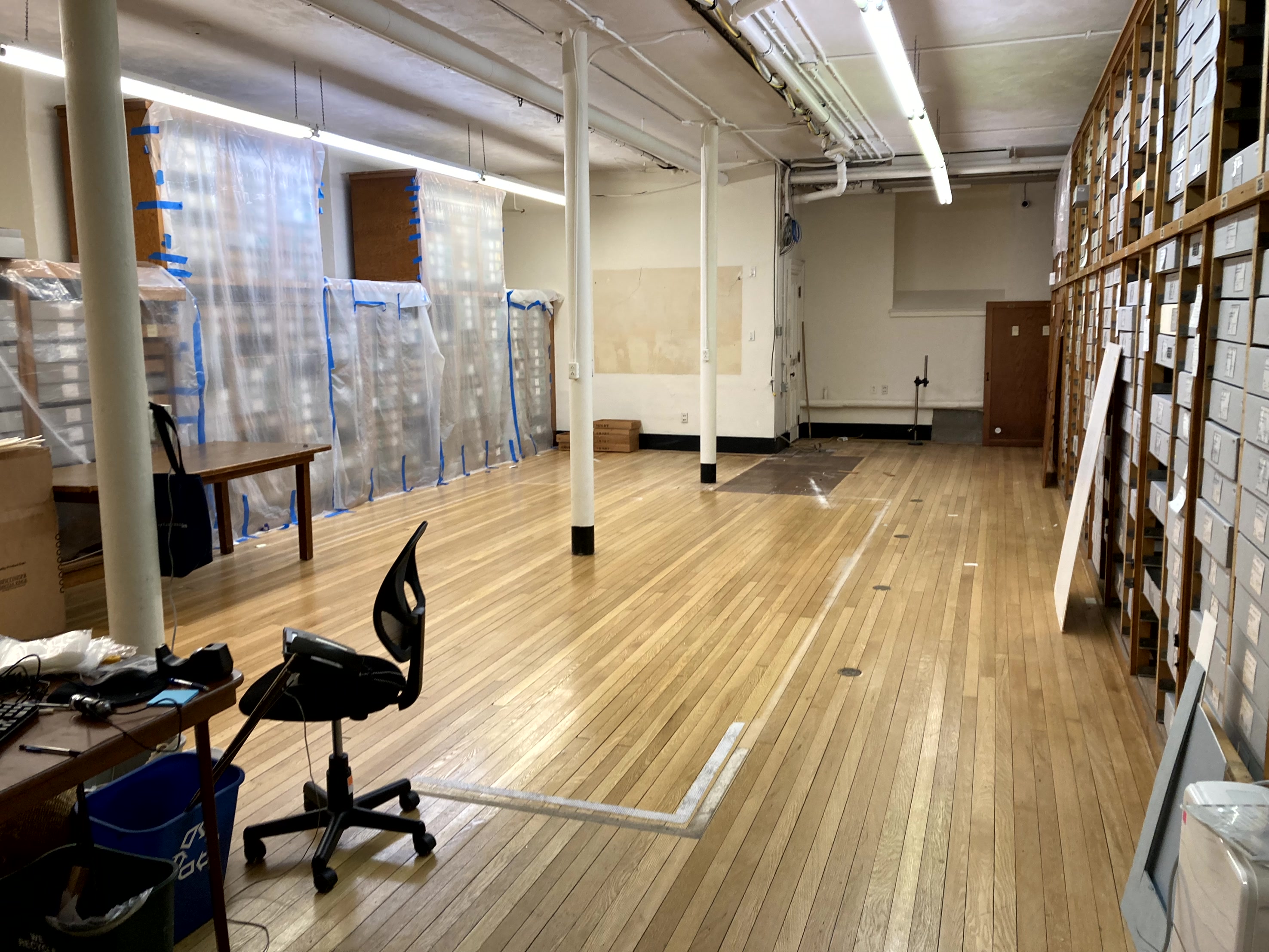
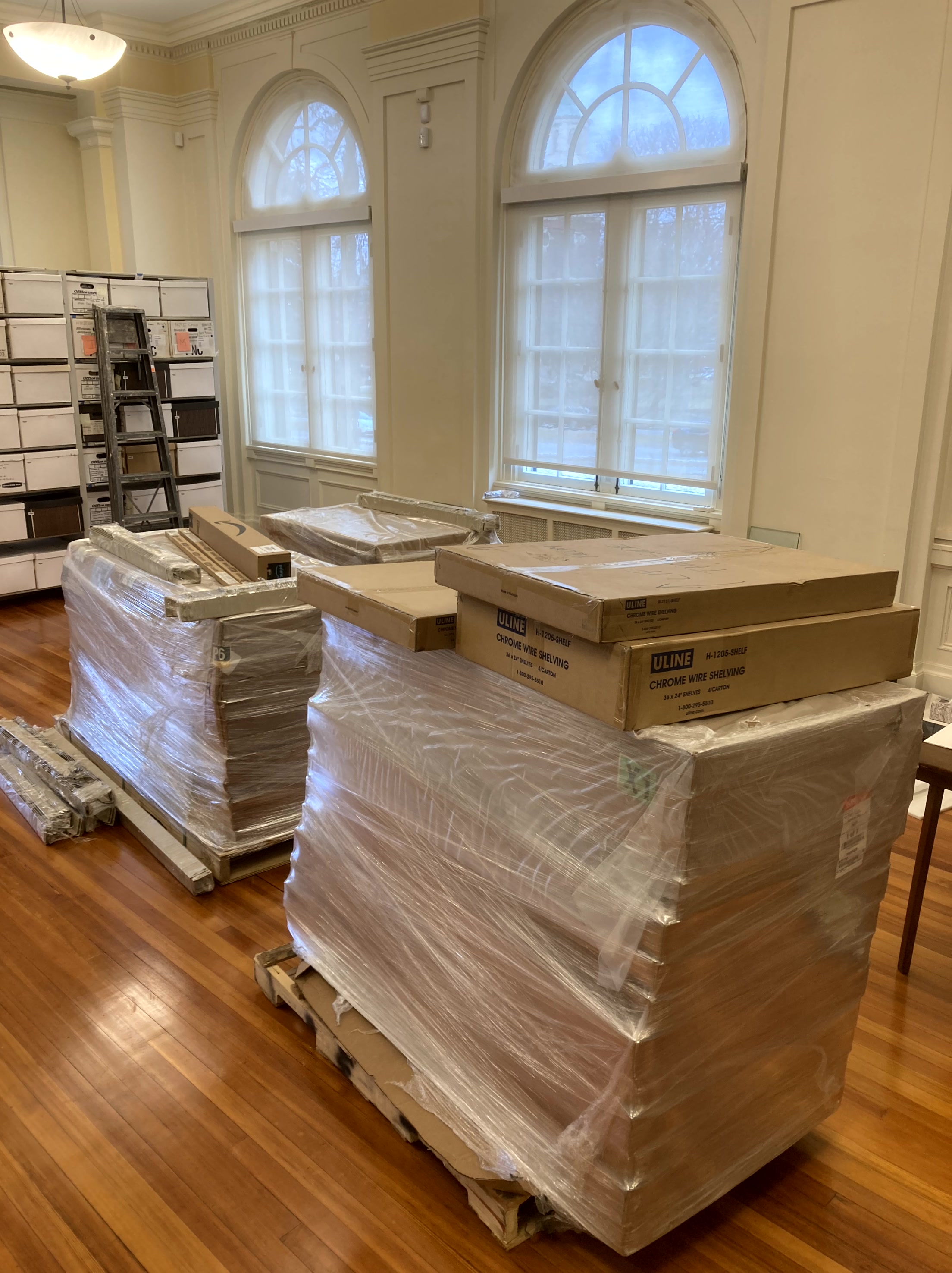
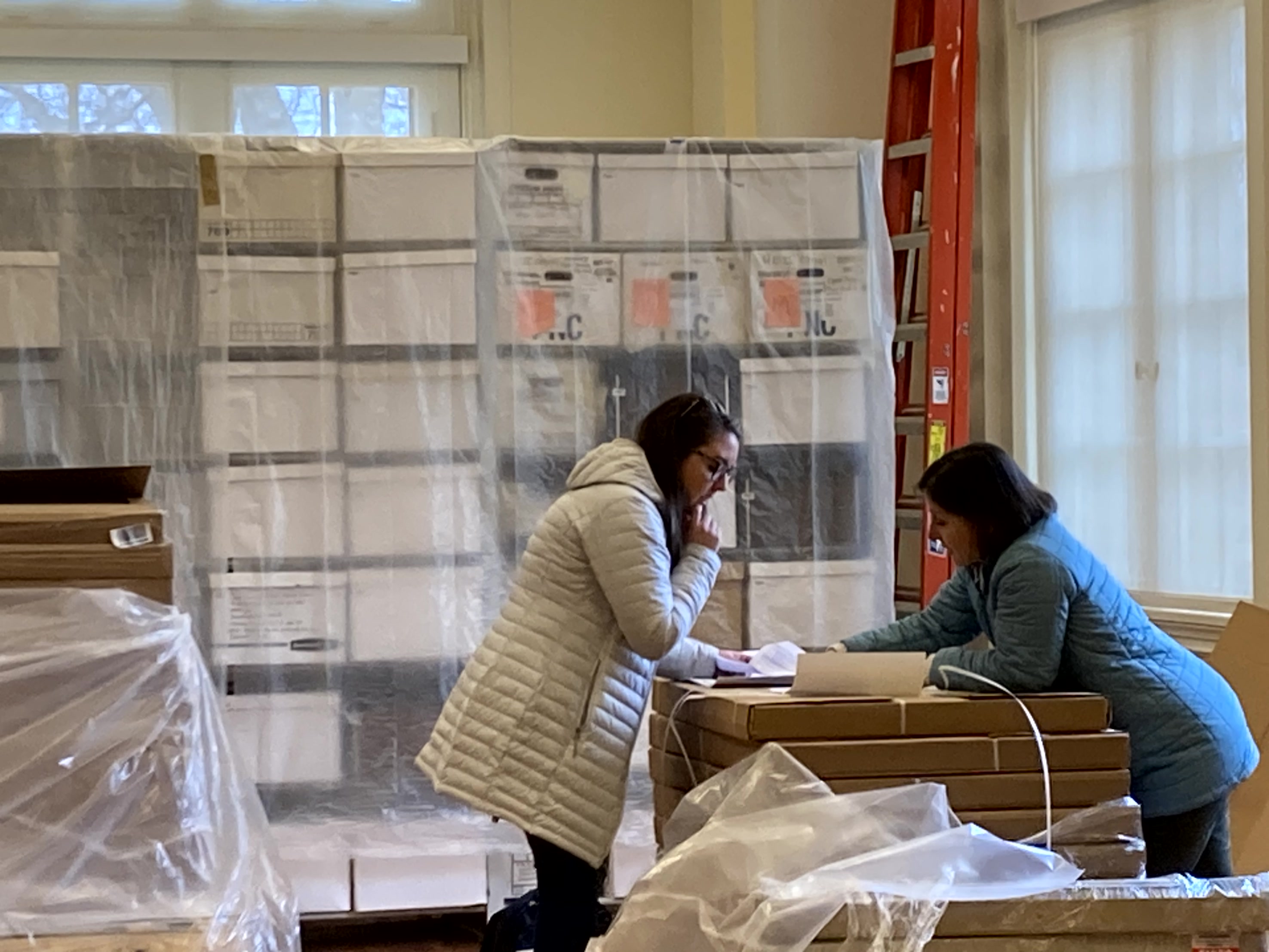
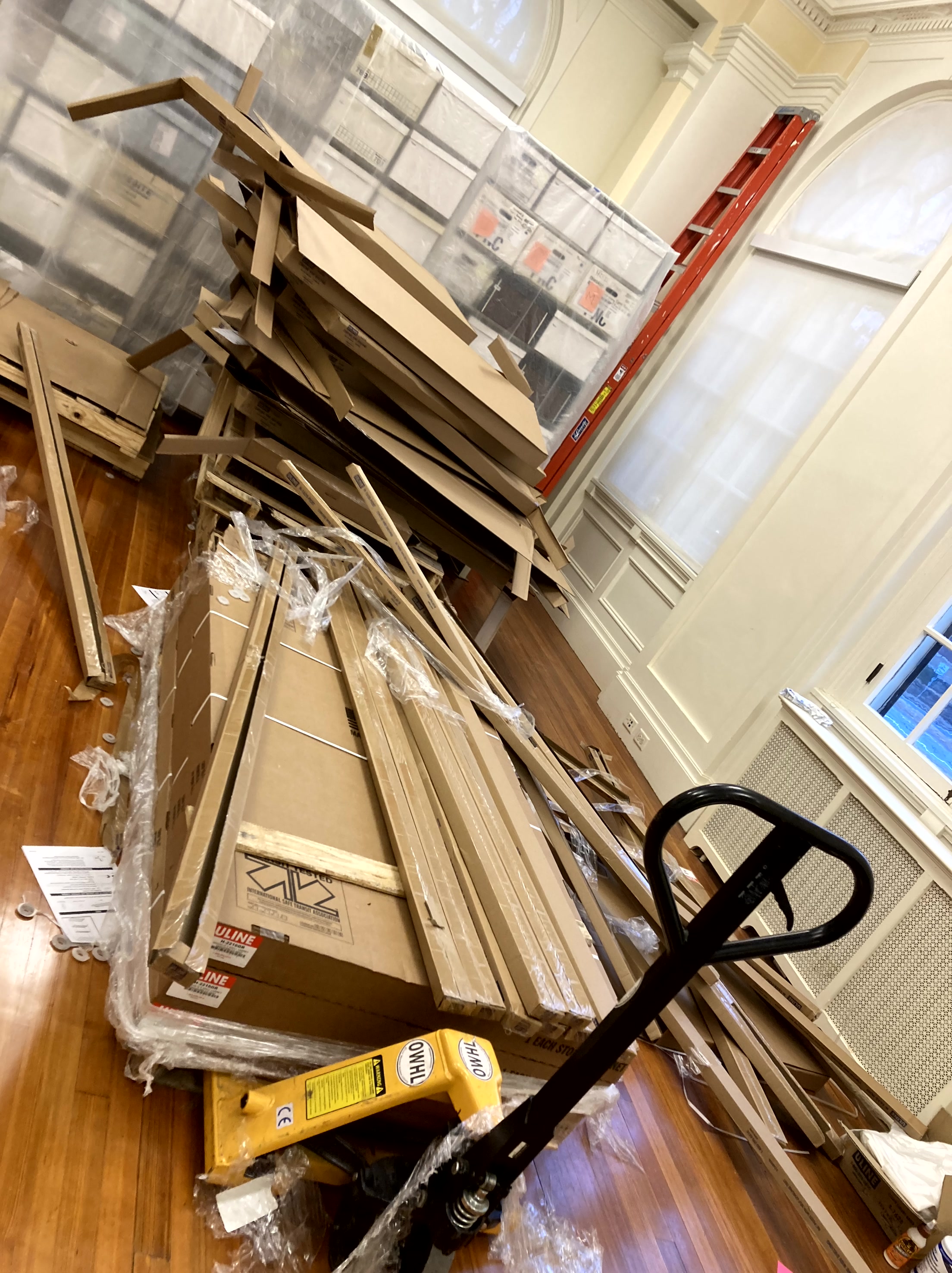
Since my last update, the full collection has been relocated within the building, asbestos has been remediated, the old storage bays have been demolished, and staff transitioned to working at small folding tables.  We made the move to our temporary office space on-campus and are beginning to settle in.

So much credit goes to the Peabody staff members (and past interns) who collaborated to facilitate keeping the collection safe and organized during this process – thank you all!

We will keep you updated on progress as we are able.

This project will rely on philanthropic support from our donor community. To help advance this critical renovation, please contact Beth Parsons, director for museums and educational outreach, at 978-749-4523 or bparsons@andover.edu.

Pueblo Revolt at ASECS

Contributed by Ryan Wheeler

At this year’s American Society for Eighteenth Century Studies (ASECS) conference, I had the opportunity to participate in the roundtable Teaching the Global Eighteenth Century. Phillips Academy instructor in history and social sciences Natalya Baldyga and I presented Assimilation, Acculturation, Catachresis, and Syncretism: Employing Archaeology to Foreground Indigenous Resistance in the Spanish Southwest, sharing our experiences teaching the Pueblo Revolt of 1680 to History 200 classes at the Academy.

Contemporary Indigenous artist Jason Garcia’s take on the Pueblo Revolt combines traditional materials and methods with graphic designs depicting Po’Pay, the architect of the revolt, as a comic book superhero. These two pieces are in the collection of the Robert S. Peabody Institute of Archaeology–you can see the vessel on the right in the inaugural exhibition of the Smithsonian’s National Museum of the American Latino.

If you are not familiar with the Pueblo Revolt, it is a pivotal moment in the history of the Southwest and the modern descendants of those who fought Spanish colonization at the end of the seventeenth century. Our abstract has a little more information on the Revolt and our approach:

Using the case study of the Pueblo Revolt of 1680, our presentation illustrates how archaeological artifacts can be employed to unsettle and decenter colonial narratives by refocusing the North American story of the early eighteenth century on Indigenous peoples of the Spanish Southwest. Too often, Anglophone histories associate the long eighteenth century in the Americas with English colonialism in general, and with the American Revolution in particular. We ask students to consider instead the “first American Revolution,” in which the Pueblo Peoples, led by the Tewa religious leader Po’pay, confronted missionaries and soldiers in the Spanish borderlands of what is now New Mexico. In our classes, students explore both artifacts from the Pueblo Revolt and contemporary Puebloan artistic responses to the historical event, foregrounding Indigenous resistance and survival over tales of erasure and domination. This approach both reorientates students’ understanding of colonial North American history towards wider global narratives of European expansion, and, perhaps more importantly, introduces students to multiple ways that Indigenous peoples adapted to, resisted, and overcame the efforts to erase their cultural identities and physical existence.

Drs. Wheeler and Baldyga also celebrated their anniversary during the conference.

The Peabody Institute has long offered various versions of a Pueblo Revolt lesson, but the current iteration has greatly benefitted from Dr. Baldyga’s experience and training. Together we’ve developed the lesson, typically delivered in the world history survey course for tenth grade, providing students with anthropological concepts, like assimilation and catachresis, that they can use in other settings, as well as foregrounding contemporary Indigenous perspectives and objects directly related to the Revolt. Conversations with other participants in the workshop were productive, especially in their pedagogical approach to topics like the production of sugar.

Building Update!

Contributed by Marla Taylor

The Peabody is currently in the pre-construction phase of a much-needed building update!  This is Phase 1 of a two-phase project.

The project has three main goals:

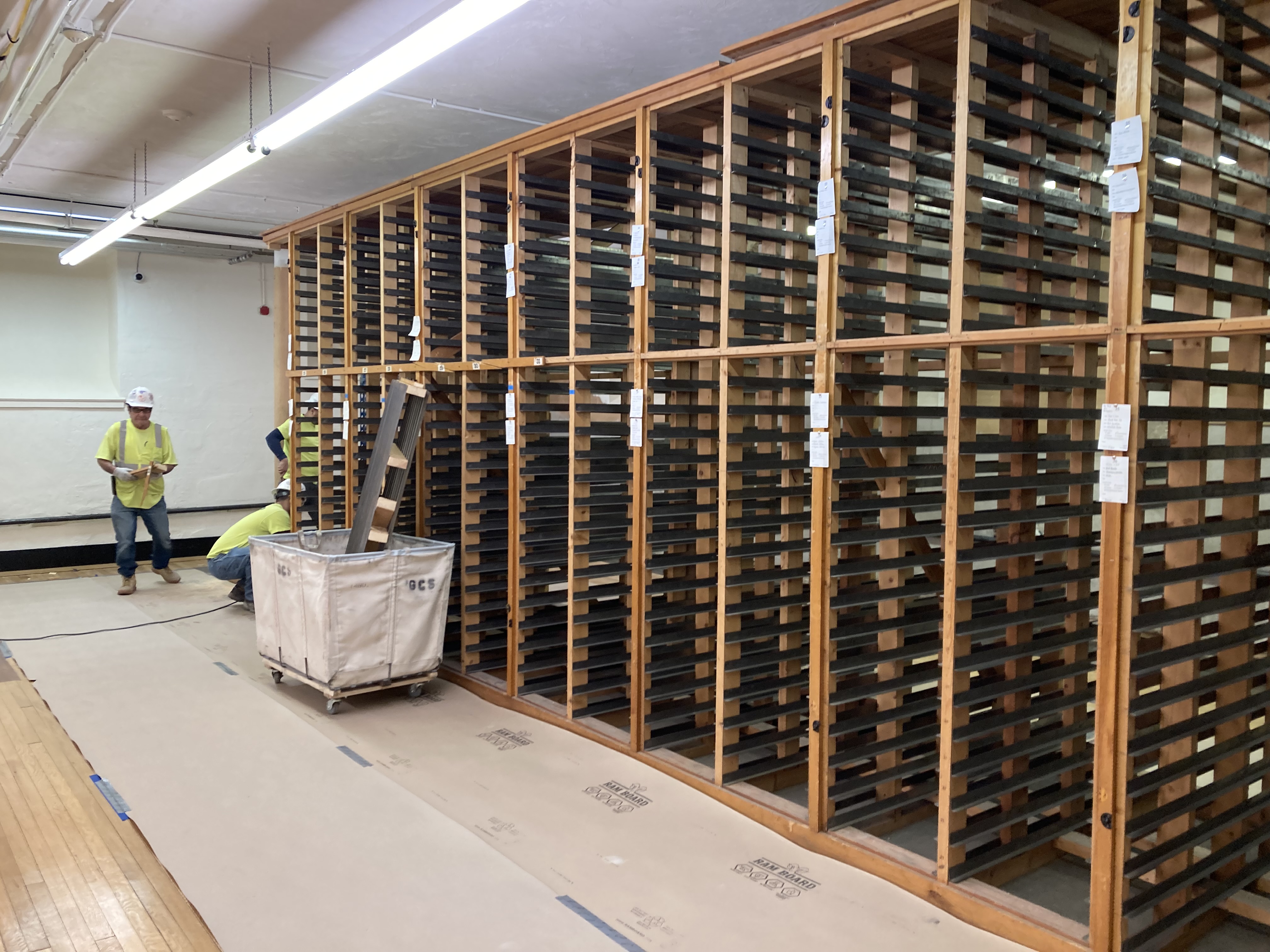
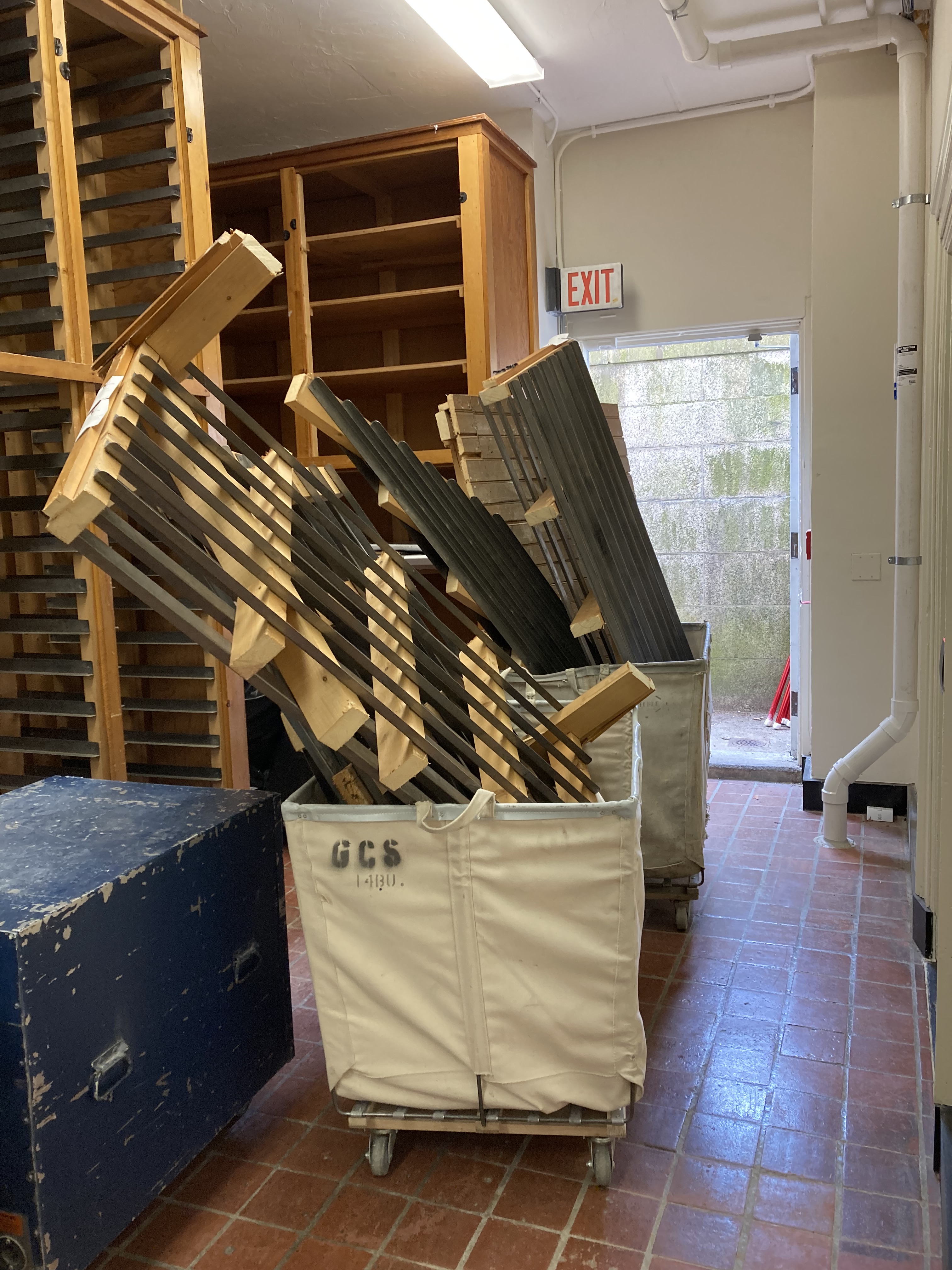
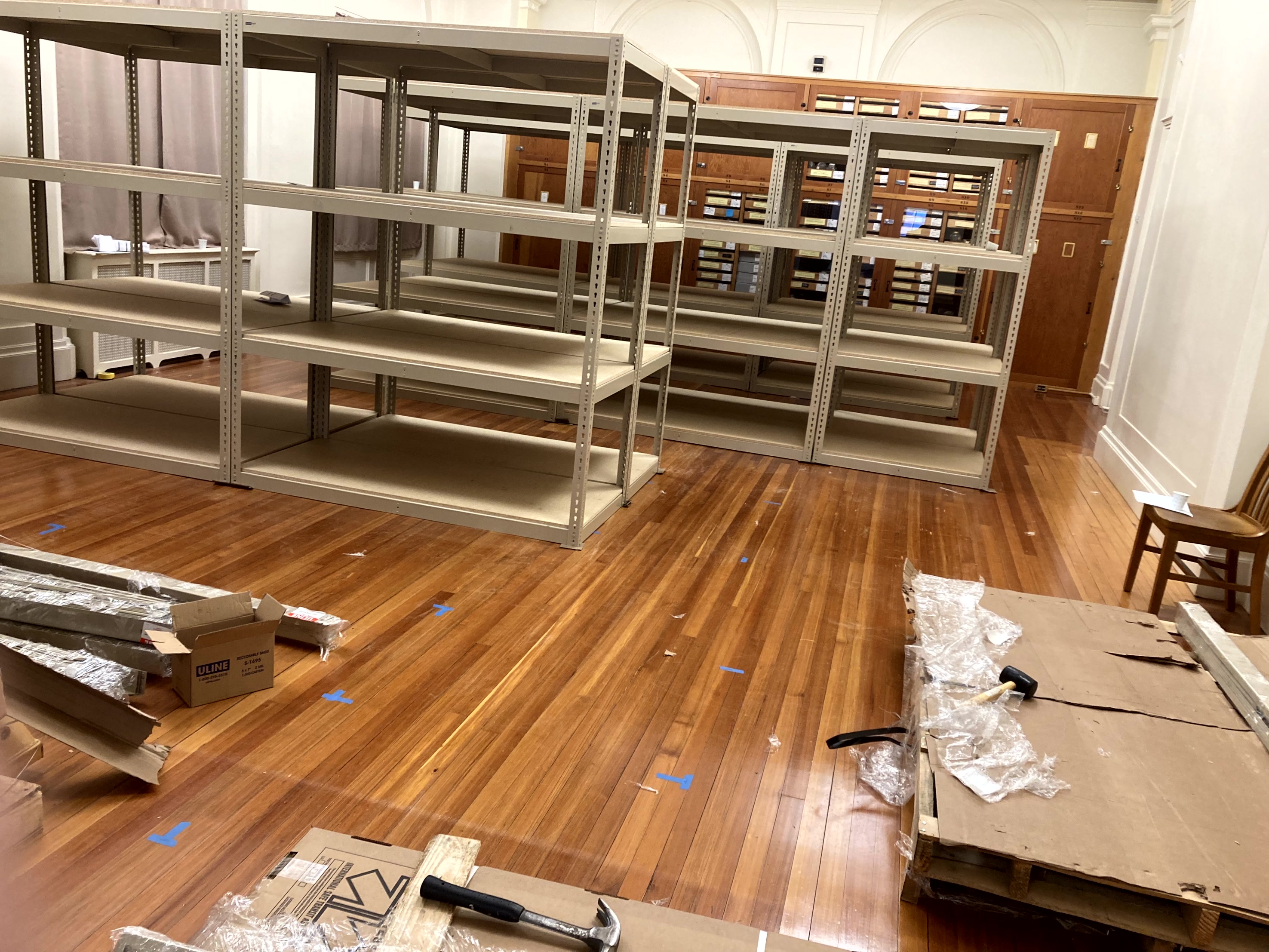
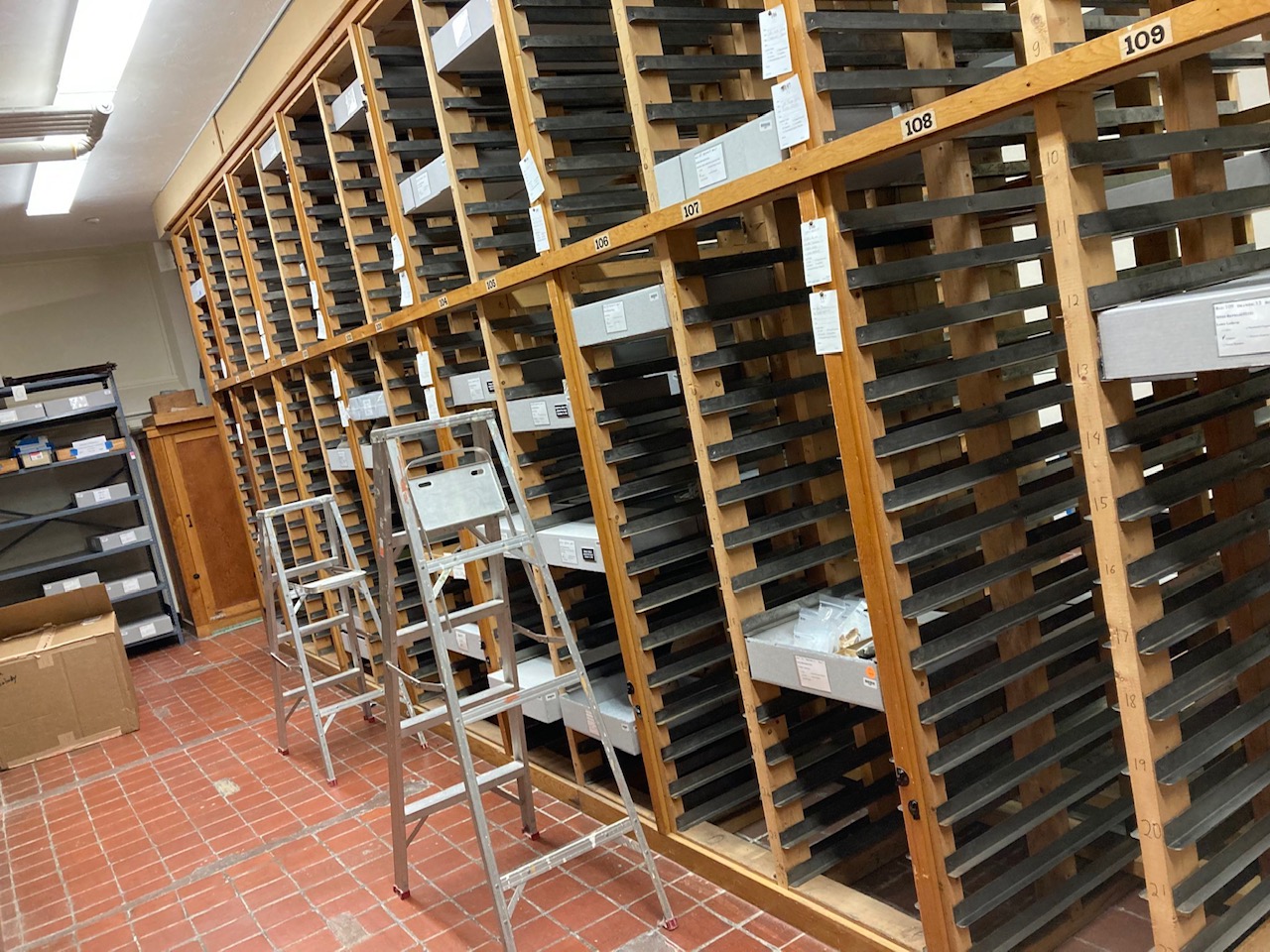
  • Replace the current basement shelving (that was constructed in the very early 1900s) with modern mobile shelving
  • Provide HVAC and sprinklers for the collections areas
  • Install an elevator and meet other code compliance issues

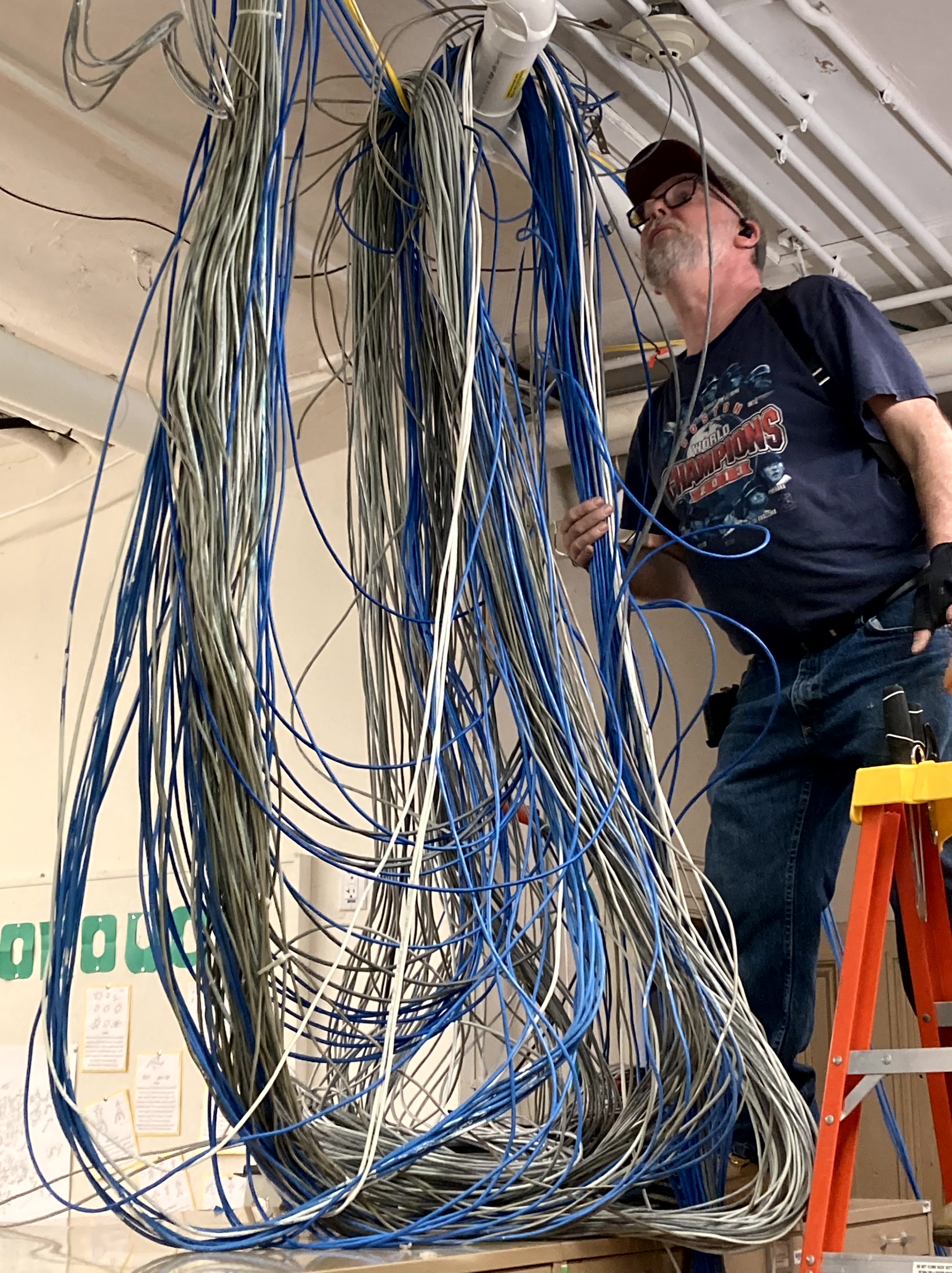
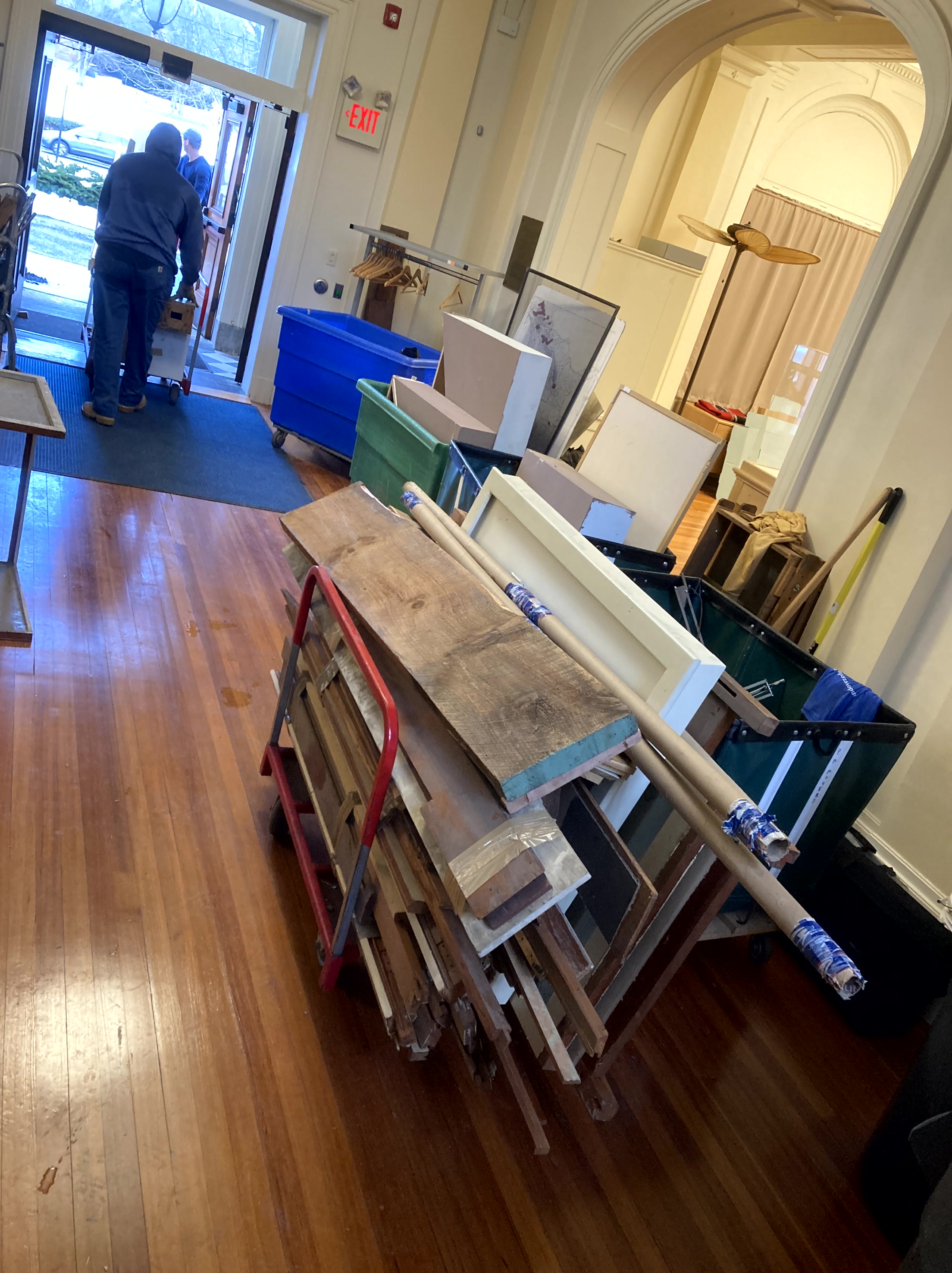
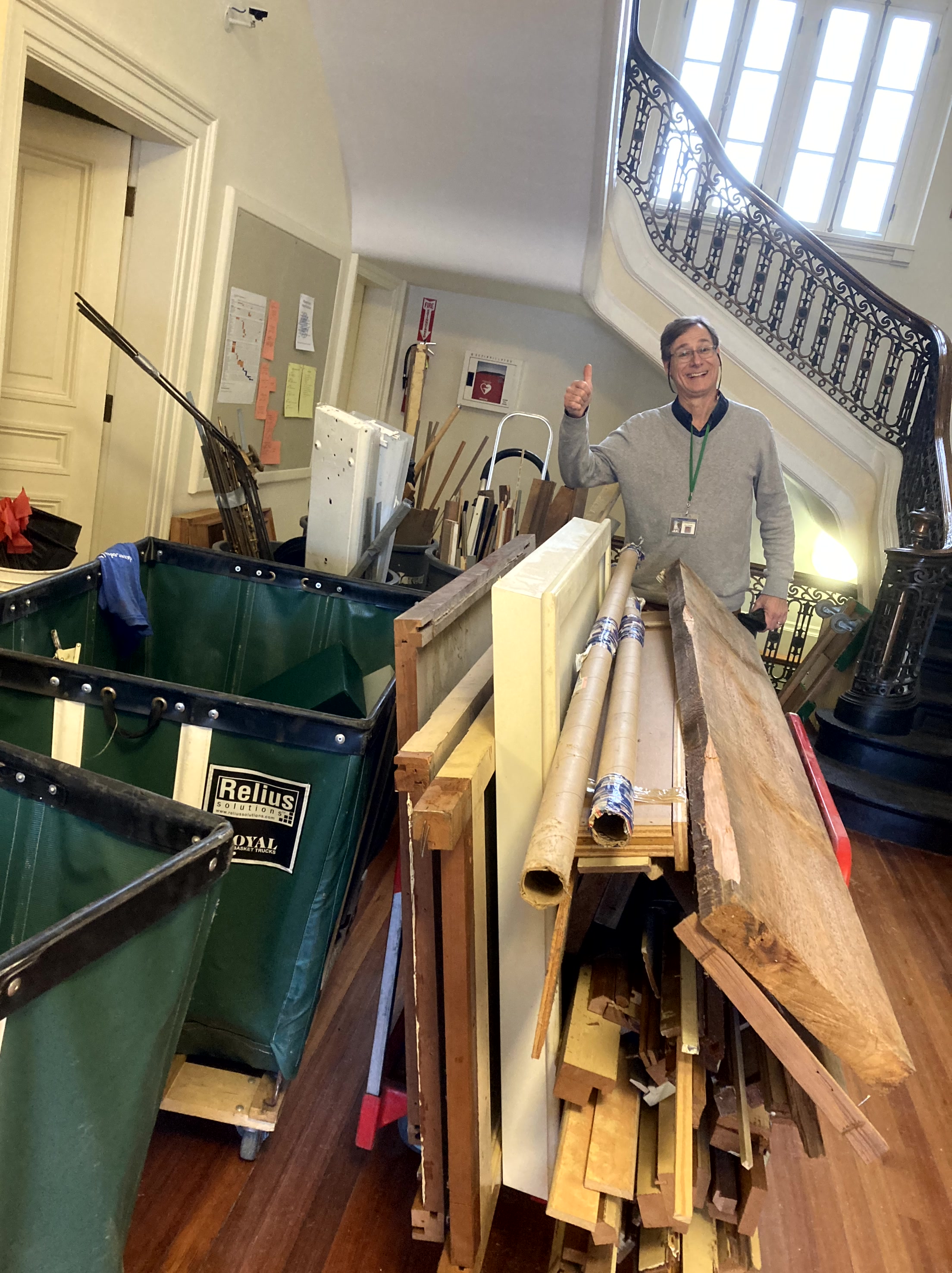
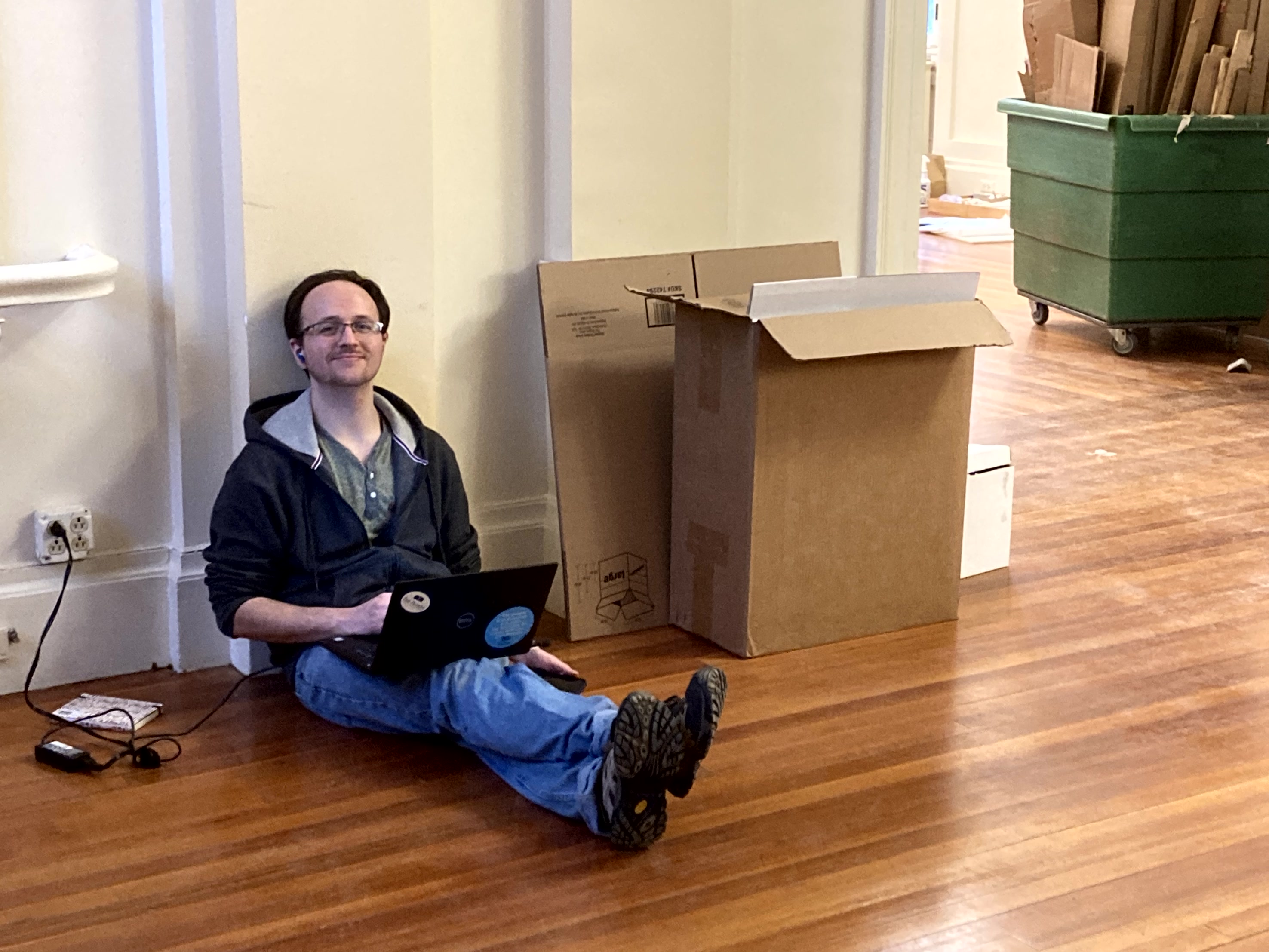
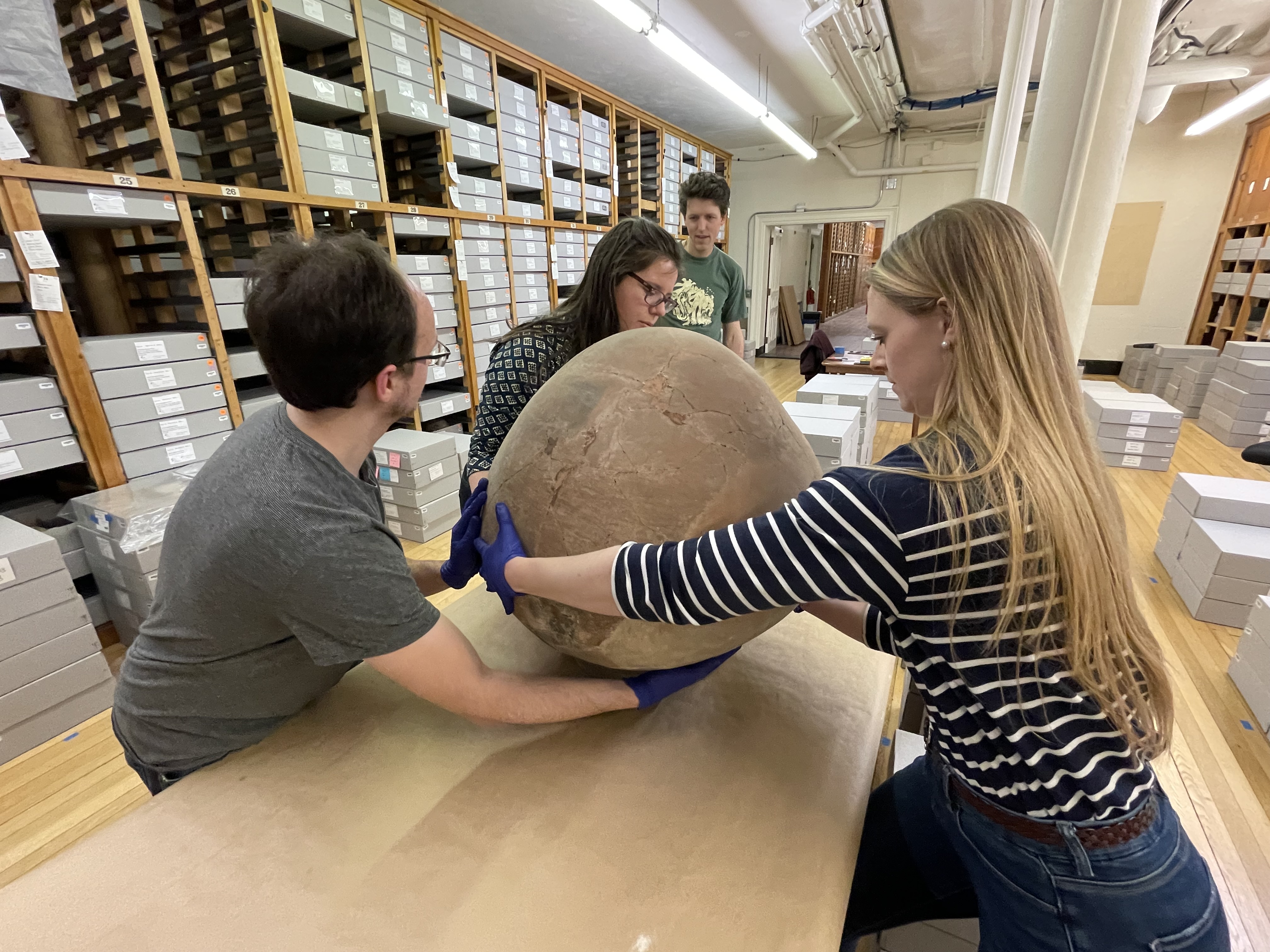
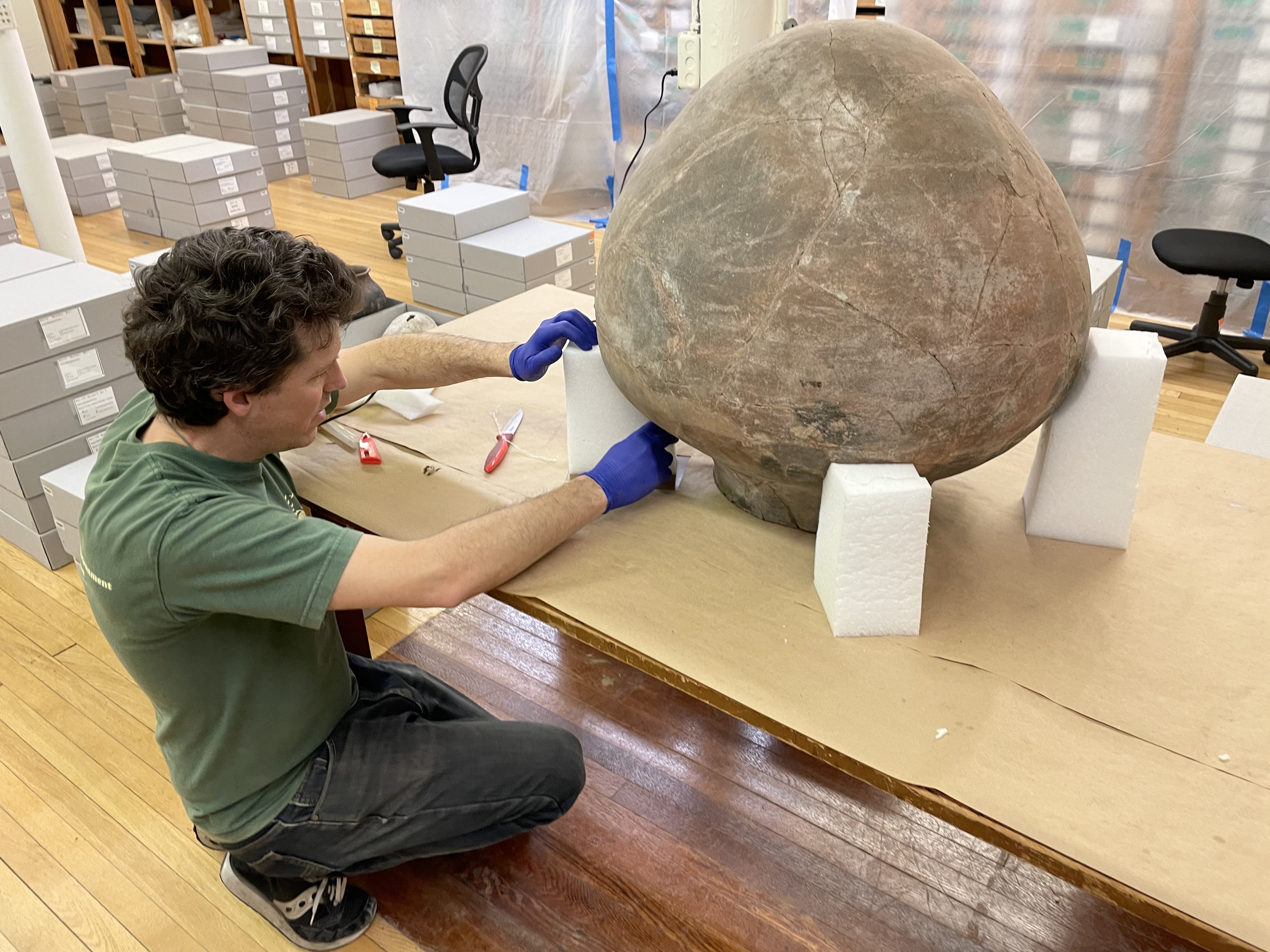
The Peabody staff have been working diligently to ensure the safety of all the collections during this work.  We have coordinated with the construction company, security vendors, tribal partners, and our Phillips Academy project manager to make the project a success.  There is still a lot to do – and construction hasn’t even started yet!

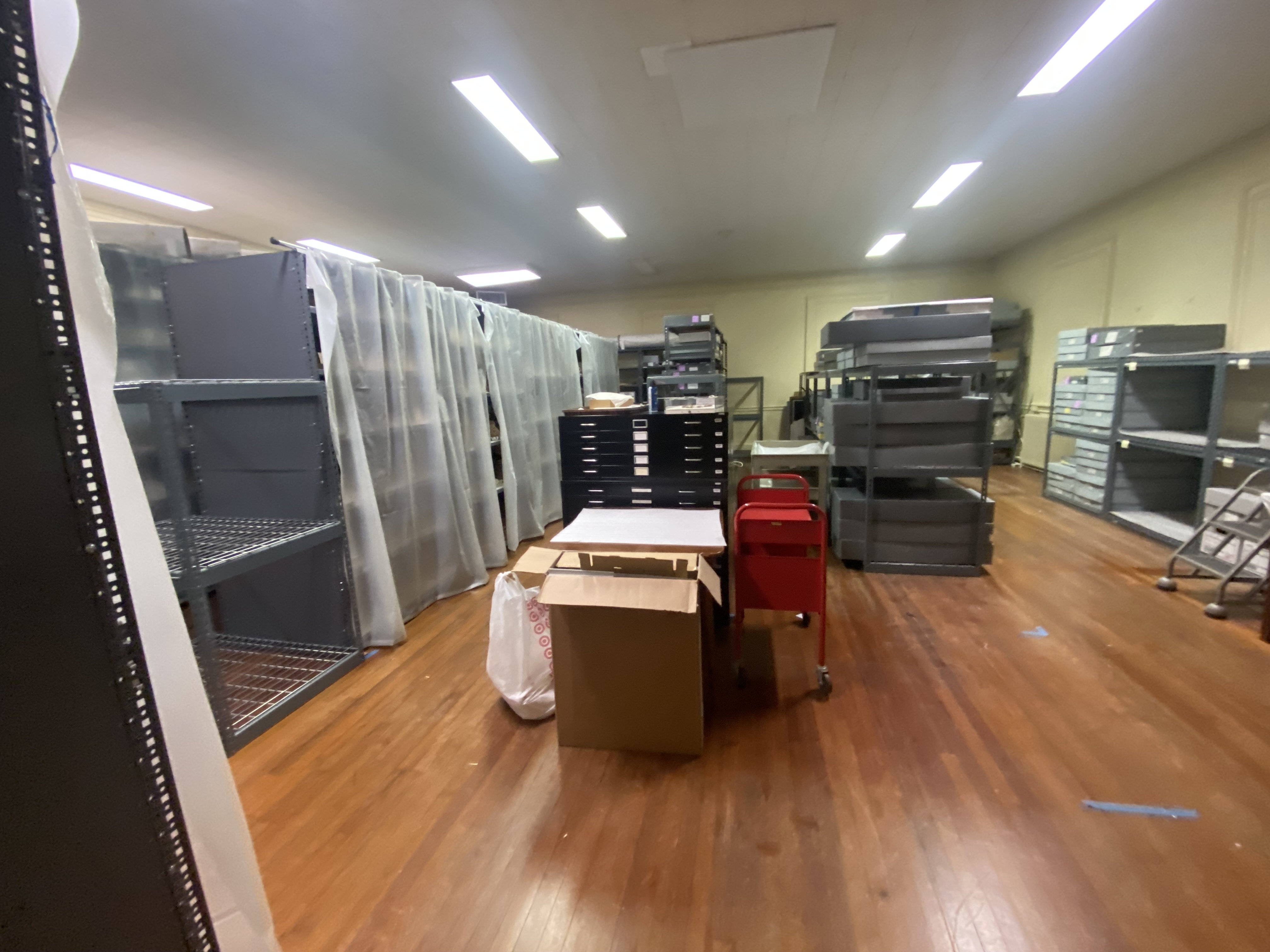
Here are some photos of the work as it has been happening:

This project will rely on philanthropic support from our donor community. To help advance this critical renovation, please contact Beth Parsons, director for museums and educational outreach, at 978-749-4523 or bparsons@andover.edu.

The Repatriation Project by ProPublica

For more than a year, a dedicated reporting team at ProPublica has been exploring NAGPRA and repatriation.  They have been investigating what is behind the overall slow return of ancestral remains back to descendant communities.  Their work has culminated in The Repatriation Project:

America’s Biggest Museums Fail to Return Native American Human Remains

The remains of more than 100,000 Native Americans are held by prestigious U.S. institutions, despite a 1990 law meant to return them to tribal nations. Here’s how the ancestors were stolen — and how tribes are working to get them back.

Behind ProPublica’s Reporting on Repatriation

Our reporters answer frequently asked questions about The Repatriation Project from leaders and citizens of tribal nations.

Does Your Local Museum or University Still Have Native American Remains?

Three decades after legislation pushed for the return of Native American remains to Indigenous communities, many of the nation’s top museums and universities still have thousands of human remains in their collections. Check on institutions near you.

They also compiled a database that allows you to explore information related to individual institutions and tribes.  For example, you can see where the statistics place the Peabody Institute on repatriation.  There is always more work to be done and I hope you can watch those numbers change over the next few months.

I am excited to see where they take the project next!

Conference Season

Contributed by Marla Taylor

October/November is conference season!  I was an active participant in multiple conferences over the past couple months and really enjoyed connecting with colleagues after the worst of COVID.

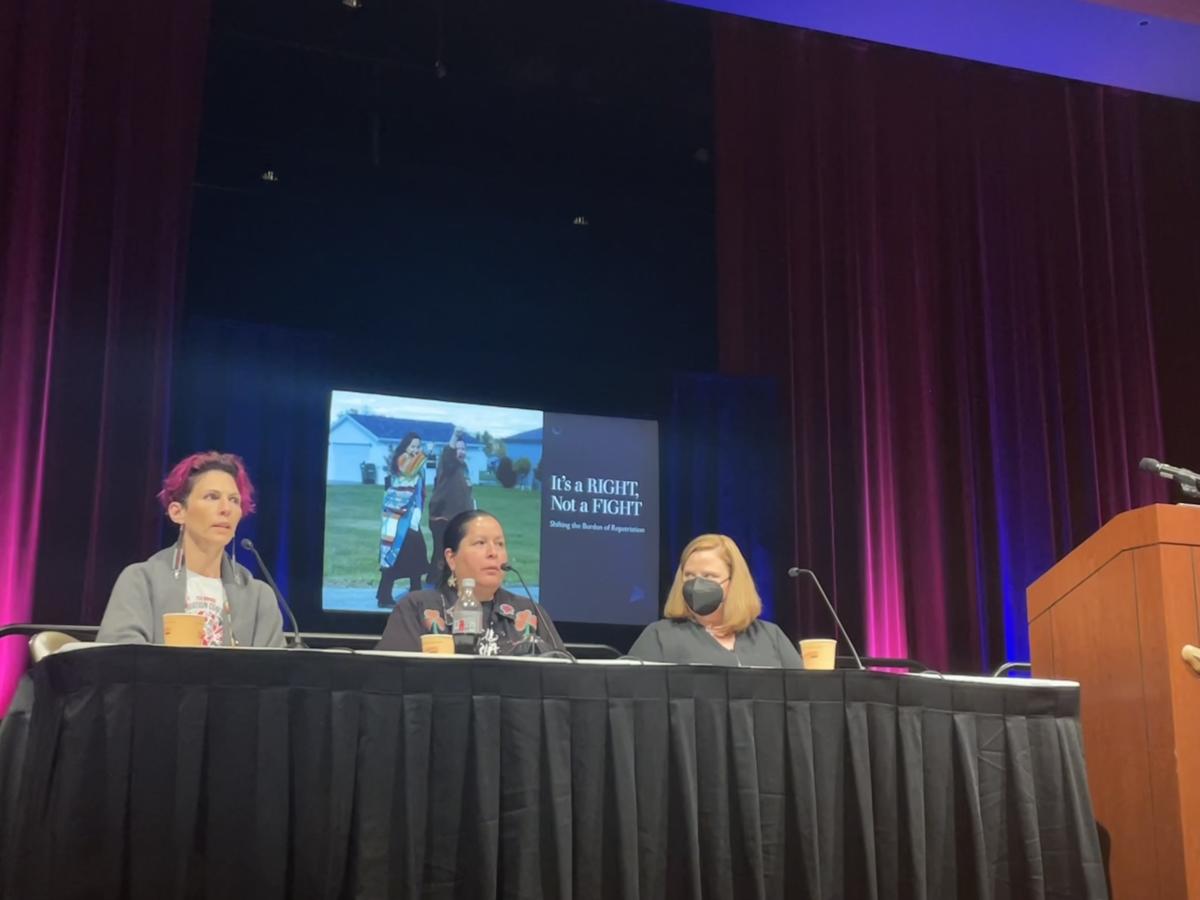
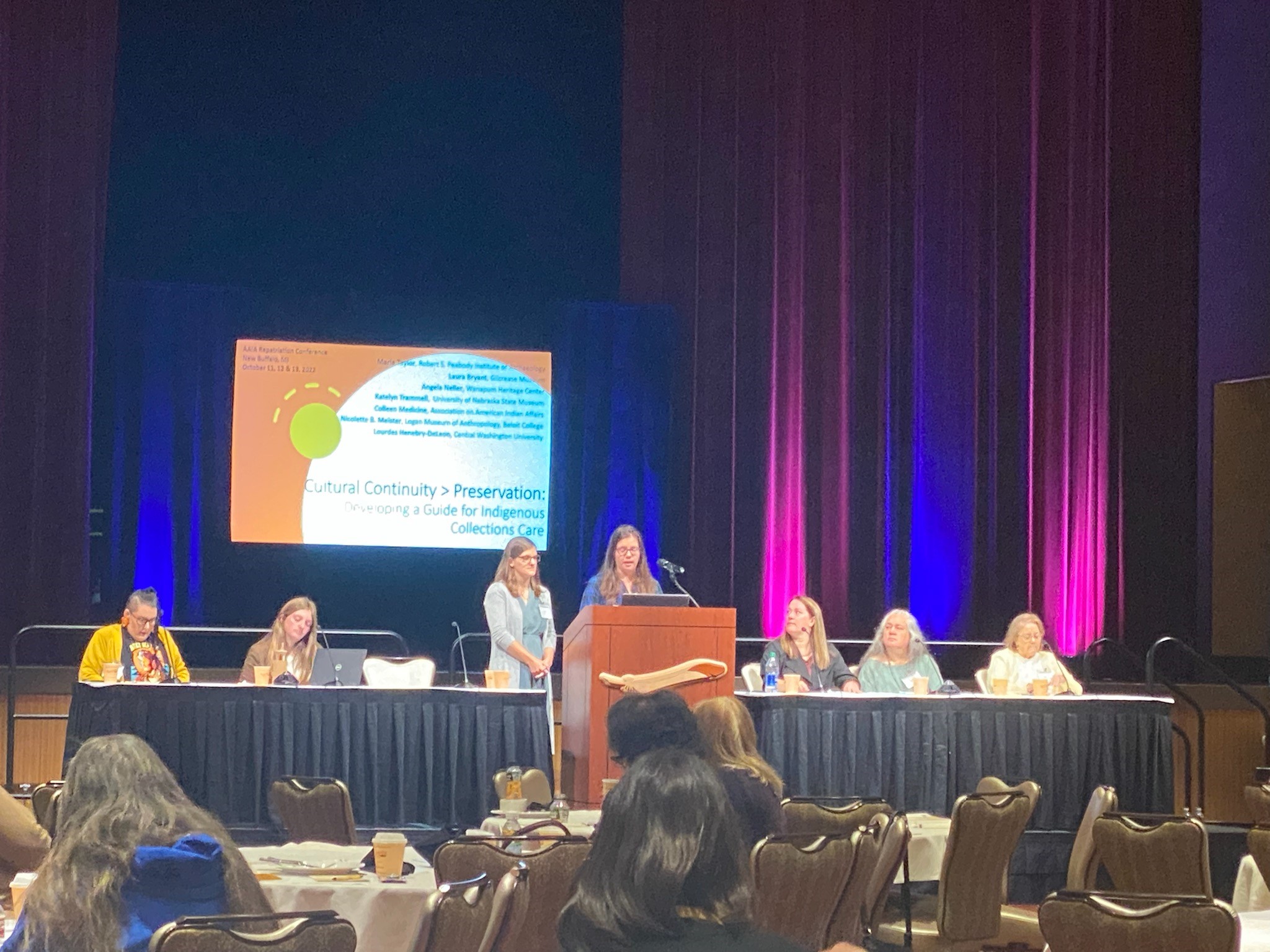
First, I attended the Association on American Indian Affairs (AAIA) 8th Annual Repatriation Conference in New Buffalo, Michigan.  The conference “brings together Native Nations, museums, artists, spiritual leaders, academics, lawyers, federal and state agencies, international institutions, collectors and others to work together to reactivate relationships with the past to create a world where diverse Native cultures and values are lived, protected and respected.”

It was a fantastic experience.  The Repatriation Conference is a space where I greeted so many colleagues with hugs and made new and important connections.  The speakers shared meaningful perspectives and insights and I am proud to be a part of that community.  Oh, and the sunrise ceremony by the host Pokagon Band of Potawatomi was an invigorating way to start the day!

The second conference (only one week later!) was the 2022 International Conference of Indigenous Archives, Libraries, and Museums hosted by the Association of Tribal Archives, Libraries, and Museums (ATALM) in Temecula, California.  I love ATALM as an experience.  I learn so much from those sessions and surrounding myself with innovate professionals, both Indigenous and non-Indigenous, who work so hard to prioritize Indigenous voices and perspectives.  A couple of shout-outs to my favorite presentations – Traditional plant-based methods for pest control and Your Neighborhood Museum.

At both the Repatriation Conference and ATALM, I was a presenter and shared the work that colleagues and I have done to create the Indigenous Collections Care (ICC) Working Group and Guide.  The ICC is a group of both Indigenous and non-Indigenous museum professionals and academics, Tribal Historic Preservation Officers, collections staff, and NAGPRA coordinators who are working to create a Guide as a reference tool for people who interact regularly with Native American collections.  The Guide will offer scalable considerations and templates for implementation, advocacy, and creation of policies and procedures for all areas of collections stewardship.  This project has been a major focus of mine over the past couple years and I am proud to share our work with the broader community.

The third and final conference in my marathon was the New England Museum Association 2022 Annual Conference.  Now, I was admittedly a little exhausted after traveling from New Hampshire to Michigan to New Hampshire to California and back home to New Hampshire so I only attended NEMA for a day to be a speaker.  This session was slightly different and focused on demystifying decolonization/Indigenizing museum collections stewardship.  I was joined by colleagues from the Boston Children’s Museum and The Trustees of the Reservation for this conversation.  We received positive feedback from everyone and I hope it inspired someone to take a step forward in this work.

While I really did love the opportunity to connect with other professionals, I am happy to be done with conferences for the year!  And I have to admit, I am already planning my schedule for 2023…

A New Photo of Margaret Ashley Towle

Contributed by Ryan Wheeler

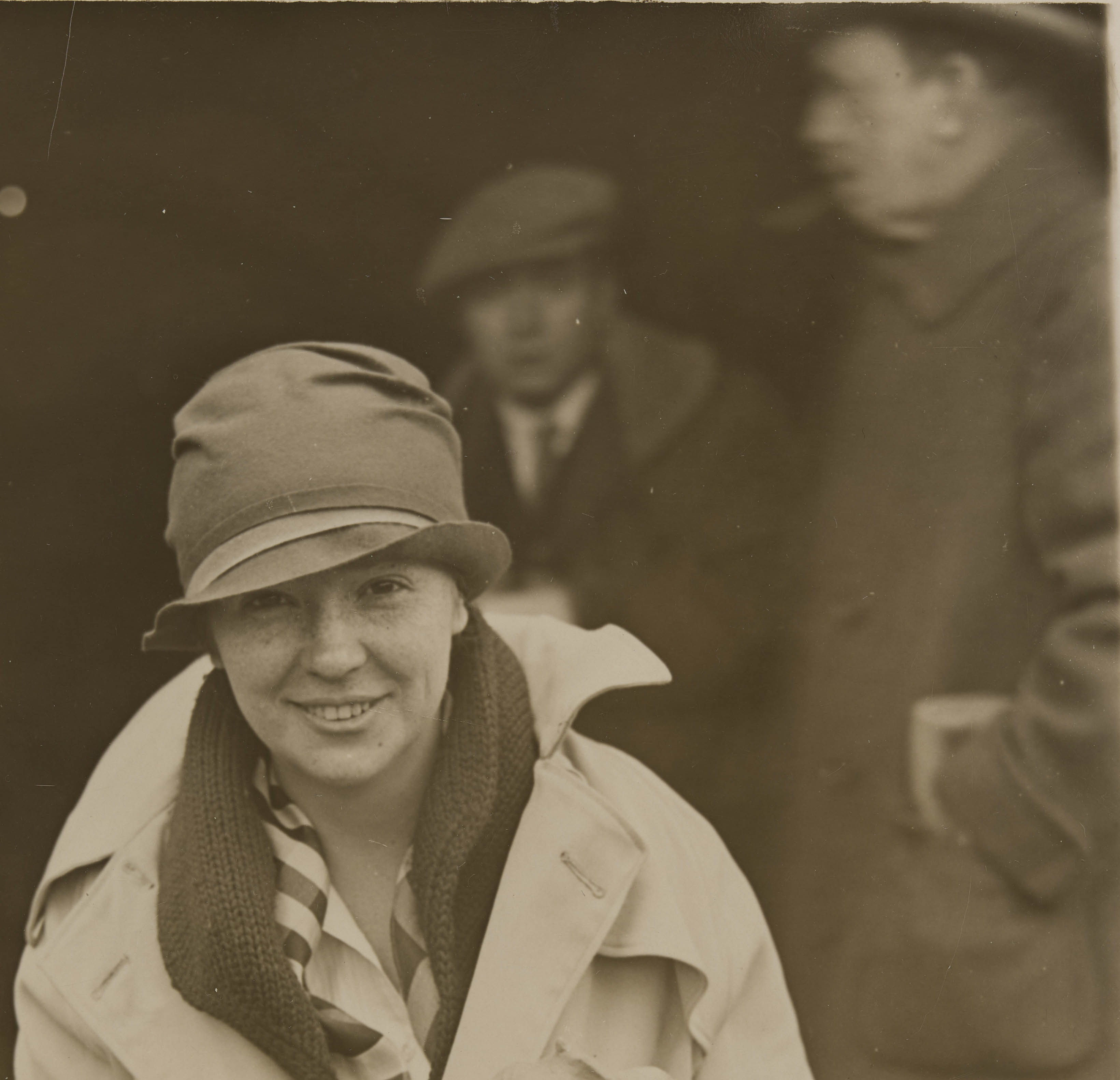
Several years ago as we organized the Peabody Institute’s extensive photographic collection, we came across a group of black-and-white prints that had not been flattened. These images relate to Warren Moorehead’s 1920’s era excavation of the Etowah mound group in Georgia. Any attempt to unroll the images would produce a tear and threatened to damage the prints. We did some research on techniques that might help these older prints relax a little, to no avail. Help was nearby, however, in the form of the Northeast Document Conservation Center or NEDCC, one of the leading paper and media conservation organizations in the country. We’ve used them before to digitize oversized maps and to scan black-and-white negatives.

The images were returned to us after conservation recently, and we also received high resolution digital versions. Most of the photos show items from the Etowah site, but one picture was of Margaret Ashley Towle, one of the pioneering female archaeologists of the southeastern United States. The image is marked on the reverse as “Etowah Ga 1928 Miss Ashley” and has our recent catalog number 2020.3.283. It is a wonderful complement to Frank Schnell Jr’s 1999 chapter “Margaret E. Ashley: Georgia’s First Professional Archaeologist,” which appeared in Grit-Tempered: Early Women Archaeologists in the Southeastern United States. She was also featured, sans photo, in Irene Gates’s Women of the Peabody blog in 2018.

Image of Margaret Ashley as a smiling young woman wearing a cloche hat and light-colored trench coat with collar turned up. She has several scarves loosely around her neck. Hazy, out of focus image of Warren Moorehead in the background.
Image of Margaret Ashley at the Etowah site, 1928. In the right background is a slightly out of focus image of archaeologist Warren Moorehead. The image has been cropped to exclude several cultural items from the site. Robert S. Peabody Institute of Archaeology 2020.3.283.

Margaret Ashley was already well-versed in archaeology and was a skilled outdoorswoman when she worked with Warren Moorehead at the Etowah site, and went on to assist with his projects in Maine and to continue her own research in the Southeast. She also contributed to Moorehead’s Etowah Papers publication and published on her technique for illustrating pottery. According to Frank Schnell’s chapter in Grit-Tempered, Ashley married Moorehead’s main field assistant Gerald Towle in 1930. Unfortunately, Ashley’s marriage coincided with a significant hiatus to her training and research. We do know that after Towle’s death, Ashley completed her Ph.D. at Columbia with her dissertation later appearing as The Ethnobotany of Pre-Columbian Peru, number 30 of the Wenner-Gren Foundation’s Viking Fund Publications in Anthropology (1961). Colleagues working in the Andes report that Ashley’s publication remains a significant resource. Ashley spent several decades as an unpaid research associate at the Harvard Botanical Museum where she worked with botanist Paul Mangelsdorf, who had also been encouraging Richard “Scotty” MacNeish’s interests in agriculture, also around this same time.

We are delighted that we have been able to recover this early photo of Margaret Ashley Towle. If you get a chance, get a copy of Grit-Tempered–the biographical entries also include Adelaide Bullen, another pioneering archaeologist with connections to the Peabody Institute!