Among the newest student clubs on offer to the Phillips Academy community as of this term is the Andover Anthropological Society: a group of students of superior intelligence who recognized ahead of their peers that doing research with cultural materials is incredibly fun, and an excellent use of one’s free time.
Now with a membership of ten, club members selected as their inaugural project an accession of Arctic materials surface-collected by Patricia Hume near Utqiagvik (previously Barrow), Alaska during six summers between 1959-1969, and donated to the Peabody Institute in 1998. Meeting weekly at the Peabody, so far the AAS has received collections handling training and begun to build direct experience doing close-looking analysis of cultural materials; perused the Pat Hume accession file and visited storage, doing archival research AND learning some basics of museum practice (I’m very efficient); learned about the Bureau of American Ethnology and delved into 20th century ethnographies from the region (thank you, OWHL reference librarians!); and started to explore various themes and approaches for their group project. These have included connecting collections to Iñupiaq language, exploring notions of gender and household structures, and questioning anthropological terms like “effigy” to build more robust interpretations of people’s material expressions of spirituality and religion – just to name a few.
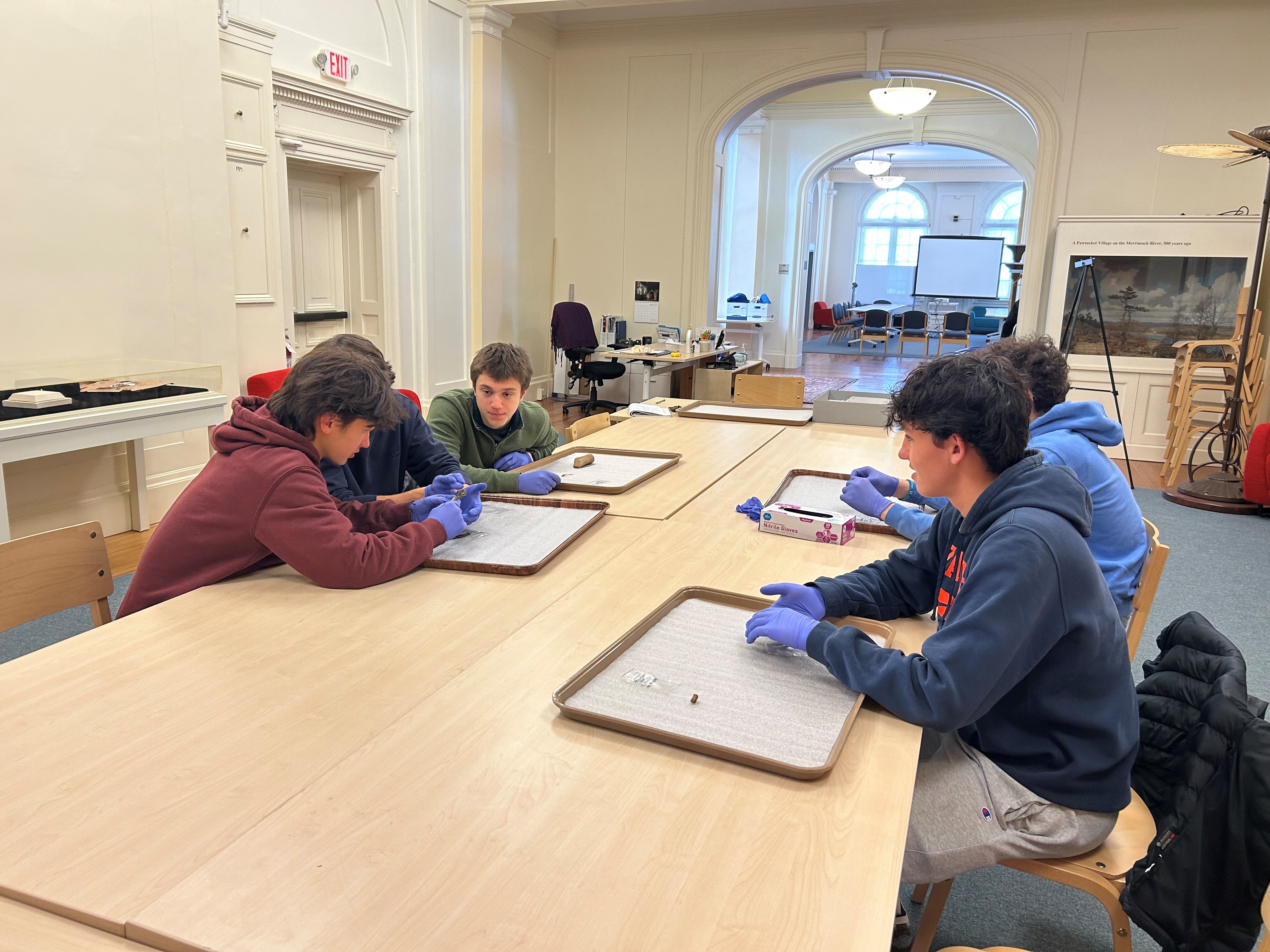
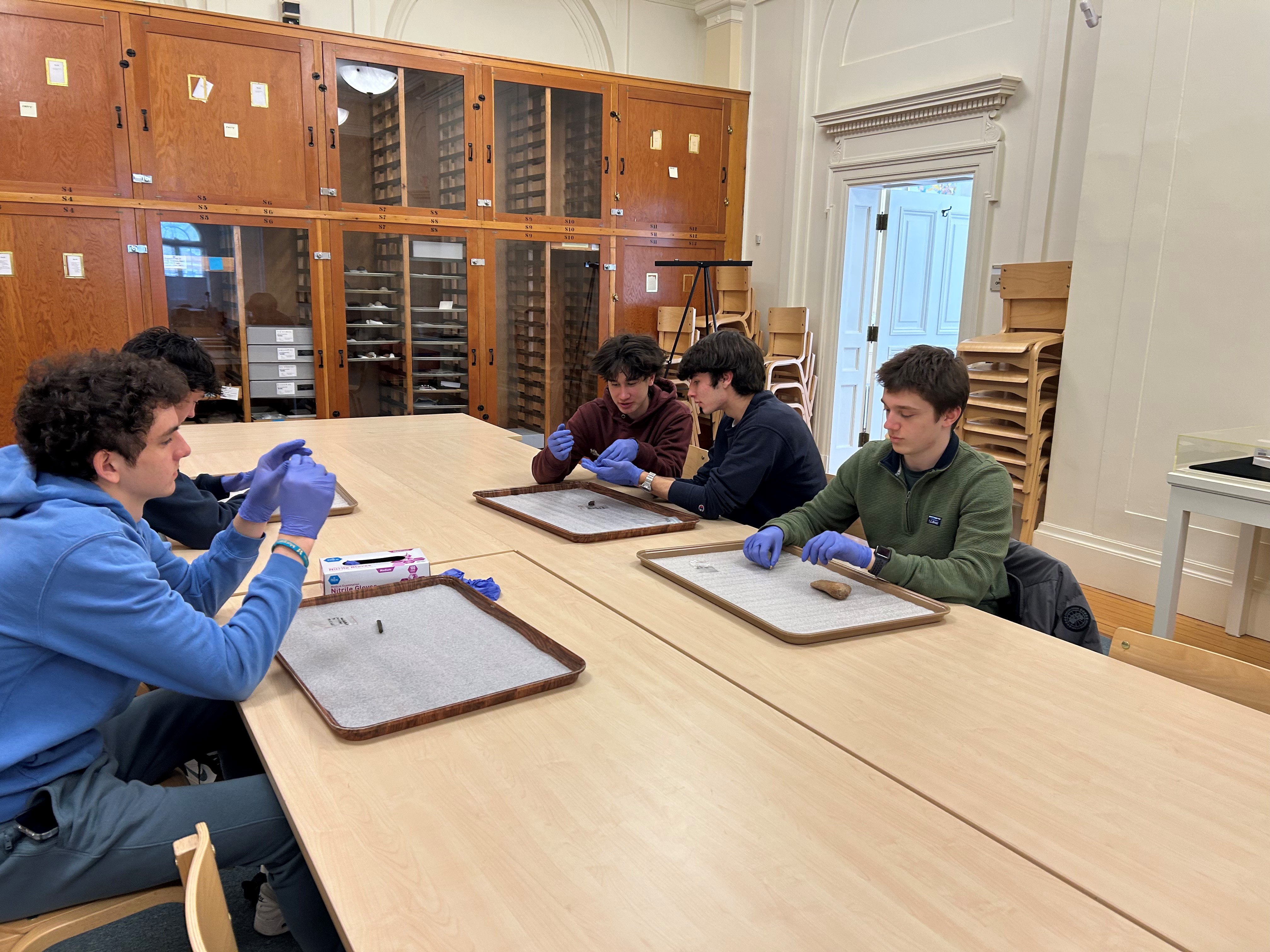
AAS members closely examining “household” items from the Pat Hume accession and debating whether I was messing with them in my claims for what they were. [Not pictured: all the female members of the club. I promise it was just unlucky they had to leave before I could take any photos…]
Whichever direction(s) the club ends up taking, what they learn will enter into the Peabody’s database, enhancing our own understandings of these collections here and the ways in which we’ll be able to connect others to them in the future.
I happen to have the privilege of serving as faculty advisor for this club, and it has been a joy getting to know these students, and having them teach me about Iñupiat culture. Bookmark this blog and stay tuned to learn more about the AAS from the AAS itself!
For the past two years, the Peabody has been dealing with an endlessly noisy neighbor. Falls Music Center, a new home for music at Phillips Academy, has been under construction since early 2023.
The noise started early in construction as a massive mountain of dirt was excavated from the building site. Next came the drilling for the geothermal wells. We could feel the vibrations in the ground as the wells reached 500 feet deep in an effort to maintain PA’s commitment to sustainability. Alas, despite our repeated (yet playful) requests, we were not allowed to sift through the back dirt to look for pieces of Phillips Academy history.
Over the next months, the building rose behind us and carried all the sounds of construction as the steel frame went up and carefully crafted practice and performance spaces were built. Most spaces within Falls Music Center are acoustically separated to isolate noises and capture the most “live” sound possible. The sounds were a constant background to much of our work moving back into the Peabody after our building project.
My favorite discovery during the construction was that the window in the main stairwell of the Peabody looks directly into the glass stairwell of the Falls Music Center. I have to admit that more than once I tried to wave at the construction workers. Unfortunately, no one waved back.
Towards the end of 2024 the fences around Falls Music Center came down, the sidewalks were repaved, the grounds were cleaned up, and the sounds diminished. I can’t say that we have missed them, but we definitely notice their absence.
Now, Falls Music Center is open to students and I look forward to a new type of noise – the stray notes from the incredible student musicians and sound of increased student presence in our little corner of PA.
Last month we were delighted to welcome back Ramson Lomatewama to Phillips Academy Andover (PA) where he worked with students and campus community members in fused glass workshops.
Ramson Lomatewama is an award-winning Hopi glass artist, kachina doll carver, jewelry maker, and published poet from Hotevilla, Arizona. This is his second year working with the Peabody Institute to bring fused glass workshops to the PA campus community. Ramson has also participated in various virtual, and in-person talks at PA, sharing his poetry, art, and life stories with students and the broader public. You can view these virtual talks on our Peabody YouTube page.
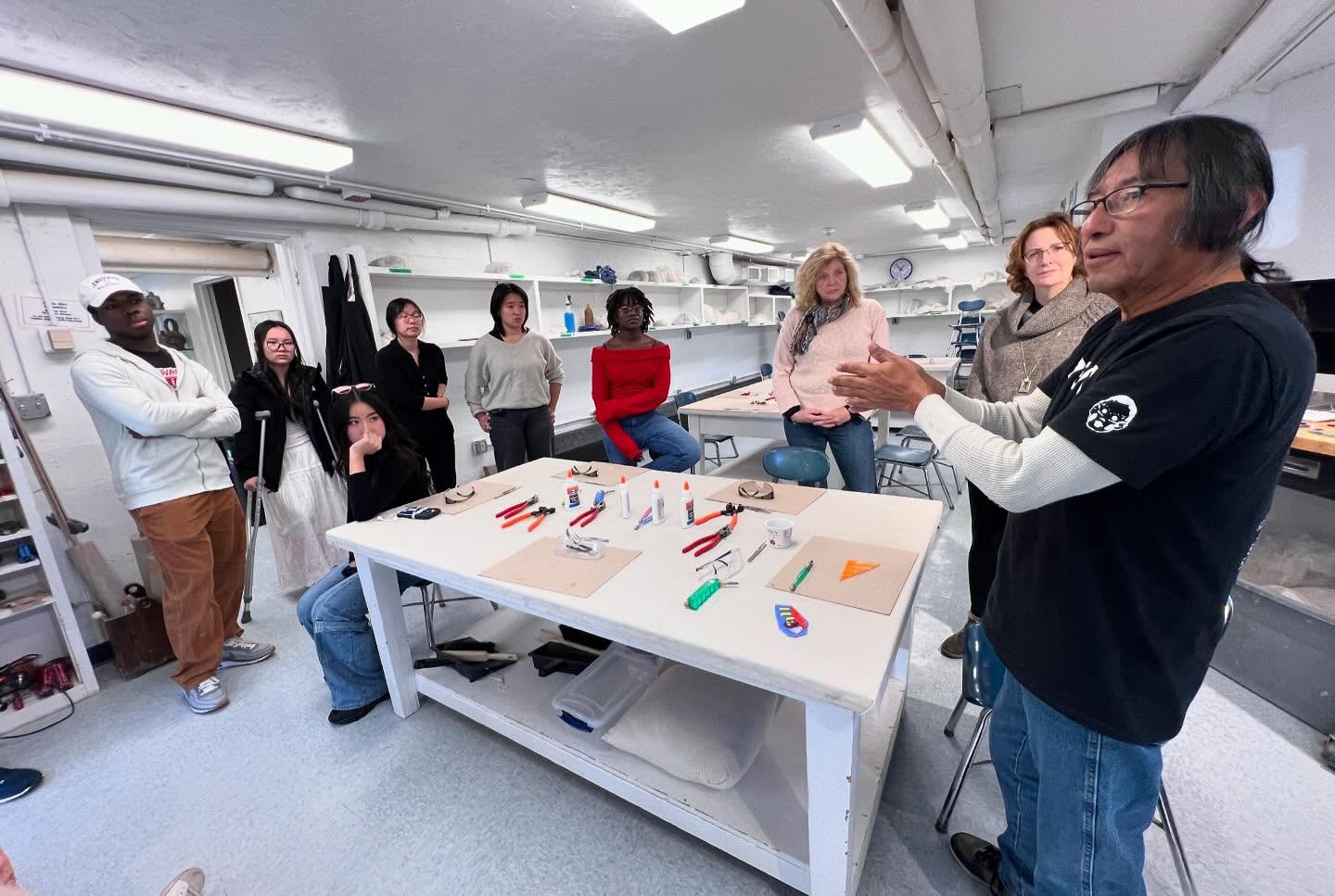
Ramson speaking to one of the fused glass community workshops.
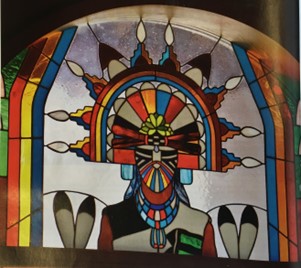
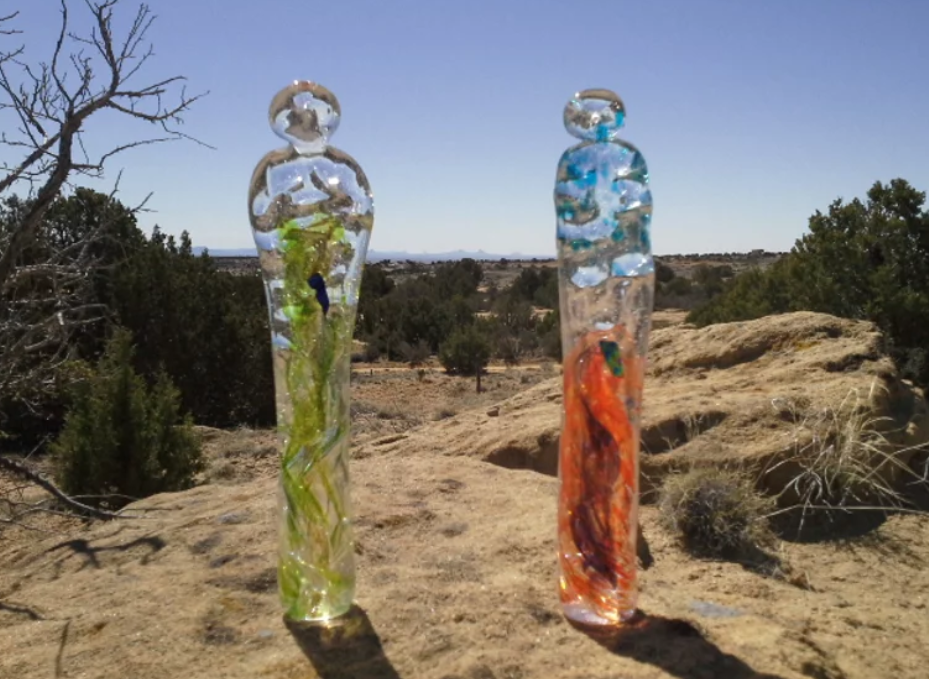
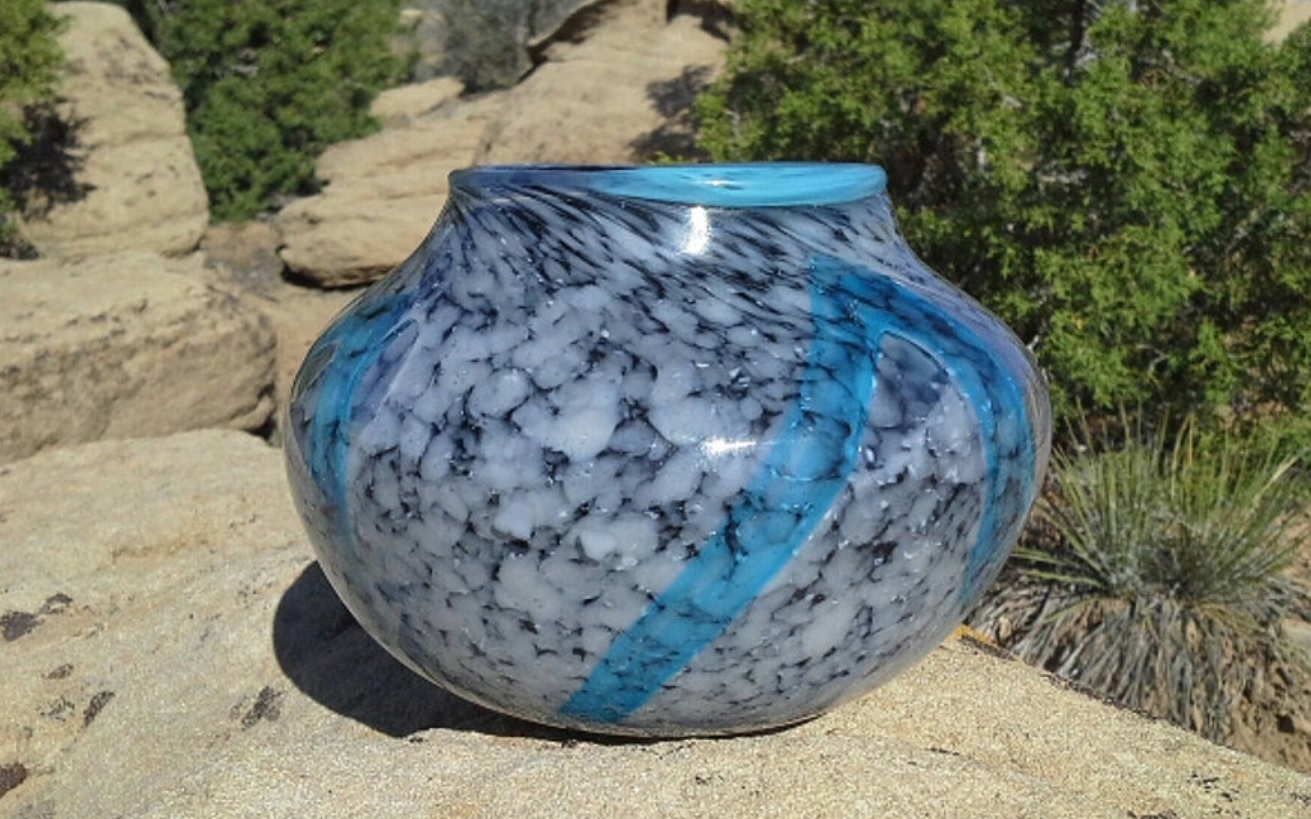
Ramson creates stained glass, blown glass, and fused glass art. Ramson’s glass art is viewed as “a contemporary expression of ancient and artistically rich people… evoking a beautiful, yet humbling mindscape which we all long to find.” He is the first hot glass artist from the Hopi Tribe. Ceremonies and cultural activities continue to play a major role in his life. He has showed works at the Santa Fe Indian Market, the Museum of Northern Arizona, Fusing Traditions, a traveling exhibition, and the San Diego Museum of Man (now known as the Museum of Us).
Stained glass artwork by Ramson Lomatewama.
Blown glass ‘spirit figure’ sculptures by Ramson.
Blown glass vessel by Ramson.
Ramson is an educator on several levels. Early in his career, he was a middle school and high school teacher, and for many years, served as adjunct faculty at North Central College in Naperville, Illinois. Ramson also taught glass art for Hopitutuqayki (The Hopi School), an arts apprenticeship program located on the Hopi reservation. Ramson’s studio, Hotevilla Glassworks, is the first and only Hopi owned working glass studio. Check it out here!
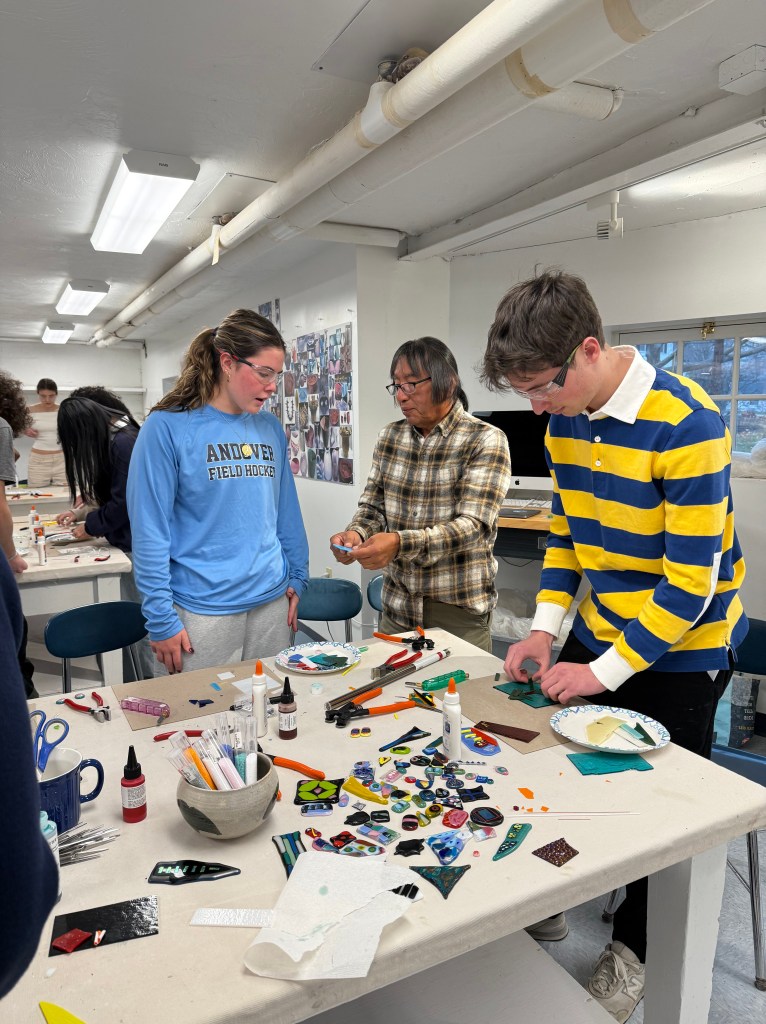
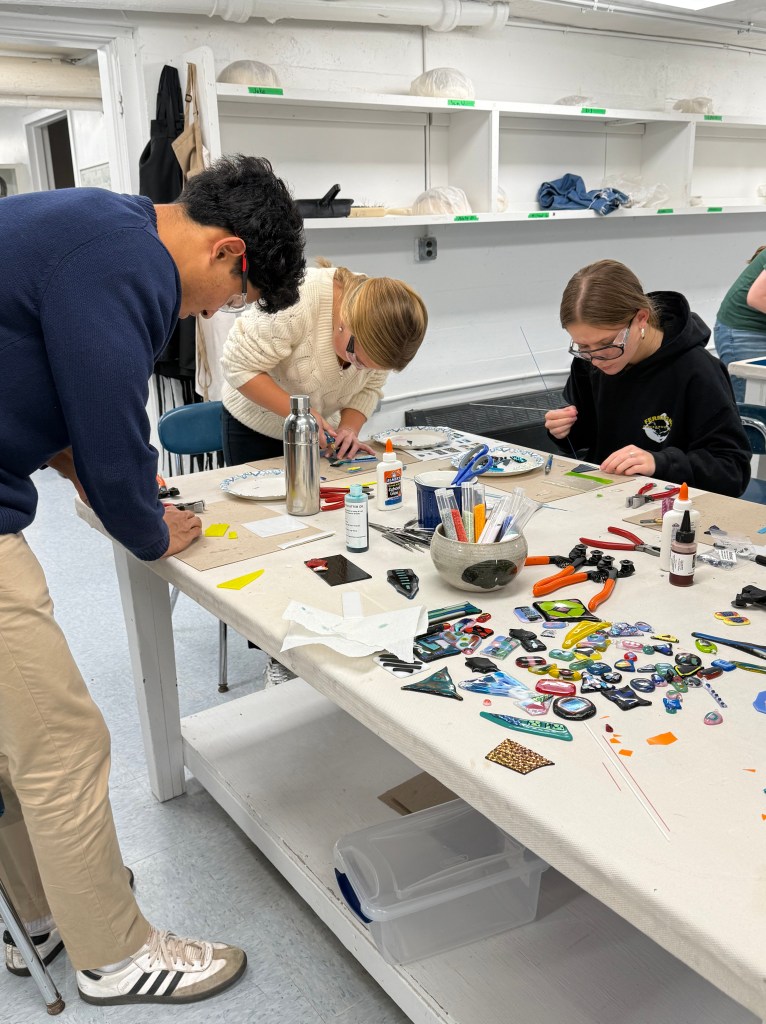
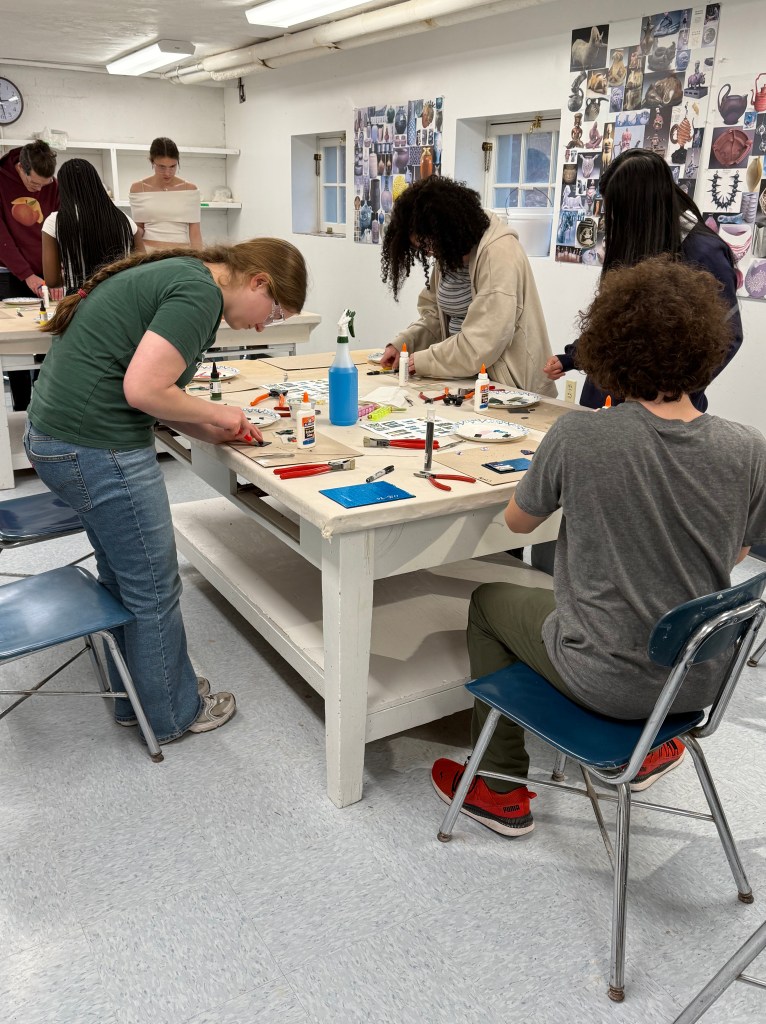
Students at work, creating their own fused glass pieces in their class workshops.
Working with fused glass seemed a little daunting at the beginning of the workshops, but a quick demonstration by Ramson with helpful instructions gave students the courage and motivation to dive in. The plethora of glass pieces to work with – stringers, millefiori, frit, swizzle sticks, dichroic, and ribbons – came in many shapes, textures, and colors. Students worked side by side creating their pieces of art, asking Ramson questions about his techniques and listening to stories about his life and art journey.
“Working with fused glass, you need to be prepared to forfeit control…” was Ramson’s important insight that would hold true from assembling our glass pieces to the final kiln firing of our pieces. No matter the shape or size of your glass piece – after firing – it would melt down to around 6mm thick. Ramson calls this the “6mm rule.” I found it best to go into a fused glass design with no plan, as your final product would tend to come out a little different from what you’d imagine… most of the time it would look even better!
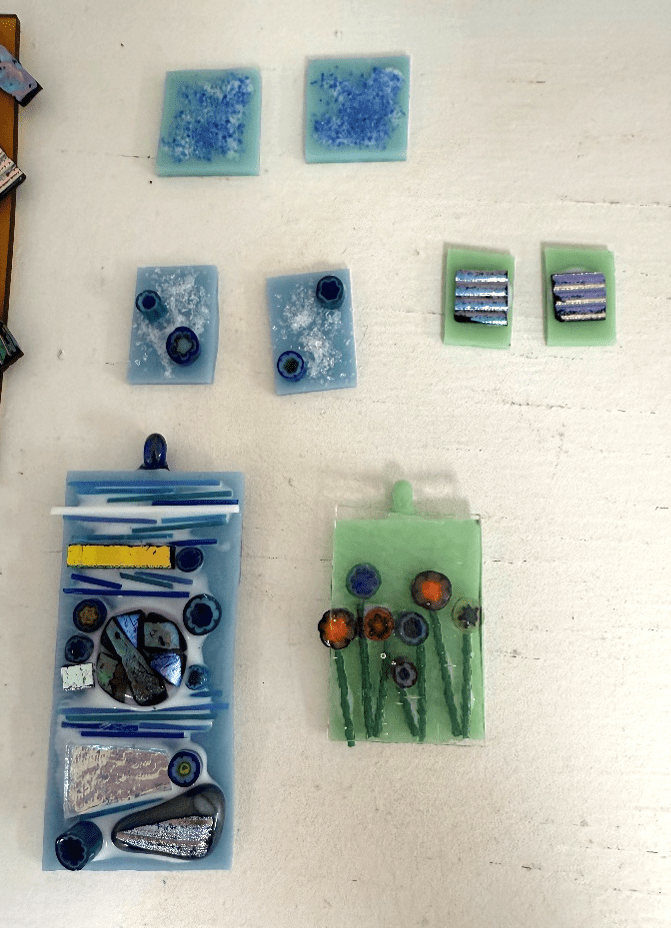
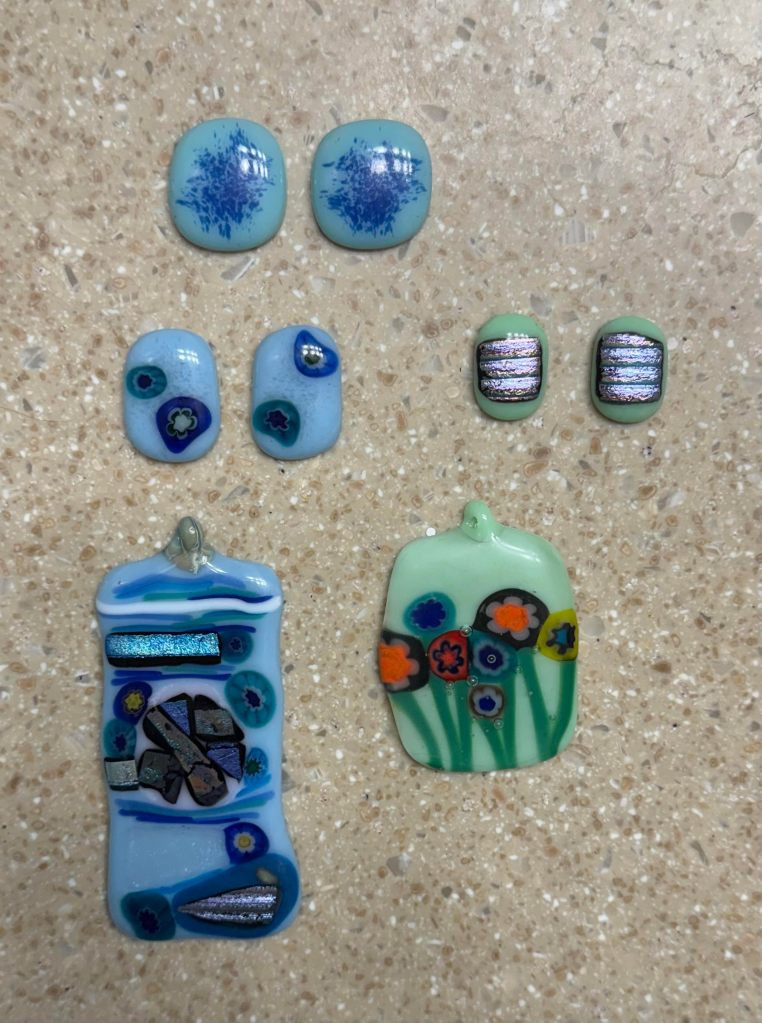
This year I created two pendants and (hopefully) some pieces to assemble into earrings. You can see my “before and after” photos of my glass pieces at the end of this blog. In the meantime, see below for some finished pieces by PA community members.
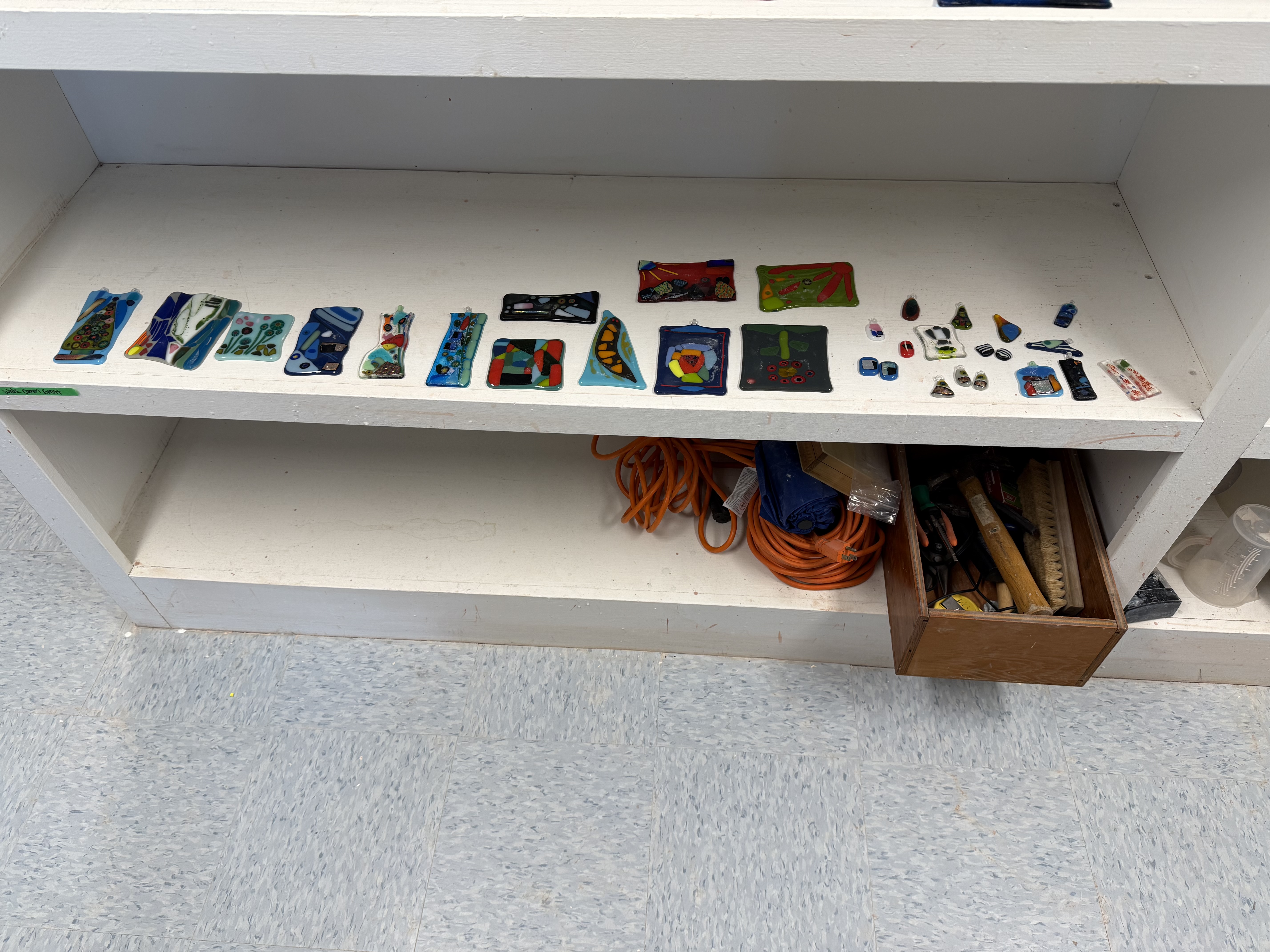
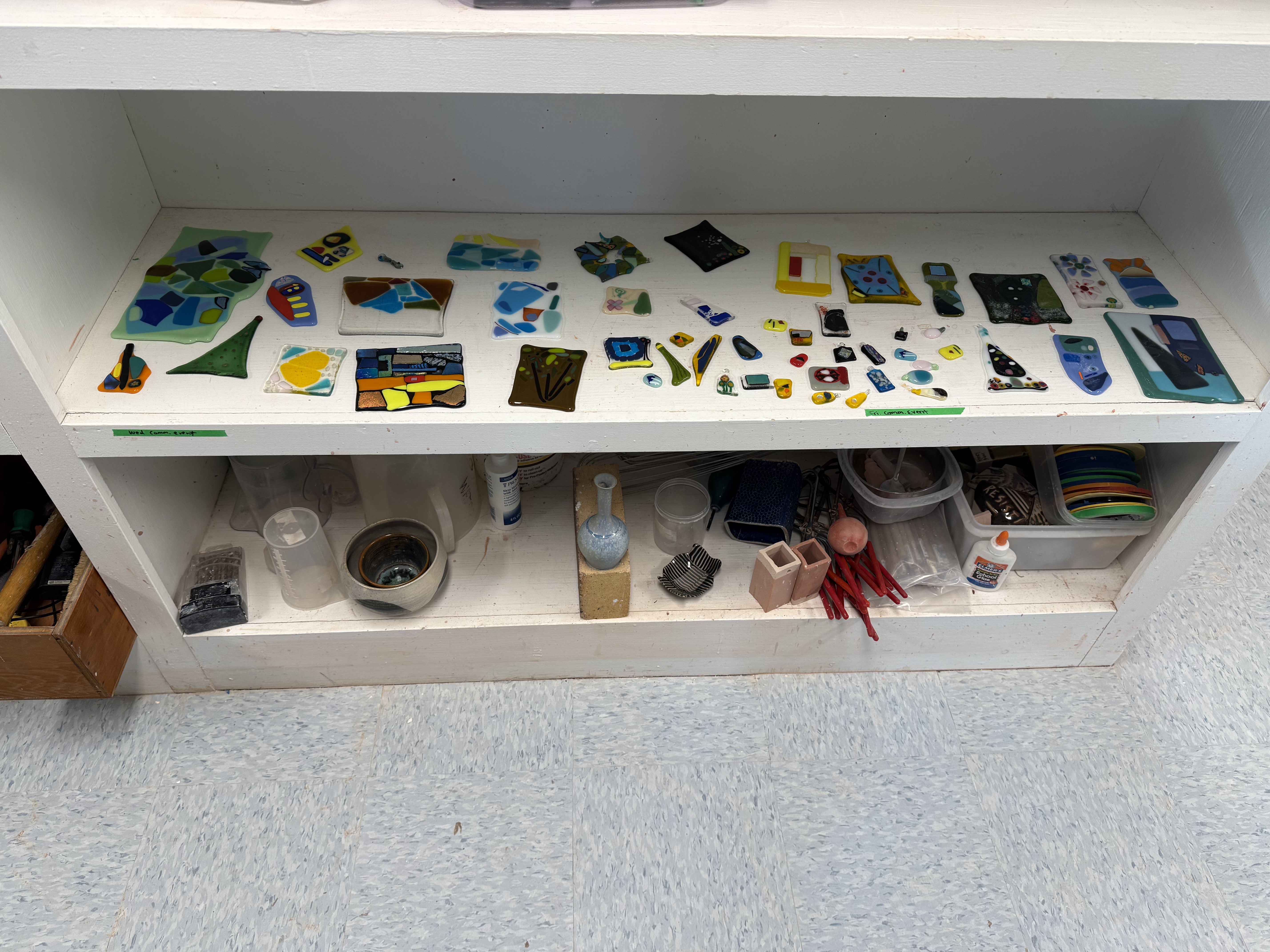
Finished fused glass pieces from the PA community workshops.
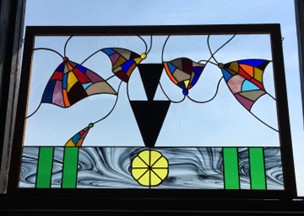
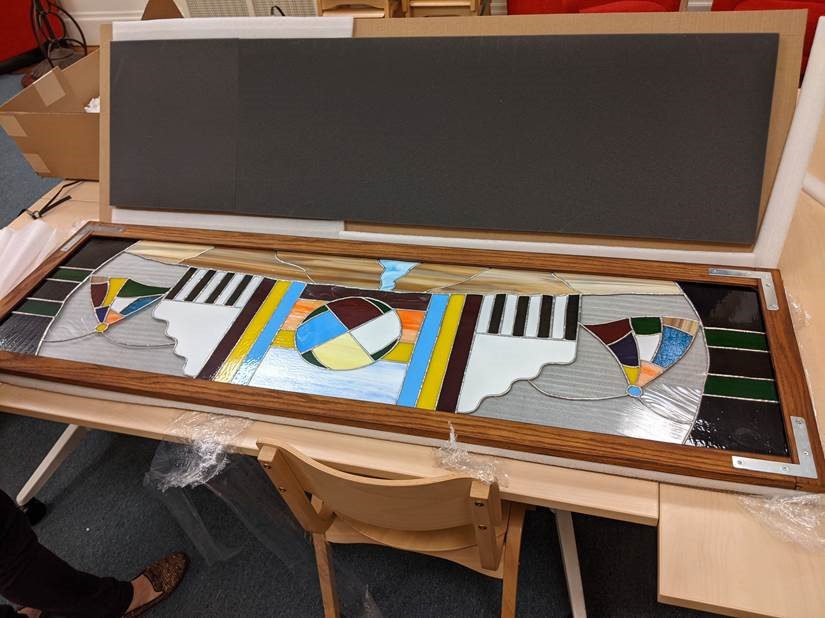
We are very fortunate to have acquired a stained-glass piece that Ramson created for the Peabody. We look forward to completing its installation in the Peabody’s front transom window once the next iteration of the building renovation is complete.
Ramson’s stained glass piece, commissioned by the Peabody.
We are very grateful for the time that Ramson dedicates to working with and educating our PA students and campus community! We hope to have him back next year! For more information about Ramson and the PA fused glass workshops, check out this article by the Andover Magazine (i.e. page spread #10-11, Digging Deeper article).
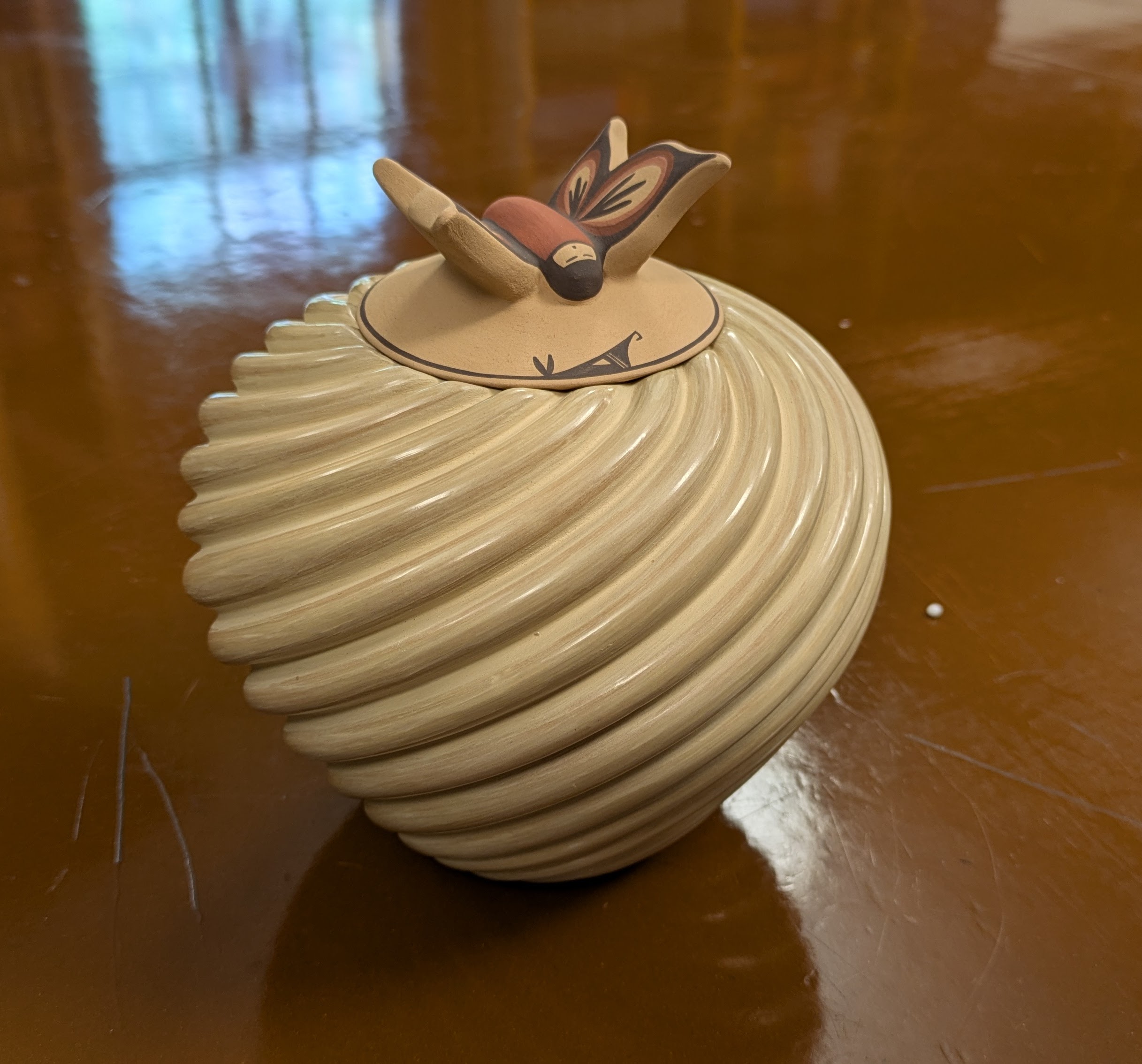
Mia Toya’s melon swirl vessel with distinctive butterfly lid. I particularly like the creamy slip, which sets this piece apart from others in the Peabody collections.
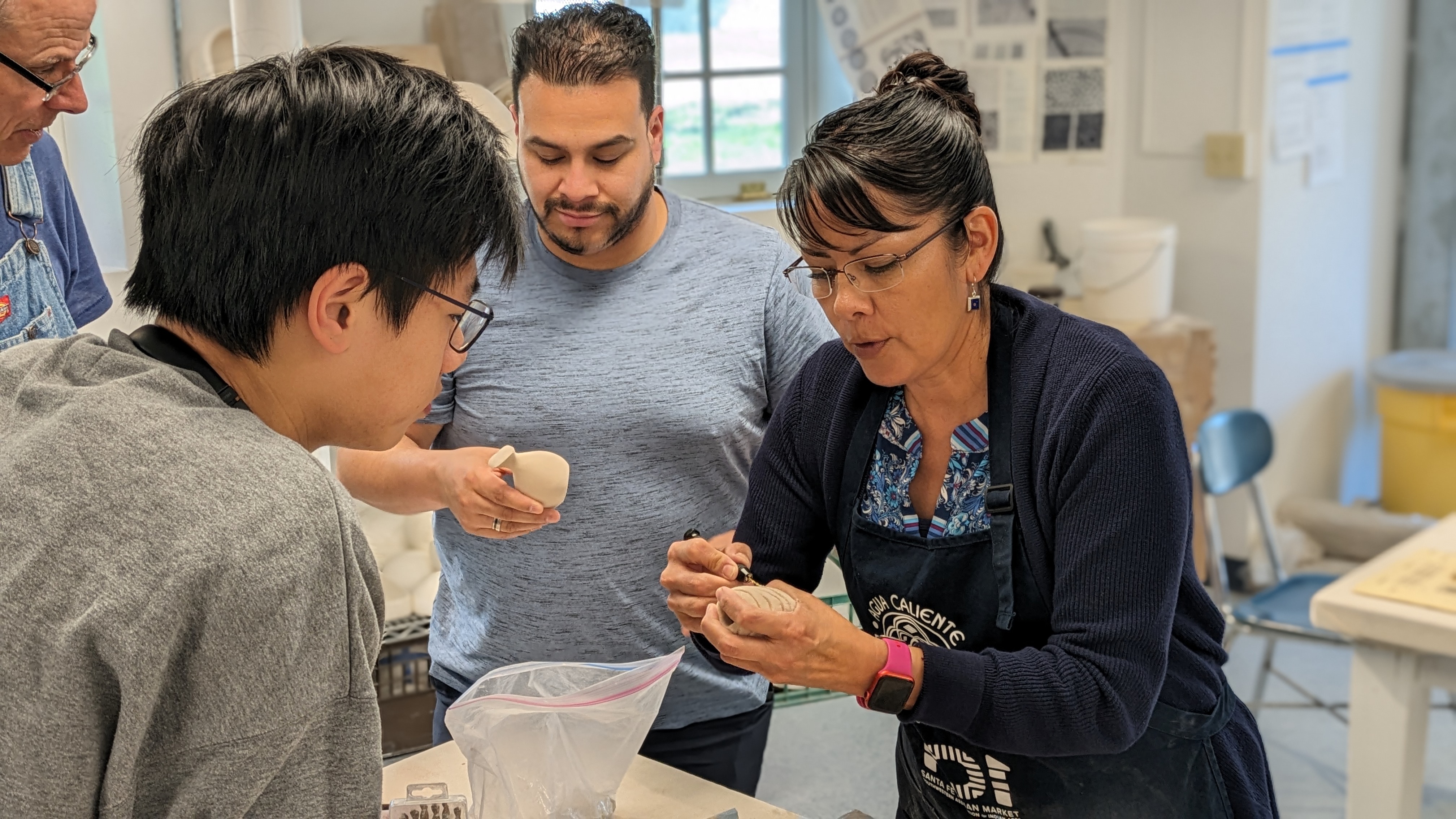
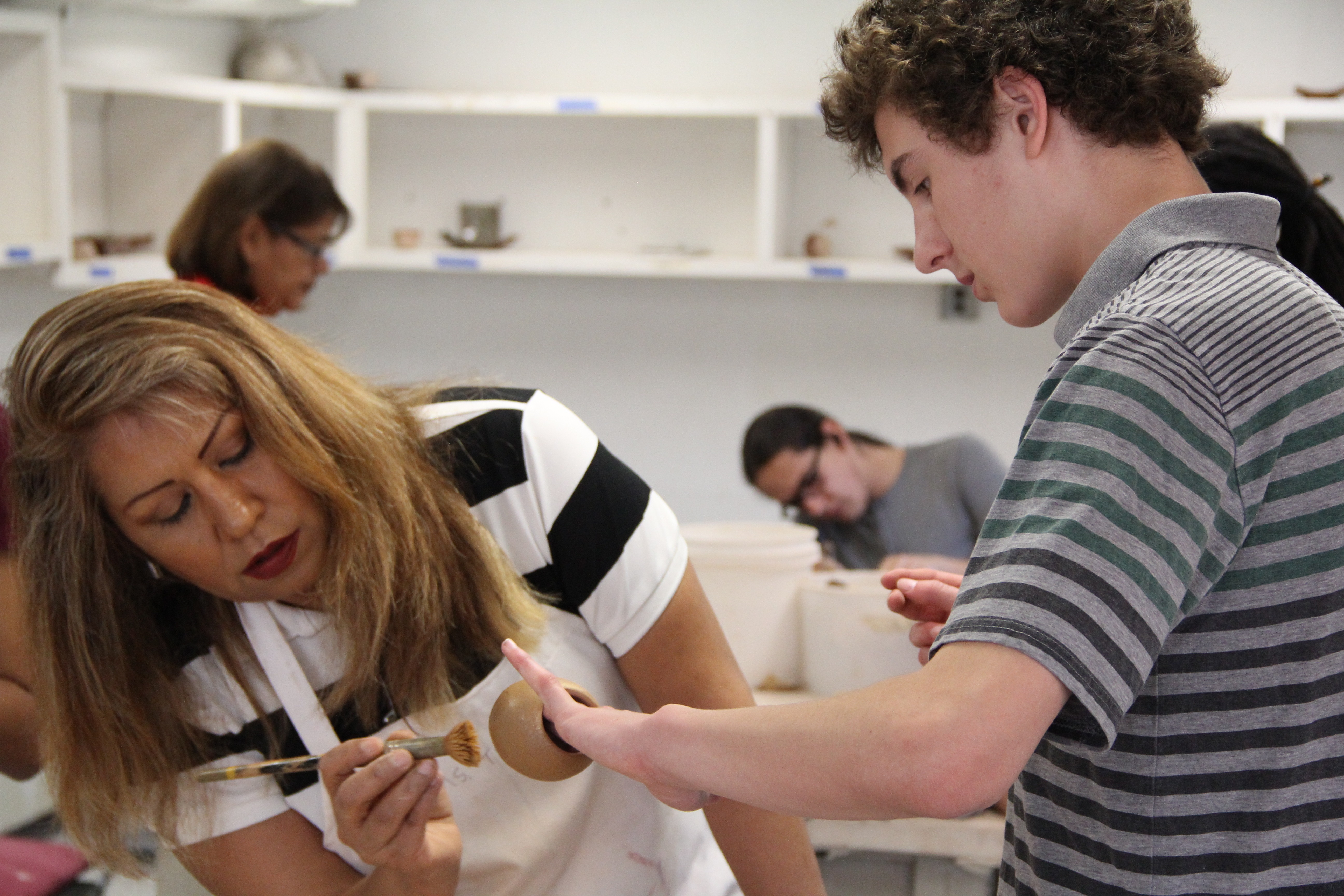
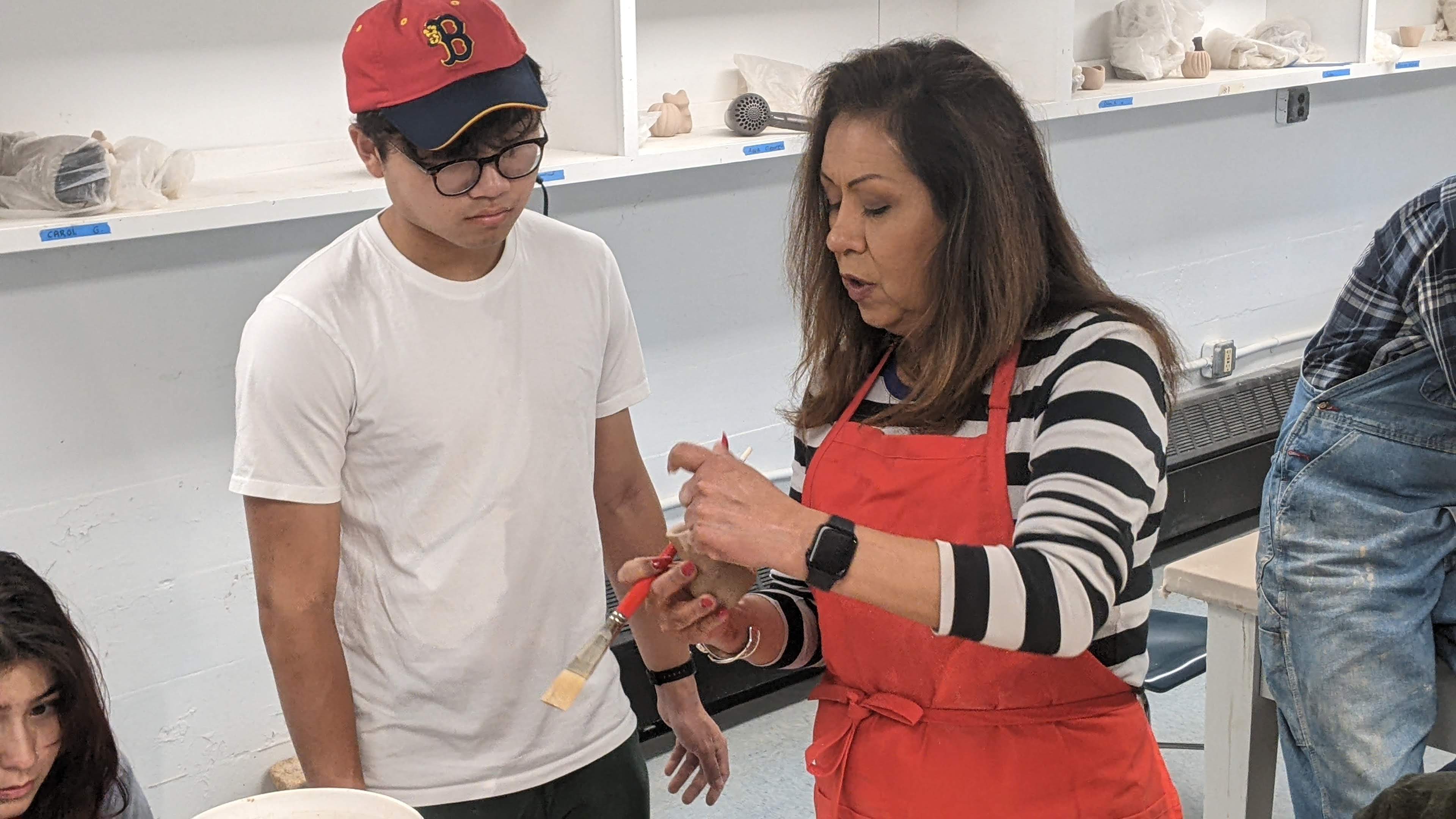
Early this fall–just after Santa Fe Indian Market–we were fortunate to add to the Peabody Institute collections this lovely melon swirl vessel by Mia Toya (Pueblo of Jemez). Mia and her family have a long relationship with the Peabody and Phillips Academy, regularly coming to campus to conduct week-long workshops on Pueblo pottery making with students in Thayer Zaeder’s studio ceramics classes.
Mia helps a student perfect their piece in Thayer Zaeder’s campus ceramics studio, May 2024.
Mia is a member of the Corn Clan and was inspired to continue the long lived tradition of working with clay from many members of her family who are well known artists, including her mom Maxine, grandmother Marie G. Romero, aunt Laura Gachupin, and her sister Dominique. Mia began working with clay at the age of 14 and continues to add her unique style of art to this day, constructing pieces using hand coiling methods, stone polished slips, and figural elements like her distinctive butterfly lids.
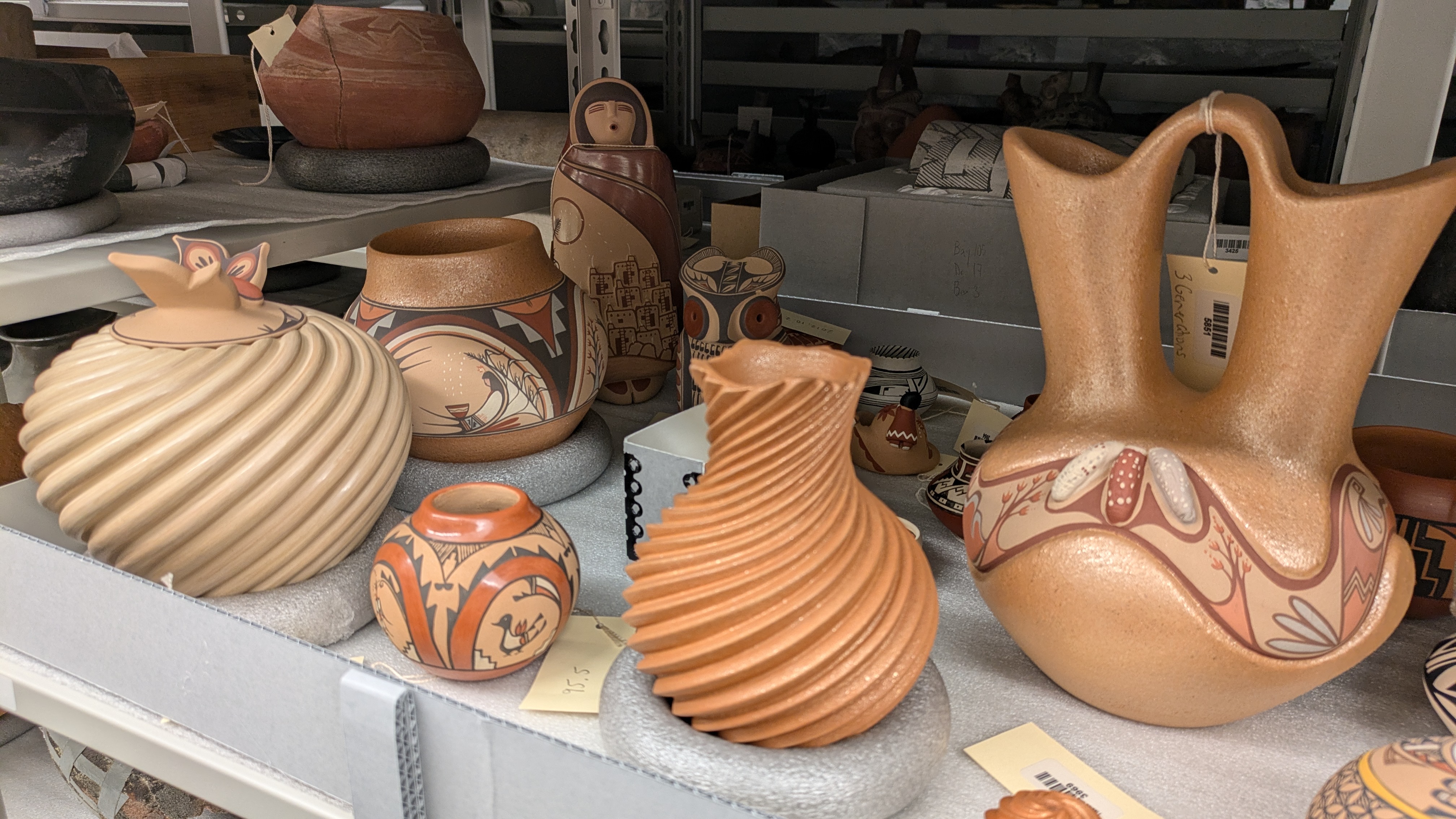
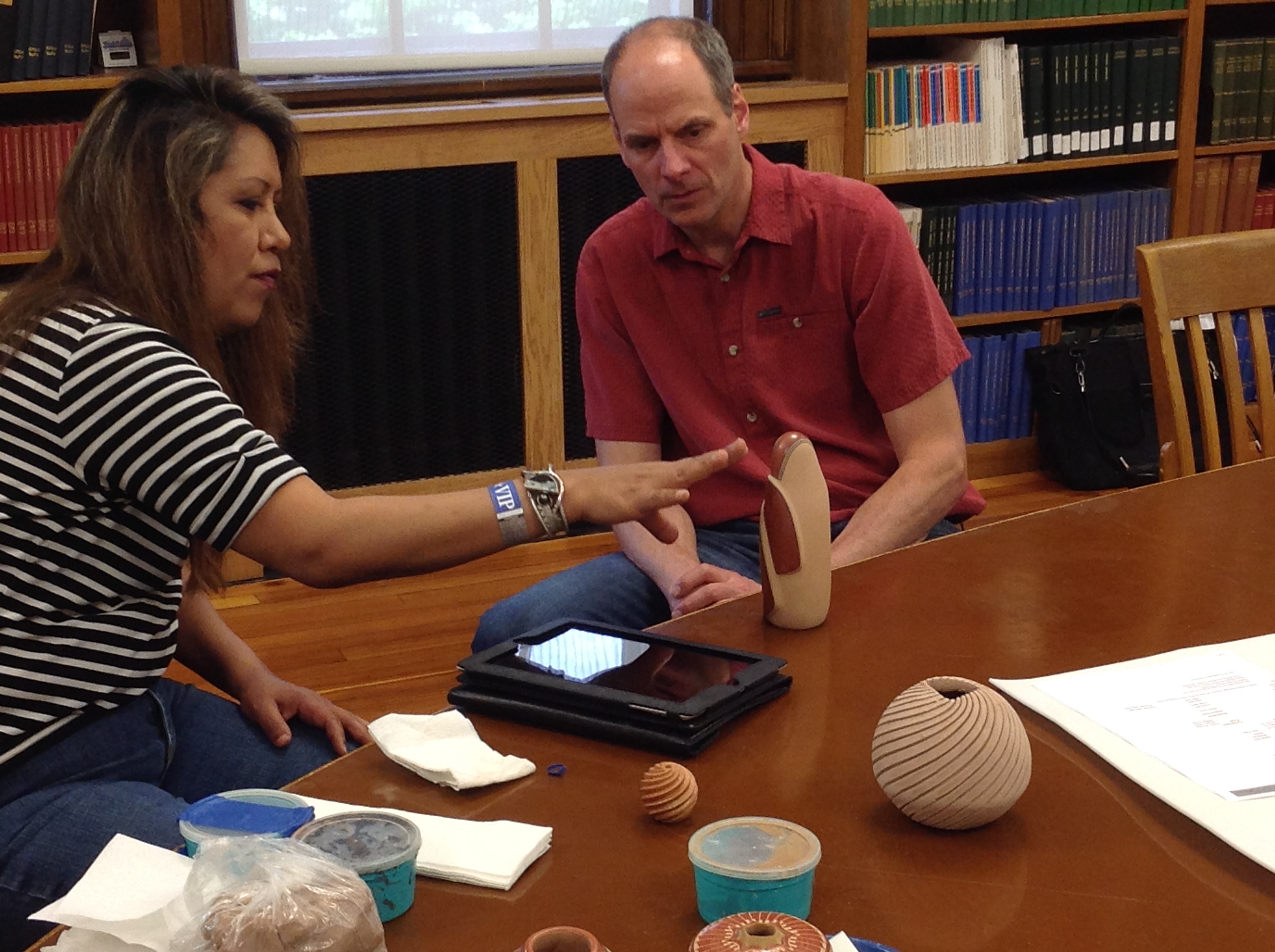
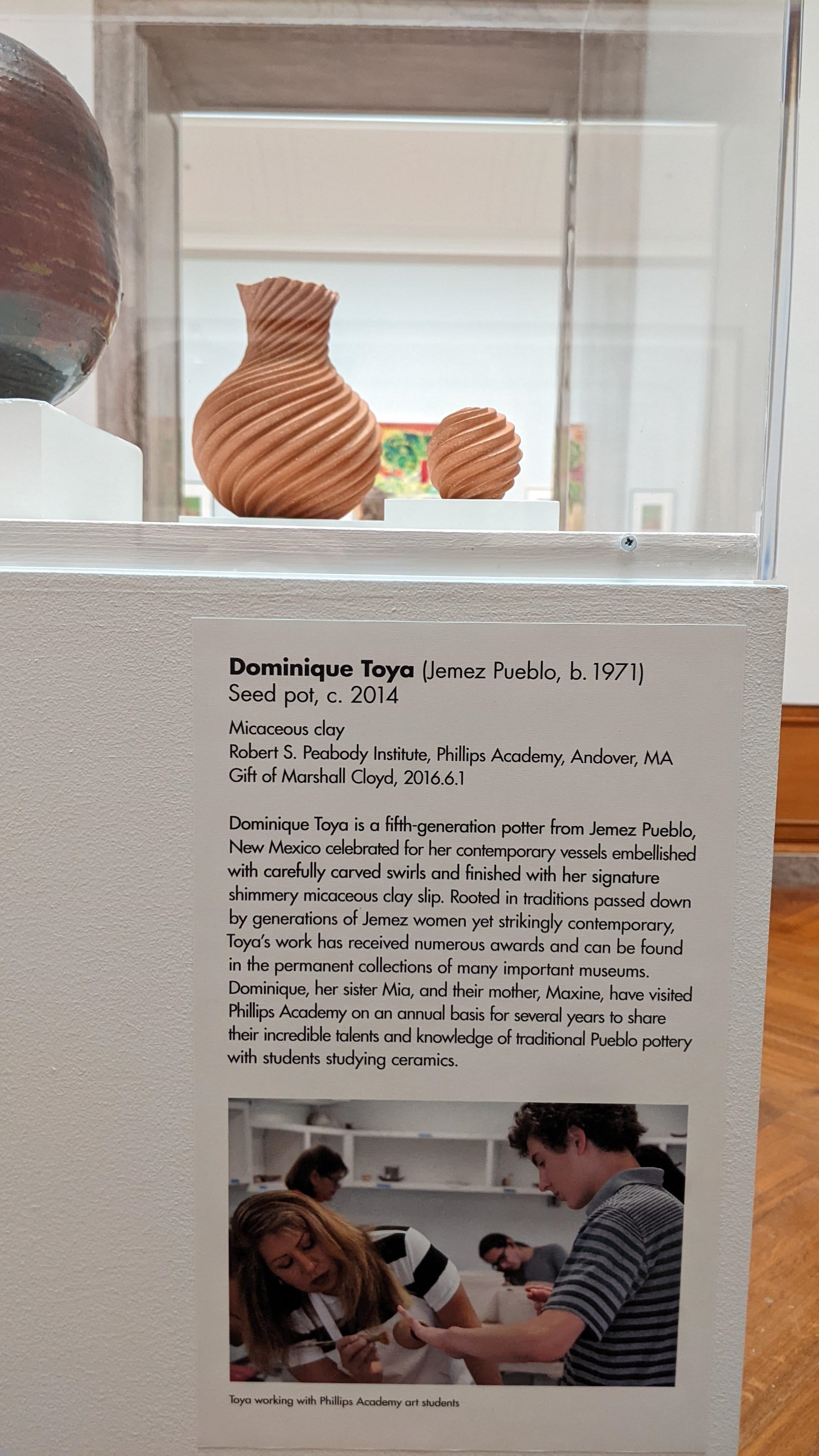
Mia’s piece (far left) joins other Toya Family creations in the Peabody Institute collections, including collaborations between Dominique and Maxine Toya, Maxine’s storyteller and owl figures, Dominique’s distinctive micaceous swirl vessels, and a piece by Mia’s grandmother Marie G. Romero (second from the left).
Watching Mia work with students, its not surprising that in addition to being an accomplished artist, she’s also an educator. Mia teaches second grade at Jemez Day School. A Bureau of Indian Education social media post from 2016 includes a quote from Mia, reflecting on becoming a National Board Certified teacher, “I always knew I wanted to teach in this school–to serve the kids in my community and be one of their role models. Being a National Board Certified teacher helps me give my best to my students, community, and Tribe every day.”
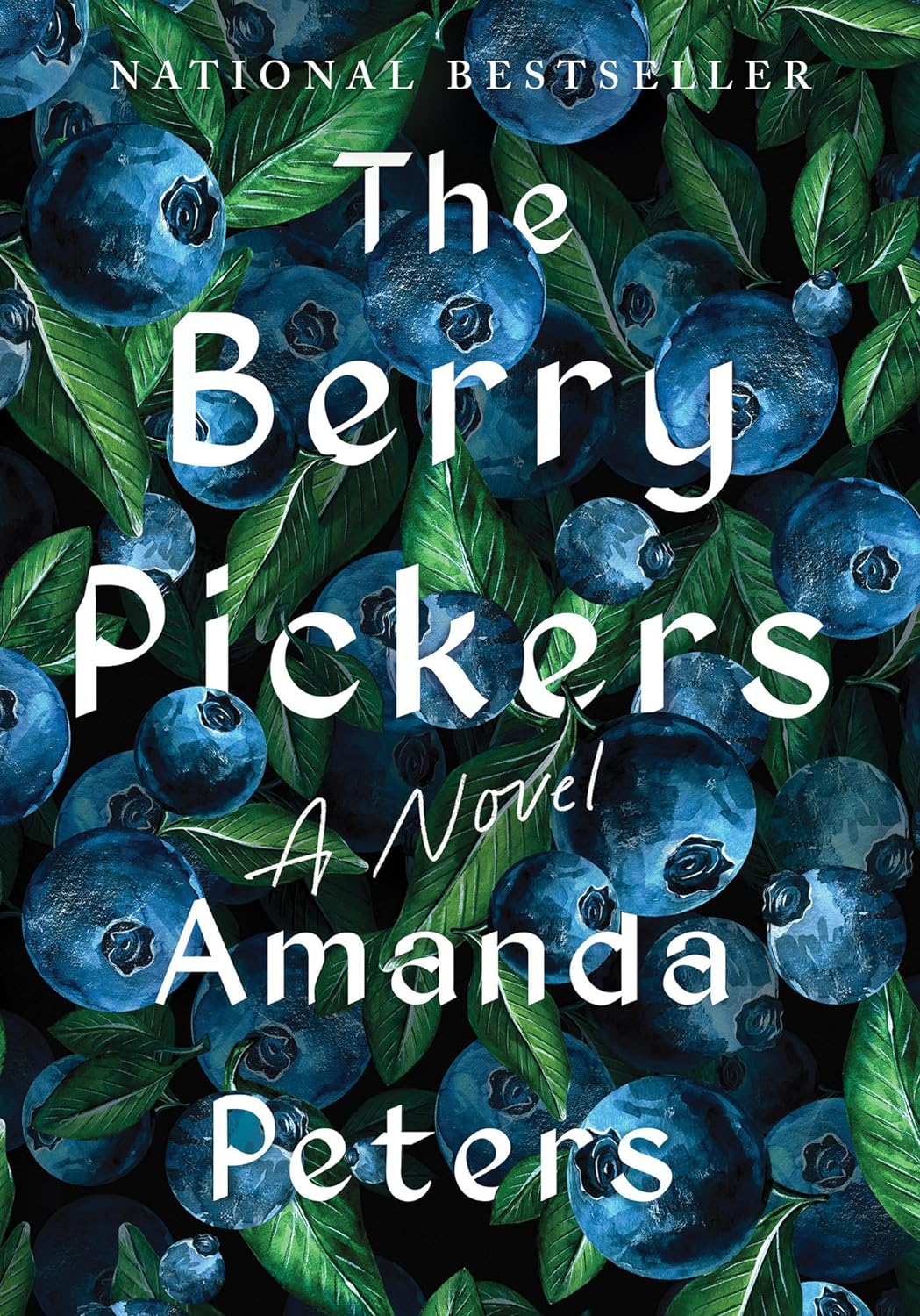
A four-year-old Mi’kmaq girl goes missing from the blueberry fields of Maine, sparking a tragic mystery that haunts the survivors, unravels a community, and remains unsolved for nearly fifty years.
The Berry Pickers is a heartbreaking, riveting tale of Indigenous family separation. We follow an Indigenous Mi’kmaq family in Nova Scotia who travels every summer to Maine to pick blueberries as migrant workers. In the summer of 1962, 4-year-old Ruthie, the youngest of the family’s five children, disappears from the fields. The last to see her is the second youngest, 6-year-old Joe, who takes the loss especially hard and carries his guilt in the years to come.
The book is told through two alternating character perspectives – one being Ruthie’s brother Joe and the second being a young girl named Norma. Growing up in Maine as the only child of affluent and overprotective parents, Norma, struggles to find the truth behind her recurring dreams and visions (that seem more like memories than imagination). As time and secrets unfold, these two storylines ultimately converge.
This is a treasure of a book – filled with loss and sadness yet manages to be hopeful as well. Amanda Peters (Mi’kmaq, Glooscap First Nation) has a lot of empathy for her characters and gently invites readers to examine the affects of intergenerational trauma, racist residential institutions, and the specific ways Indigenous families were treated – in a deeply personal way.
This story is both powerful and moving. Although told quietly, it did not take away from its impact.
Next on my list to read is Amanda Peter’s newest book, Waiting for the Long Night Moon: Stories. This is her debut collection of short fiction that describes Indigenous experiences across time and space – from contact with European settlers, to the forced removal of Indigenous children, to the present-day fight for the right to clean water.
The book will be available August 2024 in Canada and January 2024 in the U.S.
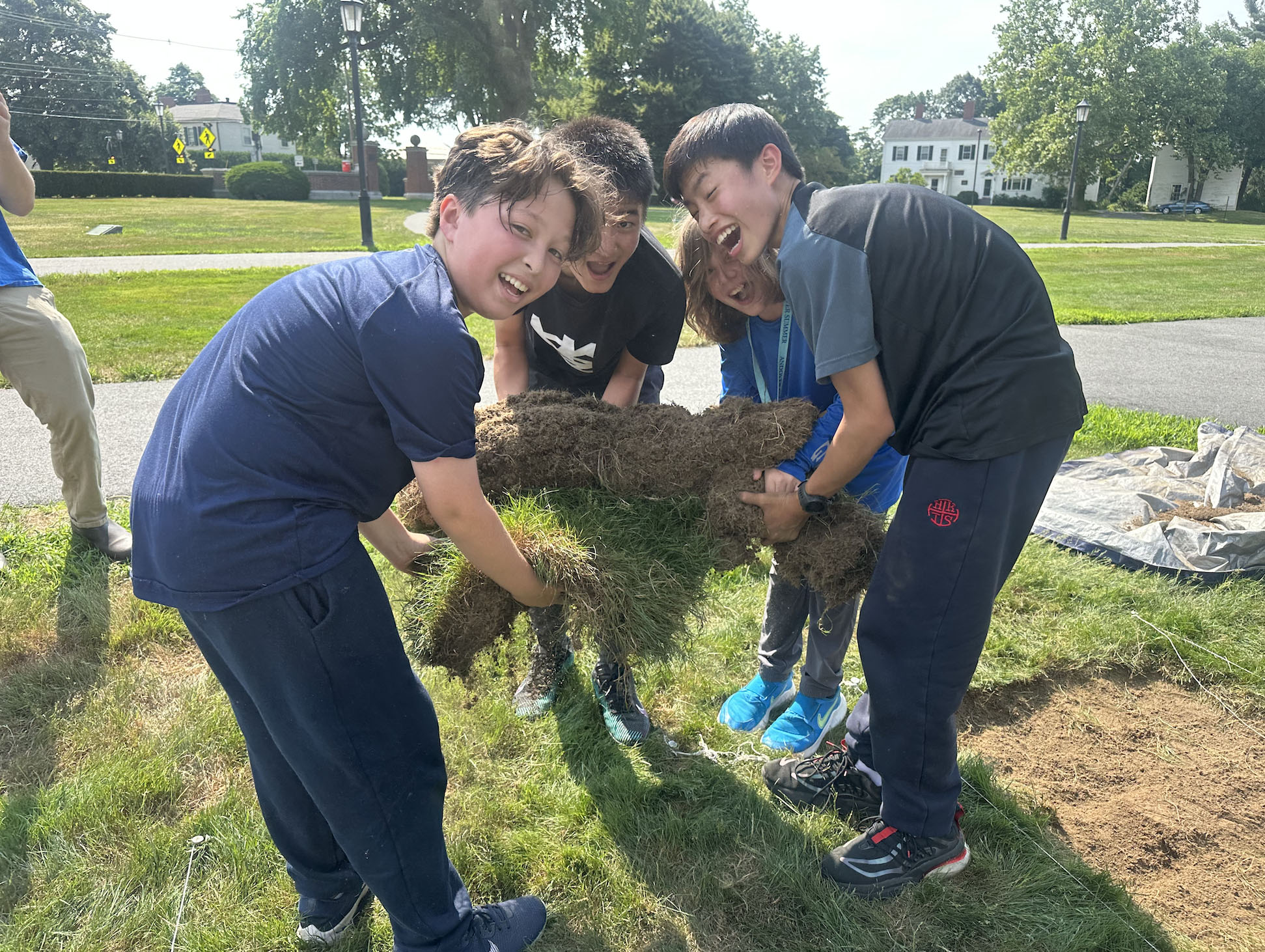
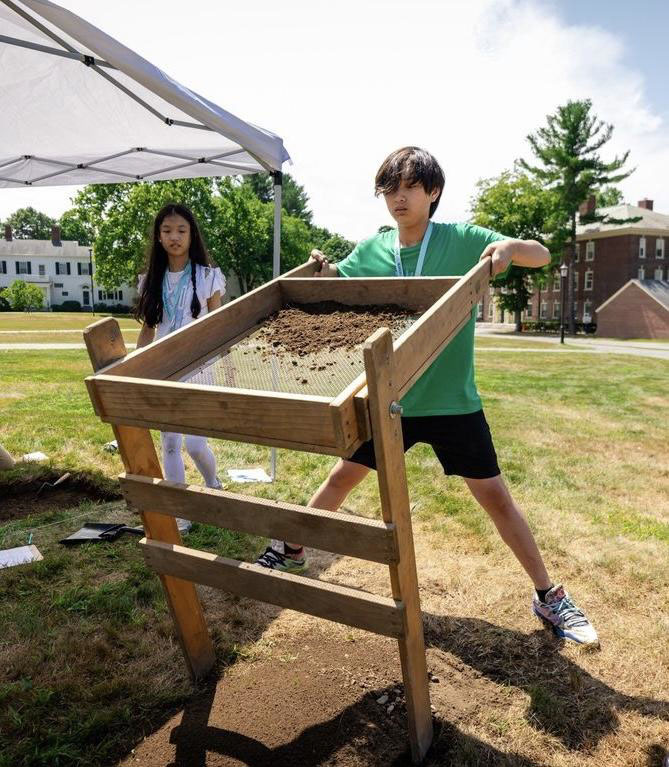
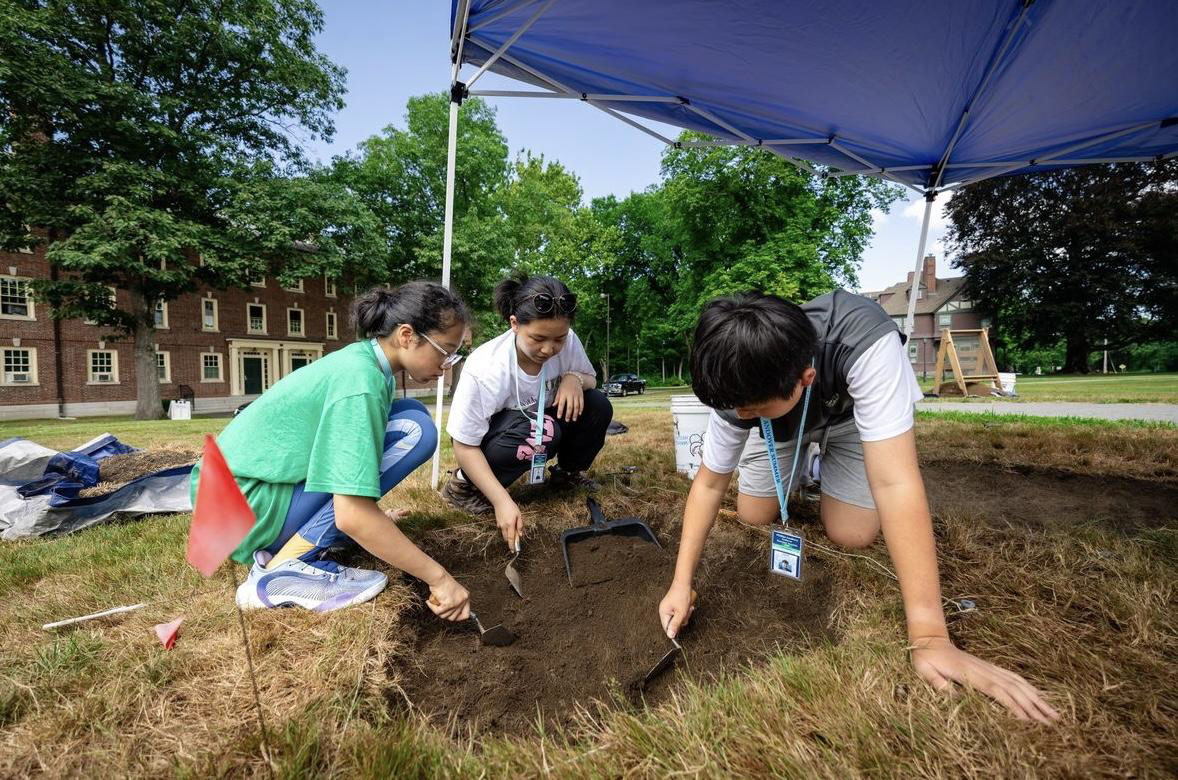
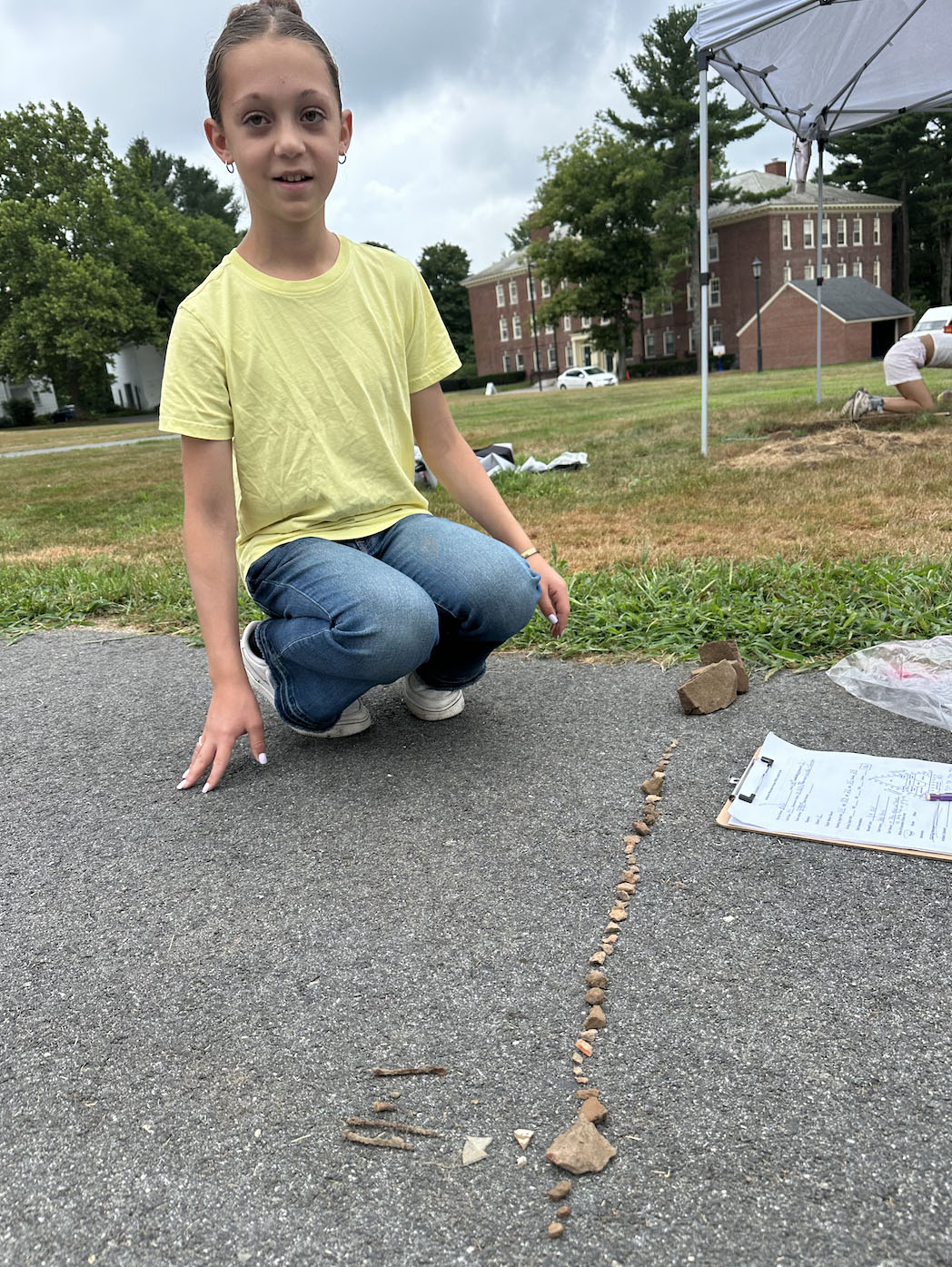
As Phillips Academy’s Lower School Institute (LSI) Dig This! course comes to the end of its seventh field season, students and instructors are so excited to share stories of the many artifacts they discovered at the school’s very own excavation site. At the start of the 2024 season, students were introduced to the story of the Mansion House, an eighteenth century home which belonged to the founder of the academy, and now lies buried underneath the lawn of the West Quad on Phillips Academy campus. The Mansion House stood on the property for 105 years before being burned down through an act of arson, which was never solved or prosecuted. The remains of the house laid just centimeters underneath the surface of the quad for a little over 100 years before LSI’s summer session course began the long process of meticulously digging it up.
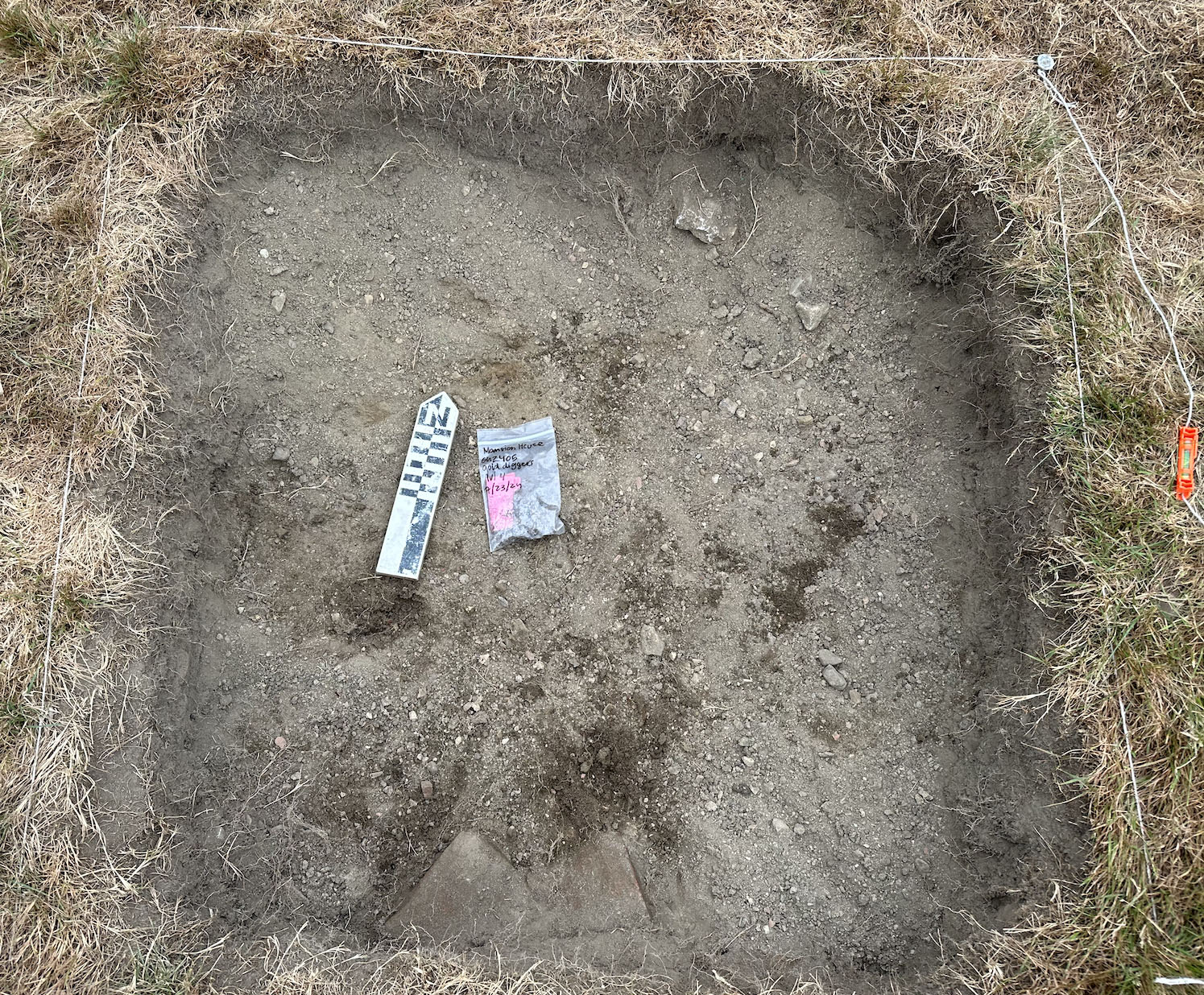
After being introduced to the legacy of the Mansion House and its past excavations, the 2024 archaeology crew set out to build upon this research by investigating parts of the site which have never been previously tested. Specifically, six teams were each assigned a 1 X 1 meter unit and asked to investigate a given region of the West Quad, whether it be just outside of the Mansion House walls, in the area suspected to hold a nineteenth century privy, or the very place where a neighboring nineteenth century printing house was known to have stood. Equipped with shovels, trowels, and screens, the six teams got to work and all quickly began to gather archaeological data.
While no team this summer unearthed ash layers relating to the infamous 1887 fire, which resulted in the destruction of the Mansion House, several groups discovered an abundance of charcoal and burned brick. Additionally, the two groups assigned to dig in the hypothesized privy, EU 2404+2405, uncovered a plethora of cultural materials, including a button, many ceramic shards, and faunal bones. Specifically, a small black glass button, which was unearthed in EU2405, became of great interest to the students. Because black glass beads were only in fashion during the ten-year period when England’s Queen Victoria was in mourning, the button students found can be dated to that decade between 1861 to 1870. How exciting!
Students stationed in the area believed to be where the nineteenth century printing house once stood uncovered a considerable amount of leather. It is unknown if this leather came from shoes or book bindings, however the find itself is incredible given how well the material preserved over time!
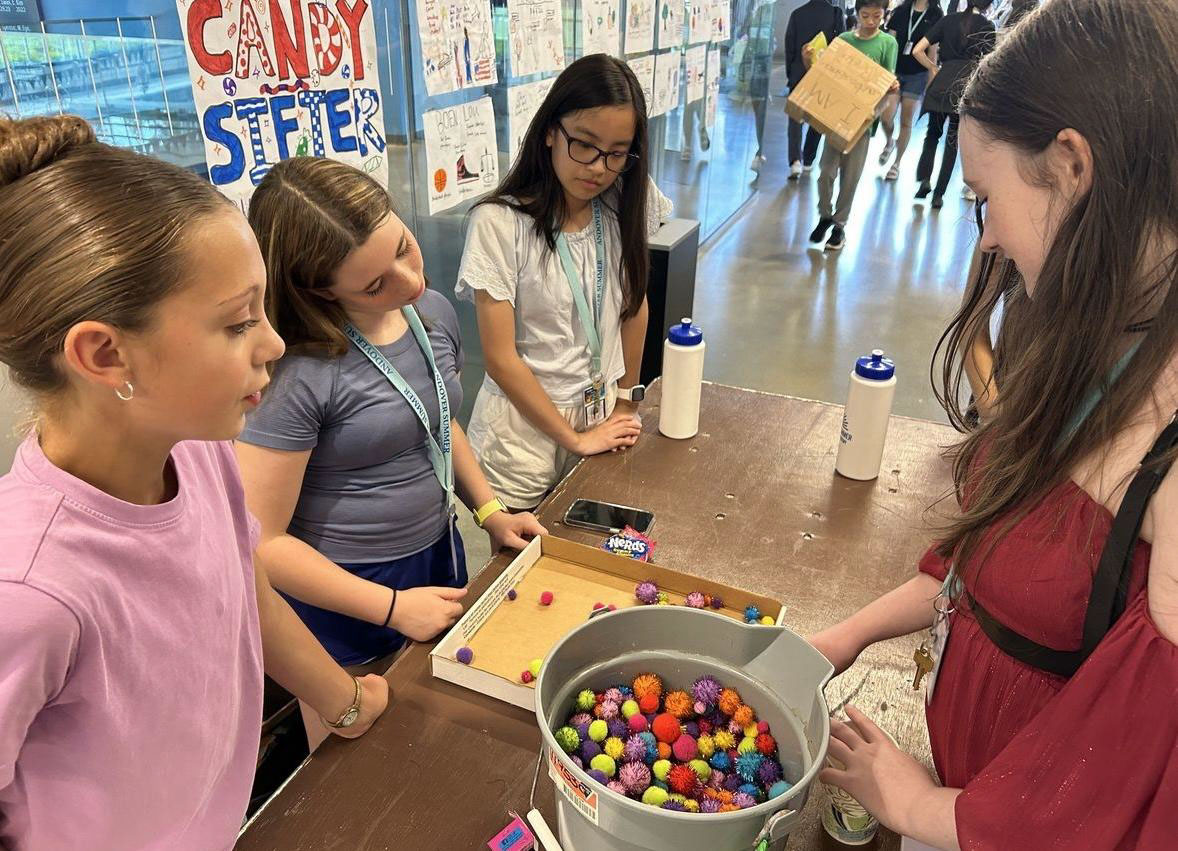
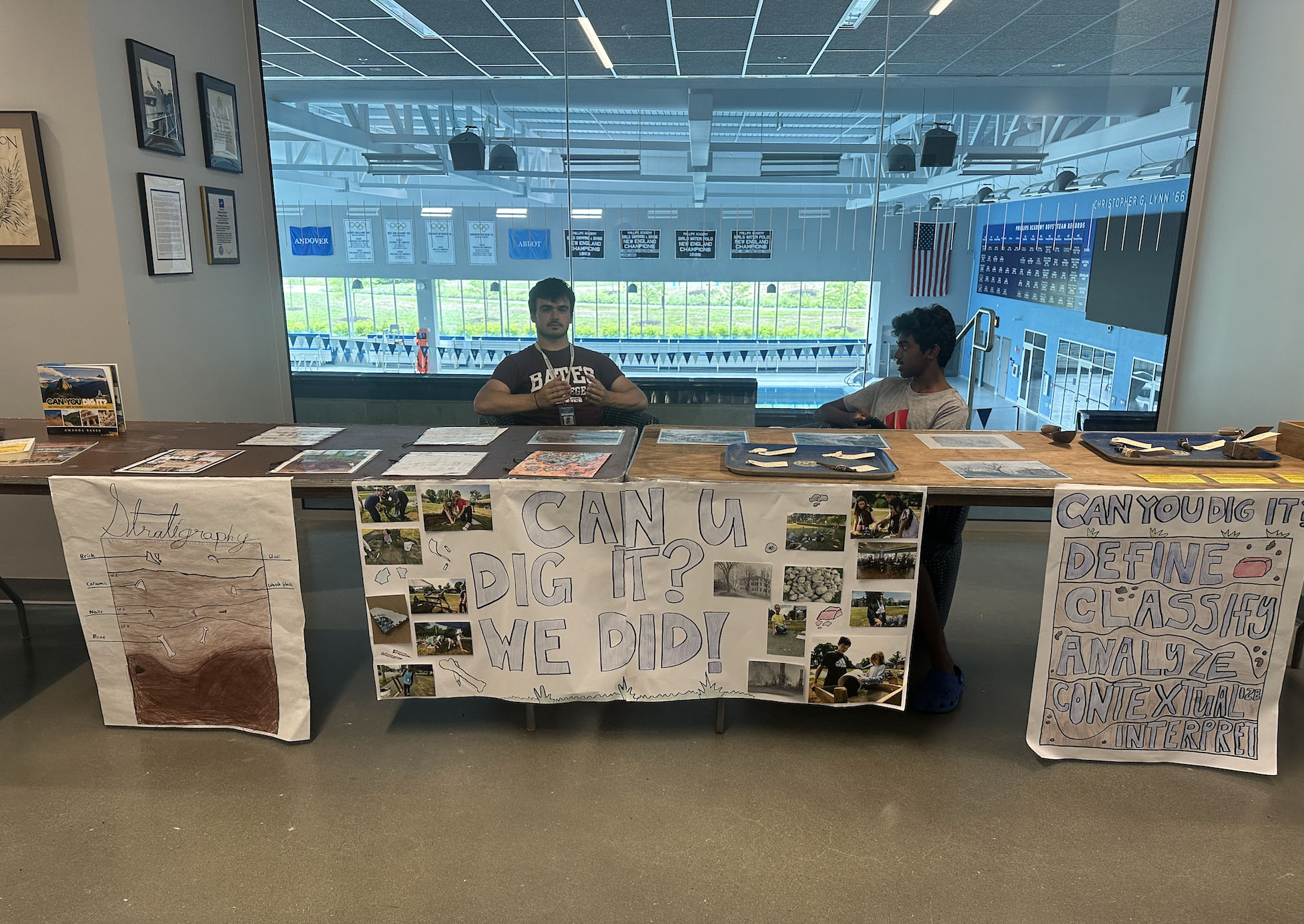
Despite the fact that the 2024 Dig This! crew did not uncover any features relating to the Mansion House, privy, or printing house, students still reveled in the amount of cultural material found and were very excited to show it off at their LSI student exhibition. Students specifically enjoyed the opportunity to set up an archaeology simulation, where they explained the process of digging and let others take a stab at excavating exciting treasures in the form of candy!
Cheers to another amazing summer of learning in the dirt!
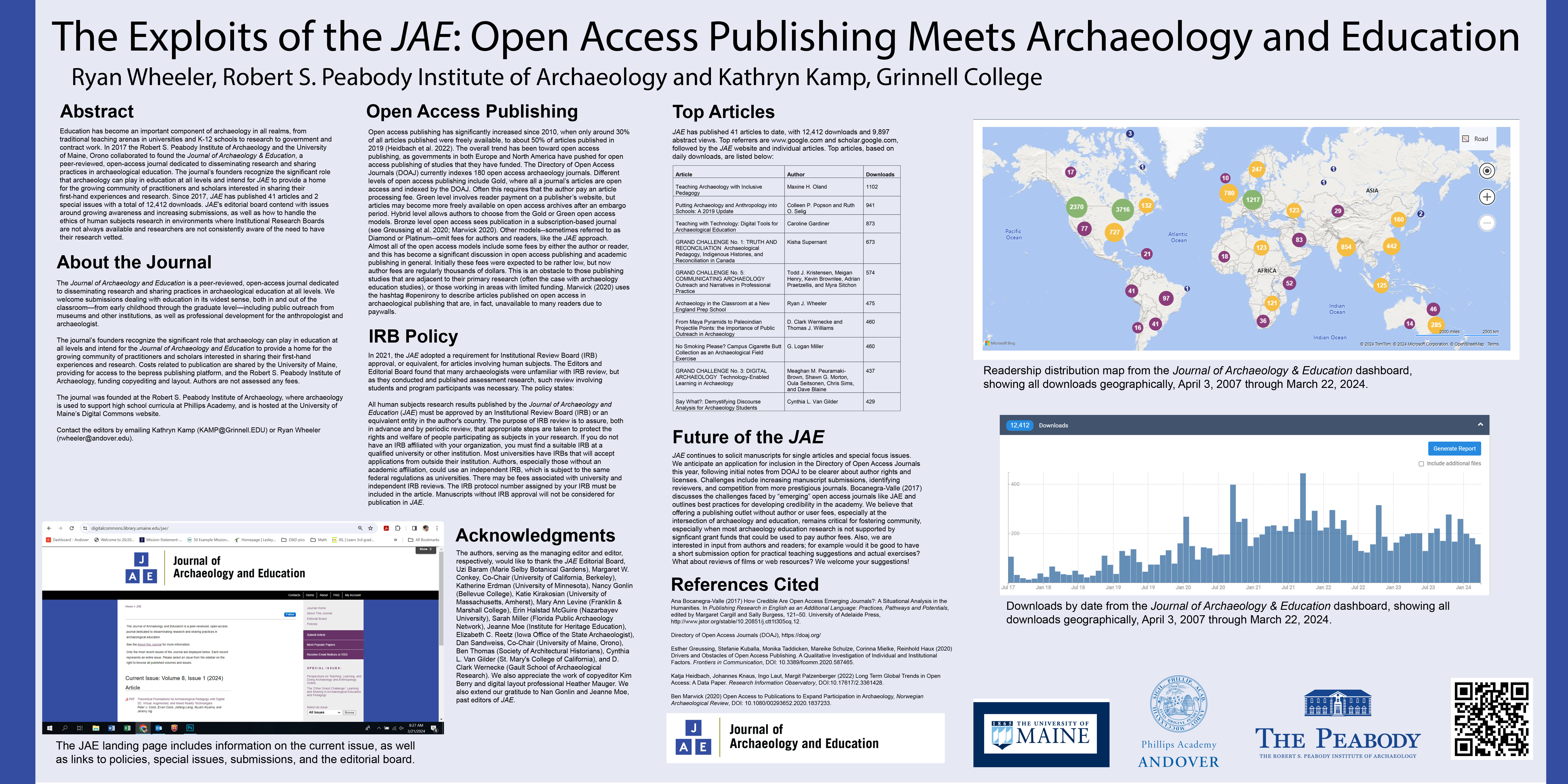
Poster sessions are a great way to share information and connect with people at the annual meeting of the Society for American Archaeology. Exhibitors have two hours to share their research and projects, connecting at length with attendees that stop by to chat–a bit less pressure than the regular sessions and symposia! At the recent 89th annual meeting of the SAA, the Journal of Archaeology & Education was represented at the Thursday afternoon posters after hours session. For those that couldn’t make it, here are some highlights of our poster:
JAE poster from the recent SAA annual meeting.
Abstract
Education has become an important component of archaeology in all realms, from traditional teaching arenas in universities and K-12 schools to research to government and contract work. In 2017 the Robert S. Peabody Institute of Archaeology and the University of Maine, Orono collaborated to found the Journal of Archaeology & Education, a peer-reviewed, open-access journal dedicated to disseminating research and sharing practices in archaeological education. The journal’s founders recognize the significant role that archaeology can play in education at all levels and intend for JAE to provide a home for the growing community of practitioners and scholars interested in sharing their first-hand experiences and research. Since 2017, JAE has published 41 articles and 2 special issues with a total of 12,412 downloads. JAE’s editorial board contend with issues around growing awareness and increasing submissions, as well as how to handle the ethics of human subjects research in environments where Institutional Research Boards are not always available and researchers are not consistently aware of the need to have their research vetted.
About the Journal
The Journal of Archaeology and Education is a peer-reviewed, open-access journal dedicated to disseminating research and sharing practices in archaeological education at all levels. We welcome submissions dealing with education in its widest sense, both in and out of the classroom—from early childhood through the graduate level—including public outreach from museums and other institutions, as well as professional development for the anthropologist and archaeologist.
The journal’s founders recognize the significant role that archaeology can play in education at all levels and intend for the Journal of Archaeology and Education to provide a home for the growing community of practitioners and scholars interested in sharing their first-hand experiences and research. Costs related to publication are shared by the University of Maine, providing for access to the bepress publishing platform, and the Robert S. Peabody Institute of Archaeology, funding copyediting and layout. Authors are not assessed any fees.
The journal was founded at the Robert S. Peabody Institute of Archaeology, where archaeology is used to support high school curricula at Phillips Academy, and is hosted at the University of Maine’s Digital Commons website. Contact the editors by emailing Kathryn Kamp (KAMP@Grinnell.EDU) or Ryan Wheeler (rwheeler@andover.edu).
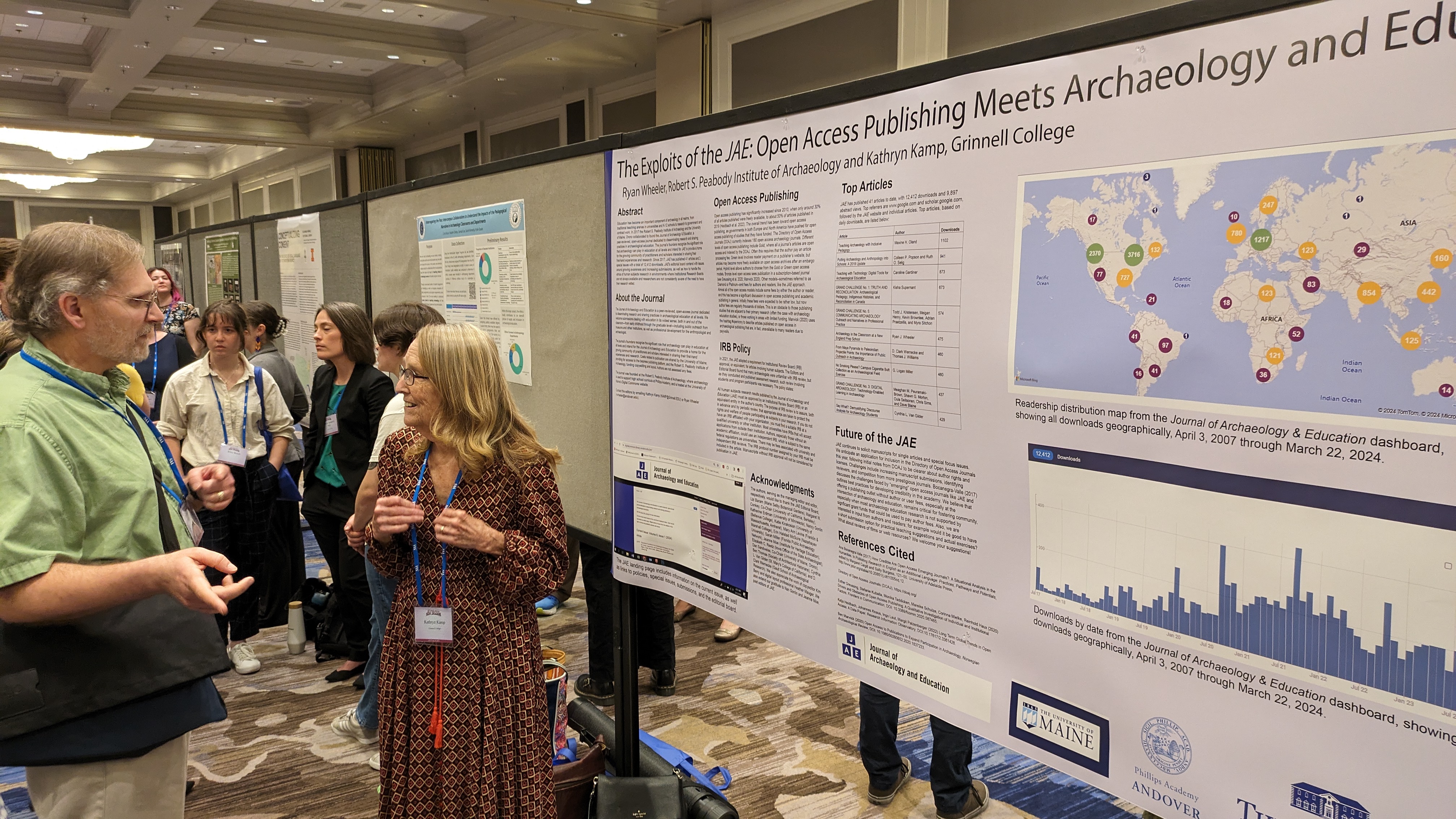
JAE editor Kathryn Kamp talks to attendees at the poster session.
Open Access Publishing
Open access publishing has significantly increased since 2010, when only around 30% of all articles published were freely available, to about 50% of articles published in 2019 (Heidbach et al. 2022). The overall trend has been toward open access publishing, as governments in both Europe and North America have pushed for open access publishing of studies that they have funded. The Directory of Open Access Journals (DOAJ) currently indexes 180 open access archaeology journals. Different levels of open access publishing include Gold, where all a journal’s articles are open access and indexed by the DOAJ. Often this requires that the author pay an article processing fee. Green level involves reader payment on a publisher’s website, but articles may become more freely available on open access archives after an embargo period. Hybrid level allows authors to choose from the Gold or Green open access models. Bronze level open access sees publication in a subscription-based journal (see Greussing et al. 2020; Marwick 2020). Other models–sometimes referred to as Diamond or Platinum–omit fees for authors and readers, like the JAE approach. Almost all of the open access models include some fees by either the author or reader, and this has become a significant discussion in open access publishing and academic publishing in general. Initially these fees were expected to be rather low, but now author fees are regularly thousands of dollars. This is an obstacle to those publishing studies that are adjacent to their primary research (often the case with archaeology education studies), or those working in areas with limited funding. Marwick (2020) uses the hashtag #openirony to describe articles published on open access in archaeological publishing that are, in fact, unavailable to many readers due to paywalls.
IRB Policy
In 2021, the JAE adopted a requirement for Institutional Review Board (IRB) approval, or equivalent, for articles involving human subjects. The Editors and Editorial Board found that many archaeologists were unfamiliar with IRB review, but as they conducted and published assessment research, such review involving students and program participants was necessary. The policy states:
All human subjects research results published by the Journal of Archaeology and Education (JAE) must be approved by an Institutional Review Board (IRB) or an equivalent entity in the author’s country. The purpose of IRB review is to assure, both in advance and by periodic review, that appropriate steps are taken to protect the rights and welfare of people participating as subjects in your research. If you do not have an IRB affiliated with your organization, you must find a suitable IRB at a qualified university or other institution. Most universities have IRBs that will accept applications from outside their institution. Authors, especially those without an academic affiliation, could use an independent IRB, which is subject to the same federal regulations as universities. There may be fees associated with university and independent IRB reviews. The IRB protocol number assigned by your IRB must be included in the article. Manuscripts without IRB approval will not be considered for publication in JAE.
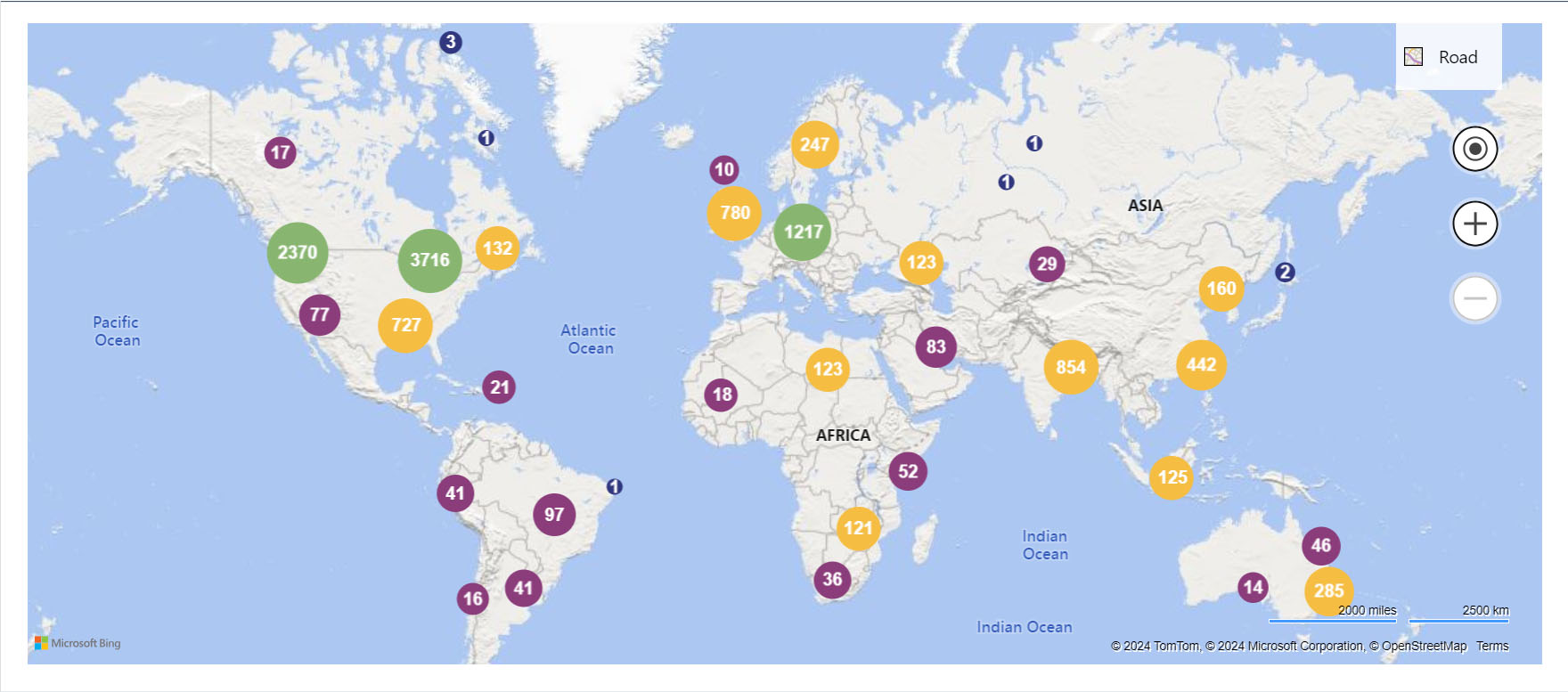
Geographic depiction of downloads from the JAE dashboard.
Top Articles
AE has published 41 articles to date, with 12,412 downloads and 9,897 abstract views. Top referrers are http://www.google.com and scholar.google.com, followed by the JAE website and individual articles. Top articles, based on daily downloads, are listed below:
JAE continues to solicit manuscripts for single articles and special focus issues. We anticipate an application for inclusion in the Directory of Open Access Journals this year, following initial notes from DOAJ to be clearer about author rights and licenses. Challenges include increasing manuscript submissions, identifying reviewers, and competition from more prestigious journals. Bocanegra-Valle (2017) discusses the challenges faced by “emerging” open access journals like JAE and outlines best practices for developing credibility in the academy. We believe that offering a publishing outlet without author or user fees, especially at the intersection of archaeology and education, remains critical for fostering community, especially when most archaeology education research is not supported by significant grant funds that could be used to pay author fees. Also, we are interested in input from authors and readers; for example would it be good to have a short submission option for practical teaching suggestions and actual exercises? What about reviews of films or web resources? We welcome your suggestions!
JAE managing editor ready to engage attendees at the poster session.
References Cited
Ana Bocanegra-Valle (2017) How Credible Are Open Access Emerging Journals?: A Situational Analysis in the Humanities. In Publishing Research in English as an Additional Language: Practices, Pathways and Potentials, edited by Margaret Cargill and Sally Burgess, 121–50. University of Adelaide Press, http://www.jstor.org/stable/10.20851/j.ctt1t305cq.12.
Esther Greussing, Stefanie Kuballa, Monika Taddicken, Mareike Schulze, Corinna Mielke, Reinhold Haux (2020) Drivers and Obstacles of Open Access Publishing. A Qualitative Investigation of Individual and Institutional Factors. Frontiers in Communication, DOI: 10.3389/fcomm.2020.587465.
Katja Heidbach, Johannes Knaus, Ingo Laut, Margit Palzenberger (2022) Long Term Global Trends in Open Access: A Data Paper. Research Information Observatory, DOI:10.17617/2.3361428.
Ben Marwick (2020) Open Access to Publications to Expand Participation in Archaeology, Norwegian Archaeological Review, DOI: 10.1080/00293652.2020.1837233.
Bigfoot, ancient aliens, Homo naledi, Australopithecines, stone tools, painted pebbles, scientific racism, repatriation. How are these topics connected? Students in the senior science elective Human Origins find out. A lot of it has to do with the history of anthropology–the scientists that studied fossil humans also studied race. The two fields continue to influence one another, not always in the most positive ways. The course is divided into modules that explore science and pseudoscience, human biological evolution and the development of technology and imagery, and the concept of race and scientific racism.
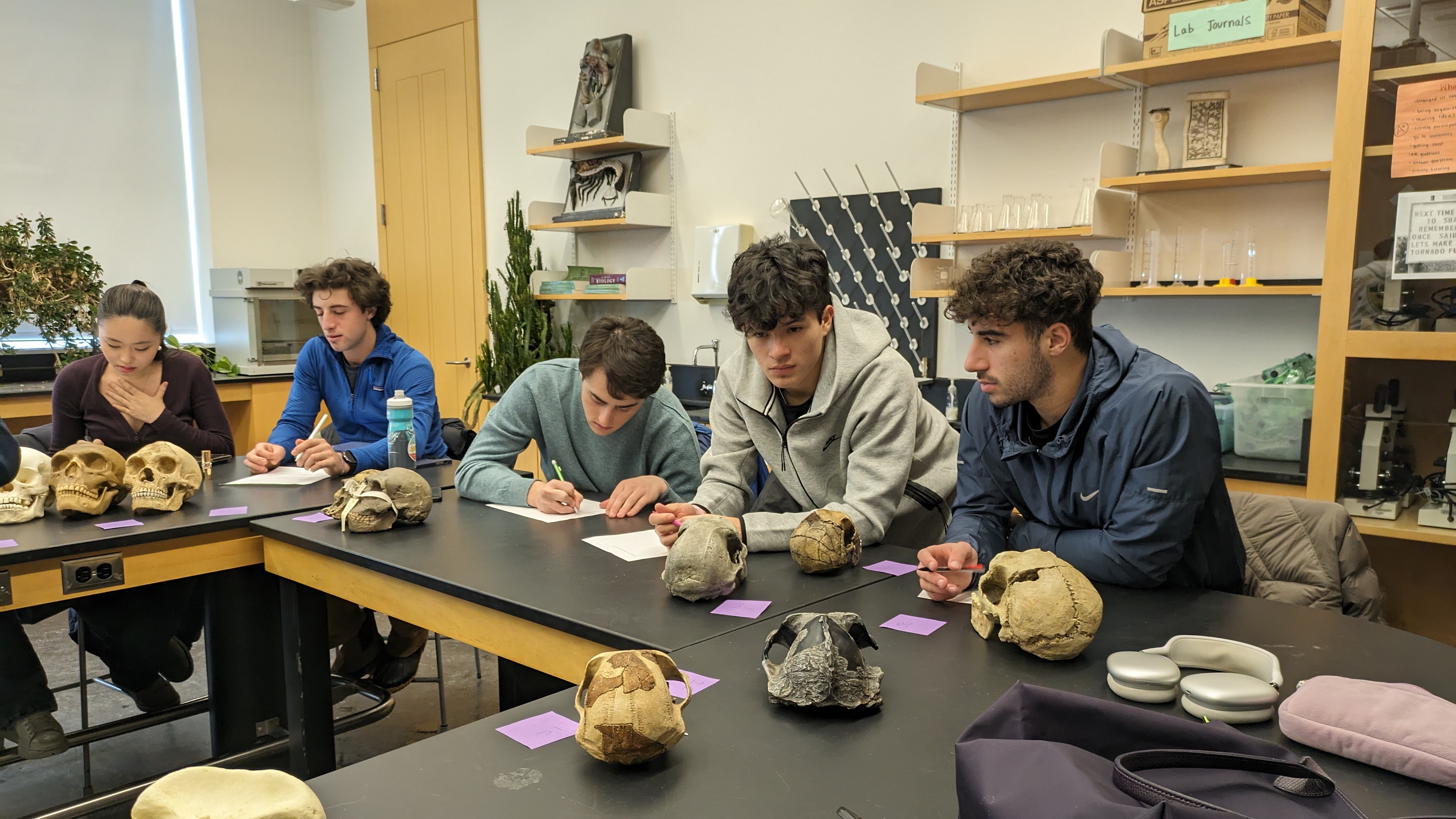
Human Origins students explore some of the Peabody Institute’s fossil human crania casts and models.
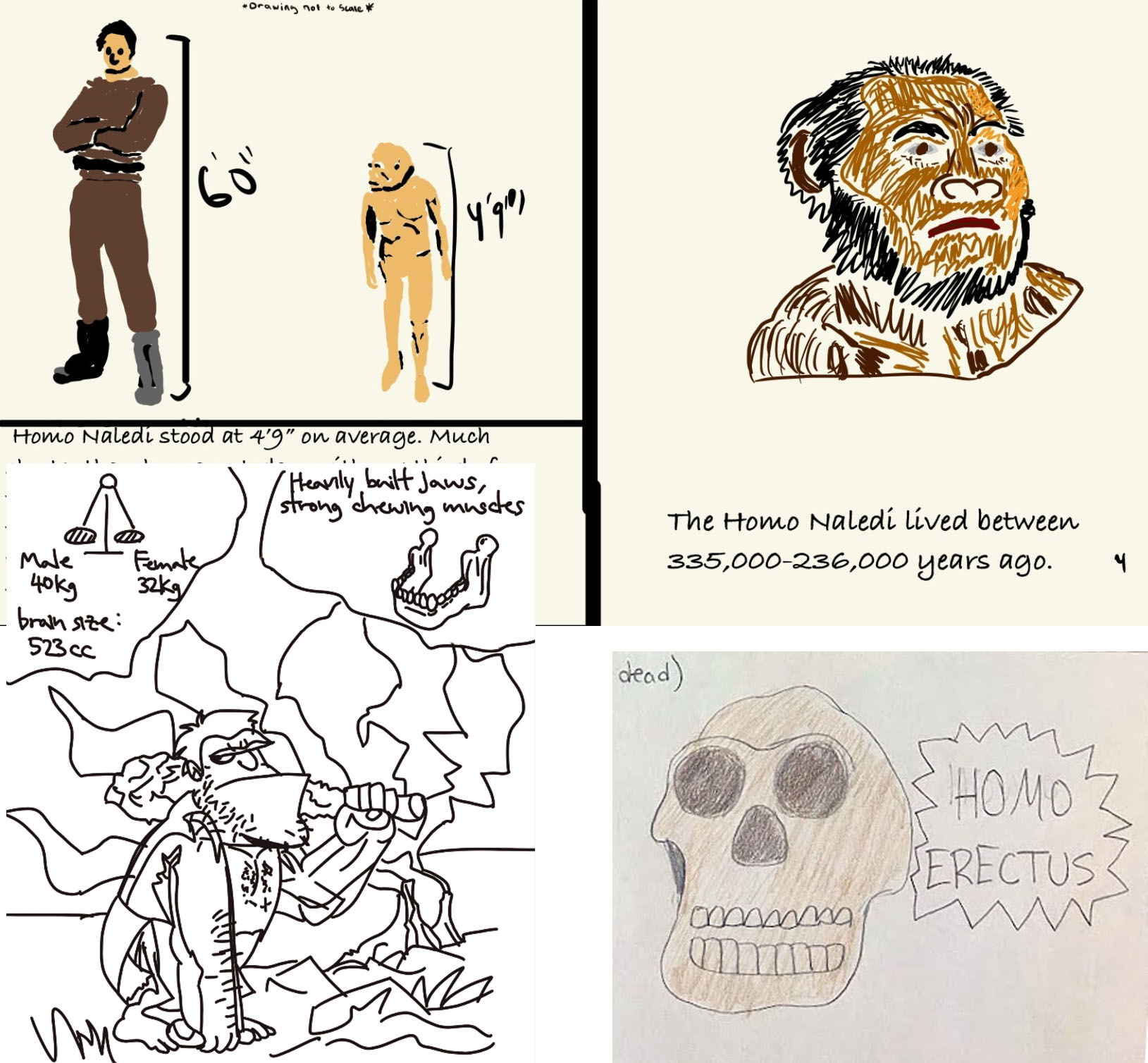
Some of my favorite assignments are team projects that involve producing a trailer for a new tv series on pseudoscience, a new comic pages project that focused on specific fossil humans, and Human Origins in the News, where student teams lead class. We just finished midterm, and I was wowed by the new comic pages assignment. I’ve wanted to develop a comics assignment and I’m really pleased with the results–student teams researched particular fossils and then developed a few comic pages in response to a series of prompts. Students are now making their own chipped stone tools and starting to plan their podcasts for the end of the term.
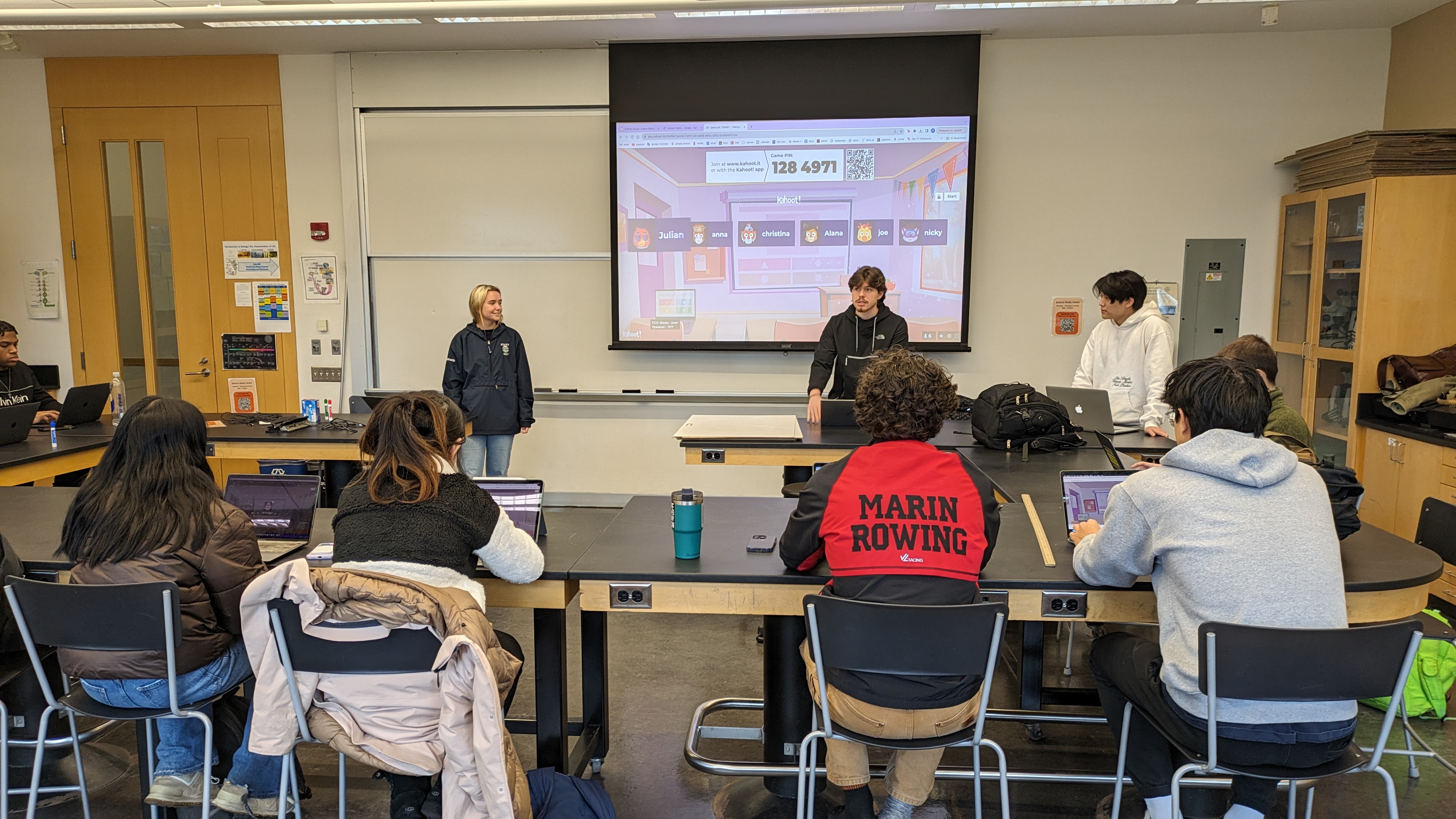
Human Origins students lead class during our “short period” on most Mondays with Human Origins in the News.
A couple of big changes this term include teaching during winter term–usually we’ve offered Human Origins in the fall–and we’ve been meeting the class in the Gelb science building, as Phase 1 of the Peabody Institute renovation wraps up. I’m really grateful to my colleagues in the science division for sharing the Gelb classroom with me. It will be nice to return to the Peabody Institute in the near future. We’ll at least be close-by next week when we explore the atlatl and throw spears on the Chandler-Wormley Vista!
A sample from the comic pages created by Human Origins students this term.
I’ve sat down several times to write this. It’s hard, for a couple of reasons. Dominique will always remain a remarkable person, funny, talented, generous of spirit, and with a laugh that made everyone around her soar. I think I’ve delayed writing because I feared I wouldn’t find the right words. Also, I was afraid that with the words would come a finality.
Dominique demonstrates the addition of mica to a student’s piece, May 2016.
Last month saw the passing of a truly remarkable individual. We remain shocked and saddened by the loss of Dominique Toya (1971-2023), who we have been fortunate to know since 2013. Dominique was a fifth generation potter, born to the Corn Clan at the Pueblo of Jemez. Dominique’s particular style of pottery saw the fusion of traditional methods and materials with innovative shapes and surface treatments. Collaboration with her family and other artists produced stunning and innovative results.
Dominique shares points out the polished details on her mom’s town crier figure to Phillips Academy ceramics instructor Thayer Zaeder, May 2014.
Dominique and her mom Maxine and sister Mia, often with other friends and family, traveled to Andover every year since 2014 to share Pueblo pottery making with Phillips Academy students, faculty, and friends. These weeklong workshops allowed students to make their own ceramic pieces with clay from New Mexico, finished, decorated, guided, and encouraged by the Toya Family. One year I conducted interviews with students following the finale of the class—an open-air firing. Considering all that Phillips Academy has to offer, I was a bit surprised when many of the students said their time with Dominique and her family was their best Andover experience. I shouldn’t have been surprised. Dominique was far more than a gifted artist; she was an ambassador of Indigenous art, and above all, a generous teacher.
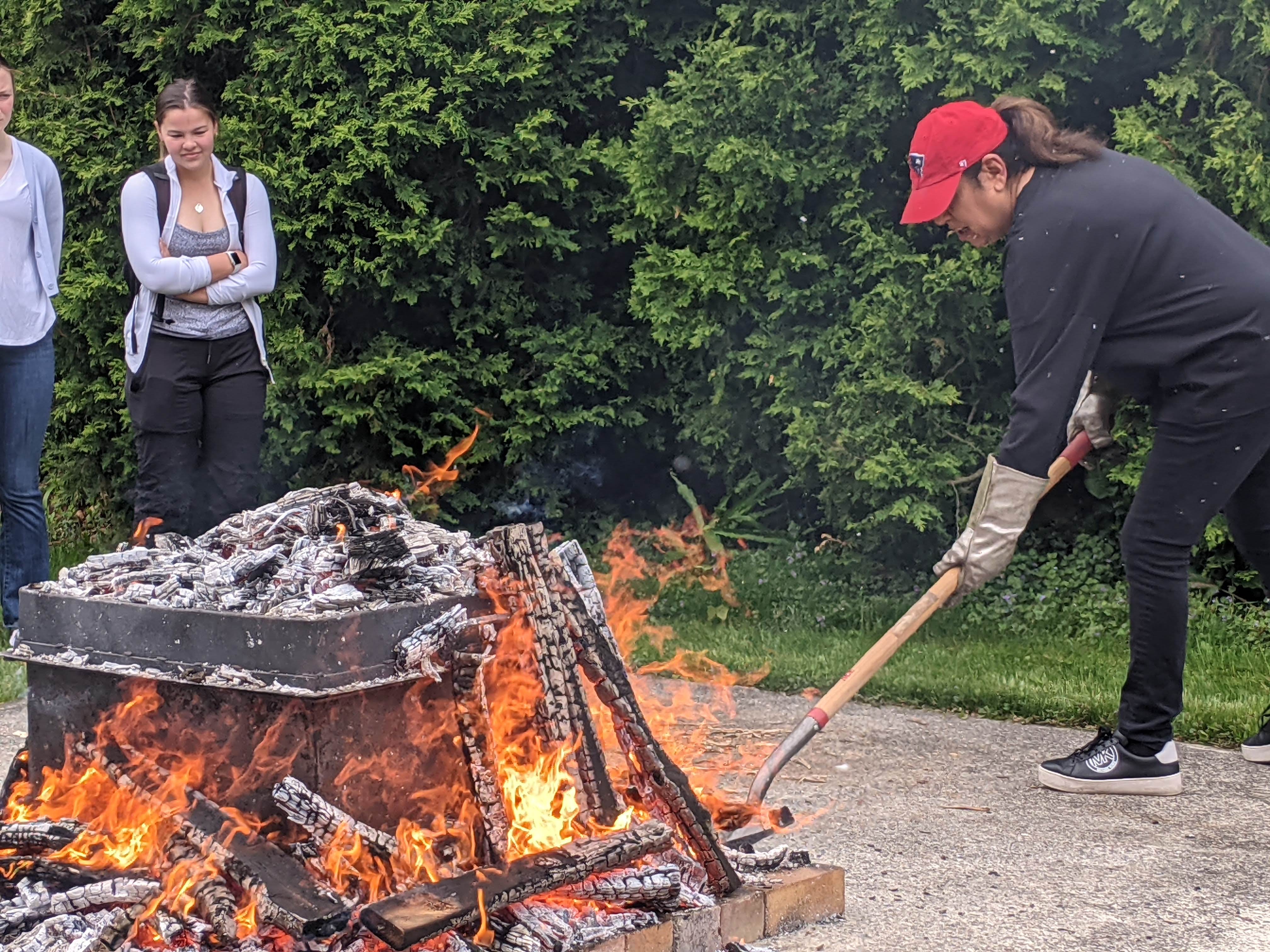
Dominique tends the open air pottery firing at the end of May 2022’s weeklong workshop as students look on.
I cherish the Toya Family’s time on campus, Dominique’s laughter and sense of humor, but also watching her help students design and complete pieces, often helping them figure out how to solve problems or challenges (often ones that they had created!). Dominique played a big role in many communities–she was involved in the Southwestern Association for Indian Arts, from exhibiting and frequently winning awards at the annual Santa Fe Indian Market, judging and mentoring, to service on the SWAIA board. Dominique also was a drag performer and frequently traveled to participate in the International Court System, including the Imperial Sovereign Court of New Mexico, where she was crowned Empress 10. The International Court System is a venerable and well-known LGBTQ organization, raising funds for social issues, education, and other charitable causes. Dominique and her mom often donated their pieces for those fundraising efforts. During the Jemez and Pecos feast days, Dominique and her family prepared traditional foods, like Jemez enchiladas and oven bread, welcoming friends and visitors into their home to celebrate.
Dominique shares some tips on finishing a piece with an Academy student, May 2023.
I’m grateful that Dominique chose to be part of the Peabody Institute and Phillips Academy communities as well. Dominique, you taught us all a lot about art, Indigenous art, clay, the magic of mica, the business (and politics) of Native American art, but most of all, the art of being yourself. I’ll end with some of the student reflections from the Toya Family workshop in 2017: “Working with the Pueblo potters is really fun—we learned a lot and they have an amazing sense of humor.” “To be able to incorporate these techniques into my pieces gave me a new level of respect for pottery.” “This is one of the best things I’ve done all term, actually all year.” “These artists are so cool and they really care about their art and about your art.” Dominique, thank you for sharing and Godspeed.
The Peabody Institute is fortunate to have several of Dominique’s pieces, including these two swirl vessels that were featured in the spring 2023 show “Women in Abstraction” at the Addison Galley of American Art.
Last month, the Peabody Institute sponsored a day trip to Harvard University for Phillips Academy students. The 25th Annual Powwow was hosted by the Harvard University Native American Program (HUNAP). After a three-year hiatus due to the Covid-19 pandemic, the HUNAP program was able to welcome the return of their Powwow.
Flyer for HUNAP’s 25th Annual Powwow
This year’s theme for the HUNAP Powwow was Protect Indigenous Futures! The event was held on Orange Shirt Day, a national day of remembrance and reconciliation for victims of residential schools, which sought to separate Native children from their families and forcibly assimilate them. The Powwow honored survivors and victims of residential schools throughout Canada and the United States.
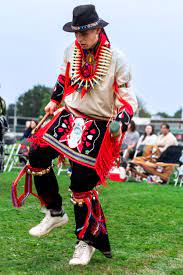
The Powwow ceremony is an Indigenous gathering with traditional dances and music held by Tribal nations from the New England area. The event welcomed hundreds of attendees from Harvard, neighboring Native communities, and the Greater Boston area.
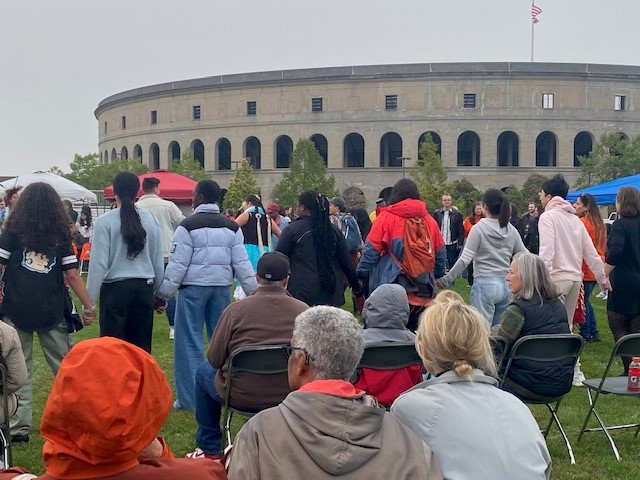
Photos from the HUNAP Powwow Photos by Catherine Dondero and Courtesy of Harvard University
Students took part in community dances, which welcomed all event attendees into the arena to dance together. Many PA students took part in these community dances and got to experience the ceremony traditions first-hand.
PA students participating in community dances
This event was a wonderful opportunity for students to experience Indigenous cultural traditions and ceremonies. Students also had the opportunity to connect with Indigenous students, community members, HUNAP students, and Tribal nations from the Greater Boston area, New England, and those visiting from other parts of the United States and Canada.
Want to hear more about this event from the students’ perspective? Check out this article from Phillips Academy’s student paper, The Phillipian.
For more details about the HUNAP 25th Annual Powwow, explore this article from The Harvard Gazette and video coverage of the event by Harvard University.





 The Peabody