New Mexico, May 2023

Contributed by Ryan Wheeler

The Peabody Institute has a history with New Mexico stretching back to 1915 and the beginning of Alfred Kidder’s nearly fifteen yearlong excavation at Pecos Pueblo outside of Santa Fe. In May, I had an opportunity to visit New Mexico, with stops at the Pueblo of Jemez and Pecos National Historical Park. The connections between Jemez and Pecos are even older, with a merger of the two communities in 1838, as the population at Pecos dwindled, and Jemez remained as the only place where Indigenous language Towa is spoken.

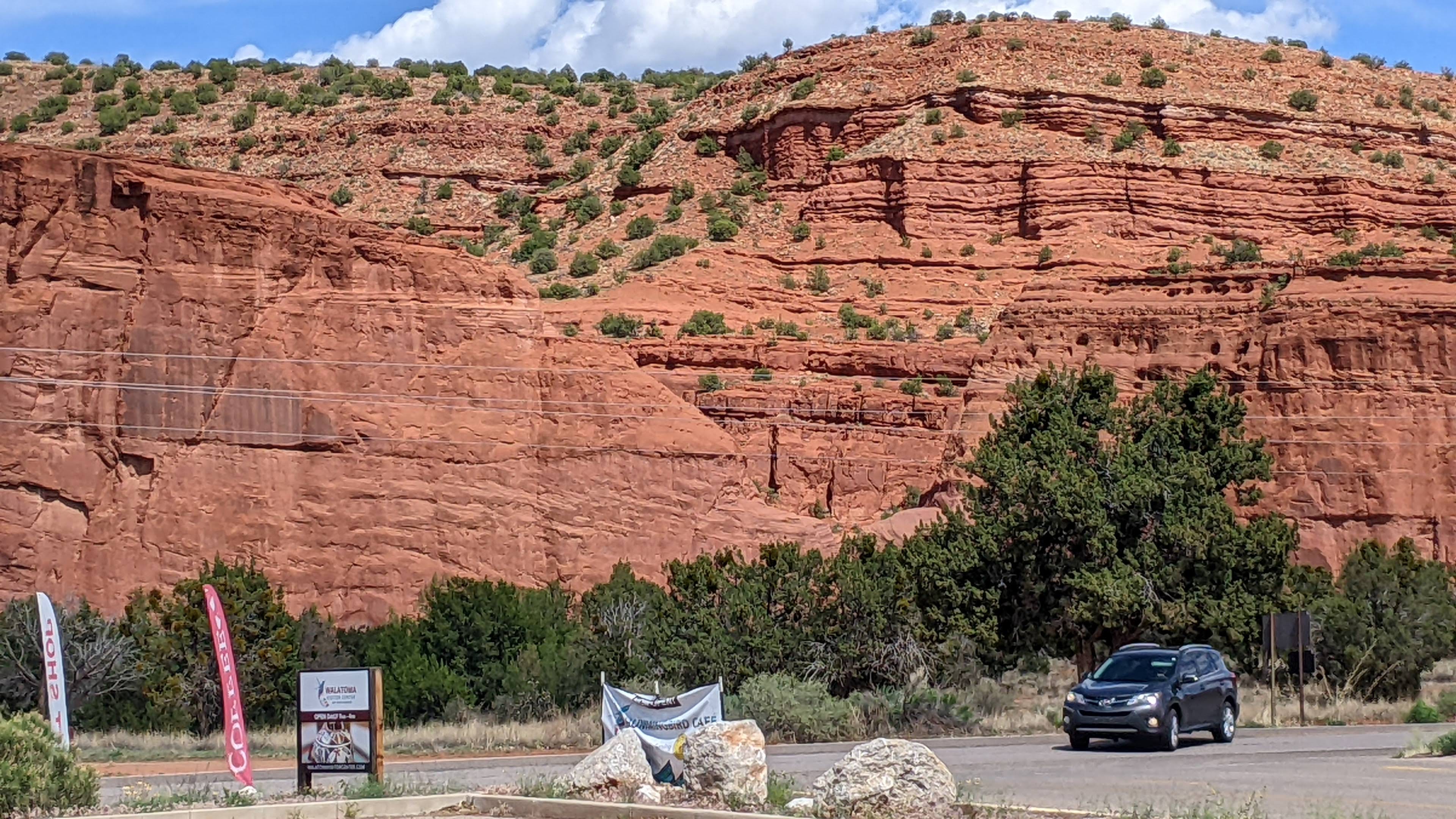
The “red rocks” of Canon del Diego seen from the Walatowa Visitor Center, Jemez Pueblo.

My first stop was the Pueblo of Jemez, where I had an opportunity to visit with tribal archaeologist Chris Toya, and tour the Jemez visitor center, which exhibits around 100 of the objects that Kidder removed from Pecos. Jemez, also called Walatowa, meaning “this is the place,” is situated in some amazing scenery of the Canon don Diego. The canyon is well known as “red rocks,” a reference to the vibrant red and orange hue of the sedimentary rock walls, capped by a volcanic tuff. When I was there, it had just rained, making the canyon wall even brighter. Jemez is typically closed to outsiders, but the Walatowa Visitor Center is open to all and has some great exhibits on Jemez history and culture. I spent the night at the Laughing Lizard in nearby Jemez Springs, where I had stayed with my family last summer.

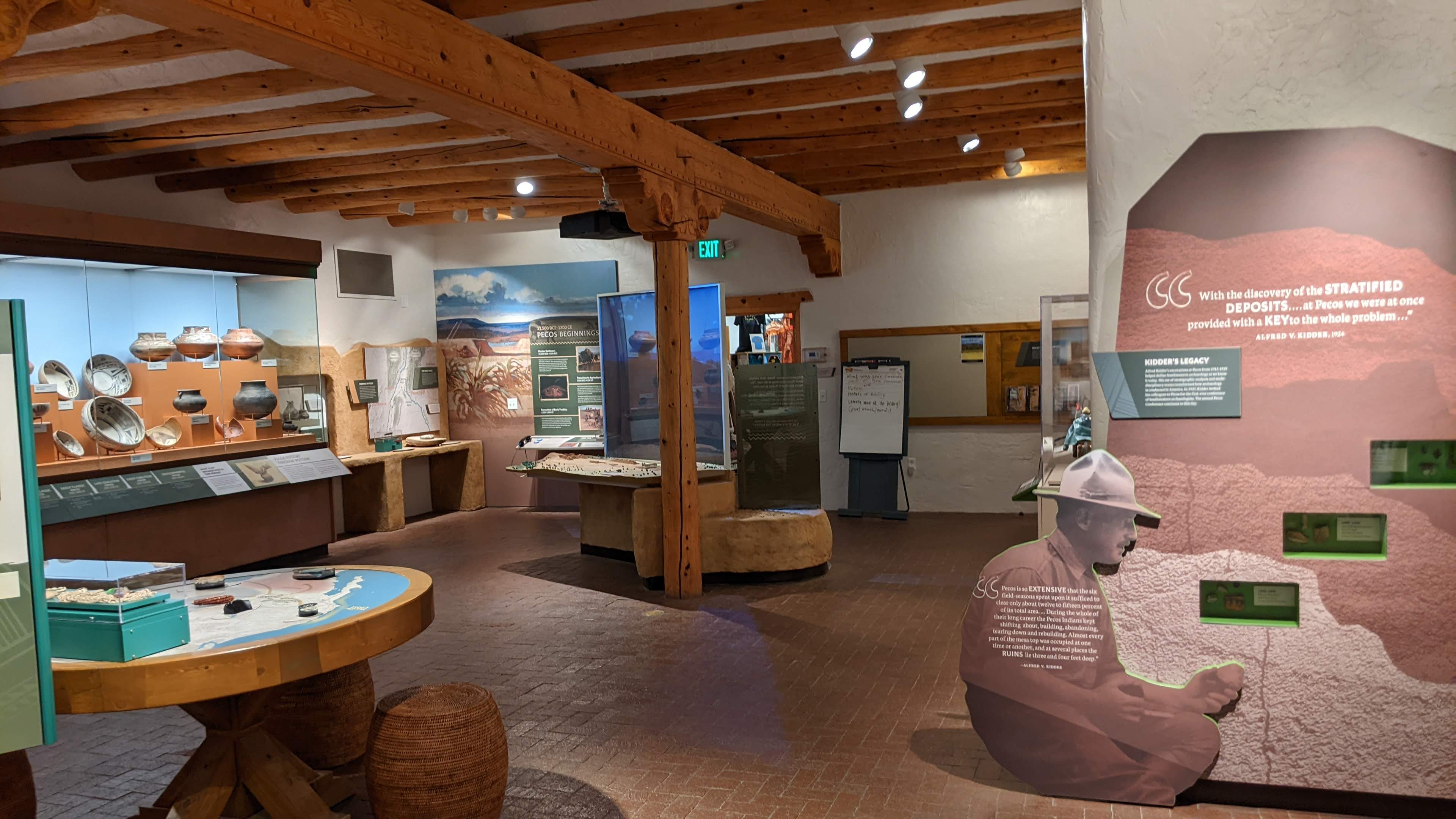
The recently updated visitor center at Pecos National Historical Park. Note the exhibit featuring Alfred Kidder in the lower right. Kidder, working out of the Robert S. Peabody Institute of Archaeology (then the Department of Archaeology, Phillips Academy) excavated Pecos Pueblo between 1915 and 1929.

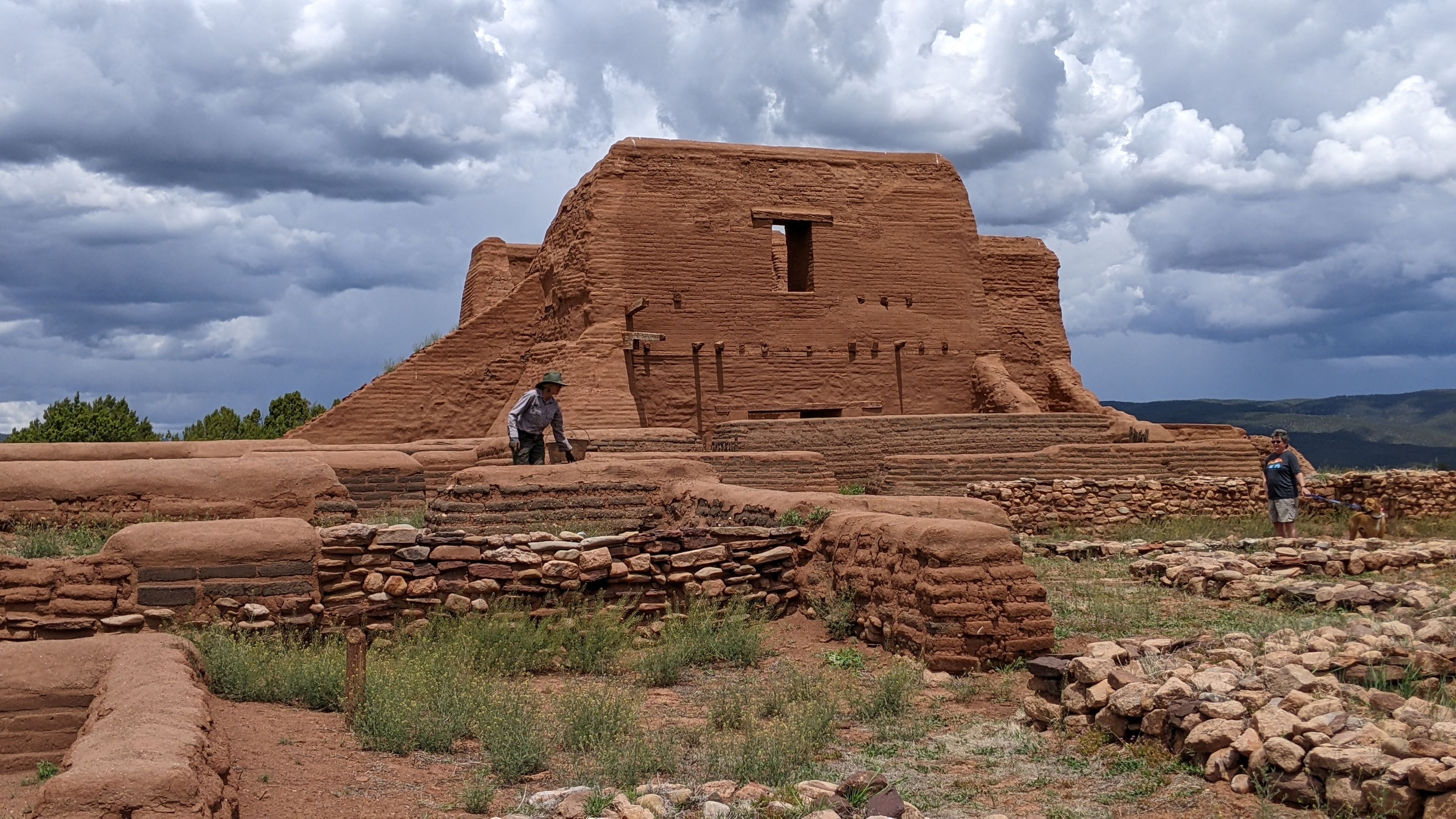
I got up early the next morning and drove to Pecos National Historical Park. The visitor center there has just received a significant update and includes more of the objects removed from Pecos by Kidder. Audio narration of the exhibits was in English and Towa, so great! The ruins of a Spanish church dominate the top of the plateau here and wandering the trails takes you past the remains of Pecos Pueblo. Ongoing preservation work at the church included capping the walls with contemporary adobe to protect the ancient features. I also had an opportunity to see the storage facilities where Pecos objects are housed and talk with Rhonda Brewer, park museum curator, and Jeremy Moss, cultural resource coordinator.

National Park Service masons were actively preserving the architectural ruins of the massive Catholic church and convento that still dominates the Pecos Pueblo ruins.
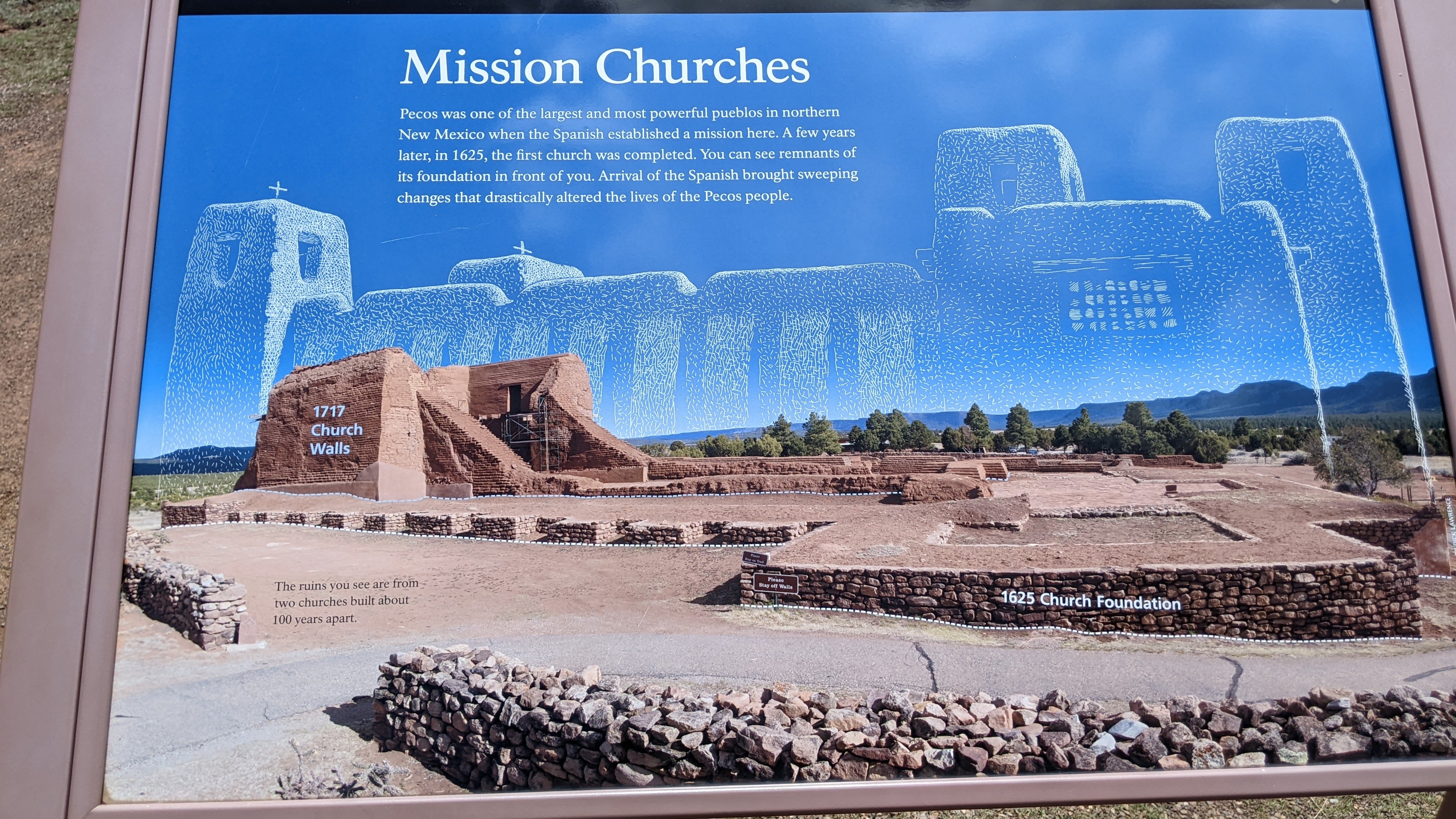
This interpretive panel gives a sense of at least two of the four Catholic churches that were constructed at Pecos Pueblo. The mason pointed out that the pre-1680 Pueblo Revolt church was built with black bricks, while the post-revolt church used red bricks.

My final stop was in Albuquerque, and from there I ventured out to Chaco Canyon National Historical Park. I’ve been wanting to visit Chaco for some time, but it’s pretty much an all day excursion. I signed up for a tour by Kialo Winters of Navajo Tours USA. I was a little nervous about the drive to Chaco. After turning off US 550, the 20 miles or so to the Chaco visitor center go from paved to dirt to pretty bumpy. Apparently its bad when its wet. I have a terrible sense of direction, so was mostly worried about getting lost, but the road is well marked and was fine when I drove it.

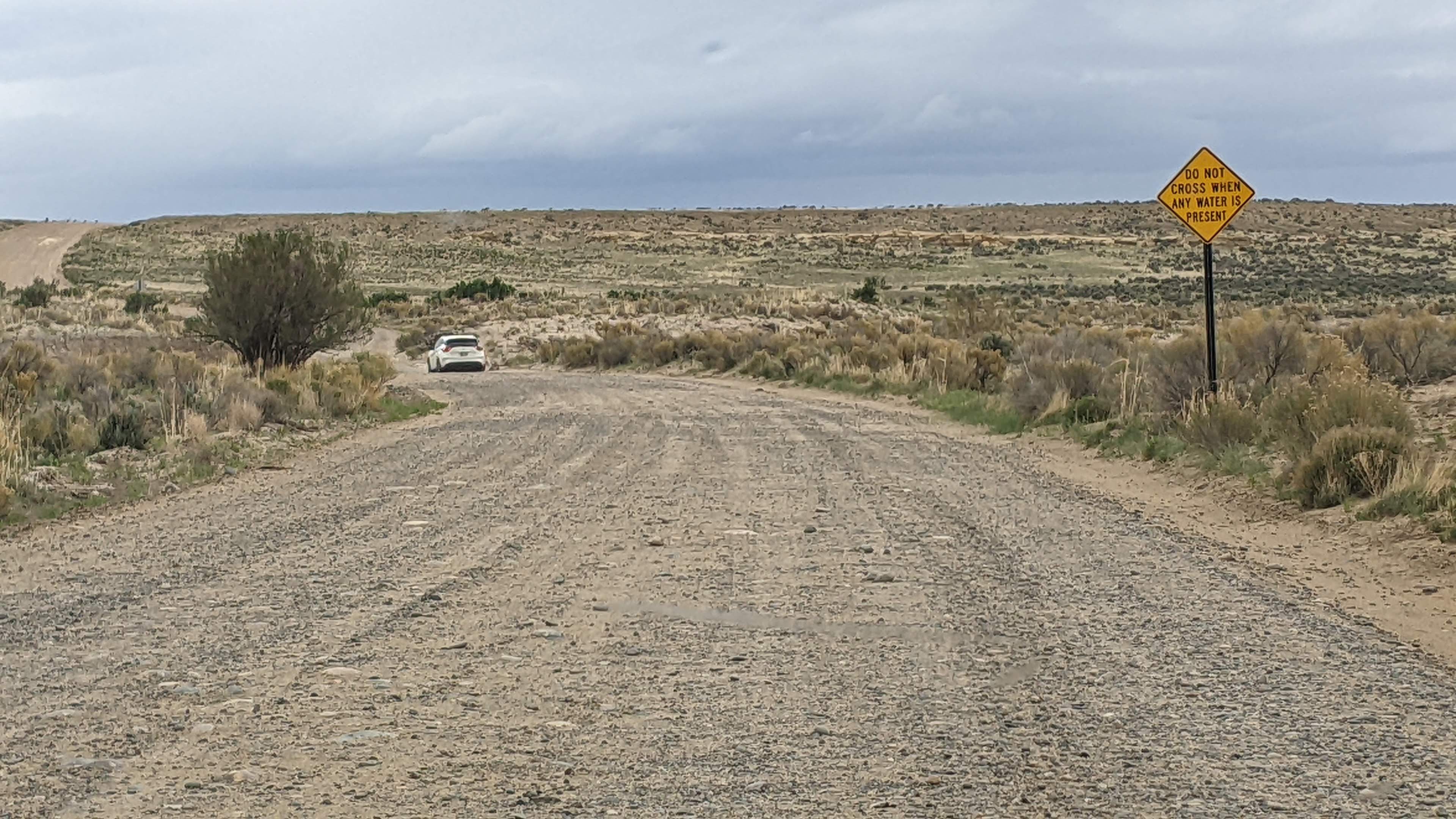
CR7950, right around where it crosses the Gallo Wash, not too far from the Chaco Canyon visitor center.

Kialo shared that really to see everything at Chaco you would need about three days, but his tour hit the high notes, including the expansive ruins of Chetro Ketl and Pueblo Bonito. I highly recommend the Navajo Tours USA tour—Kialo is incredibly knowledgeable and up to date on Chacoan archaeology and history, and he drew heavily on Navajo and Zia Pueblo Indigenous knowledge. It was impressive to walk through the ruins of what were once four-story high buildings at Pueblo Bonito and find the places where the different styles of masonry connected and extended the buildings. Occupation here dates from 850 to 1,250 CE. The Peabody also holds a number of objects from Pueblo Bonito related to Warren Moorehead’s 1897 visit to the site. As Teofilo, the author of Gambler’s House blog notes, Moorehead ransacked rooms 53 and 56, near other rooms that had produced fabulous finds, like cylinder jars and macaw burials. In fact, Moorehead removed several complete and fragmentary cylinder jars from the site.

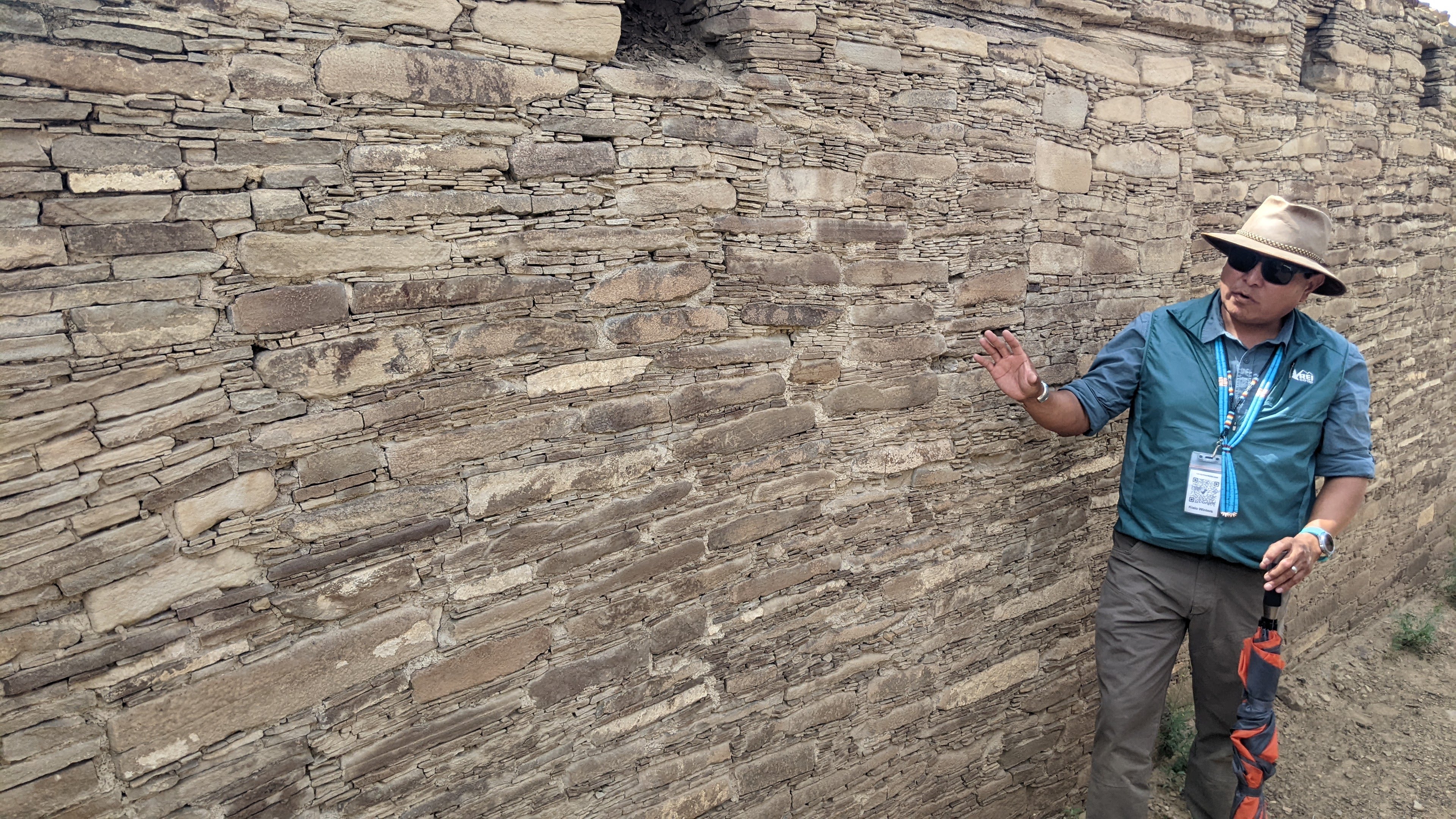
Kialo Winters of Navajo Tours USA points out some of the details of the masonry at Chaco Canyon. The chinking with the small stones signals that this is from an earlier period.
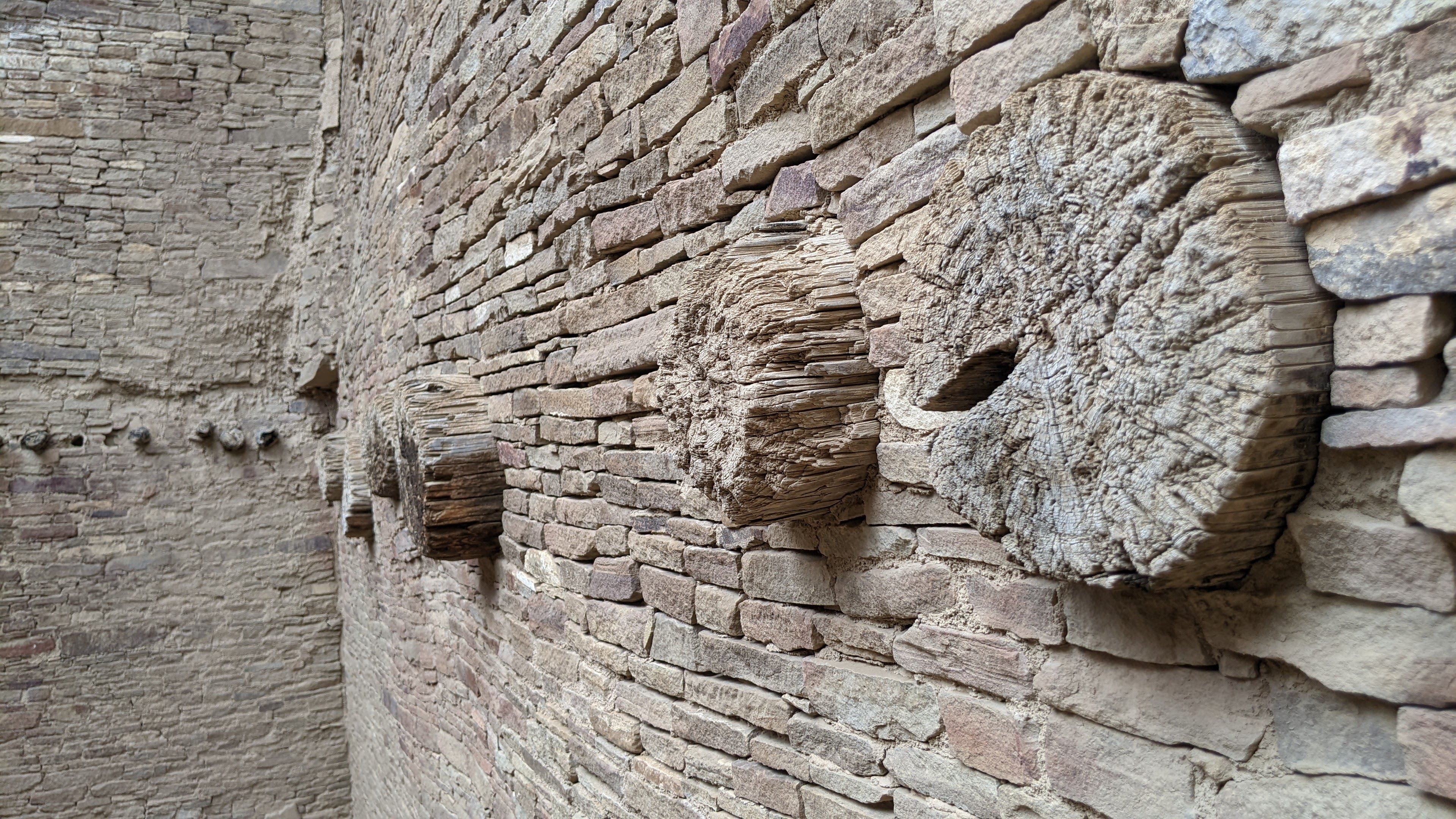
Masonry with heavy timber vigas at Pueblo Bonito. The vigas supported the floor of the next story up. Note different style of masonry, without all the small stones.

Overall, it was a productive few days in New Mexico. It was great to visit Chaco Canyon, one of the most impressive cultural sites in the United States, as well as visit with folx at Jemez and Pecos. As many of you know, the Peabody Institute sponsored the long-running Pecos Pathways student travel program, and there has been a lot of interest in creating a new version of that trip. I’m not sure if or when that might happen, but we will work on further contacts, assess interest on campus, and see what happens. Certainly all of the above would be important stops!

Volunteers are back at the Peabody!

Contributed by John Bergman-McCool

If you’re keeping track of the progress of renovations occurring at our building, you know that construction started last month, and that we are in our new temporary office space on campus. If you aren’t up to date on the project, read these two blogs out to see the changes that have already occurred (here and here).

Last week our non-student volunteers returned to duty. They were on a two-month hiatus while we figured out what projects they could assist with in our new space. With a month of our stay at the Abbot campus behind us, we decided it was time for the volunteers to come back and help carry out inventory clean-up. While the surroundings have changed, Mike and Richard picked right up where they left off.

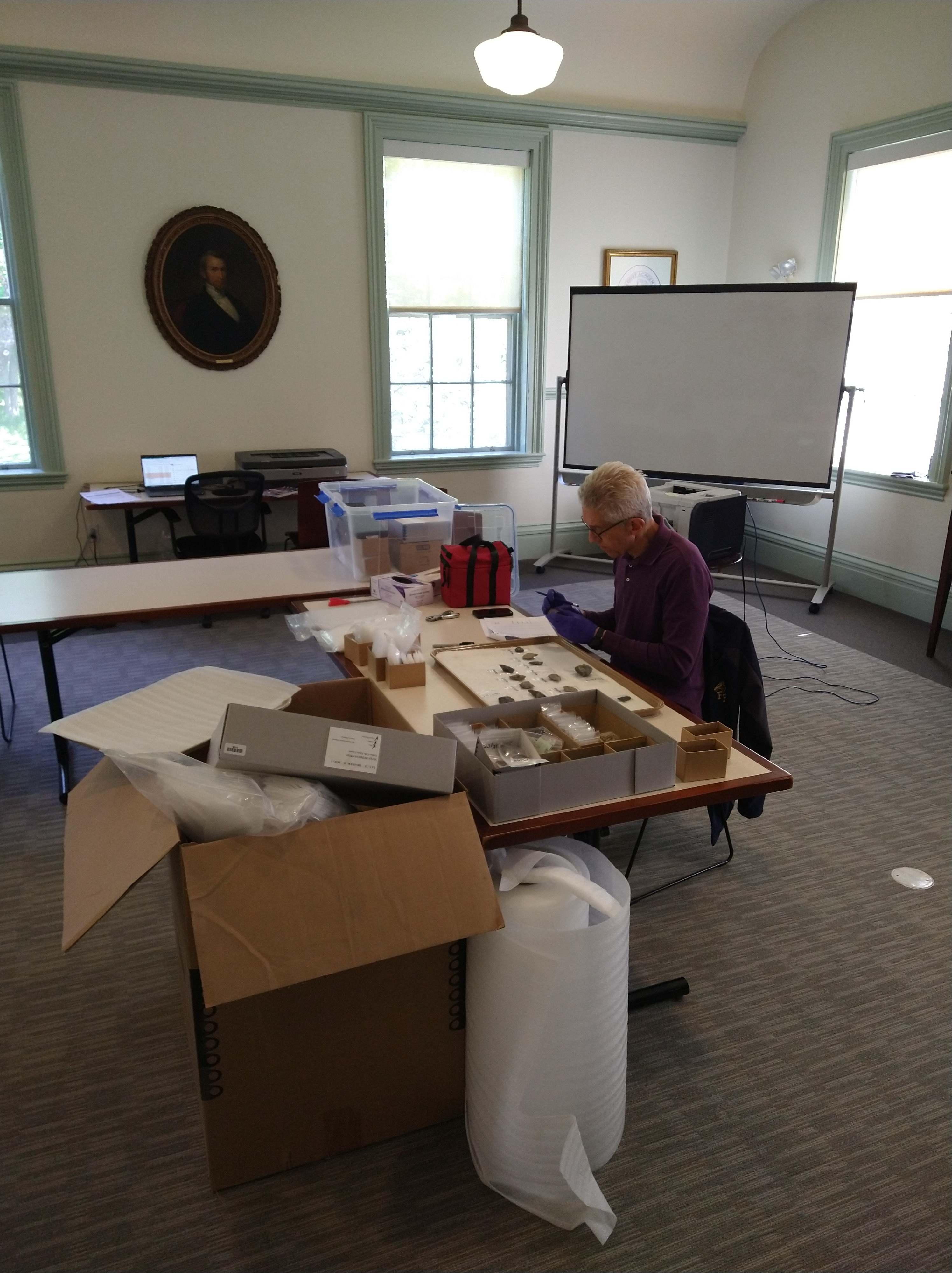
Volunteer Mike rehousing items for inventory clean-up.

If you are interested in volunteering at the Peabody, you can contact me at jbergmanmccool@andover.edu. Currently we have limited capacity, but when we are back in our building in the fall, we’ll have a lot more space and the big job of moving the collection into our newly redesigned collection space.

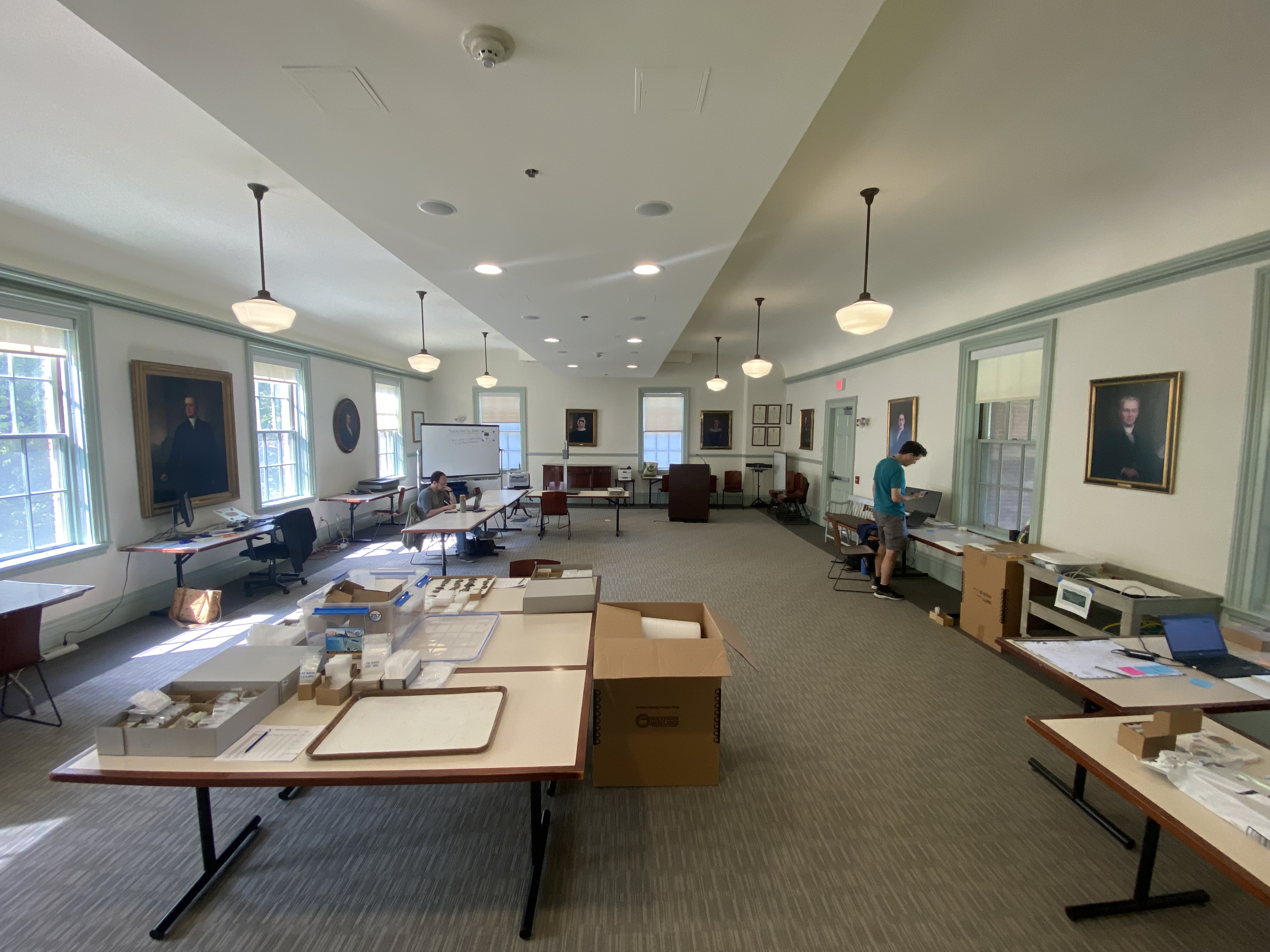
Welcome to the School Room: A Temporary Home for Peabody Staff

Contributed by Emma Lavoie

Hello from Abbot Campus! The Peabody staff have successfully moved to the School Room in Abbot Hall where we will be residing throughout the course of Phase 1 of the Peabody building renewal project. Our staff officially moved out of the Peabody at the end of April – see our Curator of Collections, Marla Taylor’s blog for updates on the building renewal project! We will continue to provide updates on the building project throughout the summer, so keep an eye out for more blogs coming soon!

Although our circumstances and environment have changed, the Peabody staff have continued most of their operations such as managing the care and organization of the collections, teaching lesson units across campus, and continuing consultation and repatriation work with tribal communities.

Abbot Academy students in the School Room at Abbot Hall, 1828-1829

After a few weeks of settling in, we’ve been able to welcome our Peabody volunteers back to our temporary space and have even hosted our Peabody Advisory Committee members for our annual Peabody Spring PAC meeting. In addition, the Peabody was fortunate to sponsor contemporary indigenous artists Dominique, Mia, ad Maxine Toya, for their annual spring visit to PA campus.

The Toya family teaches a week long workshop for students in Thayer Zaeder’s ceramic classes. We were lucky enough this year to host our PAC meeting and the Toya’s workshop in the same week, giving opportunity for our PAC members to meet the Toya’s and observe their work with students. For more about this workshop and past visits check out this blog by Peabody Director, Ryan Wheeler. For photos from the Toya’s most recent visit, check out our Smug Mug album here!

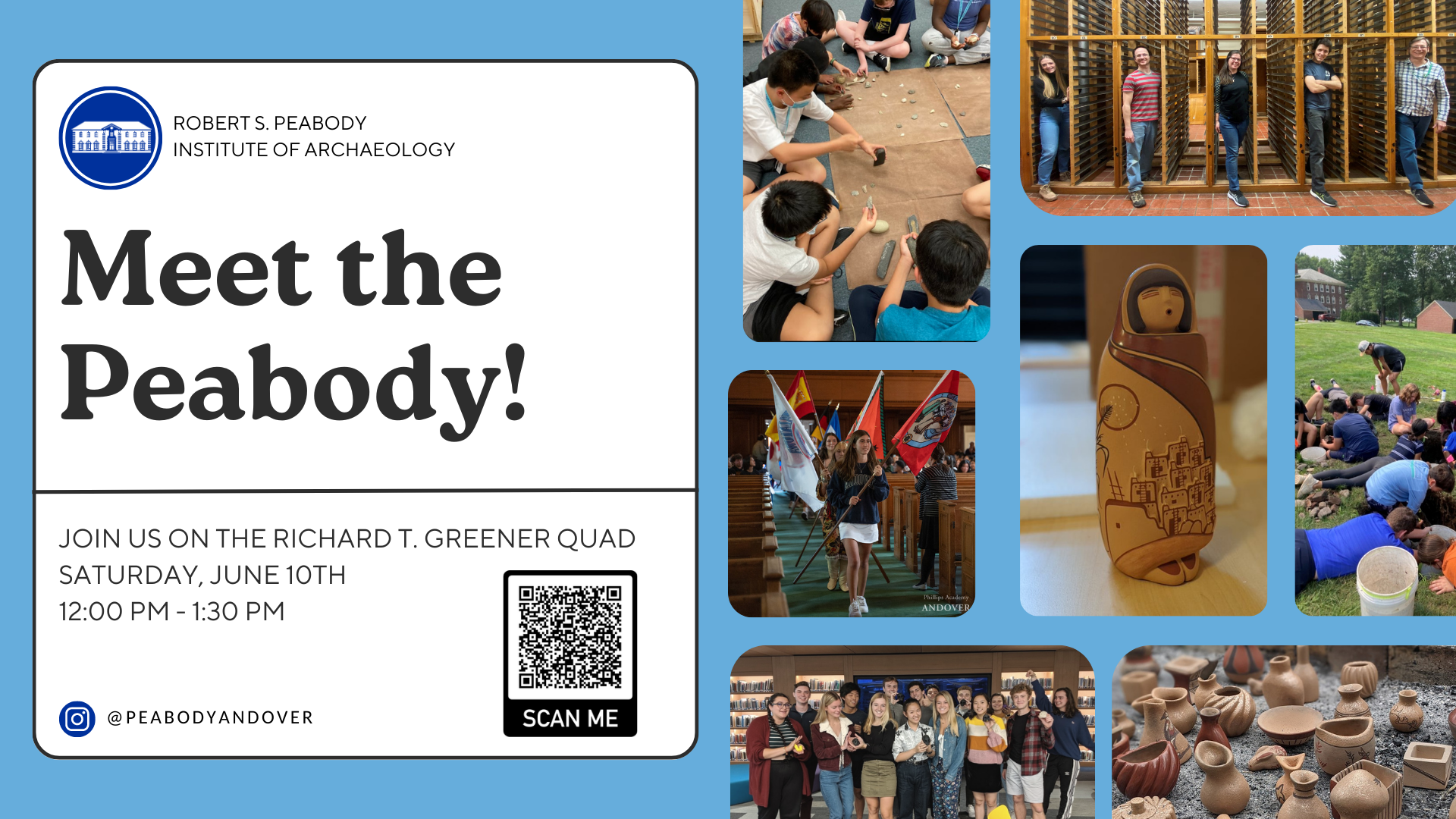
As summer approaches, we look forward to continuing partnership with the Andover Summer, Dig This! Class and greeting alumni back to the Andover campus during Reunion Weekend. Despite the Peabody building being closed during this time, the Peabody staff and several Peabody Advisory Committee members will be hosting a table during reunion lunch on the Richard T. Greener Quad from 12:00 PM – 1:30 PM on Saturday, June 10th. This will give alumni and visitors the ability to meet the Peabody and learn more about our current activities, initiatives, and building project updates.

Join the Peabody on Greener Quad at PA Reunion Weekend, Saturday, June 10th!

To celebrate our one month anniversary in the Abbot Hall School Room, the Communications Department was generous enough to host an Abbot Hall Meet & Greet as a welcome to the Peabody and opportunity for us to meet our new neighbors. Thank you Communications Team!

Award Recognitions at SAA

Contributed by Emma Lavoie

Around this time, we post a blog about our visit to the annual meeting of the Society for American Archaeology (SAA). The meeting was held March 29th – April 2nd, 2023 in Portland, Oregon, at the Oregon Convention Center.

The SAA Annual Meeting is the largest gathering of archaeologists of the Americas, attracting thousands of archaeologists each year from around the world (over 45 countries!) This conference offers archaeologists the ability to present and share research, network and explore the exhibit hall, and participate in excursions, receptions, and career development opportunities.

The Society for American Archaeology was founded in 1934 and held its first meeting at Phillips Academy Andover (That’s right! The very campus the Peabody calls home) in December 1935. Longtime Peabody Director, Doug Byers, served as the editor of the Society’s flagship publication – American Antiquity. Past Peabody Director, Richard “Scotty” MacNeish, served as president of SAA at one time as well.

Today, the SAA is comprised of over 7,000 members and our Peabody staff and Peabody Advisory Committee (PAC) continue to be involved with SAA. Peabody personnel regularly present papers and posters in meeting sessions, host a booth in the meeting’s exhibit hall, and sponsor the Robert S. Peabody Institute of Archaeology Award for Archaeology and Education.

For more on the Peabody’s previous visits to the SAA Annual Meeting check out our blogs here, here, and here!

Robert S. Peabody Institute of Archaeology Award for Archaeology and Education

The Robert S. Peabody Institute Award for Archaeology and Education recognizes excellence of individuals or institutions in using archaeological methods, theory, and/or data to enliven, enrich, and enhance other disciplines, and to foster the community of archaeology education practitioners. The Peabody Award will spotlight these contributions and promote teaching ideas, exercises, activities, and methods across the educational spectrum, from K-12 through higher education and including public education broadly conceived.

This year’s recipient of the Peabody Award is Pima Community College Centre for Archaeological Field Training. Pima Community College Centre for Archaeological Field Training has earned the Robert S. Peabody Institute of Archaeology Award for Archaeology and Education for their long-term commitment to archaeology education. Through the Pima Community College Archaeology Centre’s certificate program, which includes a Southwest Prehistory pathway, a field Methods pathway, and a GIS and Technology pathway, students learn the fundamentals of archaeological methods, ethics, and technology while attending community college and earning a certificate at affordable rates. Pima Community College’s programs provide an important career pathway for prospective archaeologists in a time when there are increasing demands for CRM professionals. Importantly, the program provides a career pathway for local students that does not require a four-year university education. PCC’s Archaeology Program, and the unique educational services it provides, exemplify what should be replicated across the country to provide affordable, equitable, and accessible education to students thinking about careers in archaeology.

Outstanding Public Archaeology Initiative Award

The Outstanding Public Archaeology Initiative Award continues the tradition begun by the Award for Excellence in Public Education (1997-2020) of recognizing exemplary public engagement efforts but refocuses on discrete projects (defined as a project with a clear start and end date). This award recognizes the best short-term initiatives such as (but not limited to) the following: exhibits, lesson plans, products, or other short-term outreach projects.

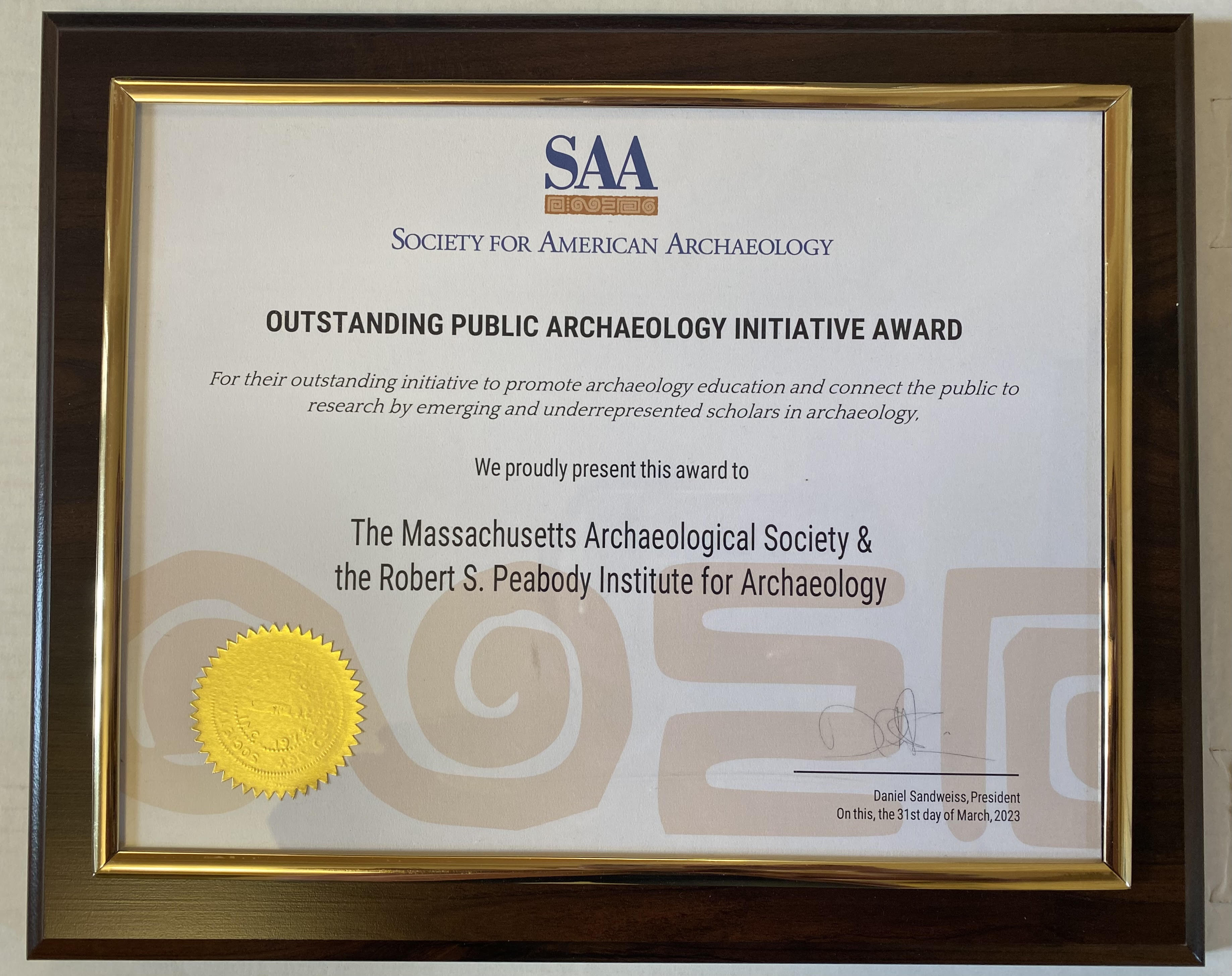
This year’s recipient was none other than The Massachusetts Archaeological Society (MAS) and the Robert S. Peabody Institute of Archaeology (RSP)! The Massachusetts Archaeological Society and the Robert S. Peabody Institute have earned the Outstanding Public Archaeology Initiative Award for their live presentation and video series “Diggin’ In: Digital Conversations with Archaeologists.” The series consisted of five seasons, with 49 total episodes. These were broadcast live over Zoom reaching an initial audience of 350 over Zoom for the live program, then 7,000 views on YouTube. The program’s goals were to connect the public to research by emerging or underrepresented scholars in archaeology and spotlight innovative or marginalized research topics, themes, and methodologies. The focus of “Diggin’ In” on these critical aspects of archaeology helped to generate media coverage of these themes. This initiative demonstrates the critical role archaeologists can play in communicating contemporary themes in archaeology to the public.

SAA Award presented to the Massachusetts Archaeological Society and Robert S. Peabody Institute at the SAA’s 88th Annual Meeting earlier this month.

For more information about the Diggin’ In series, check out this article for the New England Museum Association’s digital publication. The article was written by Diggin’ In co-hosts and creators, Lindsay Randall (previous Curator of Education for the Peabody and current MAS Vice Chair/Secretary) and Suanna Crowley (MAS Trustee).

You can check out all seasons of the Diggin’ In series on our Peabody YouTube page!

For those interested in attending the SAA’s annual meetings, the 89th Annual Meeting will be held April 17 – April 21, 2024 in New Orleans, Louisiana, at the New Orleans Marriott and the Sheraton New Orleans. We hope to see you there next year!

Save the Date! #PAGivingDay is March 29, 2023!

Contributed by Emma Lavoie

Mark your calendars! Save the date! PA Giving Day begins Wednesday, March 29, 2023! This year, the PA Giving Day event will run from 9am on Wednesday, March 29th to noon on Thursday, March 30th (Eastern Time).

Support the Peabody by making a gift of any size and help us jump-start this amazing day! For those inspired to give early, please complete the PA Giving Day form here! Please be sure to select the Peabody Institute of Archaeology under the “designation” section. Any gift made in advance of the event will count toward PA Giving Day totals. Your donation will also be included in all applicable matches. This is a wonderful way to maximize your giving and inspire others to do the same.

To date, we have $11,000 in match funds, but are still hoping to have more!

Keep a look out for exciting posts and takeovers across our social media channels leading up to PA Giving Day! Support what you love, support the Peabody!

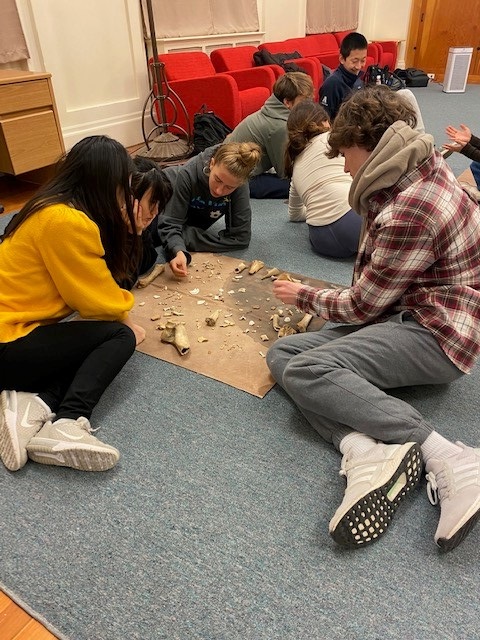
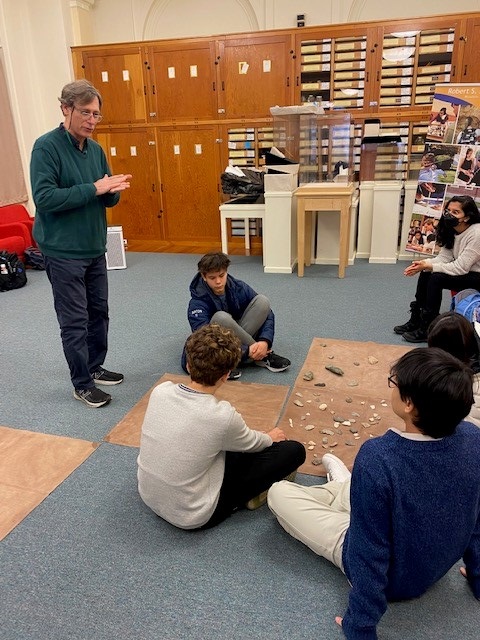
Students examine a mock excavation of a local archaeological site, one that highlights Andover’s historical status as a Native American trading center.

Blog showcase: A small blog about blogs

Contributed by Nick Andrusin

One cool thing about the Peabody is the varied types of experiences and interests of the people working here. It’s what makes the blog so interesting! For years now, Peabody employees have been making regular blog posts on whatever topic they can think of. From interesting insights into the museum world, to personal interests of the writer, there is always something to look forward to every month. 

With new blog posts coming out on such a regular basis, it can be easy to forget that there is quite an accumulation of interesting articles on the Peabody’s website. One can read posts going back to the fall of 2015! While helping to archive the blog, I’ve been reading a lot of fascinating pages, making notes of ones that I found particularly interesting. Creating this was the logical next step, a look back, a spotlight on blogs past. My own blog about blogs!  

Note: I am limiting my self to five entries, but this list could easily be three times longer! 

Vikings – The Peabody (andover.edu) 

Ever since reading The Age of Vikings by Anders Winroth I’ve had a big interest in medieval Scandinavian history. The Vikings and their contemporaries have such a fascinating history, and maintain a strong footprint in popular culture. So imagine my surprise when I found a blog about Viking material at the Peabody!…well, sort of. You should look for yourself! 

Corn – The Peabody (andover.edu) 

In teaching a few different classes at the Peabody, the concept of corn comes up quite a bit. Especially since it was a focus of former director Richard “Scotty” MacNeish. When one student asked about why corn spread so far and wide, I recall answering in a jovial way “well you see, humans LOVE corn, and will take any opportunity to grow it!” This blog post is a fascinating dive into the history of this staple crop. 

Women of the Peabody – The Peabody (andover.edu) 

At a glance, the history of archeology (and similar fields) seems very frontloaded with men. However, it’s not hard to find plenty of women heavily involved. Maybe not quite as visible, but just as important, if not more so. This blog post goes into the history of women involved with the Peabody! 

FBI Collection – Origin and Update – The Peabody (andover.edu) 

Due to the nature of museums, strange tales often go hand and hand with their history, and the Peabody is not lacking in this department. This blog post discusses an interesting one, a theft in the 80s that struck multiple New England museums! If you are interested in a mini crime drama, complete with information on its resolution, this one is worth a look.  

Never Alone: Video Games and the Teaching of Culture – The Peabody (andover.edu) 

I’m a person who would consider themselves an avid “gamer,” as well as one with a background in public history (basically, historical engagement outside of a classroom). Therefore, when I see a game, or a blog post in this case, that combines my two interests, there is no way I am not going to talk about it! This post talks about the game “Never Alone,” developed by Upper One Games and originally released in late 2014. The game was about an Iñupiat girl who goes on an adventure with a fox, based on a traditional Iñupiat tale. The game was made in cooperation with Cook Inlet tribal council, and features…well I don’t want to spoil the post too much! Take a look for yourself! 

Behind the Photograph: Flammable Film

Contributed by Emma Lavoie

Stuart Travis mural at the Robert S. Peabody Institute of Archaeology

Ever wonder what lies behind a photograph? Beyond the simple description scrawled on the back of each image? The Peabody collection contains more than 600,000 artifacts, photographs, and documents. The Peabody’s photograph collection, specifically, is extensive and contains many interesting, yet untold stories. To bring these stories and photographs to light, we would like to share them with YOU, fellow readers, in our blog series, Behind the Photograph. You can find these stories using our BehindThePhoto tag on our blog.

The Mural

As the Peabody enters the pre-construction phase of a much-needed renovation project, I’ve been looking back at some of our old photos of the building. This image in particular is fascinating, as it was taken during the installation of the Peabody’s Stuart Travis mural in 1938. Those of you who have visited the Peabody may find the room in this image familiar – it’s the interior of our front entrance door! Although those columns behind the mural have since been removed, the crown molding, floor, and archways are still present at the Peabody today. Around the perimeter of the image you’ll find what looks to be an old grandfather clock against the wall to the left. If you peer closely just through both archways (to the right and left) you’ll see glimpses of exhibit cases where the Peabody’s first floor galleries housed exhibits and displayed artifacts.

The Peabody’s mural was created by American artist, illustrator, and designer, Stuart Travis (1868-1942). Stuart Travis is well-known to the Phillips Academy Andover community. Not only can you find his work at the Peabody, but all over – the Oliver Wendell Holmes Library, Paresky Commons, the Gelb science building, and the wrought iron gate at the entrance to the Moncrieff Cochran Bird Sanctuary. Stuart Travis is buried in the Chapel Cemetery here on campus.

The mural was installed in the Peabody’s central staircase where it continues to reside today. Titled “Culture Areas of North America,” this mural reflects ideas about anthropology and archaeology in the 1930s and 1940s. The mural features many drawings of artifacts from various sites and museum collections, some drawings even link to archaeological works by long-time Peabody Director, Warren K. Moorehead (1924-1938) as well as Director, Douglas Byers (1938-1968) and Curator, Fred Johnson (1936-1968).

The mural was dated 1938, however, Stuart Travis continued to make additions through 1942. The mural was later restored in 1997 by Christy Cunningham-Adams through the generous support of the Abbot Academy Fund. If you look closely at the image, you’ll see the mural was created in sections (i.e. the very fine line located down the middle of the mural). One interesting detail you cannot see from the photo, but rather in person is the various pencil notes and markings that still remain on the mural. This leads me to believe that perhaps the mural was never quite finished or rather, some new additions planned for the mural never came to fruition.

For more information about the Peabody’s Stuart Travis mural, check out this blog by Peabody Director, Ryan Wheeler – Culture Areas of North America: The Peabody’s Stuart Travis Mural.

Another fascinating find and story is this blog from our past temporary archivist, Irene Gates, who discovered six small notebooks belonging to Stuart Travis depicting illustrations and information about the Indigenous communities represented in the mural.

The Film

Mural history aside, the material image itself has quite the hazardous history (or should we say fiery?) The original image of the mural installation was made on a nitrate negative, a type of film used as a base for photographic roll film created by George Eastman in 1889. Nitrate was used for photographic and professional 35mm motion picture film until the 1950s.

What many may (or may not) know is nitrate film is highly flammable and also toxic when decomposing with age. New nitrate film could ignite with the heat of a cigarette, while decomposing nitrate film can ignite spontaneously at temperatures as low as 120 degrees Fahrenheit. Once ignited, nitrate film burns rapidly, fueled by its own oxygen, and releasing toxic fumes.

Before you jump to thoughts of flammable film spontaneously combusting in the Peabody’s collections, let me assure you THERE IS NO nitrate film currently located at the Peabody. But at one point in time there used to be nitrate film in the Peabody’s archival photograph collection, YIKES! As of July 2010, all nitrate negatives were digitized and then discarded due to the film’s potential hazard to the Peabody collections and building.

With that out of the way, let’s dive in to the history of nitrate film and how much of this history went up in smoke. We see its legacy in Alfred Hitchcock’s Sabotage – a bus operator tells a young boy he cannot bring two reels of nitrate film onboard, it’s flammable after all. Then in Quentin Taratino’s Inglourious Basterds – nitrate film’s volatile chemistry is used for his alternate history story of a plot to assassinate high-ranking officials of the Nazi party, including Hitler.

Nitrate fires were infrequent compared to the rapid spread of cinema, however, when disaster occurred at the hands of nitrate film, the results were quite devastating. One such fire occurred at Paris’s 1897 Charity Bazaar, claiming 126 lives many of which were women. In 2019, a French drama miniseries debuted on Netflix called Le Bazar de la Charité (The Bonfire of Destiny) depicting this destructive time in history.

The 1940s saw numerous fires in New York City involving nitrate film. Investigators found no evidence of negligence by personnel or the careless use of cigarettes. In fact, it appeared the nitrate film spontaneously ignited due to abnormally hot summers. Since burning nitrate produces its own oxygen, submerging the film in water is futile. In addition, the fumes given off by its ignition are highly toxic and hamper any efforts to suppress the fire. These fumes contain oxides of nitrogen which, if inhaled, can be fatal. Unfortunately, nitrate film must burn itself out.

Besides its combustive properties, nitrate is extremely fragile. Overtime, the film naturally shrinks and deteriorates, even when treated with care.  Film archivists in the 1970s and 80s expressed urgency for the preservation of nitrate film using the slogan, “Nitrate Won’t Wait,” with images of the destruction of vault fires such as the 1978 vault fire at the National Archives and Records Service in Suitland, Maryland, which destroyed 12.6 million feet of historical newsreel footage and outtakes donated by Universal Pictures. As a result of this, many nitrate negatives and film have been digitized or reprinted on polyester stock (the replacement to nitrate beginning in the 1950s).

How to Spot Decomposition in Nitrate Film (sourced from the Science & Media Museum Blog)

1.) Fading picture with amber discoloration

2.) Film becomes brittle; emulsion becomes adhesive and film sticks together

(At stages 1 and 2, film can be copied)

3.) Film has a noxious odor

(At stage 3 some parts of the film may be copied)

4.) Film is soft and covered with a viscous froth

5.) Film is deteriorating into a brownish acrid powder

  (At stages 4 and 5, film should be immediately destroyed by local fire department)

On the other side of the argument, many believe nitrate film is a viable artifact that doesn’t have to be destroyed or hidden away. In 2015, the Nitrate Picture Show was created by the Eastman Museum to raise awareness of nitrate and preserve what remains. The Eastman Museum currently houses 24,054 reels of nitrate film. 

Circling back to our mural image – I’d like to provide the current status of our Peabody mural during the pre-construction phase of our planned renovation work. We are taking protective measures to keep it safe during upcoming renovation work. Here you can see a temporary wall being placed over the mural as a protective layer.

The Peabody mural receiving a temporary wall for protection during building renovations.

Student Volunteer Voices

Contributed by Elizabeth Reppas, Anthony Chung Yin Woo and John Bergman-McCool

Here at the Peabody, we are fortunate to have students assist us with collections-related projects. Work duty is the primary avenue for students to help our small staff, but we also rely on non-work duty students who volunteer in various ways during their free time. As we prepare for building renovations, work duty assignments have been canceled at the Peabody for the academic year. However, a few dedicated student volunteers have continued to come each week to help us as we approach the start of construction. We’ve asked them to share a bit about their experiences:

Hi! I am Elizabeth Reppas, and I am a three-year senior from Washington DC. I have always really loved visiting museums and learning how they work, so when I learned that I could volunteer at the Peabody Institute, I was very interested. I have been volunteering since the winter of my upper year and have gotten to help with a range of projects from organizing objects to creating an exhibit.

I first started helping with inventory like labelling and sorting objects. As I learned more about the artifacts, I got the chance to help curate an exhibit with projectile points and textiles from Tamaulipas Mexico for one of the exhibit cases. I helped with all things from choosing the objects and photos for the case to writing the explanations and putting the pieces together. I finished off the year with that exhibit, which was up on display for reunion weekend. It was particularly meaningful because it was in honor of Maya Cointreau ’92 supported by her classmates. Now, this year, I have helped with smaller projects like putting together an interactive activity for the Andover Historical Society and reviewing new objects, but I have mostly been helping to sort and organize the collections as the Peabody gets ready for its renovations.

I have loved these past two years working at the Peabody. I have learned a lot about archeology and how objects are excavated. I have also gotten to learn more about Andover and places around us since many of the Peabody’s artifacts come from nearby. And lastly, and for the reason I initially joined, I have gotten to learn more about collections: taking care of objects, doing inventory, and learning about ethically acquiring, maintaining, and displaying artifacts. Overall, I love the time I have spent volunteering and am excited for what is to come with the Peabody.

I’m Anthony and I’m a Phillips Academy student volunteering at the Peabody. Currently, I’m an eleventh grader living in Tucker House on campus, though I call the city of Hong Kong my home.

Since tenth grade, I’ve been involved with the Peabody, first through the work duty program, then by reaching out to become a student volunteer. The work I do at the Peabody varies a lot, which involves hands-on tasks such as sorting through artifacts, rehousing them in small Ziploc bags, and climbing up rickety wooden ladders to correctly label the new archival boxes in their respective bays, all as part of the rehousing project at the Peabody. Other work that I’ve done at the Peabody includes writing condition reports for artifacts that are used in classes as well as packaging old pamphlets for storage. More recently, I was involved with calculating and measuring the space required for to move all the boxes from the basement to the first floor, in preparation for the renovation work that will soon commence in the building.

To me, the Peabody has always been a place where I am able to take my mind off class work and come into close contact with items from decades, centuries, or perhaps epochs ago. Having visited a fair amount of museums before, it was eye opening for me to see the massive logistical challenges and the large amount of work that the Peabody staff and volunteers have to put into overcoming these challenges, along with digitizing artifact data and developing strict procedures to categorize and label the objects. My experiences at the Peabody have allowed me to better appreciate the people who work in the field of taking care of objects that are historically and culturally significant, particularly as we investigate the previously silenced histories of subjugated people across the globe.

Nick at the Museum

Contributed by Nick Andrusin

Hi! My name is Nicholas Andrusin (or just Nick), and I am the new Temporary Educator/Collections Assistant at the Robert S. Peabody Institute of Archaeology! I began in early November, and I am so excited to be a part of the Peabody and work with the staff! In this position I will be helping with the ongoing renovation project and teaching lessons. 

Before moving to North Reading , MA in August 2022 I was living in Rochester, NY, where I earned a master’s degree in history at SUNY Brockport with a focus on public history. There I spent time as an intern at the Rochester Museum and Science Center where I helped them with their own storage renovation project. As well as helping the Rochester city historian create their Stonewall: 50 Years Out exhibit for the 50th anniversary of the Stonewall riots.   

This position at the Peabody feels made for me! So far, I have been helping with a variety of collections related projects. From cataloging, to getting measurements of storage space, to rehousing objects into proper storages containers for the eventual move, they are exactly the kinds of tasks I love doing. In addition, I have also been helping to teach lessons to Phillips Academy students! From Tarps, which simulate a basic archaeological dig, to lectures on the Taíno people, the group who discovered Christopher Columbus. It has been a pleasure to flex my teaching muscles!  

(that’s me in the gray hoodie!)  

Museums have always been of huge interest to me, and I am fortunate enough to have had a small hand in helping several of them over the years, the Peabody being the most recent and exciting! I am so thankful and delighted to be a part of this team, and I cannot wait to see what the future holds. 

Introducing our Peabody Annual Report 2021-2022

Contributed by Emma Lavoie

Our Peabody annual report for academic year 2021-2022 has just been released! This report highlights student participation at the Peabody, including more than 1,300 students who visited for classes, work duty, and more! In addition, our annual report features new acquisitions, classes, and workshops along with updates on our collection and NAGPRA work. Thank you to everyone who supported the completion of another wonderful year at the Peabody!

You can read the report in its entirety HERE.