To many institutions, the annual report is one of the most important pieces of information. A single document, yet a powerful tool in communicating an institution’s performance during each fiscal year. Each fall the Peabody presents their annual report to the public, highlighting their achievements, overall performance of the past year, as well as their goals and objectives for the coming year. Not only does the annual report provide a snap shot of what a year at the Peabody looks like, it provides transparency of the institution to the public and its local community.
The making of the Peabody annual report includes several staff members who collaborate in the documentation, writing, and gathering of the material across several departments within the Peabody. These include: Administration (Ryan, Director), Education and Outreach (Lindsay, Curator of Education and Outreach and Ryan, Director), Collections (Marla, Curator of Collections), and Peabody Donors and Support (Beth, PA Director for Museums and Educational Outreach). Once the information is gathered and content is written, I take over to design the overall layout of the annual report.
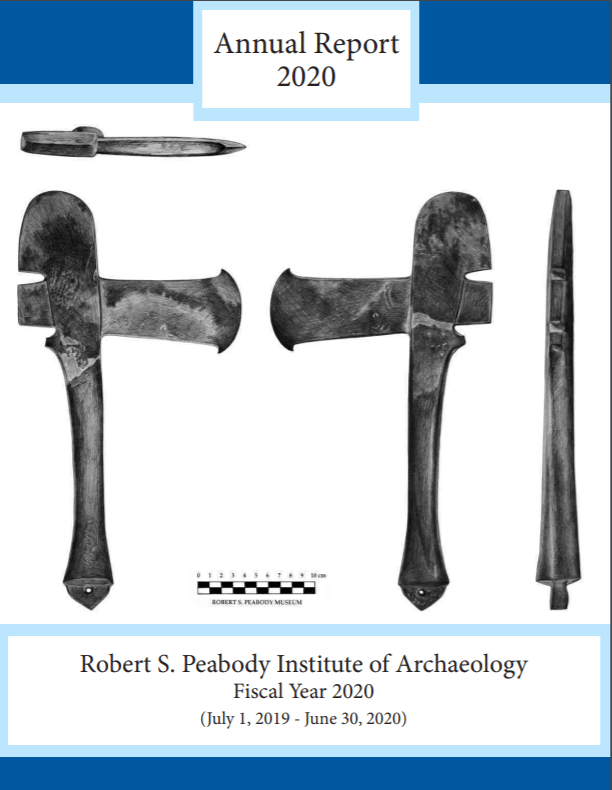
A page from the 2020 Peabody Annual Report
Using the Adobe InDesign software, I create each page spread using the information that staff give me. When designing, it is important to always keep in mind the overall flow of information and that the format/design features are cohesive throughout the document. Something new I incorporated into the report this year were black and white photographs from the Peabody archives. I used these photographs as transitions between specific sections of the report to provide a natural break, while still maintaining the overall flow of the report. I also had a little fun creating a new page dedicated to our collections remote work during Covid-19.
Photograph from the Peabody archives used in the 2020 Peabody Annual Report
I really enjoy designing the annual report and watching all the work Peabody staff put into the year unfold with the design of each page. Not only does it provide an opportunity for each department to feature their success and performance, its where all the Peabody’s work finally comes together.
You can view the 2020 Peabody Annual Report here. Enjoy!
Last fall I had the opportunity to work with students and faculty in Outdoor Pursuits in a unique way. Ranbel Sun, Stephanie Cormier, and Miriam Villanueva learned that I knew about a terrestrial ship wreck that the students could visit and asked me to join them on their planned outing to Crane Beach, where the wreck has rested for over 100 years.
Outdoor Pursuits visiting the Ada K. Damon in 2019
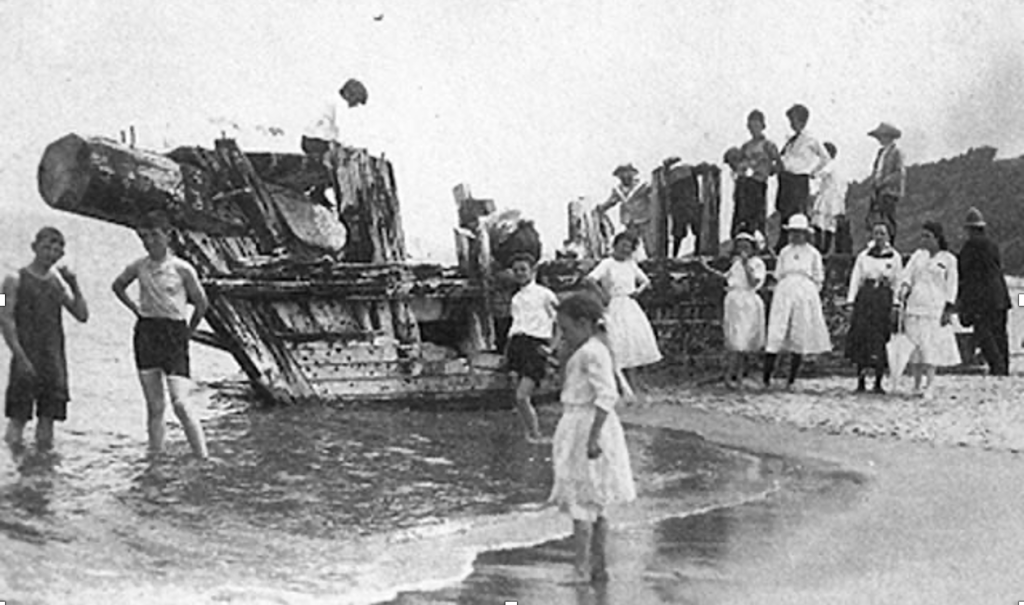
The shipwreck that we visited was of the Ada K. Damon in Ipswich, MA. It is a great place to bring students to learn more about maritime archaeology since it is accessible at low tide. Salem State University and partner SEAMAHP have also done field schools at the site.
The Ada K. Damon was a schooner built in 1875 by H.A. Burnham Boat Building (still in operation today!). By 1909, the owner was Captain A.K. Brewster who had sold his property and used the proceeds, along with all his savings, to invest in the ship.
It a bout of terrible luck, it was during her first voyage for Brewster that the Ada K. Damon was wrecked. She was caught in what locals called the “Great Christmas Snowstorm.” That storm was also responsible for destroying many other ships on Cape Ann.
Since 1909, she has sat on the sands of Crane Beach at the base of Steep Hill and become quite a tourist attraction for visitors.
Sadly, due to the strong surf that resulted from Hurricane Teddy, the Ada K. Damon has been broken up and strewed across the beach.
Both Dave Robinson, the current state underwater archaeologist for Massachusetts, and his predecessor Vic Mastone will survey the damage.
While I hope that the damage isn’t too extensive and that I will be able to bring future students back to this shipwreck, it does serve as an example about the fragility of archaeological sites.
As we weather this pandemic storm, we are finding more and more that the days of yesterday are unlike the days of tomorrow. Many of our daily activities have gone virtual and museums, galleries, and institutions alike have adapted to reach their audiences online in order to continue their mission of educating and engaging with the public.
Another wonderful site to add to this collection is New Day Culture. This site is a society and culture website founded by a group of cultural enthusiasts that have created an online community (amidst the pandemic) where audiences can connect, explore, and experience the world of art and culture.
From live animal cams at the San Diego Zoo to drone footage of amazing destinations and historical sites, this site has everything for all ages and interests! Here are a few highlights of some of my favorite activities.
Explore the Depths of an Ancient Egyptian Queen’s Tomb
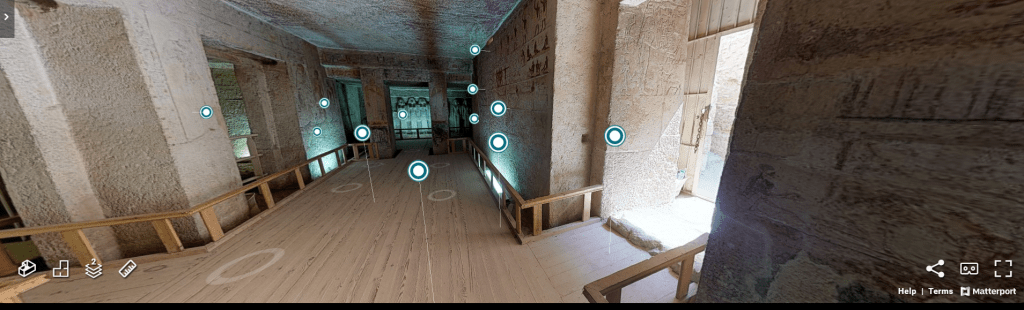
Thanks to this 3D modeling project by Harvard University, you can take a virtual tour of the tomb of Queen Meresankh III. Discover photographs from the original excavations of the tomb along with details and reconstructions of the wall art found in each room. Take a winding staircase down about 5 meters below the upper level to discover the burial chamber of Queen Meresankh III. For more information about this project click here.
3D image of the upper level of Queen Meresankh III’s tomb. Image courtesy of Matterport, The Giza Project by Harvard University.
Explore the Civil Rights Trail
This activity is an interactive map of the United States’ Civil Rights Trail. This map highlights places and moments that impacted history, including the heroes and stories behind the movement that forged new trails for civil rights.
#metkids
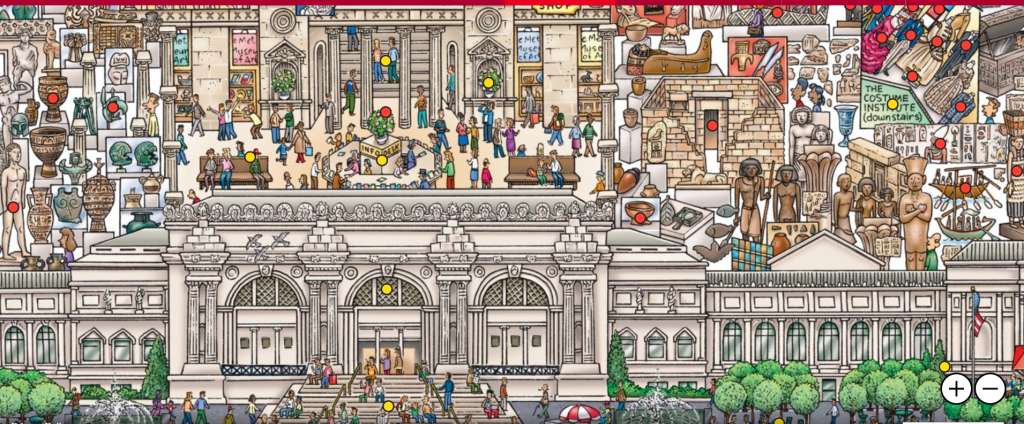
The Metropolitan Museum of Art creates a space of learning and exploring for, with, and by kids and the Met. Kids (or the young at heart) can watch videos to learn more about art, create their own time machine adventure, or explore the Met through an interactive map.
An interactive map of the Met by #metkids. Image courtesy of the Metropolitan Museum of Art.
The Great Inka Road: Engineering an Empire
Discover one of the most incredible achievements in history – the Great Inka Road, a 20,000 mile route through mountains and hillsides, all made by hand. The Smithsonian’s National Museum of the American Indian shares a virtual walkthrough of its Inka Road exhibition.
Buckle in to Climb a Mountain
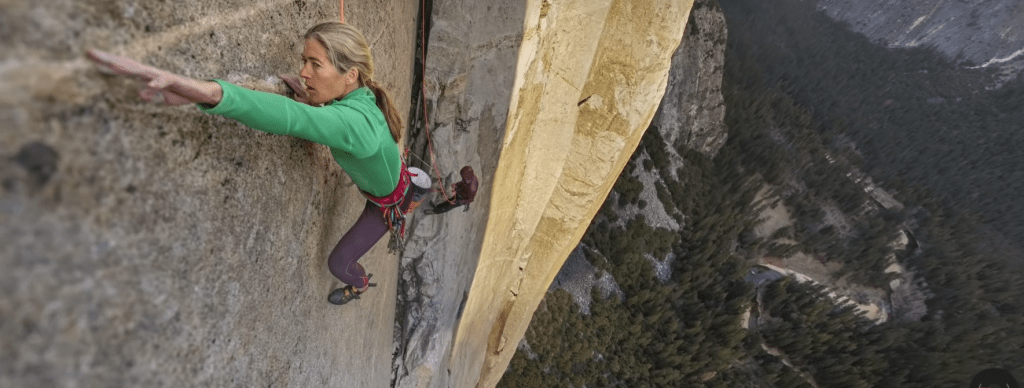
Through storytelling and 360 views, this interactive video and Google Maps site follows renowned rock climbers as they scale the heights of El Capitan in Yosemite National Park. Prepare your gear and experience the dizzying views of the Yosemite Valley from your 3,000 foot climb.
Climber, Lynn Hill, as she scales the Nose of El Capitan – the most famous rock climb in the world. Image courtesy of Google Maps.
Some honorable mentions I have come across in my exploring are a photo tour of the Burnt Food Museum (yes, you read that right), an elevator ride to the top of the Eiffel Tower, a YouTube tour of how Pixar films are made along with links to activities, a video tour of the “It’s a Small World” ride for the Disney enthusiast (Viewer disclaimer: the song will be stuck in your head for the rest of the day), and iconic performances to revisit or discover (without the hassle of waiting in lines, nosebleed seating, and even buying tickets!)
If you are unsure where to start I recommend exploring the “Top 15 Tours” first. You can find a list of them here.
There is so many experiences to discover and so much this site has to offer. All it takes is just your name, email, and a minute of your time to register! Don’t worry it’s free! Once you have joined the New Day Culture community, you will have all these art and culture resources at your fingertips – including exclusive events. For more information check out New Day Culture’s Facebook page here.
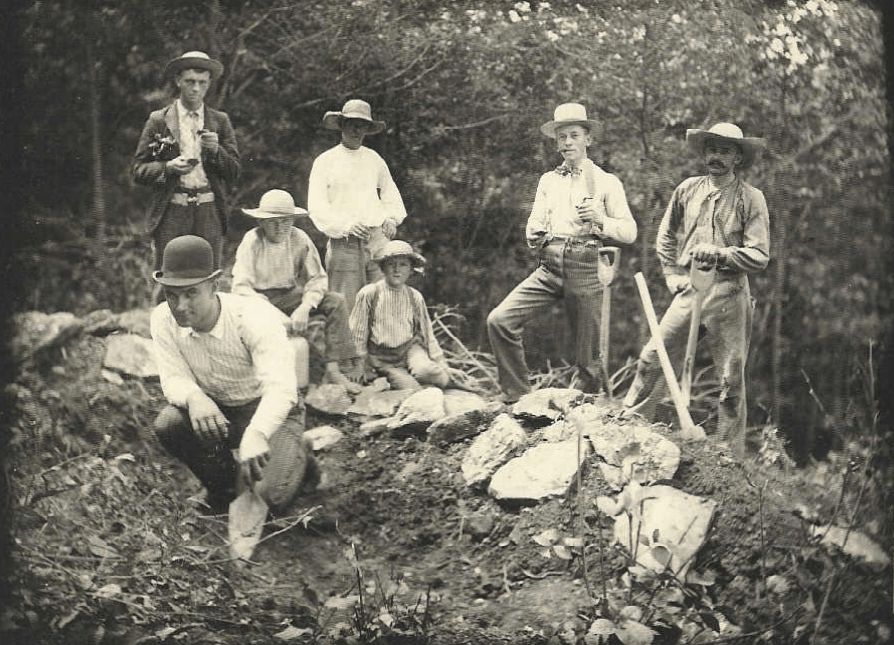
Our last newsletter sparked the interest of many readers with a featured black and white photograph of seven individuals posing with shovels, trowels, and cigars in hand. Their eyes focused intently on the camera, full of hope and mystery – reminds me of a moment like the Carpe Diem scene from Dead Poet’s Society. By popular demand, we share some additional information about this photograph.
Plate XIV – The Excavation of a Stone Heap near Station 246, Fort Ancient Site, Ohio. Photographed by C.J. Strong. Warren K. Moorehead (second from right), Joseph Wigglesworth (closest to camera on left with trowel), and unidentified field crew members.
This photograph was taken at the Fort Ancient site in Warren County, Ohio in the late nineteenth century. The photograph is of Warren K. Moorehead (second from right) and some of his field crew. Another man is identified in the photograph as Joseph Wigglesworth (closest to camera on left with trowel), a collector and amateur archaeologist from Wilmington, Delaware. You can view the original image in Moorehead’s publication of the Fort Ancient site here.
Fort Ancient is a series of earthen embankments, known as earthworks, with 18,000 feet of earthen walls enclosing 100 acres near the Little Miami River. People of the Hopewell culture (100 B.C. to 500 A.D.) built these walls and many other features both within the enclosure and on the steep valleys that surround the site. Investigations at Fort Ancient began in the early 1800s as mapping expeditions, expanding to surface collecting and full-scale excavations near the end of the century.
Warren K. Moorehead was the first curator for the Ohio Archaeological and Historical Society (now the Ohio History Connection). In 1893, Frederic Ward Putnam hired Moorehead to conduct excavations at Fort Ancient and obtain artifacts for the Columbian Exposition. One of Moorehead’s major contributions to archaeology was the preservation of Fort Ancient as an archaeological park. Later in his career, Moorehead served as the curator and then director of the Phillips Academy Department of Archaeology (now the Robert S. Peabody Institute of Archaeology) in Andover, Massachusetts, where he conducted important excavations at the Cahokia site in Illinois and the Etowah site in Georgia.
The Fort Ancient site is maintained by the Ohio History Connection and is a National Historic Landmark and listed on the National Register of Historic Places. Along with its earthworks, the site includes a museum about Ohio’s ancient history. You can explore the site’s website here!
In these unprecedented times, we are adjusting to a “new normal” in our lives – whether that be working from home, wearing a mask and social distancing in public places, ordering more online, participating in video calls and Zoom meetings, or assisting students with schoolwork. As we persevere during this time, we are finding ways to safely connect with friends and family, get outside, exercise, and continue our lives while embracing new changes to keep everyone safe and healthy.
It’s nice to find new ways to smile… even in a pandemic ☺️
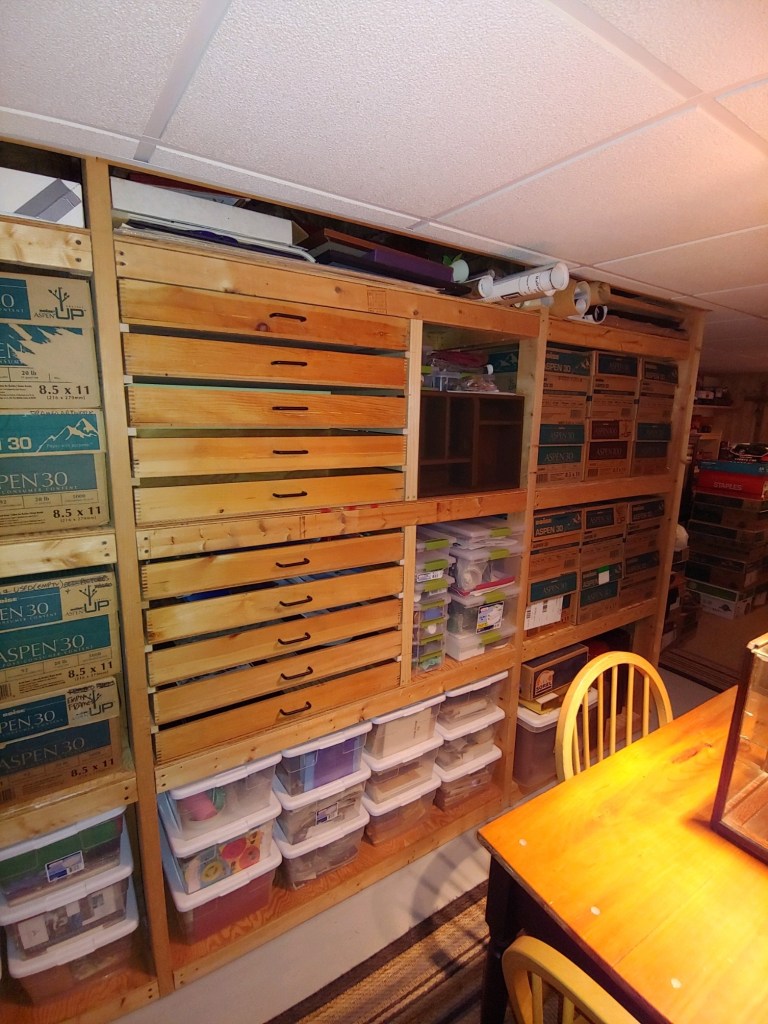
House projects have been a popular trend for many, especially with the warming weather. A few friends of the Peabody have used this time to revive and repurpose some of our old collection drawers.
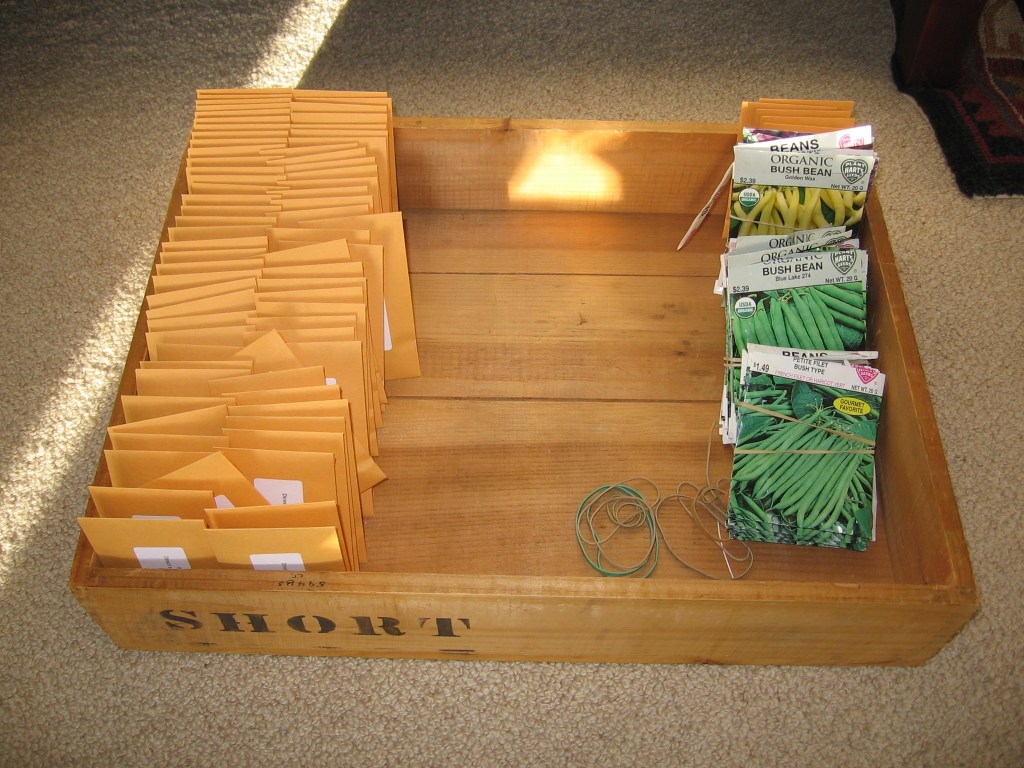
Planting season is in full swing! This drawer is being used to sort out seeds for the Andover Community Garden. It is the perfect medium for organizing the seeds before they are packaged and distributed to those in the community looking to begin their planting season.
From storing artifacts to storing seeds – this drawer is great for organizing and storage.
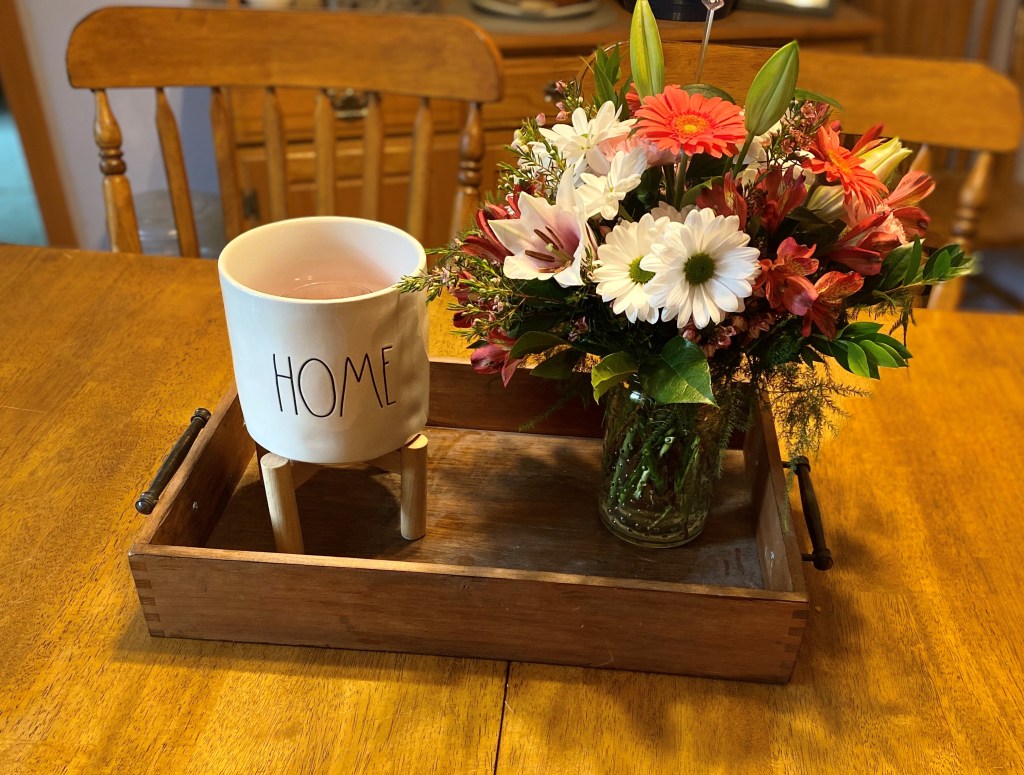
A little bit of sanding, wood stain, and cabinet handles can go a long way. Revive a drawer into a serving or decorative tray. Pair some bright flowers with that Rae Dunn piece you’ve always wanted and voilà! You have a decorative centerpiece for your kitchen table or coffee table.
Just look at those original box joints on the corners!
The large drawers are great for holding large items or large quantities of smaller items. Add handles and they make a perfect storage feature for your household. These drawers are being used to store artwork. What a great way to stay organized with a little piece of history!
Stay organized with a piece of the Peabody – a beautiful accent to your storage!
We love seeing our drawers revived and repurposed into new creations. Not only do the drawers provide great opportunities for organization, storage, décor, and material design, they provide a unique story and history to share with your family and friends. If you have repurposed some of the Peabody drawers, we would love to see and share your projects! Please share your photos with us at elavoie@andover.edu. Stay tuned for our next blog update featuring more repurposed drawer ideas!
As we all adapt to our new normal, the Peabody has compiled a list of various institutions that offer digital resources, from virtual tours to artifact images. If you are a caregiver at home with children, these can be used to enhance their educational experiences as you work to continue their learning.
And for those who simply are looking for something to do now that everyone has extra time on their hands (I’m sure no one misses their long commutes into work and sitting in traffic though), experiencing new and exciting things can be a perfect way to combat boredom!
National Women’s History Museum: This museum has a variety of online exhibits such as Breaking In: Women in STEM and Fashioning Yourself!
Museum of the Rockies: In this YouTube video Michael Fox and Dr. Shane Doyle explain why in August the town of Crow Agency becomes the Tipi Capitol of the World.
Canadian Museum of History: This museum offers numerous online exhibits including Inuit Prints from Cape Dorset and Archaeological Mysteries in the Ottawa Area.
British Museum: The largest museum in the United Kingdom offers a digital tour of some of their most impressive collections.
The Louvre: Three virtual tours are offered on Egyptian Antiquities, Remains of the Louvre’s Moat, and the Galeried’Apollon.
National Museum of Anthropology: One of Mexico’s premiere institutions that houses numerous archaeological artifacts that have been digitized and shared with the public.
Blarney Castle: If you were sad to miss out on gathering with friends and strangers for St. Patrick’s Day, or just have a fondness for old castles, Blarney Castle has incredible 360-degree tours of the interior and grounds of the castle.
We also understand that after being cooped up in your house, you might not want to stay indoors, even virtually. So if you find yourself just needing to leave the confines of your house for a bit,our friends at the National Park Service have created a way to virtually escape the walls around you atfive differentNational Parks.
We’ll be posting other resources that can be used and explored during this unique situation, so check back with us often!
The Centers for Disease Control and Prevention (CDC) issued guidelines to limit the spread of COVID-19, also known as the coronavirus. One recommendation included in these guidelines was for “social distancing” – a term referring to the conscious effort to reduce close contact between people and hopefully hinder the community transmission of the virus.
While schools, companies, and various workplaces determine the best possible options to both adhere to these guidelines as well as provide the appropriate support to their staff, students, and customers – many have chosen to close their doors. Some institutions and companies have shut down indefinitely, while various schools and universities have moved to remote teaching, where students complete their classes online and stay at home. Universities and colleges all over the country have moved courses to online platforms. Undergrads are being told to move out of their dorms and off campus for the remainder of the semester.
Phillips Academy (PA), a New England boarding school and the Peabody’s parent institution has instituted similar measures, following the directives issued by Massachusetts Governor Charlie Baker.
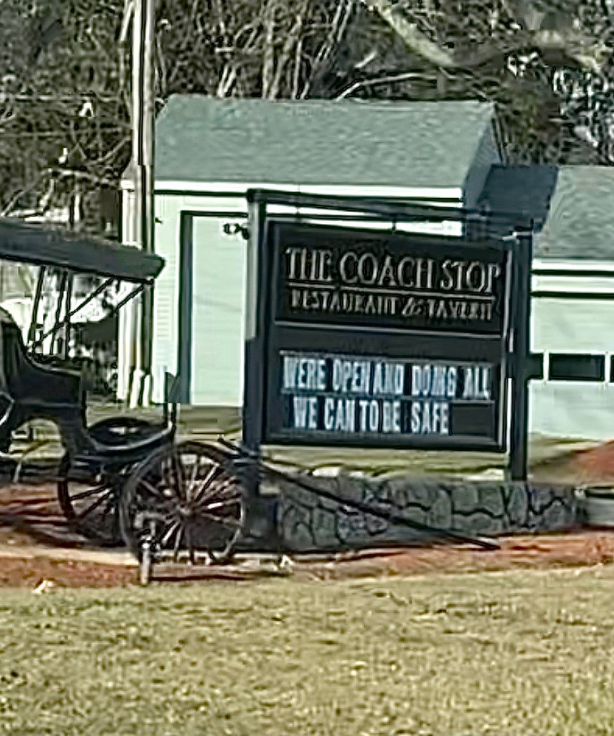
A local restaurant closes their doors in light of “on-site eating” bans over COVID-19
Now many would say they like working from home and actually get more done, but it is not the case for everyone. The Peabody staff are doing what they can to continue their museum work from home. For the Peabody collections team, it is very difficult to continue much of the work they do every day at the institution, as much of the collections and material cannot leave the building. While inventory, rehousing, and cataloguing of the collection is put on hold, our staff is editing object photographs, digitizing documents, transcribing collection ledgers, writing blogs (like this one), and more.
My dog, Rourke, is very happy to have me working from home!
Outside of my remote-work, I am wondering like many others who are stuck at home – what else can I do with the rest of my week? By being at home, we miss out on the daily interactions with our coworkers, colleagues, and classmates. Our experiences with each other fuel our creativity and critical thinking, and are important for much needed collaborative efforts. Through “social distancing” we are recommended to not take part in every day, public activities such as eating out, going to the store, or visiting a museum or historical site with our friends and family.
But don’t let social distancing doom your week and weekend! Museums have found a way to bring some of their collections to their visitors. So worry no more! You can view that Van Gough from the couch!
I was happy to enjoy a little culture and education in my off-time while at home. According to Fast Company, Google Arts & Culture has teamed up with over 500 museums and galleries around the world to bring virtual tours and online exhibits to a global audience.
Some of the museums highlighted by Google Arts & Culture include the British Museum in London, the National Gallery of Art in Washington, D.C., the Musée d’Orsay in Paris, France, the National Museum of Anthropology in Mexico City, Mexico, and various historical parks and sites.
Design of the Musée d’Orsay in 1979 Image courtesy of A.C.T. Architecture and the Musée d’Orsay
The first museum I “visited” was the Musée d’Orsay in Paris, France. As a student, I had visited this museum on a class trip many years ago and I was interested in the exhibits they provided online. This exhibit was a detailed history on the building of the museum titled, From Station to the Renovated Musée d’Orsay. This endeavor was a groundbreaking project for Paris as it was the first time an industrial building had been restored to accommodate a major museum. The virtual exhibit showcases the early building plans and images of the Orsay train station and hotel from the 1900s as well as images of the museum and its galleries after the renovation project in the early 2000s. Explore this virtual exhibit here!
I visited a second virtual exhibition, this time, at the National Gallery of Art in Washington, D.C. The exhibition is called, Fashioning a Nation. This exhibit features drawings from the Index of American Design, a collection of more than 18,000 watercolor pictures of American decorative art objects. This exhibition explores the American fashions from 1740 to 1895, giving insight into the character and quality of American life from the colonial period to the Industrial Revolution. Click here to explore this exhibit!
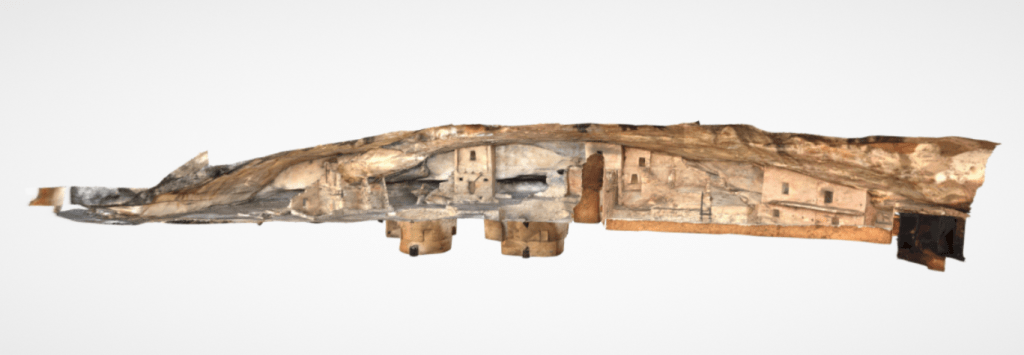
3D model of the Balcony House at Mesa Verde National Park Image courtesy of CyArk and Open Heritage – Google Arts & Culture
If museums aren’t your thing, explore a historic site!Open Heritage – Google Arts & Culture offers iconic locations in 3D, using 3D modeling techniques for you to explore. You can learn about the tools of digital preservation and how people all over the world are preserving our shared history. One site I visited was the Mesa Verde National Park. This site is home to Native American cliff dwellings in southern Colorado that span over 700 years of Native American history (600-1300 CE). An expedition was led by CyArk in February 2017. CyArk is a nonprofit organization that specializes in the digital documentation and preservation of historic sites. The organization documented the Balcony House at Mesa Verde using Light Detection and Ranging (LIDAR) and terrestrial photogrammetry. Combining these two technologies is what creates the 3D model of a site. To explore the 3D model of the Balcony House at Mesa Verde, click here!
Unfortunately, not all popular museums and galleries are included on Google Arts & Culture’s collection website, but some museums are offering virtual tours and online visits on their own websites, such as the Louvre in Paris, France. To see more of Google Arts & Culture’s collection of virtual museums and exhibits, visit their collection website. Explore and enjoy your visit!
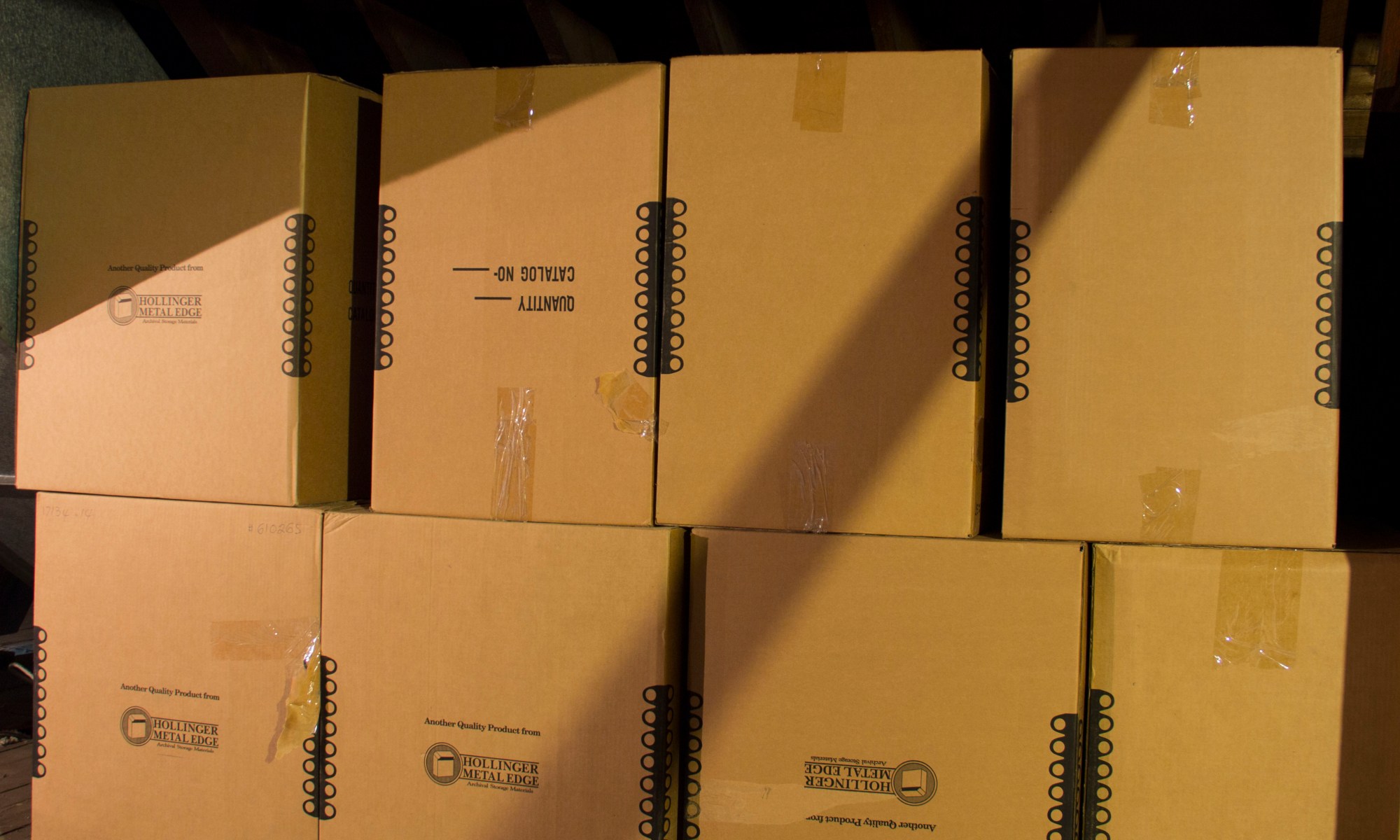
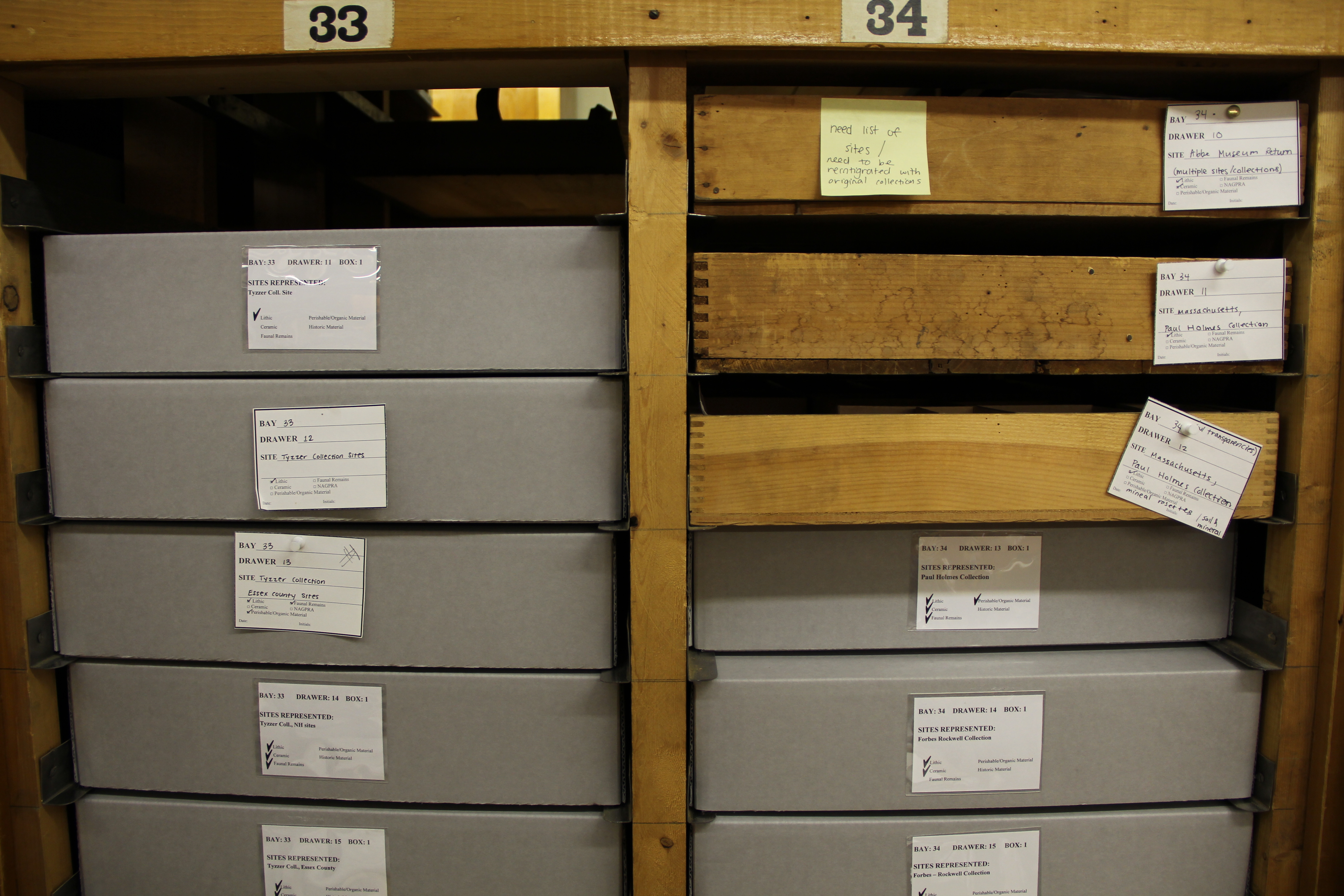
As some of you blog may know, the biggest project currently being done at the Peabody is the complete inventory of all of our collections. In previous blog entries (these can be read here and here), we have discussed the process, including the fact that we move the artifacts from the original wood storage drawers to custom made gray Hollinger boxes-generously supported by the Abbot Academy Fund. When we received the shipments of these boxes, they were stored off-site in two storage units that the Peabody had rented in town. These two storage units perfectly held all of our boxes and everything has been right in the world.
Side by side comparison of new gray boxes and older wooden drawers.
A few weeks ago, I was up in the attic of the Peabody doing a pest inspection with Waltham Services and I had an idea. I went to my supervisor Marla Taylor and I said, “Do you know what would be an interesting idea? If we rearranged what is up in the attic, closed out both storage unit accounts and moved the rest of the boxes up into the attic.” By this point in time, the first of our two storage units was getting pretty empty, with maybe 15-20 large boxes remaining inside. I told Marla that if this idea worked out, it would benefit the Peabody in two major ways (and possibly more, but these are the big ones).
First of all, we wouldn’t have to pay the monthly fee for storage units anymore. This would ultimately save the Peabody a chunk of change every fiscal year, and who doesn’t want to save money wherever they can? When we had the storage units, we used to have to reserve a rally wagon (an SUV owned by Phillips Academy that only certified drivers can operate) and drive over to the storage unit. With that method we could only fit a maximum of six boxes (each containing 12 gray boxes) into the back of the SUV. Additionally, we would save on the cost of renting the rally wagons, which we have been using more frequently lately since we have three people working on the inventory.
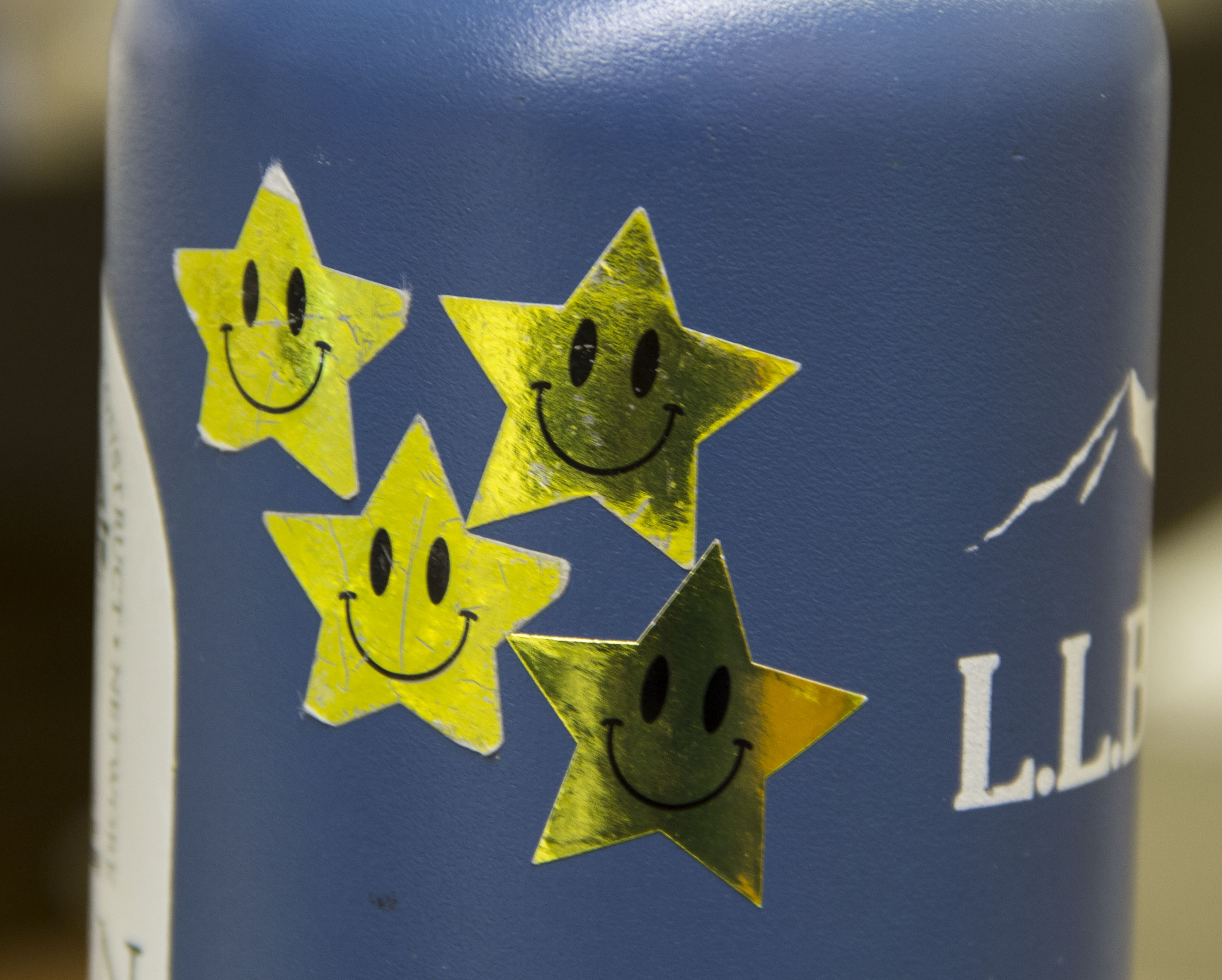
Second, anytime we needed more gray boxes for the inventory, we would be able to just walk upstairs to the attic and grab them. The only way this idea wouldn’t work was if the boxes wouldn’t fit in the attic. Marla thought about this idea for a minute and we had a look around the attic to see if this was feasible. After a few minutes with a measuring tape, she said she thought that this idea was great and had serious potential to work. This response was of no surprise to me, because it is well known that I only have good ideas. I received yet another gold star for my many efforts and great ideas.
These are my gold stars for all the good ideas I have come up with. I cherish them.
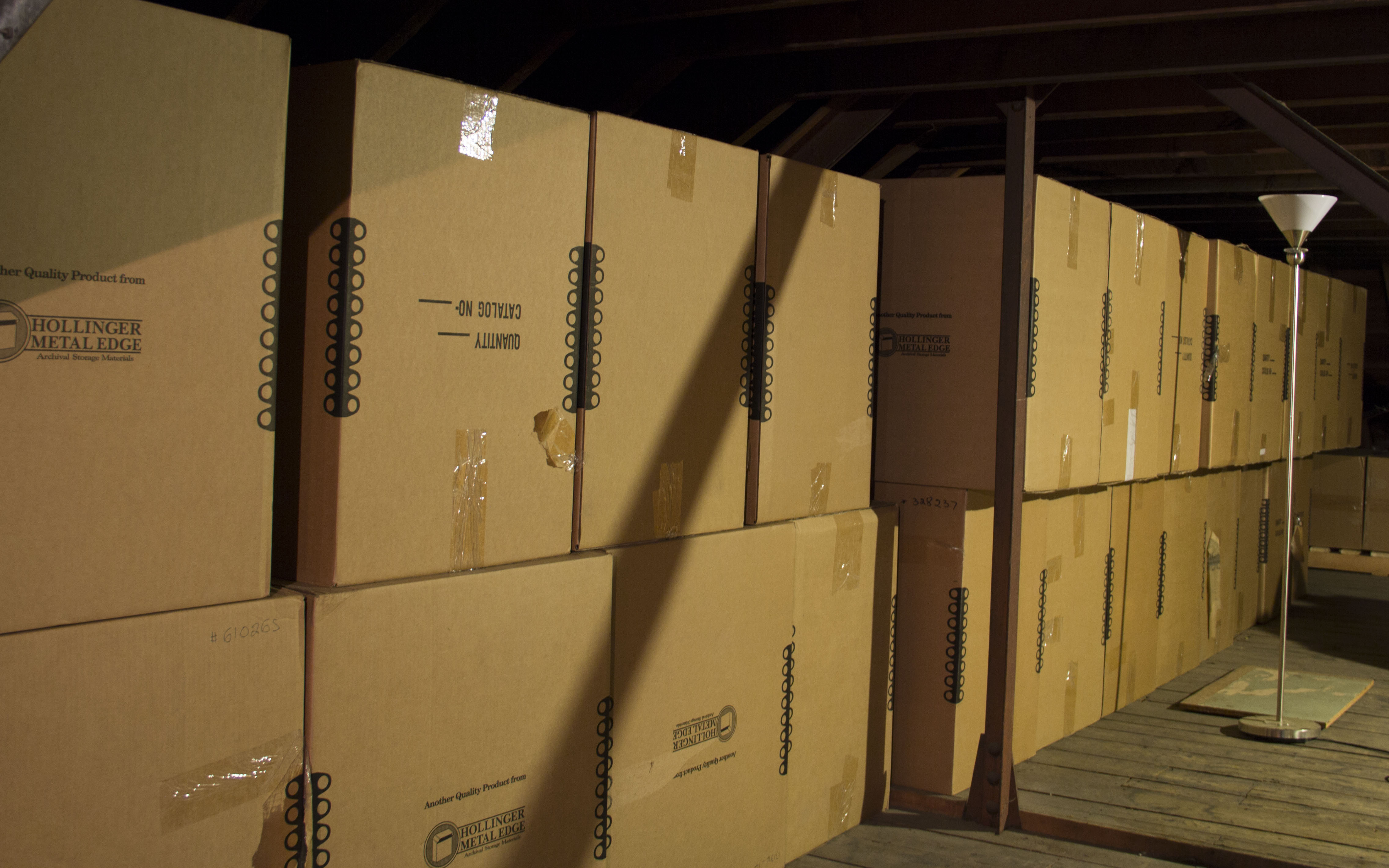
We then strategized how to get the Peabody ready for the influx of these boxes of boxes. First, we needed to empty the first storage unit. This involved John and Emily making multiple runs to the unit while Marla, Emma and I unpacked the gray boxes and organized them around the basement. All of these gray boxes managed to fit in various places downstairs. This was great! It meant the attic wouldn’t have to house anything but the second unit. A week before the big move, we set about cleaning the attic to make as much space as possibly for the contents of the final storage unit. With the help of work duty students, Marla, Emma, Emily and John, the attic was cleaned and looked like a barren wasteland, but a beautiful one that was about to be filled with boxes.
Finally, we rented a U-Haul truck and set to work. We had set aside an entire day to facilitate this move. Marla and John drove the truck to the storage unit and filled it with as many boxes as possible. When they pulled up outside the Peabody, all hands were on deck. We got all of the boxes into the lobby and started carrying them up to the second floor landing. Marla and John left to go fill the truck with a second load. Once all of the boxes were up on the second floor, Emily, Emma and I started the move to the attic. This part seemed like it was going to be difficult because the attic stairs are very narrow and the large boxes are very wide. But then, I had the BRILLIANT idea to use the stairs as a ramp and literally push the boxes up the stairs. This made the operation go so much faster than originally anticipated.
Seriously, look at how great these boxes look in the attic.
When all was finally said and done, this move that we expected to take all day (and possibly longer) was accomplished in THREE HOURS. GO TEAM – these boxes were MEANT to go into this attic. We were exhausted, but totally deserving of the Indian Buffet lunch we decided to enjoy. The day was a huge success for the Peabody Collections team. Now the attic looks beautiful and it will be much easier for us to restock on boxes when we need them.
In 2017, the Peabody welcomed Dr. Laura Kelvin to examine the William Duncan Strong collection from Labrador. You can learn all about that visit in a previous blog post here.
Recently, Dr. Kelvin reached out for permission to share some of the images she took in a video that is part of a larger project – the Agvituk Digital Archive Project, which is part of the Agvituk Archaeology Project (AAP). The AAP is a community-based archaeology project that was initiated by the Hopedale community through the Tradition and Transition Research Partnership between Memorial University and the Nunatsiavut Government.
An Agvituk Archaeology Project excavation. Image from Tradition and Transition website.
Every summer, students are hired (high school, college/university, or upgrading) from Hopedale to help conduct traditional knowledge interviews with community members (and sometimes archaeologists) and help with survey and excavation if needed. The interviews were originally going to focus on specific objects that Dr. Kelvin documented, or those recovered through AAP activities. However, due to the high volume of material, the students have been picking topics inspired by the artifacts and interviewing people about those subjects. This past summer the students chose to discuss sewing.
Short videos are created that blend conversations with community members and images of relevant artifacts and historical photos. The videos can then easily share traditional knowledge with the larger community.
Dr. Kelvin and her students used several artifacts from the Peabody’s collection in the sewing video. You can see it in its entirety here.
To learn more about the project, check out their Facebook page.
Hot off the presses – the Peabody’s annual report for academic year 2018-2019 has just been released! Interacting with nearly 2,000 students (yes, some PA students keep coming back for more) and dozens of researchers, another wonderful year is under our belt.