Identifying Patterns!

Contributed by Rachel Manning

Out of all the artifacts that I have worked with over the course of my career, one of my favorite types has always been historic ceramics. There are so many different ceramic types and beautiful decorative patterns that it’s easy to see why ceramics can often become collector’s items. Transferware has always been particularly interesting to me. Maybe it’s because there is such a wide array of images and scenery that can be depicted on this type of ceramic.

One of my previous jobs dealt heavily with colonial and antebellum artifacts, so transfer printed ceramic fragments would come through the lab on a regular basis. One of my favorite things to do there was to identify the specific patterns on the fragments as best I could. In order to do that I had many resources, including a Powerpoint with typologies found at the site and access to the Transferware Collectors Club website.

Last week, I decided to inventory a drawer which has historic ceramics in it. I rarely see historic ceramics here, so I figured it would be a good way to keep them fresh in my mind. When it came time to catalog the ceramics, I organized them in my workspace by colors, and then further broke these groups into design patterns.

IMG_9985
Organizing ceramics!

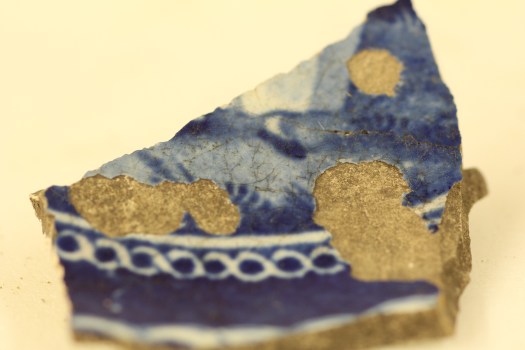
I had kept the aforementioned Powerpoint on a flash drive in case I ever ran into historic ceramics again. It was open on my computer while I was going through this particular drawer and it proved to be a valuable resource once again. I had a few fragments of transfer printed ceramics in front of me and noticed that even though they were tiny sherds, I was able to see that they contained images of grain, a foot, and a window with some shrubs.

IMG_9996
The foot of a gleaner
IMG_9992
Ceramic fragment with a window and shrubs
IMG_9998
Ceramic fragment with gathered wheat

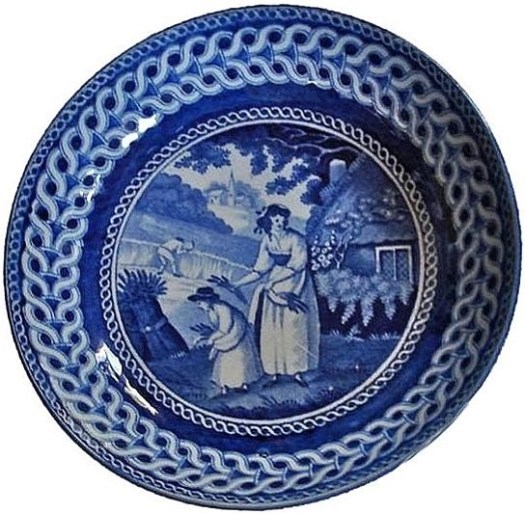
Going through the Powerpoint, I immediately recognized that these match up with a transfer pattern that is known as “Gleaners.” The rim pattern also was a dead giveaway, but that didn’t make it any less exciting to see that from a few tiny pieces of ceramic, I could get a vision of what the entire vessel once looked like!

Gleaners
An entire vessel with the “Gleaners” pattern.

Finding fragments of transfer printed ceramic is always exciting and can be like having pieces of a puzzle that you need to put together. Many antique transfer printing patterns are still used and reproduced to this day. If you have any in your possession, or know anyone else who does, I’d encourage you to look it up online and see what you can learn about something you might have once thought was just a cool decorative piece.

The Inventory Specialist position is supported by a generous grant from the Oak River Foundation of Peoria, Ill. to improve the intellectual and physical control of the institute’s collections. We hope this gift will inspire others to support our work to better catalog, document, and make accessible the Peabody’s world-class collections of objects, photographs, and archival materials. If you would like information on how you can help please contact Peabody director Ryan Wheeler at rwheeler@andover.edu or 978 749 4493.

Cataloging photographs in our database, and the Andover-Harvard Yukon Expedition photographs

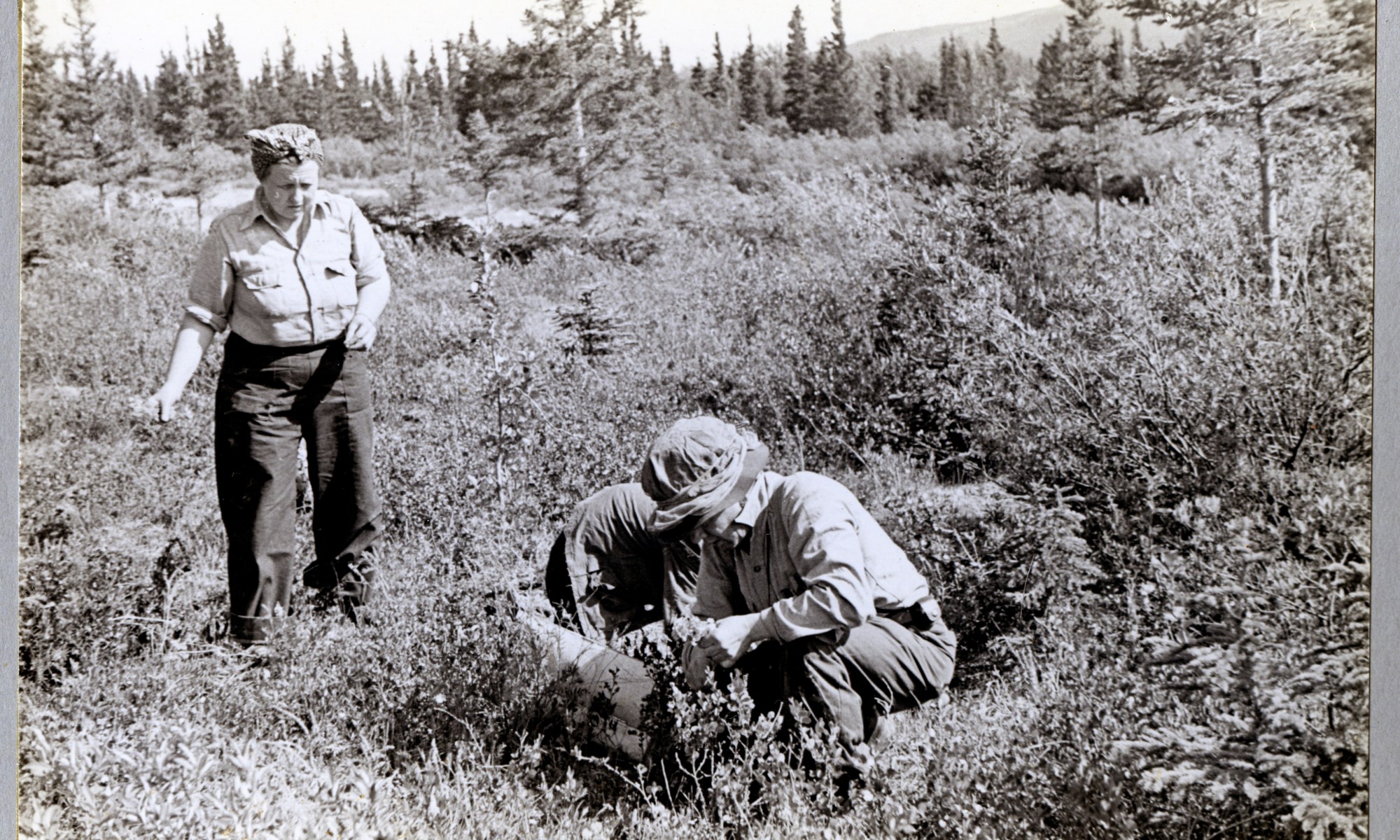
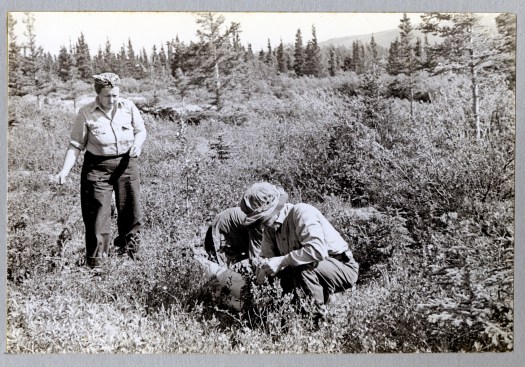
L-25-5. Collecting Primulas on muskeg between beaches west of Mile 1020-21. Near Pine Creek Camp. Alaska Highway. 6/23/44.

Contributed by Irene Gates

Since November, I’ve been focused on better organizing and rehousing the Peabody’s photographic collections (a rough extent estimate: 10,000 prints, 35,000 slides, 230 rolls of film, 500 glass plate negatives and 1,500 lantern slides). These consist of excavation, ethnographic and museum object photographs. Some were created during the course of the Peabody’s activities; others were donated to the museum. There are some wonderful images here, many unknown to Peabody staff members even. In keeping with the archives project’s mission to make the Peabody’s archival collections more accessible, contract librarian Mary Beth Clack has begun cataloging photographs in our Past Perfect collections management database. For many photographs, some type of bibliographic record such as a catalog card or an index already exists, so adding a record to the database is a question of transcribing and consistently formatting existing information. Work duty students and I have been scanning photographs so that a digital image can then be attached to the catalog records, which are then easily published online via our Past Perfect web portal. In addition to the benefits of making these publically available, cataloging them in the database makes them infinitely more findable for staff members.

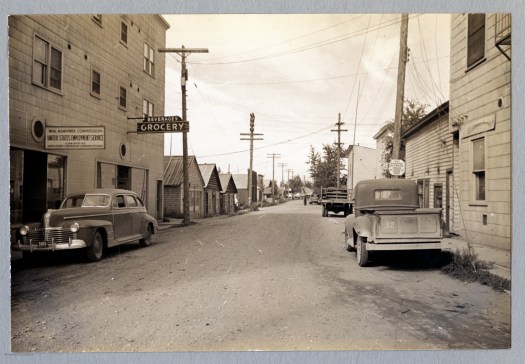
L-28-28. Fairbanks, Alaska. Snapshots of Chena Slough, streets and houses. 7/30/44

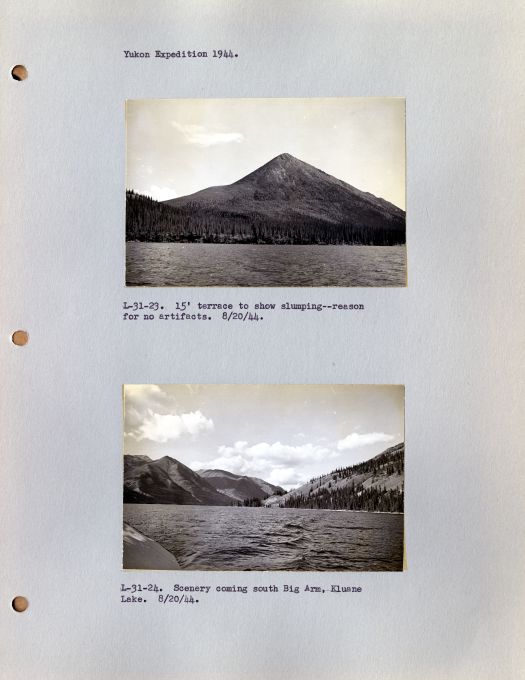
Mary Beth is currently working on the 1944 and 1948 Andover-Harvard Yukon Expedition print photographs. These approximately 1,500 images document the archaeological and geobotanical expeditions carried out jointly by the Peabody and Harvard University (and funded by additional sources, including the Wenner-Gren Foundation) in parts of the Shakwak and Dezadeash Valleys, in southwestern Yukon. The photographs, taken by Fred Johnson, Hugh Miller Raup and John H.H. Sticht, are mounted on stiff paper, typically two to a page, with typewritten captions below each image. Many of them, in addition to being important documentation of the expeditions, are very beautiful. Included here a few examples. The first batch of records have just been published online, and more will be added soon: please browse them here.

Example of an Andover-Harvard Yukon Expedition photographs page, with images from 1944.
L-25-5. Collecting Primulas on muskeg between beaches west of Mile 1020-21. Near Pine Creek Camp. Alaska Highway. 6/23/44.

For more information about the Yukon project, see its publication: Investigation in Southwest Yukon, by Fred Johnson, Hugh Raup and Richard MacNeish, 1964

The Temporary Archivist position is supported by a generous grant from the Oak River Foundation of Peoria, Ill. to improve the intellectual and physical control of the institute’s collections. We hope this gift will inspire others to support our work to better catalog, document, and make accessible the Peabody’s world-class collections of objects, photographs, and archival materials. If you would like information on how you can help please contact Peabody director Ryan Wheeler at rwheeler@andover.eduor 978 749 4493.

Puerto Rican Artifacts at the Peabody

Contributed by Ryan Wheeler

A poorly known collection occupying several drawers at the Peabody Institute sheds a little light on the Taíno, the indigenous people of Puerto Rico and neighboring islands who met Christopher Columbus in 1492.

When Columbus landed in Hispaniola the Taíno population was perhaps in the millions and early records estimate that 85 percent of the population had been lost within a few decades. People lived in family groups, with some villages numbering 3,000 people. Native foods like fish, shellfish, birds, lizards, and other small animals augmented agricultural crops of cassava, yams, and other domesticates. A complex and elaborate religion included the worship of spirits called zemis, and like their neighbors in Mesoamerica, the Taíno played a ball game on a rectangular court that they called Batey. Hereditary chiefs and nobles ruled over commoners and slaves. The Taíno, however, soon succumbed to the Spanish conquest, but most of us recognize a handful of loan words in English that can be traced back to the Caribbean, including barbecue (barbacoa) and canoe (canoa).

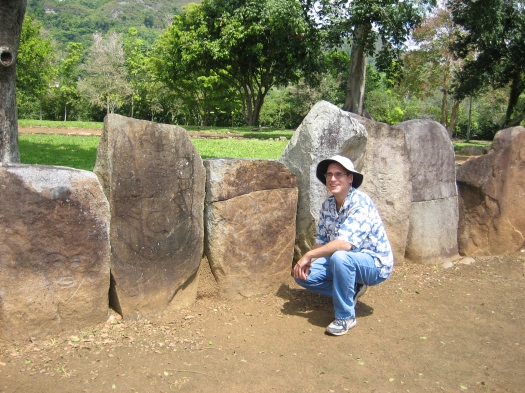
Image of Ryan Wheeler at the Caguana Ceremonial Ball Courts Site in barrio Caguana, Utuado, Puerto Rico, 2006. The reconstructed ball court is lined with engraved stone slabs.
Ryan Wheeler at the Caguana Ceremonial Ball Courts Site in barrio Caguana, Utuado, Puerto Rico, 2006. The reconstructed ball court is lined with engraved stone slabs.

I got interested in the Taíno in 1999 when as an employee of the Florida State Archaeologist’s Office I conducted an investigation of the Miami Circle site in downtown Miami. Miami is a melting pot of people from Latin America and the Caribbean. Among those I met during my time in Miami were a group of folks from Puerto Rico who considered themselves living members of the Taíno tribe. Like most other archaeologist and anthropologists at that time I had learned that the Taíno were extinct—one of the first victims of European conquest and colonization of the Americas. My new friends shared that they had, however, preserved their language and culture, including many old songs which they were working to pass on to future generations. Over the next few years I met more Taíno people and several tribal members participated in my excavations near Lake Okeechobee in 2000.

A 2011 Smithsonian.com article by Robert M. Poole recounts his search for modern day Taíno in New York and Puerto Rico with surprising results. Like my friends in Miami, many Puerto Ricans acknowledged indigenous ancestry. Many of my archaeologist friends were still skeptical, suggesting that cultural practices were based on ethnohistoric accounts left by the Spanish and that language was being recreated based on Julian Granberry’s 2005 book Languages of the pre-Columbian Antilles. By the early 2000s there were several Taíno groups that asserted cultural affiliation, including the Jatibonicu Taino Tribal Nation of Boriken, who were the folks I knew. DNA analysis by Juan C. Martínez-Cruzado—reported in 2003 and 2006—suggests that the archaeologists and anthropologists got it wrong. Based on an island-wide DNA survey, Martinez-Cruzado found that 61 percent of all Puerto Ricans have Amerindian mitochondrial DNA, 27 percent have African and 12 percent Caucasian. Martinez-Cruzado’s study also pointed to evidence for cultural survivals into modern times, including traditional fishing practices.

So, back to the Peabody collections. Preserved in several drawers are petaloid celts, adornos and sherds from ceramic vessels (many depict animals), three-point stones (also called zemis), and a very heavy stone belt (or yoke) that would have been worn during the ball game. Mela Pons Alegria, in an article in Archaeology magazine, explains that the three-pointed stone zemis “are the oldest and most abundant” form of Taíno art, and evolve from simple triangular carvings to elaborate effigy forms. Flat areas hint that these may have been attached to handles or staffs. We have little catalog information, but it appears that the collection was a gift from Eugene M. Verges. A little poking around on genealogical sites shows that Eugene Marcelin Verges II was born in 1889 in Arroyo, Puerto Rico and was a student at Phillips Academy in 1907—he’s listed in the catalog as being from Wellesley, Mass.—he died in 1970. Verges’ father was engaged in the sugar business and it seems likely that the Peabody collections from Puerto Rico were made by the Verges family and gifted to us in the first part of the twentieth century.

A Move Around the Country

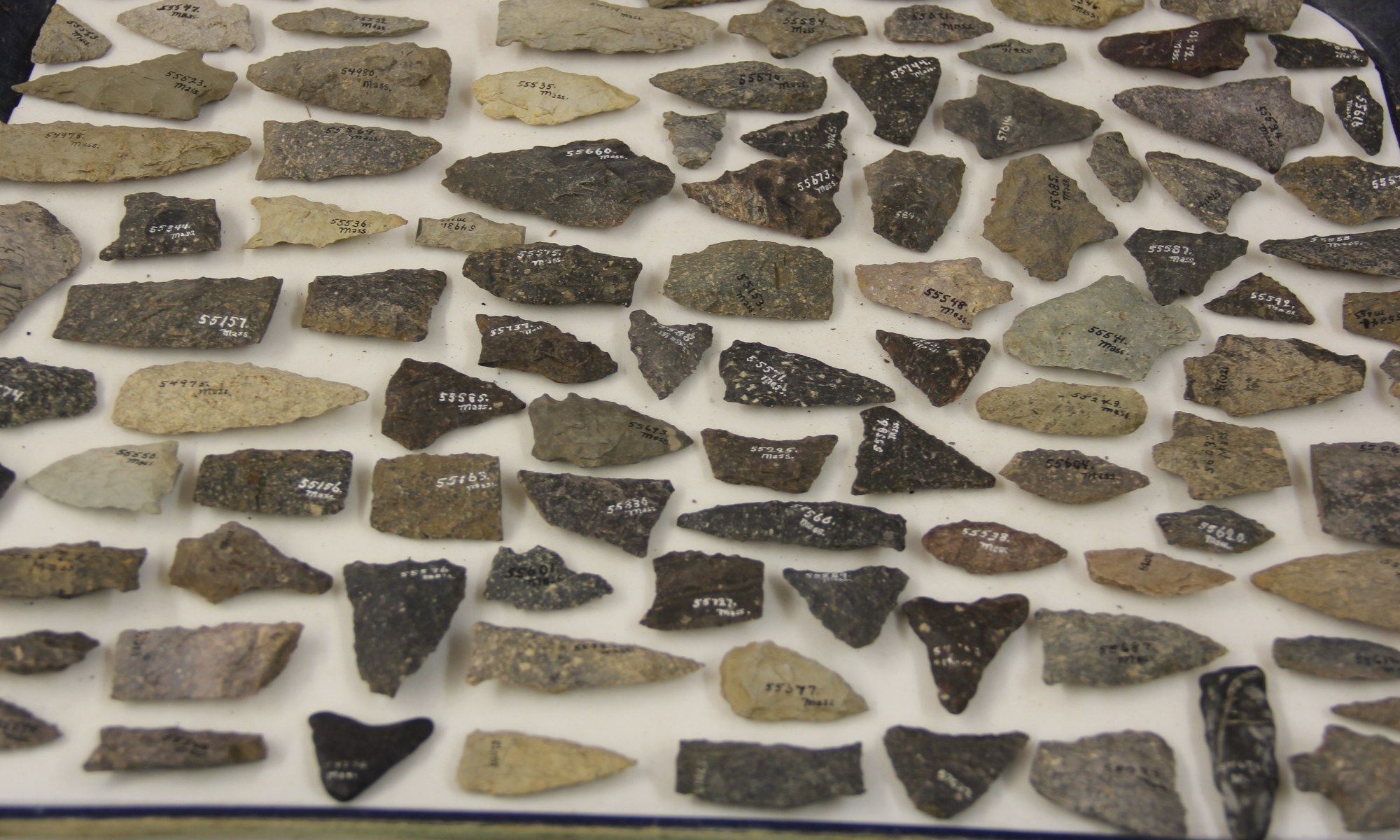
This job is awesome, but sometimes the material I work with can get pretty repetitive. I have been working on cataloging a bay full of artifacts from sites throughout Massachusetts. This allowed me to see what had been discovered throughout the state in which I now live. While there were a few ground stone tools, the vast majority of artifacts I cataloged were modified stone and bifaces. Drawer after drawer, box after box was filled to the brim with fragments of stone that had been worked by someone, but never fully formed into a usable tool such as a projectile point or a blade, and while it is still incredible to see these artifacts and be able to hone my skills identifying worked stone, it started getting very redundant.

IMG_9937
A completed box of modified stone – more layers under the ethofoam

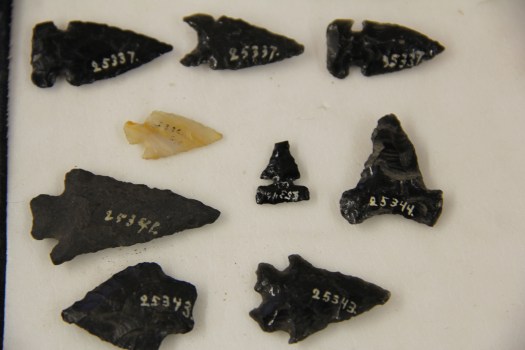
Luckily for me, when I need a change of pace, I can walk over to another bay and choose drawers from almost anywhere in North America. After cataloging hundreds, if not thousands, of modified stone fragments, I decided to take a break from the Northeast and I moved to a bay containing artifacts from Idaho, Kansas and Iowa. So far these drawers have been amazing! While there are still amorphous fragments of modified stone, the number of finished tools far outweighs them. This particular drawer has many finished projectile points.

IMG_9946
Tiny projectile points!

Not only are they finished points, some of them are seriously tiny! A couple haven’t been much bigger than my pinky nail, and I have pretty small hands. It is incredible to see how small they are and think about the craftsmanship that must have gone into making such a tiny specimen. The level of precision and the skill that must have been required to craft these projectile points without them breaking must have been tremendous. Getting to see final products such as these has the power to make counting all the other fragments of modified stone worth it.

The Inventory Specialist position is supported by a generous grant from the Oak River Foundation of Peoria, Ill. to improve the intellectual and physical control of the institute’s collections. We hope this gift will inspire others to support our work to better catalog, document, and make accessible the Peabody’s world-class collections of objects, photographs, and archival materials. If you would like information on how you can help please contact Peabody director Ryan Wheeler at rwheeler@andover.edu or 978 749 4493.

Decoding a woven language

Contributed by Lindsay Randall

Cloth was the books the Spanish could not burn.

During Fall Term I worked with Meg Bednarcik and Nick Zufelt – both Instructors in Mathematics, Statistics, and Computer Science – to create a class that would focus on the computer science concepts of looping and parameters.

We decided to utilize the extensive Guatemalan textile collection at the Peabody, as they are brightly colored and engaging and most have repeating, or looping, motifs. We also liked the idea of incorporating clothing made and worn exclusively by indigenous women into a subject where they are woefully underrepresented.

Eighteen huipils (wee-peels) were pulled for the class, with the images of another twelve scanned. A huipil is a traditional Maya women’s shirt.

as

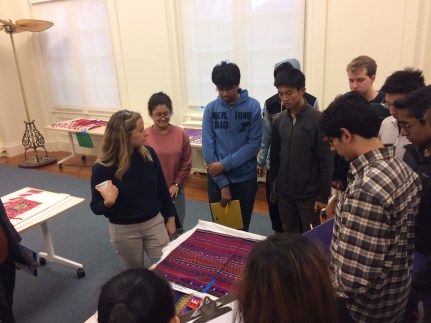
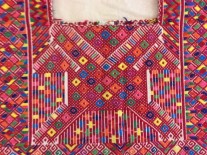
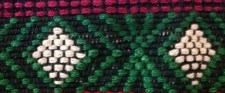
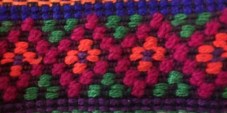
The first activity was a matching game to show students how huipils had silent information encoded into them about the wearer’s home community. Each village has its own distinctive design. The students were given twelve cards with images of other huipils in our collection and asked to match them to huipils that were laid out in the room. The following images are from three villages, highlighting how the differences between villages, as well as the variation within a particular village.

Huipils from San Mateo

Huipils from San Ildefonso

Huipils from Almolongo

IMG_4990
Students participating in the village sorting game.

Then students worked with either Meg or Nick to find designs that had looping designs, or nested loops. Then they worked on creating parameters for the designs they had found.

czx
Meg Bednarcik points out looping patterns to her students.

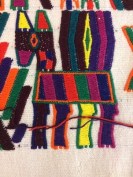
The third activity was asking students to identify certain motifs that are common in Maya imagery. Some, such as a deer, were more literal then others, such as the feathered water serpent or portals.

And as you learn in the write up bellow by Meg, this class served as the starting point for a term long project the students will be working on:

My AP CS A students ventured to the Peabody Institute to learn of Guatemalan huipils and the stories these women’s clothes tell of personal identity. The students will complete follow-up assignments to program their own design defining their personal identity here at the academy and beyond utilizing programming concepts learned in class such as objects and repetitions. Though many students were shocked to be at the Peabody for a CS class, they left reflecting on the many ways these programming ideas apply to other aspects of our world. I am eager to continue to utilize these resources at our fingertips to allow students the space to ponder their place in our interconnected world beyond PA, and consider the beneficial impact their work as computer scientists can have on others outside of the classroom.

~ Meg Bednarcik, Instructor in Mathematics, Statistics, and Computer Science

This has been one of the most interesting and fun classes for me to develop. I really enjoyed working with and learning about part of our collection that is underutilized. But most of all, I have been thoroughly engrossed by the current action Maya women are taking to ensure that their designs are protected and not appropriated. Based on the information I gleaned from my research, I included a huipil from Santiago Sacatepéquez, which is the only community so far that has been able to give legal protection to their woven intellectual property.

To learn more about huipils and their images, visit Guatemala City’s Ixchel Museum of Indigenous Textiles and Clothing website.


Below are symbols found in some of the huipils in the Peabody’s collection:

Serpent motif – geometric designs known as “kumatz’in”. “The Kaqchikel term kumatz means snake, or the feathered serpent.

 adsas

 Deer – Deer held particular significance in Maya mythology and the Dance of the Deer, originating from pre-Conquest times, is still performed at festivals today.

deer

The Double Headed Eagle – The double headed eagle in Maya mythology represents the Great God with two faces, one looking to good and the other to evil, or to heaven and earth. Double-headed birds are motifs frequently used for decorating ceremonial garments. The image to the right outlines the shape of the double headed eagle.

XZX   cxzc

Sky bands – represents the path of the sun with the Xs formed in the “empty” space refers to the end of the solstices.

sky.jpg

Offering plate / Portal – “portal” or “door” was the Maya name for the entrance into the “other world” (spirit world). The dot in the center represents the door through which an ancestor can travel.

dsfs

The Star That Proceeds The Sun – This motif has been a part of Mesoamerican cosmology since Olmec times. It can be seen in celestial bands along with the sun, the moon, and particularly Venus. It is also featured in codices, such as the Popol Vuh.

fd

Bird – At the beginning of the rains, and when maize is sowed, they can be seen in large quantities on the rivers and lakes.

fdfds.jpg

Sun – A sun is embroidered around the neckline. If a woman in the village just became a widow, she would wear her huipil without the sun around the neck, because she would have lost her sun

 fdsfds

Lightning – Vertical zigzag lines are associated with rain and lightning.

dsads.jpg

Lion / Jaguar – The animal has been given a mane, indicating European influence. The cougar or American lion has no mane.

gdsfewr

Radiocarbon Dates Association, Inc.

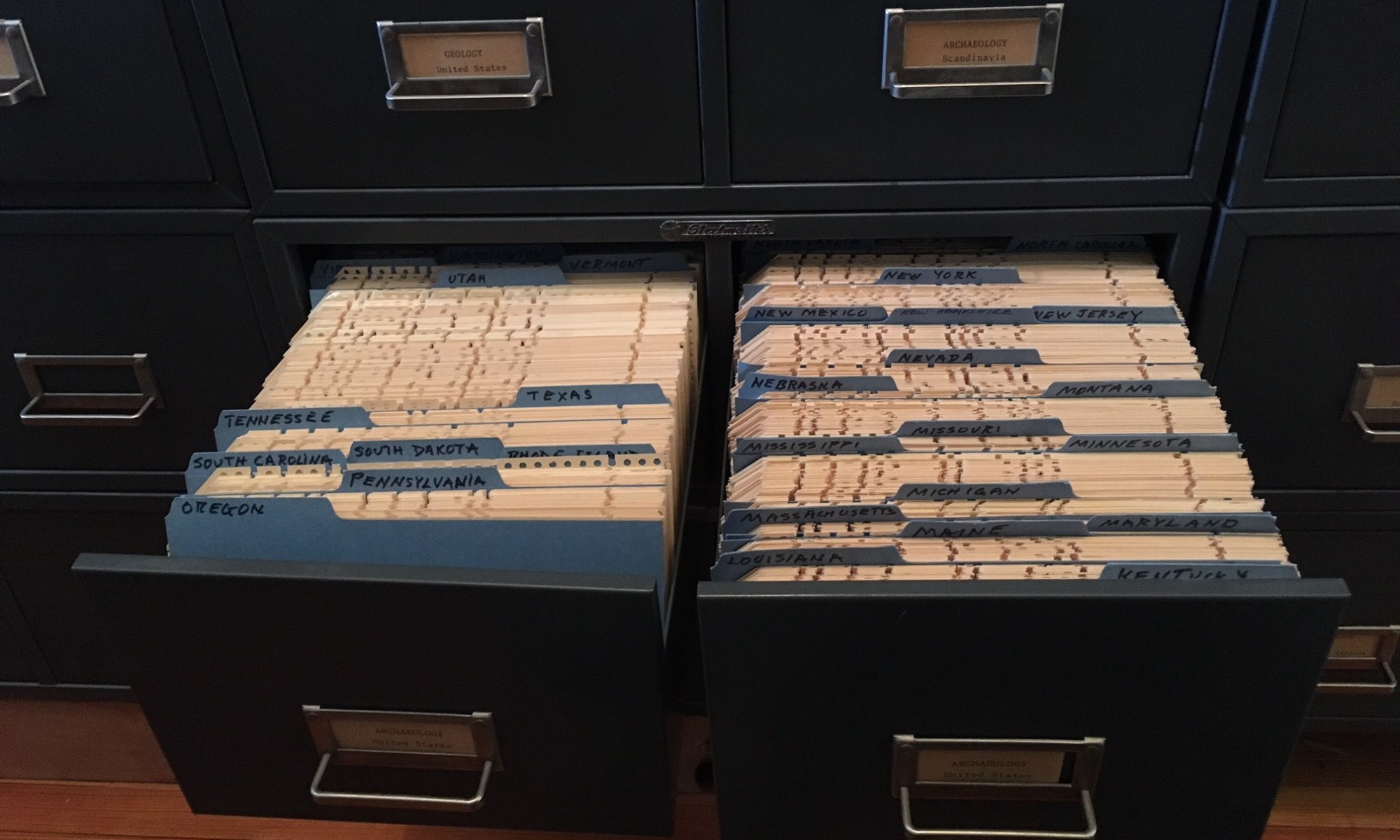
Drawers of punch cards

This blog represents the eleventh entry in a blog series – Peabody 25 – that will delve into the history of the Peabody Institute through objects in our collection.  A new post will be out with each newsletter, so keep your eyes peeled for the Peabody 25 tag!

One of the more unusual collections I came across during my survey of the Peabody’s archives last year was a group of notched 5×8-inch cards containing radiocarbon dating information. It took me a while to figure out what these cards were, and as it turns out, both the format and the content have interesting back stories. These “punch cards,” widely used as a form of data storage in the late nineteenth to twentieth century, represent an endeavor to create a data set of known radiocarbon dates from sites around the world and share it with researchers.

Dr. Willard Frank Libby, a chemist who studied radioactivity and worked on the development of the atomic bomb during World War II, invented radiocarbon dating in the 1940s. He recognized its potential for fields such as archaeology and geology (and received a Nobel Prize in Chemistry in 1960 for these efforts). His research quickly came to the attention of Doug Byers and Fred Johnson at the Peabody, who were already using scientific dating techniques such as pollen analysis and dendrochronology. When the American Anthropological Association formed the Committee on Radioactive Carbon 14 in 1948, to liaise between the archaeological community and Libby and provide him with archaeological samples on which to test his method, Johnson was appointed its Chairman.

(See the additional resources below for publications on radiocarbon dating authored or edited by Johnson, who became so involved with this subject that in a 1958 letter he wrote, “… now I wish to heaven that I had never heard of radiocarbon”)!

Beginning in 1953, conferences on radiocarbon dating began to be held at the Peabody. In October 1956, the Committee for Distribution of Radiocarbon Dates was established at one such conference. The R.S. Peabody Foundation was listed as the committee’s address. A $1,500 grant by the Wenner-Gren Foundation in 1957 was used to finance a survey sent to 1,500 scientists to gauge interest in radiocarbon dates punch cards. Enough interest was shown that the enterprise moved forward. In 1958, Radiocarbon Dates Association, Inc., was established, with Johnson as President and Byers as Secretary-Treasurer. Subscriptions were purchased by museums and universities across the world.

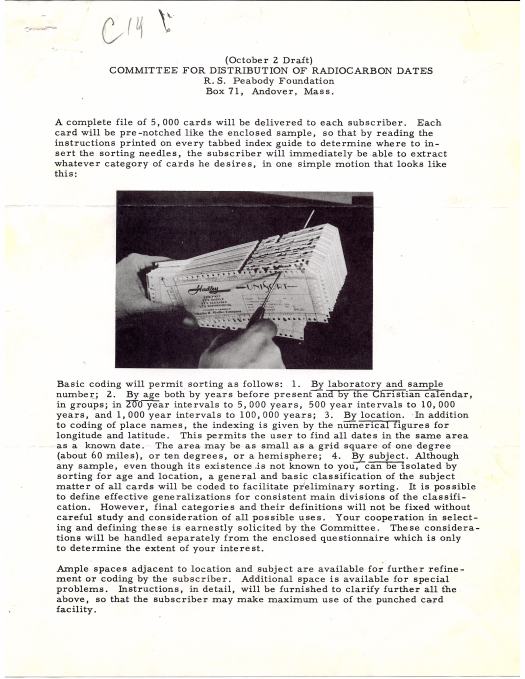
Committee for Distribution of Radiocarbon Dates informational page
Committee for Distribution of Radiocarbon Dates informational page accompanying survey
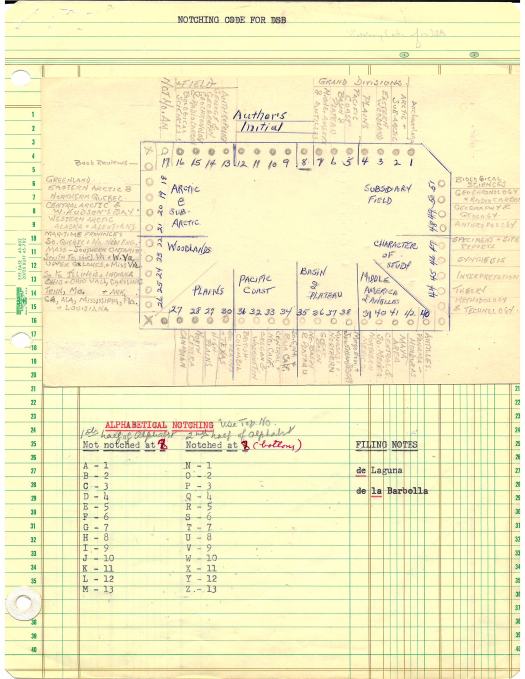
Mockup of radiocarbon dates punch cards

The cards were published and sent to subscribers in batches, along with sorting and coding equipment, and index guides. Each card contained information about a sample, such as its geographic location, its material (plant remains, oak, i.e.), where it was processed, its date, a citation if published, and occasionally a narrative description of where it was collected. This information was collected from the approximately forty laboratories carrying out this type of dating. Through the notches on the cards, using the sorter, subscribers could parse out samples having a common trait, like doing a search of records through a computer database with a particular term.

Punch cards were inspired by notched papers designed in the eighteenth century for looms, to help automate patterns in weaving.  By the late nineteenth century, the idea had been adapted to other uses. Herman Hollerith, working at the United States Census Bureau, applied his Electric Tabulating System invention to census data processing. This game-changing system led to the formation of IBM, and punch cards dominated data processing for most of the twentieth century, and were used with early computers until about a generation ago.

After the launch of Radiocarbon Dates Association, Inc., in the late 1950s, the production and distribution of the cards are not mentioned as much in the Peabody’s Annual Reports (my main source of information for this post!). A 1973 letter shows that the name had been shortened to Radiocarbon Dates, and that the main address had been moved to Braintree, MA, c/o John Ramsden. That is the last trace of the project that I’ve found here, besides the cards themselves. Fred Johnson donated his radiocarbon dating-related papers to the University of California, Los Angeles, where Willard Libby taught for a substantial amount of his career (and which hold his papers as well). More information about the project exists in those records, which were used by Keith Baich in his 2010 Portland State University master’s thesis, American Scientists, Americanist Archaeology: The Committee on Radioactive Carbon 14, which heavily features Fred Johnson.

Additional resources:

Finding aid for the Frederick Johnson Papers at UCLA: http://www.oac.cdlib.org/findaid/ark:/13030/kt296nc30m/entire_text/

Finding aid for the Willard F. Libby Papers at UCLA: http://www.oac.cdlib.org/findaid/ark:/13030/kt9j49q5hh/admin/#ref7

Baich, Keith David, “American Scientists, Americanist Archaeology: The Committee on Radioactive Carbon 14” (2010). Dissertations and Theses. Paper 168.
http://pdxscholar.library.pdx.edu/open_access_etds/168

Johnson, Frederick, et al. “Radiocarbon Dating: A Report on the Program to Aid in the Development of the Method of Dating.” Memoirs of the Society for American Archaeology, no. 8, 1951, pp. 1–65. JSTOR, JSTOR, www.jstor.org/stable/25146610.

Johnson, Frederick. “Radiocarbon Dating and Archeology in North America.” Science, vol. 155, no. 3759, 1967, pp. 165–169. JSTOR, JSTOR, www.jstor.org/stable/1721124.

The Temporary Archivist position is supported by a generous grant from the Oak River Foundation of Peoria, Ill. to improve the intellectual and physical control of the museum’s collections. We hope this gift will inspire others to support our work to better catalog, document, and make accessible the Peabody’s world-class collections of objects, photographs, and archival materials. If you would like information on how you can help please contact Peabody director Ryan Wheeler at rwheeler@andover.edu or 978 749 4493.

NAGPRA, Repatriation, and the Peabody

In 1990 President George H. W. Bush (Phillips Academy Class of 1942) signed into law the Native American Graves Protection and Repatriation Act (NAGPRA). The passage of NAGPRA signaled a major shift in the relationship between Native Americans and museums, requiring that the latter inventory collections and identify human remains, funerary objects, sacred objects, and objects of cultural patrimony and contact the appropriate tribal groups to arrange repatriation. For tribal peoples this represented major human rights legislation.

Former Peabody director James Bradley and repatriation coordinator Leah Rosenmeier embraced the new law and worked diligently through the 1990s and into the early 2000s to identify NAGPRA collections, to determine tribal affiliations, and to ensure timely repatriation. Much of the focus during this time was on human remains and associated funerary objects. Major consultations include those that involved Alfred V. Kidder’s excavations at Pecos Pueblo in the early twentieth century, Warren Moorehead’s excavations at the Etowah and Little Egypt sites in Georgia, and excavations at sites in Maine.

Today the Peabody continues its commitment to working with tribes and indigenous peoples to ensure that ancestral remains, funerary objects, sacred objects, and objects of cultural patrimony are repatriated in a respectful and timely fashion. Much work has been done and much remains to be done.

The Peabody supports the United Nations Declaration on the Rights of Indigenous Peoples and is committed to the repatriation provisions outlined in that document. The United Nations Declaration on the Rights of Indigenous Peoples explicitly affirms that indigenous people have a right to repatriation of ceremonial objects and human remains.

We look forward to hearing from the representatives of tribes in the United States or indigenous groups abroad to answer questions, to schedule visits to view collections, to receive guidance on care and storage of collections, or to begin the consultation process. We also are happy to discuss NAGPRA and repatriation with staff members from other institutions. Please contact Peabody director Ryan Wheeler (rwheeler@andover.edu or 978 749 4493) to begin a conversation today.

Homo naledi and 3D printing

Contributed by Ryan Wheeler

Since the announcement of Homo naledi’s discovery in 2015, this South African fossil hominin has made an appearance in the multidisciplinary science course Human Origins, taught at the Peabody and offered as a senior science elective by Phillips Academy.

Over 100 specimens of Homo naledi have been scanned and made available via Duke University’s MorphoSource website. This represents unprecedented access to the fossils. Typically, we rely on older casts (our plaster casts from Wenner-Gren’s twentieth century casting program have become quite fragile!) or models made from photos and measurements.

Image of Homo naledi hand from Morphosource website.
Reconstruction of Homo naledi hand from MorphoSource website.

Last year in Human Origins Phillips Academy Makerspace guru Claudia Wessner helped us 3D print Homo naledi’s femur, which includes some unusual features, including a distinct sulcus or furrow on the femoral neck that is not known in other hominins. Students and instructor alike puzzled over the femur, and compared it to other casts and models in the Peabody collection.

This year Ms. Wessner was kind enough to host us again and discuss different types of 3D scanning and printing and help us think how these might be useful in paleoanthropology and physical anthropology.

Image of students and Makerspace guru Claudia Wessner with 3D print of Homo naledi hand.
Human Origins students look on as Claudia Wessner prepares the resin print of Homo naledi’s hand for a bath in alcohol.

Instead of the femur, we chose to do a 3D print of Homo naledi’s hand, also available via the MorphoSource website. We were treated to side by side 3D prints using the Makerspace’s filament and resin printers. While the prints with the filament printer were interesting, the resin print is at a level comparable with a cast or model, in terms of finish and detail. Lee Berger and his colleagues, involved in discovery and study of Homo naledi, have pointed out that the hand is quite similar to that of a modern human, but also has curved bones likely related to tree climbing. Students in Human Origins 2017 got a chance to see Homo naledi’s hand up close and compare with bones of a modern human, noting the similarities and differences.

Image of resin 3D hand print.
Resin 3D hand print.

In the intervening months between the 2016 and 2017 Human Origins classes we’ve learned a lot more about Homo naledi. Lee Berger’s book, Almost Human, was published, adding lots of exciting details to the discovery and quest to date the remains, and perhaps most important, we now understand the dating of the fossils. In May 2017 we learned that Homo naledi dates between 236,000 and 335,000 years ago, making them a cousin, rather than great-grandparent of modern humans. It is fascinating to imagine, however, that a hominin that combined aspects of Australopithecines and much more modern features existed around the same time as the earliest anatomically modern humans.

Image with comparison of four hands: from upper left, clockwise: 3D resin print of Homo naledi; plastic anatomical model, modern human; 3D filament print, Homo naledi; real bone anatomical model, modern human.
Comparison of hands, from upper left, clockwise: 3D resin print of Homo naledi; plastic anatomical model, modern human; 3D filament print, Homo naledi; real bone anatomical model, modern human.

An end of the term assignment, Human Origins in the News, asks students to find recent and relevant news stories and share them with the class. One story—from September 2017—reports on new fossils found at the Rising Star Cave system. Also members of the new genus and species, these fossils may help understand how Homo naledi accessed the cave and if they were being interred there.

Beyond the classroom, Homo naledi inspired some excitement in one of the seniors who took the course in 2016. I was delighted when she wrote to me in May 2017 to report that Lee Berger’s Almost Human book was out–she had pre-ordered on Amazon and her copy had arrived. A few months later she had a chance to hear Dr Berger deliver a lecture on Homo naledi at the Chautauqua Institute in New York.

A Day in the Life of Boxing Boxes

Contributed by Rachel Manning

Hi, my name is Rachel and I was hired in August as the Inventory Specialist at the Robert S. Peabody Institute of Archaeology. I am originally from upstate New York although for part of 2016 and the majority of 2017 I did work primarily in Virginia. For my first blog post I wanted to give a brief overview of my daily activities.

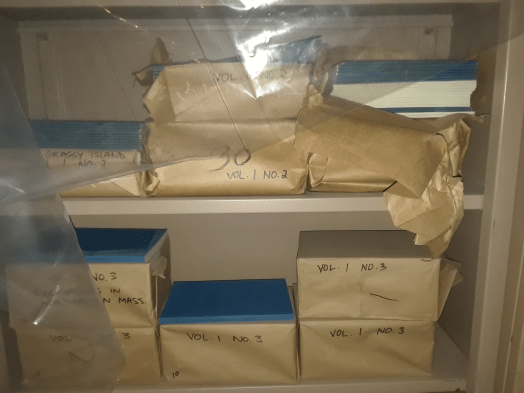
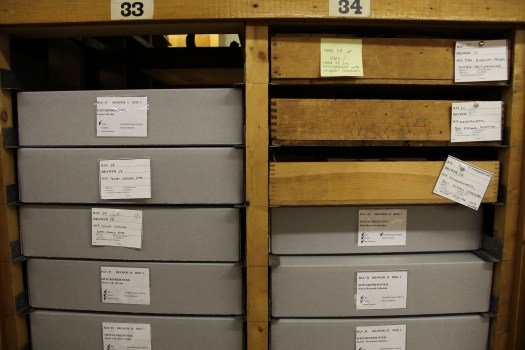
The main goal of the project I was hired to do is to conduct a complete inventory and rehousing of the collections at the Peabody. This is a task that has never been done before. Currently, the majority of the collections are housed in the wooden drawers that were brought into the Peabody in the 1930s. In each drawer, collections objects are housed in tan artifact boxes.

This is an example of what drawers look like before I work on them. All of these brown boxes hold artifacts.

Every day I take the objects out of the tan box and record information about them such as what the object is, what its catalog number is, how many there are and their current location. I then record all of this information into a Microsoft Excel spreadsheet, put the objects back into their tan box and put them into the new gray (or blue, depending on who is asked) archival box. Currently I am working on drawers containing collections from Massachusetts.

These artifacts have been rehoused and placed in a gray archival box rather than the original wooden drawer.

This type of work is something I have done since 2013 when I was a graduate student at SUNY Albany. It is work that I genuinely enjoy doing, which makes getting up in the morning and coming to the Peabody a whole lot easier. It is always amazing to handle various collections. Doing so has helped me to learn so much more than I ever thought I could about material culture from all over the United States. I know working at the Peabody will help push that knowledge even further. It’s such a great experience to be able to work on a collection from Massachusetts one day, then move to a collection from Ohio or Indiana or even the Yukon the next day.

The Inventory Specialist position is supported by a generous grant from the Oak River Foundation of Peoria, Ill. to improve the intellectual and physical control of the institute’s collections. We hope this gift will inspire others to support our work to better catalog, document, and make accessible the Peabody’s world-class collections of objects, photographs, and archival materials. If you would like information on how you can help please contact Peabody director Ryan Wheeler at rwheeler@andover.edu or 978 749 4493.

Robert S. Peabody Institute of Archaeology

Contributed by Ryan Wheeler

The Peabody has a new name! The Phillips Academy Board of Trustees, at their November 5, 2017 meeting, approved the Peabody’s new name. We are now known as the Robert S. Peabody Institute of Archaeology. Part of our proposal for a name change–included below–addresses the history of our institution’s name, issues of identity, and practical concerns:

Throughout the Peabody’s strategic planning work in 2014 and 2015 there was frequent discussion about the need for focused work on branding. These conversations included Museum personnel, members of the Peabody Advisory Committee, and the broader Phillips Academy community. There was general agreement that one issue was the name Robert S. Peabody Museum of Archaeology. Discussants pointed out that the name “Peabody” often leads to confusion with the other, larger institutions in Salem, Cambridge, and New Haven, and that the term “museum” is misleading.

The topic of branding was revisited during the Peabody Advisory Committee’s 2016 summer retreat and November 2016 meeting and the group proposed a name change.

Department of Archaeology engraved on entablature over door of Peabody building.
“Department of Archaeology” engraved in the granite entablature above the door was part of architect Guy Lowell’s original 1901 building design and reflects Robert S. Peabody’s interest in seeing the institution as an integral part of campus pedagogy.

The topic of a potential name change has been considered in three ways:

1) Historical— Past names for our institution include Department of Archaeology (1901-1938); Robert S. Peabody Foundation for Archaeology (1938-1995); and Robert S. Peabody Museum of Archaeology (1990-present). The most recent name change occurred in the 1990s and was made to reflect the interest in creating an exhibition driven institution like the Addison Gallery of American Art. That program ended in 2002 with a shift to our current focus on teaching and learning.

Image of old Peabody logo, on glass panel, from front door.
The logo from the Peabody’s front doors is based on a shell gorget from the Etowah site in Georgia.

2) Identity—Museum personnel and advisory committee members have discussed whether or not we are a museum. For example, Eugene Dillenberg’s 2011 article in Exhibitionist emphasizes exhibitions as the core defining aspect of a museum, with exhibits as the primary mission and goal of the institution. The Peabody’s current mission is to provide archaeological and anthropological learning opportunities to the students of Phillips Academy, returning to Robert Peabody’s original vision for the institution, which was to introduce students to the emerging disciplines of archaeology and anthropology, to conduct scientific research, and to provide a place for student activities. There also was general agreement that it was important to retain the name “Peabody,” despite the proliferation of Peabody museums in New England. The sense was that we would continue to be called “The Peabody” on campus and in the broader Phillips Academy community.

Other “Peabody Museums” in New England include:

Peabody Essex Museum in Salem, MA.

Yale Peabody Museum of Natural History, New Haven, CT.

Peabody Museum of Archaeology & Ethnology at Harvard University, Cambridge, MA

Image of blue sign for the Robert S. Peabody Museum of Archaeology on Andover's Main Street.
Blue sign for the Robert S. Peabody Museum of Archaeology on Andover’s Main Street.

3) Practical—the word “museum” creates considerable confusion as people come here expecting a more typical museum experience. While we are happy to have people come for tours and events (and classes, of course!) we are a pretty disappointing experience to a growing number of casual visitors. As we become more well-known in the area more people have become curious about what is inside the building and come in to find out.

In his gift letter to the Board of Trustees and the Academy administrators in 1901 Robert S. Peabody shared that he did not want to create a museum on campus, but rather to find ways to introduce students to the fields of archaeology and anthropology. We’ve come to recognize the prescience and vision of Peabody’s original idea for our institution. We trust the name change will help avoid confusion and emphasize our commitment to teaching and learning on campus and beyond.