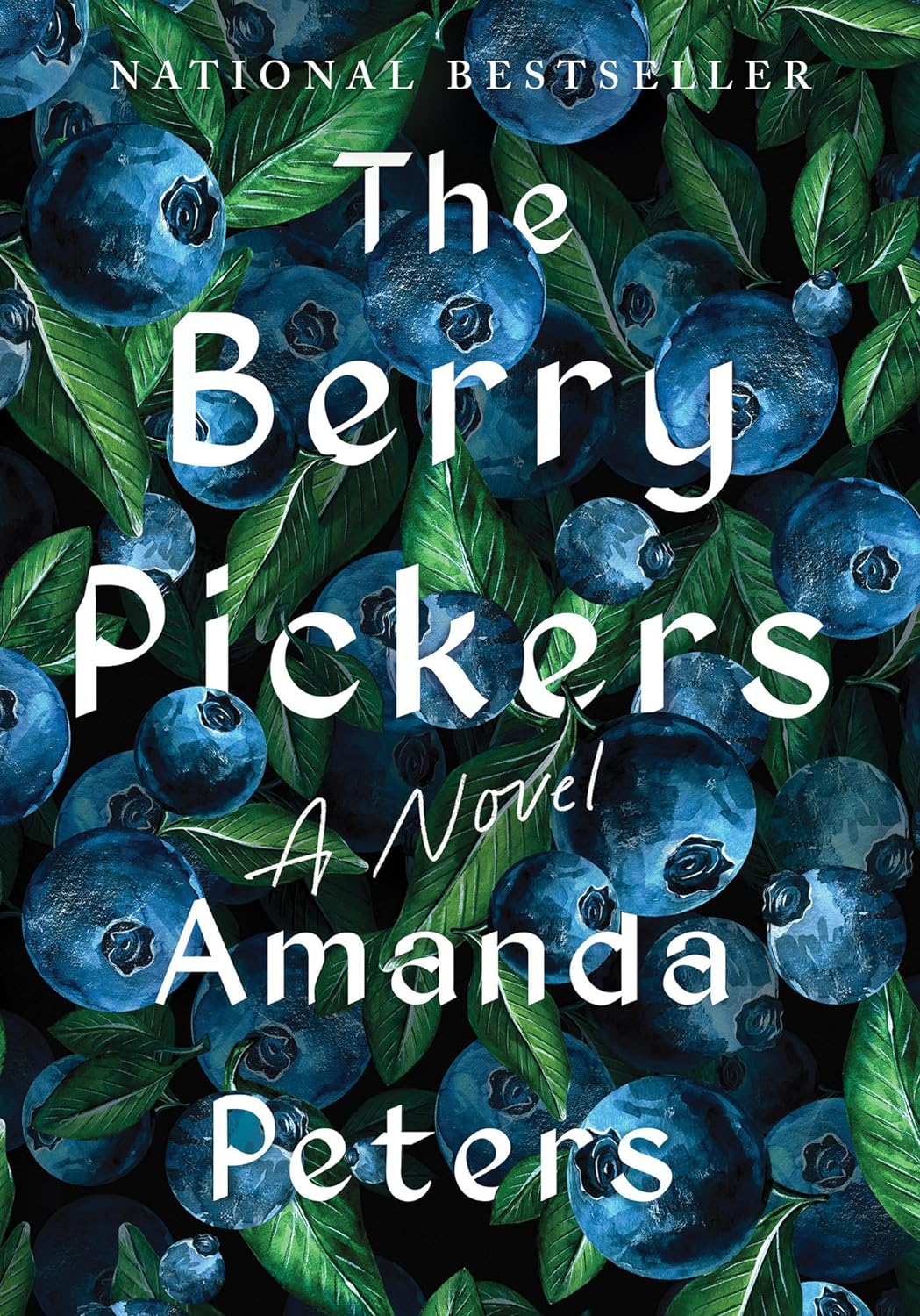
A four-year-old Mi’kmaq girl goes missing from the blueberry fields of Maine, sparking a tragic mystery that haunts the survivors, unravels a community, and remains unsolved for nearly fifty years.
The Berry Pickers is a heartbreaking, riveting tale of Indigenous family separation. We follow an Indigenous Mi’kmaq family in Nova Scotia who travels every summer to Maine to pick blueberries as migrant workers. In the summer of 1962, 4-year-old Ruthie, the youngest of the family’s five children, disappears from the fields. The last to see her is the second youngest, 6-year-old Joe, who takes the loss especially hard and carries his guilt in the years to come.
The book is told through two alternating character perspectives – one being Ruthie’s brother Joe and the second being a young girl named Norma. Growing up in Maine as the only child of affluent and overprotective parents, Norma, struggles to find the truth behind her recurring dreams and visions (that seem more like memories than imagination). As time and secrets unfold, these two storylines ultimately converge.
This is a treasure of a book – filled with loss and sadness yet manages to be hopeful as well. Amanda Peters (Mi’kmaq, Glooscap First Nation) has a lot of empathy for her characters and gently invites readers to examine the affects of intergenerational trauma, racist residential institutions, and the specific ways Indigenous families were treated – in a deeply personal way.
This story is both powerful and moving. Although told quietly, it did not take away from its impact.
Next on my list to read is Amanda Peter’s newest book, Waiting for the Long Night Moon: Stories. This is her debut collection of short fiction that describes Indigenous experiences across time and space – from contact with European settlers, to the forced removal of Indigenous children, to the present-day fight for the right to clean water.
The book will be available August 2024 in Canada and January 2024 in the U.S.
As summer approaches and we begin to wind down from the end of another school year, we could all use a good book (or podcast) to help us relax and escape our busy lives. We’ve rounded up our staff’s “Peabody Picks” for summer and hope one of these recommendations may accompany you to the beach, on your next trip, or at home on the couch. We hope you all enjoy your summer!
Happy reading (and listening)!
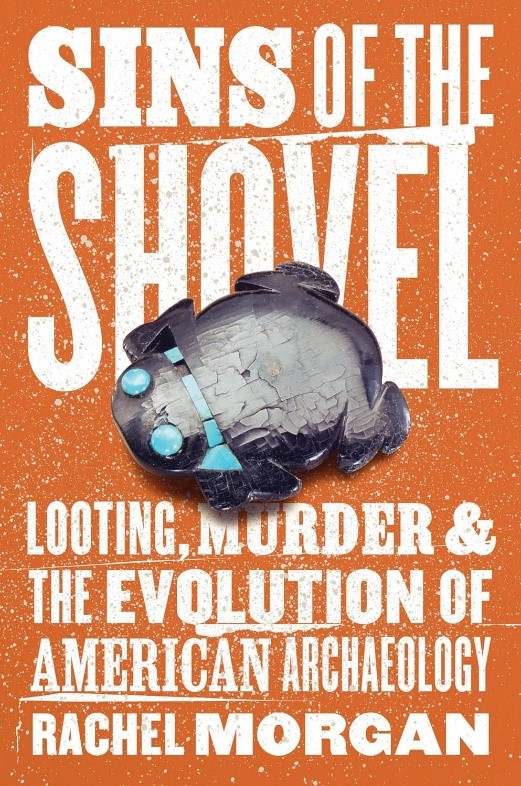
Ryan Wheeler, Director – Sins of the Shovel: Looting, Murder, and the Evolution of American Archaeology by Rachel Morgan
American archaeology was forever scarred by an 1893 business proposition between cowboy-turned-excavator Richard Wetherill and socialites-turned-antiquarians Fred and Talbot Hyde. Wetherill had stumbled upon Mesa Verde’s spectacular cliff dwellings and started selling artifacts, but with the Hydes’ money behind him, well—there’s no telling what they might discover. Thus begins the Hyde Exploring Expedition, a nine-year venture into Utah’s Grand Gulch and New Mexico’s Chaco Canyon that—coupled with other less-restrained looters—so devastates Indigenous cultural sites across the American Southwest that Congress passes first-of-their-kind regulations to stop the carnage. As the money dries up, tensions rise, and a once-profitable enterprise disintegrates, setting the stage for a tragic murder.
Sins of the Shovel is a story of adventure and business gone wrong and how archaeologists today grapple with this complex heritage. Through the story of the Hyde Exploring Expedition, practicing archaeologist Rachel Morgan uncovers the uncomfortable links between commodity culture, contemporary ethics, and the broader political forces that perpetuate destructive behavior today. The result is an unsparing and even-handed assessment of American archaeology’s sins, past and present, and how the field is working toward atonement.
“An incisive history of early American archaeology—from reckless looting to professional science—and the field’s unfinished efforts to make amends today, told “with passion, indignation, and a dash of suspense.” –New York Times
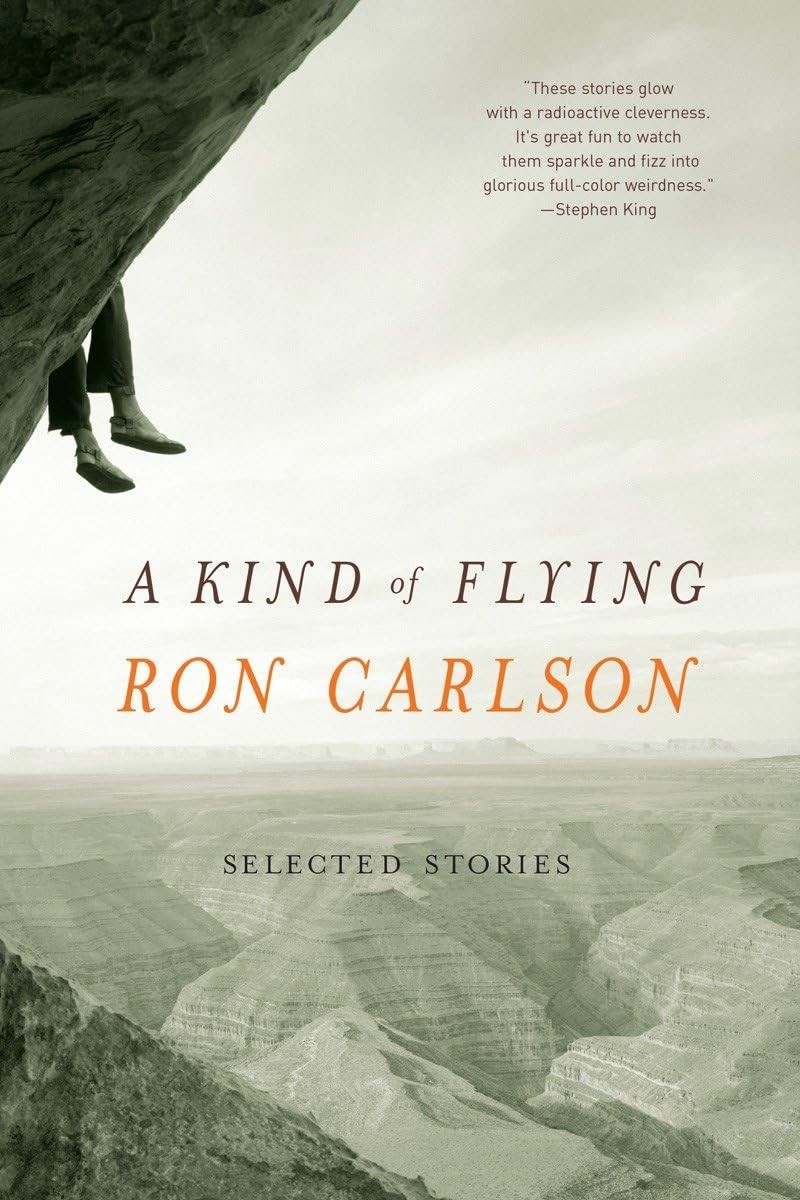
Richard Davis, Peabody Volunteer – A Kind of Flying: Selected Stories by Ron Carlson
Ron Carlson’s stories, sometimes wicked or bittersweet, often zany, are rich with a hard-earned hopefulness frequently absent in contemporary fiction. In this generous gathering from collections no longer available, longtime fans and new readers alike can savor the development of a master of idiosyncrasy.
Properly celebrated for his range, Carlson offers us a rural sheriff who’s wary of UFOs (“Phenomena”), a lawyer on a mission in remote Alaska (“Blazo”), a baseball player turned killer-by-accident (“Zanduce at Second”), and a man accusing Bigfoot of stealing his wife, followed by Bigfoot’s incomparable response.
.“These stories are full of surprises, jolts, and lightning strikes of recognition. Do yourself a favor and read Ron Carlson.” –Stephen King
John Bergman-McCool, Collections Coordinator – Podcasts: Handsome and Throughline from NPR
Handsome is a podcast from comedians Tig Notaro, Fortune Feimster, and Mae Martin. Every week, the handsome hosts field a question from a friend and attempt to answer it together, covering every subject you could think of. Along the way, Tig, Fortune, and Mae tell plenty of stories and just generally have a ridiculous time.
Throughlineis a time machine. Each episode, we travel beyond the headlines to answer the question, “How did we get here?” We use sound and stories to bring history to life and put you into the middle of it. From ancient civilizations to forgotten figures, we take you directly to the moments that shaped our world. Throughline is hosted by Peabody Award-winning journalists Rund Abdelfatah and Ramtin Arablouei.
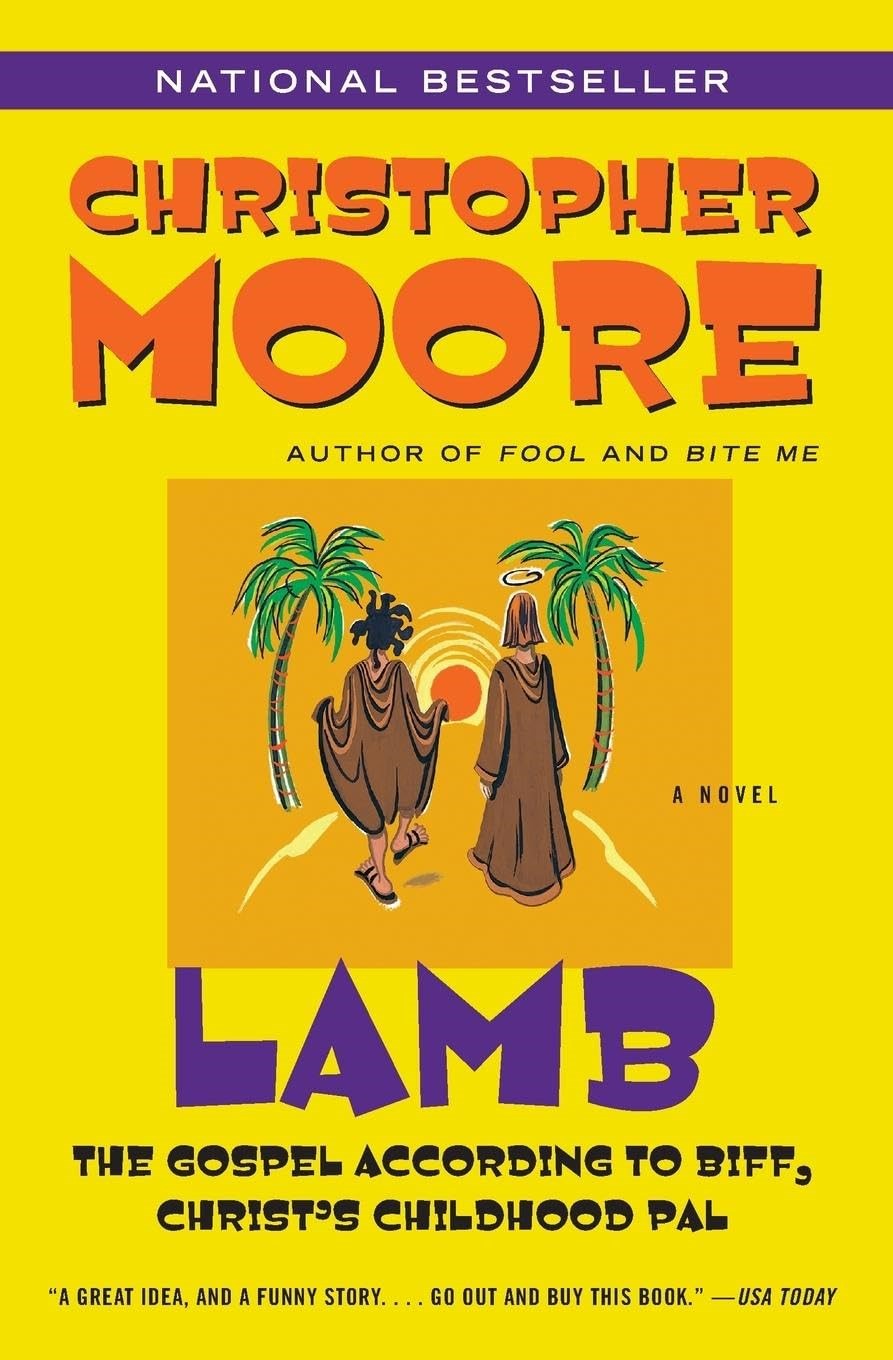
Marla Taylor, Curator of Collections – Lamb: The Gospel According to Biff, Christ’s Childhood Pal by Christopher Moore
Marla – Sometimes I like to revisit favorite books that I have read in the past. Lamb by Christopher Moore is one of those books for me. The full title is Lamb: The Gospel According to Biff, Christ’s Childhood Pal.
Moore tells the story of a very human Joshua (Jesus) and his best friend/protector, Biff, as they explore their world and learn about themselves. Joshua can’t sin, so Biff has to do it all for him with some delightful and unexpected encounters. This book is irreverent and hilarious – it makes me laugh every time.
But Lamb is also so much more than that. It is a deeply sentimental story about friendship, an exploration of faith, and something that has stuck with me over the years. I really enjoy reading it periodically and hope you find the time to read it as well.
“An instant classic…terrific, funny, and poignant.” –Rocky Mountain News
Emma Lavoie, Administrative Assistant – The Only One Left by Riley Sager
At seventeen, Lenora Hope, Hung her sister with a rope – Now reduced to a schoolyard chant, the Hope family murders shocked the Maine coast one bloody night in 1929. While most people assume seventeen-year-old Lenora was responsible, the police were never able to prove it. Other than her denial after the killings, she has never spoken publicly about that night, nor has she set foot outside Hope’s End, the cliffside mansion where the massacre occurred.
Stabbed her father with a knife, Took her mother’s happy life – It’s now 1983, and home-health aide Kit McDeere arrives at a decaying Hope’s End to care for Lenora after her previous nurse fled in the middle of the night. In her seventies and confined to a wheelchair, Lenora was rendered mute by a series of strokes and can only communicate with Kit by tapping out sentences on an old typewriter. One night, Lenora uses it to make a tantalizing offer—I want to tell you everything. “It wasn’t me,” Lenora said, But she’s the only one not dead.
“Propulsive … a dizzying Gothic whodunit.” –New York Times Book Review
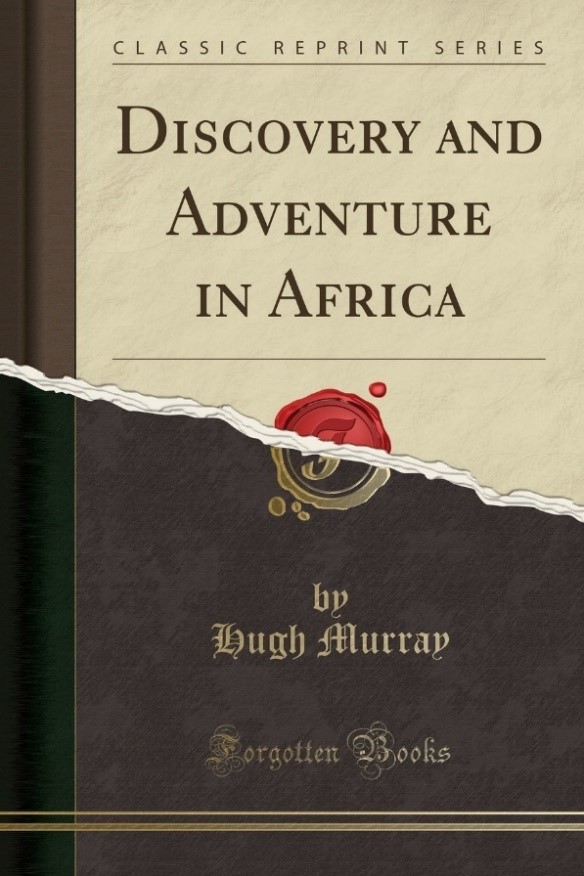
Michael Agostino, Peabody Volunteer – Discovery and Adventure in Africa by James Wilson Jameson and Hugh Murray
Mike – I like old books. Really old books. Old books which have sat on shelves for many years, sometimes read cover to cover, sometimes ignored and gathering dust. Passed down, sold, and exchanged, they end up in a bookstore that I manage to find while on vacation. I have been lucky enough to come across science books published in the late 1800’s and own four Darwins from that time period. No, these are not first edition collector’s items valued at thousands of dollars. I believe the most I ever spent was $30! They must be in good shape for me to buy them, but often show their age. I don’t mind these flaws as it adds to the character I am seeking.
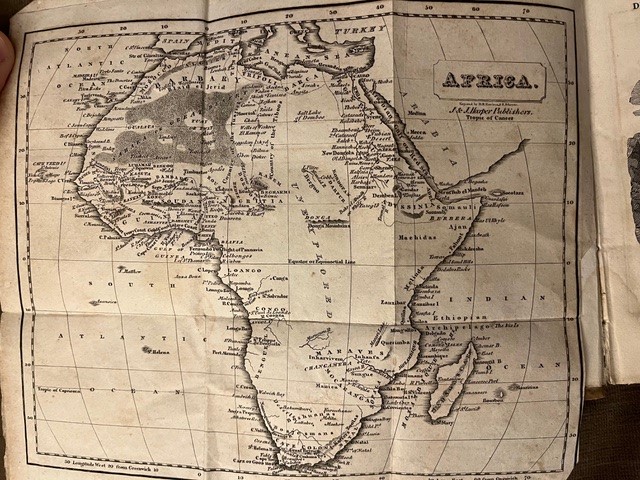
One year I purchased a very old book, “Discovery and Adventure in Africa,” printed in 1832. According to the writing inside the jacket, I spent $5. It is very fragile, yellow with age, and I must be careful when I open it and turn the pages. But what a find! It is number 16 of a 71 book series called “Harper’s Family Library.” It is written by two men who appear to be professors of history and they are recounting the travels and discovery of other Europeans in Africa. It contains a number of illustrations (“engravings”) which try to capture what the explorers are seeing. The real gem of the book is a 9” x 8” fold-out map of Africa. This map reflects the European knowledge of that era as numerous features appear on the edges of the continent but much of the interior is blank.
This 4” by 6” book is a tough read as the text is tiny. But the style is very colorful, common in old writing. Explorers and their teams died frequently in their travels. In this case, almost every explorer came down with high fevers and were ill for weeks. But many recovered to continue months of travel marked with deteriorating resources and energy. They were met by kindness, distrust, help, violence, and puzzlement. The people they met varied in apparent wealth. Many led simple lives while others were the local kings and queens. Some villages contained dozens of inhabitants, while cities had populations in the thousands. Since the descriptions are second and even third-hand, it is hard to decide how accurate the accounts are. But even with that in mind, the window back in time is still interesting and I am enjoying reading about the various cultures the explorers encountered.
Given its age, I was lucky to find this book on a store shelf. But you can find it for sale on the web as you can for almost anything. For me, the hunt continues and if I’m lucky I will find another volume of this great series of books.
“This work has been selected by scholars as being culturally important, and is part of the knowledge base of civilization as we know it.” –Wentworth Press
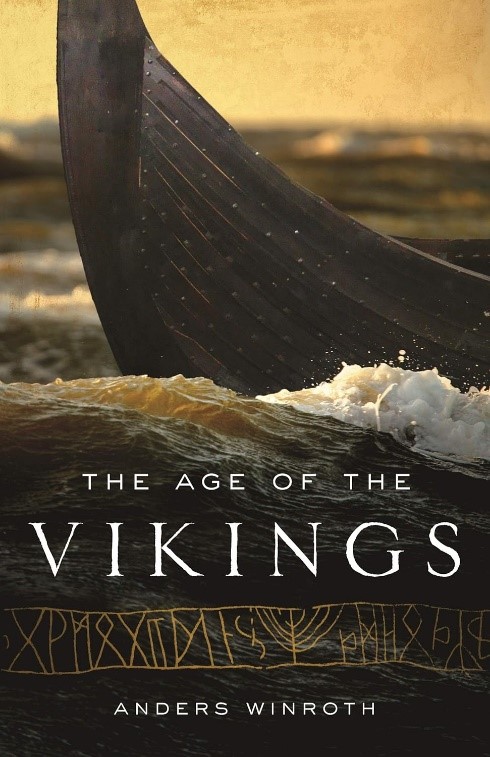
Nick Andrusin, Temporary Educator and Collections Assistant – The Age of the Vikings by Anders Winroth
The Vikings maintain their grip on our imagination, but their image is too often distorted by myth. It is true that they pillaged, looted, and enslaved. But they also settled peacefully and traveled far from their homelands in swift and sturdy ships to explore. The Age of the Vikings tells the full story of this exciting period in history. Drawing on a wealth of written, visual, and archaeological evidence, Anders Winroth captures the innovation and pure daring of the Vikings without glossing over their destructive heritage. He not only explains the Viking attacks, but also looks at Viking endeavors in commerce, politics, discovery, and colonization, and reveals how Viking arts, literature, and religious thought evolved in ways unequaled in the rest of Europe. The Age of the Vikings sheds new light on the complex society, culture, and legacy of these legendary seafarers.
“[Winroth] has an impressive knowledge of the sources, the archaeology, and the modern historical literature. . . . Winroth really knows what he is writing about, and has done the research. . . . I recommend the work to anyone with little knowledge of the subject and a wish to learn more.”–New York Review of Books
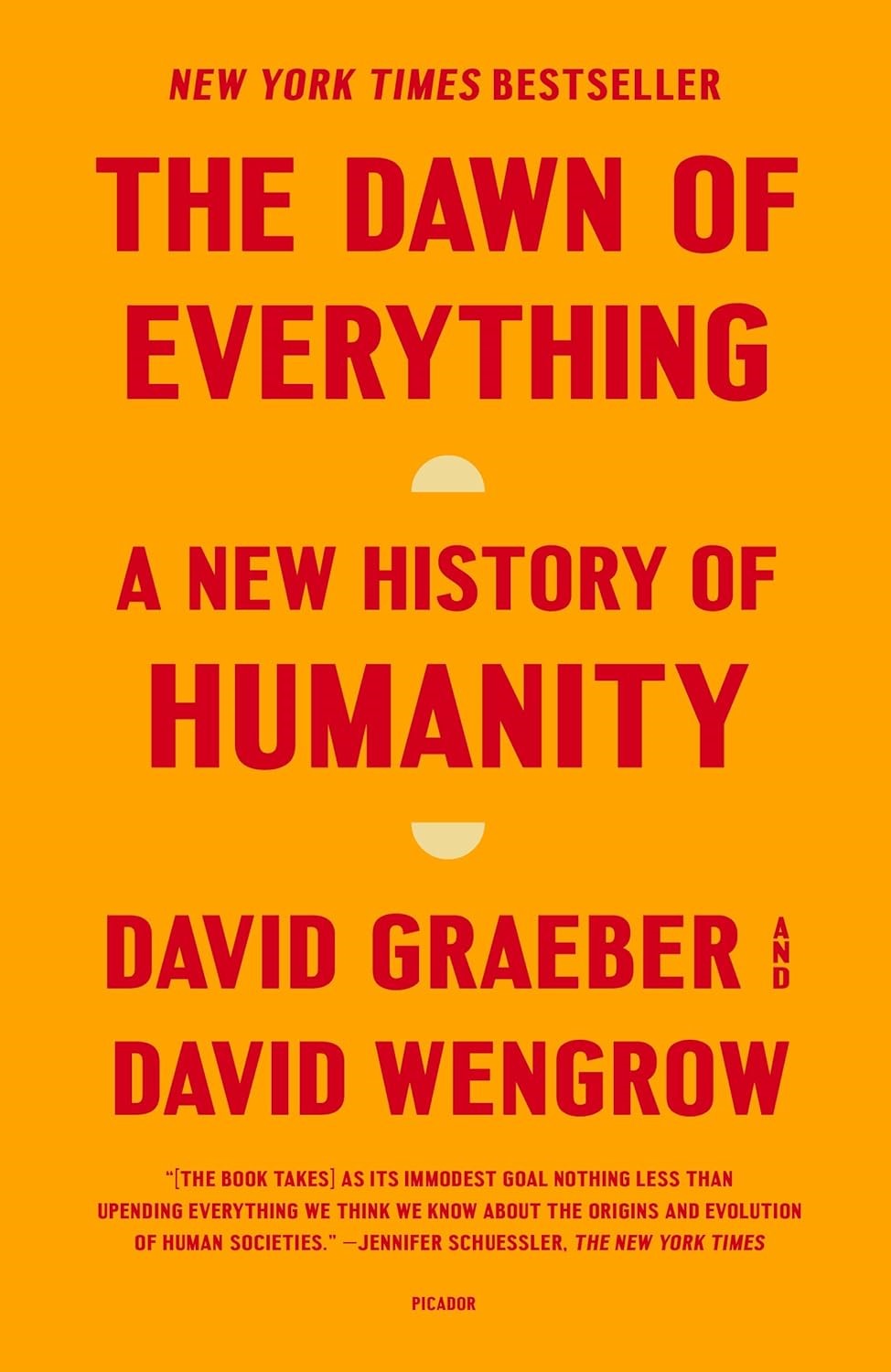
Cyrus Marion, Curatorial Assistant – The Dawn of Everything: A New History of Humanity by David Graeber and David Wengrow
A dramatically new understanding of human history, challenging our most fundamental assumptions about social evolution―from the development of agriculture and cities to the origins of the state, democracy, and inequality―and revealing new possibilities for human emancipation.
Drawing on pathbreaking research in archaeology and anthropology, Graeber and Wengrow reveal how history becomes a far more interesting place once we learn to throw off our conceptual blinders and perceive what’s really there. If humans did not spend 95 percent of their evolutionary past in tiny bands of hunter-gatherers, what were they doing during all that time? If agriculture and cities did not mean a plunge into hierarchy and domination, then what kinds of social and economic organizations did they lead to? The answers are often unexpected, and suggest that the course of human history may be less set in stone, and more open to playful, hopeful possibilities, than we tend to assume.
Cyrus – Pay special attention to those footnotes! You do not want to pass those up in your reading.
“[The book takes] as its immodest goal nothing less than upending everything we think we know about the origins and evolution of human societies.” –The New York Times
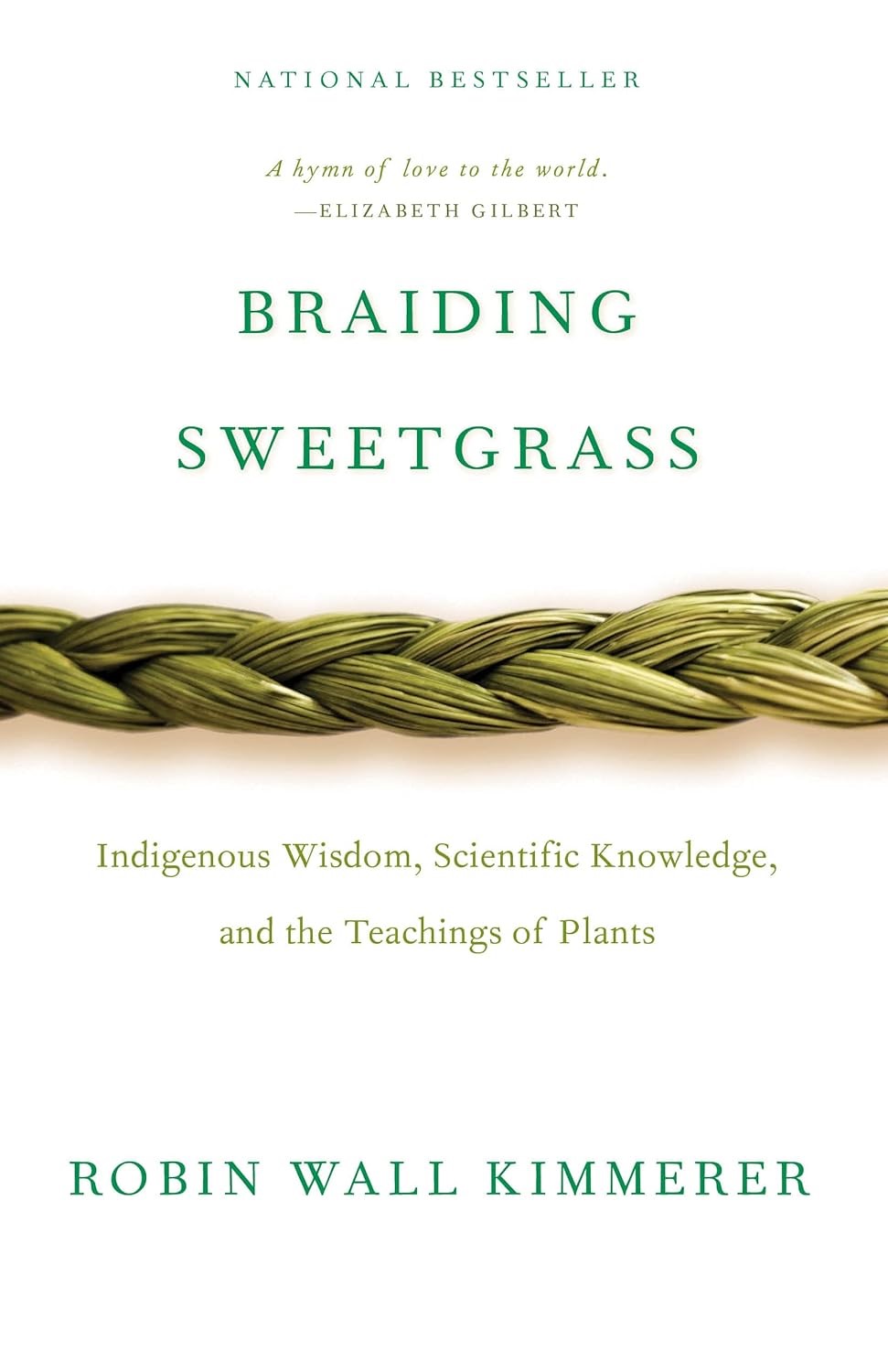
Kyra Smith, Curatorial Assistant – Braiding Sweetgrass: Indigenous Wisdom, Scientific Knowledge, and the Teachings of Plants by Robin Wall Kimmerer
As a botanist, Robin Wall Kimmerer has been trained to ask questions of nature with the tools of science. As a member of the Citizen Potawatomi Nation, she embraces the notion that plants and animals are our oldest teachers. Drawing on her life as an indigenous scientist, and as a woman, Kimmerer shows how other living beings―asters and goldenrod, strawberries and squash, salamanders, algae, and sweetgrass―offer us gifts and lessons, even if we’ve forgotten how to hear their voices. In reflections that range from the creation of Turtle Island to the forces that threaten its flourishing today, she circles toward a central argument: that the awakening of ecological consciousness requires the acknowledgment and celebration of our reciprocal relationship with the rest of the living world. For only when we can hear the languages of other beings will we be capable of understanding the generosity of the earth, and learn to give our own gifts in return.
“Robin Wall Kimmerer has written an extraordinary book, showing how the factual, objective approach of science can be enriched by the ancient knowledge of the indigenous people. It is the way she captures beauty that I love the most—the images of giant cedars and wild strawberries, a forest in the rain and a meadow of fragrant sweetgrass will stay with you long after you read the last page” –Jane Goodall
Additional reading recommendations from our Peabody Staff
May is National Pet Month, a time to celebrate how important our pets are! Whether they are just being their playful selves or providing assistance in various ways, pets contribute so much love in people’s lives. They also make our social media that much more entertaining.
This month we’d like to introduce some more Peabody Pets! Amongst these new faces, you may see some familiar furry friends from our first Peabody Pets blog here!
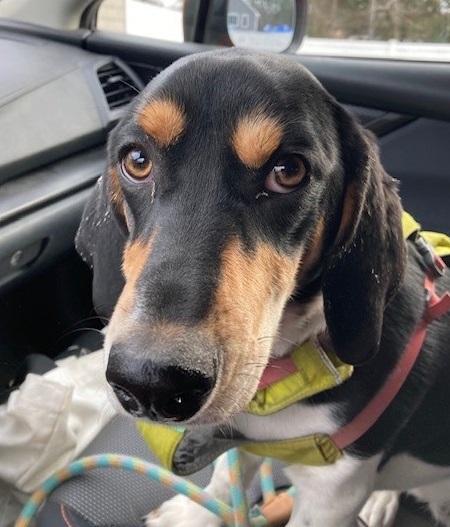
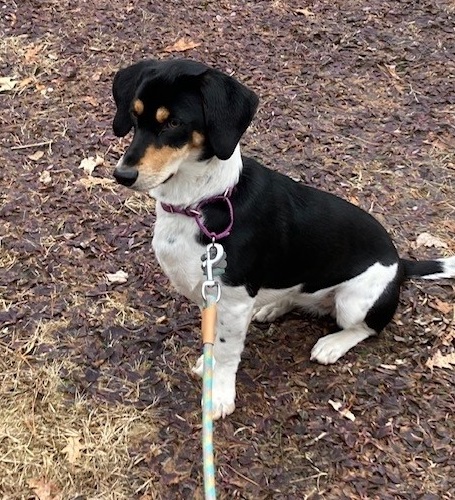
Meet Opal
Opal is a beagle/basset hound mix that was rescued from Oklahoma. She was a puppy when she came to Peabody curator of collections Marla Taylor’s family just about a year ago and they decided her birthday is February 14th. Opal was named by Marla’s sons – they came up with the name completely on their own and it won the family vote. Opal loves her boys!
Opal’s favorite foods are broccoli, carrots, and salami. She LOVES chasing the ball in the backyard but hasn’t figured out that she needs to bring it back to have it thrown again. She also loves trying to play soccer with the boys (but she uses her mouth). Opal does not hesitate to climb onto your lap when she wants some attention.
Meet Sophie and Elle
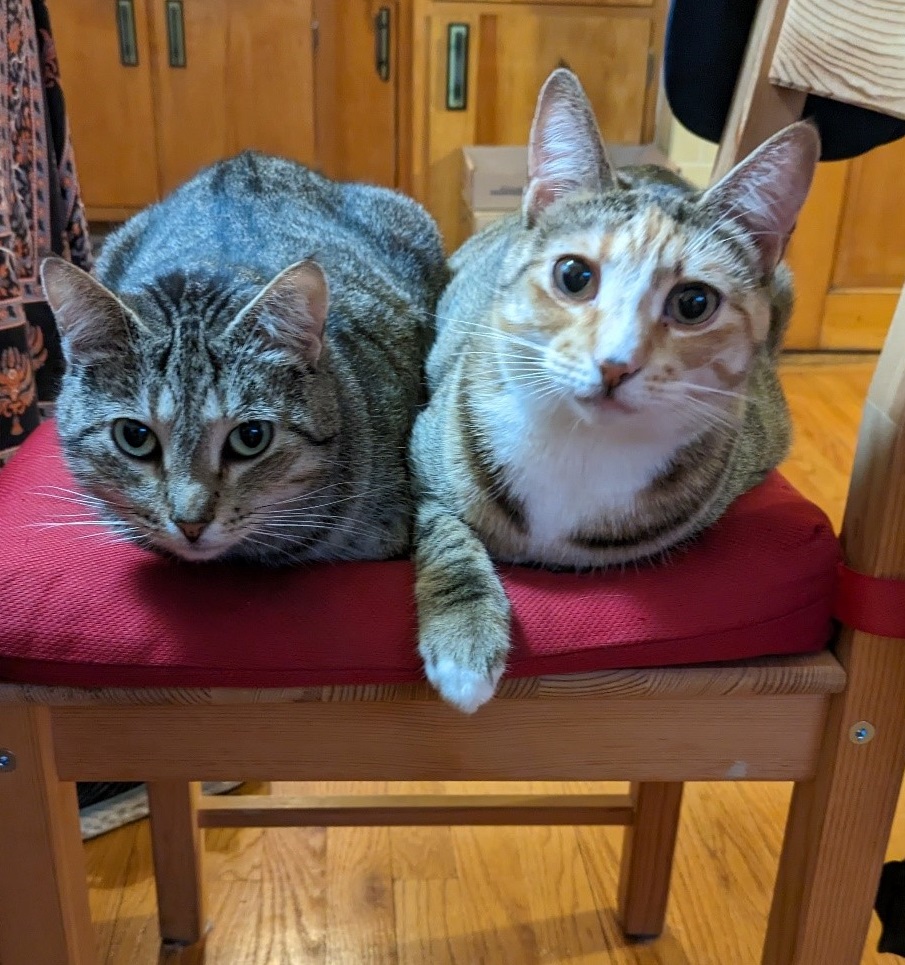
Sophie and her daughter Elle are the newest additions to Peabody director Ryan Wheeler’s family. Sophie (also known as Baby Cat, Baby Momma Cat, Clio, Buttons, etc.) was part of a feral cat colony in Fort Lauderdale, where she befriended Ryan in 2021. She was ultimately rescued by the organization Love for Cats in 2022 and was soon joined by her kitten Elle (named for Millie Bobby Brown’s character Eleven from Stranger Things).
In July 2022, Ryan traveled to Florida to bring Sophie and Elle back to Massachusetts. Despite being feral, Sophie enjoys sitting with her humans, interacting with her dog friend Scotty, and, occasionally, snuggling with her daughter. Elle is now two years old and the biggest cat at Ryan’s home. She enjoys being goofy, watching television, and playing with her toys.
Meet Batson
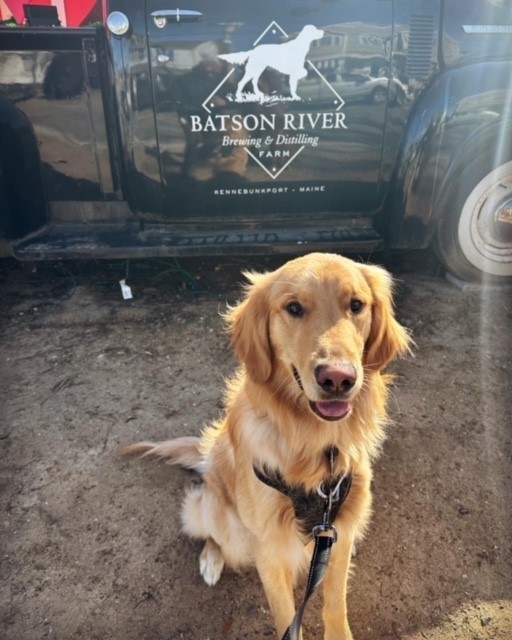
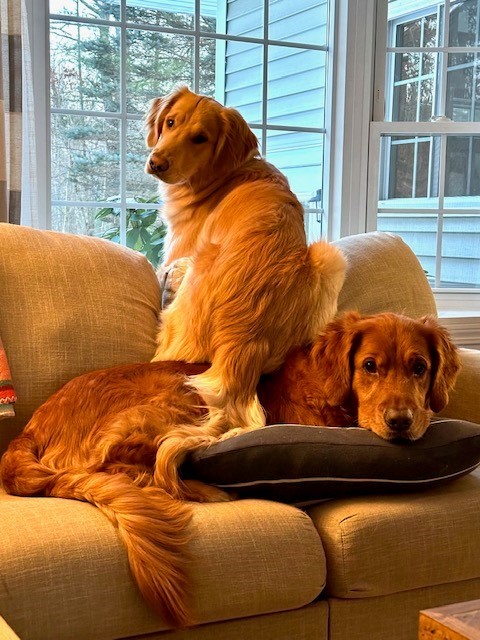
Batson is a 1-year old golden retriever whose birthday was just last month! He is the second fur child to Peabody administrative assistant Emma Lavoie and her family. Batson gets his name from the Batson River that flows through Kennebunkport, Maine. The towns of Wells and Kennebunkport, Maine are very dear to Emma’s family, as her family has spent summers there since she was a child. Batson’s namesake is also dedicated to the Batson River Brewing & Distilling Company, a local favorite in Maine!
Batson’s favorite activities are swimming, running on the beach (and into the ocean), looking out the window, giving hugs, wrestling or sitting on his brother, and looking at himself in a mirror (we’re still figuring that one out). His favorite foods are peanut butter, green beans, carrots, and his meatball and jerky treats. You may recognize Batson’s brother, Rourke, from our previous pet blog. Rourke is now 5 years old and loves having a little brother… most of the time. Rourke got his name from Emma’s old family Irish name O’Rourke (meaning Red Hero). Emma found the family crest during her visit to Ireland in the fall!
Meet Baz
Remember Baz from our previous blog? He’s now 17 years old! Baz has been a long-time member of Peabody collections coordinator John Bergman-McCool’s family. He will follow you around the house for hours waiting for the moment you sit down. Then, he claims his spot in your lap. The remaining time is spent sleeping on your pillow. He loves cucurbits of all kinds and playing fetch.
Meet Scotty
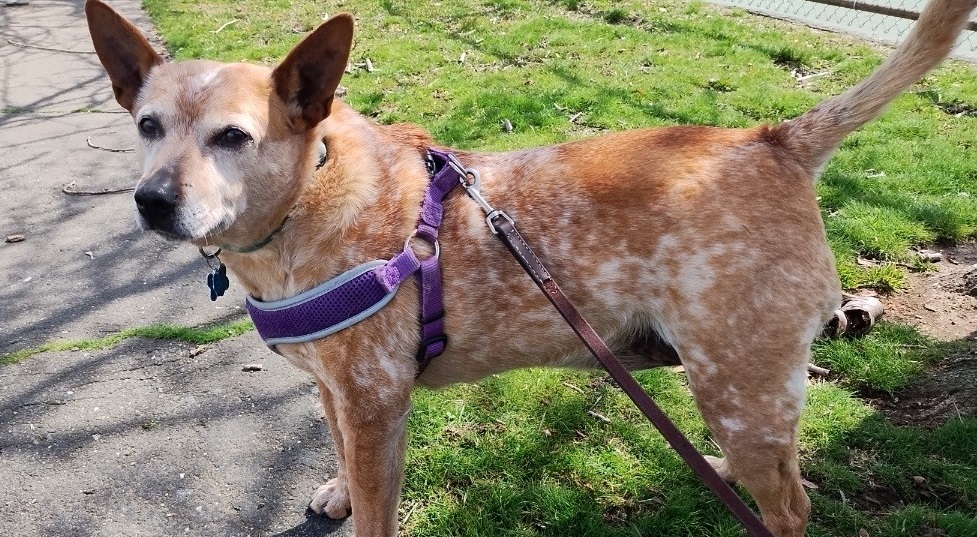
Recognize Scotty from our previous blog? Scotty MacLeish is an Australian cattle dog mix who joined Peabody director Ryan Wheeler’s family in fall 2016. He was about a year old at that time, a rescue from Tennessee. Scotty soon made an appearance in Ryan’s Human Origins course, where he helped facilitate conversations about dog domestication (being part dingo!).
Scotty enjoys hanging around with his cat friends, but doesn’t enjoy rainy or cold weather. His name is a tribute to Richard “Scotty” MacNeish, fifth director of the Robert S. Peabody Institute of Archaeology and super star archaeologist of plant domestication.
Meet Dexter
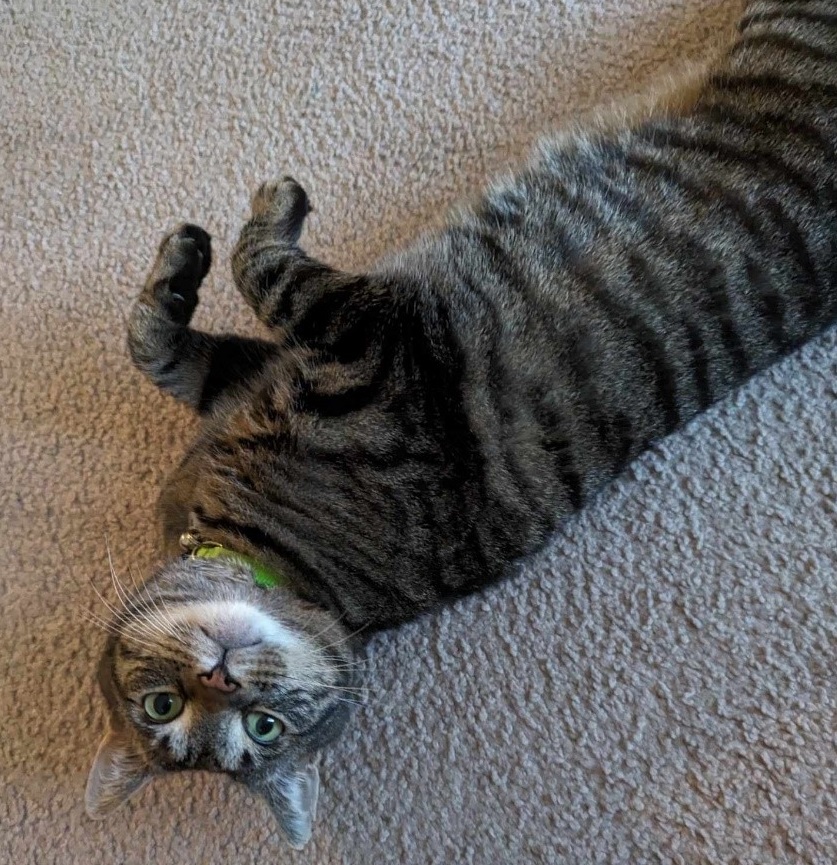
This is Dexter! He is a 6 year old Tabby cat. He was adopted from the pet adoption center in Irondequoit, NY, joining Peabody temporary educator and collections assistant, Nick Andrusin’s family back in 2019. His new family did not pick his name. Instead, they chose to keep his original name, Dexter, as he already knew and answered to it before adoption.
His favorite activities include rough housing, staring at birds, and sitting on an open lap for as long as possible. He loves cream cheese and deli meats.
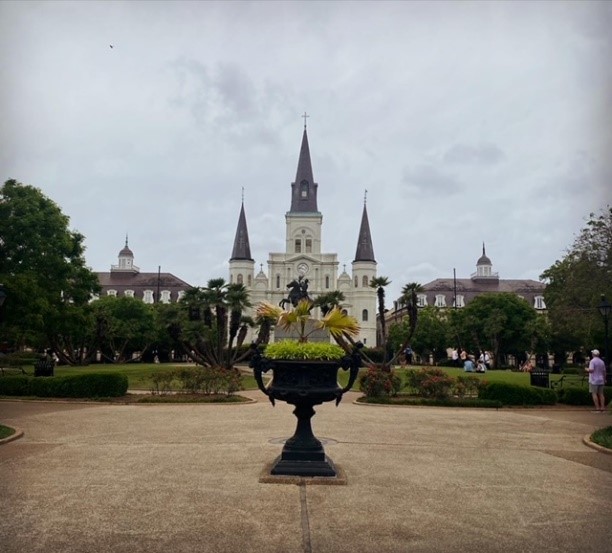
This month, members of the Peabody staff attended the 89th annual meeting of the Society for American Archaeology (SAA). This year, the annual meeting was in New Orleans, Louisiana. SAA was founded in 1934 and is the largest organization for archaeologists conducting work in North and South America. Fun fact: the first meeting by SAA took place at Phillips Academy in December 1935!
Today, the SAA includes over 7,000 members and their annual meetings take place all over the country, giving archaeologists the opportunity to present papers and posters on their research, as well as conduct symposiums and panel discussions related to current issues in the field of archaeology.
There are many institutions and vendors who take part in SAA’s exhibit hall, where various groups rent space to promote their organizations and activities. This is also a wonderful place to meet and network with other institutions and archaeologists. The Peabody booth was very popular – and this may or may not have had to do with our booth neighbors, the Institute for Canine Forensics. They were the best neighbors and of course we had a blast meeting Katana and Jazz (two of their service canine teammates.)
Staff with the Peabody booth at SAA
This was one of the largest exhibit hall turnouts the Peabody has experienced at SAA and it was a great opportunity for staff to meet new people interested in the Peabody for research, educational programming with the Journal of Archaeology and Education, collection care, and NAGPRA work. It was also wonderful for staff to reunite with past friends and colleagues.
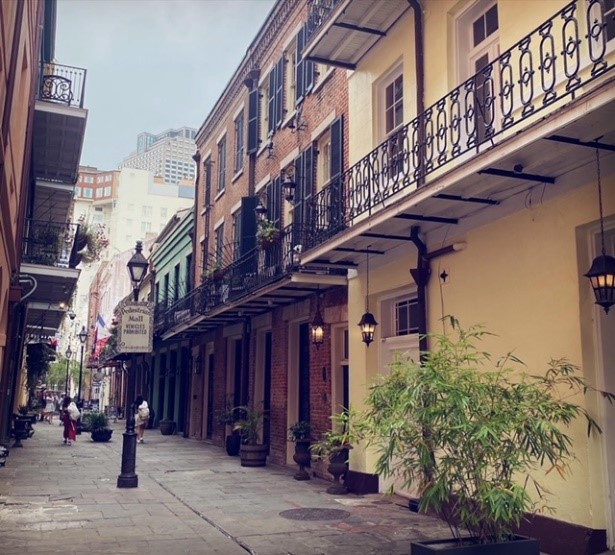
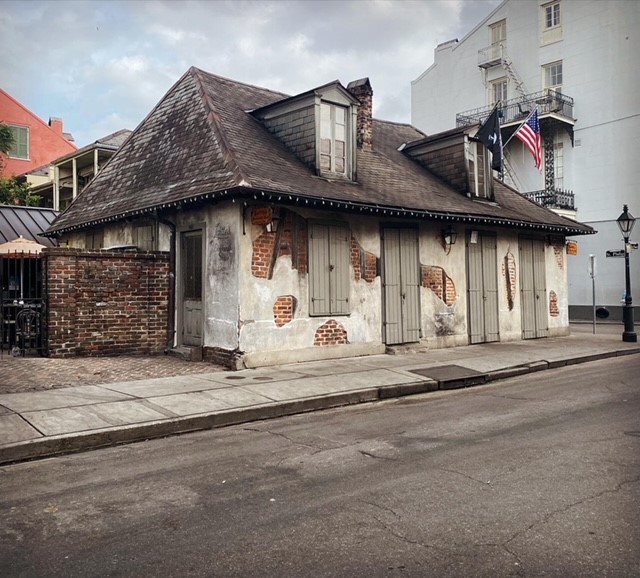
With the SAA conference in New Orleans (right in the heart of the French Quarter no less), there were many opportunities to explore the historical city and jazz culture. I even got to see a site associated with my ancestors – the Lafitte brothers, who used the property for their privateering and smuggling operations in New Orleans.
Next year’s SAA meeting will take place in Denver, Colorado – where SAA will be celebrating 90 years! You can be sure to see the Peabody in attendance!
It’s been a few months since we shared our last building update and so much has transpired since staff have been back in the Peabody. These last few months have been busy for the Peabody staff, as they worked on moving the collections, moving furniture back into the building from offsite storage, and organizing/cleaning the building to welcome Phillips Academy classes in the spring term.
The largest and most involved of these projects, is moving the collections from temporary spaces around the building to our newly renovated, sustainable, and secure collections space, putting all holdings in one place! This project is ongoing and requires a great deal of care as the collections team transport items to their new housing and mapping out how items’ locations are organized and tracked. We also are extremely grateful for our Peabody volunteers and work duty students who have helped with this project!
Creating new housing for collection itemsTracking locations in the new collection space
In addition to moving the collections, the Peabody is organizing our classroom spaces to welcome back students this term. With our furniture back onsite and in place, we are ready to have students back through our doors (just in time!) with classes starting this week!
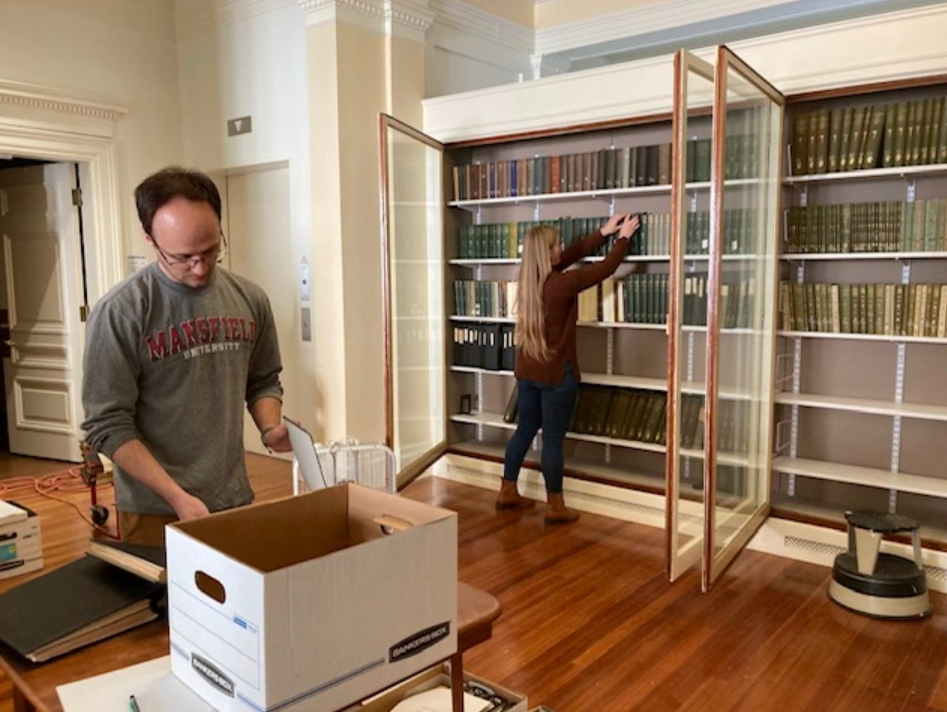
The Peabody library – now fully accessible – received a deep clean and is ready to serve as classroom and meeting space for students and out colleagues across campus.
Peabody staff returning books to shelves on the second floor landing.
With things returning to normal, we are only opening our doors at this time for Phillips Academy classes and events. This is a “soft opening” as we continue organizing our new collection spaces and preparing for our next round of building renovation. We will continue to keep the updates coming as we enter the warmer months of spring. Stay tuned for some exciting content from the Peabody to be shared on our social channels this PA Giving Day – Wednesday, March 27th!
Human Origins students learn about the history of the atlatl, an ancient hunting and warfare device.
Mark your calendars! PA Giving Day is Wednesday, March 27, 2024! Last year the Peabody Institute garnered 60 gifts and $25,000 in match funds!
For those inspired to give early, please complete the PA Giving Day form here! Please be sure to select the “Peabody Institute of Archaeology” under the “designation” section. Any gift made in advance of the event will count toward PA Giving Day totals.
This year we hope to have more challenges, more social media posts, and even more support!
Last month, the Peabody Institute sponsored a day trip to Harvard University for Phillips Academy students. The 25th Annual Powwow was hosted by the Harvard University Native American Program (HUNAP). After a three-year hiatus due to the Covid-19 pandemic, the HUNAP program was able to welcome the return of their Powwow.
Flyer for HUNAP’s 25th Annual Powwow
This year’s theme for the HUNAP Powwow was Protect Indigenous Futures! The event was held on Orange Shirt Day, a national day of remembrance and reconciliation for victims of residential schools, which sought to separate Native children from their families and forcibly assimilate them. The Powwow honored survivors and victims of residential schools throughout Canada and the United States.
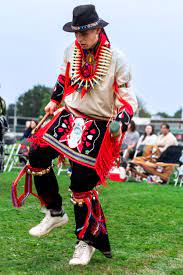
The Powwow ceremony is an Indigenous gathering with traditional dances and music held by Tribal nations from the New England area. The event welcomed hundreds of attendees from Harvard, neighboring Native communities, and the Greater Boston area.
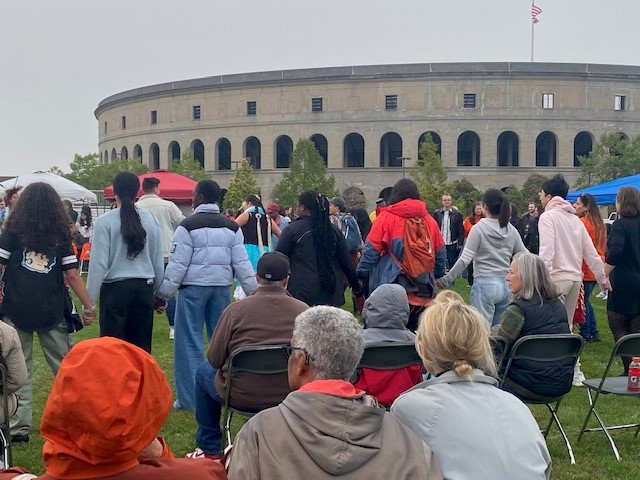
Photos from the HUNAP Powwow Photos by Catherine Dondero and Courtesy of Harvard University
Students took part in community dances, which welcomed all event attendees into the arena to dance together. Many PA students took part in these community dances and got to experience the ceremony traditions first-hand.
PA students participating in community dances
This event was a wonderful opportunity for students to experience Indigenous cultural traditions and ceremonies. Students also had the opportunity to connect with Indigenous students, community members, HUNAP students, and Tribal nations from the Greater Boston area, New England, and those visiting from other parts of the United States and Canada.
Want to hear more about this event from the students’ perspective? Check out this article from Phillips Academy’s student paper, The Phillipian.
For more details about the HUNAP 25th Annual Powwow, explore this article from The Harvard Gazette and video coverage of the event by Harvard University.
Since the Peabody staff moved to the School Room in Abbot Hall, I’ve been fascinated by the history of Abbot Academy and what remains of the school’s campus. As we work in the very heart of the Abbot Academy campus, I can’t help but notice the many features and tangible details left since the merger of Abbot and Phillips in 1973.
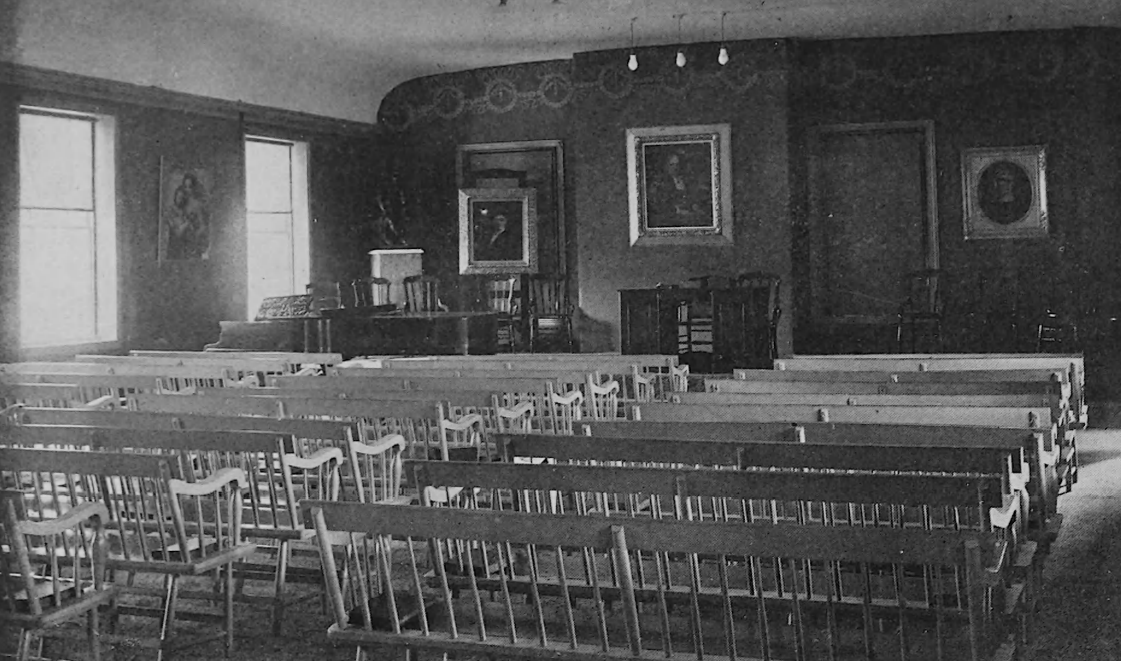
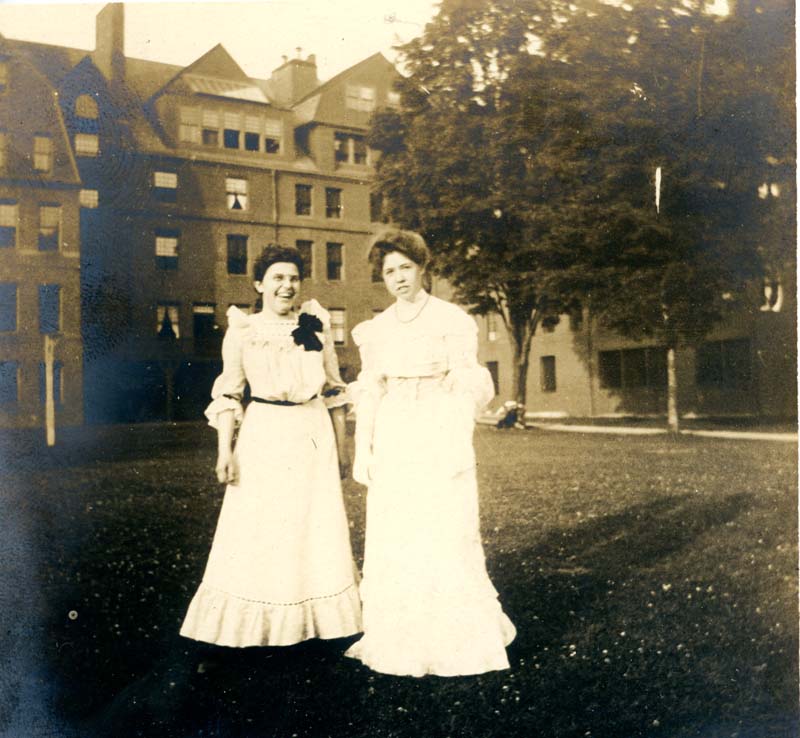
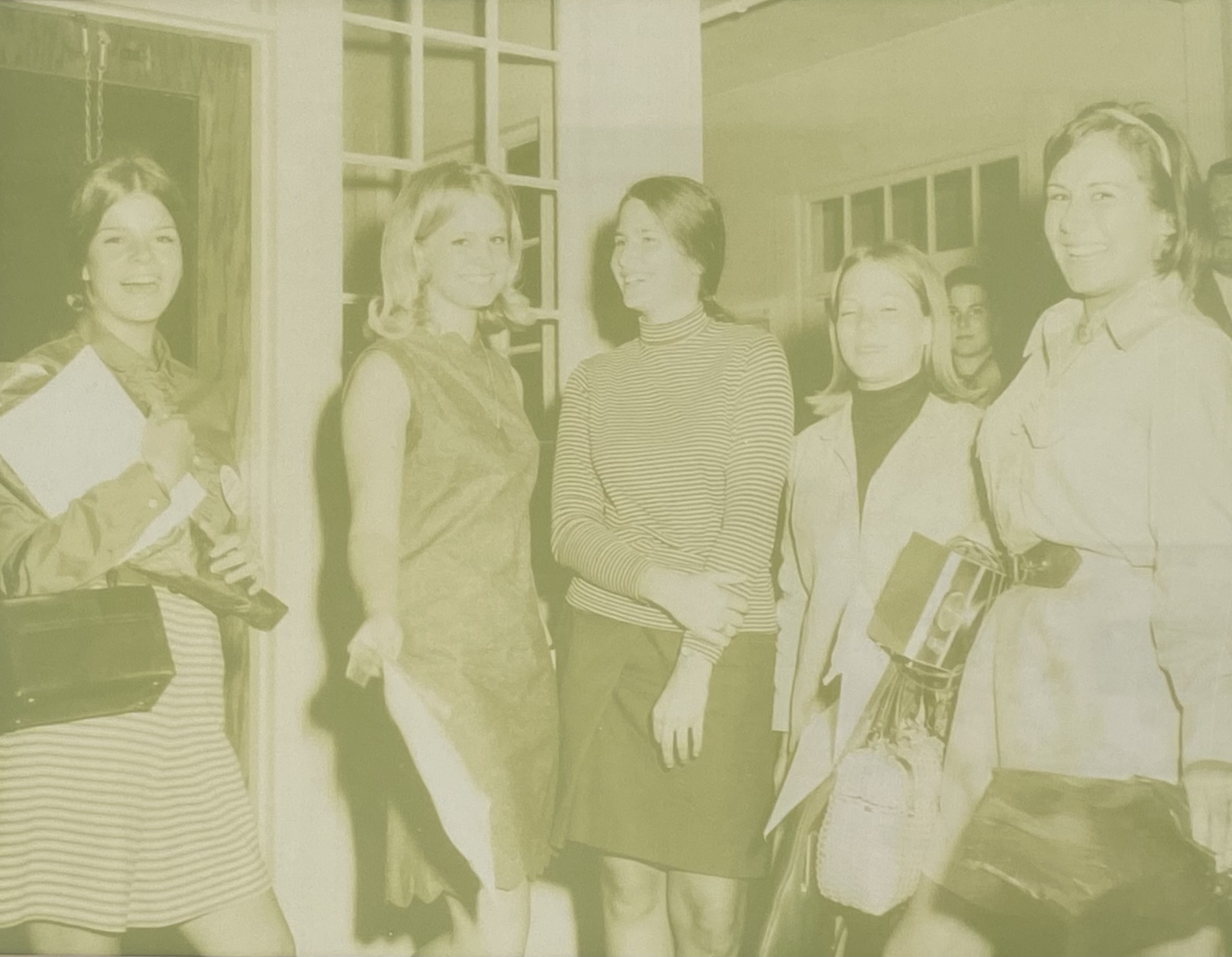
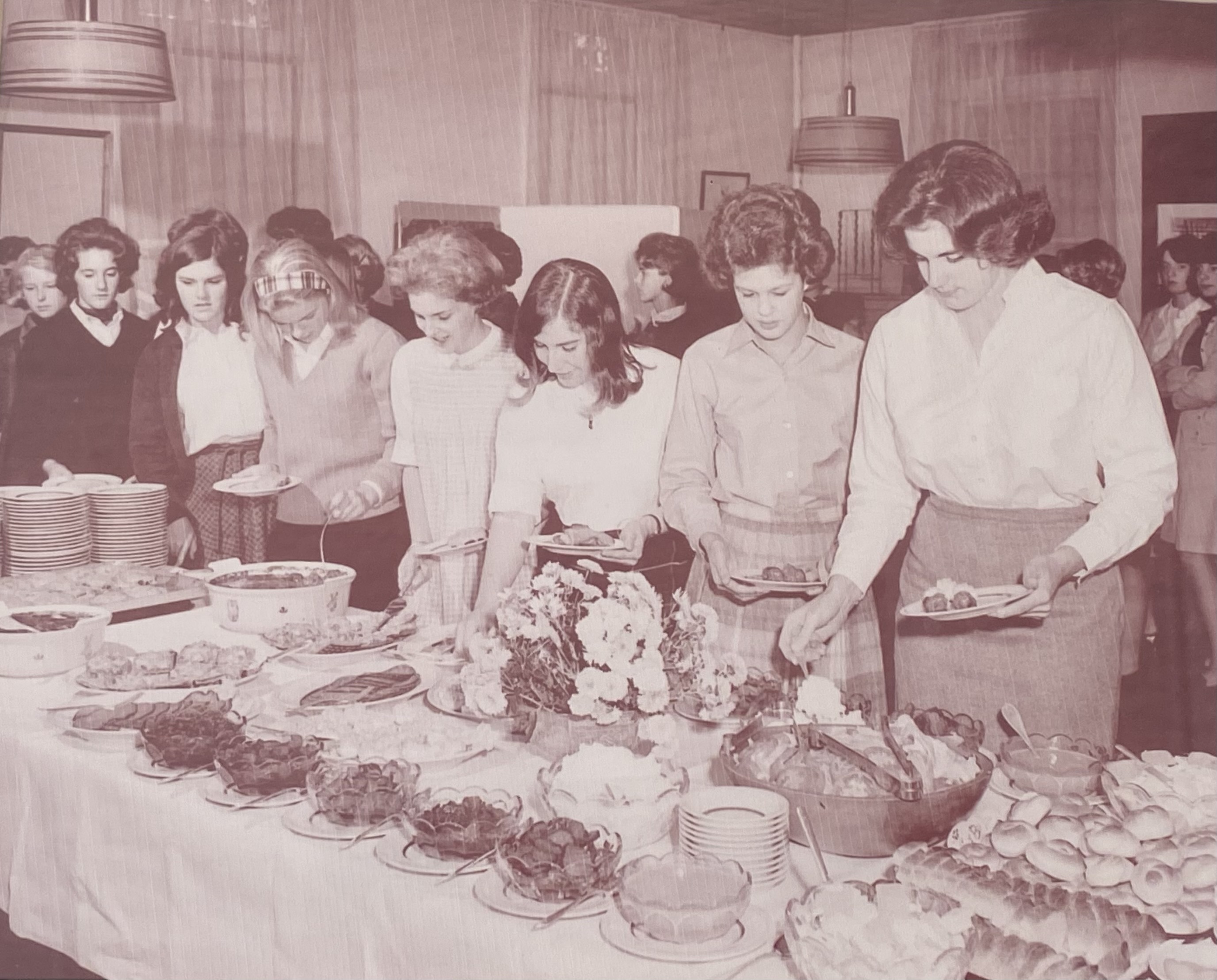
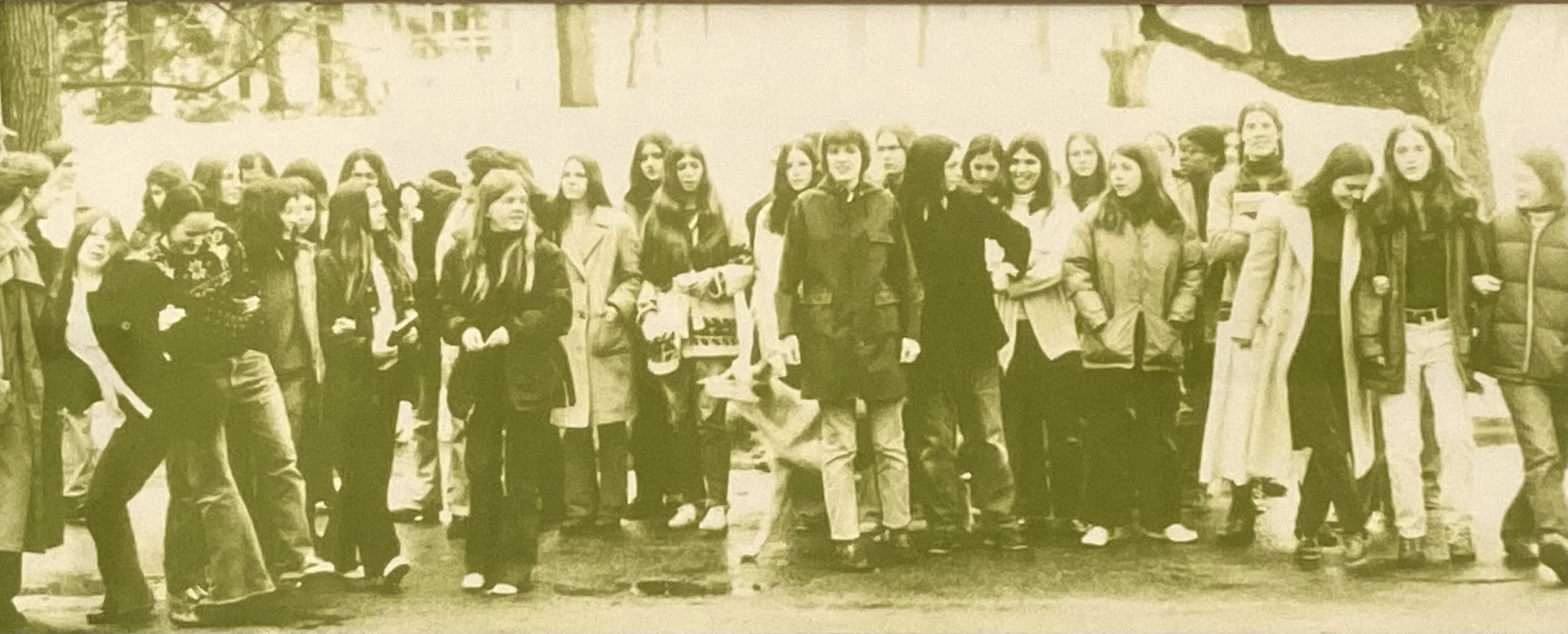
The very School Room in which our staff currently resides was once an assembly room for all the Abbot Academy students to gather, known as the “Hall” and later as the “Chapel.” Within this same building are many rooms with remnants of old chalk boards as well as photographs of Abbot students from throughout the school’s history. These photographs inspired this next entry of the Behind the Photograph blog series and although many do not have specific provenance or further information provided, they represent what life and education was like at Abbot Academy during a rapidly changing America.
The “Hall” at Abbot Hall, now known as the School Room, circa 1906.
Students gather in the “Chapel” at Abbot Hall, now known as the School Room, circa 1945.
Abbot Academy was one of the first educational institutions in New England for girls and women. Founded through the financial support of Sarah Abbot, the Academy opened in May 6, 1829 with seventy students and continued as an independent preparatory school for female boarding and day students until the merger of the two schools in 1973. Today the campus continues to be used by the combined school where many of its buildings and stories remain.
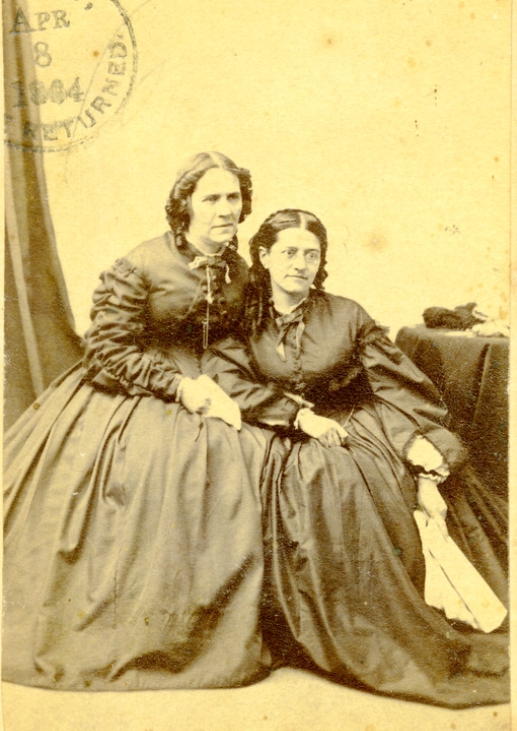
Sarah Abbot, Founder of Abbot Academy
Although many were hesitant at its reception and Victorian society questioned the need to educate women, Abbot Academy quickly became an example of women’s accomplishment. Some believed its curriculum even surpassed the all-male Phillips Academy up the hill. One particular era of note was Abbot’s “golden age” under the McKeen sisters, headmistresses Philena and Phebe (Abbot Academy, 1859-1892).
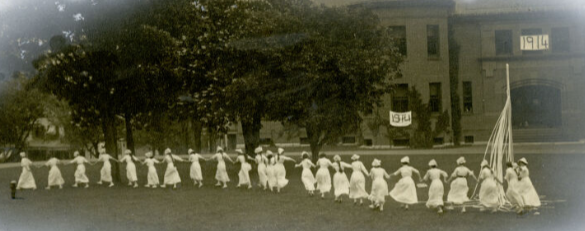
The sisters brought about many changes at Abbot including the expansion of buildings, strict schedules for students, world language classes, student involvement in the surrounding community, lecture opportunities, emphasis on art education, and so much more. The Abbot Circle was created with the construction of Draper Hall in 1890. Abbot Hall was also moved to frame the new grass plot. Activities such as commencement and winding the Maypole were staged on the lawn and became traditions for years to come.
The Abbot Circle, framed by Abbot Hall (left), Draper Hall (center), and the old Davis Hall (right), (1890-1892)
Abbot Academy Class of 1914 with Maypole on Abbot Circle
Draper Hall contained the parlors, library and reading room, music rooms, studio and infirmary, dining room, and student dormitories. Abbot Hall was later altered to make space for laboratories, an art studio, and an exhibition gallery.
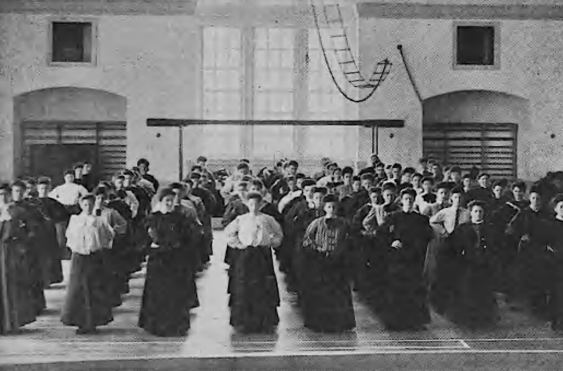
Many of the McKeen traditions continued, even after the sisters departed Abbot in 1892. In the early 1900s, McKeen Hall was built on the original site of Davis Hall. This new building was dedicated to the memory of the McKeen sisters and used as a study hall, classrooms, and gymnasium that doubled as an assembly room named Davis Hall.
Davis Hall (located in McKeen Hall) doubled as both a gymnasium and assembly space for students. At one point there was even an organ in the upper loft of the space! (1912-1925)
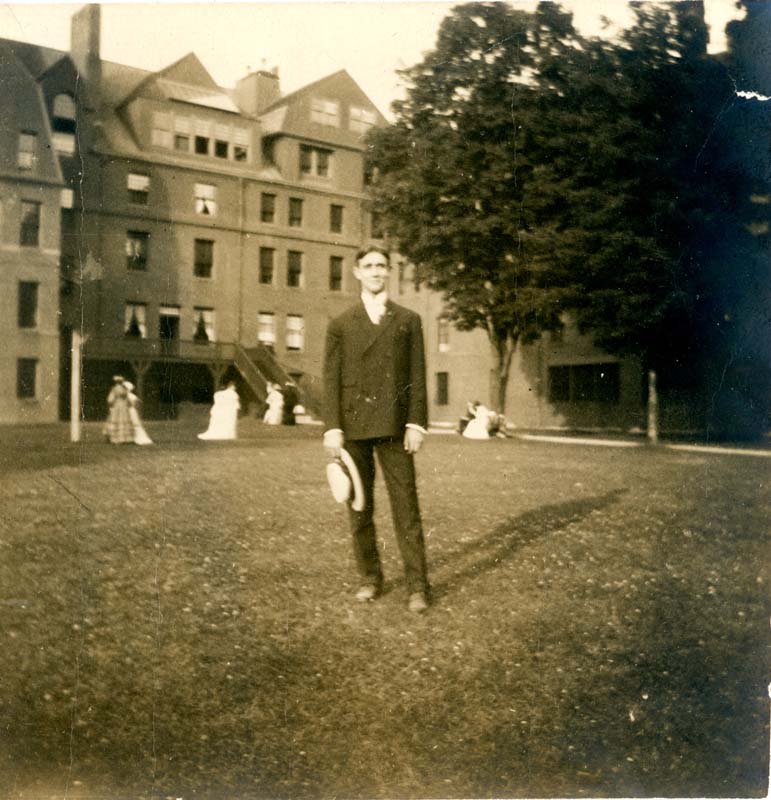
As Abbot faced new challenges such as the Great Depression and two World Wars, the school isolated itself, however, this only kept out new waves of change as women’s colleges and public schooling became a permanent fixture in American society. Students described these years as isolating, strict, and confining. Students had a rigid dress code, curfews, and could not speak to boys (especially those from Phillips Academy).
A Phillips Academy boy and Abbot Academy girls standing in the same place, but never together.
After World War II, the Academy experienced a jump in enrollment and opened its doors more widely to minority groups of women. As a result, the academic excellence of the Abbot school improved and applications to the school increased in the 1950s and 1960s. The strict rules of the past were gone by the 1960s, giving female students more independence and featuring more chaperoned dances and interactions with the Phillips Academy boys.
By the late 1960s, many colleges and universities were becoming coeducational institutions. As a result, along with other factors such as shared history and common activities, Abbot Academy and Phillips Academy merged on June 28, 1973. Many Abbot traditions were included in the combined school, such as Parents Weekend. The Phillips Academy headmaster at the time, John Kemper, believed the merger was “practical, ethical, and educationally sound.” The Peabody had already opened Richard “Scotty” MacNeish’s archaeology course to Abbot women as preparations for the merger were being made. This year, we celebrate 50 years of the Abbot Academy and Phillips Academy merger!
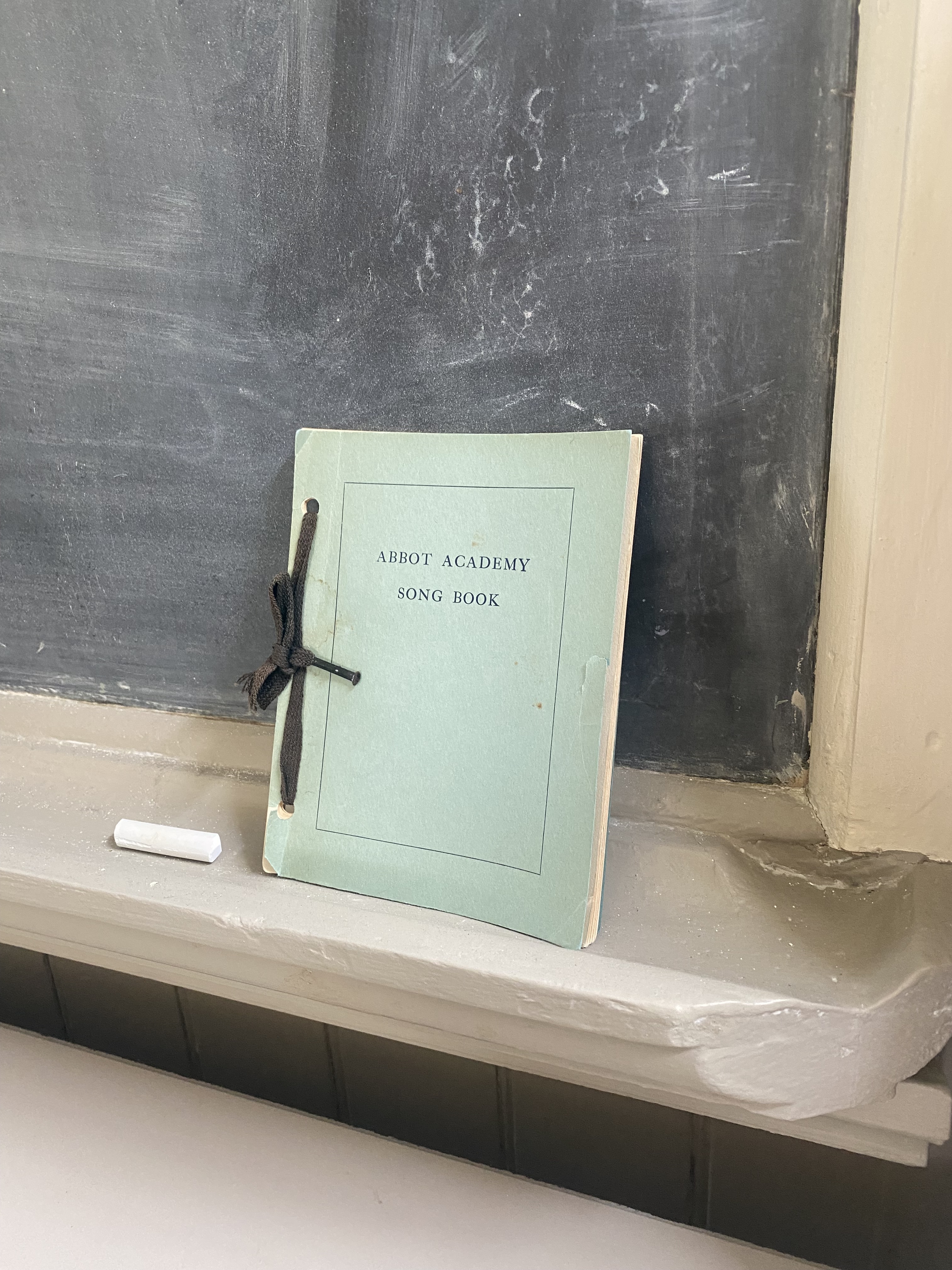
In additon to all the wonderful and candid photographs that decorate the walls in Abbot Hall, my favorite find was an Abbot Academy Song Book. This book is filled with a variety of school songs, marches, sport songs, serenades and salutes, rounds, parting hymn, and Bradford songs remembered by past Abbot Academy alumni. What really brought this find full circle for me was listening to past Abbot Academy alumni sing these songs during our 2023 reunion weekend.
There’s something special about the Abbot Academy campus and I’ve truly enjoyed calling this place home for the last several months. There is so much history here and I hope I provided a small glimpse of this history by sharing the photographs that adorn Abbot Hall.
For more photographs related to Abbot Academy and student life check out the Abbot Collections online archive here!
Additional Reading on the History of Abbot Academy
Academy Hill: The Andover Campus, 1778 to the Present. New York: Princeton Architectural Press, 2000.
Dominique, Robert A. Phillips Academy Andover, Massachusetts: An Illustrated History of the Property (including Abbot Academy). Wilmington, MA: Hampshire Press, 1990.
Roberts, Paige. “Abbot Hall, 1828-1829, at Phillips Academy.” Clio: Your Guide to History. December 5, 2019. Accessed June 22, 2023. https://theclio.com/entry/88419
As the school year comes to a close and we take time to slow down (thank you vacation time), what better time this season then to grab a book and settle down on a porch swing. It’s time to grab your library card, load up your Kindle, or get yourself to your local bookstore. Our staff and friends of the Peabody have done it again… Back by popular demand! The Peabody shares their favorite finds for this summer’s reading list. We even threw in a podcast as a bonus for any listeners! We hope you have a wonderful summer dear readers and enjoy exploring these “Peabody Picks.”
Happy reading!
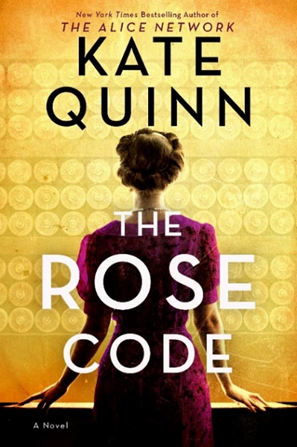
The Rose Code by Kate Quinn – Recommended by Emma Lavoie, Administrative Assistant
If you read one historical fiction book this year, THIS SHOULD BE IT! As England prepares for World War II, three women from very different walks of life answer the call to mysterious county estate Bletchley Park, where the best minds in Britain train to break German military codes. Osla translates decoded enemy secrets, Mab works the legendary code-breaking machines, and Beth is one of the Park’s few female cryptanalysts. Eventually war, loss, and the impossible pressure of secrecy will tear the three apart. Flash forward seven years later, these friends-turned-enemies are reunited by a mysterious encrypted letter – the key to which lies buried in the long-ago betrayal that destroyed their friendship and left one of them confined to an asylum. A mysterious traitor has emerged from the shadows of their Bletchley Park past, and now Osla, Mab, and Beth must resurrect their old alliance and crack one last code together against the backdrop of the royal wedding of Elizabeth and Philip.
“The reigning queen of historical fiction.” – Fiona Davis, New York Times bestselling author of The Lions of Fifth Avenue
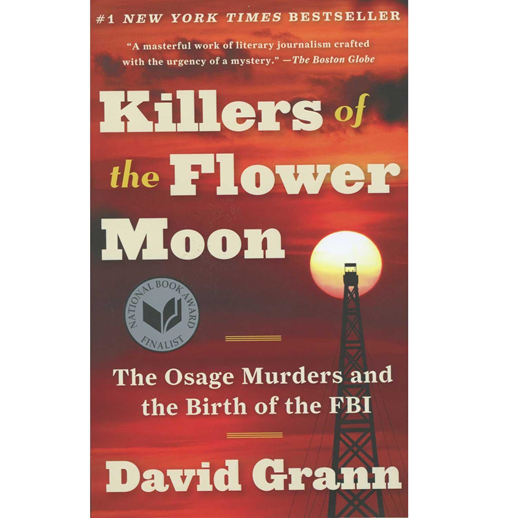
Killers of the Flower Moon by David Grann – Recommended by Michael Agostino, Peabody Volunteer
Set in the 1920s, this book features people of the Osage Nation who were relocated to barren lands in Oklahoma which were later discovered to be rich in oil. Per capita, members of the Osage nation quickly became the richest people in the world and targets for murder. This book carefully describes efforts by lawmen to solve these crimes and bring the murderers to justice. The lawmen were led by J. Edgar Hoover and his organization soon became the FBI – in what became one of the organization’s first major homicide investigations. Together with the Osage and Texas Ranger, Tom White, they began to expose one of the most sinister conspiracies in American History. A true-life murder mystery about one of the most monstrous crimes in American history, Killers of the Flower Moon, is highly acclaimed, receiving numerous awards, and was recently made into a movie starring Leonardo DiCaprio and Robert Deniro.
“A masterful work of literary journalism crafted with the urgency of a mystery…. Contained within Grann’s mesmerizing storytelling lies something more than a brisk, satisfying read. Killers of the Flower Moon offers up the Osage killings as emblematic of America’s relationship with its indigenous peoples and the ‘culture of killing’ that has forever marred that tie.” – The Boston Globe
Swords and Deviltry (Fafhrd & the Gray Mouser #1) by Fritz Leiber – Recommended by Ryan Wheeler, Peabody Director
First in the influential fan-favorite series, Swords and Deviltry collects four fantastical adventure stories from Fritz Leiber, the author who coined the phrase “sword and sorcery” and helped birth an entire genre. This collection of short stories and novellas follows the adventures of barbarian Fafhrd and conjurer turned sword fighter Gray Mouser written by Leiber in the 1950s and 60s and collected in 1970. If you like Robert E. Howard and Conan the Barbarian, you will love this! And if you do, there are a total of seven of these collected volumes chronicling the exploits of Fafhrd and the Gray Mouser, in this and other dimensions.
“A Grand Master of Science Fiction and Fantasy.” – Science Fiction Writers of America
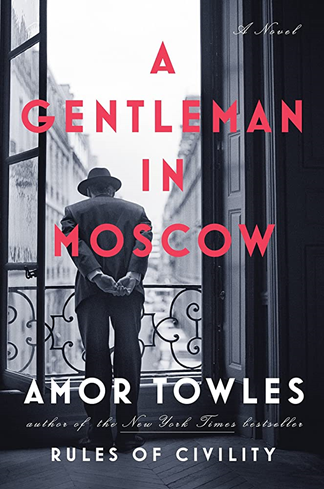
A Gentlemen in Moscow by Amor Towles – Recommended by Richard Davis, Peabody Volunteer
In 1922, Count Alexander Rostov is deemed an unrepentant aristocrat by a Bolshevik tribunal, and is sentenced to house arrest in the Metropol, a grand hotel across the street from the Kremlin. Rostov, an indomitable man of erudition and wit, has never worked a day in his life, and must now live in an attic room while some of the most tumultuous decades in Russian history are unfolding outside the hotel’s doors. Unexpectedly, his reduced circumstances provide him entry into a much larger world of emotional discovery. Brimming with humor, a glittering cast of characters, and one beautifully rendered scene after another, this singular novel casts a spell as it relates the count’s endeavor to gain a deeper understanding of what it means to be a man of purpose.
“How delightful that in an era as crude as ours this finely composed novel stretched out with old-World elegance.” – The Washington Post
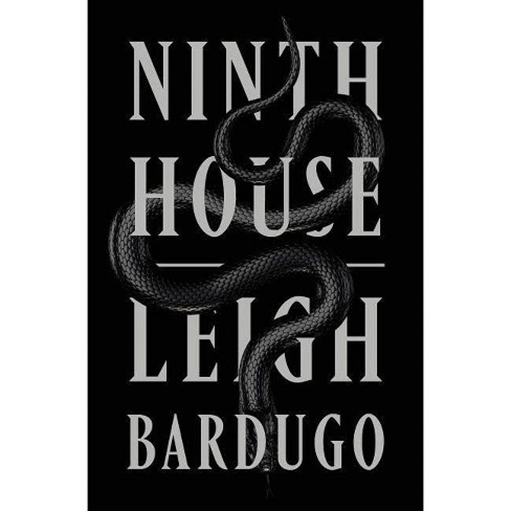
Ninth House by Leigh Bardugo – Recommended by Marla Taylor, Curator of Collections
Galaxy “Alex” Stern is the most unlikely member of Yale’s freshman class. Alex dropped out of school early and into a world of dead-end jobs and much, much worse. In fact, by age twenty, she is the sole survivor of a horrific, unsolved multiple homicide. Some might say she’s thrown her life away, but Alex is offered a second chance: to attend one of the world’s most prestigious universities on a full ride. What’s the catch, and why her? Still searching for answers, Alex arrives in New Haven tasked by her mysterious benefactors with monitoring the activities of Yale’s secret societies. Their eight windowless “tombs” are the well-known haunts of the rich and powerful, from high-ranking politicos to Wall Street’s biggest players. But their occult activities are more sinister and more extraordinary than any paranoid imagination might conceive. They tamper with forbidden magic. They raise the dead. And, sometimes, they prey on the living.
“The best fantasy novel I’ve read in years, because it’s about real people. Bardugo’s imaginative reach is brilliant, and this story – full of shocks and twists – is impossible to put down.” – Stephen King
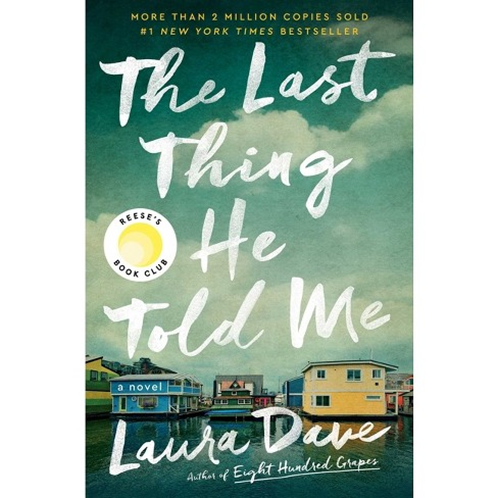
The Last Thing He Told Me by Laura Dave – Recommended by Beth Parsons, Office of Academy Resources, Director for Museums and Educational Outreach
Before Owen Michaels disappears, he manages to smuggle a note to his beloved wife of one year: Protect her. Despite her confusion and fear, Hannah Hall knows exactly to whom the note refers: Owen’s sixteen-year-old daughter, Bailey. Bailey, who lost her mother tragically as a child. Bailey, who wants absolutely nothing to do with her new stepmother. As Hannah’s increasingly desperate calls to Owen go unanswered; as the FBI arrests Owen’s boss; as a US Marshal and FBI agents arrive at her Sausalito home unannounced, Hannah quickly realizes her husband isn’t who he said he was. And that Bailey just may hold the key to figuring out Owen’s true identity—and why he really disappeared. Hannah and Bailey set out to discover the truth, together. But as they start putting together the pieces of Owen’s past, they soon realize they are also building a new future. One neither Hannah nor Bailey could have anticipated.
“In this novel, now an Apple TV+ series, Laura Dave has given readers what they crave most – a thoroughly engrossing yet comforting distraction.” – BookPage
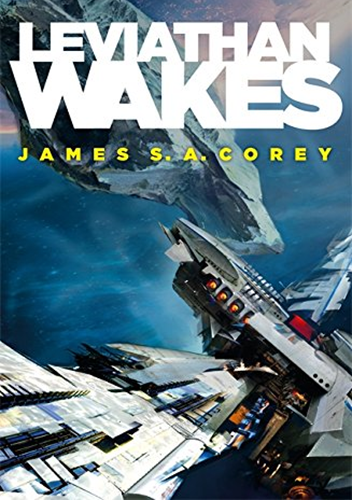
Leviathan Wakes by James A. Corey – Recommended by Nick Andrusin, Temporary Educator and Collections Assistant
Humanity has colonized the solar system—Mars, the Moon, the Asteroid Belt and beyond—but the stars are still out of our reach. Jim Holden is XO of an ice miner making runs from the rings of Saturn to the mining stations of the Belt. When he and his crew stumble upon a derelict ship, the Scopuli, they find themselves in possession of a secret they never wanted. A secret that someone is willing to kill for—and kill on a scale unfathomable to Jim and his crew. War is brewing in the system unless he can find out who left the ship and why. Detective Miller is looking for a girl. One girl in a system of billions, but her parents have money and money talks. When the trail leads him to the Scopuli and rebel sympathizer Holden, he realizes that this girl may be the key to everything. Holden and Miller must thread the needle between the Earth government, the Outer Planet revolutionaries, and secretive corporations—and the odds are against them. But out in the Belt, the rules are different, and one small ship can change the fate of the universe. Also now a Prime Original TV Series called The Expanse.
“This is the future the way it was supposed to be.” – The Wall Street Journal
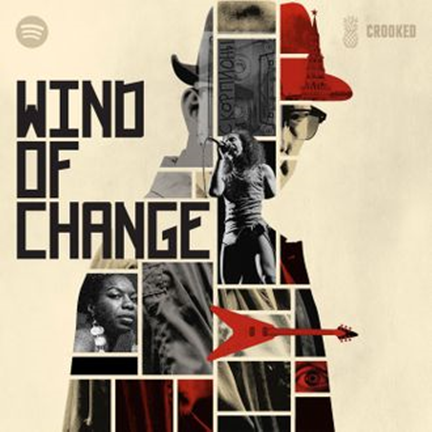
Wind of Change Podcast by Pineapple Street Studios and Crooked Media – Recommended by John Bergman-McCool, Collections Assistant
It’s 1990. The Berlin Wall has just come down. The Soviet Union is on the verge of collapse. A heavy metal band from West Germany, the Scorpions, releases a power ballad, “Wind of Change.” The song becomes the soundtrack to the peaceful revolution sweeping Europe – and one of the biggest rock singles ever. According to some fans, it’s the song that ended the Cold War. Decades later, New Yorker writer (and podcast host) Patrick Radden Keefe hears a rumor from a source: the Scorpions didn’t actually write “Wind of Change.” The CIA did. This is Patrick’s journey to find the truth. Among former operatives and leather-clad rockers, from Moscow to Kyiv to a GI Joe convention in Ohio, It’s a story about spies doing the unthinkable, about propaganda hidden in pop music, and a maze of government secrets.
“Wind of Change is a beautifully constructed listen, never less than entertaining.” – The Guardian
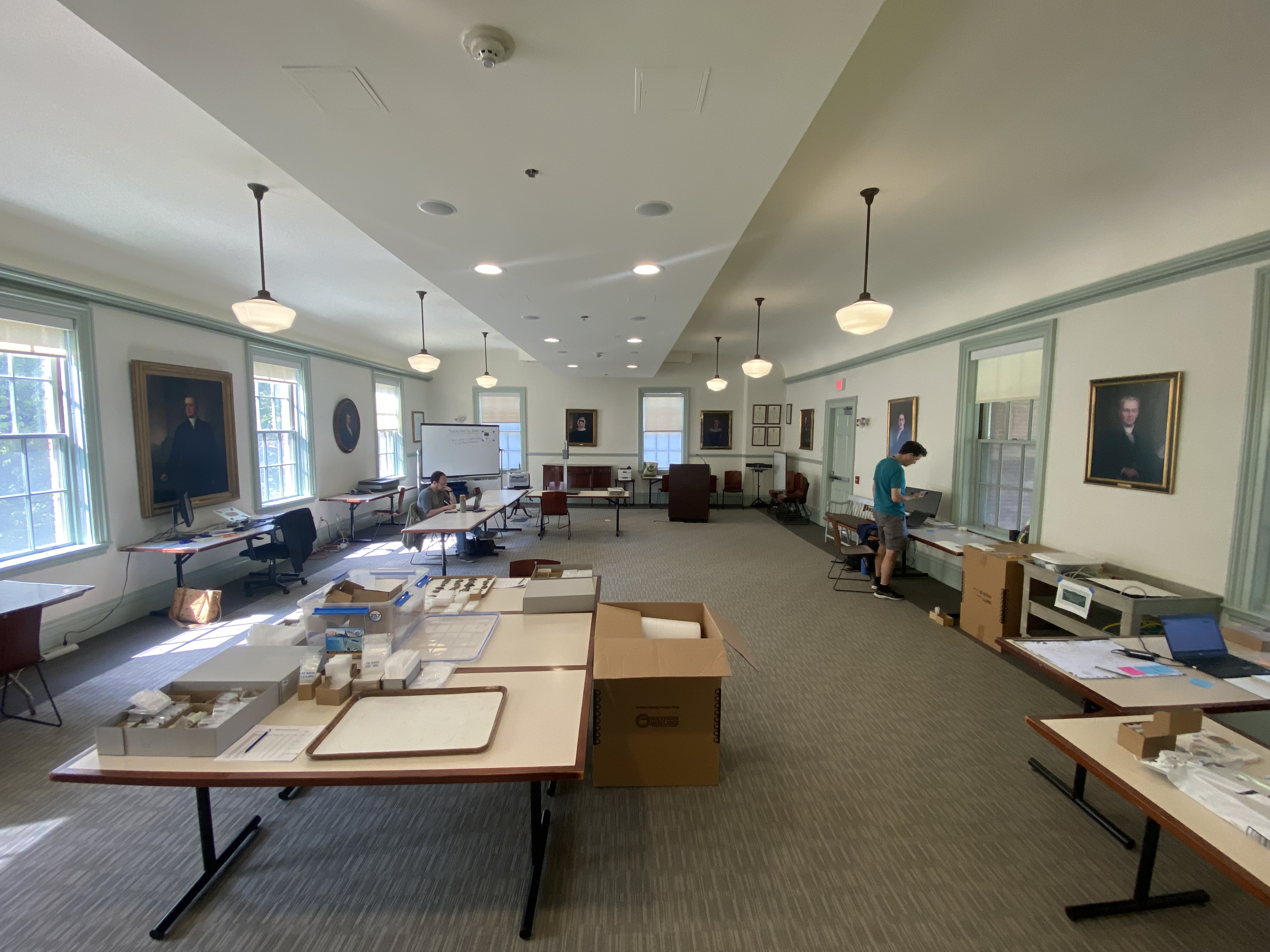
Hello from Abbot Campus! The Peabody staff have successfully moved to the School Room in Abbot Hall where we will be residing throughout the course of Phase 1 of the Peabody building renewal project. Our staff officially moved out of the Peabody at the end of April – see our Curator of Collections, Marla Taylor’s blog for updates on the building renewal project! We will continue to provide updates on the building project throughout the summer, so keep an eye out for more blogs coming soon!
Although our circumstances and environment have changed, the Peabody staff have continued most of their operations such as managing the care and organization of the collections, teaching lesson units across campus, and continuing consultation and repatriation work with tribal communities.
Abbot Academy students in the School Room at Abbot Hall, 1828-1829
After a few weeks of settling in, we’ve been able to welcome our Peabody volunteers back to our temporary space and have even hosted our Peabody Advisory Committee members for our annual Peabody Spring PAC meeting. In addition, the Peabody was fortunate to sponsor contemporary indigenous artists Dominique, Mia, ad Maxine Toya, for their annual spring visit to PA campus.
The Toya family teaches a week long workshop for students in Thayer Zaeder’s ceramic classes. We were lucky enough this year to host our PAC meeting and the Toya’s workshop in the same week, giving opportunity for our PAC members to meet the Toya’s and observe their work with students. For more about this workshop and past visits check out this blog by Peabody Director, Ryan Wheeler. For photos from the Toya’s most recent visit, check out our Smug Mug album here!
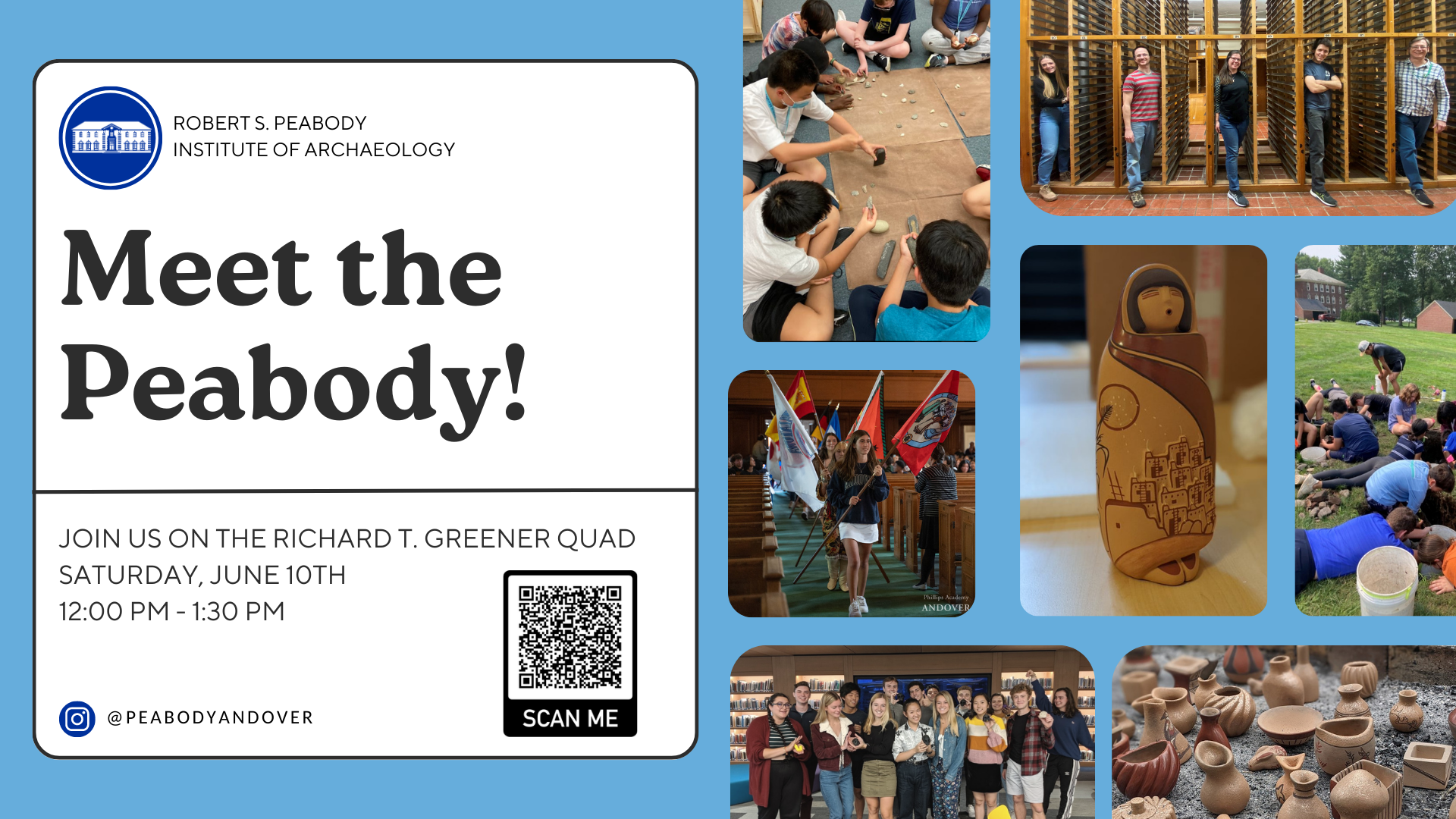
As summer approaches, we look forward to continuing partnership with the Andover Summer, Dig This! Class and greeting alumni back to the Andover campus during Reunion Weekend. Despite the Peabody building being closed during this time, the Peabody staff and several Peabody Advisory Committee members will be hosting a table during reunion lunch on the Richard T. Greener Quad from 12:00 PM – 1:30 PM on Saturday, June 10th. This will give alumni and visitors the ability to meet the Peabody and learn more about our current activities, initiatives, and building project updates.
Join the Peabody on Greener Quad at PA Reunion Weekend, Saturday, June 10th!
To celebrate our one month anniversary in the Abbot Hall School Room, the Communications Department was generous enough to host an Abbot Hall Meet & Greet as a welcome to the Peabody and opportunity for us to meet our new neighbors. Thank you Communications Team!

























 The Peabody