Back to Work!

Contributed by Emily Hurley

It’s been almost two months now since John and I have been back at the Peabody alternating weeks of work. In order to save time while we are in the Peabody, we are using that time exclusively to inventory drawers and spending our weeks at home updating the database with the drawers we inventoried the previous week. Now that we’ll be back in the Peabody more regularly, our work from home duties have shifted to more database work. In his post from last month’s newsletter, you can see all the hard work John’s been doing at home so now I’d like to share some of the things I’ve been able to accomplish from home so far.

Marla has kept everyone busy with various projects since we started working remotely in March. For me, that included digitizing photographs, creating condition reports for textiles, digitizing ledger books, and photographing site records. In total, while working remotely, I was able to digitize nine boxes of photos, complete 120 condition reports, digitize 1,700 ledger entries, and photograph 354 site records.

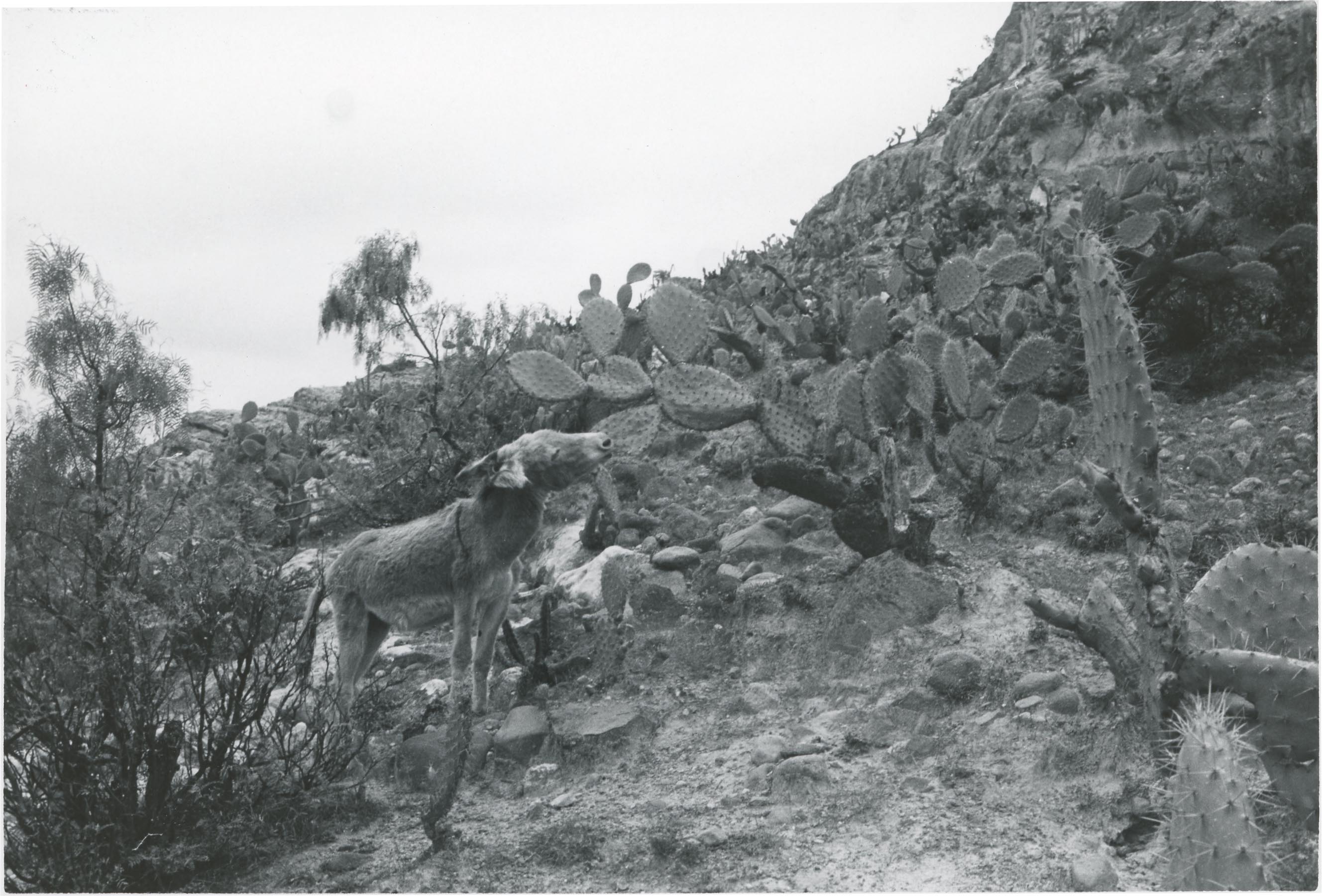
2019.0.706
2019.0.706 – A goat on a mountainside in the Ayacucho Valley. (I think this goat is so cute!)

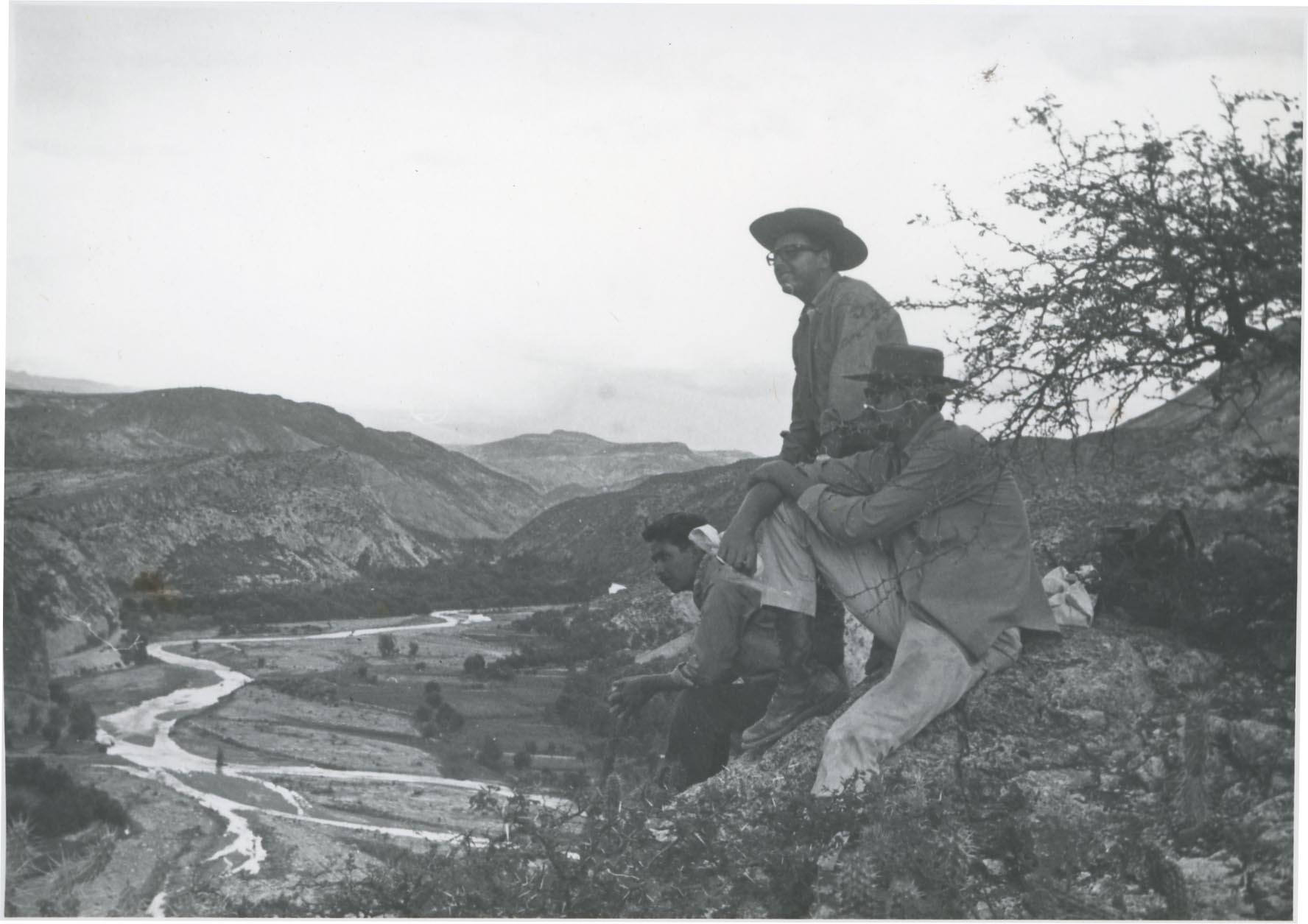
The majority of my time working remotely has been spent scanning and editing photographs of various archaeological projects from the collection. The photos I digitized were from archaeological excavations in Massachusetts, Maine, Ohio, Illinois, Kentucky, and Connecticut. Perhaps my favorite photos to work with were the ones from the Ayacucho Archaeological-Botanical Project in Peru. This project, directed by Richard MacNeish, was meant to investigate the origin of agriculture and its relationship to the development of civilization in New World Centers. The Ayacucho Valley was subsequently excavated between 1969 and 1975, which produced the hundreds of images that I’ve been working on. Many of the photos are of cave excavations, others show sweeping views of the Peruvian highlands complete with mountains and wildlife, and there’s the occasional photo of the archaeologists acting silly.

2019.0.743
2019.0.743 – Archaeologists overlooking the Ayacucho Valley

Since we’ve been back at the Peabody, John and I have been working hard to make up for lost time on the inventory project. So far we’ve been making great progress as we’ve been able to inventory over 60 drawers since being back. Empty wooden drawers are once again piling up like crazy!

Working from home for the past few months has been an interesting experience. It’s been great saving so much money on gas and I loved being able to make myself gourmet grilled cheese sandwiches for lunch every day, but I’m very happy to be back working with the artifacts. Hopefully someday soon we’ll all be able to enjoy being back at the Peabody full time!

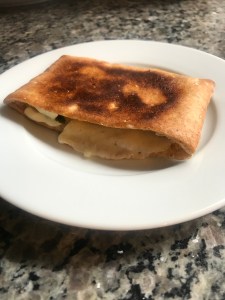
IMG_8518

If you’re in need of some grilled cheese inspiration here is one of my favorites—olive tapenade, roasted red peppers, arugula, and manchego cheese! (I only had pita pockets at the time but I think a nice sourdough would be great)

Introducing Our Newest Team Member

Contributed by Emily Hurley

My name is Emily and I have been working as the new Inventory Specialist at the Peabody Institute for about a month now. My job is to assist with the current inventory and rehousing project. My day to day work consists of moving artifacts from their old wooden storage drawers into new archival boxes which better preserve the objects.

I grew up in a small town called Andover, New York (I know, how ironic) before moving to Buffalo to pursue my Bachelor’s degree in Anthropology. From there, I spent a year in Florence, Italy doing coursework for my MA in Museum Studies which I completed this past August. During my time in Italy, I learned collections care and management from some of the most famous museums in the world including the Uffizi Gallery and the Vatican Museum. This is only my first position working in a museum but I have completed museum internships back home in Buffalo as well as in Santa Fe, New Mexico.

Emily Hurley photo
This is me overlooking the beautiful city of Florence!

I have always been passionate about archaeology and indigenous studies so I am excited to be in a position where I can apply my knowledge of both and continue to learn more. Even though I have only been here a few weeks, I have learned so much already. It is amazing to be able to work with and handle objects every day which are hundreds of years old and come from all over the continent. Objects that I have been studying for the past five years are now a part of my everyday life and it is truly such a rewarding experience.

Overall I am very excited to be in this position and can’t wait to see what else I will learn and do during my time at the Peabody!

Northeastern Archaeological Survey re-examined

Hello! We are Arthur Anderson and Gabe Hrynick, faculty at the University of New England and University of New Brunswick, respectively. Much of our fieldwork together is in far Down East, Maine on Cobscook Bay in Washington County. We’ve been lucky enough to make a few visits to the Peabody over the last few years to get an understanding of the collections housed there from this area. Now we’re excited to be back for an extended visit to explore these collections further! The Peabody’s collections are particularly important to our research because in many cases they may be all that’s left of sites that have eroded due to rising sea levels and increased storm magnitude.

The Peabody collections from Cobscook Bay are almost all the product of the Northeastern Archaeological Survey from the late 1940s to the middle 1950s. The project was initially led by Robert Dyson, future director of the Penn Museum, but effectively taken over by Theodore Stoddard, the most consistent member of the crew over those years. In addition to NAS members from the Peabody, Stoddard worked closely with avocational archaeologists in the area. The most prominent of these was Isaac W. Kingsbury, a Hartford internist who summered in Perry, Maine and seems to have been a local point of contact for the survey crew, and even occasionally published his findings in the Bulletin of the Massachusetts Archaeological Society. One of the most interesting aspects of our research in the Peabody Collections has been reconstructing the work undertaken during those years largely from charming and expansive correspondence between Kingsbury and Stoddard to better understand the context of their records and collections. It’s also a lot of fun to read their accounts of the joys and challenges of working in an area that we love. We can commiserate with their complaints of construction on US Route 1 almost every summer and the barrage of mosquitoes and black flies. We certainly identify with ‘day book’ entries recounting their discussions of the latest archaeological publications on the long drive there. Unfortunately, Frank’s Restaurant in Freeport is long gone, so we can’t comment on their lunch recommendations.

In addition to better understanding the NAS collections, we’ve been looking for some very specific artifacts within it. Our current project, funded by the Social Science and Humanities Research Council of Canada, focuses on the very earliest period of European interaction with Maine and the Maritime Provinces. This is often referred to as the Protohistoric period. By examining old collections for things like glass trade beads, early iron axes and fragments of copper kettle that we have much more context for and information about than they did in the middle of the 20th century, we hope that we can better understand the period and potentially re-locate sites we know to have Protohistoric components thanks to the Peabody collections.

Northeastern Archaeological Survey
Why not write the entire provenience on every object?

Mansion House Excavations

Contributed by Ryan Collins

My name is Ryan Collins, and I am an Archaeological Anthropologist specializing in Ancient Maya Culture. I recently earned a Ph.D. in Anthropology from Brandeis University where I also instruct courses (as well as at Northeastern University and Lesley Art + Design) in Archaeology, Anthropology, Latin America, and Material Culture Studies.

I am also fortunate enough to have two roles with the Robert S. Peabody Institute of Archaeology. First, I am the Transcription Project Associate, working through the museum’s original bound ledgers to create a digital inventory. While there are several subjects of interest that I want to explore from the Ledger Transcription Project (including the stories of somewhat mysterious artifacts), the subject of this post will focus on my role as the Lead Archaeologist with Mansion House Excavations happening on Phillips Academy’s Campus during the Summer Session with the Lower School Institute. The Mansion House excavations happen in collaboration with the Robert S. Peabody Institute of Archaeology which houses recovered artifacts as well as materials that once belonged in the late 18th-century building.

The Mansion House at Phillips Academy Andover is a site of significant historical importance in the local community. Built during the Revolutionary War in 1782 (though fully completed in 1785) it was home to Phillips Academy Andover’s founder, Judge Samuel “Esquire” Phillips Jr., and his family until 1812. During this time Judge Phillips, his wife Phoebe Phillips, and their family were known to cultivate a warm and inviting atmosphere to the students of the academy while also hosting notable political figures of the day like President George Washington.

Image 1 MansionHouse_1880s
Mansion House in the 1880s

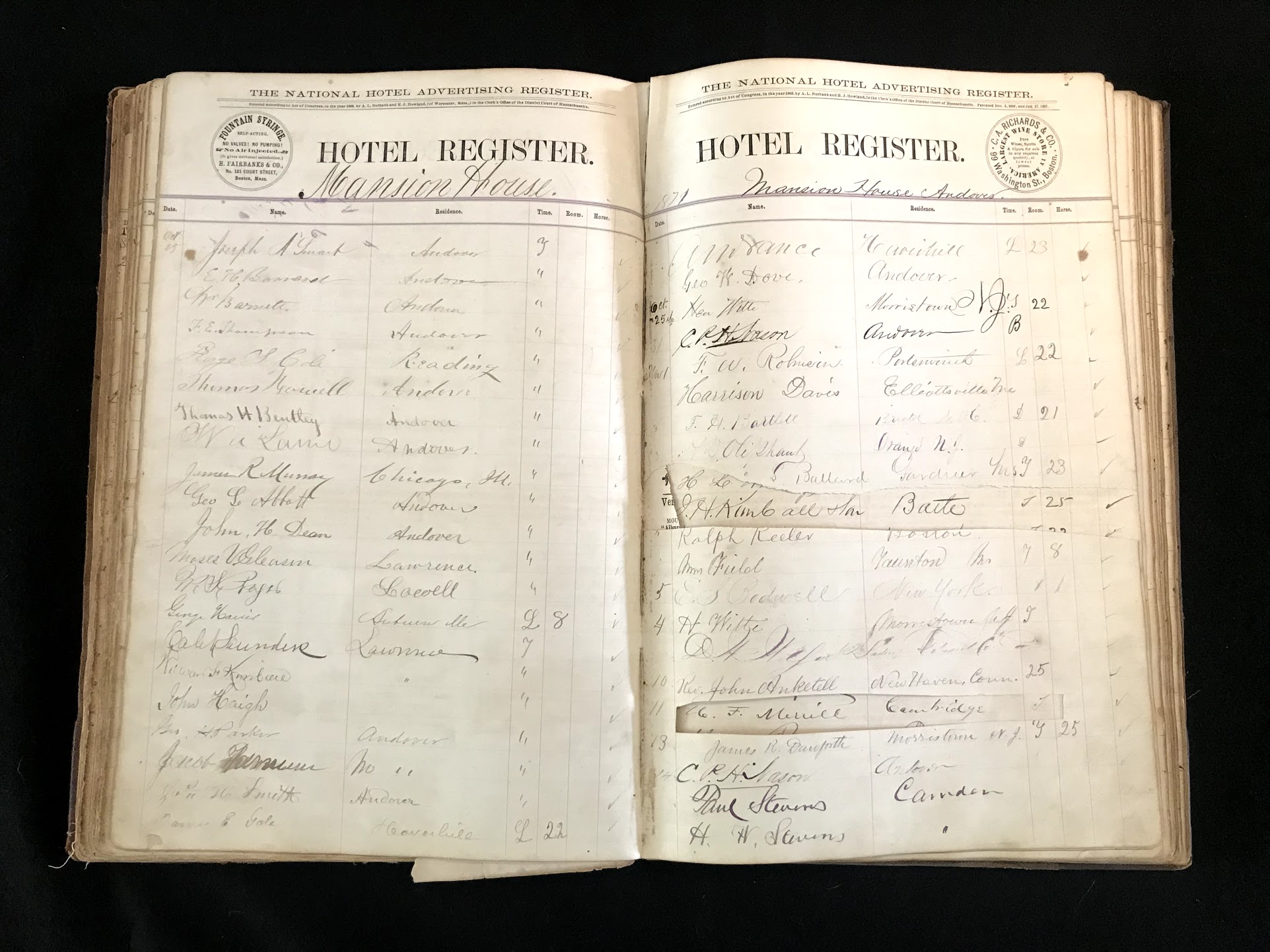
With the decline of Phoebe Phillips’ health in 1812, the Trustees of Phillips Academy purchased Mansion House converting it into an Inn and Tavern. As an Inn and Tavern, Mansion House became a central meeting place for students and faculty of the academy as well as for residents in Andover. Over the years Mansion House hosted notable guests including Emerson, Webster, President Andrew Jackson, and Mark Twain among many others. Although, when looking through the guest ledger on the date of his stay, Mark Twain’s signature is absent having mysteriously been cut out.

Image 2
Signed guest ledger from the Mansion House

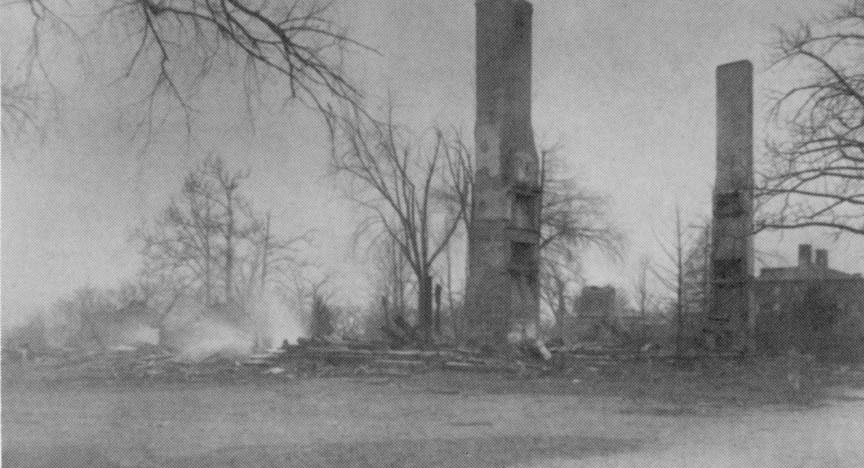
The history of Mansion House and its guests is enough to capture the attention of archaeologists. However, beneath Mansion House’s rich past is an enduring mystery – who burned it down? On the very early morning of November 29th, 1887, around 2:00 am the tenants were awoken by thick smoke coming from a fire in the rear base of the house near a pile of woodchips. A second fire was discovered shortly after in a third-floor room at the front of the house. Despite the best efforts of the local fire brigade and a galvanized town, Mansion House could not be saved. As chronicled by the Andover Townsman on December 2nd, 1887, Mansion House did not collapse, but it “slowly melted” into its foundations.

Image 3 1887 Mansion House Ruins Post Fire
Mansion House ruins after the fire

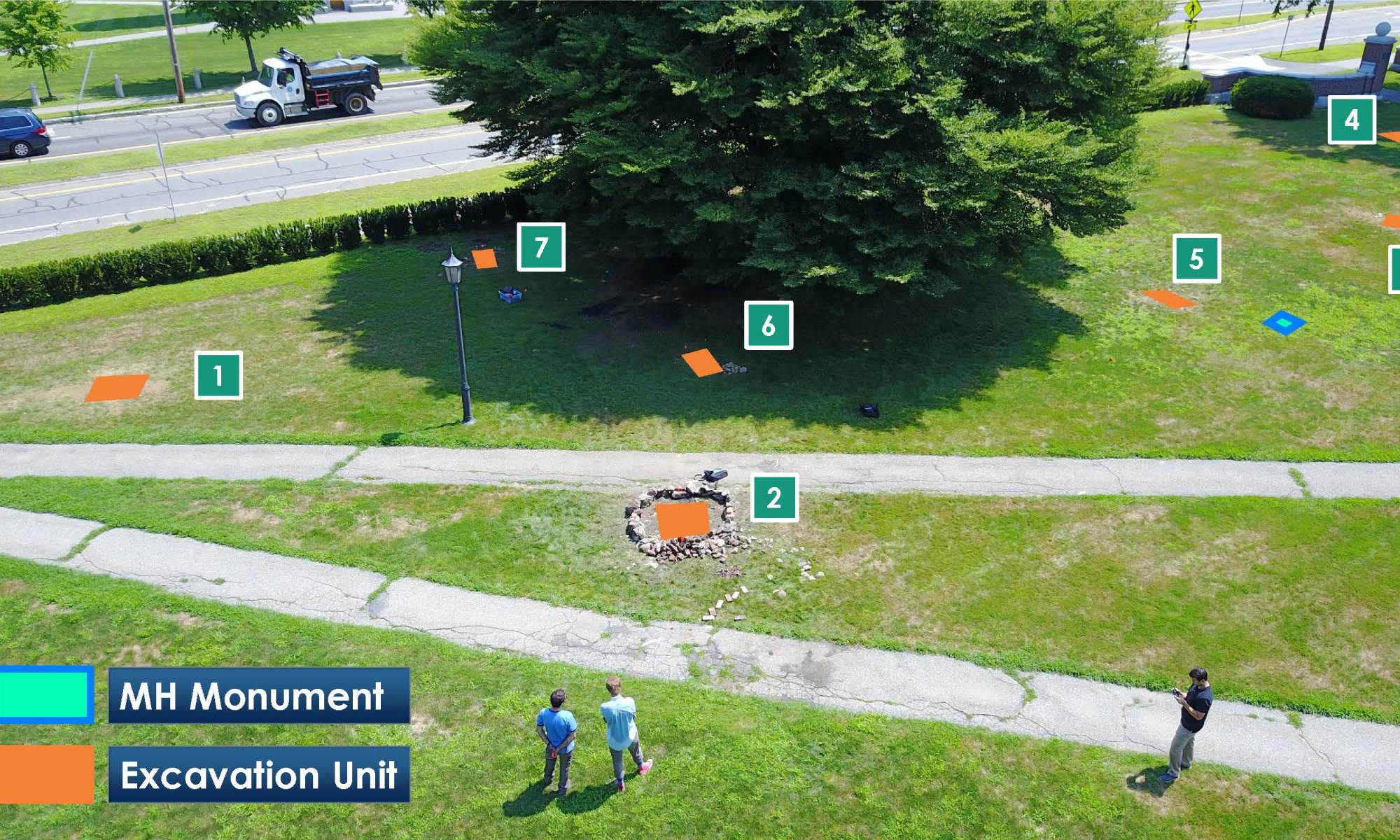
Most sites and buildings that archaeologists explore are little more than skeletons of their former selves. This reality puts limits on the archaeological record (often refuse in this context) and on the questions that archaeologists can ask about a site to broad notions of process or change over time. With Mansion House, a question of this variety would be: How did Mansion House change over time? What traditions are evident in the material remains of the site? However, because Mansion House burned into its foundations, we have access to an event, a specific moment in time. In this way, the materials students recover from Mansion House will help then share different informed stories about the site, its residents, and life in the 18th and 19th centuries. (IMAGE 4)

Image 4
Summer Session excavation unit

In 2018, our excavations confirmed the location of Mansion House by finding one of its (at least) 6 chimneys and the remains of an iron furnace. This finding not only establishes a more precise understanding of where Mansion House’s foundations are currently situated but it allows us to explore the material remains that have sat untouched for 132 years. With luck, this year’s investigations will allow us to understand even more about life in Mansion House during its final days. While the mysteries around the long-ago fire are unlikely to be solved, more insight will undoubtedly be learned about Phillips Academy and the local Andover community. Excavations at Mansion House will reopen in July of 2019.

Party’s not over – volunteering at the Peabody

Contributed by Quinn Rosefsky ’59

No one invited us to the party but we’ve stayed for over nine years. And the desserts keep getting better. Not that what we do would come under the category of party. What should be obvious to readers of this blog is that I am talking about what it is like to volunteer at the Peabody Institute. First of all, who can volunteer? Being a graduate of Phillips Academy helps in passing the rigorous entrance examination but there are exceptions, such as my wife, Susan, whose qualifications, while many, started with marriage. This automatically reduces the interview process (but does not eliminate the background check.) And what do volunteers do?

Some of you might get the wrong impression that all we do is what the staff shy away from. Far from it. There have been plenty of occasions where it was all we could do to pry staff apart from a project to allow us to either dig into the unknown (such as categorizing about one hundred yards of unclassified photos) or finish it off (such as one hundred yards of labels.)

Of course, I am exaggerating. (No point in frightening you.) I have handled (and often read) documents from the nineteenth and twentieth centuries; paleolithic artifacts from 10,000 B.C.E; ledgers with tens of thousands of entries. I can picture specific bifaces, sherds and feathers.

What my wife, Susan, and I have been doing has varied considerably over the years as staff have come and gone, priorities have shifted, and time frames have expanded. I like to think that volunteering has allowed the Peabody to think in terms of decades, not centuries. This might come as a surprise until you consider that the Peabody is home to somewhere in the vicinity of 600,000 artifacts.

For quite a number of the past nine years, Susan and Leah (another spectacular volunteer) have been inspecting, vacuuming and protecting textiles from Guatemala. Although the end of the project has been in their sights for the past year, Einstein’s theory of special relativity keeps getting in the way (time slowing, distances shortening…easy stuff.) Eager to try my own hand at a multitude of projects, my time has been slowed as well. Despite Einstein’s slowing of time as we operate at the speed of light, sadly, all of us working as an extended family inside the Peabody’s walls have grown somewhat older (but not by much and not at the same rate.)

Most recently, I had the task of filling out labels to put on a few of the 1,500 drawers containing a variety of artifacts. It was a matter of necessity, not just my dexterity and eye coordination. When I completed that task, it was my honor to look for the “absence” of items. It all started with the discovery that an item had been “mislabeled.” That’s akin to looking through a haystack and saying you didn’t find the needle. And winning means you did not find the needle.

Sometimes I write blogs. I’ll stop here because my limit is 500 words. (Only staff can do more!)

Yoda_Quinn
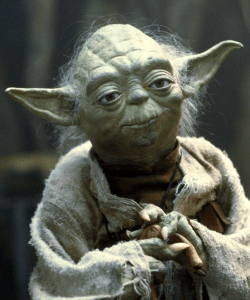
Quinn after volunteering for 9 years

The Flat Files

Contributed by Annie Greco

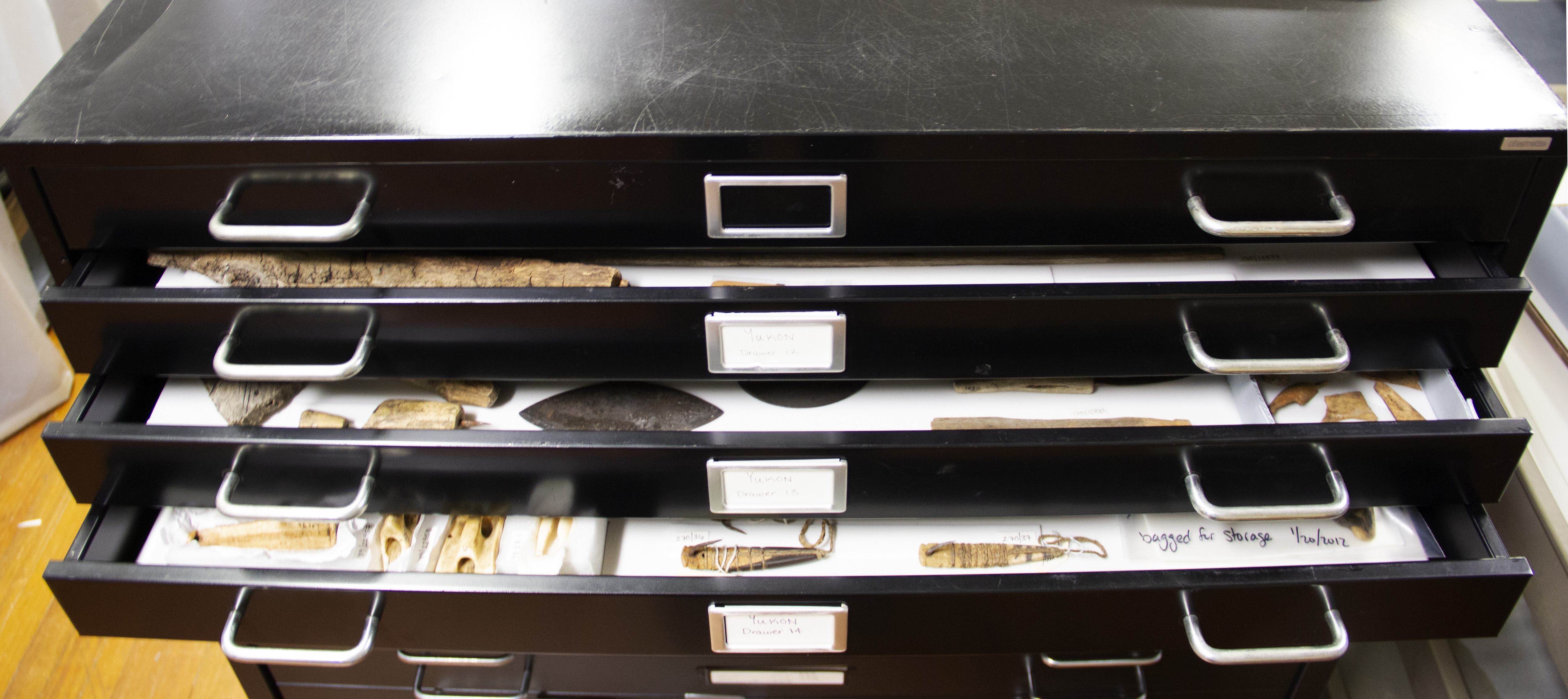
In addition to working on the Inventory Rehousing Project, I survey the artifacts and ethnographic materials held in our flat file storage units. While all artifacts at the Peabody Institute require special attention, the objects stored in our flat file storage need extra TLC, such as pest protection, monitored temperature, and custom storage mounts.

Flat File 1

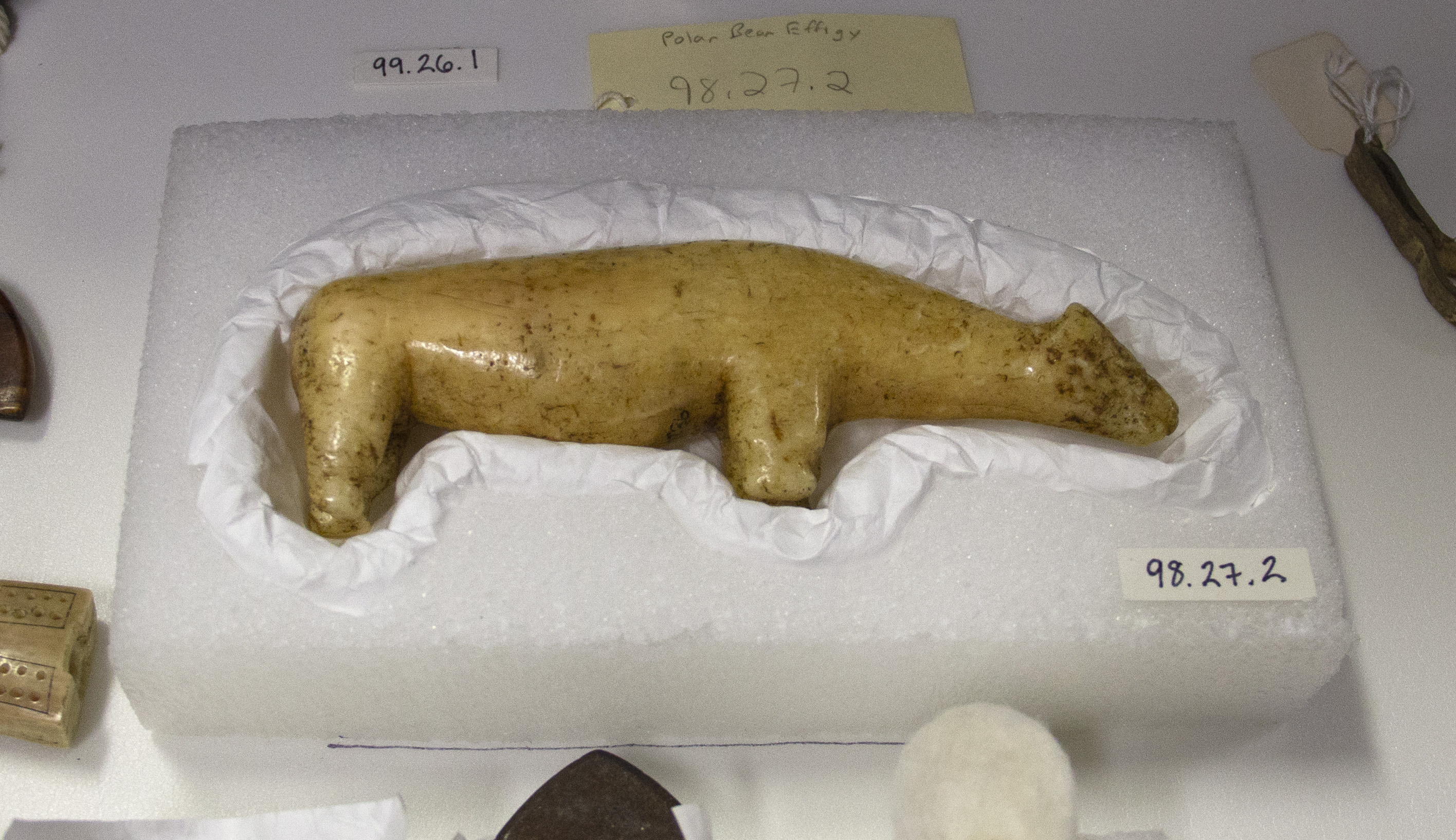
Let’s take a journey through the process! Each drawer in our flat file storage is first emptied for an inventory and inspection of objects. Once emptied, the drawer is vacuumed and relined with clean Volara® foam. Volara® is a closed cell polyethylene foam that has applications in medicine and museums. Objects that are particularly susceptible to movement or damage in storage are measured for custom mounts. Custom cavity mounts provide a rare opportunity to do work outside, to enjoy the weather while carving foam with a hot knife. Next, I assess each item’s condition and photograph it for our database records. Once complete, the artifacts are returned to their newly created foam padding and/or mounts for safe resting. My most recent work includes this small cavity mount for a Thule ivory figurine of a polar bear.

98.27.2

It is important to revisit these objects, not only to make sure all are accounted for, but to bring them up to today’s standards in terms of care and condition. After all, one of the most important goals of collections management is to preserve these objects to the best of our ability for future generations.

Different but the Same

Contributed by Alex Hagler ’16

Before I officially became a staff member here at the Peabody, I was a volunteer and work duty student. I started volunteering at the Peabody about nine years ago, and when I came to Phillips Academy as a student I immediately signed on to do work duty. As a volunteer and work duty student, I worked to catalogue and inventory returned artifact loans, set out class activities, digitize records, and photograph artifacts. Since going to college out of state about two years ago, I have not been back at the Peabody, other than for brief visits. Reflecting on my time working here, it is fascinating, and somewhat nostalgic, to look back at what the Peabody was like when I started all those years ago and how it has changed so much since then!

When I started volunteering here, the Peabody was still officially a museum and still had standing exhibit space on the first floor. Some of those exhibit cases displayed artifacts, others dioramas or archaeology-related activities done by some Phillips Academy classes. Down in the collections, we used white cotton gloves to handle artifacts, rather than the purple nitrile gloves we use now. The reboxing project had not begun, so much of the work I did was cataloguing and inventorying in preparation for when that project might get funding. While I was doing work-duty, I sat in on some meetings about how to make the Peabody more accessible to Phillips Academy students, both in terms of the collections and the building space as a whole. Since then, the Peabody has initiated student study hours, during which the building is open to students as a study space, and renovated the first floor to make it more class-friendly!

It has been just over two years since I graduated from Phillips Academy, and I am so happy to be back working here! I study archaeology in college, and so working here, albeit temporarily, is an opportunity not only to continue learning how to preserve archaeological collections, but also to put into practice what I have learned at school, namely how to make archaeology more accessible for everyone.

Alex
Inventorying the never-ending drawers


Allow me to introduce myself…

Contributed by Annie Greco

Welcome to my inaugural blog post. I have been working at the Peabody Institute for three months, so it is high time I introduce myself. I am the new Inventory Specialist. It is my job to inventory and rehouse the collections in storage for the next year.

I am a graduate student at UMass Boston and am passionate about Indigenous studies, both in and outside of archaeology. I interned for National NAGPRA last fall where I learned the importance of employing ethical daily practices at museums, especially when looking through the lens of civil rights issues. I have also worked on various archaeological projects in New England, New Mexico, California, and Iceland.

I have learned a lot in my time here so far, the diversity of regional material culture across North America, the importance of preservation, the most effective rehousing practices…even how to throw an atlatl. (Although my success rate is nothing to brag about.)

While most of my work experience is with freshly excavated archaeological collections, I am excited to transition my focus to the preservation of older collections, including collections on which the foundations of Native American archaeology were built. At least once a week, I am blown away by the Peabody’s collections. Objects I have only had the pleasure of reading about appear in their drawers. Needless to say, I am happy to be here and happy to help with the rehousing inventory project.

California Basketry Exploration

Contributed by Catherine Hunter

Native American basketry was the subject of a special research visit on June 4th. Ralph Shanks, Research Associate at University of California, Davis, and Lisa Woo Shanks are experts in identifying and analyzing Native American California basketry.  Together, they produced an outstanding 3-volume series on California basketry that has been indispensable in examining the Peabody collection.  The goal of their visit was the examination of over 100 Californian baskets for cultural identification.  The visit developed into a tutorial for staff as the discussions addressed ethnobotany, physical structure, and design elements found on the baskets.

Immersion in basketry required a specialized vocabulary for structures and materials such as twining, coiling, plaiting, overlay, double interlacing, foundation, willow, red bud, juncos and more.  The forms of baskets were confirmed as bowls, hats, seed beaters, burden baskets, winnowing trays, toys, and cooking vessels. Many Californian Indians cooked in water-tight water-filled baskets by adding heated stones; and examples of these were identified in the Peabody collection.

The visit was facilitated by Marla Taylor, Curator of Collections, and Catherine Hunter, Research Associate, who inventoried the collection of 300+ Native American baskets in 2015-16. Hunter returned to the Peabody recently to continue research for a paper “Indian Basketry in Yosemite Valley, 19th-20th Century: Gertrude ‘Cosie’ Hutchings Mills, Tourists and the National Park Serviceto be presented at the Textile Society of America Symposium in September 2018.  After Hunter consulted Shanks last month, he extended an East Coast vacation to include a visit to Andover.

Hunter selected this topic because of the Hutchings Mills Collection of baskets. Collector and donor Gertrude “Cosie” Hutchings Mills (1867-1956) was one of the first Anglo-American children born in Yosemite Valley to early settlers James Mason and Elvira Hutchings. She collected Native American baskets in the Yosemite Valley region before 1900, recording many acquisition sites and the names of three weavers. Such documentation is very rare; thus, the collection was of special interest to Ralph Shanks.

After marriage to William Elligood Mills in 1899, they lived in New England and their son attended Phillips Academy. In 1937 the collection of fifty-six baskets was donated by Mrs. Mills to the Peabody Institute.

Shanks was enthusiastic about the quality of the basketry, contributed significantly to our interpretation of the collection, and identified rare baskets that would enhance his own research. We were thrilled to host his visit!

Changing Roles and Responsibilities of Museums

Contributed by Samantha Hixson

The past five years have been a busy time for museums- most notably in the image department.  Following a number of high profile controversies, a lot of people–audiences, and museum professionals alike–asked what role museums play in our society?  Here are a couple of recent articles dealing with this subject head on.

Why Museum Professionals Need to Talk About Black Panther

black panther
Killmonger in the Museum (Photo courtesy of article)

Last month saw the release of Marvel’s newest blockbuster, Black Panther.  Besides being a fantastic movie, this film offers a unique chance to open dialogues on a large scale about many topics- least of which are museums as mechanisms of colonialism.  This article discusses how and why museum professionals especially should look at their roles in this and the effects they have on the audiences we try to reach.  The piece ends by laying out suggestions for how museums can move forward incorporating and working towards more diverse and open dialogues between communities.

Two Museum Directors Say It’s Time to Tell the Unvarnished History of the U.S.

Ggover and Bunch
Gover and Bunch at Symposium (Photo courtesy of Smithsonian Magazine)

This article opens with the quote, “history matters because it has contemporary consequences,” and it just gets better from there.  Directors Kevin Gover (National Museum of the American Indian) and Lonnie Bunch (National Museum of African American History and Culture) participated in a day long symposium titled, “Mascots, Myths, Monuments and Memory,” in which they talked about confronting the historic and continued racist ideologies that are entrenched in contemporary American society and the role of museums.  They specifically discuss the example of the concurrent rise of confederate statues and racist mascots.

How the Dana Schultz Controversy- and a Year of Reckoning- Have Changed Museums Forever

protest
Election protest (photo courtesy of Quartz)

Chronicling a series of high profile controversies, this article looks at the combination of factors that have led to these, as well as the changes they are bringing to museums and their operation.  It also discusses why museums have become ground zero for explosive cultural encounters stating, “We’re in a time when these issues are real, these controversies are part of public space and public discourse, and museums are going to become the places where these issues get played out.”

Native Voices, Accurate History Forge Deeper, Better Understanding of American Indians in Nations Schools

NMAI education
Students using NK360 (photo courtesy of Smithsonian Insider)

This article showcases the role museums have within their respective walls and how they are branching out to have far reaching impacts in classrooms all over the nation.  Similar to classes taught at the Peabody by Curator of Education, Lindsay Randall, this article follows the creation and implementation of National Museum of the American Indian’s newest initiative, Native Knowledge 360. NK360 is a “long-term initiative to integrate the Native American experience into social studies, language arts and other curriculum in kindergarten through 12th-grade classrooms across the country.”   This program works with the inclusion and cooperation of Native communities and educators as well as provides educational materials for teachers.