We recently commissioned Chase Kahwinhut Earles to create a pair of traditional Caddo style earspools for our permanent collection. We are thrilled with the result! Chase is a talented ceramic artist who works with traditional methods and materials to create vessels and other objects. Along with traditional forms and designs, Chase’s work also includes contemporary pieces and his own exploration of Star Wars through an Indigenous lens. His work has garnered numerous awards and accolades; private collectors and museums regularly commission and acquire his work. Check out his webpage for more of his work and videos of his process: https://www.caddopottery.com/
Ceramic and copper earspools by Chase Kahwinhut Earles, photograph by Chase Kahwinhut Earles.
These earspools were made with hand-dug clay, pit fired, with an embossed copper covering, much like examples found at archaeological sites in the southeastern United States. The star motif on this pair of earspools is reminiscent of designs known from Spiro, an ancient city in eastern Oklahoma, and from neighboring areas.
We look forward to seeing these earspools used in classes, especially curator of education Lindsay Randall’s Trade Connections lesson designed for History 100. Ear ornaments, made from a variety materials and styles, are well known throughout the western hemisphere, including jade and jadeite, wood, copper, shell, obsidian, and other stones.
Did you know that the Smithsonian is opening a new gallery – the Molina Family Latino Gallery of the National Museum of the American Latino – dedicated to highlighting Latino contributions to the United States?
I learned about this cool gallery about 18 months ago when the Peabody Institute was first contacted about potentially loaning an item from the collection for the inaugural exhibition that will open in mid-2022. The exhibition is the first to be presented by the National Museum of the American Latino. We were thrilled to contribute a small piece to the important story of how Latinos and Latinas inform and shape U.S. history.
What did they want to borrow?
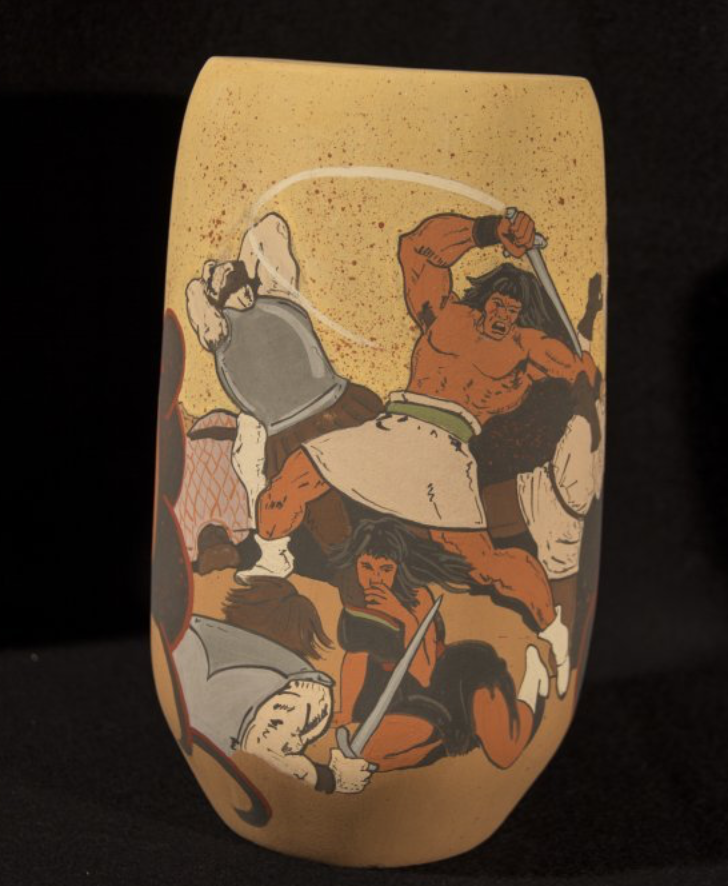
Vessel depicting the Pueblo Revolt by Jason Garcia
This amazing vessel by Jason Garcia (Okuu Pin), Santa Clara Pueblo, is an exploration of the Pueblo Revolt of 1680. Garcia is known for his mixture of traditional materials and methods with pop culture. Past blog posts have discussed this piece and his work.
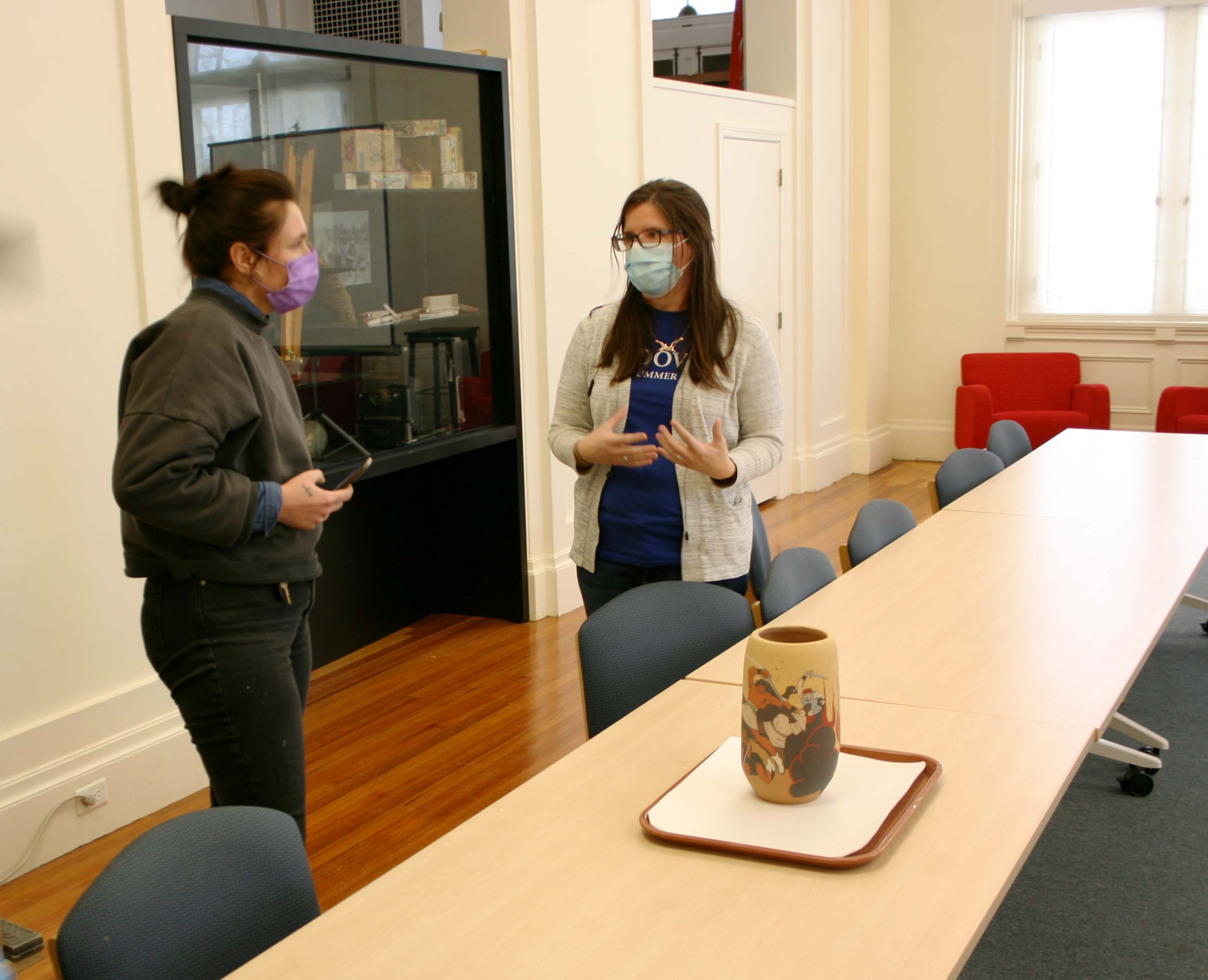
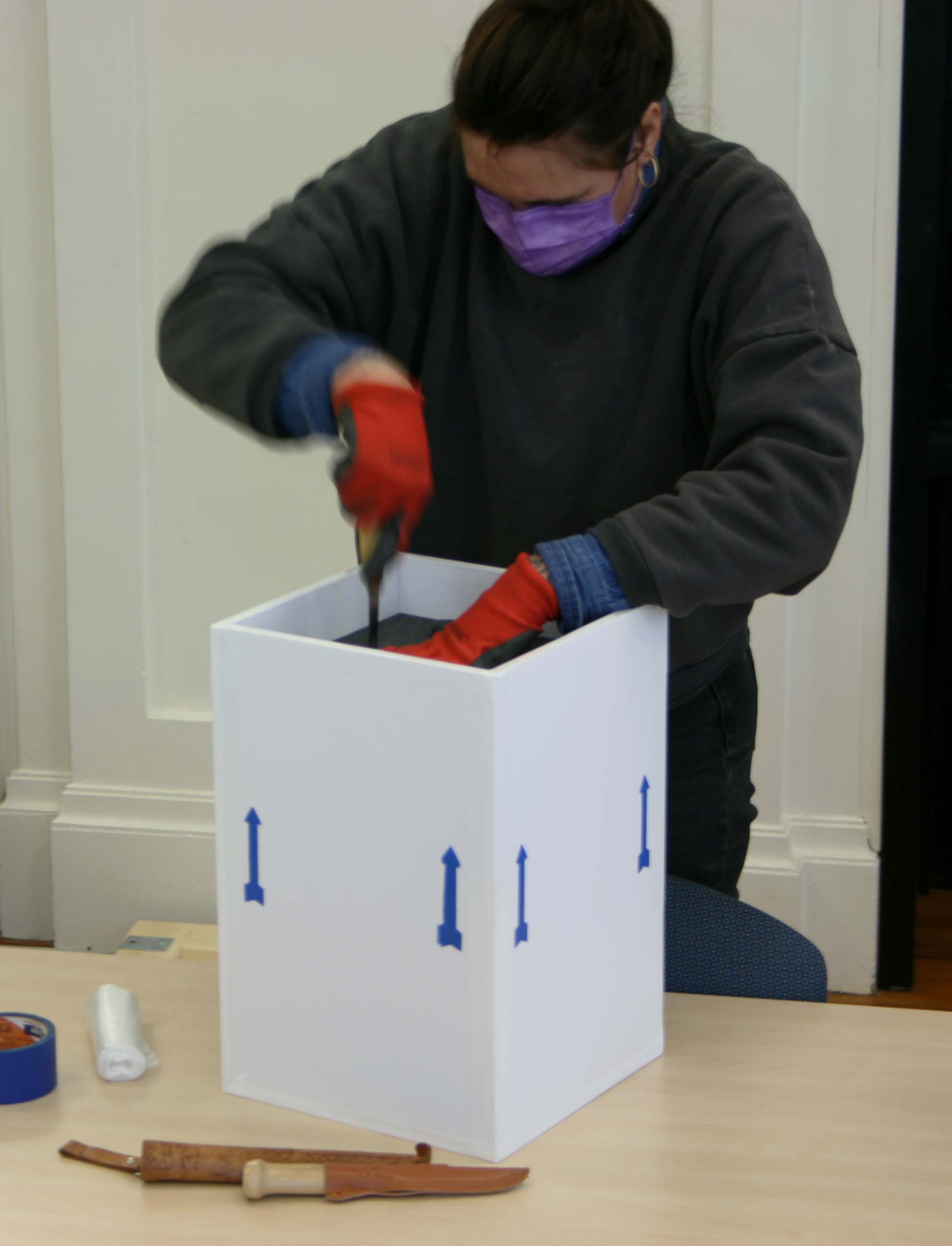
After months of correspondence and paperwork, the vessel was packed for transportation in mid-February of this year. It is always a pleasure to watch skilled art handlers create custom packaging and work to ensure that items make it safely to their destination. The team was great and the vessel is awaiting installation in its new temporary home.
I enjoyed learning more about the Molina Family Latino Gallery and the National Museum of the American Latino and encourage you to explore the newest branch of the Smithsonian. Keep your eyes peeled for an online version of the gallery later in 2022 for those who are unable to travel there in person.
[NOTE: This paper was published in the special issue “Indigenous Collections: Belongings, Decolonization, Contextualization” of Collections: A Journal for Museum and Archives Professionals, 2022, Vol. 18(1):8-17. We’ve reproduced the pre-press version here with pagination for those who do not have access to SAGE publications. Please cite as Wheeler, Ryan, Jaime Arsenault, and Marla Taylor. “Beyond NAGPRA/Not NAGPRA.” Collections 18, no. 1 (March 2022): 8–17. https://doi.org/10.1177/15501906211072916.%5D
Abstract
Institutions have been slow to respond to calls from Indigenous nations, organizations, and scholars to require free, prior, and informed consent before authorizing use of their cultural heritage materials in publications, exhibition, and research. In the United States, the Native American Graves Protection and Repatriation Act of 1990 fundamentally changed the relationship between museums, archaeologists, and Indigenous nations, requiring institutions to inventory their collections and consult with descendant communities on repatriation of specific Indigenous collections. In response, institutions and their personnel have come to view Indigenous collections as those subject to NAGPRA and those that are not—NAGPRA/Not NAGPRA. Many Indigenous nations, however, do not accept this demarcation, resulting in continued frustration and trauma for those descendant communities. This case study follows the evolving relationship between the White Earth Band of the Minnesota Chippewa Tribe and the Robert S. Peabody Institute of Archaeology. Beginning with repatriation, the relationship has expanded to consider how the museum and Indigenous nation can collaborate on the care and curation of cultural heritage materials that remain at the Peabody Institute. Most recently, White Earth and the Peabody have executed an MOU that governs how the museum will handle new acquisitions, found-in-collections materials, and donor offers. The relationship with the White Earth also has influenced how the Peabody Institute approaches its holdings of Indigenous cultural heritage materials more broadly, blurring the line between NAGPRA and Not NAGPRA collections. The Peabody Institute is working to revise its collections policy to require free, prior, and informed consent prior to use of Indigenous cultural heritage materials in publications, exhibitions, and research.
PAGE 9
Introduction
This case study is authored by Ryan Wheeler and Marla Taylor, who acknowledge that they are settlers of European descent in the unceded territories of many Indigenous nations in New Hampshire and Massachusetts, USA, including the Wabanaki Confederacy and the Wampanoag nations, and Jaime Arsenault, the Tribal Historic Preservation Officer (THPO) for the White Earth Band of the Minnesota Chippewa Tribe (White Earth). Wheeler and Taylor are employees of the Robert S. Peabody Institute of Archaeology (the Peabody), an archaeology museum that is part of Phillips Academy, a college preparatory school located in Andover, Massachusetts USA. Founded in 1901, the Peabody has a lot in common with other twentieth century museums in the United States, including amassing Indigenous collections from diverse areas with little or no consent from descendant communities. The Peabody currently holds nearly 600,000 objects of Indigenous material culture, primarily from the Arctic and Canada; the northeastern, southeastern, and southwestern United States, and Mexico and Peru, as well as photographs and archival materials.
The Native American Graves Protection and Repatriation Act (NAGPRA) was passed as federal law in 1990 and required that museums and federal agencies inventory their holdings for ancestral remains and funerary belongings, provide these inventories to descendant Indigenous communities, and consult with those communities on cultural affiliation and repatriation. NAGPRA has elements of property law and civil rights legislation, providing an opportunity for Indigenous nations to reclaim stolen ancestors and funerary belongings. NAGPRA fundamentally changed the relationship between Indigenous nations, archaeologists, and museums, creating an environment where representatives of each group were in regular contact with one another. Often this contact led to other programs and collaborations beyond NAGPRA. For examples, Nash (2021; also see Moore 2010) has recently revisited the concept of “propatriation,” collaborative undertakings that go beyond the legal requirements of the Native American Graves Protection and Repatriation Act (NAGPRA) or moral imperatives to return Indigenous cultural heritage to groups outside the United States. NAGPRA compliance, however, has been slowed by a variety of factors, including institutional reliance on archaeological and biological lines of evidence, even in the face of compelling oral history evidence or expert opinion supplied by Indigenous nations. At the time of this writing, over 100,000 ancestors remain in museum collections with little or no path to repatriation (Nash and Colwell 2020).
PAGE 10
Between 2013 and 2015, the Peabody developed a strategic plan that built on an earlier commitment to NAGPRA, prioritizing decolonial principles in all aspects of museum operations (Robert S. Peabody Institute of Archaeology 2015). With decolonization as a guiding principle, the plan acknowledged the harm caused by archaeological excavations and sought to shift the balance of power, giving Indigenous nations a greater voice in how their material culture is handled and interpreted. We argue that museums and institutions holding Indigenous cultural heritage must go beyond collaborative programming to instill change at the policy and procedure level. Work on NAGPRA compliance provides an opportunity to develop and implement those policy changes.
The Peabody Institute and the White Earth Band of the Minnesota Chippewa Tribe have collaborated to blur what we have been calling the NAGPRA/Not NAGPRA dichotomy. Though we have encountered other museums in the United States where staff are interested in instituting such changes, informal conversations have found few examples where official policies governing how Indigenous collections are accessed for exhibit, research, photography, or other purposes specifically require the free, prior, and informed consent of descendant communities. The United Nations Declaration on the Rights of Indigenous Peoples (UNDRIP) was adopted by the General Assembly on 13 September 2007. Part 2 of Article 11 specifically states:
States shall provide redress through effective mechanisms, which may include restitution, developed in conjunction with indigenous peoples, with respect to their cultural, intellectual, religious and spiritual property taken without their free, prior and informed consent or in violation of their laws, traditions and customs (UN General Assembly 2007).
Article 12 deals with the rights of Indigenous people to seek repatriation of ancestors and ceremonial objects. Revision of the Peabody’s collection policy specifically aligns with Articles 11 and 12 of UNDRIP, both in the way that NAGPRA is implemented, but also in going beyond NAGPRA compliance to insure the rights of Indigenous people regarding their tangible and intangible cultural heritage.
NAGPRA/Not NAGPRA
Co-authors Wheeler and Taylor, in their respective roles as director and curator of col- lections at the Peabody Institute, began using the phrase NAGPRA/Not NAGPRA sometime in the last few years to describe their own approach to Indigenous heritage collections. This articulation of our own institution’s approach to repatriation occurred in 2017 to 2018 when we first began to draft a broad repatriation policy, based on our existing practice. Consultation with Indigenous nations, especially White Earth, as well as the Osage Nation of Oklahoma, the Wabanaki Repatriation Confederacy of
PAGE 11
Figure 1. Tara Mason, beadwork artist and member, White Earth Band, examines Anishnaabe clothing at the Peabody Institute as co-authors Marla Taylor and Ryan Wheeler look on during a consultation visit, January 2017.
Maine, Pueblos in the American Southwest, as well as engagement with other repatriation practitioners in the NAGPRA Community of Practice began to erode our commitment to this approach (Figure 1). Taylor concisely stated that she believed that many institutions, in response to the passage of NAGPRA, began to distinguish those collections that they felt were subject to NAGPRA from those that were not. By firmly drawing boundaries between NAGPRA and Not NAGPRA collections, institutions preserve pre-NAGPRA decision-making structures regarding how they can access and use Indigenous cultural heritage. This discernment, whether intentional or not, reflects the imbalance inherent in a law that sought to balance the interests of museums with the rights of Indigenous nations to reclaim their stolen ancestors and make decisions regarding other tangible and intangible cultural heritage, including images, archives, and songs. If there is any doubt about this, responses from museums and archaeologists to the Department of Interior’s proposed changes to the NAGPRA rules support our assertion (see Seidemann 2008).
Blurring the Lines
While uncommon, there are some excellent examples where organizations and institutions have blurred the lines between NAGPRA and Not NAGPRA collections. The First Archivists Circle (2007) developed and shared The Protocols for Native American
PAGE 12
Archival Materials. Like NAGPRA, consultation with descendant communities is at the core of The Protocols. The Protocols stress that consultation and shared decision making about archival collections are in line with accepted ethical archive practices. Between 2016 and 2018, the Peabody Institute incorporated many of the principles and practices advocated for in The Protocols. For example, we agreed that digitizing paper and photographic records was inappropriate without consultation and explicit approval from Indigenous nations, especially as many of the museum records dealt with excavations of ancestral remains. It was not until more recently that we formally incorporated these practices into our collections policies and procedures. It is unclear, however, how many institutions have formally implemented the recommendations within The Protocols, though there are good examples and case studies at the website of the Society of American Archivists (2021a, 2021b).
The University of Maine (2018, Orono) executed a Memorandum of Understanding with the Penobscot Nation. The MOU formalizes principles and practices regarding how the university manages and shares Penobscot cultural heritage at the Hudson Museum, the Fogler Library, the University of Maine Press, and the Anthropology Department. University of Maine history faculty member Darren Ranco and Jane Anderson of New York University developed the University of Maine MOU. Anderson’s work on attribution, Indigenous archives, intellectual property, and Traditional Knowledge labels is critically important and informs the case study presented here (Anderson 2018; Christen and Anderson 2019).
Case Study
White Earth is one of seven Anishinaabe reservations in Minnesota, created in 1867 by a treaty between the United States and the Mississippi Band of Chippewa Indians. Unlike many lands set aside for Indigenous nations in the United States, the White Earth Reservation had abundant natural resources, including timber. Meyer (1994), a historian of mixed Irish, German and Eastern Cherokee heritage, published The White Earth Tragedy, telling the story of how unscrupulous companies and individuals defrauded the Anishinaabe people of their property, land, and natural resources (Bloch et al. 2008). The dispossession of the White Earth Anishinaabe also set in motion the loss of significant material culture, as anthropologists and collectors forced Indigenous nation members to sell or gift items they possessed.
Robert S. Peabody and Warren K. Moorehead founded the Peabody Institute in 1901, originally called the Phillips Academy Department of Archaeology, at Robert’s high school alma mater. The museum became involved in the major undertakings of twentieth century archaeology, including sponsorship of Alfred V. Kidder’s 1915– 1929 excavations of Pecos Pueblo, investigations across the Northeast and Southeast, with personnel holding leadership roles in major anthropological and archaeological
PAGE 13
organizations. Curator Warren K. Moorehead was also involved with the Bureau of Indian Affairs (Fritz 1985). Through his association with the BIA, he investigated the fraud being committed against the Anishinaabe people at White Earth. While at White Earth Moorehead obtained a number of cultural heritage materials, ranging from photographs to sacred items to elements of Anishinaabe clothing (Bacon 2009; Moorehead 1914).
Personnel at the Peabody Institute embraced repatriation after the passage of NAGPRA in 1990, perhaps largely due to the commitment and vision of Leah Rosenmeier, who served in a variety of roles at the museum from 1993 to 2002 (Bradley 2018). Starting in 2013, the leadership of the Peabody Institute recognized the importance of repatriation work conducted under NAGPRA and the need for broader theoretical underpinnings that could inform all collections and educational endeavors (see Lonetree 2012). As part of their strategic planning process, Wheeler invited Arsenault to present to the institute’s advisory committee, following an earlier meeting in 2011. Coincidentally, Arsenault was assisting in the development of the White Earth’s Tribal Historic Preservation Office (THPO) repatriation program, and was actively searching for Indigenous cultural heritage that had originated at White Earth.
Warren K. Moorehead’s activities at White Earth in 1909 had led to the accession of a number of items, including glass plate photographs of his investigation, Anishanaabe clothing and bandolier bags, as well as pipes, a war flag, and birch bark scroll meeting the definition of cultural patrimony and sacred objects under the NAGPRA law and rules. Arsenault and other White Earth representatives aided in the repatriation of some of these Indigenous collections, and provided informal guidance on the care of the remaining materials (National Park Service 2016, 2017). For example, White Earth representatives asked that the museum not share the photographic images made by Moorehead without permission from the THPO.
Arsenault, serving as the White Earth’s Tribal Historic Preservation Officer, pro- posed in 2020 that the Peabody Institute enter into a more formal agreement regarding future acquisitions of Indigenous cultural heritage originating from the Indigenous nation. The agreement would cover offers of donations or sale made to the museum, or purchases of contemporary artwork from Indigenous nation members. Arsenault collaborated with Jane Anderson of NYU and provided a draft agreement document, and Wheeler, Taylor, and the Phillips Academy legal counsel made revisions and updates. A copy of the final document—ultimately called Memorandum of Understanding (MOU) between White Earth Band of the Minnesota Chippewa Tribe Historic Preservation Office and the Robert S. Peabody Institute of Archaeology—is available from the authors or the Peabody Institute. Major elements include:
The MOU addresses all tangible and intangible materials (photographs, field- recordings, maps, archaeological collections, films, field-notes, legal papers,
PAGE 14
artwork, biographical material, and like materials) that relate or may relate to White Earth. There are provisions for the tribe to aid the institution in making cultural identifications if the materials cannot be sourced to White Earth specifically.
The MOU specifies that it is part of Peabody Institute efforts to adhere to CARE Principles for Indigenous Data Governance (Global Indigenous Data Alliance 2019). Among other things, the CARE Principles recognize that current efforts to digitize and widely share scientific data often fail to involve descendant com- munities in these decisions.
There is a focus on communication between the Peabody Institute and White Earth, especially in cases where there are potential purchases or donations of cultural materials that originated from White Earth. This includes contemporary artwork, so that the White Earth THPO can track all White Earth cultural heritage. There are provisions for regular contact and exchange of information between the tribe and museum, and revisions to the MOU as needed.
The MOU specifies that the Peabody Institute will encourage potential donors and sellers to work directly with White Earth to transfer tangible and intangible cultural heritage materials to the tribe as the descendant community.
White Earth is the primary cultural authority over their cultural heritage materials in perpetuity. This includes provisions that the White Earth THPO must approve all requests to publish, research, disseminate, image, or exhibit said cultural heritage materials before the museum grants permission to the requestor.
The Peabody Institute and White Earth will collaborate to develop Traditional Knowledge (TK) labels for White Earth heritage materials held by the institution, formalizing some of the practices already in place (Local Contexts 2019).
Recommendations
Work with your institutional leadership to revise collections policies and procedures to center Indigenous voices. This should include policies that govern loans, exhibits, and research, updated to require descendant community approvals. At the Peabody Institute we have revised the documents that relate to loans and researcher access, making it clear that descendant communities must be involved at all stages of a project and that those communities must approve how Indigenous cultural heritage is used or exhibited.
Add Indigenous members to your museum leadership board or committee, and col- lections subcommittees. Members with particular geographic or cultural affiliation with collections that you hold will bring invaluable expertise.
If your institution is working on NAGPRA compliance or repatriation in general, consider having conversations with consulting tribes about MOUs that would vest
PAGE 15
cultural authority and decision making on collections with those descendant communities.
Develop and implement a Care-and-Trust Agreement with the descendant communities represented in the collection to dictate the care, access, handling, and housing of collections while in the physical control of the institution. An agreement like this should apply to all relevant material within the collection regardless of repatriation status. Update webpages to indicate that your institution is open to collaboration with Indigenous communities, especially if the collections you hold are geographically and culturally diverse.
Educate staff and board members to help build a broad base of support for your efforts. This can include readings and coursework, as well as informal conversations about decolonizing work at all levels of the institution.
Acknowledgments
We thank Rose Buchanan for her help in understanding ongoing work to implement the Protocols for Native American Archival Materials.
Bradley, James. 2018. “Negotiating NAGPRA: Rediscovering the Human Side of Science.” In Glory, Trouble, and Renaissance at the Robert S. Peabody Museum of Archaeology, edited by Malinda Stafford Blustain and Ryan Wheeler, 159–72. Lincoln: University of Nebraska Press.
Fritz, Henry, E. 1985. “The Last Hurrah of Christian Humanitarian Indian Reform: The Board of Indian Commissioners, 1909-1918.” Western Historical Quarterly 16 (2): 147–62.
Global Indigenous Data Alliance. 2019. “CARE Principles for Indigenous Data Governance.” Accessed July 1, 2021. https://www.gida-global.org/care.
Lonetree, Amy. 2012. Decolonizing Museums: Representing Native America in National and Tribal Museums. Chapel Hill: University of North Carolina Press.
Meyer, Melissa, L. 1994. The White Earth Tragedy: Ethnicity and Dispossession at a Minnesota Anishinaabe Reservation, 1889–1920. Lincoln: University of Nebraska Press.
Moore, Emily. 2010. “Propatriation: Possibilities for Art after NAGPRA.” Museum Anthropology 33 (2): 125–36.
Moorehead, Warren, K. 1914. The American Indian in the United States: 1850-1914. Andover: Andover Press.
UN General Assembly. 2007. “United Nations Declaration on the Rights of Indigenous Peoples: Resolution Adopted by the General Assembly, 2 October 2007, A/RES/61/295.” Accessed October 12, 2021. https://www.refworld.org/docid/471355a82.html.
Ryan Wheeler is the director of the Robert S. Peabody Institute of Archaeology, a museum at Phillips Academy, Andover MA. At the Peabody, he has advanced a strategic vision focused on collections, education, and repatriation. In 2017, Ryan co-founded the Journal of Archaeology & Education, the only academic journal devoted to the intersection of these two fields. Ryan lives with his family in Medford, MA.
Jaime Arsenault is the Tribal Historic Preservation Officer (THPO), Repatriation Representative, and Archives Manager for the White Earth Band of the Minnesota Chippewa Tribe. Ms. Arsenault has worked with Indigenous communities for over twenty years. Currently, she is a member of the Minnesota Historical Society Indian Advisory Committee and the Repatriation Working Group with the Association on American Indian Affairs (AAIA) and a member of the Smithsonian Institution’s National Museum of Natural History Repatriation Review Committee. She is a Community Intellectual Property Advisory Board Member for the Penobscot Nation and sits on both the Advisory Committee and the Collections Committee of the Peabody Institute of Archaeology. Ms. Arsenault also serves as a MuseDI Partner on decolonization practice for the Abbe Museum.
Marla Taylor is the curator of collections at the Robert S. Peabody Institute of Archaeology at Phillips Academy in Andover, MA. She has worked in all facets of collections management from cataloging to conservation to repatriation. Marla currently splits her time between leading an effort to conduct a full inventory of the collection and facilitating access to the Peabody’s collection for Indigenous nation partners, researchers, and educators.
My name is Deirdre Hutchison and I am currently studying for my B.A. in history at UMass Lowell. One of the things I love most about college is delving into archival research, unraveling forgotten stories, and the thrill when making connections that reveal new pieces of information, or even reshape the original context.
Recently I came across Warren K. Moorehead through his publication “The Merrimack Archaeological Survey.” Intrigued by this contradictory personality, I was excited to get the opportunity to do an internship at the Peabody and expand my knowledge on his work. Given my previous exposure and interest, curator Marla Taylor suggested I work on identifying information on approximately 30-50 photographs at the Peabody. The collection depicts ethnographic images of Native Americans. My objective was to discover how these images came to the museum, what was the purpose of the photos, and who may own the copyright. Given the magnitude of the search, it made sense to focus initially on only a few photographs. Several images had dates (early 20th century), captions with “101 Ranch, Oklahoma”, tribal names, and even a photographer name. Collectively, this seemed to occur during Moorehead’s tenure, and thus the investigation began with the Peabody’s first curator.
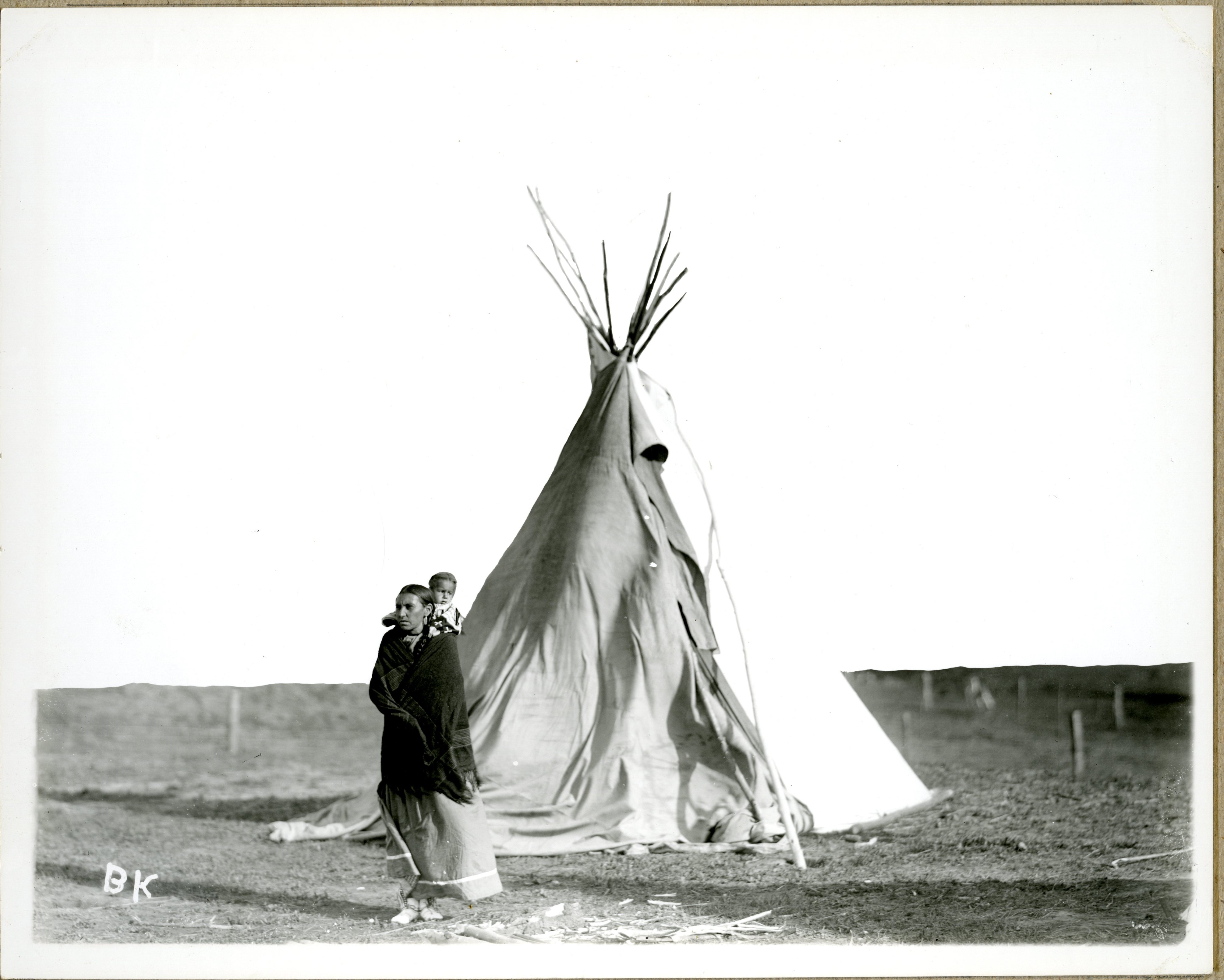
An example of one of the photographs being researched
As I eagerly navigated box after box of Moorehead records, I felt sure it was only a matter of time before I would make a connection between the man and the photos. After combing through his publications, correspondence centered on Oklahoma and the early 1900s, and hundreds of lantern slides later, a different narrative was emerging, though no less intriguing. Despite the vast array of articles, records and collections at the museum, disappointingly, no connection could yet be found between Moorehead and these early images. Details on the named photographer, Kent Chandler of OK, proved equally elusive. However, as we all learn in high school, never underestimate the importance of a comma. With no comma between Kent and Chandler on the photograph mount, I assumed it was his full name. Further digging finally revealed a gentleman named James Kent who lived in Chandler and worked with the 101 Ranch in OK.
Miller Brothers 101 Ranch (19276.76, Oklahoma Historical Society)Pawnee Bill and Zack Miller on Horseback at the Miller Brothers 101 Ranch, Oklahoma.
My next investigative step was the Library of Congress. For three of the photos held at the Peabody I found a match. Excitedly I noticed the details confirmed those at the Peabody – the photos were of the Ponca tribe and taken at the 101 Ranch in Bliss, OK. However, I now had another new piece of key information, the publisher was H.H.Clarke. Investigation into the 101 Ranch revealed the Miller Brothers, famed for their wild west shows for decades, as the brainchild behind the images. Further insight came from a bio on the Oklahoma Historical Society of photographer James B. Kent, revealing he was a resident photographer for the Miller Brothers.
Despite making headway, H.H. Clarke, the publisher of the images, also proved difficult to trace. Finally, I found a reference to publishers H.H. Clarke on the Cherokee Strip Museum website in Perry, Oklahoma. Clarke and his wife operated a small newspaper and native curio store but also had a sideline in publishing postcards. Once again, up popped the 101 Ranch as the backdrop for many of their postcards. All roads keep circling back to the Miller Brothers. It seems they had quite the operation! The Oklahoma Historical Society has an interesting documentary from c.1950 that highlights the magnitude of the activities of the brothers and the ranch which can be watched here.
At the “Oklahoma Gala day” exhibit in 1905, the Millers had their ranch hands and Native Americans demonstrate their skills and featured the incarcerated Geronimo killing a buffalo as a special attraction.
Geronimo skinning a buffalo from the Peabody’s image collection – a similar image to the one in the Library of Congress yet with notable differences
It appears the brothers showcased many Native Americans performing a range of similar publicity stunts. Kent was one of their preferred photographers for these staged events and H.H. Clarke often published them.
How the images came to the Peabody is still not clear. However, I hope I can uncover more information from the archives of the Oklahoma Historical Society which has a great deal of information on the Millers and the ranch.
There is no doubt headway has been made on the purpose of the photos. As I navigate the vast empire of the Miller brothers, propaganda, and unashamedly, profit, seem to be the key factors in their relationship with Native American photos. The question stills remains of how the images came to the Peabody. As I move through the next few weeks, I am hoping to find a link between the Miller brothers, 101 Ranch, and the Peabody. At the same time, establishing who has reproduction rights on the images that I have identified will be key to achieving my goals. As with any historical research, and in the absence of records, there are no guarantees. However, I hope to get as close to the truth as one can and there is no doubt that this journey is as exiting as the destination. More to come…
Mark your calendars! PA Giving Day begins Wednesday, March 30, 2022! This year, the PA Giving Day event will run from Wednesday, March 30, 9 a.m. to Thursday, March 31, 12 p.m. EDT.
For those inspired to give early, please complete the PA Giving Day form here! Please be sure to select the Robert S. Peabody Institute under the “designation” section. Any gift made in advance of the event will count toward PA Giving Day totals.
Last year the Peabody Institute garnered 70 gifts! This year we hope to have more challenges and even more support! Keep a look out for exciting posts and takeovers across our social media channels leading up to PA Giving Day!
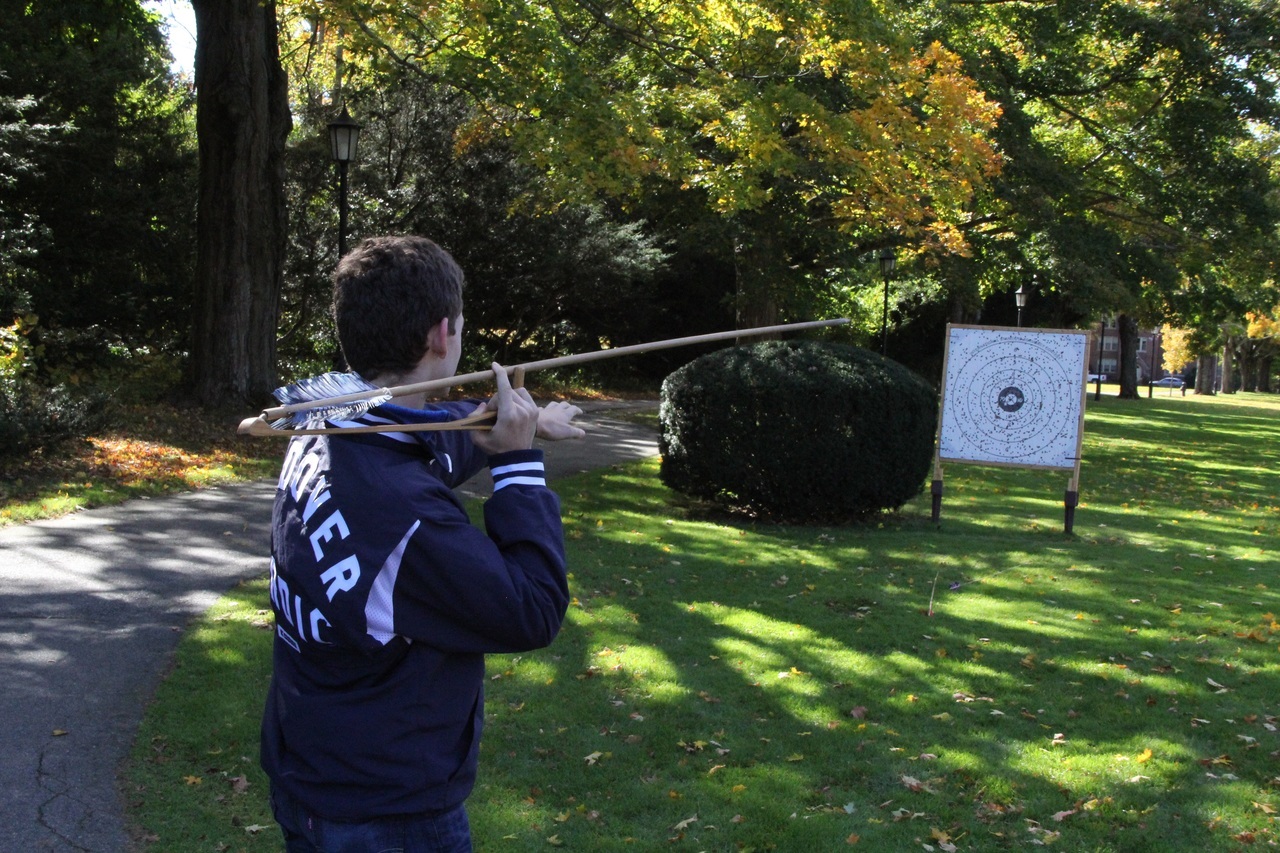
PA student preparing to throw an atlatl on the Vista
Recently, an unusual item was found while processing one of our adopted drawers. The Adopt-A-Drawer program lets donors support the full cataloging of artifacts housed at the Peabody. Every time a drawer is adopted we measure, weigh, photograph, and house the contents in archival storage. Beyond documentation and storage, adopted drawers represent a chance to dig deeper into the stories of the items held here at the Peabody.
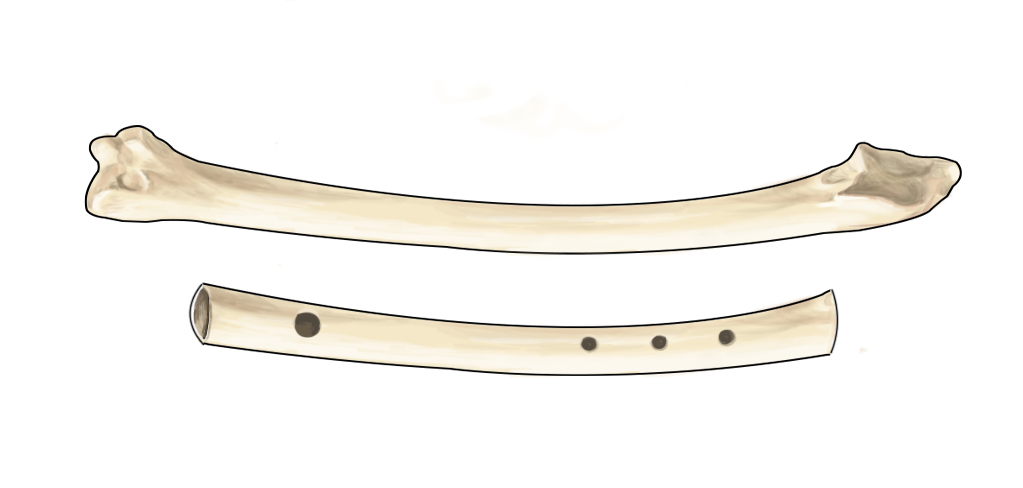
Figure 1. Example of an unmodified turkey ulna (top) and flute made from ulna.
The item in question was one of two bone flutes stored in the adopted drawer (figure 2). According to our catalog, they were both from Pecos Pueblo, a site in New Mexico situated in the Upper Pecos Valley east of Santa Fe. One of the flutes is labeled with a number that indicates that it was previously uncataloged and found with material from Pecos. At some point in the past, it had become separated from its provenience information.
When comparing the two flutes they are similar in most ways. They are both made from bird bones with the ends removed to make a hollow tube (sound chamber) that is open on both ends. They also share the same configuration of holes. There is a larger hole near the proximal end of the bone and three smaller holes at regular intervals near the distal end of the bone.
Where they differ is that the uncataloged flute’s sound chamber is plugged at the proximal end by a dark material with a vitreous luster. It immediately brought to mind resin, an Indigenous adhesive material that I knew of but had never seen in a decade of working as an archaeologist. The position of the plug suggested that this instrument was played like a transverse flute, which was eye opening.
Figure 2. The two flutes with view of openings at proximal end.
I looked for information on other flutes from Pecos and fairly quickly came across an article authored by Richard W. Payne for Kiva, an archaeological journal published by the Arizona Archaeological and Historical Society. Mr. Payne was a trained medical professional with a lifelong interest in Native American flute music. You can find more information about him here and a bibliography of his writings on native flute traditions here. He is considered one of the driving forces behind the rejuvenation of the Native American (or Plains) flute, which is its own fascinating story (Conlon 2002).
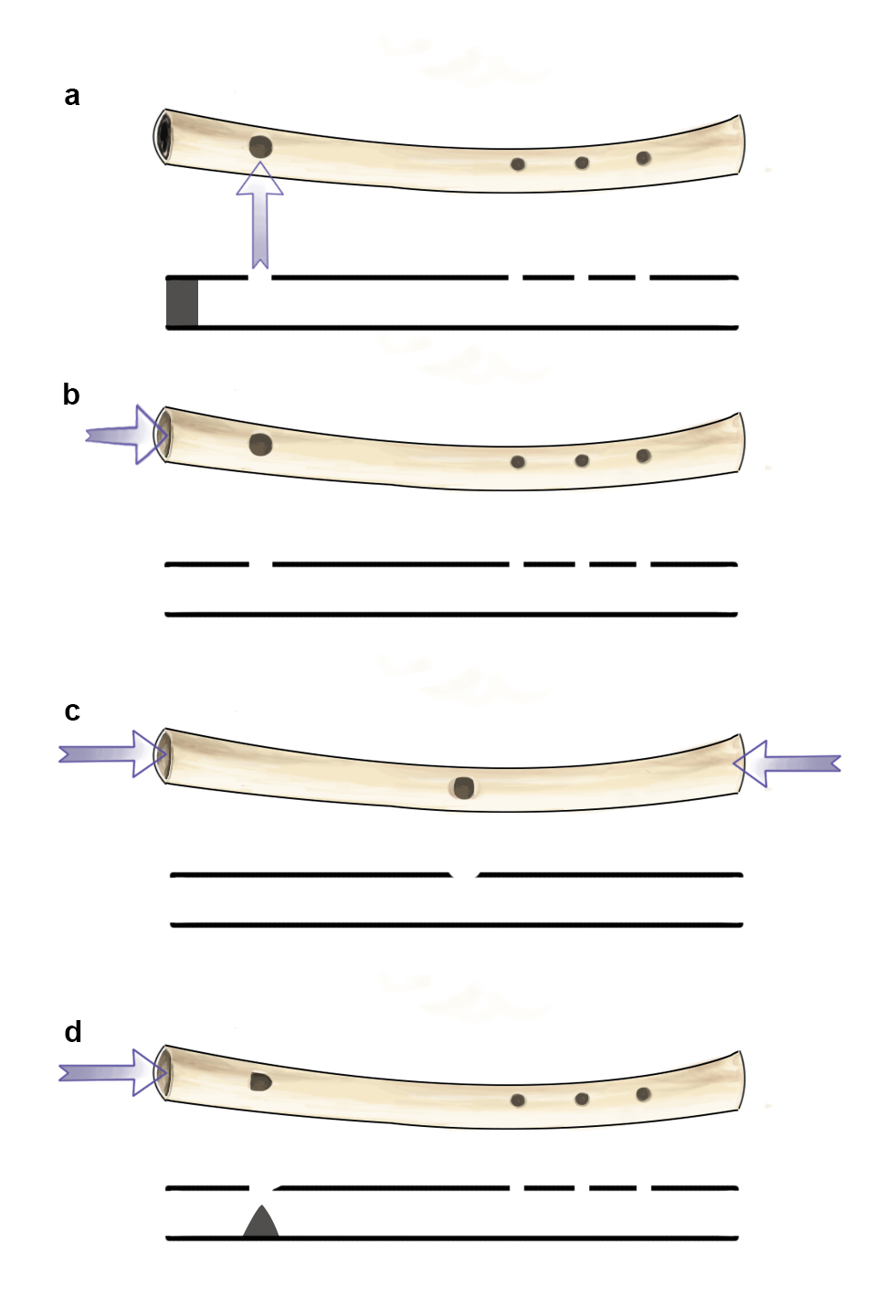
Payne’s article is fairly technical, being written from the perspective of a person with years of flute playing and experience with musical theory. Neither of these subjects are in my wheelhouse. On the first read, the most interesting points concerned his visual analysis of bone flutes from Puebloan sites. Among other suppositions, he suggests that the sound window shape can determine how the instrument was played (figure 3). Round holes could serve as the embouchure of a transverse flute or as tone holes of for an end blown flute. Notched holes could be played from either end. Triangle or square holes suggest ducted flutes. (Payne 1991)
Figure 3. Examples of sound windows with arrows to indicate wind direction and cross-section showing sound chamber. a: Transverse flute with plug. b: End blown flute, with wind blowing across the open end. c: Notched, making a hole with fipple edges to allow play from either end (my best guess). d: D-shaped window of a ducted flute with interior duct to direct air flow.
In discussing the bird bone flutes of Pecos, Payne notes that the site was occupied until the nineteenth century and that bone flutes from later contexts show evidence of European influence. Frustratingly, the claim isn’t supported with examples. Further, he mentions an article by Charles Peabody, the first director of the Peabody, wherein a flute from Pecos produced musical tones equivalent to a tabor pipe, again suggesting Western influence (Payne 1991).
The article by Charles Peabody, a talented flautist and ethnomusicologist, among other things, was written in 1917. In it, he describes asking Alfred Kidder for permission to experiment with a bone flute that was recovered while visiting Pecos during the 1916 season’s excavations. Permissions secured, those experimentations included inserting a plug of modeling clay in the proximal end of the flute. Prior to the insertion, the instrument played tones that were “excessively shrill.” After the insertion, the flute played several tones within the C sharp scale. A figure of the flute is included in Charles Peabody’s article (Peabody 1917).
When a comparison is made of the flute in Peabody’s article and the flute in question, it is clear that they are indeed one-and-the-same. The most likely scenario is that Charles Peabody acquired the flute at Pecos before it was cataloged. Eventually, it made its way back to the Peabody and was returned to the collection. By the time it was found with other materials from Pecos, all institutional knowledge of the item had been lost. Fortunately in this case, there was some record of its history.
With the story of the flute’s provenience resolved, there seems, to me, to be other questions left unanswered. These are the references to Western influence in both the musical tones and the flutes themselves suggested by Richard Payne and to a lesser degree, Charles Peabody. I’ll address those in a follow up blog.
References:
Conlon, Paula
2002 The Native American Flute: Convergence and Collaboration as Exemplified by R. Carlos Nakai. The World of Music 44(1): 61-7
Payne, Richard W.
1991 Bone Flutesof the Anasazi. Kiva 56(2): 165-177
Peabody, Charles
1917 A Prehistoric Wind-Instrument from Pecos. American Anthropologist n.s 19: 30-33
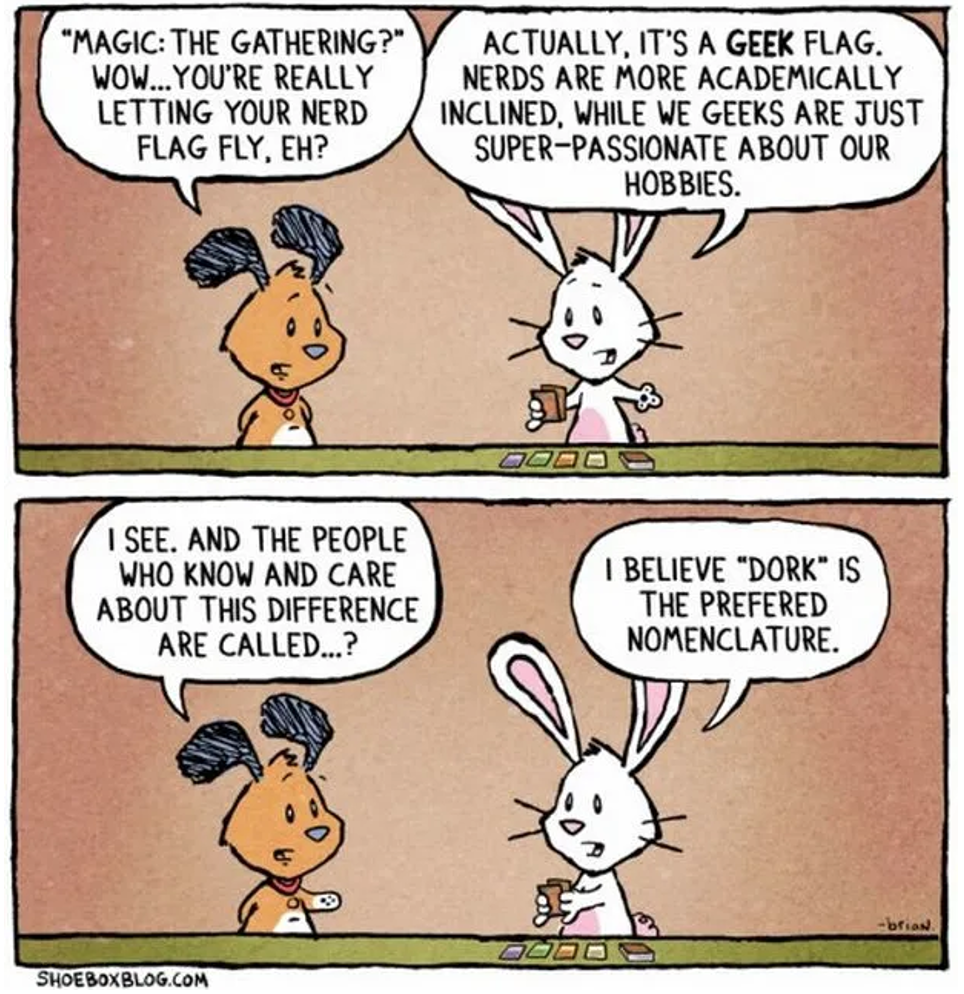
Yup. My friend Bill is the ultimate geek. Dork? Nerd? Well, whatever the terminology, he is letting his “flag fly” for all on the internet to see.
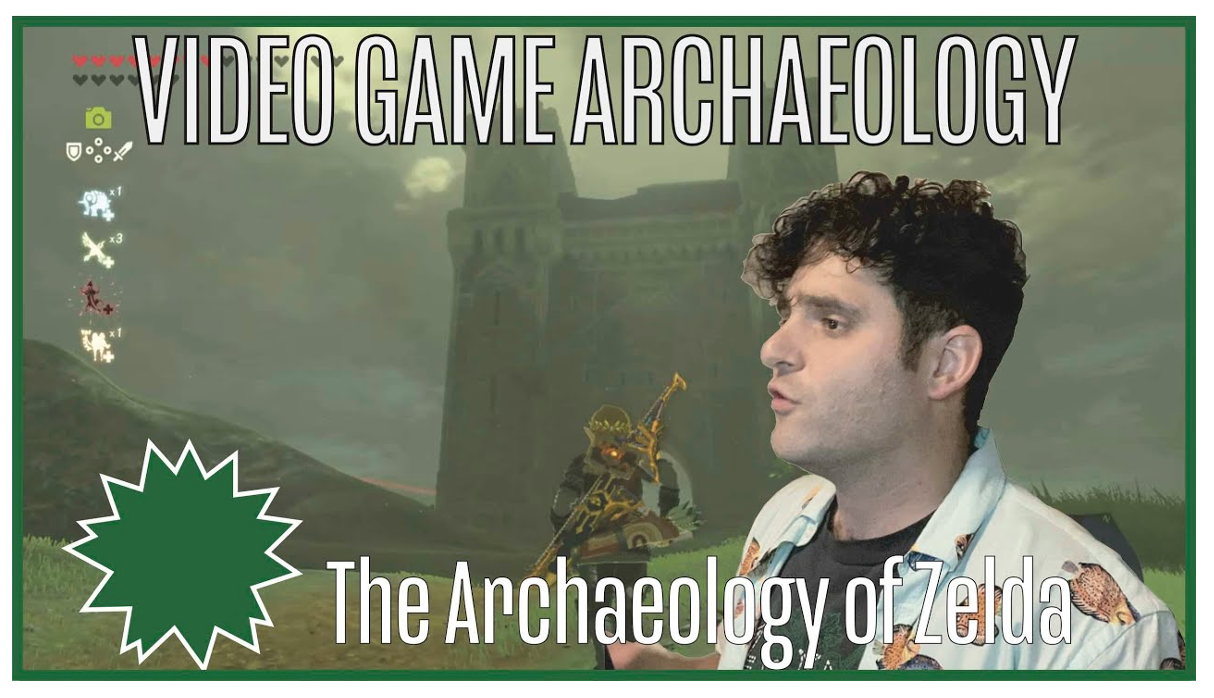
At first, I was a little dismissive of his work since I am not a video game person. My exposure to video games of any type was in the 90s when my older brother and his friends would play in our living room – on the one TV in the house – and I would lay on the couch mindlessly watching simply because I was too bored to do anything else. Besides, how on earth do video games have anything to do with archaeology?!?!
But, I was slightly intrigued and figured “why not” and sat down to watch one of the episodes to kill some time. Faced with a jumble of names that I had never heard before, I clicked on the one name with which I was slightly familiar: Zelda.
I’m not sure what I was expecting, but it certainly was not to be hit with a wave of nostalgia watching Bill’s breakdown of Zelda: Breath of the Wild when his commentary referenced the Zelda games that I watched my brother play while I passively hung out with him. Nor was I expecting the archaeologist in me to be sucked into his breakdown of the sense of place and world building of the game using archaeological concepts and theory. And I certainly was not expecting NAGPRA or the story of the famous Kennewick Man to pop up.
And, to all the Star Wars fans out there – you should tune into his exploration of The Book of Boba Fett and its use of colonialist themes and tropes. My mind began thinking of all the ways that I might use Bill’s work on this as a lesson for my students as I watched the 15-minute video. I highly recommend it.
For my own personal enjoyment, I’m hoping that a future video will explore the domestication of chocobos from Final Fantasy. No idea what a chocobo is or does, besides maybe letting a character ride it, but I always did think they were cute.
If you are interested in learning more, please join the Gene Winter Chapter of the Massachusetts Archaeological Society on Tuesday March 15 at 7 p.m. when Dr. Bill Farley will discuss video game archaeology. To register for the zoom link email info.nechapter@massarchaeology.org.
With the completion of our inventory, we have even more drawers to share with you that were repurposed by friends of the Peabody!
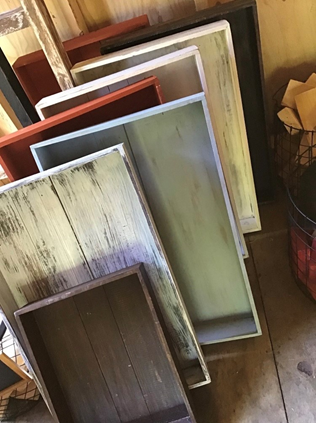
Hundreds of old collection drawers were given away throughout the Peabody’s collection inventory and rehousing project. These drawers were then transformed into furniture, décor, art, trays, storage, organizers, and gifts.
Our past blogs featured many different and unique drawer projects and we loved seeing the creativity used in giving these old drawers a new purpose. You can check these projects out here and here.
The wooden drawers were a part of the original storage for the Peabody collections, housing over 600,000 artifacts. To learn more about the history of these drawers in the Peabody Institute and collection check out our blog, Behind the Photograph: Unpacking the Peabody Collection.
The following drawer features were contributed by friends of the Peabody both on and off Phillips Academy campus. First up are several painted drawers used for various décor purposes. A little paint and stain can go a long way in repurposing the look of a drawer.
Painted and stained drawers
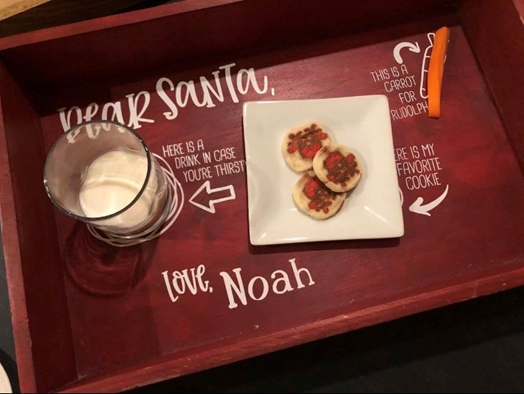
This particular drawer is a charming holiday tray, painted and customized as a fun way to leave cookies and milk out for Santa. Don’t forget the carrot for Rudolph too!
Holiday tray created out of an original Peabody drawer
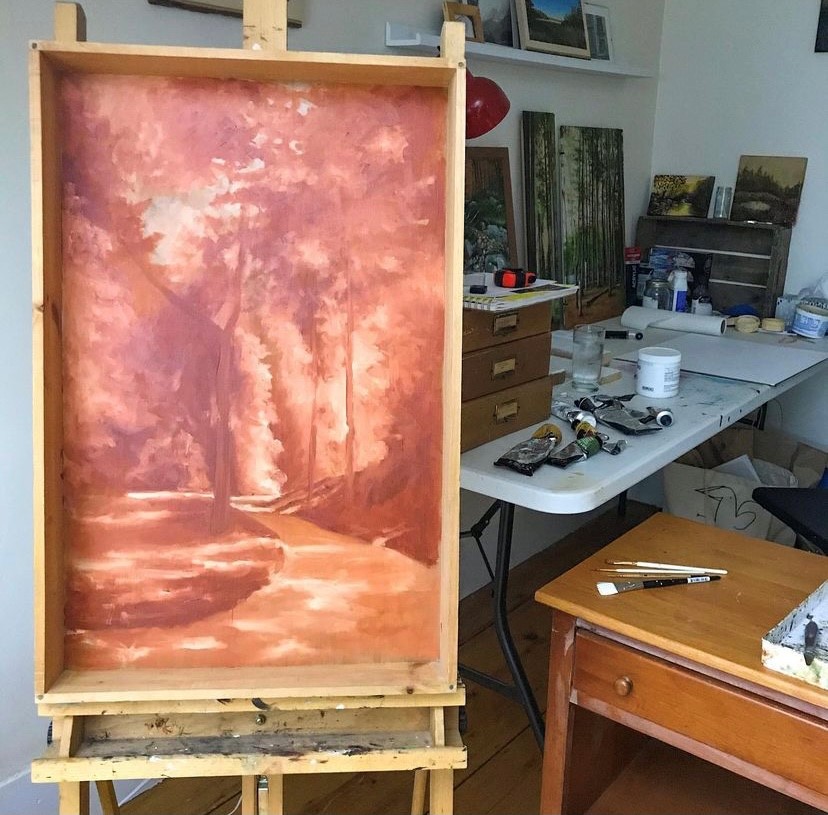
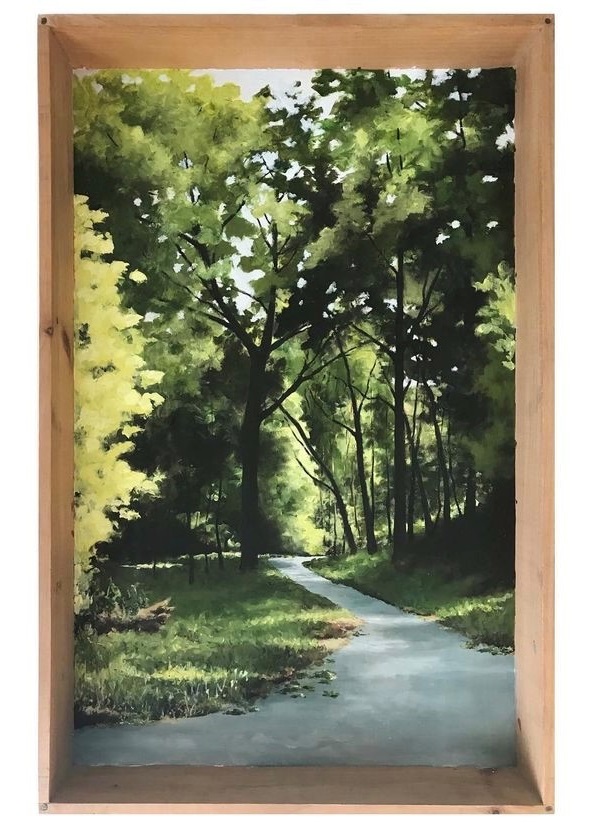
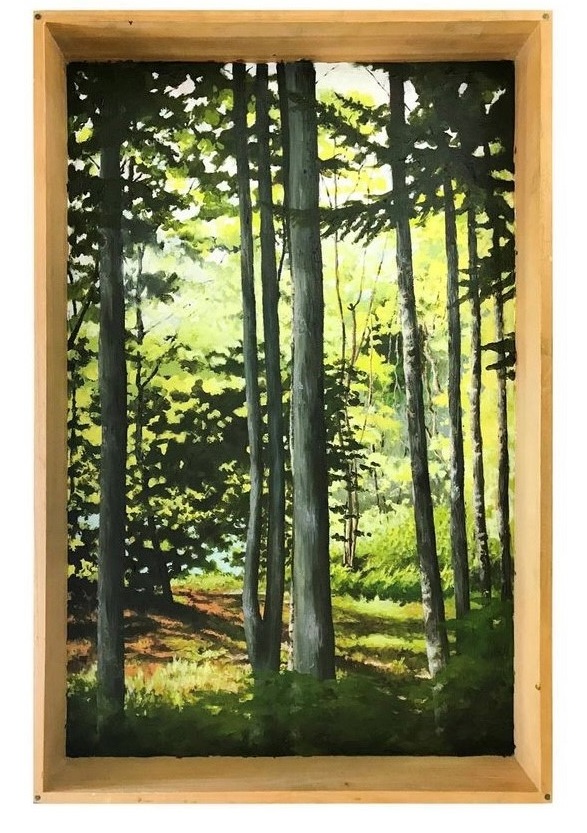
Some of our old drawers were transformed into incredible pieces of art by Jamie K. Gibbons, Head of Education at the Addison Gallery of American Art. Follow and support her work here!
Artwork by Jamie K. Gibbons, Addison Gallery of American Art
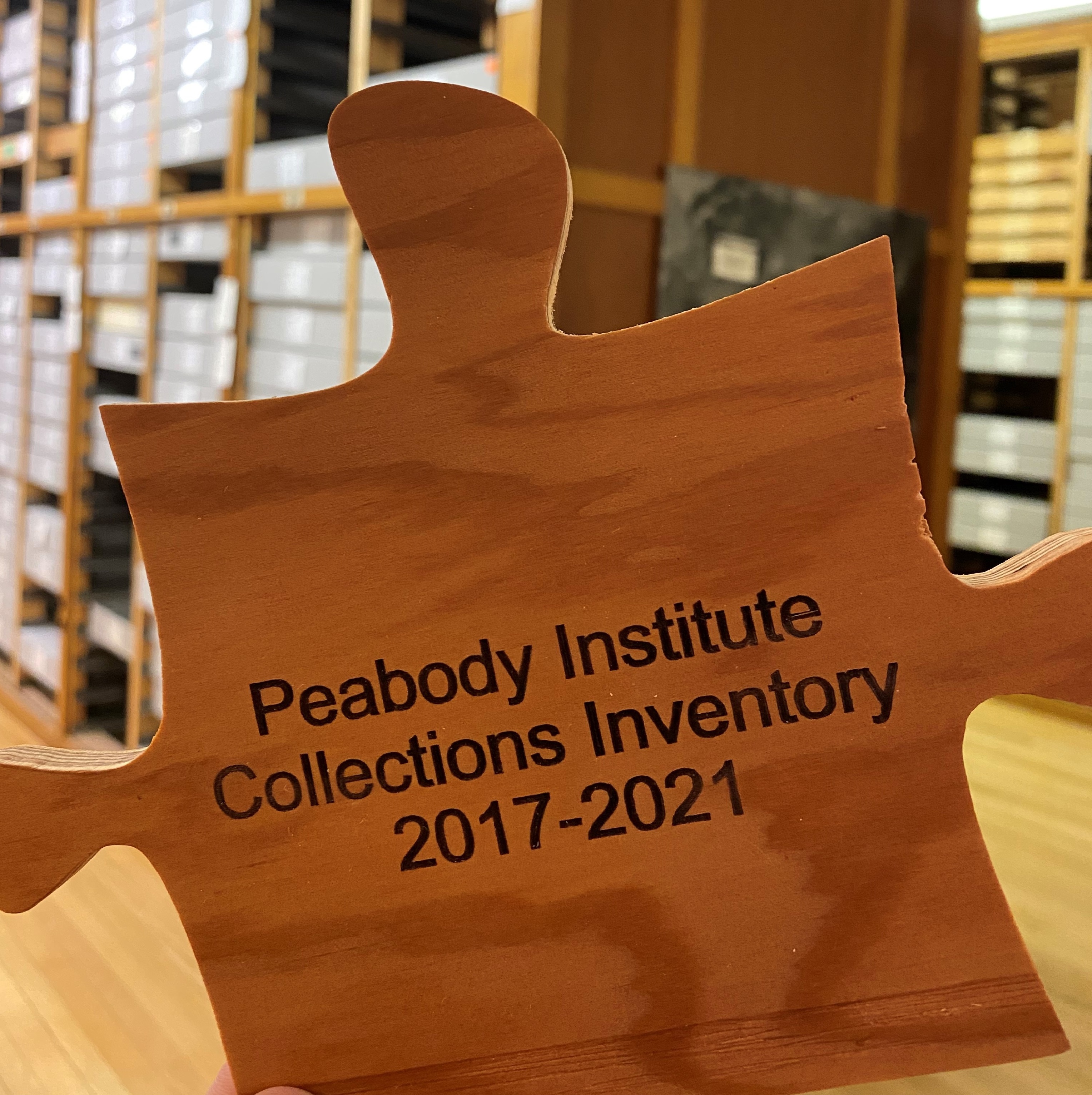
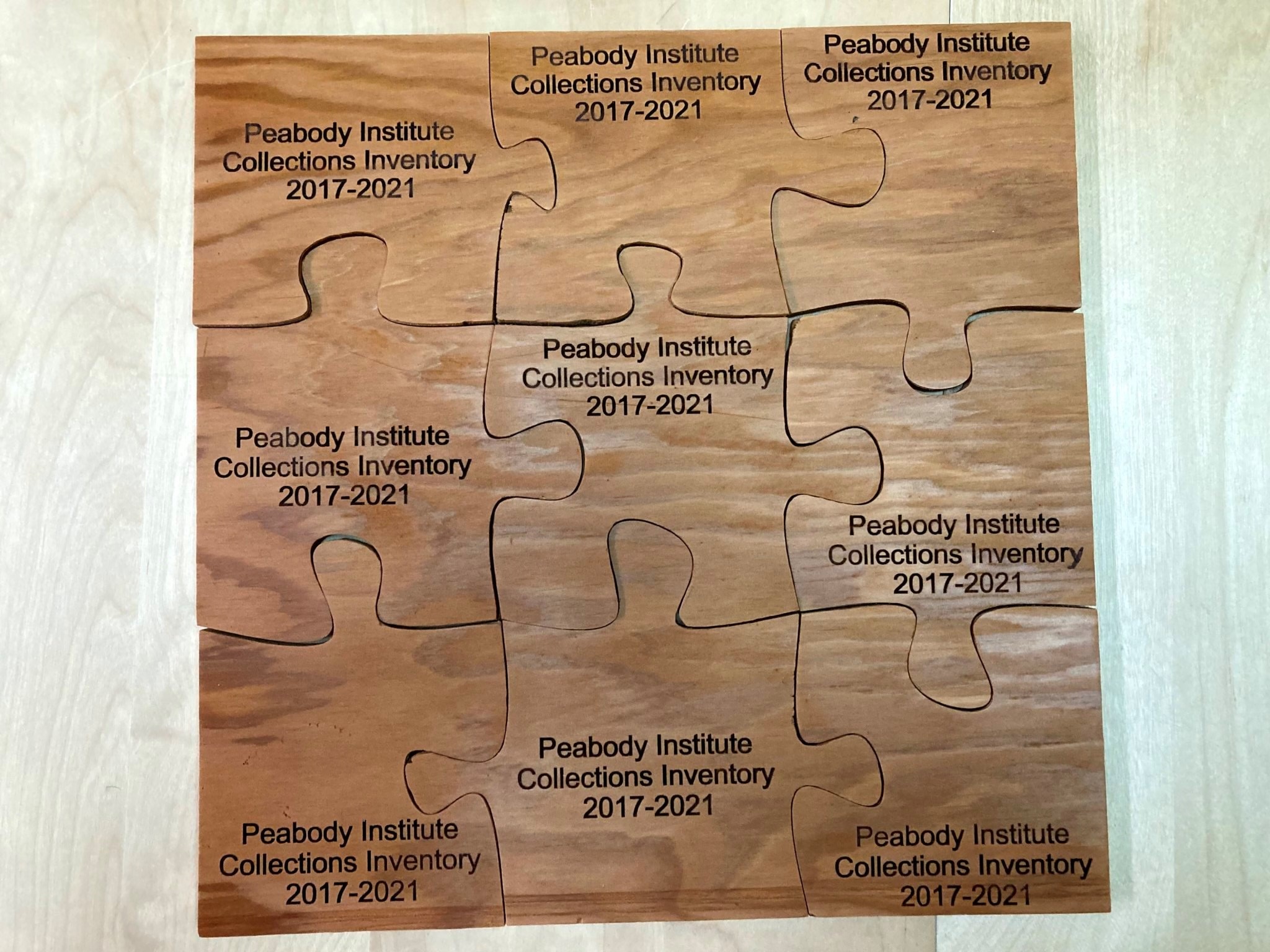
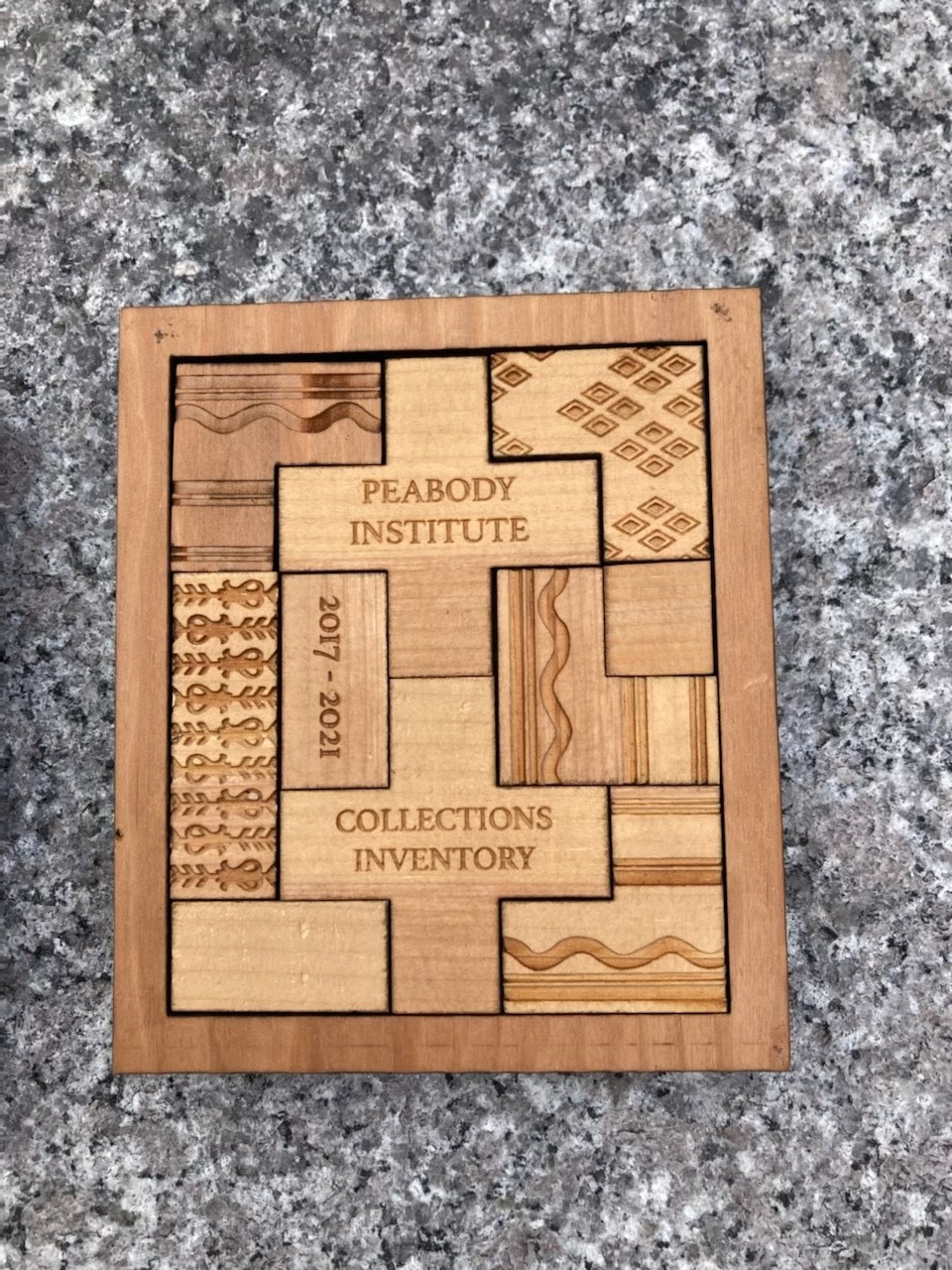
To commemorate the Peabody’s Inventory completion and thank donors, staff, and volunteers who played a role in the process, puzzle pieces were created from drawers by Get On Board – Signs and More as well as puzzle boxes by the Makerspace at the Oliver Wendell Holmes Library (OWHL) on Phillips Academy Andover campus.
Puzzle pieces and puzzle box made out of drawers
A huge thank you to all of those who have repurposed drawers and have shared their projects with us. If you’d like to feature your repurposed drawer project, please email your photos to Emma Lavoie, Peabody Administrative Assistant, at elavoie@andover.edu.
During an incredibly cold weekend in January, I was bundled up on my couch and looking for a movie to stream. I finally settled one that Disney+ had just recently released, Encanto. I had no idea what the movie was about, past the short blurb that was provided on the info page before the movie started:
After finishing the movie, I will only admit to really enjoying it and any rumors you may have heard from my cats about me being a blubbering, crying mess throughout it, are lies. All lies!
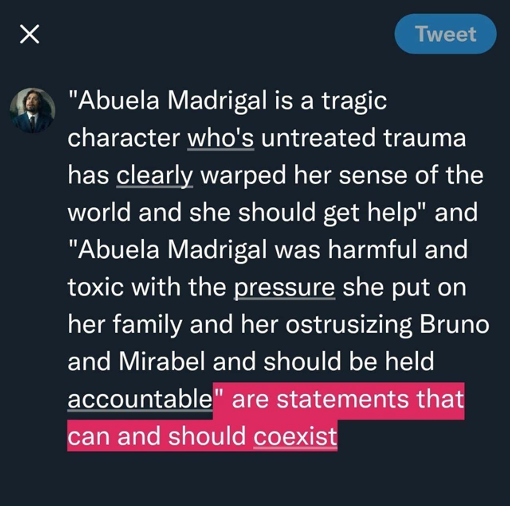
Disney’s Encanto is a movie different from most. Despite what some viewers have said about Abuela being the villain of the story, there is no “villain” personified that the characters must defeat, as is typical in such movies. Instead all the characters must overcome something more overwhelming and real, which is threatening their home: intergenerational trauma.
At the beginning of the movie, the matriarch of the Madrigal family, Abuela Alma faces armed violence and suffers incredible loss, while fleeing with her husband and three babies. After a harrowing night, in which her husband dies, she receives a miracle of a magic candle that helps to create a magical casita (house) inside a magically hidden town.
The candle grants all members of the Madrigal family unique gifts….. all except young Mirabel. This lack of a gift causes some underlying tensions between Mirabel and her family and serves as the main vehicle for the story. Then there is a missing uncle, cracks in the casita, diminishing powers, some adorable rats, and an ear-worm of a song (we don’t talk about Bruno!) to round out the story.
The experience that Abuela has in the first few minutes of the movie has a continued impact on her relationship with her children and grandchildren, as well as on their own development.
After many fraught interactions (and songs!) Abuela tells her granddaughter Mirabel “I was given a miracle, a second chance, but I was so afraid to lose it that I lost sight of who our miracle was for….. I am so sorry… We are broken because of me.” Showing that you can break the cycle of trauma.
It was incredibly interesting to see a children’s movie deal with such a weighty topic in such a sensitive a way that does not diminish the damaging influence it has, but also shows that there is a possibility to begin to heal from this particular type of trauma.
Many of our classes at the Peabody touch upon some aspect of historical trauma in indigenous communities, with the boarding school experience being one of the main ones that we explore. Given the prevalence that it has in our teaching, I look forward to making connections to a movie many of our students will know as a means to enhance their understanding of such a profound topic.
This blog is an email response to a follow-up question from a journalist writing a piece about Seminole Tribe of Florida efforts to get the Smithsonian Institution’s Museum of Natural History to repatriate ancestors being held there. A little context is necessary. Last year the Peabody Institute repatriated ancestors from Florida to the Seminole. We continue to work with them on repatriation of other ancestors from neighboring states. That repatriation included decisions about affiliation, a key concept in the Native American Graves Protection and Repatriation Act (NAGPRA). The tribe referred the reporter to me for some background on the broader questions of affiliation and the question of Seminole ancestors at the Smithsonian. After I had a conversation with the reporter, they had a talk with the Smithsonian’s repatriation personnel. Here’s the question that prompted my response, “I spoke with _____ at the Smithsonian about repatriation, and he says one reason he’s not turning over many of the remains held by his museum is that the Seminoles came to Florida in the 17th and 18th centuries. Since many of his remains are older than that, he doesn’t consider them Seminoles. Of course, the Seminoles disagree and say they are still their ancestors. I’m wondering how you made the determination that the remains you had could be returned to the Seminoles.”
Many thanks for sharing that question. I read your message yesterday afternoon and experienced a welling up of sadness at the thought that so many ancestors held by the Smithsonian really have no pathway to repatriation. I thought about this all night, on and off, thinking about my own rather longer than necessary journey to understanding, and feeling sadness for the ancestors and their modern-day descendants, and sympathy towards my archaeological colleagues who are struggling with this.
I have a couple of things to share that I hope will be helpful—the first are academic sources that helped in making our affiliation decision, while the second are more personal experiences. Reading this over, they are really all personal experiences.
A good place to start is Patricia Wickman’s 1999 book The Tree that Bends: Discourse, Power, and the Survival of the Maskoki People (University of Alabama Press). Wickman tackles this idea that somehow the modern Seminole and Miccosukee are disconnected from more ancient Indigenous people of Florida. She makes the case that this is an intentional white-washing of history, much like the Mound Builder Myth of the Ohio Valley, which was used by nineteenth century Americans to justify a push west and a land grab. In other words, if these Indigenous people have no real deep connections to the land, moving them out is perfectly justified. The book was controversial when it came out, because it went up against what we had all learned in school—and when I say school, I mean from elementary through graduate school. And archaeology and ancestors are a big part of this—those cemeteries, burials, and physical remains of the ancestors are tangible proof of long tenure on the land. Eugene Lyon, who has a blurb on the back cover and is mentioned in the acknowledgments of The Tree that Bends, was a history professor at Flagler College, he also was a peer reviewer of the book. I called him after I read it and we talked for a long time. Gene shared that maybe there were other histories that we needed to look for, what we might call hidden histories, and that this probably was one of them. That book, with whatever faults it may have, and my ensuing conversation with Gene really was a major bubble in my own understandings of Florida history and who the Seminole were and are. Gene passed in 2020, a victim of COVID-19—he was 91.
I would point to a couple of other academic things that I had already known about when Patricia’s book came out. In 1956 Frances Densmore, an ethnomusicologist affiliated with the Smithsonian Institution, published a monograph Seminole Music (Bulletin 161 in the Bureau of American Ethnology series). I found a copy of this in a used bookstore while I was in grad school at the University of Florida in the early ‘90s. What caught my attention was that she had recorded several songs that the Seminole attributed to the Calusa—one of those ancient Florida Indigenous groups that was centered in southwestern Florida. That means they knew about these people and had some close contact.
That Densmore monograph made me revisit William C. Sturtevant’s 1953 article Chakaika and the “Spanish Indians,” which was published in the magazine Tequesta. Sturtevant was an anthropologist at the Smithsonian. In the Chakaika article he tackles this question of connection between the Seminole and earlier peoples, based on oral history with Indigenous people and history as written by Anglo-Americans. It’s long and complicated, and not particularly conclusive, but it would appear that even in the early nineteenth century there were a number of Indigenous groups in Florida, including the Seminole and Miccosukee, as well as Choctaw, people of mixed Spanish and Indigenous ancestry, and Calusa. He doesn’t come to any definite conclusions, but all these people were around, and around a lot later than the conventional wisdom would have us believe. They knew about one another, and it’s pretty clear they adopted some cultural practices, like those songs Densmore recorded.
So, those are some academic books and articles that tackle this question of Seminole origins and identity that diverge, either a little or a lot, from the accepted wisdom. Now, onto some more personal observations. I knew a fair number of Seminole folx growing up, and the oral history accounts shared by Sturtevant rang pretty true, but were perhaps a little more vehement in the ‘80s: basically, we’ve been here a long time, we have deep roots and connections with the land, and anything else is nonsense. Hmmm, okay. I went to college with James Jumper. Jimmy was in his late 40s and I was in my late teens/early twenties. He had come to Florida Atlantic University to study criminal justice and went on to get a law degree and worked for the tribe. He lived in the dorm next to mine, but we often compared notes on our classes and I had taken some criminology classes too. We sometimes ordered a pizza or cooked in the dorm kitchen or on the grill outside. We sat around and chit chatted. I told him about the history and archaeology that I was taking. He was kind and patient, but challenged what I told him about Seminole origins. No, we’ve been here a long time, he told me. First bubble.
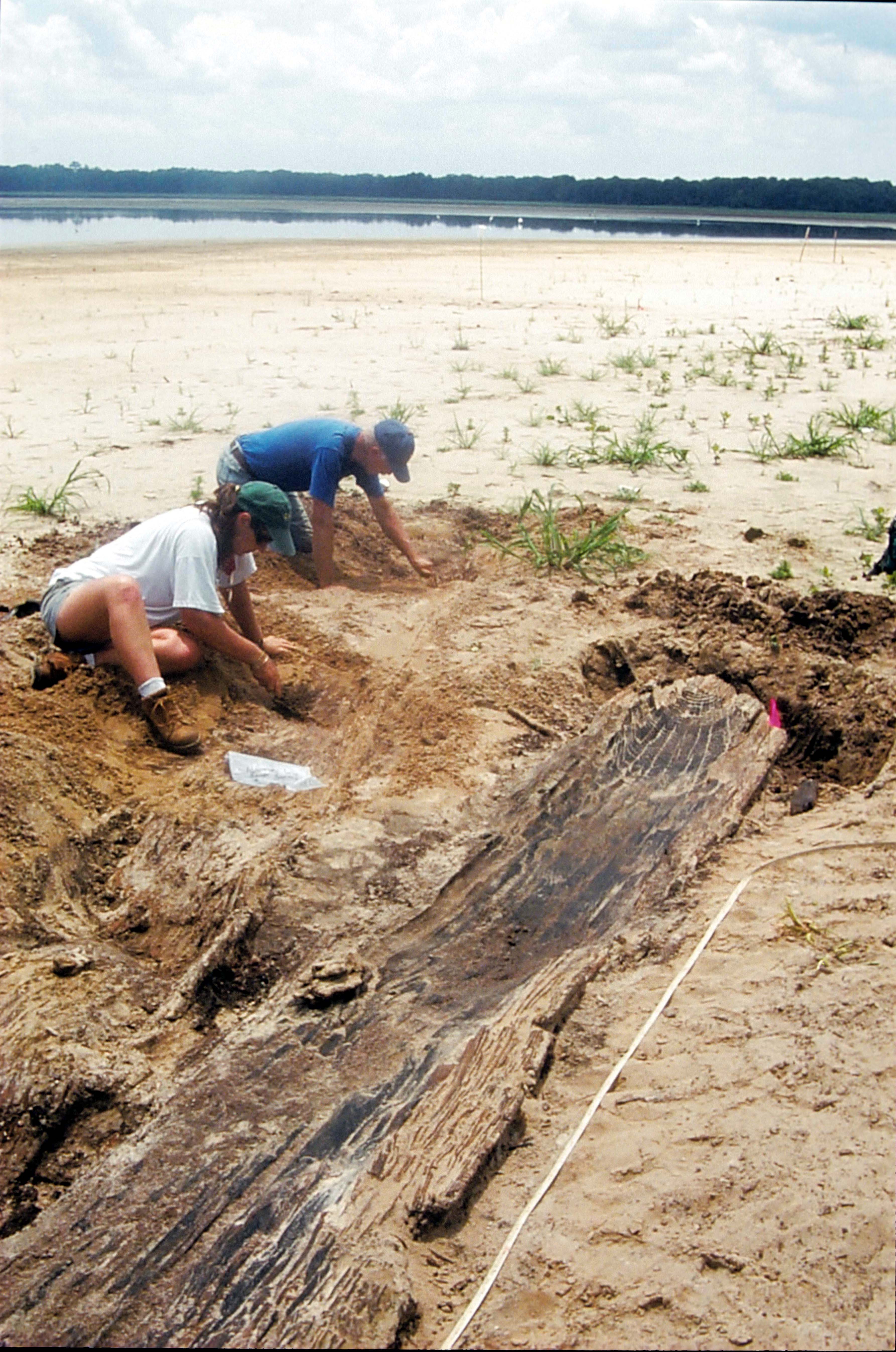
Archaeologists Christine Newman and Ray McGee excavate ancient dugout canoes at Lake Pithlachocco in 2000.
In 2000 Lake Pithlachocco (aka Newnans Lake—named after Daniel Newnan who led an illegal early nineteenth century invasion of Florida to wage war against the Spanish and Indigenous inhabitants) near Gainesville, FL dried up. I was an archaeologist with the Florida Division of Historical Resources at the time and we started getting calls about dugout canoes being found. We follow up and there were hundreds of canoes. We conducted a project and documented about 50, including many from 4,000 to 5,000 years old. These were all really old canoes! We published an article in 2003 in American Antiquity called Archaic Period Canoes from Newnans Lake, Florida. What struck me was the Seminole and Miccosukee response when some of the canoes were damaged by a man who was permitted by the state to remove old logs (deadhead logs) from the lake. You can look up the newspaper accounts. Without going into a lot of detail, the response was akin to that when human burial sites were disturbed. Oh, the original, Indigenous name of the lake—Pithlachocco—that means something like “boat house” or “place of boats” in the Creek language spoken by the Seminole. So, we have these supposed recent immigrants in the people that become the Seminole and Miccosukee acknowledging an ancient site. Is this a coincidence? Another bubble.
One of my jobs when I worked for the Division of Historical Resources was following up on reports of unmarked human burials, a responsibility of our office under state statute 872.05. This work, which I ultimately wrote an article about (September 2013, The Florida Anthropologist—Florida’s Unmarked Human Burial Law: A Retrospective, 1987-2010) put me in pretty regular contact with representatives of the Seminole and Miccosukee tribes. I learned a lot from this experience, especially from Fred Dayhoff, who was the NAGPRA representative for the Miccosukee. Fred was not a member of the tribe, but he had a long relationship with them, and dealt with the complicated issues of archaeology and ancestors and burials. I would let him know about discoveries and disturbances, he would consult with the tribal leadership and elders, then work with me on implementing some solution. As you will see, if you get a chance to read my 2013 article, the focus was on preservation in place and reburial. And long conversations with Fred, as well as the representatives from the Seminole tribe, made me again question what I had learned in school. There were connections between the Seminole, Miccosukee, and the ancient tribes, what NAGPRA refers to as affiliation. More bubbles.
Probably the last bubble came in 2009 or 2010 when we started to have meetings with the Seminole tribe’s Tribal Historic Preservation Office (THPO), helmed at that time by Paul Backhouse (you can read the book they wrote in 2017 called We Come for Good: Archaeology and Tribal Historic Preservation at the Seminole Tribe of Florida). I don’t remember what prompted the meetings, perhaps it was just the formation of the THPO office and some work to partner and collaborate more (I was Florida’s state archaeologist at that time). One of the meetings, at their offices there at Big Cypress, next to the Ah-Tah-Thi-Ki Museum, included some conversations with several of their cultural advisors. These were tribal members who were traditionalists, with deep knowledge of cultural practices, that served to advise the employees of the THPO. They explained, patiently, yet firmly, about the Seminole beliefs not just about ancestors, but about all archaeological sites. Even the most mundane and quotidian sites—little campsites with pottery fragments and animal bones from meals. These were the places where the ancestors had lived, where they had cooked, where they had raised their families. I was blown away. I had never made these connections. And, it was full circle—it was all about land and connections to place. The final bubbles. I realized that what I had learned in school, from my beloved teachers and professors, was just flat out wrong. And not just wrong, but harmful and hurtful to Indigenous people because it perpetuated the idea that somehow these Indigenous people were newcomers. Think about that—how crazy is that? We literally have a story that places Indigenous people as the newcomers after Anglo-Americans!
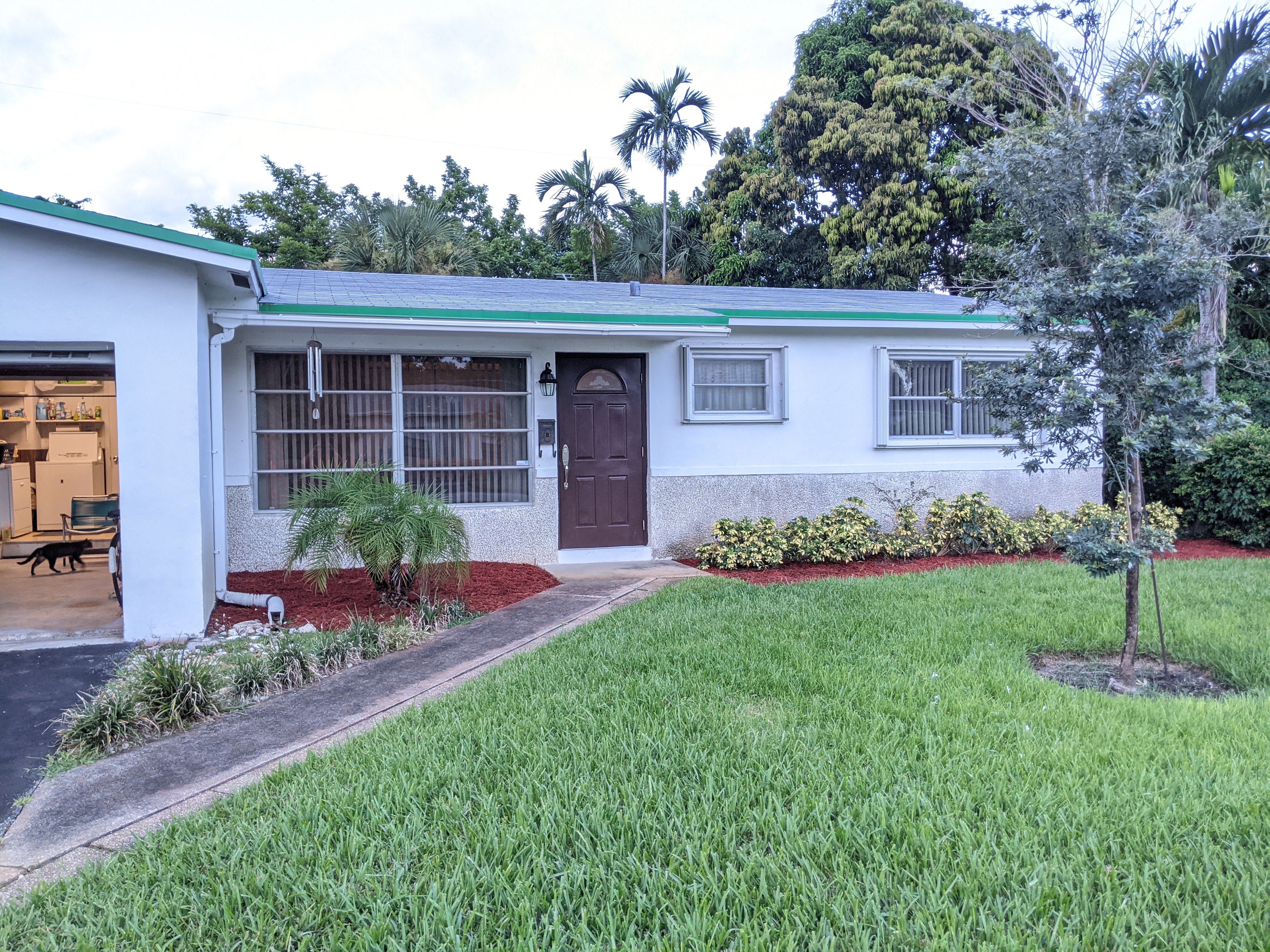
The author’s family home in Broward County, Florida, August 2021.
Last week I sold my family’s home in Florida—where my parents had lived since 1969 and where they had raised me. It was incredibly difficult to say goodbye to that place, and I expect it will remain challenging for a while. So many memories, so many connections. This is what those Seminole cultural advisors were sharing with me in 2009 or 2010. But not just fifty years of connections, millennia of connections. Generations upon generations of people all doing those human things that we all do.
In reflecting on all of this, I think a couple of things. One, I’m embarrassed that it has taken me so long to connect the dots, to see those bubbles breaking through the surface of what I had learned, and understanding that I needed to relearn history. I’ve been holding the threads of this history in my hand for a long time and I still don’t understand why it’s taken me so long to put it all together. What I learned was wrong. Maybe because our institutions, especially our educational institutions are powerful, and maybe too, because we respect and love our teachers. How could they be so wrong? Two, all of the Indigenous people, both in Florida and elsewhere, have been so patient with me. I’m not sure I deserve it, but they were and continue to be nothing but patient. They have always been there ready to help those bubbles break through the surface. I am so grateful for that patience and kindness. Three, in putting this in the context of NAGPRA and repatriation, the legal bar for affiliation is pretty low. The law requires a preponderance of the evidence, and that means slightly more than fifty percent. Looking back at the literature, oral history, and my own experiences, that requirement is met and exceeded. I don’t know the Smithsonian’s repatriation law (the Museum Act) like I do NAGPRA. Perhaps there are different requirements? But, both laws are about repatriation. These aren’t museum laws that help museum workers figure out how to hold onto ancestors and collections, they create processes for facilitating repatriation. That’s the intent, the goal. Four, I feel for my colleagues who haven’t figured all of this out yet. My message to them is, it’s not too late. Listen to people, listen to the tribes. Relearning history is hard, but it’s healing. Returning the ancestors doesn’t just heal Indigenous people and communities. This is trauma we all share, especially those of us who are archaeologists and historians, and we all need that healing. I hope this is helpful. I’m glad I had a chance to write this down. I’ve been wanting to write it down for a long time, but its hard.
As a coda to this message, I would note that things are changing. All of our institutions, from the Smithsonian down to our little museum in Andover, are colonial enterprises. There is no escaping that. And, many personnel at these institutions are stuck, because of policies and practices put in place by others, because of political pressures, whatever, to not support repatriation. While we are still part of the colonial machine, it is possible to change—some of this is generational. Younger people “get it.” The Society for American Archaeology (SAA) did a survey a few years ago and it demonstrated just this—and, the whole field has flipped. In the ‘80s when NAGPRA and the Museum Act were being debated, SAA and the American Alliance of Museums (the big museum organization) were oppositional, with a small minority of archaeologists and museum professionals recognizing that repatriation was a pathway to addressing some of the harm done by archaeology and museums. That is reversed now, largely on generational lines. As older professionals retire and leave the field, they are being replaced by younger people with new ideas who are learning all of the histories.
The organizations are changing as well. The January/February 2020 issue of Museummagazine, published by the AAM, was dedicated entirely to decolonizing, highlighting work done by museums, tribes, and Indigenous scholars and curators to change the relationships between museums and tribes. In July 2021, the SAA issued a draft statement on acknowledgment of the harm caused by archaeological practice. SAA members were asked for input on the statement, which followed the SAA’s adoption of a revised statement on the ethical treatment of human remains. This was the first time SAA had revisited this issue for more that 30 years–the previous statement on repatriation dated from the 1980s, prior to the passage of NAGPRA and the Museum Act. Just a few days ago, the Southeastern Archaeological Conference (SEAC) issued a statement supporting NAGPRA, including the following:
The Executive Committee of the Southeastern Archaeological Conference (SEAC) acknowledges the centrality of research on Indigenous cultures to the founding and perpetuation of our organization and discipline. Aspects of this history, in particular the treatment of ancestral human remains, have caused harm. We acknowledge this problematic history and seek to move forward in mutually respectful and productive partnerships with tribal nations.
It’s our job as museum professionals, as archaeologists, as scholars, as educators, to not only educate ourselves, but to make sure students are learning the history and are given the tools to critically examine what they are being told.












 The Peabody