An Archaeologist and a Museum Professional walk into a basement…

Contributed by David Spidaliere and Jessica Dow

Hello! We are the new temporary collections project assistants for the Peabody’s upcoming collections move. Our combined knowledge of archaeology and museum studies helps us assess the needs of the collection and to find efficient ways to track the collections. Here’s a little about each of us:

My name is David Spidaliere. I am currently pursuing my master’s in Historical Archaeology at UMass Boston, finishing up my thesis on trade in Plimoth Colony. I was drawn to this role at Robert S. Peabody because my background is in seventeenth and eighteenth century New England archaeology and history, but I have very little knowledge of Indigenous archeology. This position has afforded me the opportunity to work with Native materials and to learn more about the importance of repatriation legislation.

My name is Jessica Dow, I recently completed my Masters in Museum Studies at Harvard’s Extension School, with a focus on collections management, Indigenization and public service. I currently work in the Visitor Services Department of the Harvard Art Museums, and I was drawn to this role because it offered me a chance to learn more about Archaeology and the care and planning that goes into Archaeological collections management. I’m passionate about ethical stewardship and repatriation, and Marla has been a fantastic resource as I continue to learn more about this field!

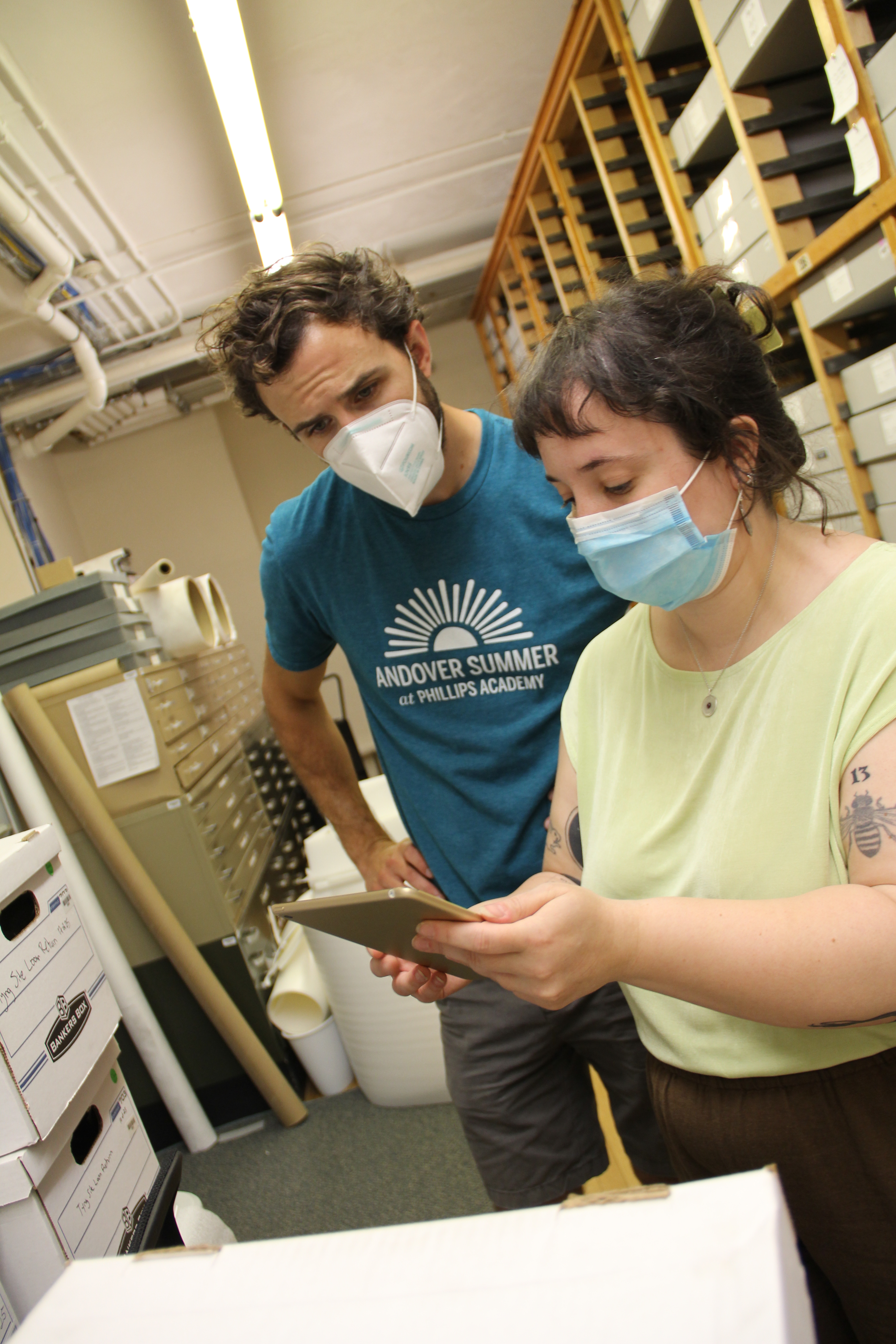
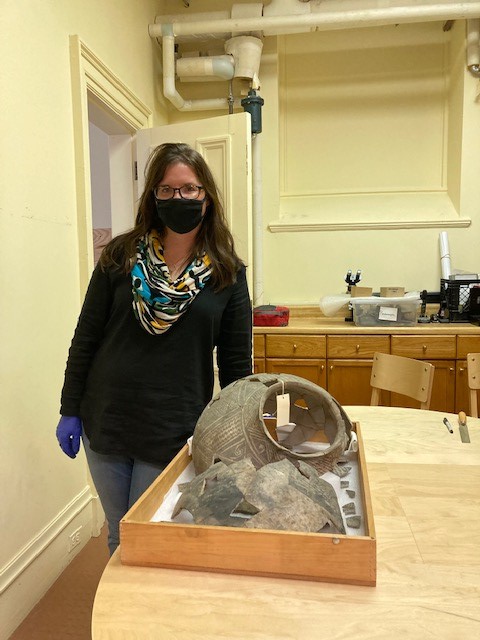
Dave and Jess hard at work

We were brought on to help the Peabody create a system by which they could track collections as they move throughout the building. This type of system is crucial for day-to-day movement of collections for research and teaching purposes, as well as for larger projects that require the collections to be moved, such as construction or pest and mold remediation. Our work is concerned with the types of data that determine risk factors such as vibration, and factors that dictate how objects are stored, such as size, weight, and cultural sensitivity.

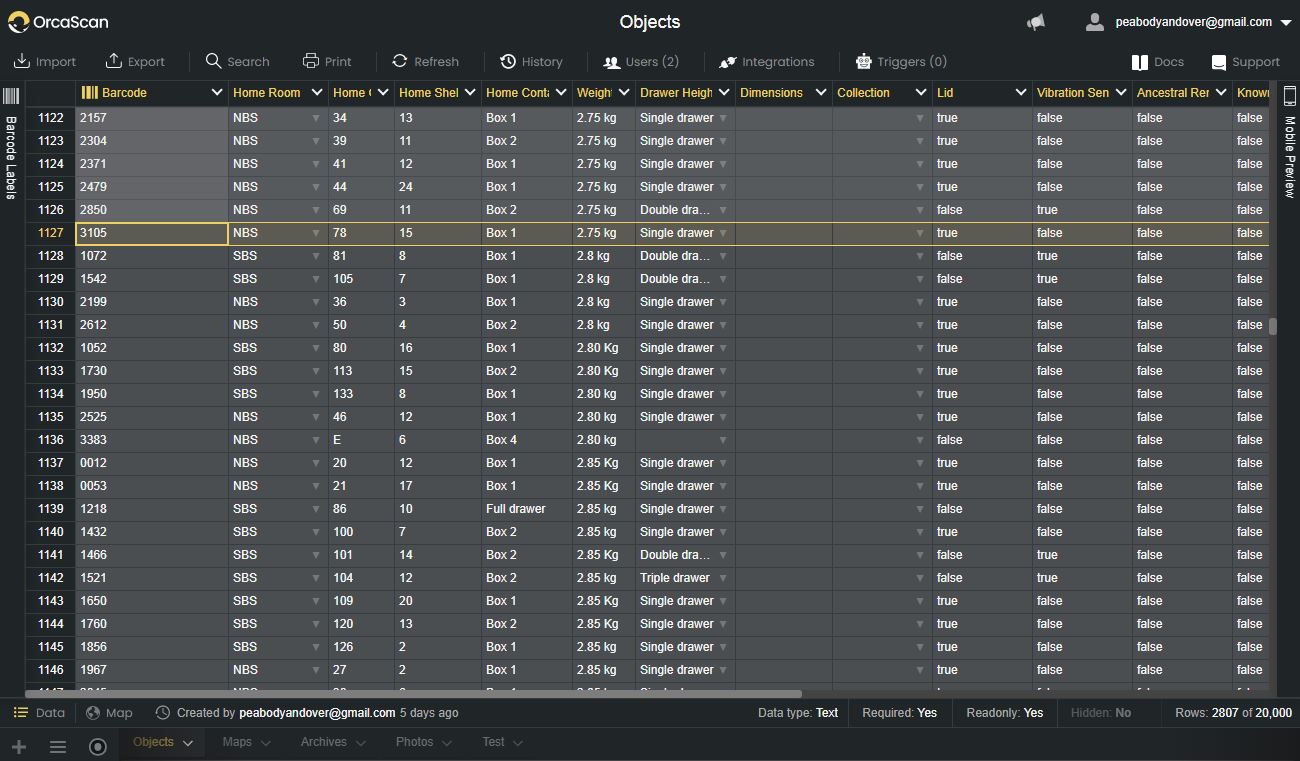
To track this data, we are using software that was designed for retail use and allows us to barcode boxes and items and assign information to each barcode using iPads. We can then review all of that data on a desktop computer in order to help Peabody staff assess collections needs on a larger scale.

In the picture below you can see the desktop view that we use to review the data we have collected as we barcode the collection. We can easily see which boxes have lids, the dimensions of items that are too large to be boxed, and other factors like weight and cultural sensitivity.

Example Orcascan screen shot

While our roles here at the Peabody are temporary, the work we are doing will continue to be useful to Peabody staff in the future. We are honored to be a part of this stage of the Peabody’s growth and hope to continue our relationship with the museum and its staff as we step into whatever is next in our respective careers!

American Alliance of Museums Annual Meeting

Contributed by Marla Taylor

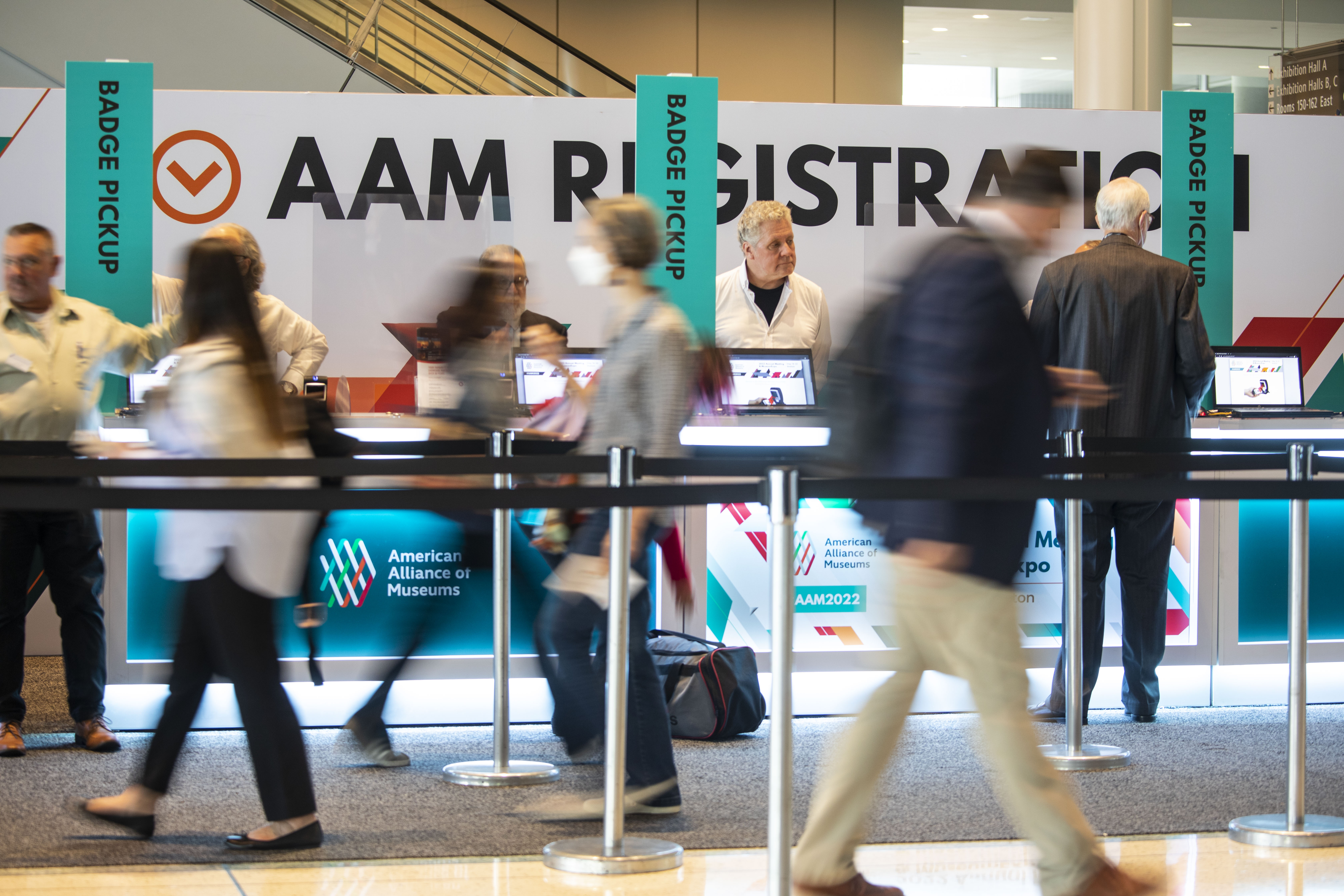
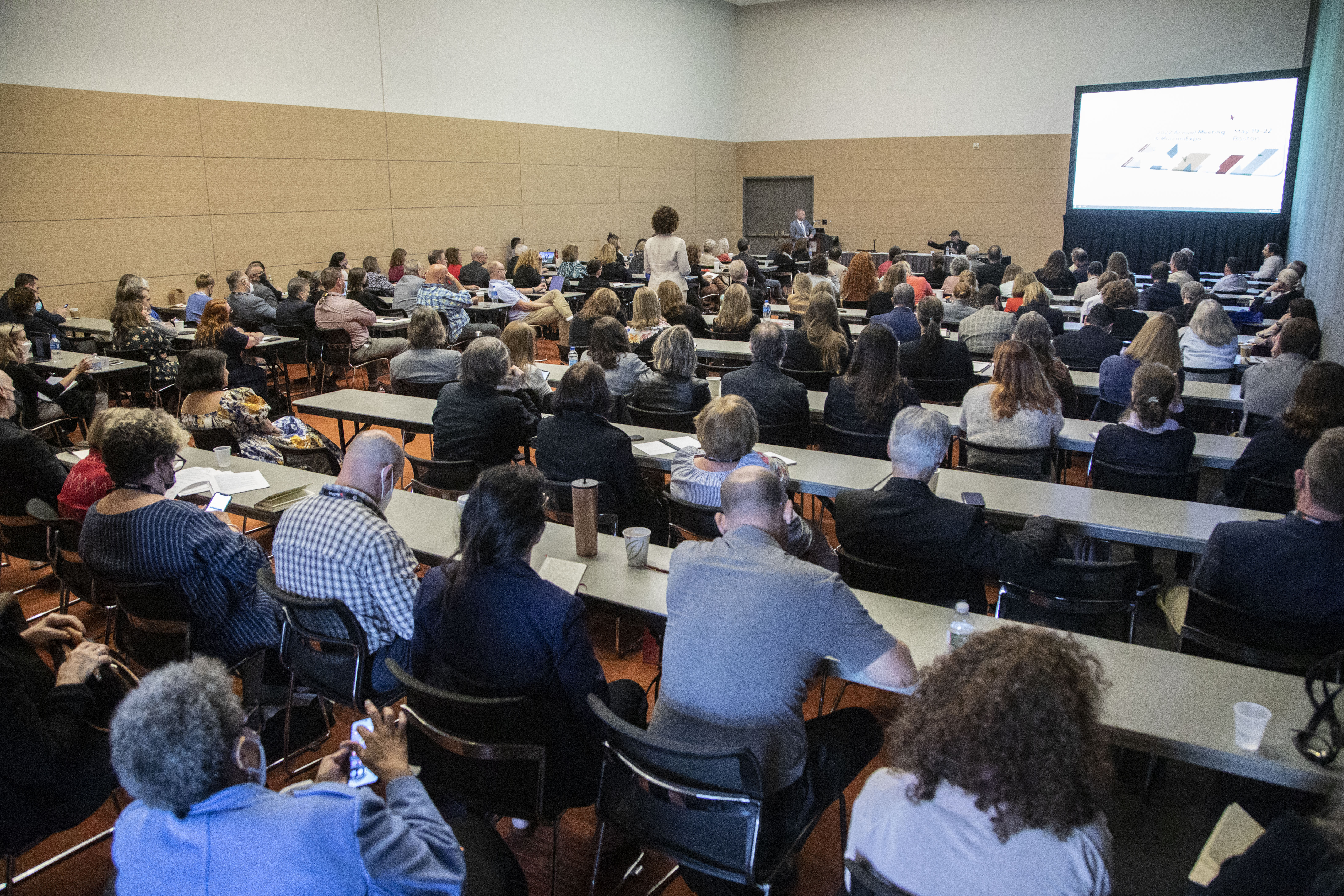
The American Alliance of Museums (AAM) held their Annual Meeting in Boston in May. Like many other conferences, this was the first in-person meeting in two years. The Peabody Institute was fortunate enough to present our work in a few different formats.

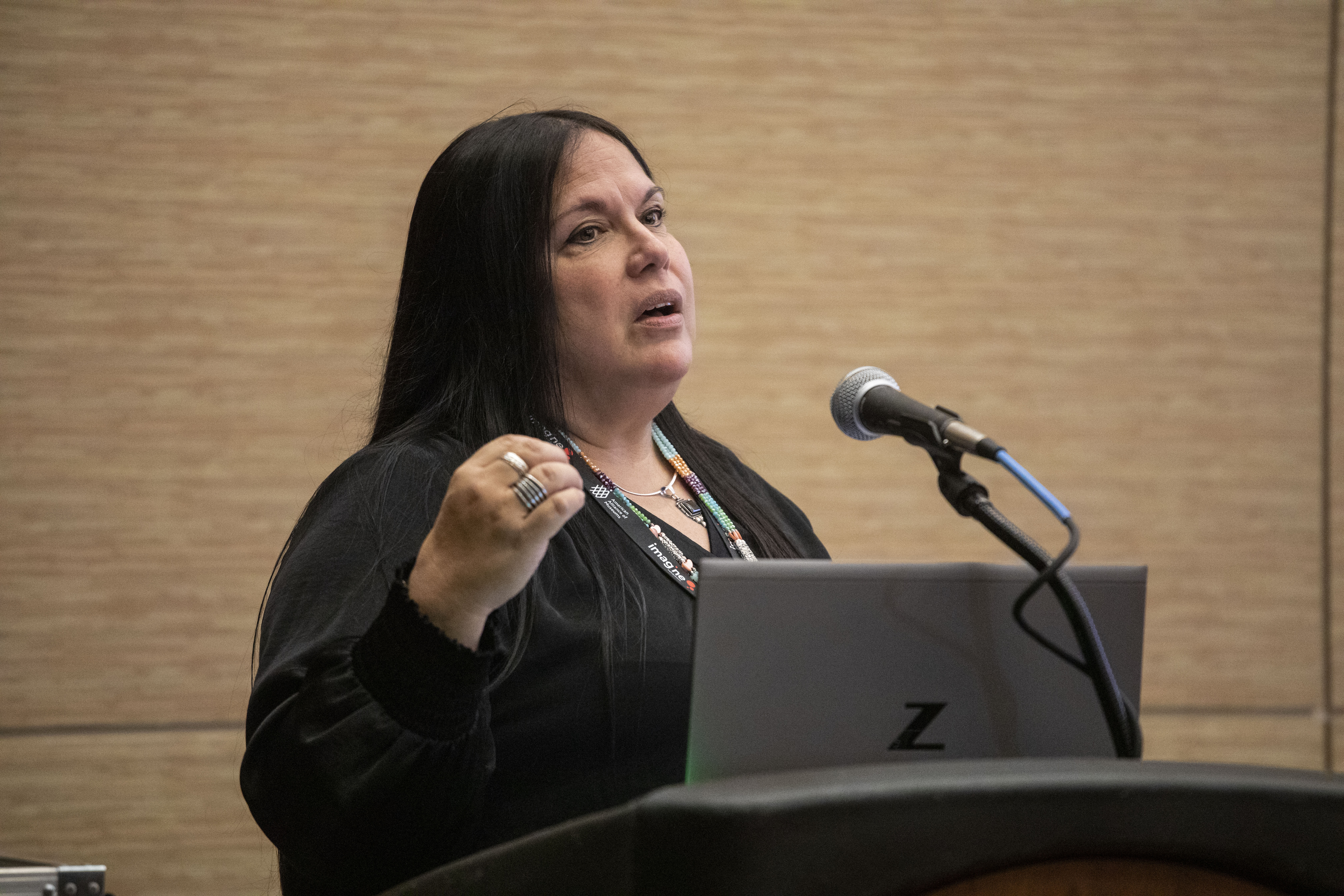
I was part of two sessions – Research Requires Consultation and Centering Culturally Appropriate Care: Re-examining Stewardship of Native American Cultural Items.

The session discussing research presented the Peabody Institute’s research policy that requires consultation and approval from an authorized tribal representative as part of any application for access to collections. You can find details about the policy here. My co-presenters were the NAGPRA Coordinator for the Osage Nation and the Senior Director of Heritage and Environmental Resources for the Seminole Tribe of Florida. Together we discussed the power of respecting tribal sovereignty by requiring these conversations about all levels of research into the cultural heritage of Native American communities.

Centering Culturally Appropriate Care presented the work of the Indigenous Collections Care Working Group (ICC) that I co-founded with my colleague Laura Bryant, Anthropology Collections Manager and NAGPRA Coordinator at the Gilcrease Museum in Tulsa, OK. The ICC has been working to develop a Guide as a reference tool for people (including museum professionals) who interact regularly with Native American collections, including those at all levels of experience and exposure. We are excited to be focusing on this conversation and developing a resource that is truly needed in the museum world. You can learn more about our work here.

But I was not the only one from the Peabody Institute presenting at AAM!

Ryan Wheeler, Peabody Institute director, was part of a session called #NoMoreStolenAncestors: Repatriation and the NMAI Act. Facilitated by the Seminole Tribe of Florida, the session explored the issues with curating human remains, obstacles to repatriation, ways to improve the process. The Seminole have been pushing for policy change at the Smithsonian Institution’s National Museum of Natural History and has had some success. You can learn about their work here, here, and here.
Lindsay Randall, curator of education, co-authored a poster examining the explosive growth in digital technologies in small organizations and how it can be used to deliver high-quality content to museum audiences. The poster shone a spotlight on the Diggin’ In series produced by the Peabody Institute and the Massachusetts Archaeological Society. You can find all the Diggin’ In talks on the Peabody’s YouTube channel here.

It was an honor to share our work with our colleagues in the museum field and receive such supportive feedback. We look forward to presenting at many more conferences – hopefully in person!

Retiring Volunteers

Contributed by Marla Taylor

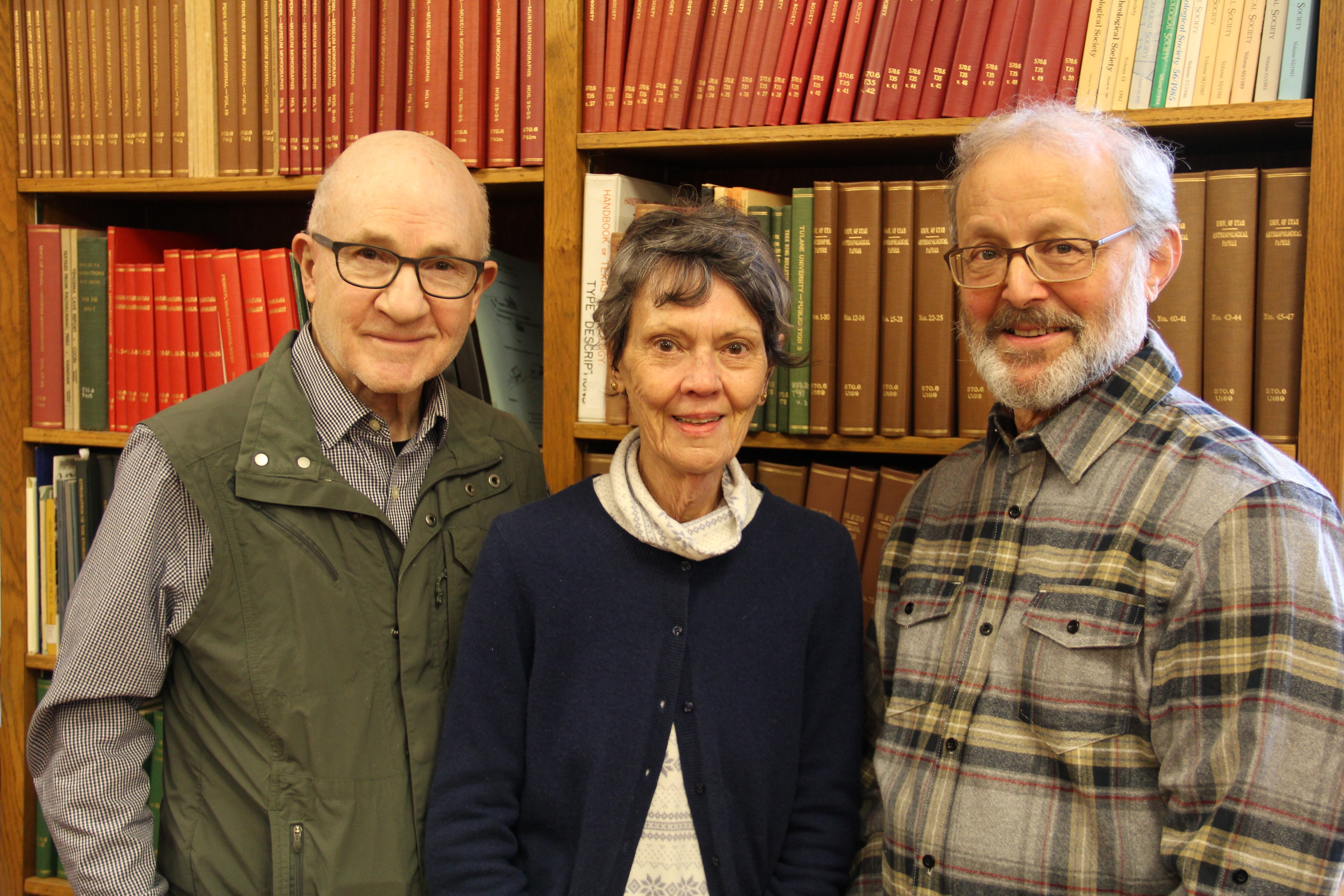
Museums are so often supported by behind-the-scenes volunteer labor and the Peabody Institute is no exception. Most of my fourteen years at the Peabody have been accompanied by two of the best volunteers you could ask for – Susan and Quinn Rosefsky.

Quinn is Phillips Academy class of 1959 and came to the Peabody for a reunion event in 2009 with his wife, Susan. There they met then director Malinda Blustain; offered their services as volunteers and have been with us ever since.

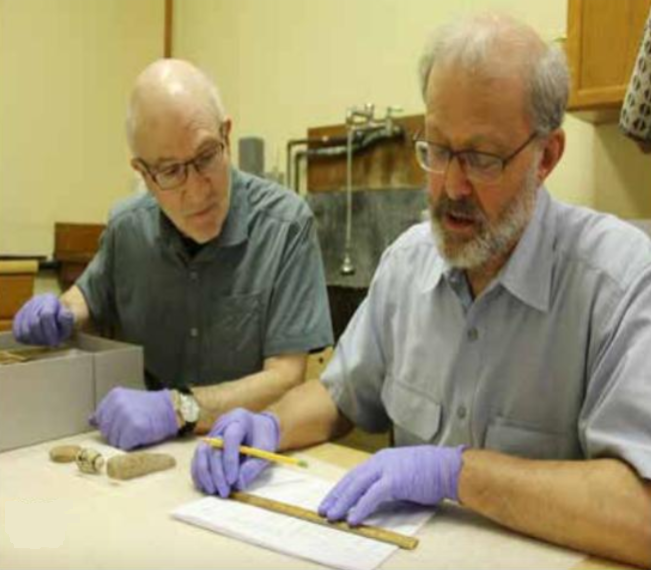
While a powerful team together, they often worked on separate projects. Quinn was a tireless force assisting with inventory of the collection. He became well versed in stone tool typology (well outside his previous career as a psychiatrist) and has never stopped learning. Quinn has also been a contributor to this blog with his perspective and thoughts on items in the collection. Here are some of my favorites that he has written:

Quinn (on left) hard at work

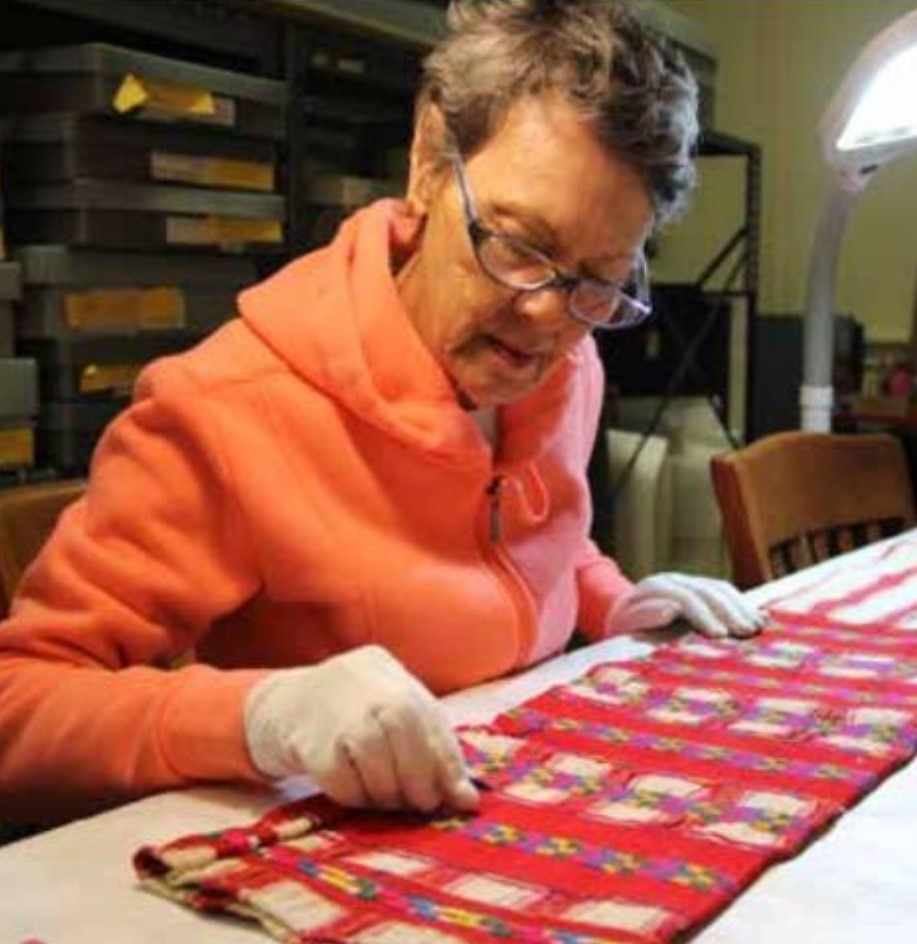
Susan, on the other hand, has been an invaluable part of the team cleaning and inspecting the Peabody’s textile collection for pest damage. Susan learned how to vacuum textiles from a local conservator and has spent years working her way through the textile collection. Her calm and focused dedication has ensured completion of this important project.

Susan at work inspecting a textile

I cannot express the gratitude that the Peabody staff have for these two wonderful people and their contributions to our work. I know that I will miss Quinn’s stories and jokes as well as Susan’s kindness and support. The Peabody Institute was lucky to have them, and we wish Susan and Quinn all the best in their “retirement!”

Thank you to all our volunteers!

Loan to the Molina Family Latino Gallery

Contributed by Marla Taylor

Did you know that the Smithsonian is opening a new gallery – the Molina Family Latino Gallery of the National Museum of the American Latino – dedicated to highlighting Latino contributions to the United States? 

I learned about this cool gallery about 18 months ago when the Peabody Institute was first contacted about potentially loaning an item from the collection for the inaugural exhibition that will open in mid-2022.  The exhibition is the first to be presented by the National Museum of the American Latino.  We were thrilled to contribute a small piece to the important story of how Latinos and Latinas inform and shape U.S. history. 

What did they want to borrow? 

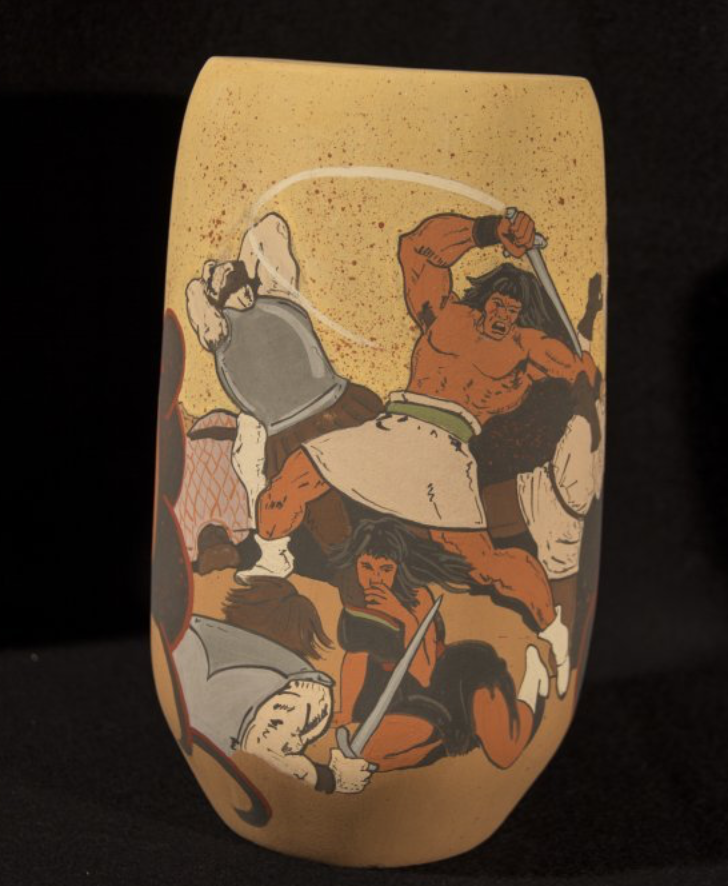
Vessel depicting the Pueblo Revolt by Jason Garcia

This amazing vessel by Jason Garcia (Okuu Pin), Santa Clara Pueblo, is an exploration of the Pueblo Revolt of 1680.  Garcia is known for his mixture of traditional materials and methods with pop culture.  Past blog posts have discussed this piece and his work.

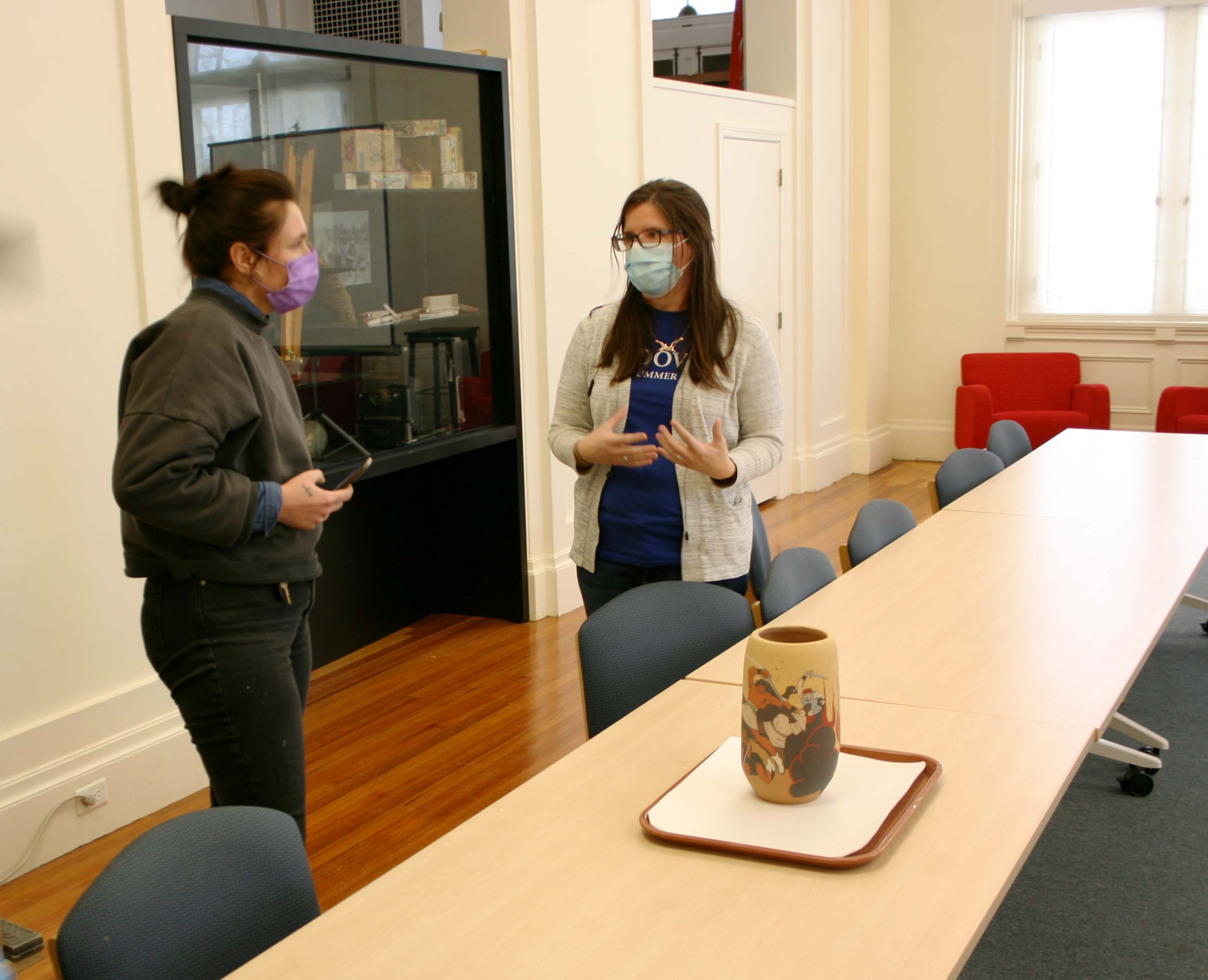
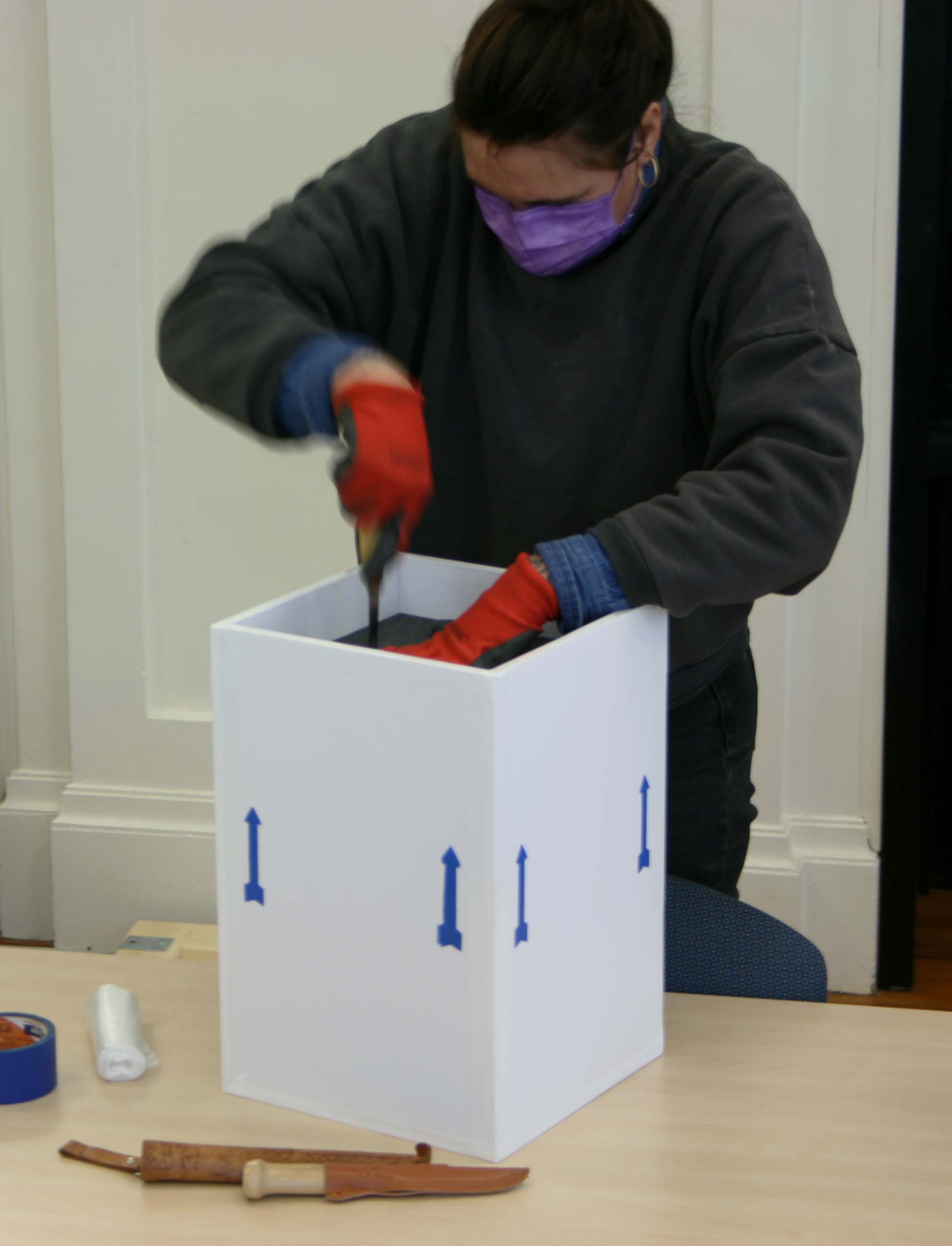
After months of correspondence and paperwork, the vessel was packed for transportation in mid-February of this year.  It is always a pleasure to watch skilled art handlers create custom packaging and work to ensure that items make it safely to their destination.  The team was great and the vessel is awaiting installation in its new temporary home.

I enjoyed learning more about the Molina Family Latino Gallery and the National Museum of the American Latino and encourage you to explore the newest branch of the Smithsonian.  Keep your eyes peeled for an online version of the gallery later in 2022 for those who are unable to travel there in person.

Reconnecting with old friends

Contributed by Marla Taylor

In late January, the Peabody Institute hosted a special school group visit of students at Cape Cod Academy. Why is this school group more special than any other? Well, it actually had a lot more to do with the teacher – Alex Hagler.

Alex has been a part of the Peabody’s extended family for nearly 13 years. They started as a volunteer in 2009 and have worked at the Peabody in several capacities: work duty student, volunteer, and temporary employee. Alex has been kind enough to contribute to the blog in the past and you can read their thoughts in a student reflection and retrospective submission from several years ago.

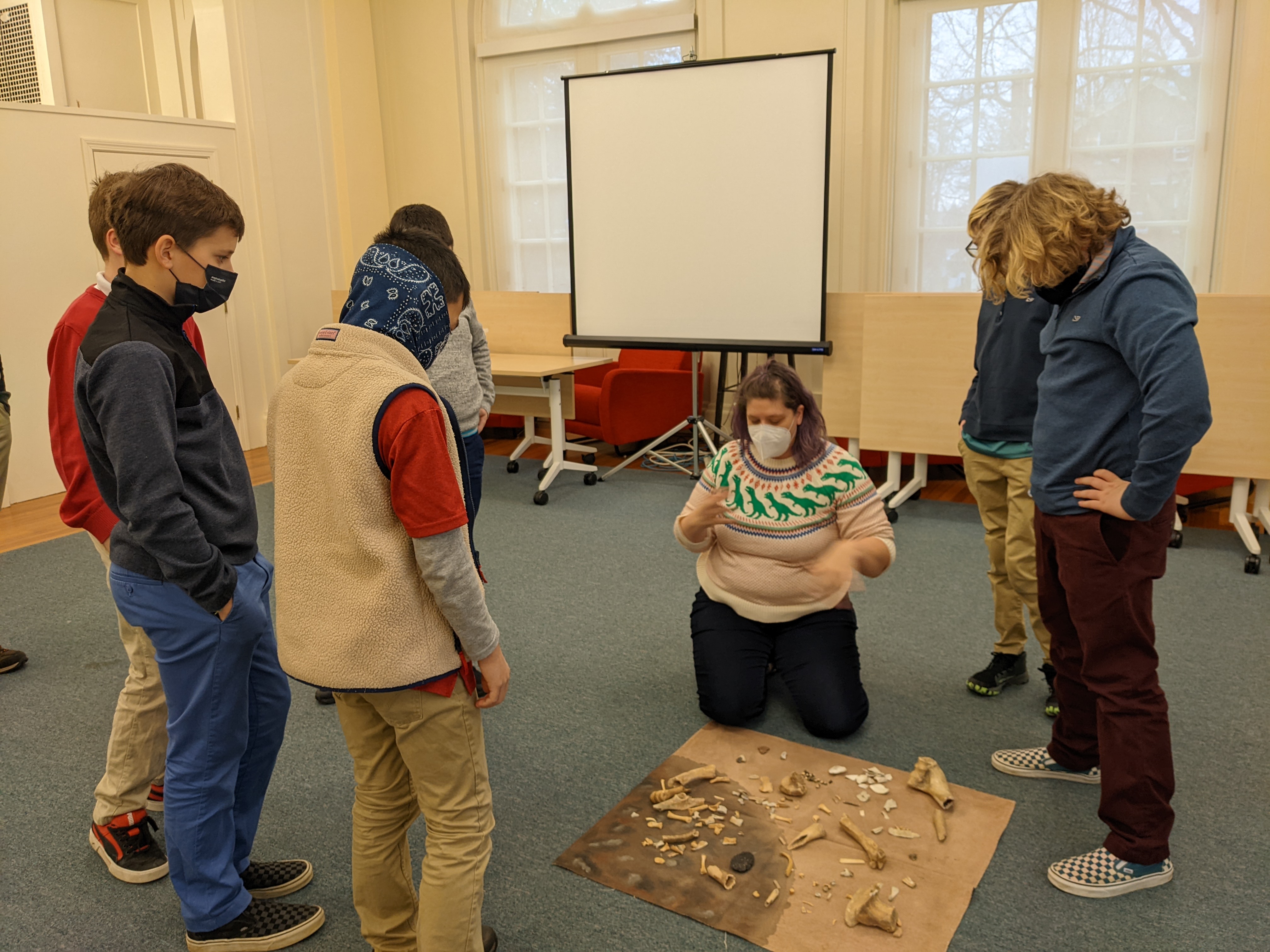
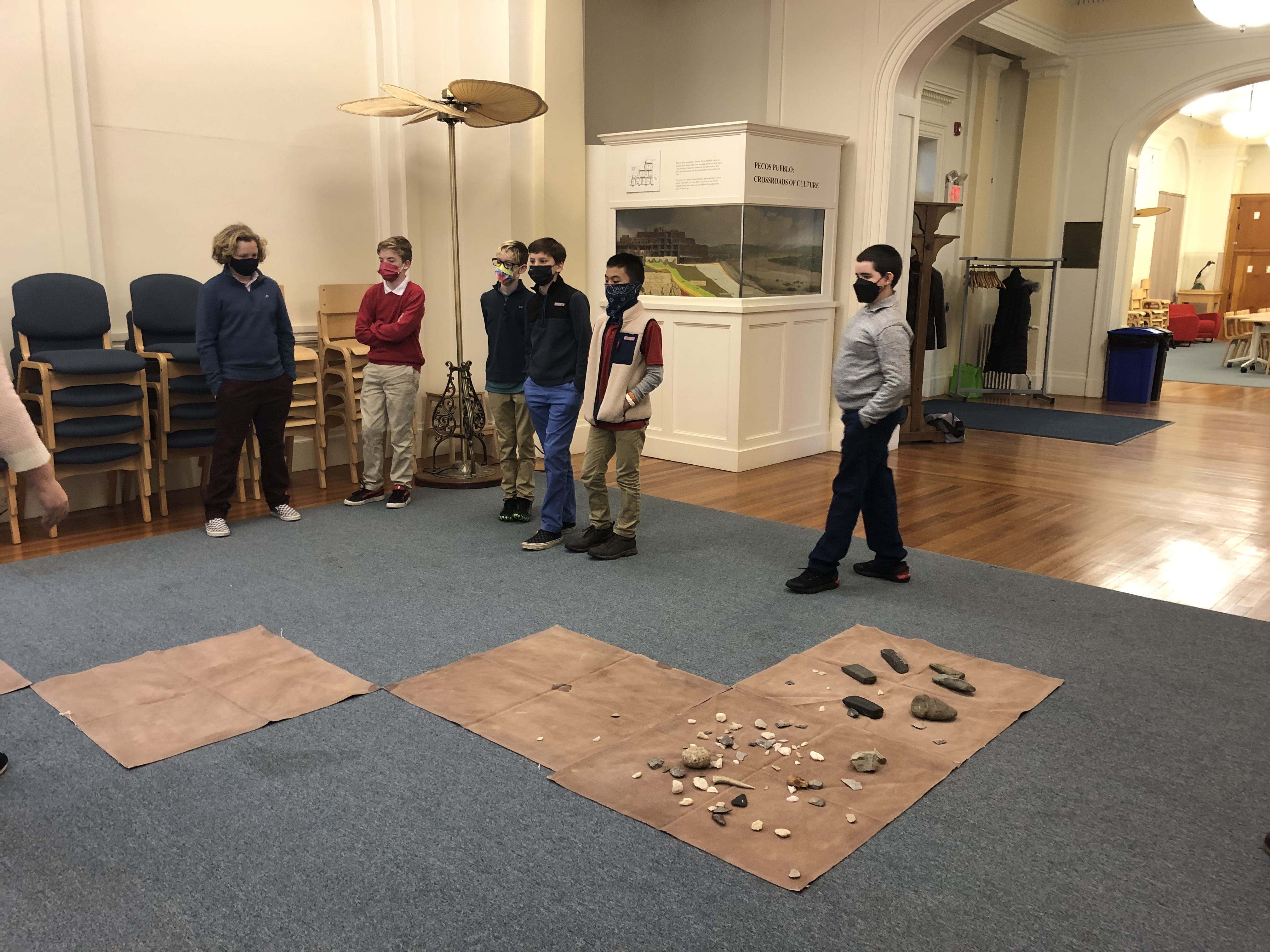
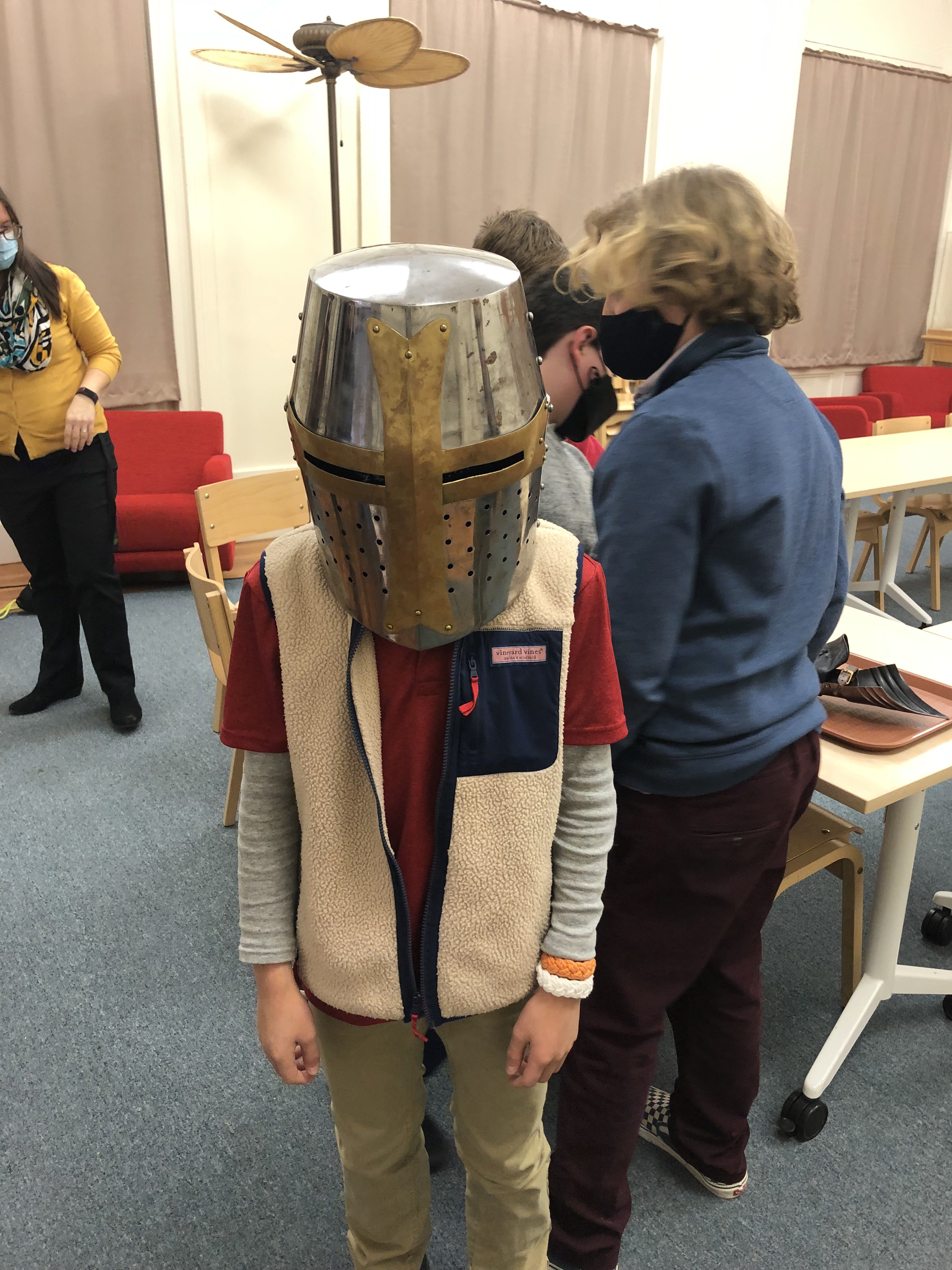
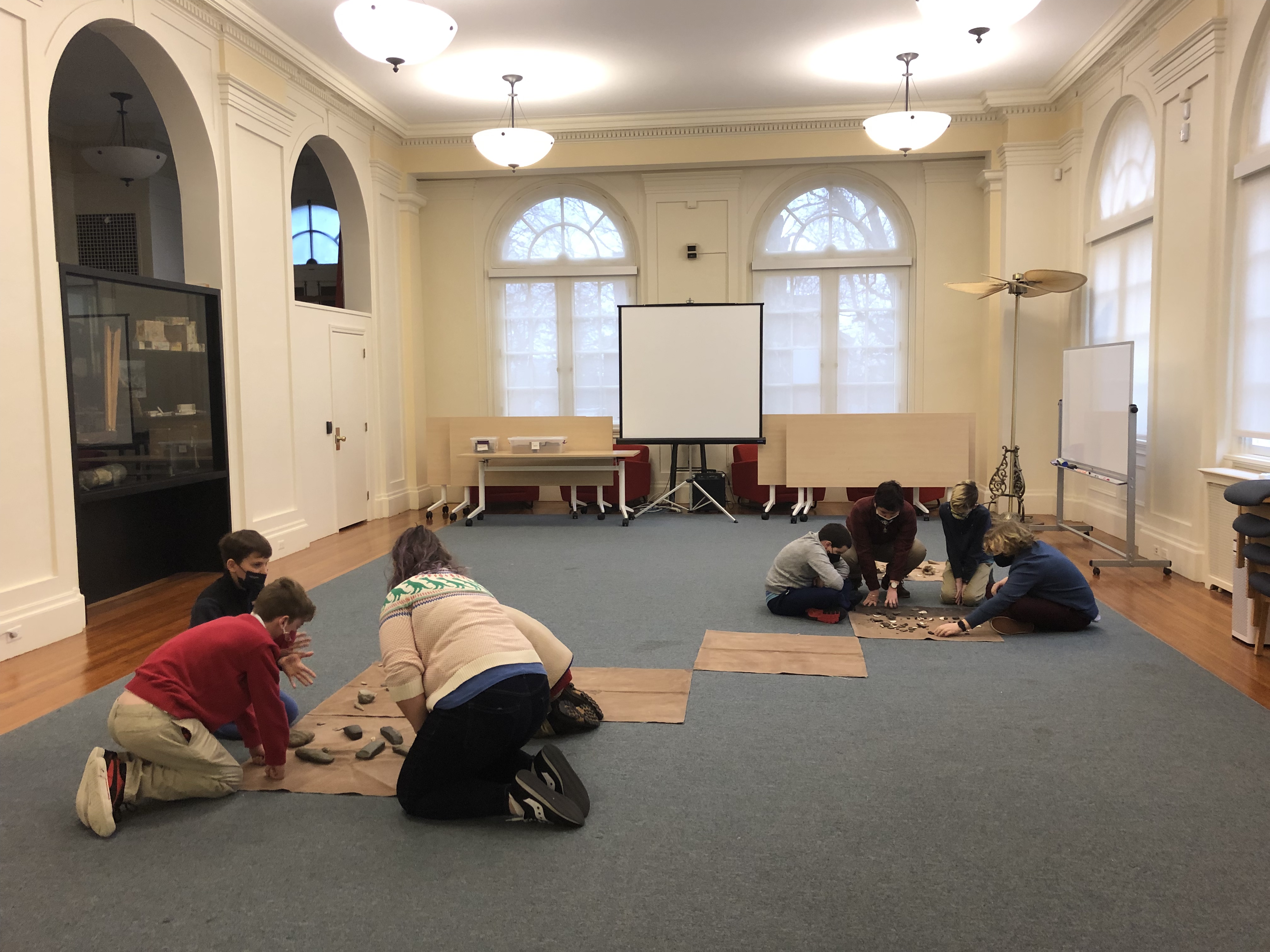
Now, Alex is a Latin teacher at Cape Cod Academy and introduces archaeology to their students as part of the curriculum. One of the best places for that, of course, is here at the Peabody Institute. Alex, and a co-teacher, brought six students to explore our TARPS mock excavation exercise and take a tour of the collections spaces. The students asked fabulous questions and learned important lessons about archaeology and Native American culture. 

Welcoming Alex back as a teacher with their own students was a powerful “full circle” moment for us here. It is so rewarding to have an ongoing relationship with the students and alumni who connected with the Peabody while here at Phillips Academy. 

If you are one of those students who enjoyed your time at the Peabody – reach out! We would love to connect with you again.

Searchable Museum

Contributed by Marla Taylor

Over Thanksgiving break, I was catching up on some news and saw an article that caught my eye – Smithsonian African American Museum Launches Online Interactive Access. First, a headline like that will always catch my attention. Second, it stirred a memory of an email exchange that I had with a registrar from the National Museum of African American History and Culture (NMAAHC) back in July. 

The Peabody Institute is proud to have a handful of items on loan to the NMAAHC to tell the story of Lucy Foster, a free Black woman who lived here in Andover from 1771-1845. Lucy’s story is part of the Slavery and Freedom exhibition. This loan has been active since 2019 and will continue until at least early 2023 (and may be extended!). 

A few months ago, a registrar from the NMAAHC asked for permission to include the items on loan from the Peabody in their new digital initiative, the Searchable Museum. The Searchable Museum offers rich interactive, digital experiences based on the NMAAHC’s inaugural exhibitions, historical collections, narratives, and educational resources. The Slavery and Freedom exhibition was the first to be developed as a digital experience. I gladly granted permission to include Lucy Foster and her story.

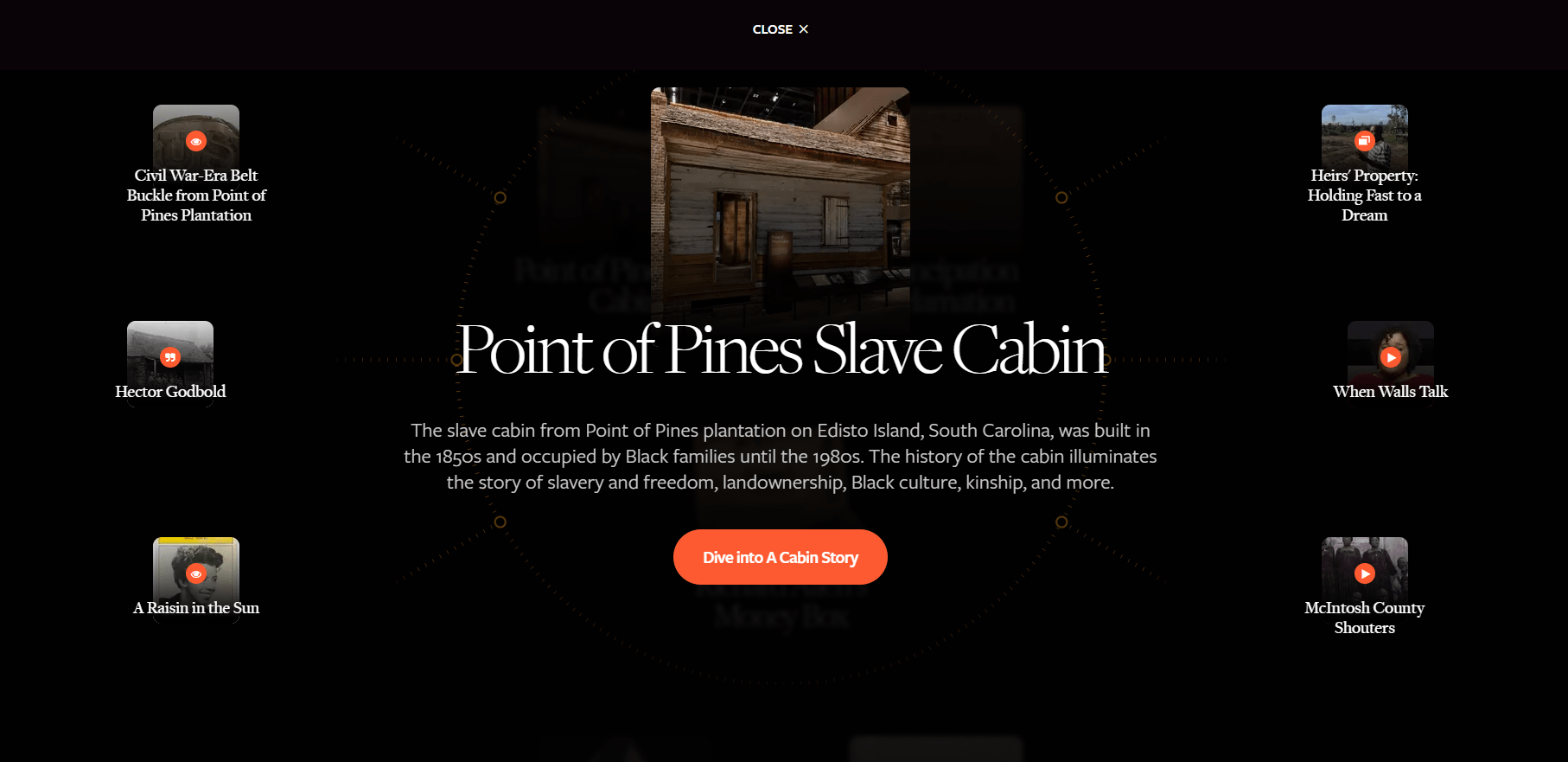
While I was excited to see items from the Peabody as part of this incredible resource, I was also quickly drawn into the rest of the content. I especially enjoyed learning about the Point of Pines Slave Cabin. In 2013, a team from NMAAHC traveled to Edisto Island, South Carolina and began the meticulous process of dismantling and relocating a cabin that had been occupied by Black families from the 1850s until the 1980s. The cabin is a vehicle to tell the story of the people who lived there, the power of land ownership, the architecture of slavery, and modern housing discrimination. 

The Searchable Museum is well organized and information is presented in clear terms – I strongly recommend that you all check it out!

Research requires consultation

Contributed by Marla Taylor

The way the Peabody Institute is supporting collections-based research is changing. 

We are committed to involving Native American and Indigenous nations, communities, and groups in research efforts involving collections held by the Peabody (archives, photographs, and items), including decision-making about the appropriateness of research activities and analysis. As of November 2021, consultation with an authorized tribal representative is a required part of any application for access to collections. This is consistent with the United Nations Declaration on the Rights of Indigenous Peoples (September 13, 2007), specifically Article 11, which states that:

Indigenous peoples have the right to practice and revitalize their cultural traditions and customs. This includes the right to maintain, protect and develop the past, present and future manifestations of their cultures, such as archaeological and historical sites, artefacts, designs, ceremonies, technologies and visual and performing arts and literature.

This approach stems from the Peabody Institute’s commitment to practice ethical management in all aspects of the Peabody’s collection, and our response to the UN Declaration, which requires member states to:

provide redress through effective mechanisms, which may include restitution, developed in conjunction with indigenous peoples, with respect to their cultural, intellectual, religious and spiritual property taken without their free, prior and informed consent or in violation of their laws, traditions and customs.

Preference will be given to research projects that are conducted by descendant communities or at the written request of those communities. The Peabody encourages researchers to foster their own relationship with geographically and culturally affiliated descendant communities. In cases where relationships have not been, or cannot be, established, the Peabody may assist with limited guidance on consultation on a case by case basis.

Researchers must submit a completed Collections Research Request Form to the Curator of Collections for evaluation.  Non-invasive techniques including, but not limited to, 3D scanning, pXRF, and x-ray, as well as invasive techniques, including, but not limited to, radiocarbon dating, compositional analysis, DNA, and isotopic analysis require the completion of the Analysis Request Form.

An International Collections Addendum form is necessary for collections whose origin is outside of the United States.

Prior to consultation, the Peabody Institute is able to confirm or deny the presence of the requested information and respond to general questions about the proposed research material. In some cases, a list may be provided to the researcher to assist them in conducting an effective consultation. However, no direct access or detailed information will be shared without appropriate community authorization.

The Peabody Institute recognizes that this is a shift in traditional museum research access practices. Our goal is prioritize Indigenous voices in any use of Indigenous cultural heritage and to make certain that research is conducted collaboratively with descendant communities.  All questions or comments can be sent to the Curator of Collections.

Inventory Complete!

Contributed by Marla Taylor

Well, we did it. After about four years of focused work, the Peabody Institute collections team has finally completed the inventory project. 

This project has been a labor of love (and frustration, and tears, and headaches…) over the years. And I am thrilled to share that the last drawer was inventoried last week!

The project was originally designed back in 2016 to gain full physical and intellectual control over the collection. We knew that the Peabody Institute was home to thousands of items that had not yet been cataloged and were therefore inaccessible to researchers, classes, and tribal partners. 

Over the course of the project, we more than doubled the catalog records in our internal database, counted just over 500,000 individual items, and rehoused items from over 2,000 wooden drawers into archival boxes.

I considered linking to all the past blog posts about this project, but honestly, that got ridiculous pretty quickly! Instead, I will direct you here to find everything tagged as part of the reboxing project to learn more about our process.

A massive thank you must go out to everyone who was a part of this incredible project. This includes all Peabody Institute staff – including those who have had to move on over the years – our volunteers, and dozens of work duty students. 

Our deepest appreciation also goes our financial supporters – the Oak River Foundation, the Abbot Academy Fund, and Les ’68 and Barbara Callahan for their generosity and support of the Peabody’s goal to improve the intellectual and physical control of the Institute’s collections.

Hopping into the Collection

Contributed by Marla Taylor

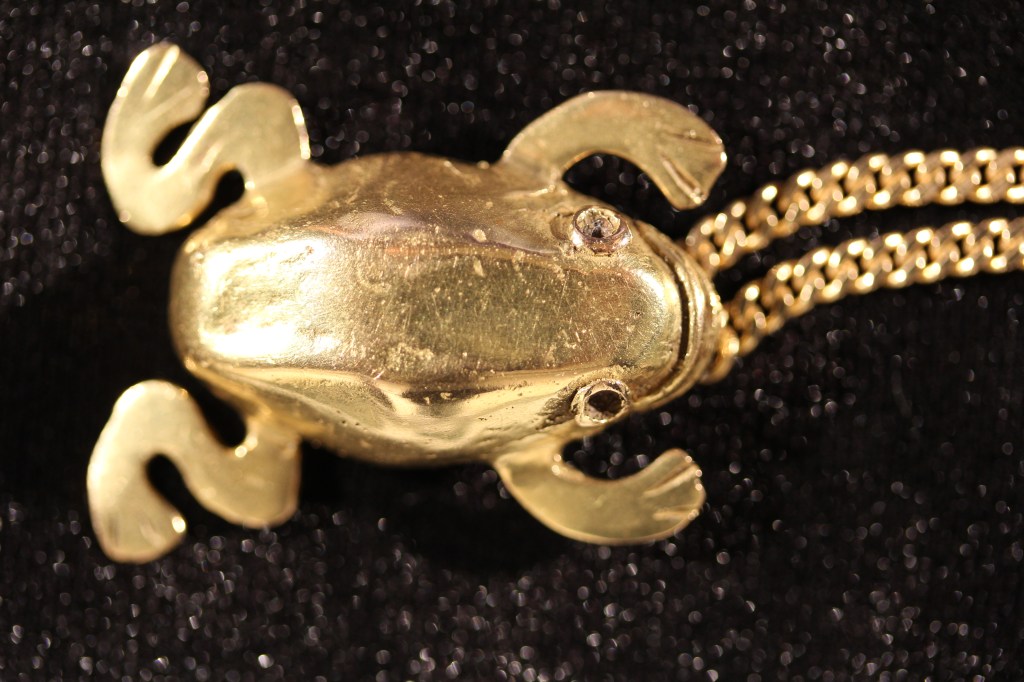
Several months ago, I was connected with a PA alum who wished to donate a piece of Pre-Columbian Mesoamerican jewelry to the Peabody Institute. It is a gold pendant in the shape of a frog with a slightly unclear origin. It had been passed down within the family and was variably attributed to the Maya, as well as cultures in Panama and Columbia. The owner had the pendant appraised for insurance purposes in the 1960s and again in the 1980s. Each appraisal identified a different culture of origin and left me a little confused.  

Now, admittedly, I know relatively little about Pre-Columbian Mesoamerican jewelry and was out of my depth to evaluate this potential donation. Thank goodness for networking!

My first step was to reach out to a couple members of the Peabody Advisory Committee who have expertise in Mesoamerica and Peru. Even if they could not identify the cultural origin of the pendant, I knew they could point me in the right direction. In collaboration with the Peabody’s director, Ryan Wheeler, it was decided that I should reach out to a professor emeritus, Dr. John Scott, at the University of Florida for evaluation. That was a solid plan.

Lots of photos were taken of every part of the frog pendant. 

The final piece of the puzzle was to determine if the frog was actually made of gold. Again, that is outside of my expertise and I needed to find some help. Fortunately, Andover is home to several amazing jewelry stores. The wonderfully helpful Vice President of Service at Royal Jewelers, Dina, came to my rescue. She hooked me up with a jeweler who had technology to identify the metallurgic components of the pendant without causing any damage.  Technology is great!

The result is that the frog is a mixture of gold and copper that is typical of tumbaga. Tumbaga is the name for a non-specific alloy of gold and copper that is very common in Lower Central American manufacture. The frog is 1,200-500 years old and probably originated in the Central Highlands or Atlantic Slope of Costa Rica.

The next step is to present all this information to the Peabody Collections Oversight Committee (PCOC) in October. The PCOC will then vote on whether or not to formally accept it into the collection. Hopefully, this frog will be making an appearance in a classroom soon!

Note – if you would like to learn more about Latin American art, check out some of Dr. Scott’s publications:

Before Cortes: Sculpture of Middle America by Elizabeth Kennedy Easby and John Scott (1971)

Latin American Art: Ancient to Modern (1999)

Back to normal… Sort of

Contributed by Marla Taylor

Like for so many of us, this summer has been a rather abrupt transition back to “normal” at the Peabody. 

I returned to the office full time in July and had to hit the ground running to help support the other Peabody staff, welcome researchers, jump back into giving tours, and provide back up for Summer Session activities. It has definitely been a transition, but it feels good to have students, researchers, and volunteers back at the Peabody!

For the entire month of July, the Peabody hosted the Summer Session class Dig This! This Lower School initiative takes a closer look at different global case studies from across the ancient world to hone skills and understanding as a historian and archaeologist. Students then get to take part in excavating the lost Mansion House of Phillips Academy – the home of Samuel Phillips. It is always great to see these students get excited about archaeology every summer!

Beyond that, it was a joy to welcome our Cordell Fellows for 2021 – Dr. Arthur Anderson and Dr. Gabe Hrynick. Their research is on the Peabody’s Northeast Archaeological Survey conducted partially in Down East, Maine in the late 1940s. I won’t try to summarize their work here, but will instead refer you to a blog they contributed a couple years ago. Their work in July focused on fully documenting one site, Thompson’s Point. A real plus to hosting researchers is that they do some of the collections documentation work for me – I am looking forward to receiving a copy of all the item photographs they took! 

“Normal” at the Peabody Institute also requires our volunteers to be around. We have all missed them this past year and are thrilled to welcome back our regular collections volunteers (and new ones!)

I don’t know how the next few months will look – mask or no mask, virtual or in-person – but it has been a real pleasure to jump back into the hectic schedule of the Peabody. Stay safe and healthy, everyone!