This skeleton is from a site near Glorieta, New Mexico – just southeast of Santa Fe – and collected by Alfred Kidder during his work at Pecos Pueblo.
As discussed in a previous blog, The Macaw Factor, the presence of macaws in the southwest is certainly note-worthy. These birds have a natural habitat approximately 1000 miles to the south and were clearly transported to the region as status symbols. They may have been kept for their feathers or displayed as a sign of wealth and connections.
Scarlet macaws
As we continue to move through the collection, who knows what we will find next!
Further reading:
Hill, Erica. “The Contextual Analysis of Animal Interments and Ritual Practice in Southwestern North America.” Kiva 65, no. 4 (2000): 361-98. http://www.jstor.org/stable/30246334.
In my last blog I discussed soil analysis and its importance in dating and understanding a site. Another form of analysis used in the Tehuacán Archaeological-Botanical Project by Richard “Scotty” MacNeish was a process called radiocarbon dating, a technique developed by University of Chicago physicist Willard Libby. Carbon samples were collected during excavation and sent for carbon dating to be used for the Tehuacán Chronology Project.
There are two techniques for dating in archaeological sites: relative and absolute dating. Relative dating, in a stratigraphic context, is the idea that objects closer to the surface are more recent in time relative to objects found deeper in the ground. This relates to the law of superposition, which in its plainest form, states soil layers in undisturbed sequences will have the oldest materials at the bottom of the sequence and the newest material closer to the surface. Although this form of dating can work well in certain cases, it does not work for all.
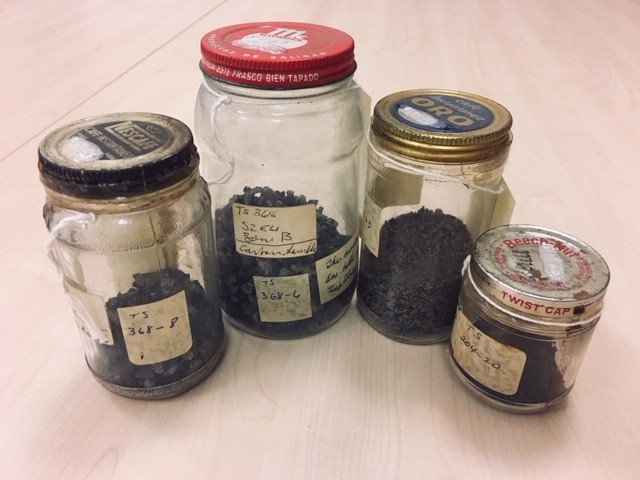
Jars of Carbon Samples from various sites in the Tehuacán Valley.
Many sites include soil layers that have been disturbed and this
can happen several ways. Natural disasters, such as floods, can erase top
layers of sites. Rodents can move around layers in a site as they burrow
underground, sometimes moving items from one context to another. Even current
human activity can change the stratigraphy of a site through construction, post
holes, and pits.
This takes us to our second dating technique. Absolute dating
represents the absolute age of a sample before the present. Examples of objects
that can be used to find absolute dates are historical documents and calendars.
However, when working in an archaeological site without documents, it is hard
to determine an absolute date. If a site has organic material present,
radiocarbon dating can be used to determine an absolute date. Radiocarbon
dating is a universal dating technique that is used around the world and can be
used to date materials ranging from about 400 to 50,000 years old. Radiocarbon
dating may even work on very recent materials.
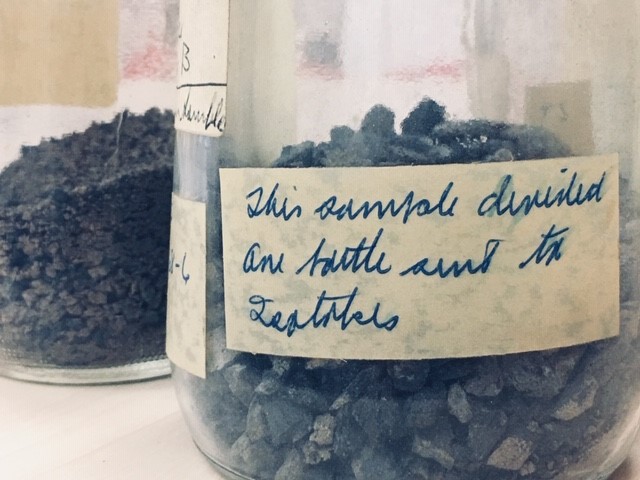
Part of this carbon sample sent to Isotopes lab for radiocarbon dating.
Organisms such as plants and animals all contain radiocarbon (14C). When these organisms die, they stop exchanging
carbon with the environment. When this occurs, they begin to lose amounts of 14C overtime through a process called radioactive decay. The half-life of 14C is about 5,730
years. Radiocarbon dating measures the amount of stable and unstable carbon in
a sample to determine its absolute date. As a result, the older the organic
material, the less 14C it has relative to stable versions of the
isotope.
The carbon samples recovered from the Tehuacán Valley were
collected specifically with this in mind. Many of these samples had labels or
notes stating that some of each sample was sent to labs for radiocarbon
testing. The carbon samples are organic material and their properties of
radiocarbon were used to determine the age of the material, which in turn, helped
date each site.
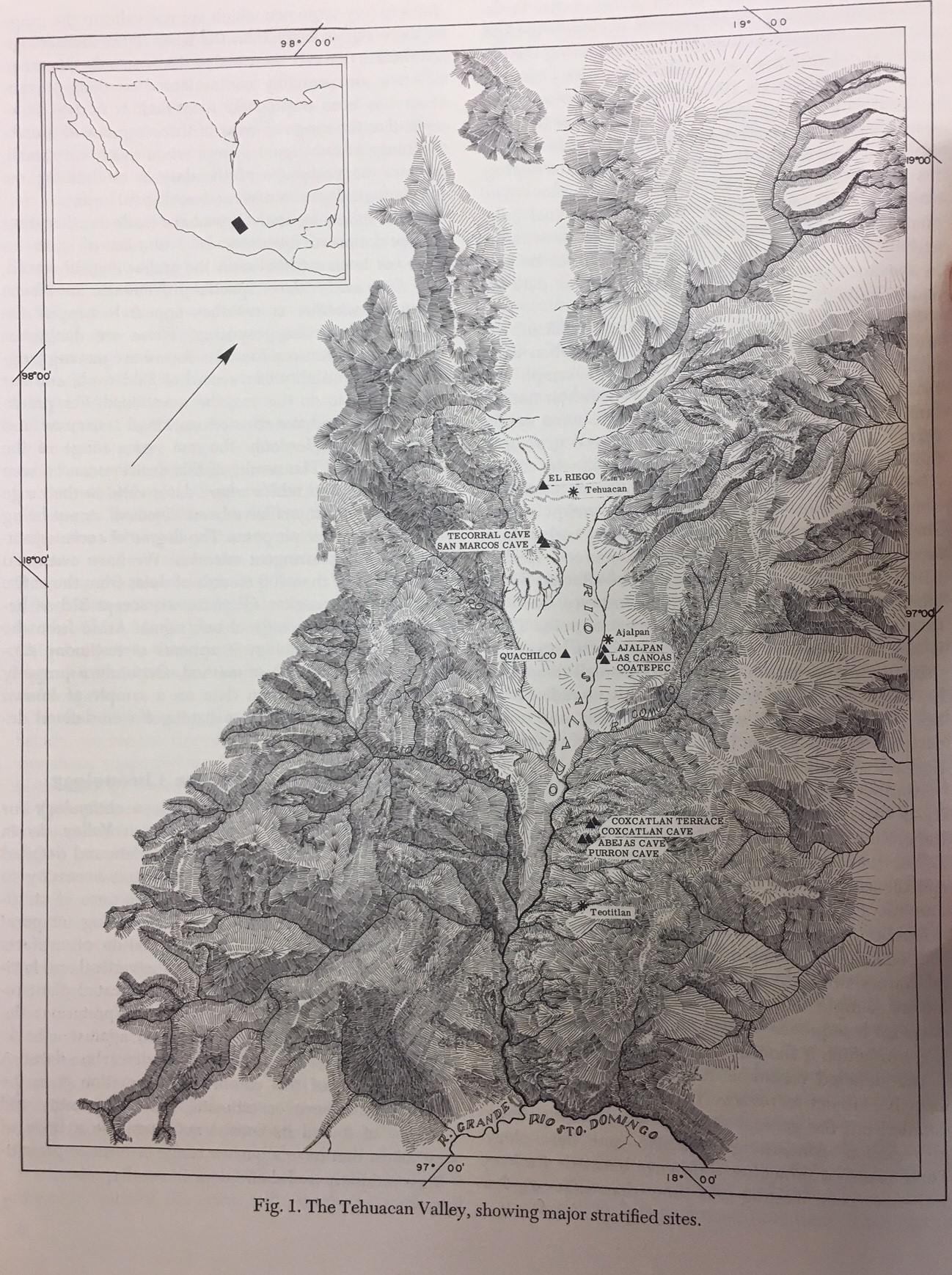
Map of the Tehuacán Valley and some of the sites the carbon samples came from.
The following sites are represented in some of the jars of carbon samples I catalogued from the Tehuacán Archaeological-Botanical Project.
Site Number Site Name Radiocarbon years
Tc 35 El Riego 6800 to 5000 B.C.
Tc 50 Coxcatlan Cave 5000 to 3400 B.C.
Tc 307 Abejas 3400 to 2300 B.C.
Tc 272 Purron Cave 2300 to 1500 B.C.
Ts 204 Ajalpan 1500 to 800 B.C.
These results were published in Volume Four of MacNeish’s Prehistory of the Tehuacan Valley: Chronology and Irrigation and can be found on Page 5. MacNeish and Tehuacán Chronology Project director, Frederick Johnson, selected carbon samples to be sent for testing, which resulted in the determination of 218 radiocarbon dates. Johnson played a prominent role in radiocarbon dating, serving as the chair of the Committee on Radioactive Carbon 14 set up by the American Anthropological Association. This project not only produced a chronology for the Tehuacán sequence of excavated sites, but later contributed (along with 400 additional radiocarbon dates) to the chronology for all of Mesoamerica. The dates, however, were made within the first two decades of radiocarbon dating and lack the accuracy and precision now available with newer techniques, especially with the older dates.
To read more about the Tehuacán Archaeological-Botanical Project
and the Tehuacán Chronology Project visit Internet
Archive.
Further Reading
Libby, Willard F. Radiocarbon
Dating, 2nd ed., University of Chicago Press, Chicago, IL, 1955.
Print.
MacNeish, Richard S. et al., The Prehistory of the Tehuacan Valley: Chronology and Irrigation.
Vol. 4. University of Texas Press, Austin, TX, 1972. Print.
My name is Ryan Collins, and I am an Archaeological Anthropologist specializing in Ancient Maya Culture. I recently earned a Ph.D. in Anthropology from Brandeis University where I also instruct courses (as well as at Northeastern University and Lesley Art + Design) in Archaeology, Anthropology, Latin America, and Material Culture Studies.
I am also fortunate enough to have two roles with the Robert S. Peabody Institute of Archaeology. First, I am the Transcription Project Associate, working through the museum’s original bound ledgers to create a digital inventory. While there are several subjects of interest that I want to explore from the Ledger Transcription Project (including the stories of somewhat mysterious artifacts), the subject of this post will focus on my role as the Lead Archaeologist with Mansion House Excavations happening on Phillips Academy’s Campus during the Summer Session with the Lower School Institute. The Mansion House excavations happen in collaboration with the Robert S. Peabody Institute of Archaeology which houses recovered artifacts as well as materials that once belonged in the late 18th-century building.
The Mansion House at Phillips Academy Andover is a site of significant historical importance in the local community. Built during the Revolutionary War in 1782 (though fully completed in 1785) it was home to Phillips Academy Andover’s founder, Judge Samuel “Esquire” Phillips Jr., and his family until 1812. During this time Judge Phillips, his wife Phoebe Phillips, and their family were known to cultivate a warm and inviting atmosphere to the students of the academy while also hosting notable political figures of the day like President George Washington.
Mansion House in the 1880s
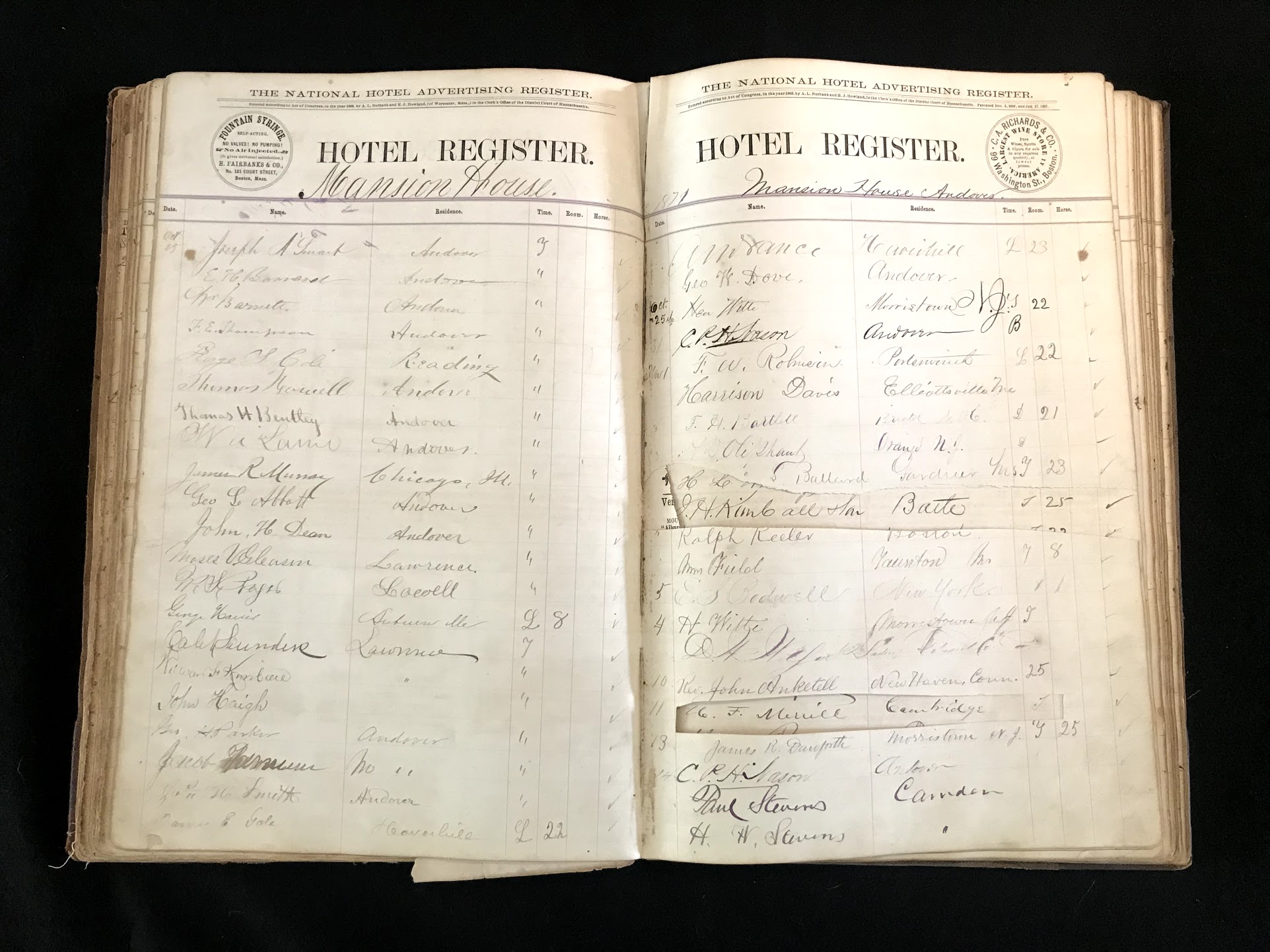
With the decline of Phoebe Phillips’ health in 1812, the Trustees of Phillips Academy purchased Mansion House converting it into an Inn and Tavern. As an Inn and Tavern, Mansion House became a central meeting place for students and faculty of the academy as well as for residents in Andover. Over the years Mansion House hosted notable guests including Emerson, Webster, President Andrew Jackson, and Mark Twain among many others. Although, when looking through the guest ledger on the date of his stay, Mark Twain’s signature is absent having mysteriously been cut out.
Signed guest ledger from the Mansion House
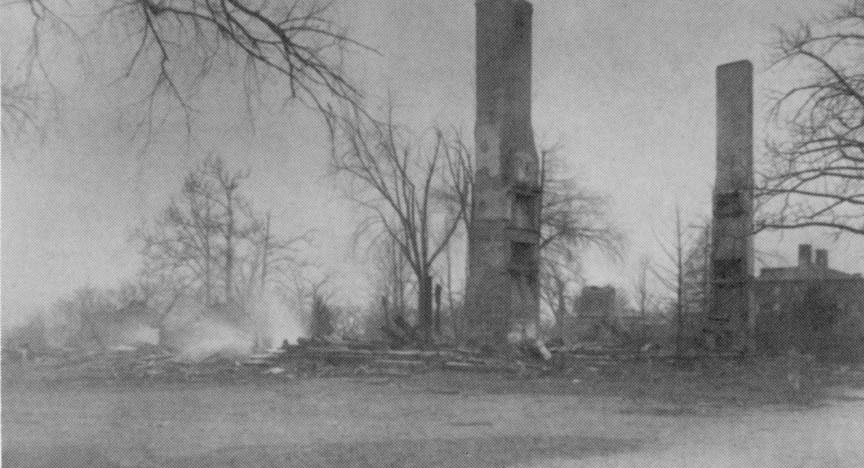
The history of Mansion House and its guests is enough to capture the attention of archaeologists. However, beneath Mansion House’s rich past is an enduring mystery – who burned it down? On the very early morning of November 29th, 1887, around 2:00 am the tenants were awoken by thick smoke coming from a fire in the rear base of the house near a pile of woodchips. A second fire was discovered shortly after in a third-floor room at the front of the house. Despite the best efforts of the local fire brigade and a galvanized town, Mansion House could not be saved. As chronicled by the Andover Townsman on December 2nd, 1887, Mansion House did not collapse, but it “slowly melted” into its foundations.
Mansion House ruins after the fire
Most sites and buildings that archaeologists explore are little more than skeletons of their former selves. This reality puts limits on the archaeological record (often refuse in this context) and on the questions that archaeologists can ask about a site to broad notions of process or change over time. With Mansion House, a question of this variety would be: How did Mansion House change over time? What traditions are evident in the material remains of the site? However, because Mansion House burned into its foundations, we have access to an event, a specific moment in time. In this way, the materials students recover from Mansion House will help then share different informed stories about the site, its residents, and life in the 18th and 19th centuries. (IMAGE 4)
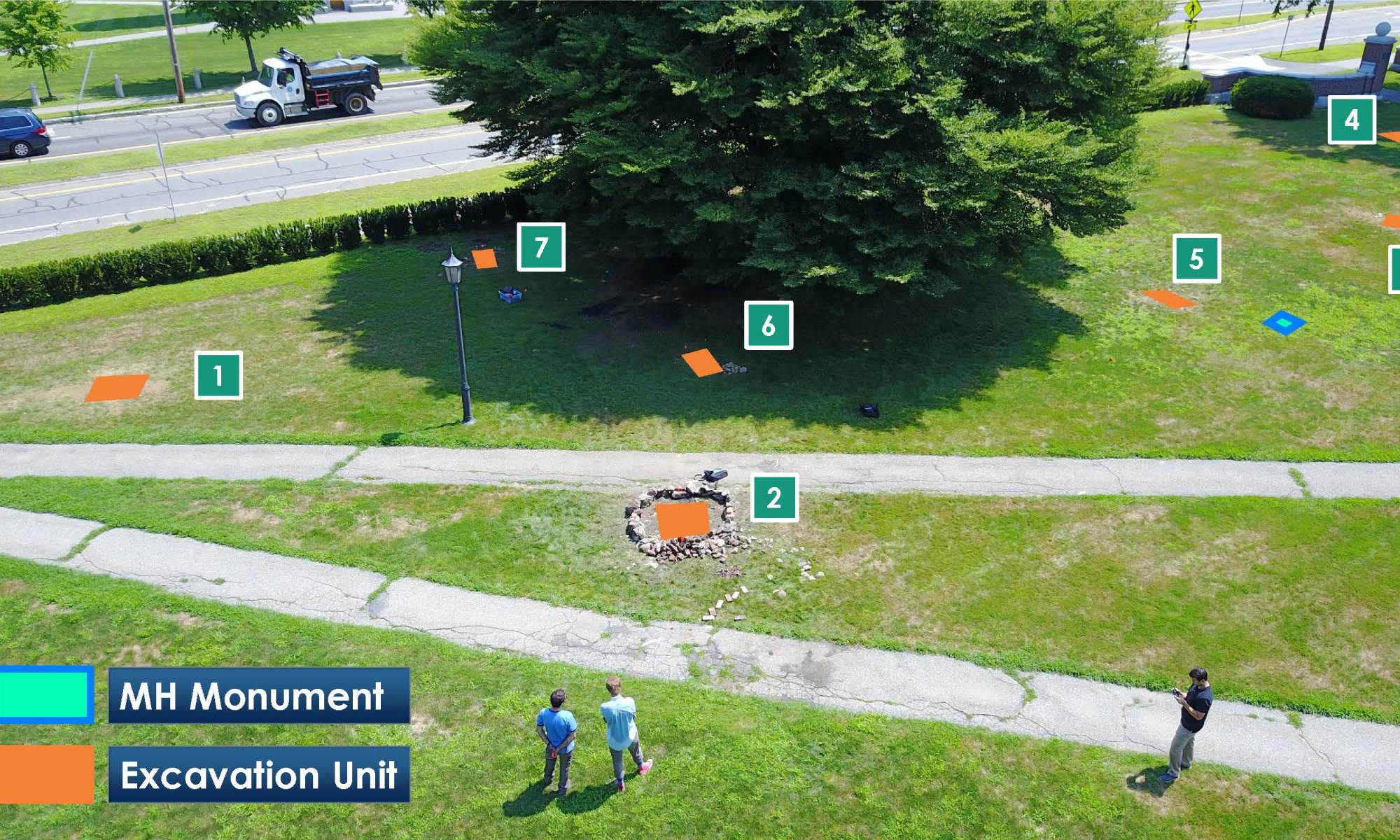
Summer Session excavation unit
In 2018, our excavations confirmed the location of Mansion House by finding one of its (at least) 6 chimneys and the remains of an iron furnace. This finding not only establishes a more precise understanding of where Mansion House’s foundations are currently situated but it allows us to explore the material remains that have sat untouched for 132 years. With luck, this year’s investigations will allow us to understand even more about life in Mansion House during its final days. While the mysteries around the long-ago fire are unlikely to be solved, more insight will undoubtedly be learned about Phillips Academy and the local Andover community. Excavations at Mansion House will reopen in July of 2019.
My latest work for the Peabody Inventory and Rehousing Project has led me to Tehuacán, where I have been cataloguing glass jars that contain soil samples. These jars are a part of the Tehuacán Archaeological-Botanical Project by Richard “Scotty” MacNeish during the early 1960s. The samples were collected for testing and analysis purposes from the project area. When archaeologists excavate a site, they dig through soil layers formed by the activities of past people. What archaeologists recover from these layers provides clues about what happened at that site from features or artifacts. However, the actual soil is another very important clue for archaeologists, as it can help date sites and tell a lot about the environment of the site during the time the soil layers were formed.
Jars of Soil Samples from the Tehuacán Archaeological-Botanical Project, 1960s
Giving an accurate description of soils help archaeologists better understand what happened in the past at a site. The color and texture of soil can reveal the age of an archaeological site, as well as how the site was used. For example, a circular stain in the soil may reveal a post-hole deposit, indicating that there was once a wooden post that had decayed, leaving a soil discoloration in the ground. Depending on the site, these post-holes could represent a structure or palisade. In addition, studying soil fertility can help archaeologists understand ancient agricultural systems.
MacNeish (left) and a field assistant analyzing stratigraphy at the Gladstone site on Kluane Lake in the Yukon.
Archaeologists use the Munsell Color Chart to help them describe the colors of the soil layers in a standardized way. This system was developed by Albert H. Munsell at what is now MassArt in 1905. Archaeologists compare the soil color in their excavation units to the color chips of the Munsell Chart – similar to the color squares found in hardware stores for paint. Where a color may be brown to one person, it may be gray to another – so it is important that archaeologists use this chart so they can standardize their descriptions.
Munsell Color Chart
To describe soil textures, archaeologists and geomorphologists use a soil triangle to help them determine what type of soil they are examining in the field. There are three types of soil components: sand, silt, and clay. Most soils have a combination of these three components and each of these components vary in sizes – sand particles being the largest and clay particles being the smallest. Similar to how the Munsell Color Chart describes soil color the same way, the soil triangle helps archaeologists describe soil texture consistently.
Soil Triangle – Courtesy of the United States Department of Agriculture
Another way archaeologists analyze their site is through soil stratigraphy. This is the different types of strata, or layers of soil that archaeologists examine to map out the archaeological site over time. Stratigraphy can be used to determine which soil was associated with human occupation and which layers are sterile, meaning the soil is not associated with human occupation and does not contain any archaeological material. Layers that include artifacts and features represent a place where people lived and worked, as archaeologists can see the objects left behind by human activity. Sterile layers such as subsoil, flood sediment, and bedrock are not as distinct, but provide information on a site’s activity or inactivity.
Archaeologists mapping out the stratigraphy at Purron Cave, TC 272, in the Tehuacán Valley.
The jars of soil samples were most likely examined after excavation and retained for further analysis. Presently, these soil samples have been rehoused and cataloguing for each of these jars is complete. To learn more about Richard “Scotty” MacNeish and the Tehuacán Archaeological-Botanical Project, visit the Peabody’s online archival collections. The MacNeish archives are available for research, separated into two collections – the Richard S. MacNeish Papers and the Richard S. MacNeish Records.
Further Readings
Birkeland, Peter W. 1974. Pedology, Weathering, and Geomorphological Research, New York: Oxford University Press.
Limbrey, Susan. 1975. Soil Science and Archaeology. London and New York: Academic Press.
Solecki, R. 1951. Notes on Soil Analysis and Archaeology. American Antiquity,16(3), 254-256.
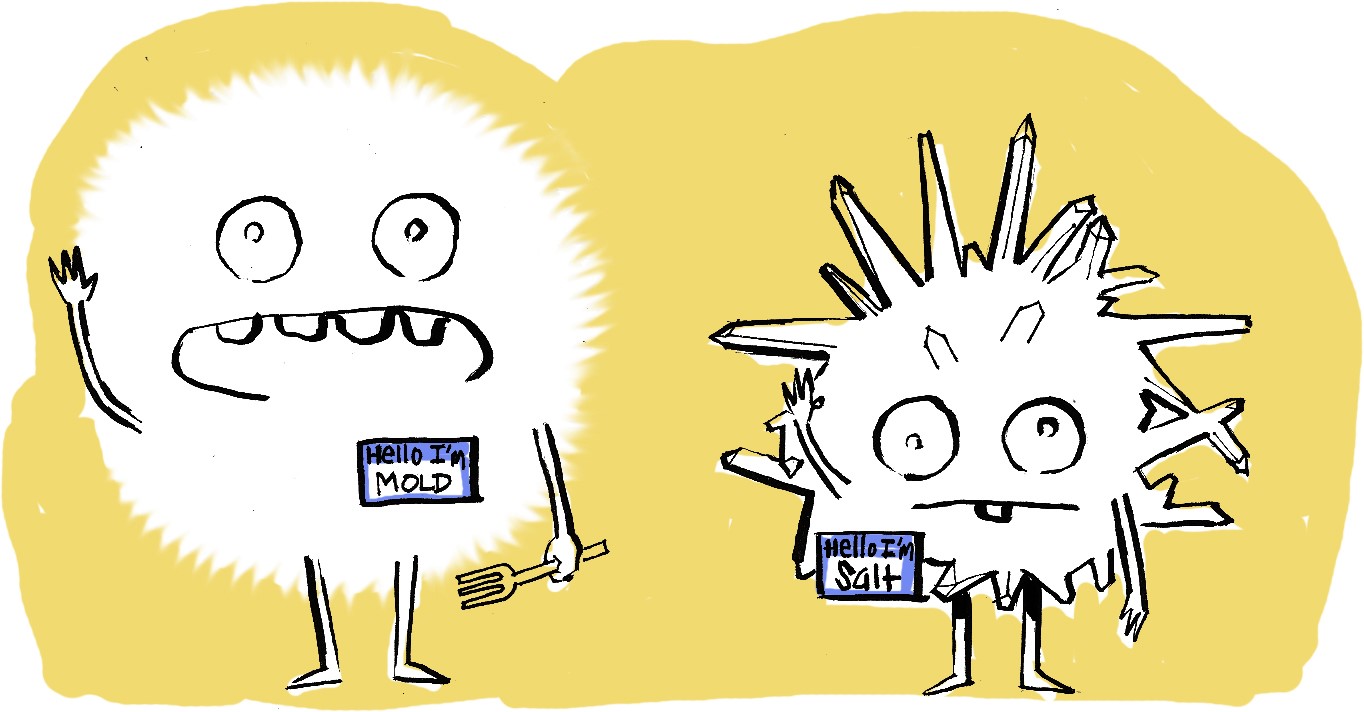
In early February we wrapped up inventorying and rehousing collections that originated in Missouri. The work was followed by two weeks of cleaning, and as a result we’ve completed one of the regions held in the collection. So you may be wondering what we were cleaning. During the inventory, we encountered bone and antler objects covered with salt crystals and patchy dormant mold. The objects were cleaned before they were stored inside their new boxes to remove salt and minimize the risk of mold spreading to unaffected objects.
Where did the mold and salt come from and why are they a problem?
Mold spores are found everywhere in the environment. When the humidity is high, those spores germinate resulting in mold. Because it is a living organism, mold is classified in the museum world as an agent of biological deterioration. It eats organic matter, in this case the dust resting on the outer surface of bone or the bone itself, and secretes waste that can stain or damage the surface that it is growing on. Mold can appear to be dormant, but when the conditions are right mold will generate spores that are easily borne on the wind, allowing it to spread quickly.
Agents of deterioration
Salts on the other hand are considered chemical agents of deterioration. They are brought into museum collections on the objects themselves. Dissolved salts present in groundwater can be absorbed by porous objects, such as bone, while they are buried underground. After the water evaporates the salts are left behind. Excessively humid conditions can dissolve soluble salts, allowing them to move through porous objects. When they arrive at the surface they form crystals. If the crystals form below the surface they can exert enough force to cause damaging cracks and spalling.
Mold and salt thrive in damp environments where the Relative Humidity (RH) is above 65%. The institute’s storage area is located in the basement, which does not have a controlled climate, so mold and salt are an unfortunate reality. Currently, the RH in the basement is somewhere below 15% (15% is as low as our monitoring equipment can read). RH levels this low shouldn’t support active mold and salt growth, so what we found is inactive, but it is hard to say when and for how long the growth of mold and salt was last active.
At the Peabody we are committed to maintaining the longevity of this very important research collection and salt and mold pose a risk to its scientific viability. Damage to the surface of artifacts caused by mold and salt can negatively impact the research value of the collection.
How do we prevent mold and salt?
While we don’t have an HVAC system maintaining the environment in basement storage, we have adopted a few practices that will mitigate and prevent future growth of mold and salt. First, we use dehumidifiers during times of high humidity that typically arise during the summer. Second, we are moving the artifacts currently stored in open drawers and rehousing them in closed archival boxes. The enclosed space of a box helps create a buffer that protects the contents from rapid shifts in RH that lead to mold and salt growth. The boxes will also keep future mold growth from spreading; something that was not possible with open-drawer storage.
Vacuum defeats Mold and Salt
In addition to the rehousing, we have implemented a cleaning program. When mold and salt are identified we isolate the effected object to keep spores from spreading. We clean the affected artifacts with a dry brush and vacuum. After we clean we use sachets of silica gel to absorb excess moisture, thereby providing another buffer against cycles of RH increases and decreases. In six months we’ll check on the status of the bone to see if the mold and salt are staying away.
My name is Emma Cook, I am the Administrative Assistant at the Robert S. Peabody Institute of Archaeology. I have a background in archaeology, history, and museum studies with undergraduate and graduate degrees from the University of Georgia and Tufts University. Aside from my administration duties, I work with the Peabody’s collections. Recently I’ve been involved in the Inventory and Rehousing Project and I am working with collections on the first floor South Alcove, located in one of our gallery/classroom spaces.
The Robert S. Peabody Institute of Archaeology collection comprises nearly 600,000 artifacts, photographs, and archives. Some of these materials are displayed and used for teaching, while many reside in our collection storage. What is unique about much of our collection space is its original storage. The bays and drawers in which many of these artifacts inhabit are almost as old as the Peabody itself, the bays being first built in the early 1920s. However, below the surface of these pine wood bays and drawers are a collection of uncatalogued objects that have hardly come to light (literally), with some still stored in the tin foil and paper bags they were placed in upon archaeological excavation many years ago.
The antiquated charm of these wooden bays is not enough to meet the need of accessible storage for our collections and the goal is to replace them with new custom-built shelves. In preparation of this storage renovation, objects need to be identified, catalogued, and rehoused. This work is completed through our Inventory and Rehousing Project.
First Floor, South Alcove – where my cataloguing work began
I began my work simply inventorying the objects in each drawer of each bay in the alcove. Some of these objects were already identified, numbered, and recorded in Past Perfect – a museum software that is the standard for cataloguing museum collections. Through this software, the Peabody collection is documented and made accessible online. My job was to make sure these objects were accounted for and in the right place, as well as properly rehoused and organized within the drawers. Sounds pretty easy right? Well, eventually things changed as I came across several drawers and bays containing objects with old numbers or no numbers at all. This is where my cataloguing efforts began.
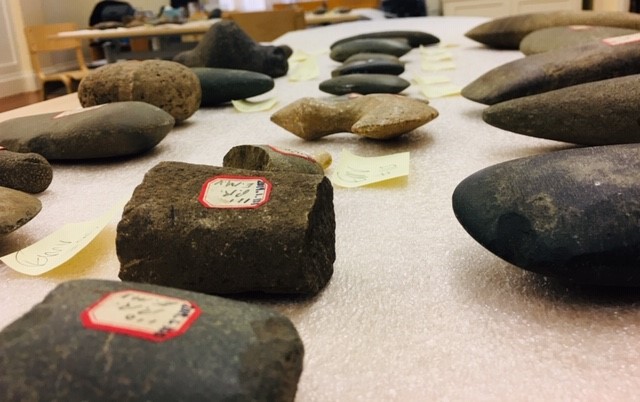
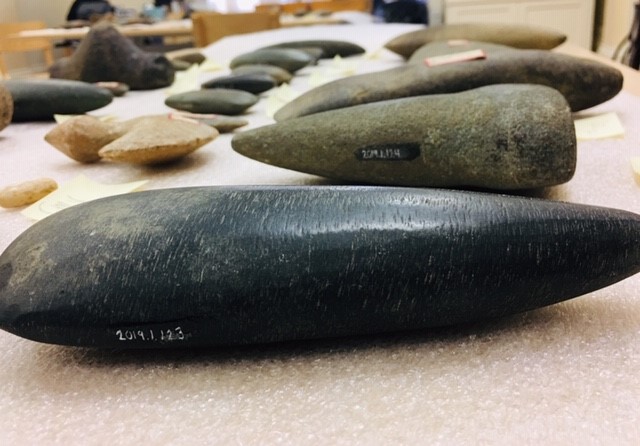
Cataloguing lithic materials from Puerto Rico, Cuba, and New England (Each sticky note marks an object without a number)
Lithic materials, primarily ground stone Celts from Puerto Rico
Cataloguing is the process of recording details about an object into a collection catalog or database that documents the information of each object as well as its location in storage. Through this process each object receives a unique number. This number is physically attached to the object and appears in records related to the object in Past Perfect. In museums and archives, objects or materials in a collection are normally catalogued in what is called a collection catalog. In the past, this was traditionally done using a card index, but in the present-day it is normally implemented using a computerized database – for the Peabody this is Past Perfect. Some of the objects I came across with “old numbers” were either connected to the Peabody’s past card index cataloguing system or the Peabody’s original numbering system (i.e. 1,2,3,…. 78,049).
Lithic objects with affixed labels and old numbers
Each object was given a new number associated with the Peabody’s present catalog numbering sequence (i.e. 2019.1.123). This numbering sequence is a three-part number, making it both simple and expandable. The first part of the sequence is the year in which the object was accessioned or catalogued (i.e. 2019). The second part of the sequence is given to objects in chronological order based on when they were first accessioned (i.e. 2019.1). The third part of the sequence gives a single object a number in chronological order (i.e. 2019.1.1). Objects that had an affixed label had the new number written on the label. Objects without labels had their numbers painted on with ink. A solution called B72 is applied to the object before the ink in order to protect the original surface of each object. This solution is not harmful to the object and can be easily removed if a mistake is made or the object needs a different number.
Lithic objects with new numbers painted on their surface using ink and the B72 solution
The cataloguing process is not an easy one, nor is inventorying and rehousing a collection. The process may be slow and tedious, but it does have its rewards. By using a great deal of care, time, and effort, rehoused and identified objects can be used for teaching and research. Not only can collection staff have full access to the collection, they can provide a safe and accessible place for these materials in storage. The cataloguing process may seem like a trivial task, but it just goes to show – it’s more than a number.
For more information and reading on the Inventory and Rehousing Project, see the following blogs below:
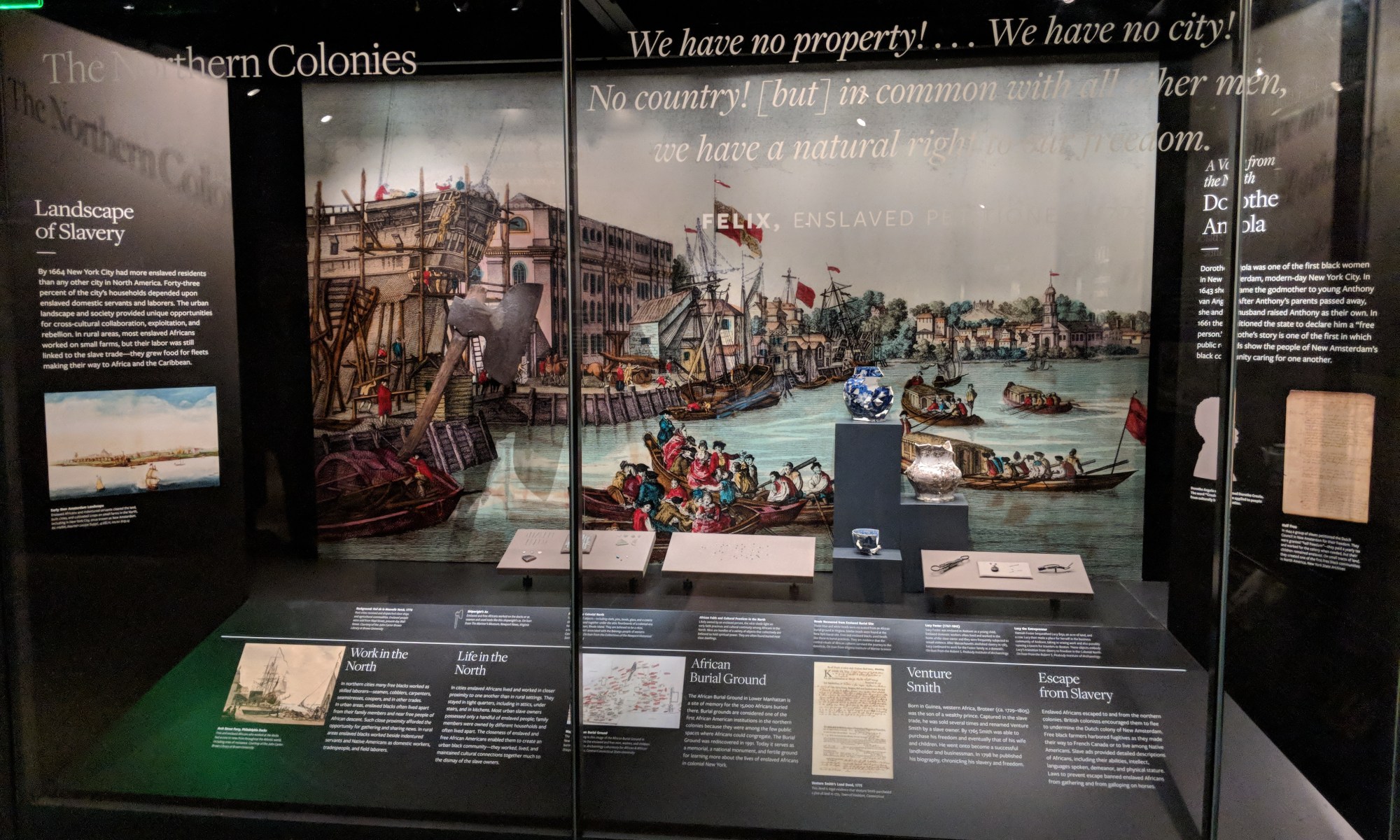
The Slavery and Freedom inaugural exhibition is at the physical heart of the Smithsonian’s National Museum of African American History and Culture. The exhibition invites visitors to explore the complex and intertwined histories of slavery and freedom through the personal stories of those who experienced it. Chronicling the early 15th century through 1876, the exhibition explores the cultural, economic, and political legacies of the making of modern slavery and the foundation of American freedoms. Visitors will encounter both free and enslaved African Americans’ contributions to the making of America in body, mind, and spirit. They will glimpse a vision of freedom—an American freedom—pushed to its fullest and most transformational limits through the everyday actions of men and women. Most importantly, they will walk away with an understanding of how the story of slavery and freedom is a shared American history with deep roots linking all people together and that still impacts American society today.
The discovery of Lucy Foster’s homestead was an accident in 1945 as archaeologists Adelaide and Ripley Bullen were looking for evidence of an ancient Native American settlement. Lucy’s early nineteenth century homestead was instead one of the first African American archaeological sites excavated in the United States. To learn more about the excavation and the artifacts recovered, check out these sources:
You can also find many of Lucy’s belongings in our online collection.
A partially reconstructed mug from the Lucy Foster site
Five buttons from the Lucy Foster site
Knife from the Lucy Foster site
Padlock from the Lucy Foster site
The Lucy Foster site objects are displayed in Slavery and Freedom in “The Northern Colonies: Expanding Merchant Capital” section of the museum. These objects allow the NMAAHC to tell the story of women and their work in the north and bring to light the personal voice and story of Lucy Foster. Foster was born in Boston in 1767 and was sold into the household of Job and Hannah Foster at age four, in 1771. She worked as a domestic in their household until Job’s death in 1789, when she moved with Hannah to her new husband Philemon Chandler’s household. After Chandler’s death, they moved back to the Foster household until Hannah’s death in 1815. Lucy then established her own household on land willed to her by Hannah. Lucy died of pneumonia on November 1, 1845. Occasional mentions of Lucy in historical documents, coupled with the archaeological remains, has allowed a glimpse into her life.
The NMAAHC requested these objects because Lucy’s story is unique. She is one of two People of Color from this area with documentary and archaeological records to tell her story. Lucy was part of both free and enslaved communities in Andover, and these objects show how she continually used her sewing and cooking skills to carve a place for herself in the Andover community. These objects embody the presence of women and their work as fundamental to the northern states and are a rare example of objects from the early nineteenth century concretely connected to an enslaved person.
If you are in the D.C. area, be sure to stop by and say “hello” to Lucy!
The Peabody Institute has been working for some time now to establish full physical and intellectual control over our collection. You can read about our progress here, here, here, and here.
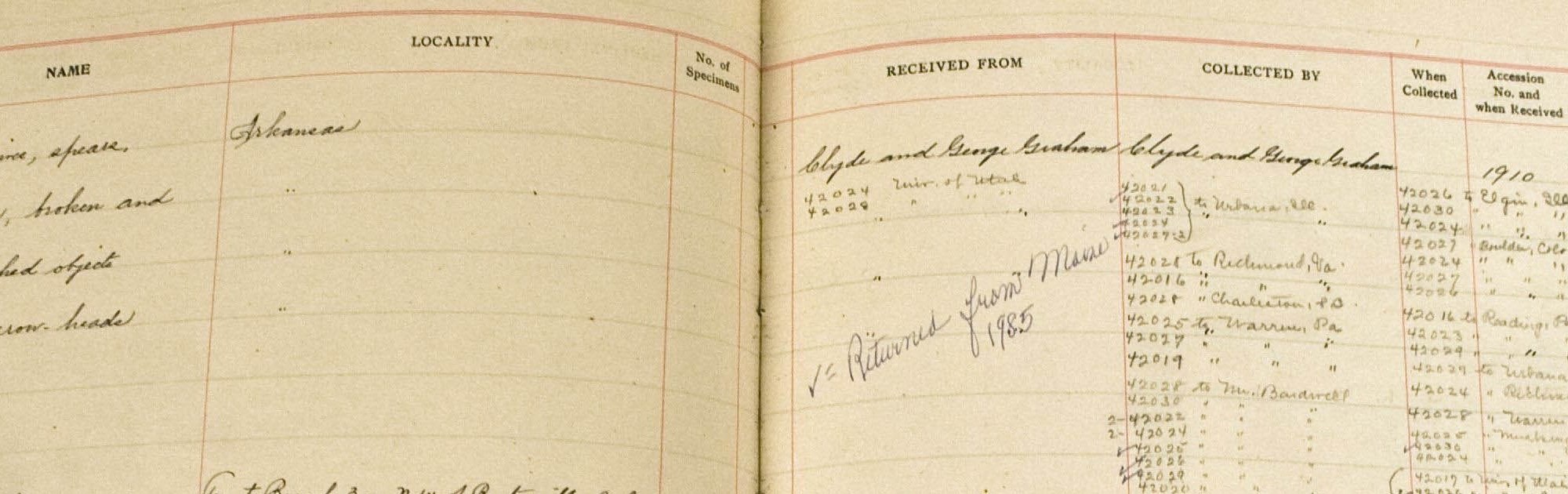
But, physically inventorying the collection is only half the project. The Peabody also needs to document and account for all the artifacts that came into, and left, the collection over the years. Currently, about 56,000 catalog records are present in our database, PastPerfect, versus the nearly 120,000 unique catalog numbers that have been assigned over the years. Original cataloging records at the Institute are largely on paper in two formats – ledger books that document the first phase of collections and individual catalog cards that were in use through the 1980s. Often, a single line of handwritten text or a 3×5 index card contains all the documented information for a specific artifact. That data is invaluable for making objects relevant and accessible to researchers, faculty, students, and in our ongoing repatriation work with Native American tribes.
A page from one of the accession ledgers
Recently, I presented this problem to the Board of the Abbot Academy Fund as part of their biannual grant cycle. Focusing on the need to transcribe the hand-written ledger books – 78,094 individual line entries in 14 ledger books. I am thrilled to report that the Abbot Academy Fund has chosen to support our Transcribing the Collection initiative!
The grant funds a temporary project transcriptionist who will type each line of the original accession ledgers from early twentieth century cursive into an Excel document. The project will be complete in the fall of 2019.
Once all this information is recorded, the Peabody will collaborate with PastPerfect to migrate the data into our database. The ultimate goal is to make the collection more accessible to staff, researchers, students and tribes.
I will keep you updated!
The Transcribing the Collection project is made possible by a grant from the Abbot Academy Fund, continuing Abbot’s tradition of boldness, innovation, and caring.
Hi there! My name is John and I am the new Inventory Specialist at the Robert S. Peabody Institute. As Inventory Specialist my primary task is to work on the ongoing inventory and rehousing project. The project’s goals are to fully understand the collections that are held at the Institute and move them from their old wooden drawers into archival boxes. Armed with the more precise knowledge of what is in the Peabody, the institute can ensure their continued care and share them with students and the public for years to come.
This position is a dream job for me. It brings together my interest in archaeology, museums and collections care, and who doesn’t love spending time underground!
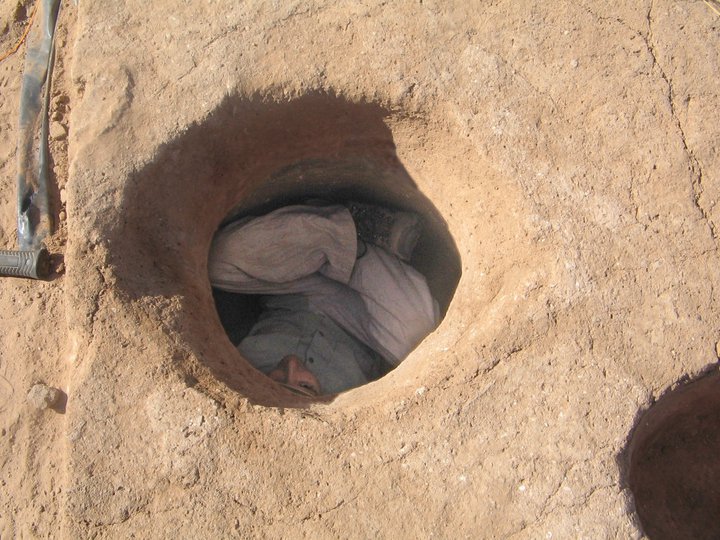
Yep, this is me in a bell pit during an excavation in Arizona!
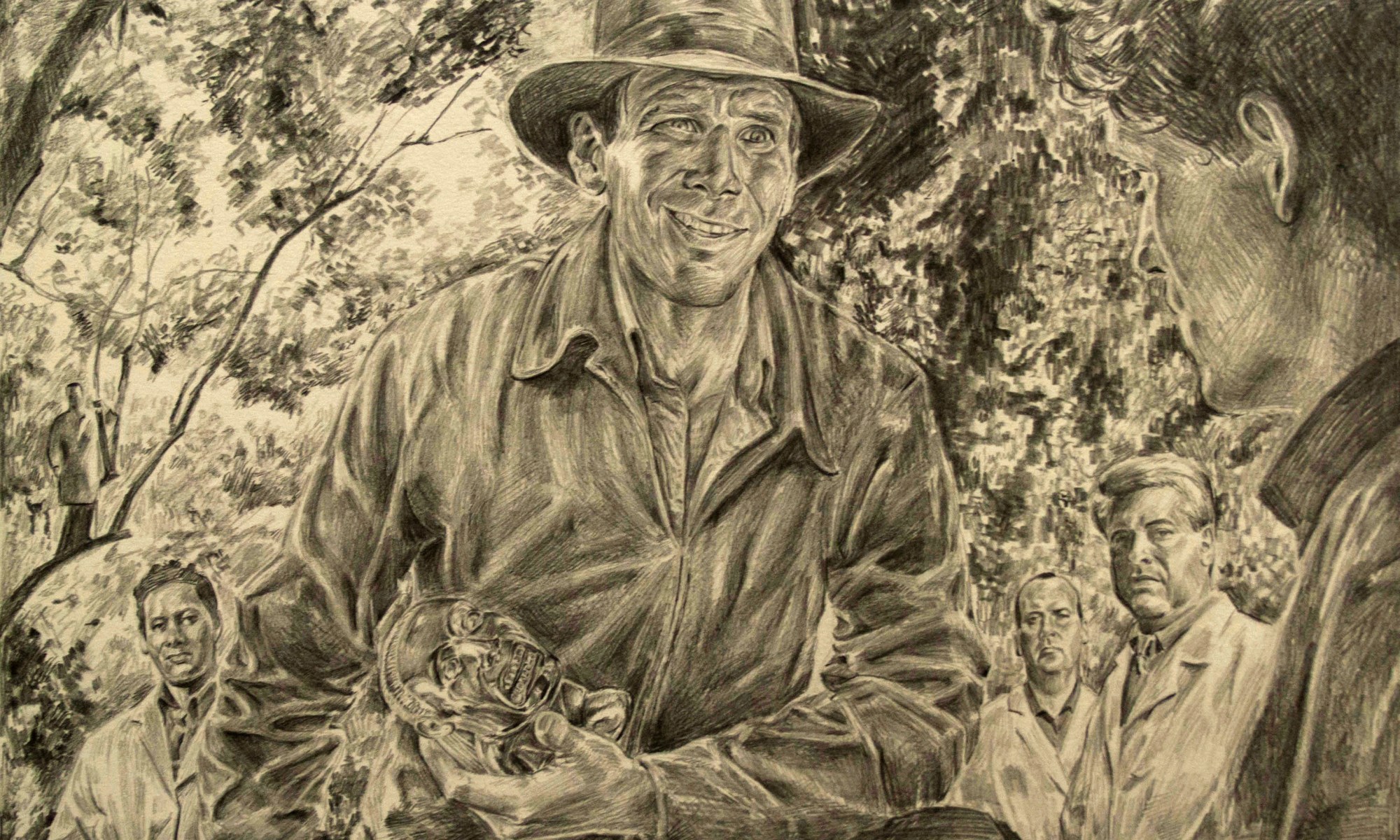
Before moving to Massachusetts in 2013, I worked for almost a decade as an archaeologist in the Pacific Northwest and Arizona. After relocating to New England I enrolled in the MFA program at Tufts and the School of the Museum of Fine Arts. During my time as a graduate student I found that I kept coming back to archaeology and the history of museum collections as a subject for my artwork.
Artwork from my thesis project
While I was in graduate school I also pursued a certificate in Museum Studies. I gravitated towards collections care and since graduating I’ve worked in collections at the Fitchburg Art Museum and Historic New England.
In a round-about way I’ve come back to archaeology, though it’s been following me for the past 5 years. During my time here I’ve been inventorying objects from Missouri. There have been some surprising finds, which has been great. You never know what you’re going to find here at the Peabody.
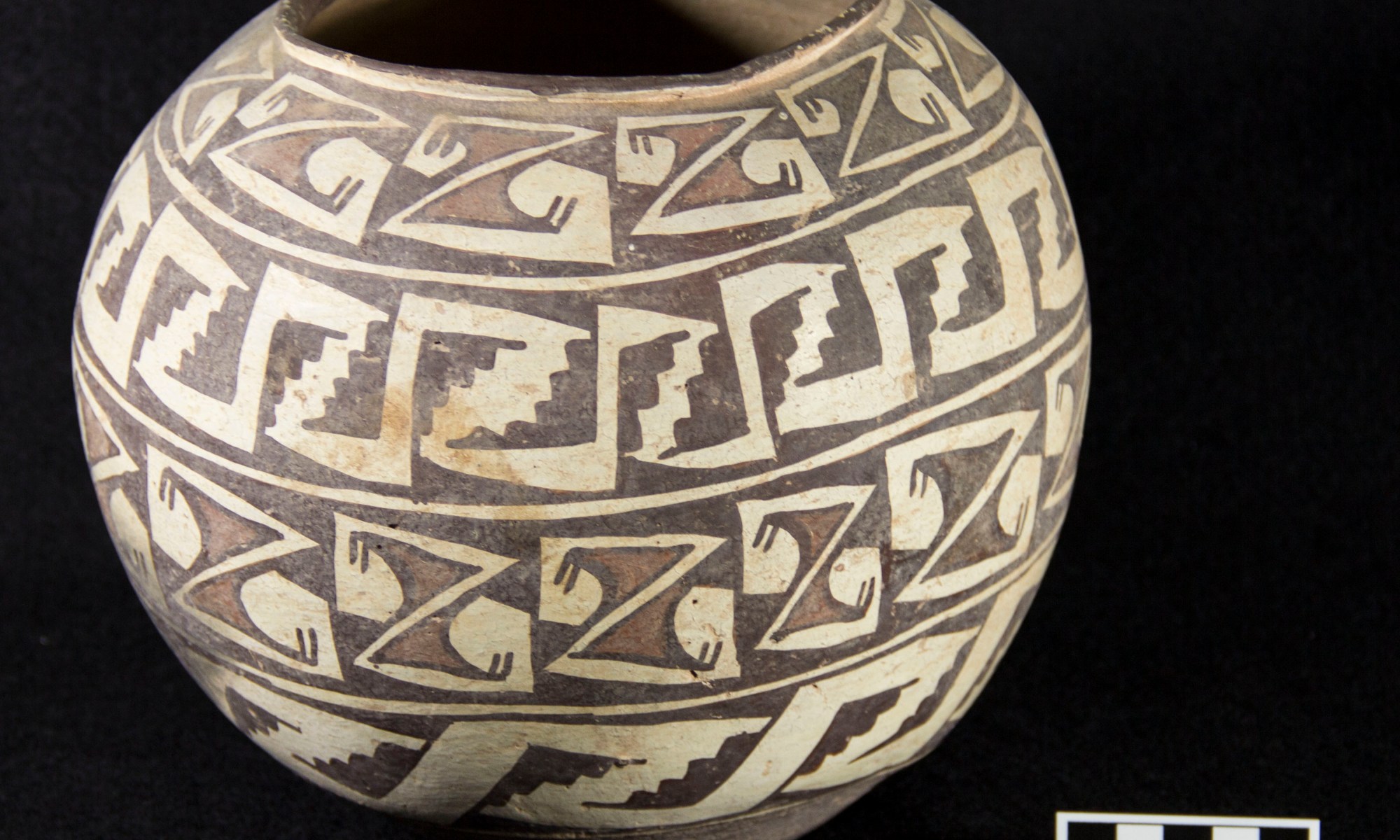
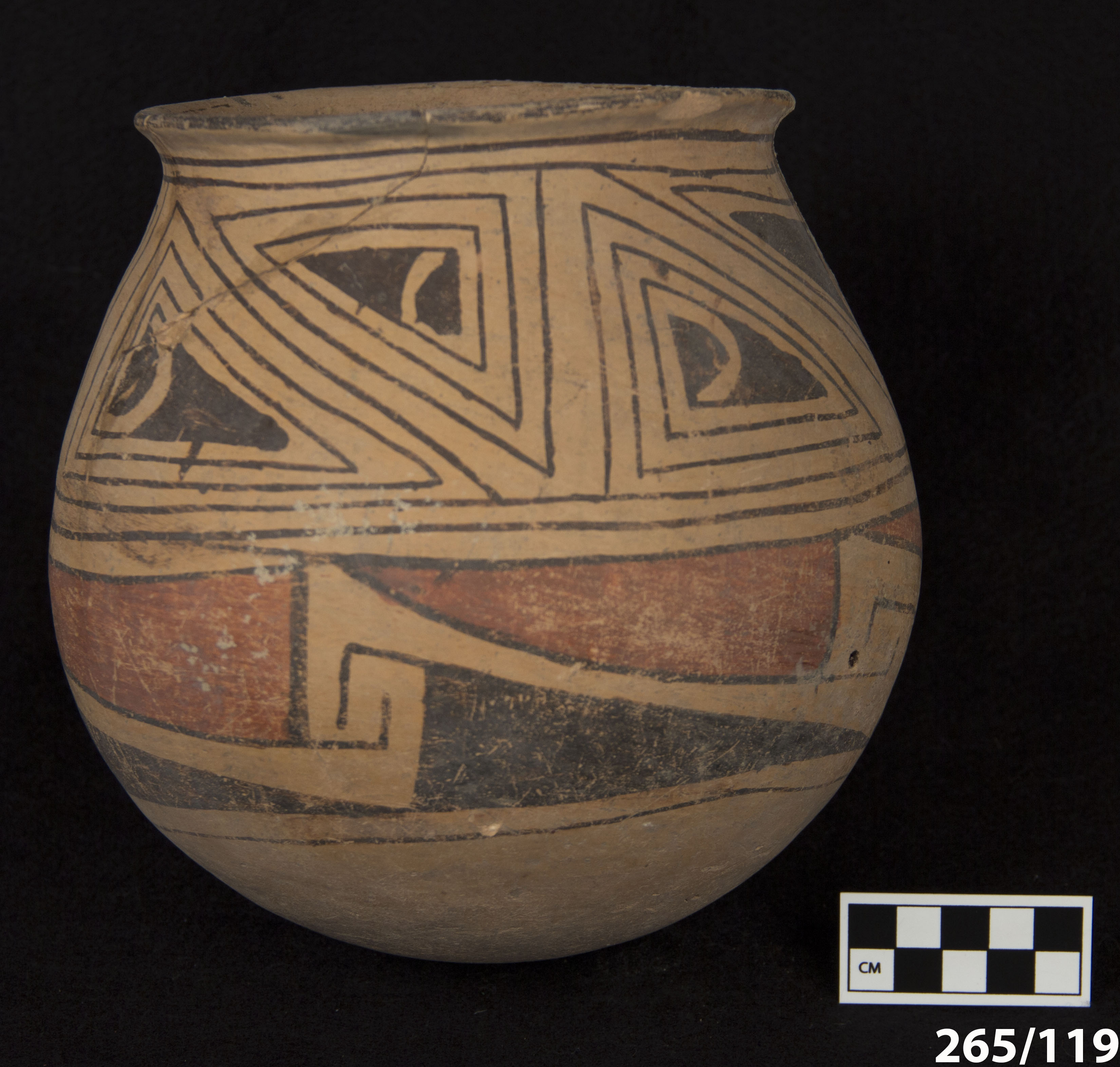
For the past year and a half, I have spent the majority of my time inventorying drawers as part of the Peabody’s Inventory and Reboxing Project. As exciting as that project has been, every once in a while I have needed to take a break from it to recharge my brain. In order to recharge while simultaneously staying productive, I was tasked with photographing and inventorying the ceramic vessel collection that is housed on the second floor of the Peabody. In order to complete this project, I printed out inventory sheets for the ceramic cabinets in Second Floor Storage and went shelf by shelf making sure each vessel was there and photographing it. This was great because I enjoy photography and try to do it often in my spare time. Once the vessels were photographed, I edited them in Photoshop and then uploaded the finished photos to each object’s catalog record in our museum software, PastPerfect. Editing the photos was very enjoyable for me because I was able to expand my Photoshop skills, which were pretty limited before taking on this project.
One of the ceramics that was inventoried and photographed
The original goal was to take one day a week to do these tasks. However, as the inventory project got rolling and certain collections needed to be cataloged faster than others, the ceramic inventory ended up getting slightly pushed aside in order to accommodate more pressing tasks at the Peabody. The main point of this blog post is this: the ceramic inventory has officially been completed!! Each vessel is logged into PastPerfect and has a photograph attached to it. The other exciting bit of information is that all of these vessels (except for NAGPRA sensitive ones) are available to view in our online catalog which can be found HERE. Take a look at the link to see what I have been working on, and feel free to peruse the online collections even further to see what else is housed at the Robert S. Peabody Institute of Archaeology!














 The Peabody