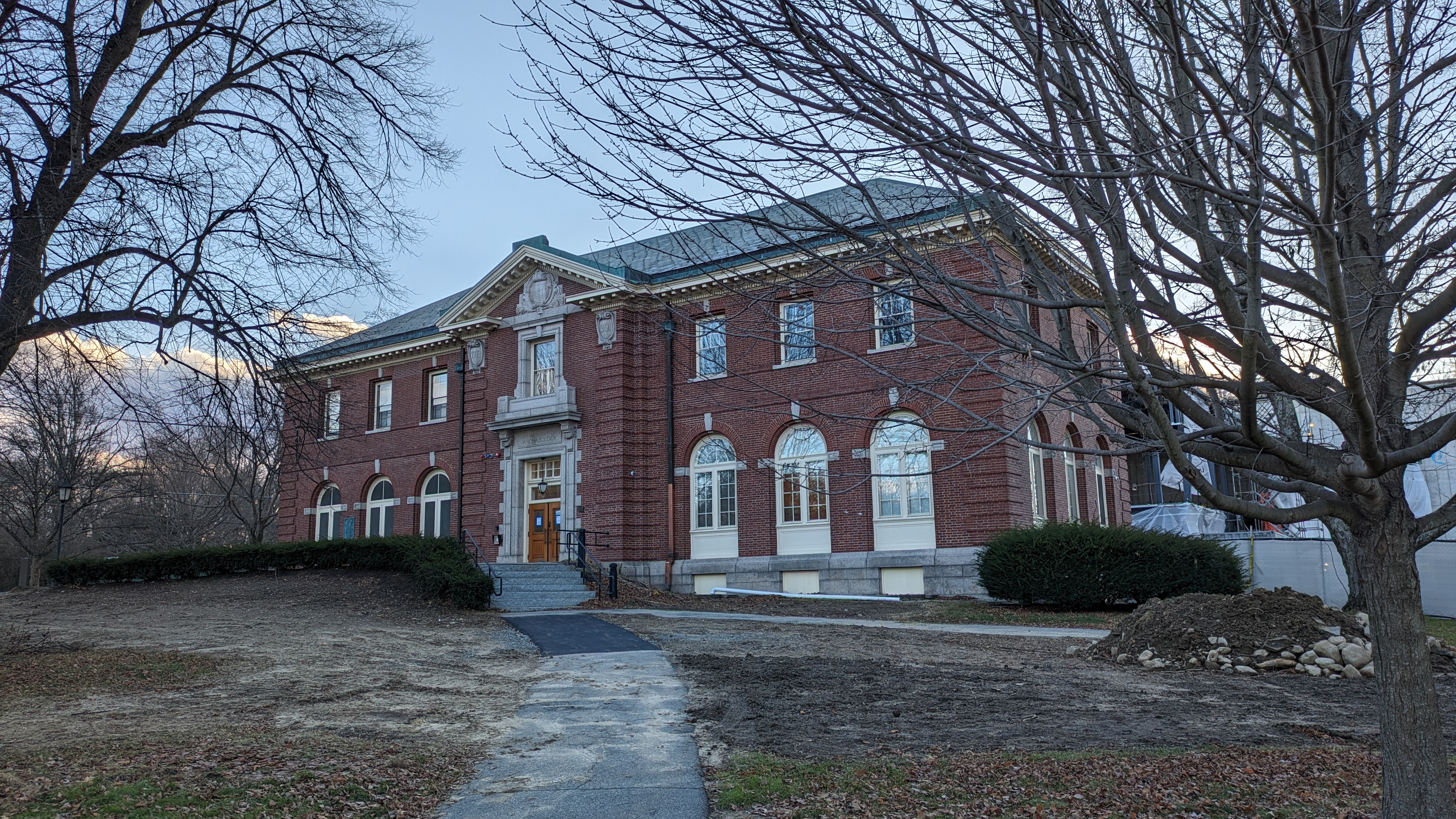
Never Whistle At Night: Indigenous Folklore (highlights from the Peabody Collection)

Contributed by Emma Lavoie

The change in season brings a time for storytelling and passing down traditions. The winter months are a prime time for sharing scary stories due to colder weather keeping people inside and gathered together.

In honor of Indigenous Peoples’ Day (October 14) and upcoming National Native American Heritage Month (November), we’re highlighting some folklore inspired by the Indigenous dark fiction anthology, Never Whistle at Night. This book is comprised of 26 short stories that explore aspects of Indigenous horror, beliefs, traditions, and folklore. These stories are told by a variety of Indigenous authors (see complete list below), edited by Shane Hawk (Cheyenne & Arapaho Tribes of Oklahoma) and Theodore C. Van Alst Jr. (Mackinac Bands of Chippewa and Ottawa Indians), and introduced by Stephen Graham Jones (Blackfeet Nation).
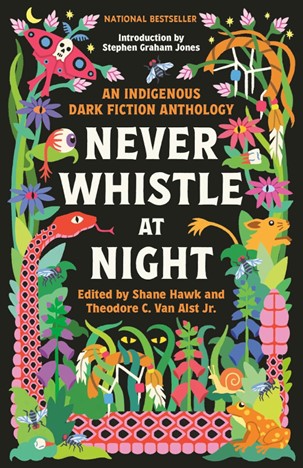
Contributing Authors

Norris Black (Haudenosaunee, Tyendinaga Mohawk Territory)

Amber Blaeser-Wardzala (White Earth Nation)

Phoenix Boudreau (Chochenyo)

Cherie Dimaline (Métis Nation of Ontario)

Carson Faust (Edisto Natchez-Kusso Tribe of South Carolina)

Kelli Jo Ford (Cherokee Nation of Oklahoma)

Kate Hart (Chickasaw/Choctaw in Arkansas)

Shane Hawk (Cheyenne & Arapaho Tribes of Oklahoma)

Brandon Hobson (Cherokee Nation Tribe of Oklahoma)

Darcie Little Badger (Lipan Apache Tribe of Texas)

Conley Lyons (Comanche)

Nick Medina (Tunica-Biloxi Tribe of Louisiana)

Tiffany Morris (Mi’kmaw)

Tommy Orange (Cheyenne and Arapaho Tribes of Oklahoma)

Mona Susan Power (Standing Rock Sioux Tribe)

Marcie R. Rendon (White Earth Band of the Minnesota Chippewa Tribe)

Waubgeshig Rice (Wasauksing First Nation)

Rebecca Roanhorse (Navajo Nation)

Andrea L. Rogers (Cherokee Nation)

Morgan Talty (Penobscot Indian Nation)

D.H. Trujillo (Pueblo)

Theodore C. Van Alst Jr. (Mackinac Bands of Chippewa and Ottawa Indians)

Richard Van Camp (Dene Nation)

David Heska Wanbli Weiden (Lakota)

Royce Young Wolf (Hiraacá, Nu’eta, and Sosore, ancestral Apsáalooke and Nʉmʉnʉʉ)

Mathilda Zeller (Inuit)

The title of the anthology refers to a belief common in many Indigenous cultures that whistling at night can attract malevolent entities. The act of night whistling is forbidden by many Native American cultures due to a shape-shifting entity, known as a “Skinwalker” or “Stekini” that responds to the call, causing harm to those who encounter it.
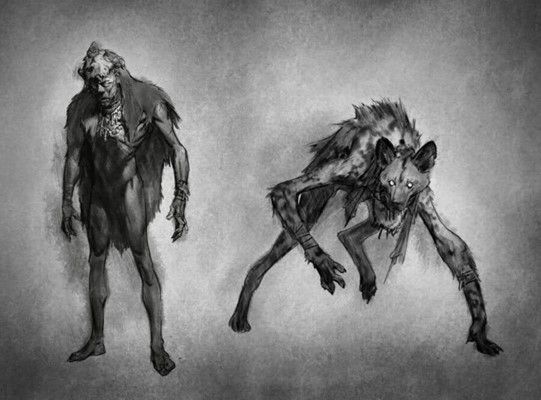
Skinwalker – Image courtesy of DoubleOurEfforts/reddit

Native cultures use storytelling to pass down knowledge and history, including folklore. Scary stories often carry deeper meanings, serving as lessons and warnings. Some of my favorite stories from this book were: Kushtuka, Quantum, Snakes are Born in the Dark, Before I Go, and Dead Owls.

Several stories in the book share a common subject – the owl. Interpretations of owls can be found across different Native American tribes, with some viewing owls more negatively than others. There are several items in the Peabody collection that highlight the owl form, their meanings varying significantly between different Indigenous cultures and locations. Here are just a few for you to explore!
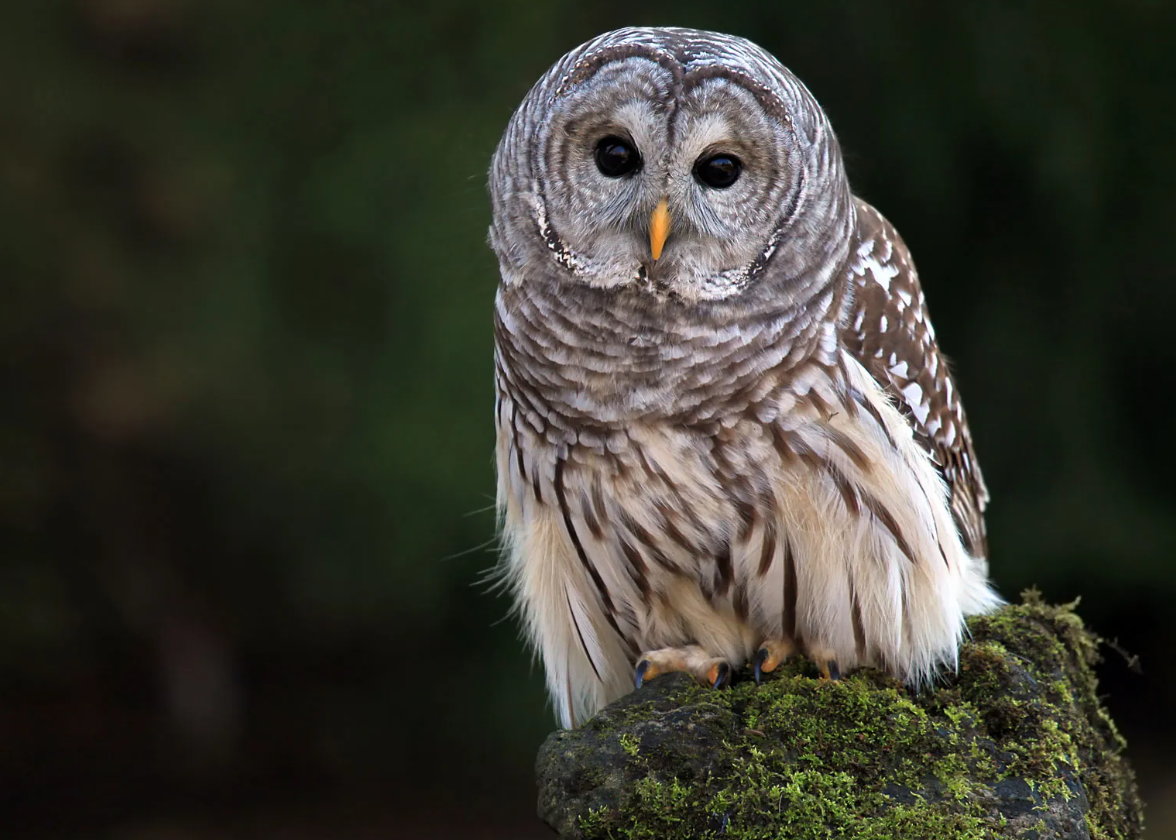
Image courtesy of © Megan Lorenz/Dreamstime.com

Owls are often associated with death and the spirit world, seen as messengers or harbingers of bad luck reflected in their nocturnal habits. Seeing an owl, particularly during the day can be a sign of death or misfortune. Some tribes consider owls as spirits of the deceased or that they might not be real birds at all, but shapeshifters. The sound of an owl’s hoot is seen as a call to the spirit world or a way to connect with ancestors.

Owl Effigy (2018.2.1266) – Fragment of an owl effigy from the Valley of Mexico. Warren K. Moorehead compared this item to clay effigies from the Etowah village site in his 1932 book Etowah Papers: Exploration of the Etowah Site in Georgia.
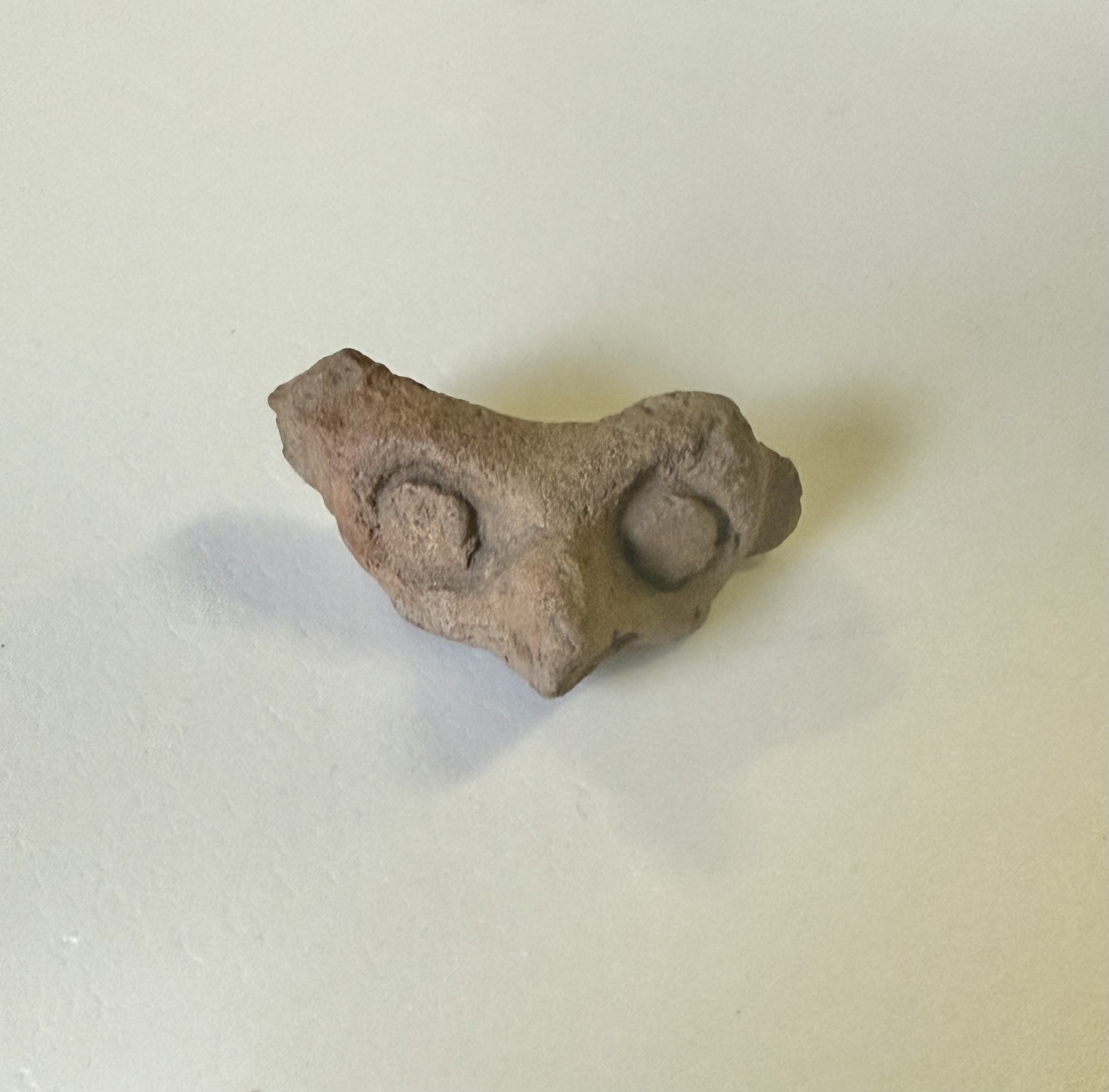
Owl Effigy (2018.2.1266), Peabody Collections

Folklore of the Valley of Mexico believe in a witch known as “La Lechuza” who shapeshifts in the form of an owl that preys on people who are disobedient, unbaptized, or who harm others. Check out this episode on La Lechuza from the podcast, History Uncovered.

Owl Effigy Slingshot (97.1.53) – From the Ixil Maya community in Chajul, El Quiché, Guatemala. Used by men and boys to hunt birds, though it is common to hunt with a blowgun.
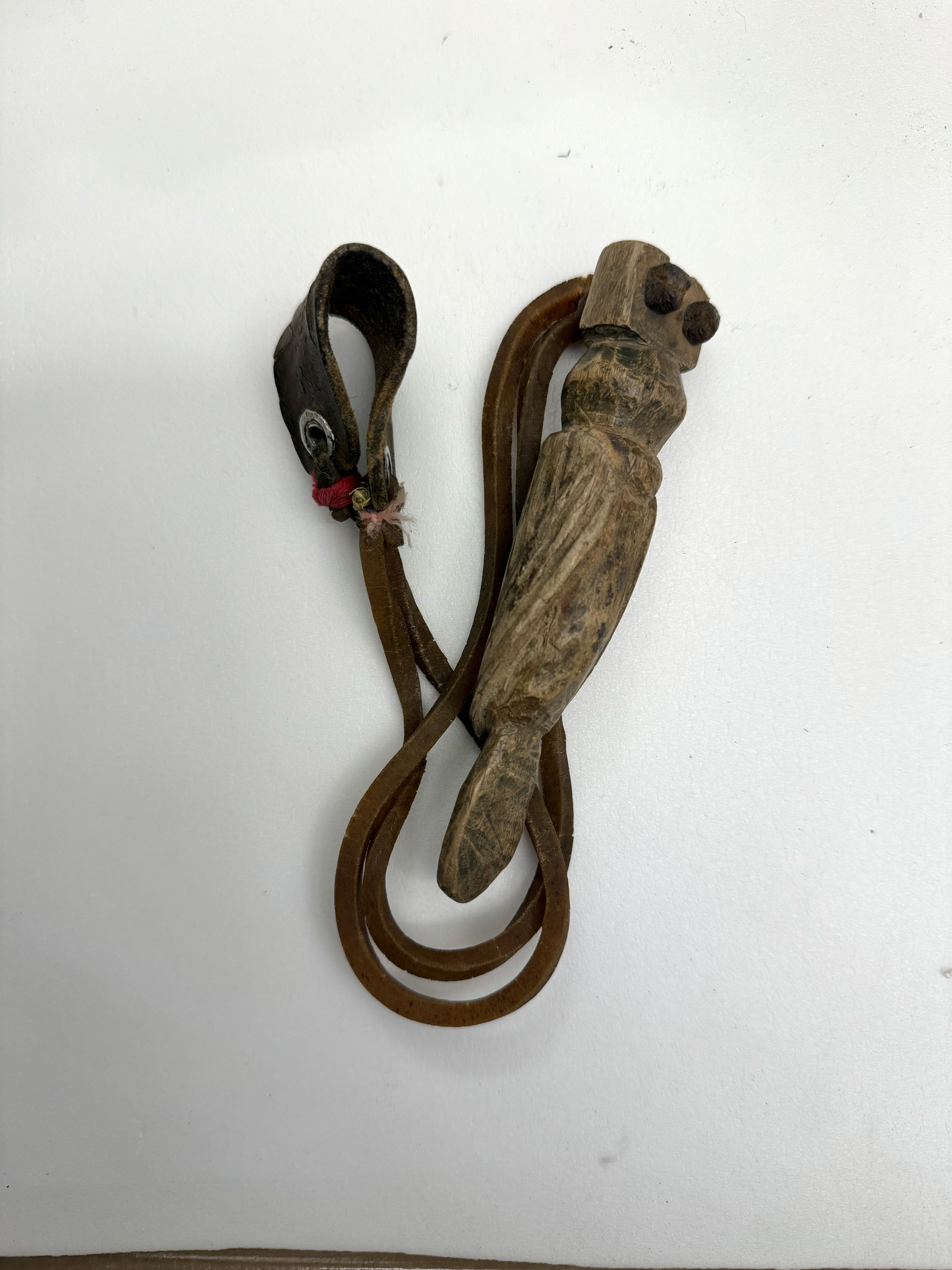
Owl Effigy Slingshot (97.1.53), Peabody Collections

Other tribal beliefs revere owls as symbols of wisdom and intuition, as well as carriers of ancient knowledge and protection.

Ceramic Owl Figurine (2017.6.1) – Ceramic piece by Maxine Toya from the Pueblo of Jemez, New Mexico. In Pueblo culture, owls are seen as protectors. The ceramic owl design is built by stacking and smoothing hand coils of clay. The piece is both carved and painted, the feathers on the front being carved into the clay. Painted designs are intricate using symbols of rain, clouds, and feathers. These designs are all matte and painted with clay slips with only the eyes being polished.

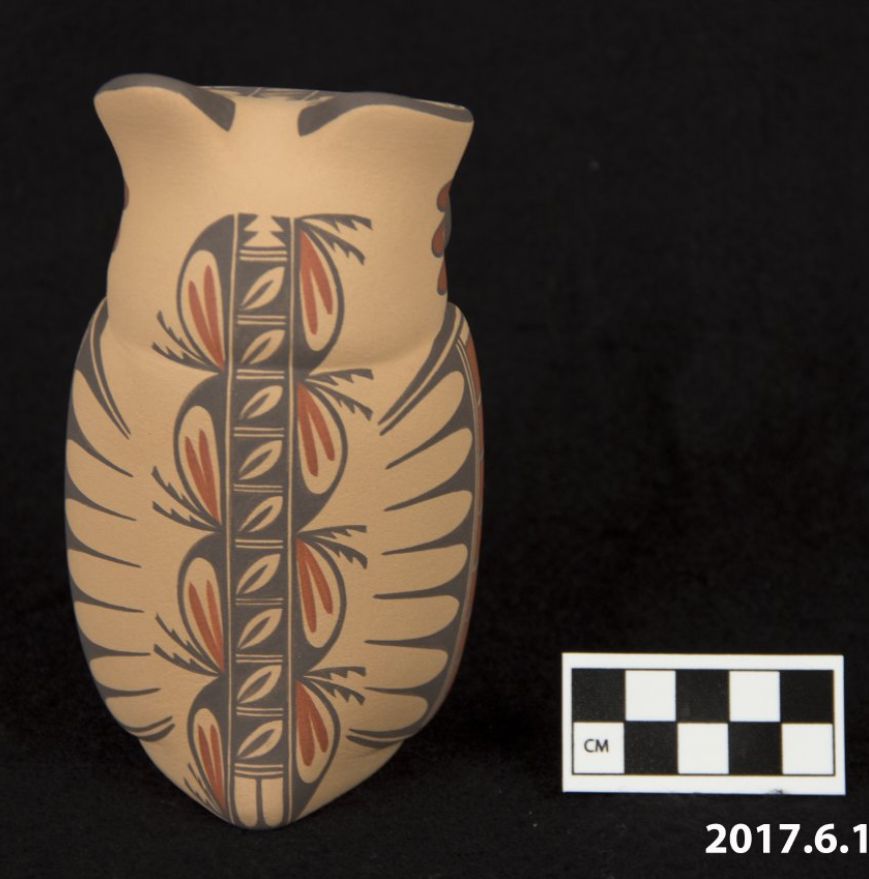
Ceramic Owl Figurine (2017.6.1), Peabody Collections

Maxine Toya is well known for her figurative pottery (the first piece of pottery Maxine created was an owl!) Maxine is one of several pottery artists from the Pueblo of Jemez that visit Phillips Academy campus each spring to work with students in ceramic classes. You can read more about these visits here and here!

Ceramic Owl Effigy Jar (90.4.2) – Globular body in black on white design with vessel opening located at owl beak. Owl facial features at neck, wings at sides and tail at back. The globular shape is the most recognizable characteristic of pottery from Cochiti Pueblo, New Mexico.
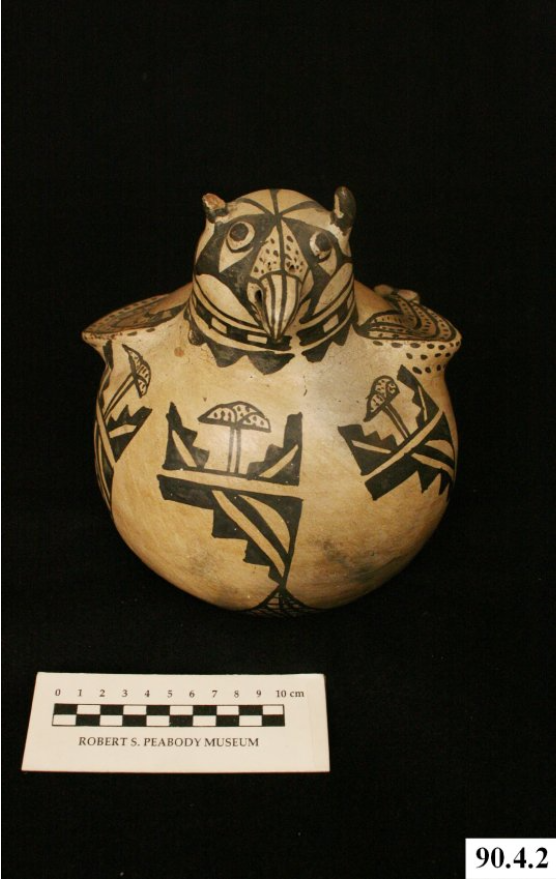
Ceramic Owl Effigy Jar (90.4.2), Peabody Collections

Owls are featured in Cochiti Pueblo pottery, often associated with the god of death and spirit of fertility, Skeleton Man.

Exciting News! – Never Whistle at Night, Part II: Back for Blood is currently accepting submissions from emerging Indigenous writers. This is the second book in the Never Whistle at Night series.
I know what I did this summer

Contributed by Kyra Smith and Cyrus Marion

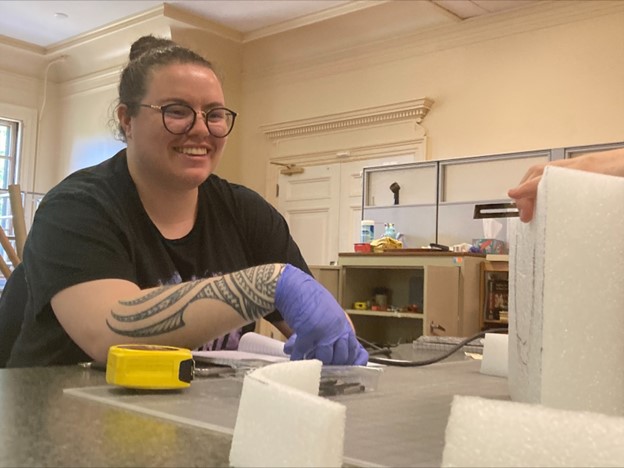
Hi my name is Kyra Smith and I was one of the curatorial assistants at the Peabody this summer! I’m a recent archaeology master’s graduate from Boston University where I focused on Indigenous archaeologies, food sovereignty, and the archaeology of the South Pacific Islands. Having previously worked in the archaeology department of another museum in undergrad, I was thrilled to apply for this position as a curatorial assistant, especially at an institution that is so dedicated to NAGPRA. I was so invested in the position I had my family ship me my sister’s 1998 Toyota Camry from Washington State- which in the state of Massachusetts counts as an Antique Vehicle! 

Working at the Peabody over these last ten weeks has been an exercise in flexibility, learning as we go along, and exposure to things we’ve never seen or interacted with before. There are so many things I could write about, but the story I want to share as my time here comes to an end is how the Peabody got its own pet mammoth.

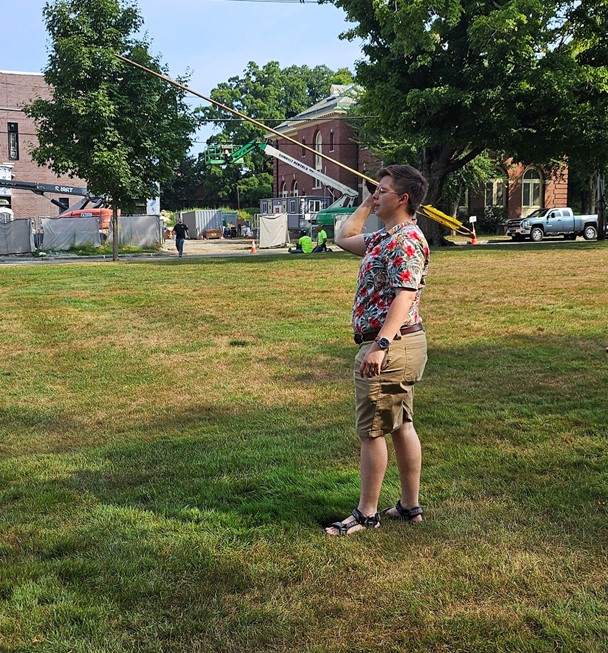
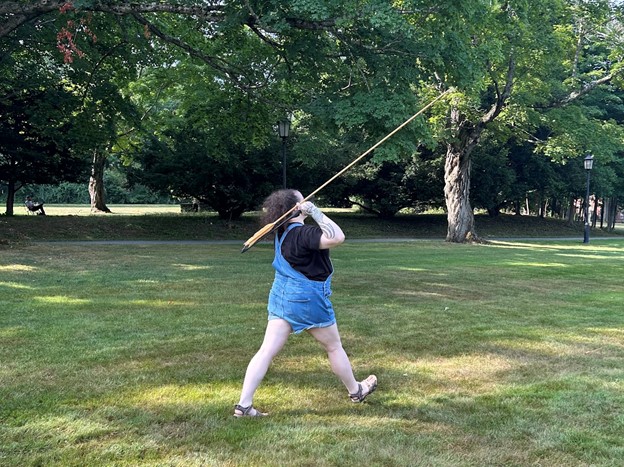
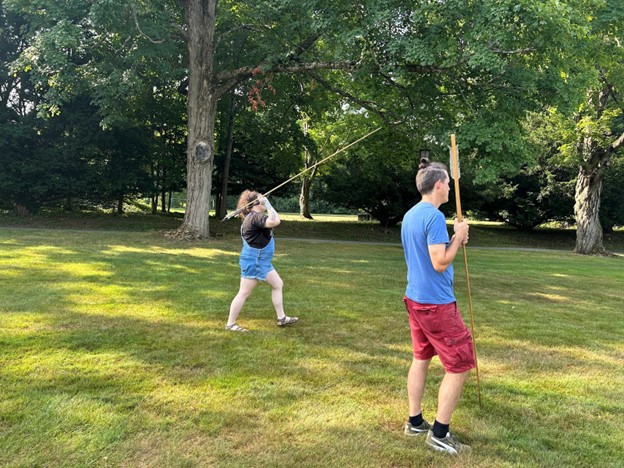
On a particularly hot and humid Friday, I finally got to use an atlatl for the first time. Ever since undergrad I have heard professors and archaeologists talk about atlatls, and even how they used to take students to try throwing them in previous years. Ever since then I have been biding my time until the opportunity arose- and oh was it worth the wait.

John, Cyrus, and I went out onto the Vista bright and early before it got too hot, and John took us through the basics. If you have ever used one of those plastic arms to play fetch with your dog- it’s nothing like that at all, which I learned very quickly. I imagine it was quite the sight for the construction workers on break in the shade of a nearby tree to see us attempting to throw the arrows taller than we were with varying degrees of success. After Cyrus and I (sort of) got the hang of it we were going to do target practice at the international standard target, but sadly that had to wait as the aforementioned construction workers were still under that tree which was too close to the target for comfort.

So, we went back inside to rest our arms and cool down, and by then an idea had begun to form. One that was inspired by our conversations about whether we were successful hunters of our theoretical mammoth/mastodon. That idea would have to wait because about an hour later we went back out to try aiming the arrows instead of attempting to throw them as far as humanly possible. It is much easier to attempt to throw them as far as humanly possible than it is to hit a large, completely still target. Still, Cyrus and I were able to land a couple hits each on the actual target and not into the bush next to it, and we called that a win. We may never know if we were skilled enough at throwing the atlatl to take on a mammoth, so instead I made a mammoth for the museum.

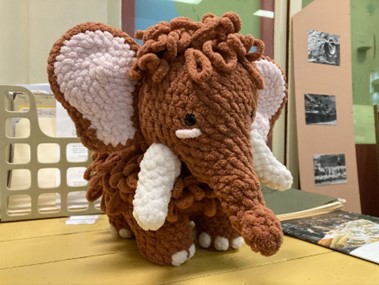
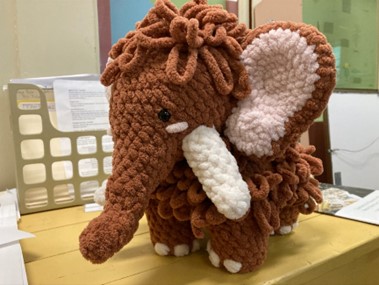
In my free time, when I’m not at the Peabody, I learned how to crochet amigurumi, which is a Japanese name for a style of stuffed crochet animals. That weekend after we threw the atlatls, I found a pattern online and spent some time crocheting a mammoth to be a mascot and companion at the museum. And thus, Josie was born! She was named by Marla, and now lives at the Peabody, where Marla promises she will never be used as target practice when throwing atlatls. For anyone else interested in crocheting or amigurumi, I got the pattern for Josie from CrochetGrove on Etsy. 

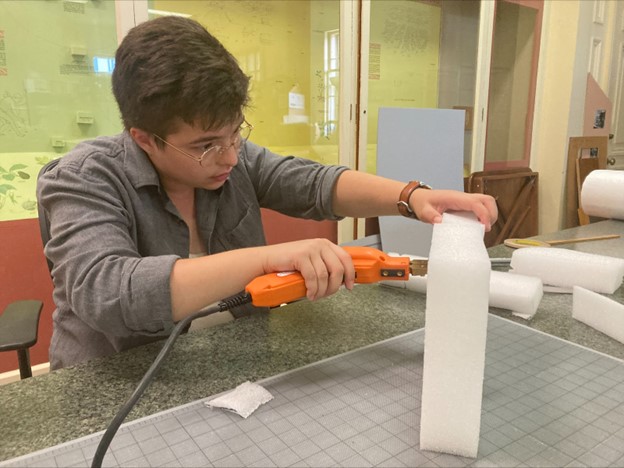
Josie also represents one of my favorite aspects of working in a museum, as they are fundamentally institutions created for the purpose of preserving and storing information, things, and stories for perpetuity, there will always be a record of my impact whether it’s the work I did, the things I made, or the stuffed mammoths I created. Sure, the things I’m doing may not be monumental, but they are fundamental things that have left a trail of my action on parts of the museum like the catalog, or the new housing for artifacts with my initials on it, and the drawers in the collections storage where Cyrus and I curated and displayed artifacts from all over the world so that the museum and its staff can better tell the stories of the materials they care for. It’s a reminder of how much the little things mean in the greater scheme of things. 

*******************************************

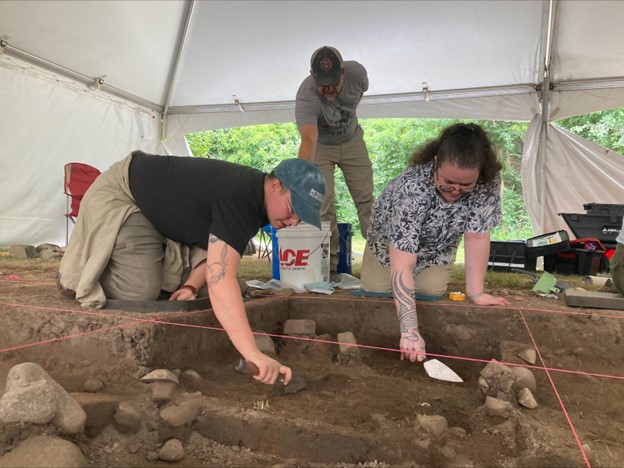
As Kyra aptly said in their post above, the Peabody Institute provided plenty of opportunities to expand our creative and intellectual spirit. As a Historical Archaeology graduate student at UMass Boston, I had minor collections experience and applied to the summer curatorial assistant position to undergo formal museum collections training. Having admired the Peabody Institute’s commitment to NAGPRA and tTribal relations for years, I was eager to witness the processes and procedures that go into the day-to-day work. However, what I was not expecting was the range of creations and artifacts I would be interacting with. My archaeological background is rooted in the Northeast United States and focuses on environmental analysis, so my mind was blown when one of our first tasks was rehousing ancient botanical remains from Tehuacán Valley, Mexico. Coming face-to-face to some of the world’s oldest domesticated maize was an experience I will never forget.

Kyra and I spent a lot of time with ceramics, lithics, and textiles from regions we were pretty unfamiliar with. Despite our lack of regional understanding, the Peabody staff always provided context and demonstrated deep respect for all creations. As we created mounts for modern Guatemalan and ancient Peruvian textiles we learned their patterns and language; as I rehoused lithics I would consider the generational knowledge and studied craftsmanship it would take to form them. Creating spaces to house and display archaeological and ethnographic creations ranging from the Lucy Foster household in Andover to Meso-America to Paleolithic Europe was an honor and I am proud to have contributed to the updated collection spaces and stories the Peabody staff can tell.


The Peabody Institute has a very storied past that was illuminated through organizing both the library and Eugene Winter’s archive. As it was founded in 1901 with contributions from many different kinds of archaeologists, the library seems to contain the entire history and complicated legacy of North American archaeology. In addition to the library, Eugene Winter, Honorary Curator and lifelong contributor to the Peabody, had left behind an archive after his passing. Kyra and I spent some time exploring his legacy through the resources, photographs, and ephemera he had designated important enough to keep. Interacting with both the collections, library and archives created an meta-institutional feedback loop as a reminder that working in archaeology requires positionality, empathy, and acceptance of “not-knowing.” We will never be able to alter the decisions made in the past, but we can always alter our perspectives in the present and contribute to a future that centers people and not only their “things.”

As Kyra noted, working at the Peabody for the past ten weeks might not have been monumental to its legacy, but the work that has been completed by the longer-term staff is monumental to the field. The Peabody staff have taught me fundamental collection management skills that are coated in careful consideration, empathy, and a desire to create a better future that I am extremely grateful to inherit.

A New Visitor to the Institute?

Contributed by John Bergman-McCool

Every month our collections staff monitor glue traps stationed around the building. The traps provide a way to monitor what kind of insect activity is happening at our Institute. They serve as one of several pillars of our Integrated Pest Management (IPM) program. IPM is a sustainable approach to managing pests that utilizes techniques that minimize risk to human health and the environment. Other pillars in our program include regular cleaning, maintaining temperature and humidity at levels that slow down and discourage insect activity, and isolating and treating affected items with deep cold or hypoxic conditions.

Insects within research and museum collections are a reality, especially within an old building like the Peabody. Some insects do not pose a danger to the collection, but their presence can signify that environmental conditions within the building may be outside of our target range. Other pests can damage the collection, and their presence requires immediate attention. In the past, the presence of one adult carpet beetle out in the open in our ethnographic collection area was enough to kick off a month’s long survey of susceptible items.

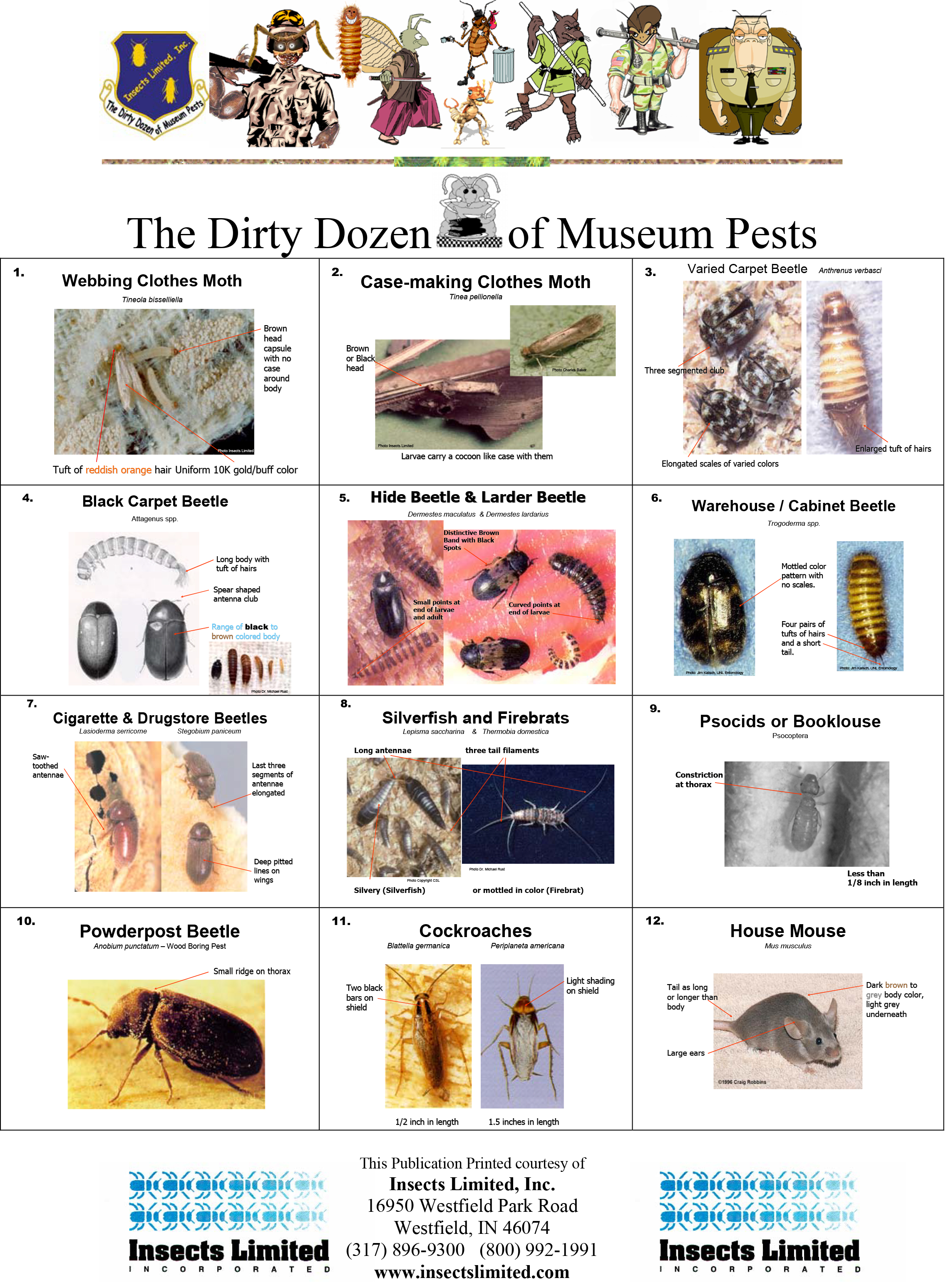
Insects Limited is a great resource for IPM solutions and insect identification, including this poster of museum baddies.

Our traps are placed along the walls where many insects prefer to travel and they are open on either side. When caught, the position of the bugs give us a sense of where insects are coming from, either within the building or from the outside. Some insects can live and breed within the building, while others have to leave to find a mate before coming back to lay eggs.

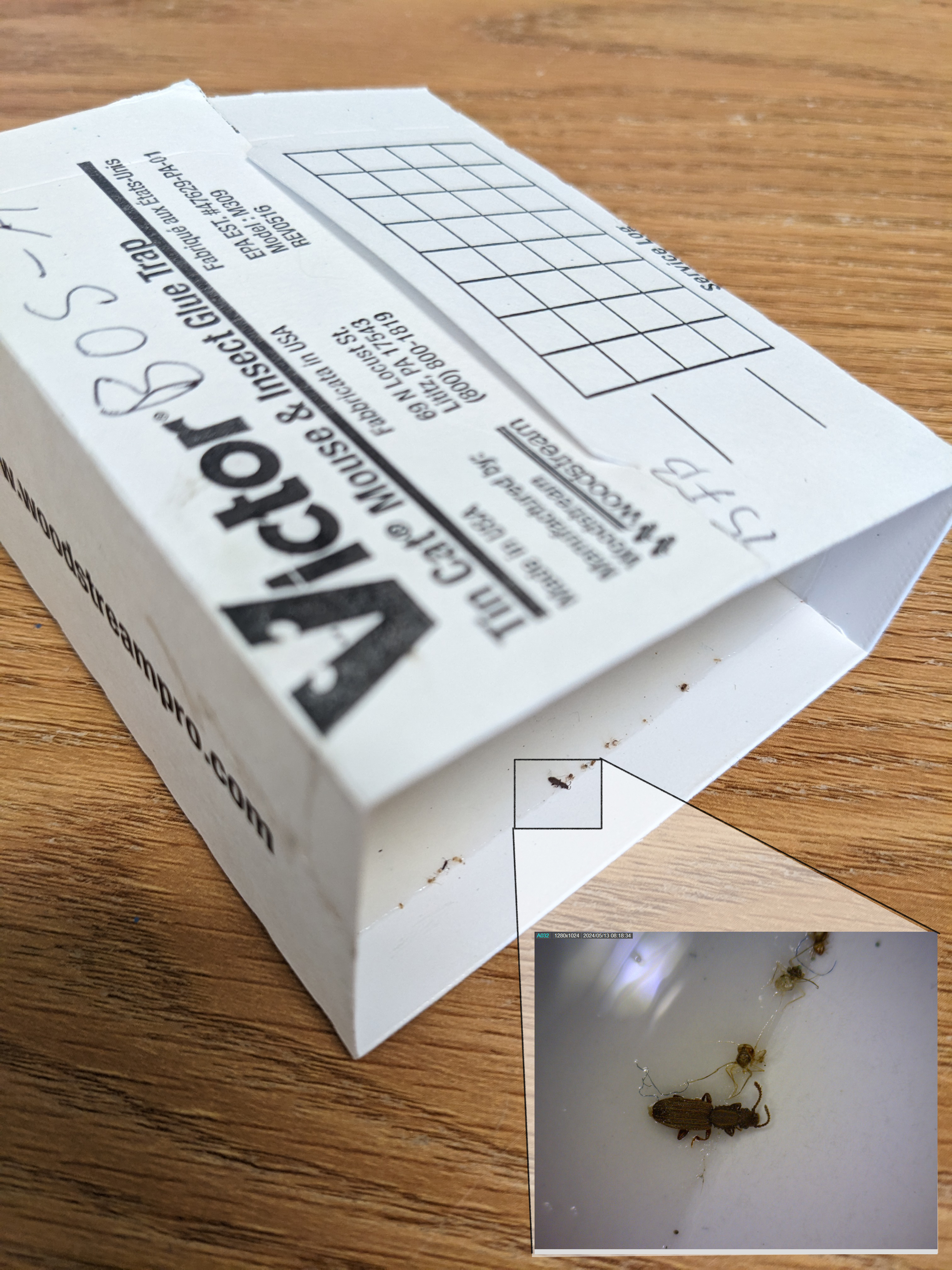
This month, as temperatures outside the building are warming up and the humidity is increasing, we are starting to see an increase in activity within our traps. One trap returned an insect that required closer inspection.

The trap in question with an enlarged image of the unknown insect.

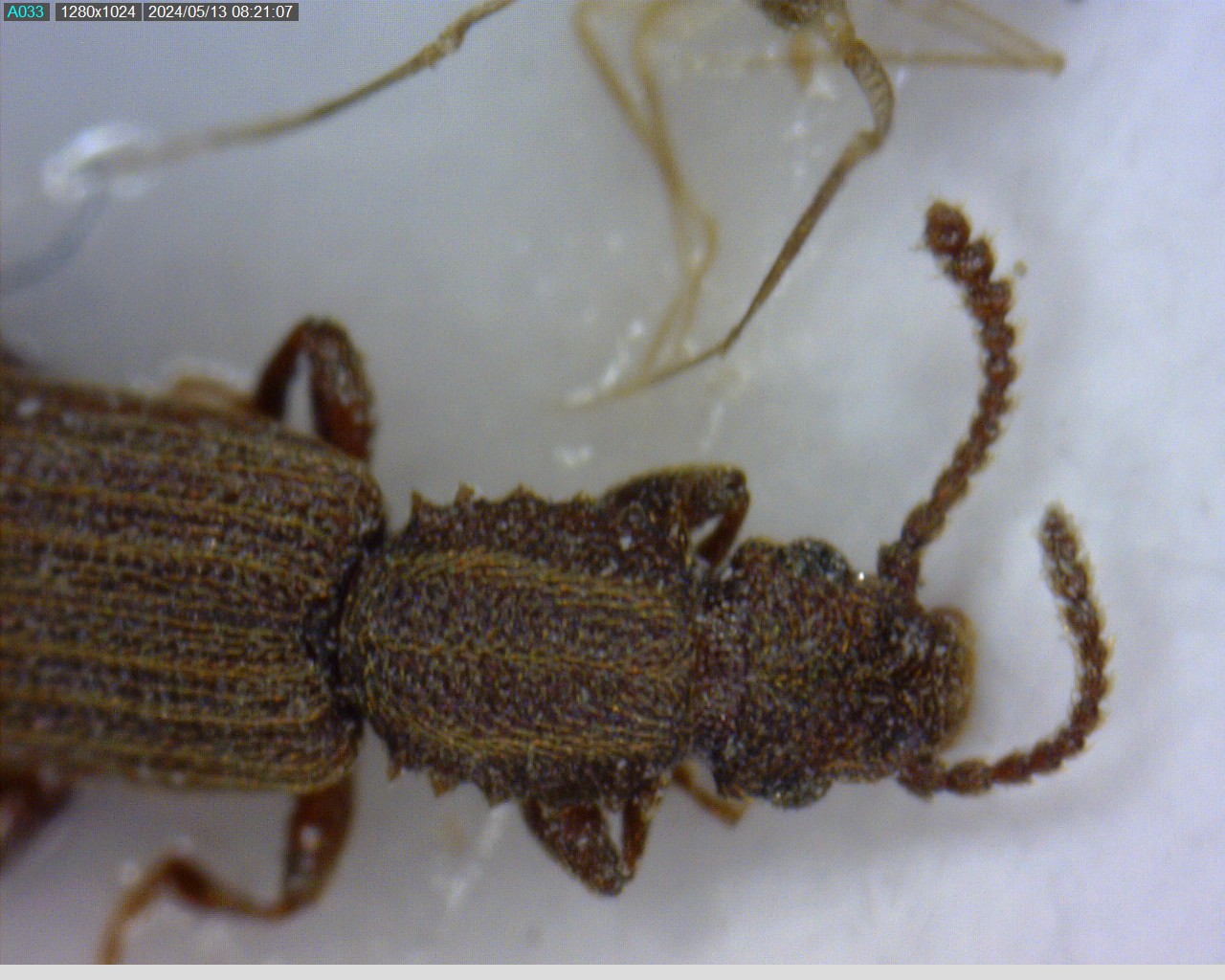
In the above image, there are lots of little specks and one larger. The small specks are psocids (booklice), one of the dirty dozen pests depicted above. Booklice feed on molds, fungi, grains, insect fragments, and other starchy material, including glue from bookbindings (link). If this trap were in our library or archives, we would want to do a good cleaning. There are no at-risk collections where this trap is located, though a vacuum cleaning is warranted.

The larger speck is a beetle of some variety. It came from the room side of the trap, not the door side. It is roughly 1-2 mm in length (very small!) and needs to be examined under magnification. Amazingly, there are many beetles of this size. One that we have seen in traps in the past is the minute brown fungus beetle (MBFB) (link). They are an insect that doesn’t pose a direct risk to the collections, however they can indicate warm and wet environmental conditions. MBFB eat wet organic matter and plaster, and if found in large numbers they may alert us to leaks in the building.

A more alarming possibility is the powderpost beetle (link). This is a truly dangerous pest. They can decimate wood. Adults are rarely seen, and they lay tiny eggs on or just under the wood surface. When the eggs hatch the larva burrow under the surface and tunnel around until they emerge from tiny pin holes when they are adults.

Here is a very up close and personal view of the mystery insect.

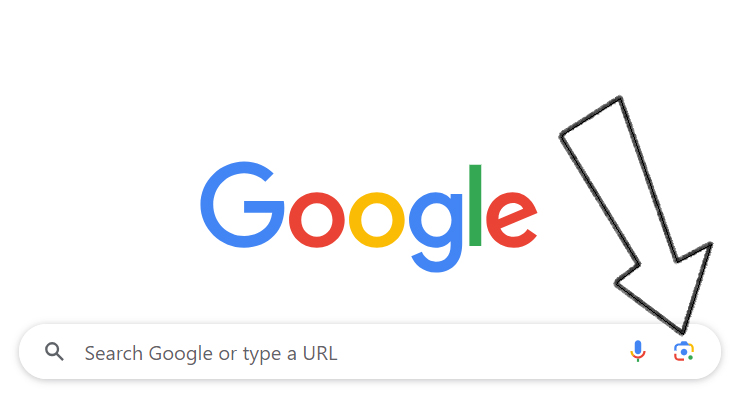
Under magnification our insect doesn’t look like either of these. A very useful tool for identifying unknown insects is the image lookup function in Google images.

Click the above icon and follow the prompts to upload your image. Google will return images that look similar to your upload.

With the image loaded into Google, we were pretty quickly able to find very close visual matches that suggest that our beetle is a Saw Tooth Grain Beetle (link, link). This beetle is a common kitchen pest frequently found in oatmeal and grain. There is a possibility that this insect is a random encounter, however they are known to consume tobacco, which we have housed with our collection. We have susceptible items within the collection, but they aren’t housed anywhere near this trap location. This is one to keep our eyes on, so we’ll be monitoring this area for future encounters.

ICC @ SAA

Contributed by Marla Taylor

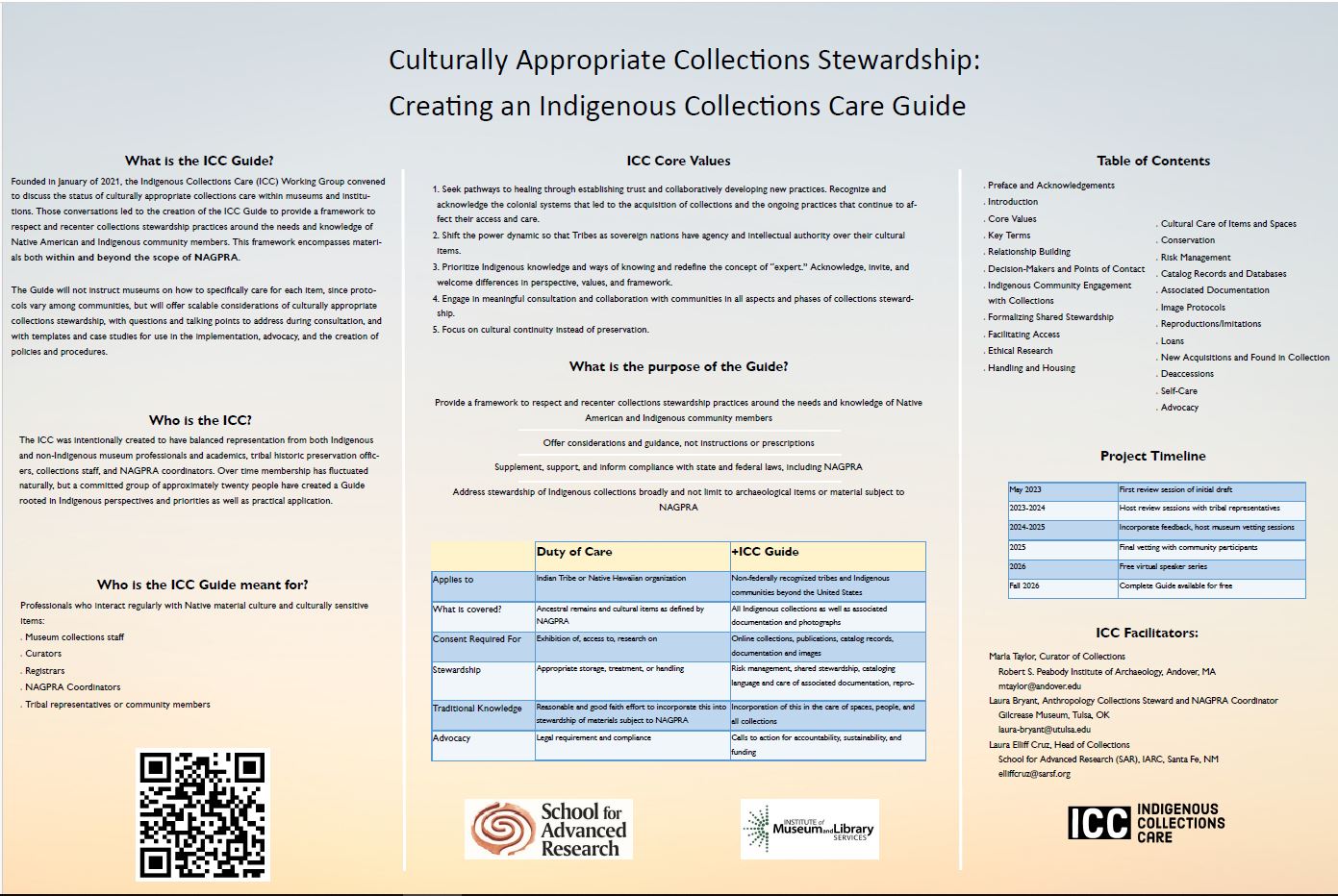
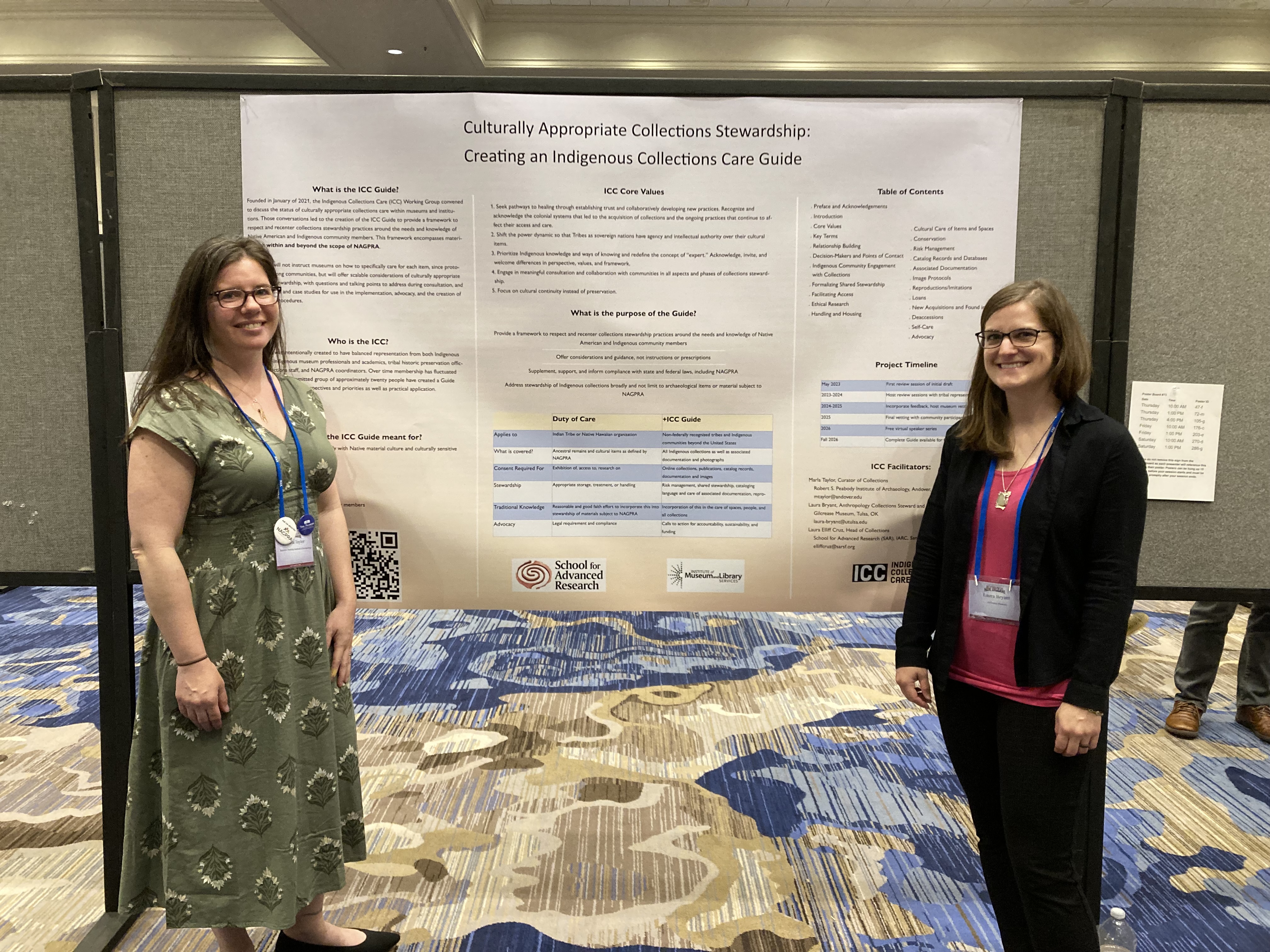
At the SAA meeting in New Orleans, I had the pleasure of representing the Indigenous Collections Care (ICC) Guide in the poster session – In Search of Solutions: Exploring Pathways to Repatriation for NAGPRA Practitioners (Part V): NAGPRA in Policy, Protocol, and Practice.

The ICC poster discussed the development of the ICC Guide, what is covered in the document, and how it can support NAGPRA compliance.  The ICC Guide provides a framework to respect and recenter collections stewardship practices around the needs and knowledge of Native American and Indigenous community members.  This framework encompasses materials both within and beyond the scope of NAGPRA.

I was excited for the opportunity to share the ICC Guide project with an archaeological audience. I had so many positive conversations with folks and really enjoyed connecting with everyone.  It was a great conference and great experience!

Marching into Spring: Peabody Updates

Contributed by Emma Lavoie

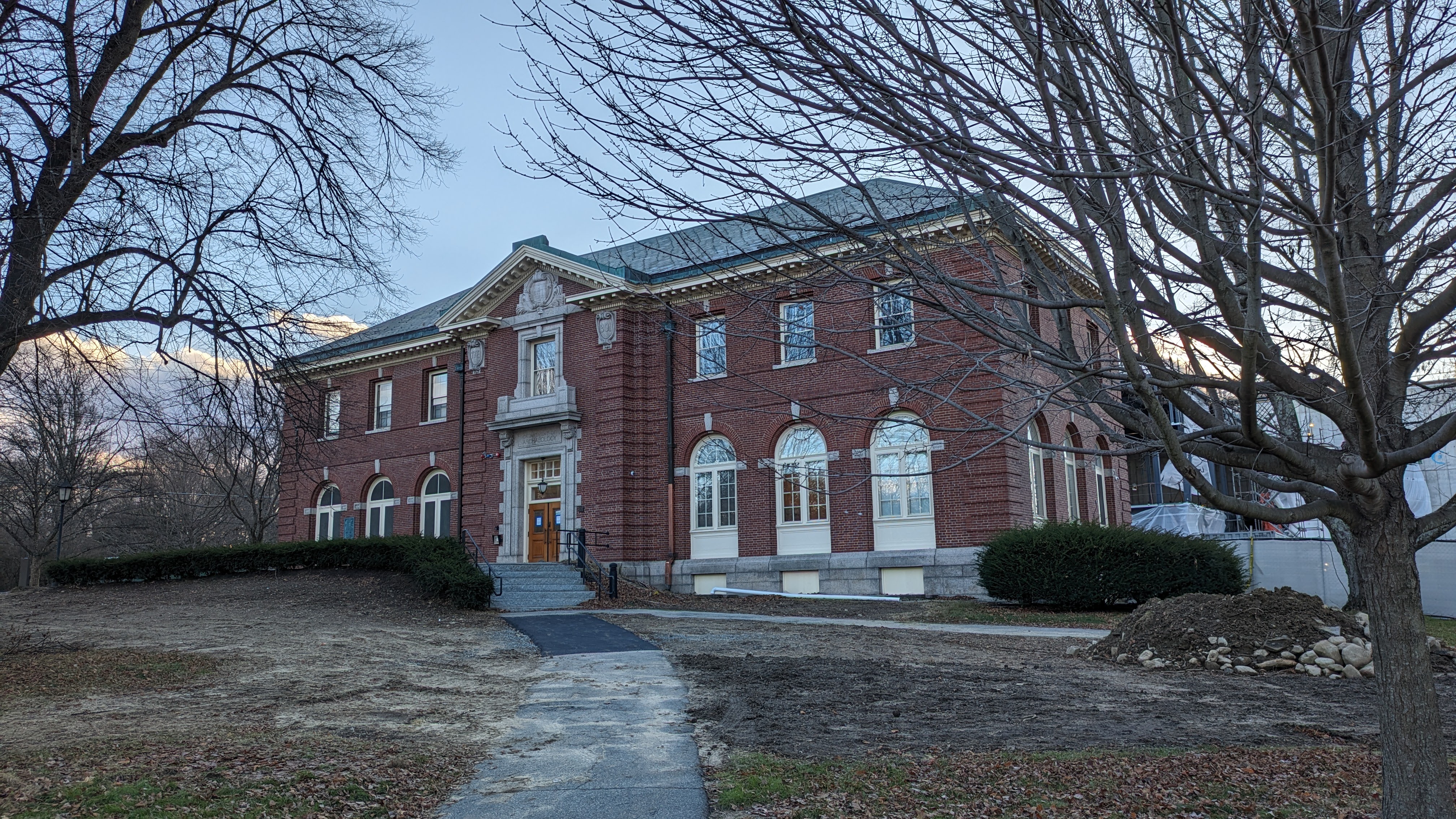
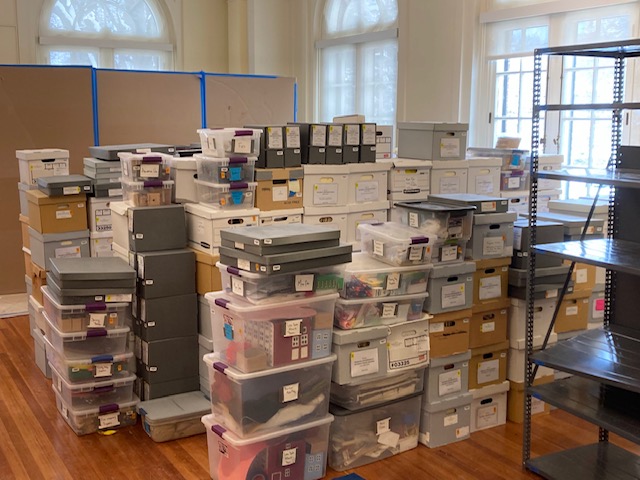
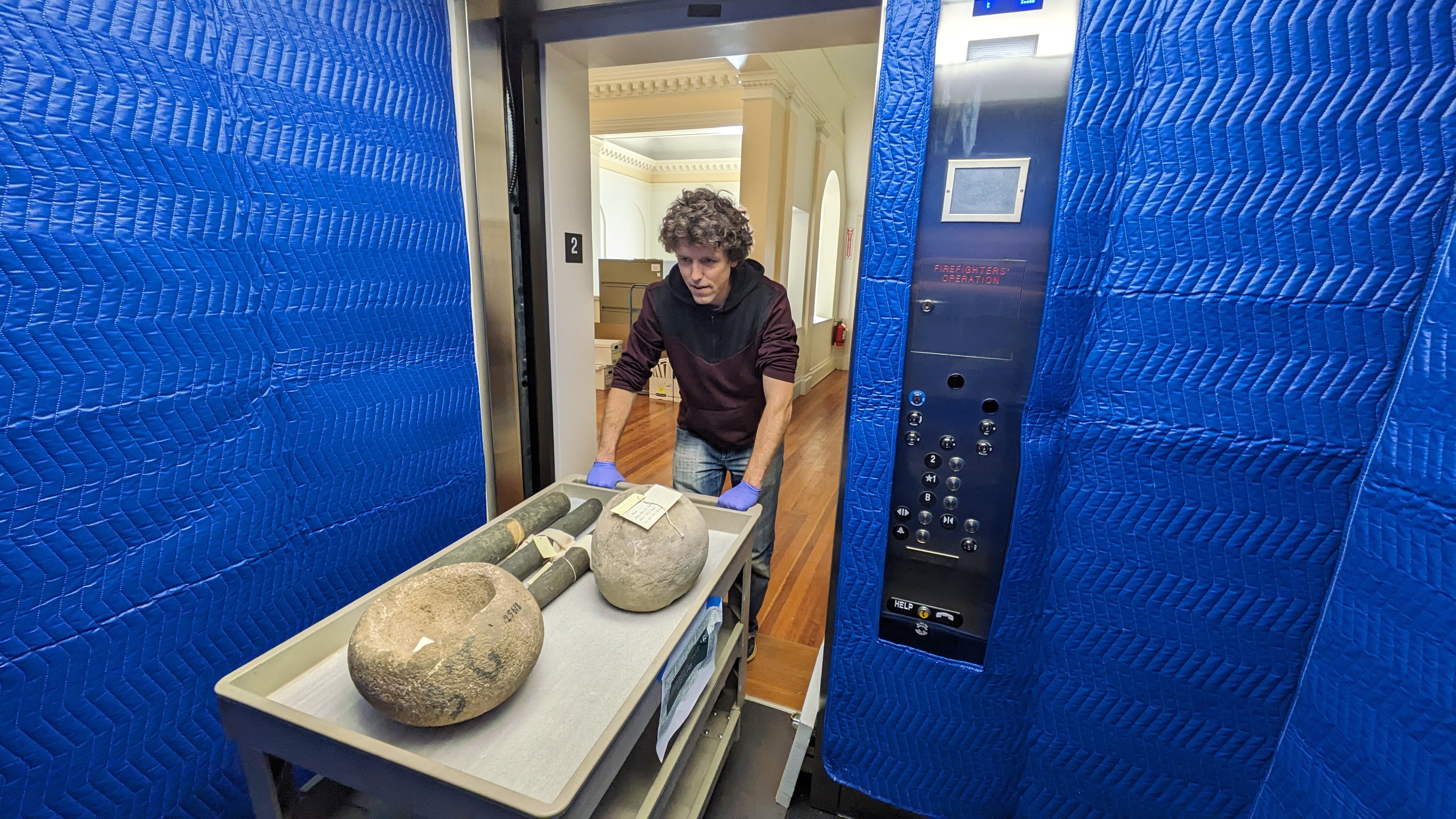
It’s been a few months since we shared our last building update and so much has transpired since staff have been back in the Peabody. These last few months have been busy for the Peabody staff, as they worked on moving the collections, moving furniture back into the building from offsite storage, and organizing/cleaning the building to welcome Phillips Academy classes in the spring term.

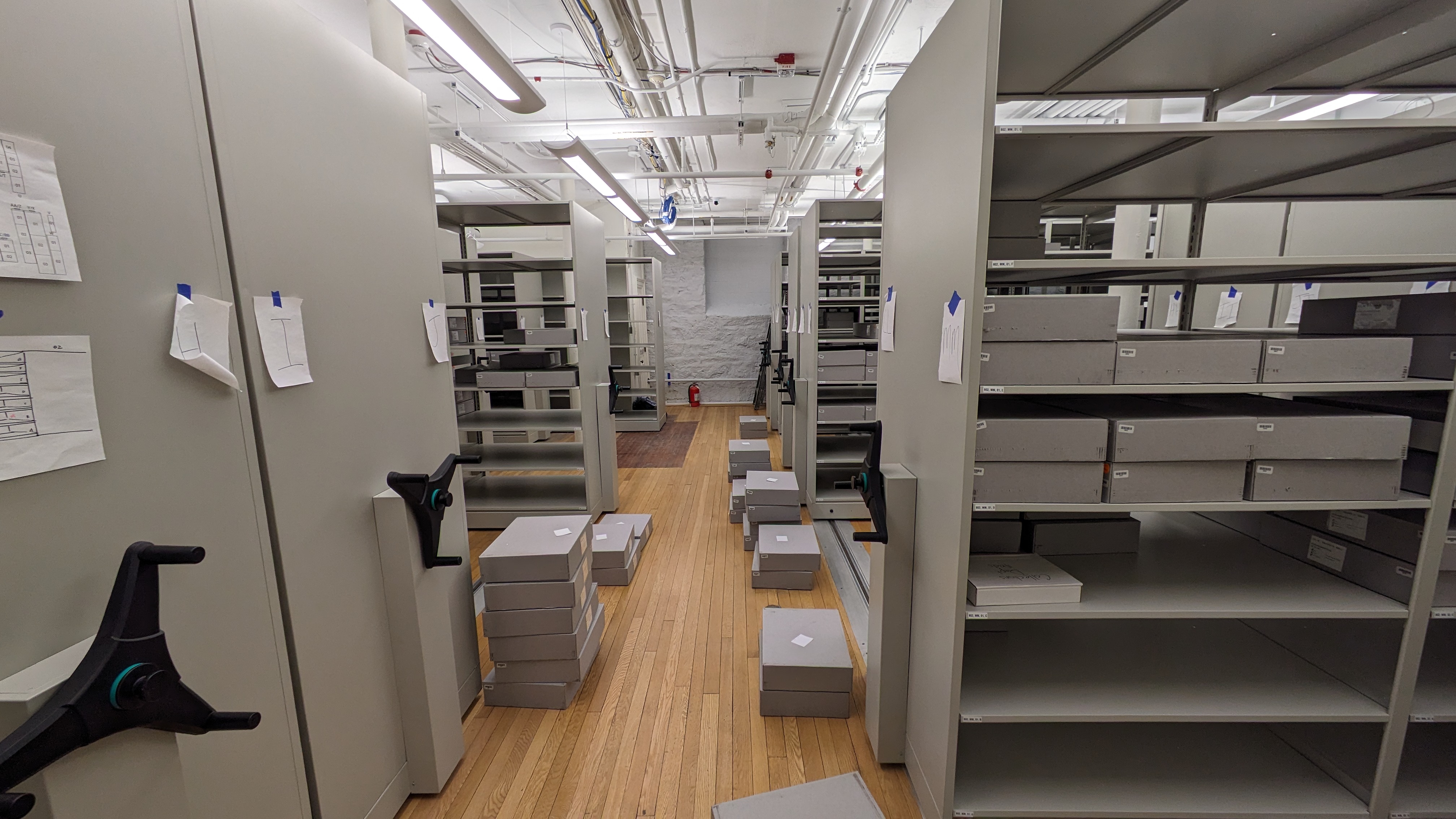
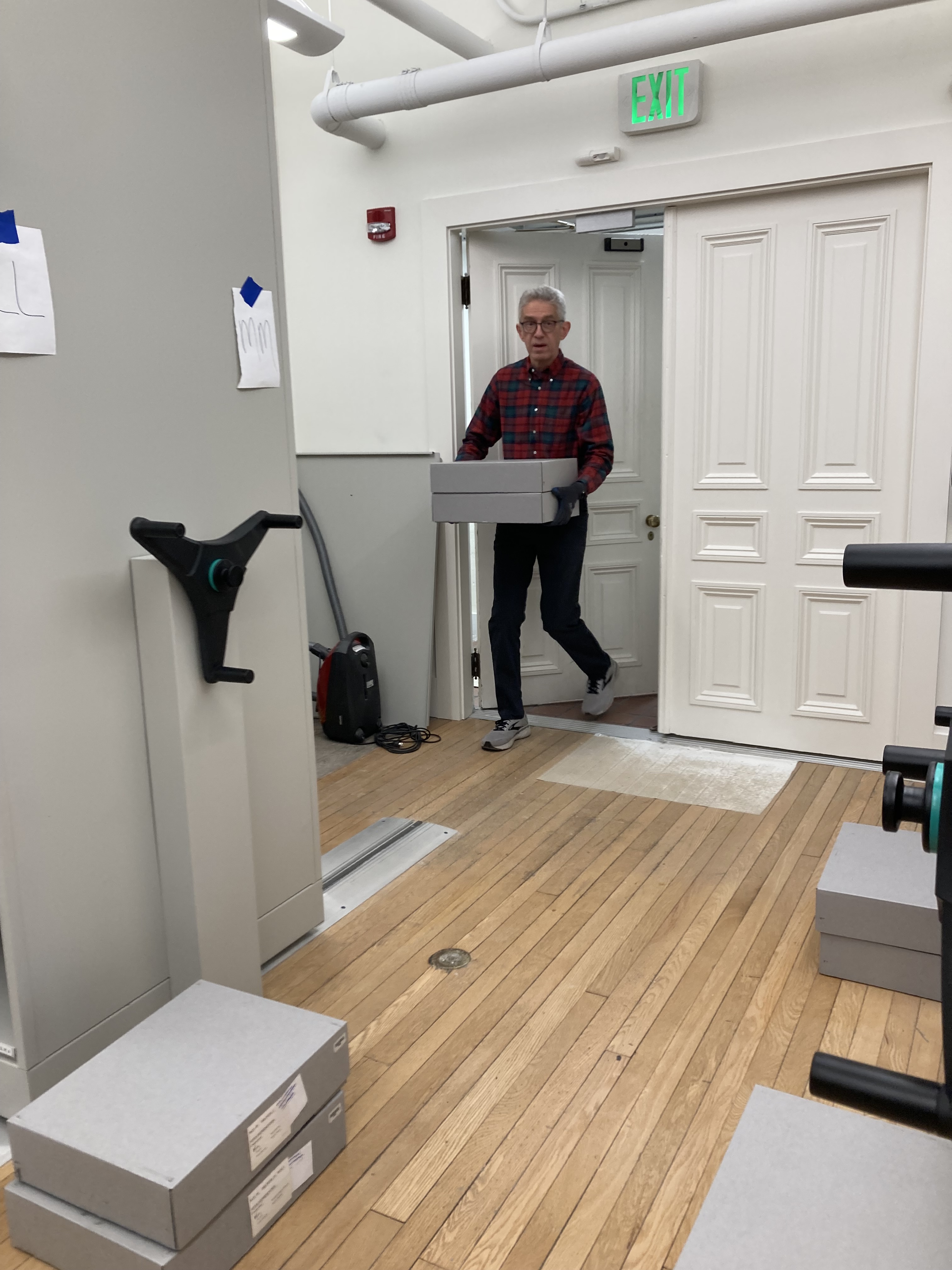
The largest and most involved of these projects, is moving the collections from temporary spaces around the building to our newly renovated, sustainable, and secure collections space, putting all holdings in one place! This project is ongoing and requires a great deal of care as the collections team transport items to their new housing and mapping out how items’ locations are organized and tracked. We also are extremely grateful for our Peabody volunteers and work duty students who have helped with this project!

In addition to moving the collections, the Peabody is organizing our classroom spaces to welcome back students this term. With our furniture back onsite and in place, we are ready to have students back through our doors (just in time!) with classes starting this week!

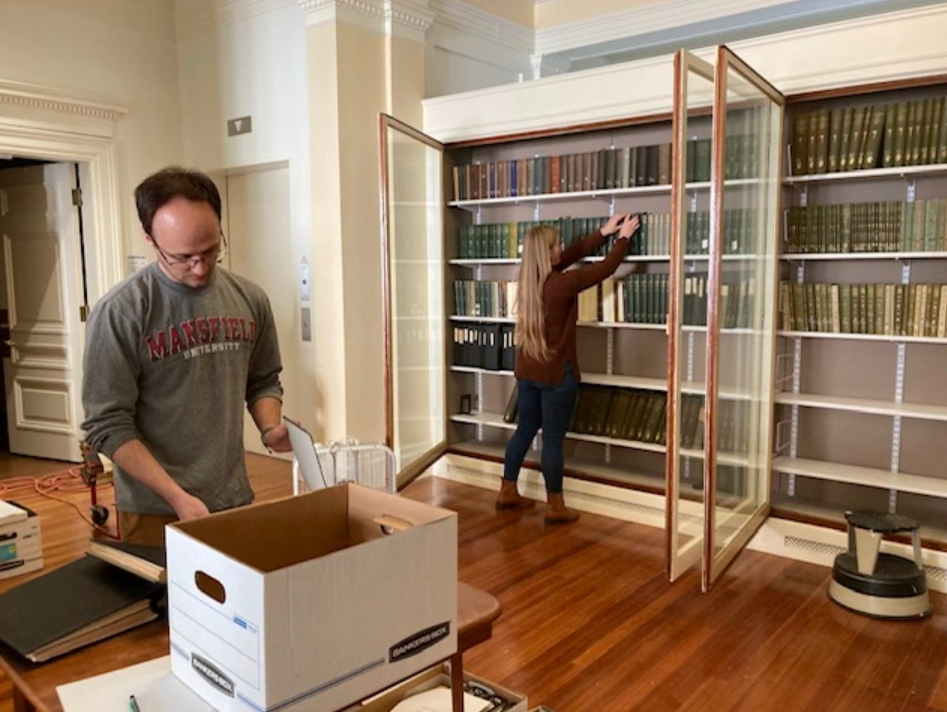
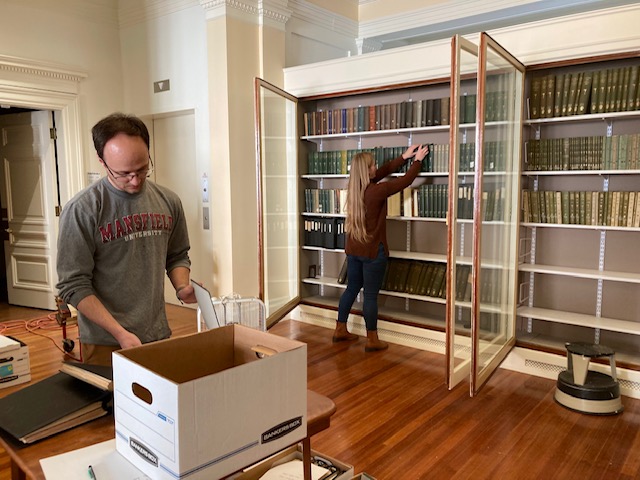
The Peabody library – now fully accessible – received a deep clean and is ready to serve as classroom and meeting space for students and out colleagues across campus.

Peabody staff returning books to shelves on the second floor landing.

With things returning to normal, we are only opening our doors at this time for Phillips Academy classes and events. This is a “soft opening” as we continue organizing our new collection spaces and preparing for our next round of building renovation. We will continue to keep the updates coming as we enter the warmer months of spring. Stay tuned for some exciting content from the Peabody to be shared on our social channels this PA Giving Day – Wednesday, March 27th!

Peabody Volunteer Spotlight: Meet Richard

Contributed by Richard Davis

Almost five years ago, I began volunteering at the Peabody Institute. I remember speaking with Peabody Curator of Collections, Marla Taylor, one evening after an evening presentation there and, as they say, the rest is history. In my time there, I think I’ve seen every possible iteration of projectile point imaginable – and there have been many – but what resonates most for me are the stories behind almost every object I’ve handled.

The museum has an important collection of approximately 600,000 objects essentially from North, Central, and South America. It is unlikely that I’ll get to see or work with every one. So far, I have helped catalog 12,000 year old bones from a cave in Peru where South American agriculture is believed to have started, reshelved a couple of dozen hominid skull casts, been taught the rudiments of differentiating mere stones from artifacts that were used for a myriad of tasks, and more.

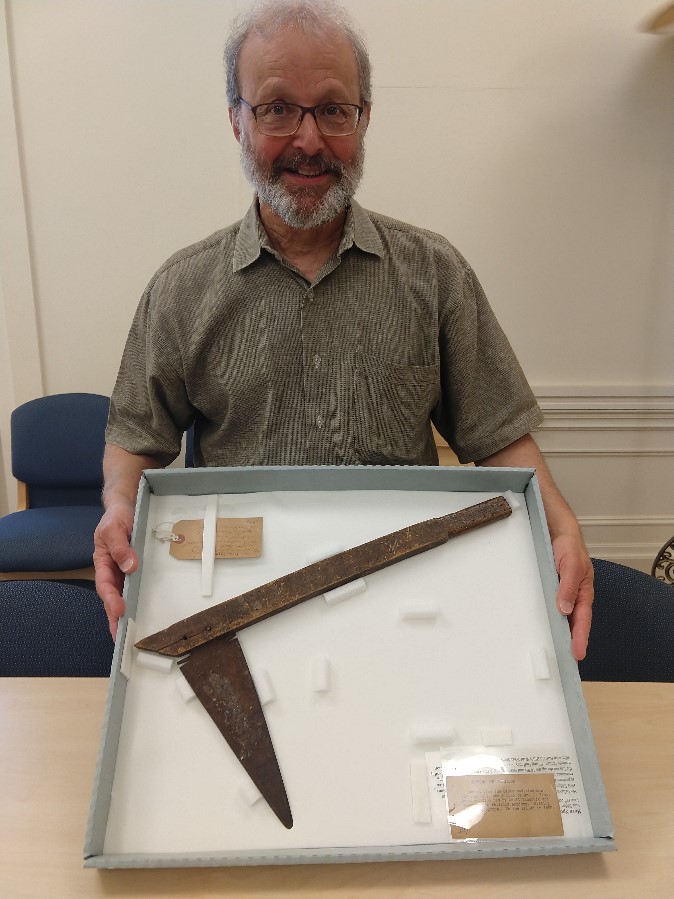
How I ended up there is a longer story, but on one of several tours, a tomahawk that was found after the Battle of Little Big Horn was shown to me. It was made from a table leg and a piece of metal from another object that was pounded into its newer, more lethal form. My son thought that was pretty compelling and asked for a photo of me with that object – the museum and I willingly complied.

Peabody Volunteer, Richard, with a tomahawk from the Battle of Little Big Horn.

I recently was examining an object that I couldn’t identify – as with many things my neophyte status should suggest – and I asked my ‘boss’ what it might be. You need to understand that the folks at the museum have seen and handled many such objects, so when they get excited by one, I figure it has some particular traction. Marla said – “Oh – that’s really cool,” so I paid close attention.

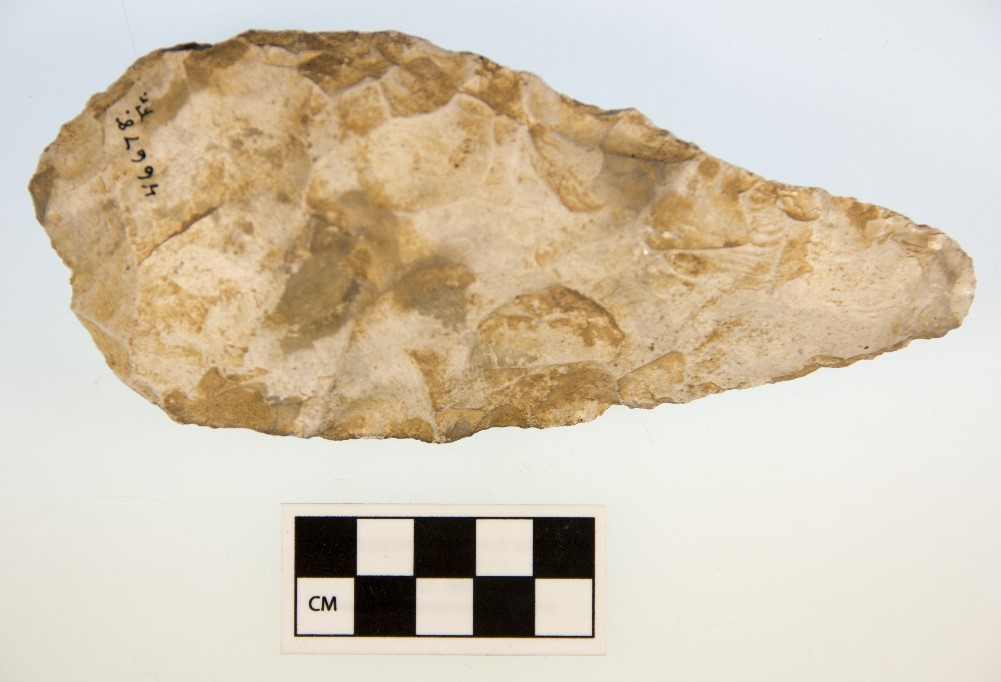
She said that it was made of flint – it was both very fine grained and smooth, except for some obvious flakes that had seemed to have been worked by somebody – something. Further, she said she knew that it came from a particular region in France and proceeded to pull up a Google search that clearly matched the object I held – a stone hand axe. So far, so good.

Next to the photo and a map were the characters ‘1MYA’ – which, I had to ask about. They, of course, meant 1 Million Years Ago. So – in my hand, I held a hand axe from France that was picked up, engineered, and used by somebody, something about one million years ago!

A stone hand axe from France, circa 1 Million Years Ago.

I went home and found myself puzzling over the object and its age. I can’t keep straight Homo sapiens, Australopithecus, Neanderthal, or any of those beings and ages, but I felt pretty sure that Homo sapiens didn’t go back that far. And after e-mailing Marla the next day, I was assured that indeed, it wasn’t of Homo sapiens origin – it was Home erectus – dating back to that 1MYA descriptor.

So – in short, I’ve had the privilege – for it is that – of holding an object, made by an ancient being for whatever purpose he or she felt necessary. I’m assuming that they weren’t thinking that it would be cool if it ended up in museum someday. They were using it to be sure they ate that night and survived long enough, so that we H. sapiens would have a go in their future.

So – long story short – it’s pretty much not only educational and worthwhile, but lots of fun volunteering at the Peabody.

After five years, I continue to enjoy and feel productive with my time at the Peabody – enmeshed with interesting objects with compelling stories, but more importantly with an amazing group of staff, colleagues, and friends. To a one, they are intelligent, patient (no job need be done in haste or unsafely), generous in both time and knowledge, and tolerant of my quirky humor and often bad puns. It doesn’t get any better.

Peabody Loading…75% Complete…

Contributed by Marla Taylor

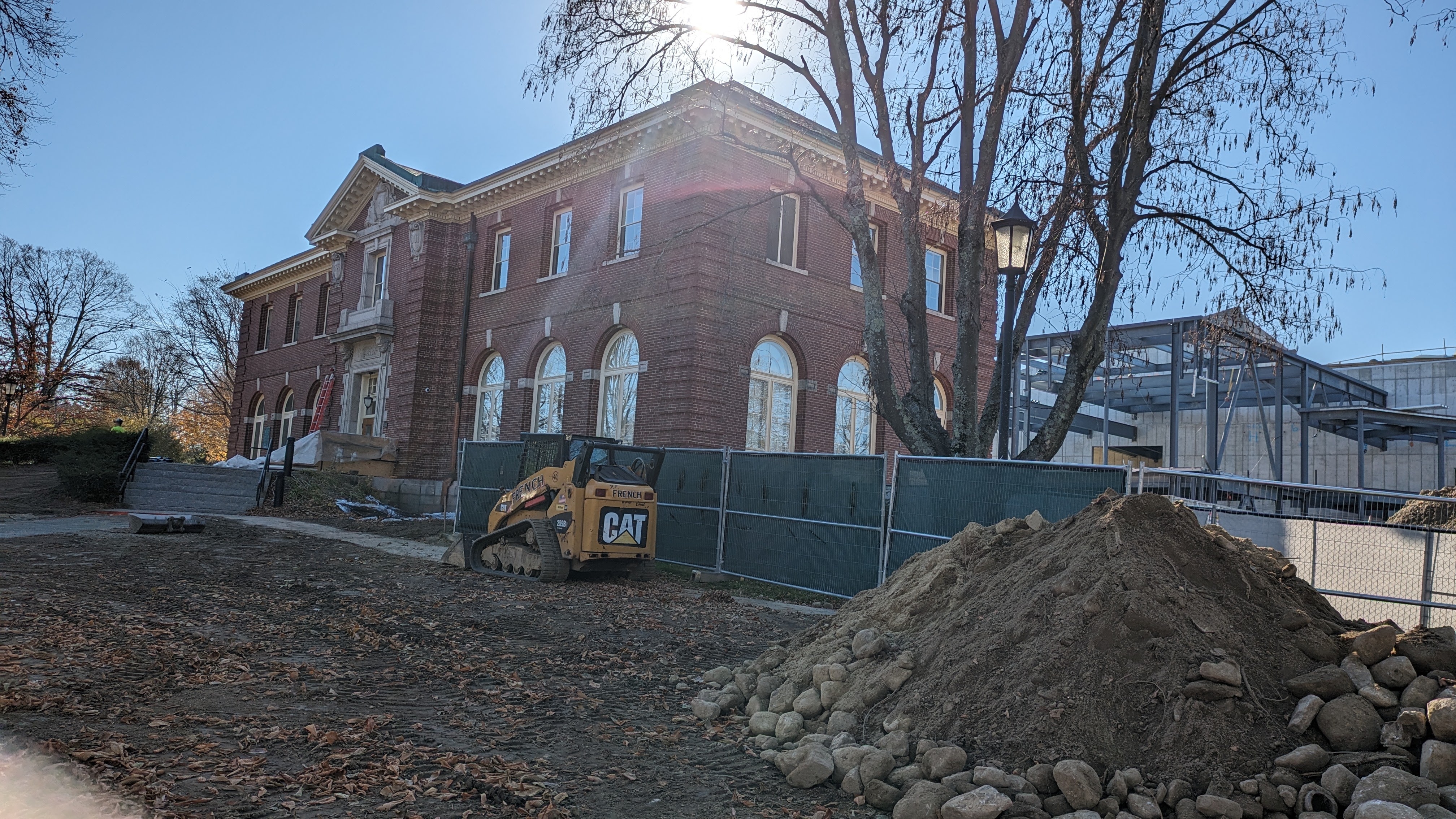
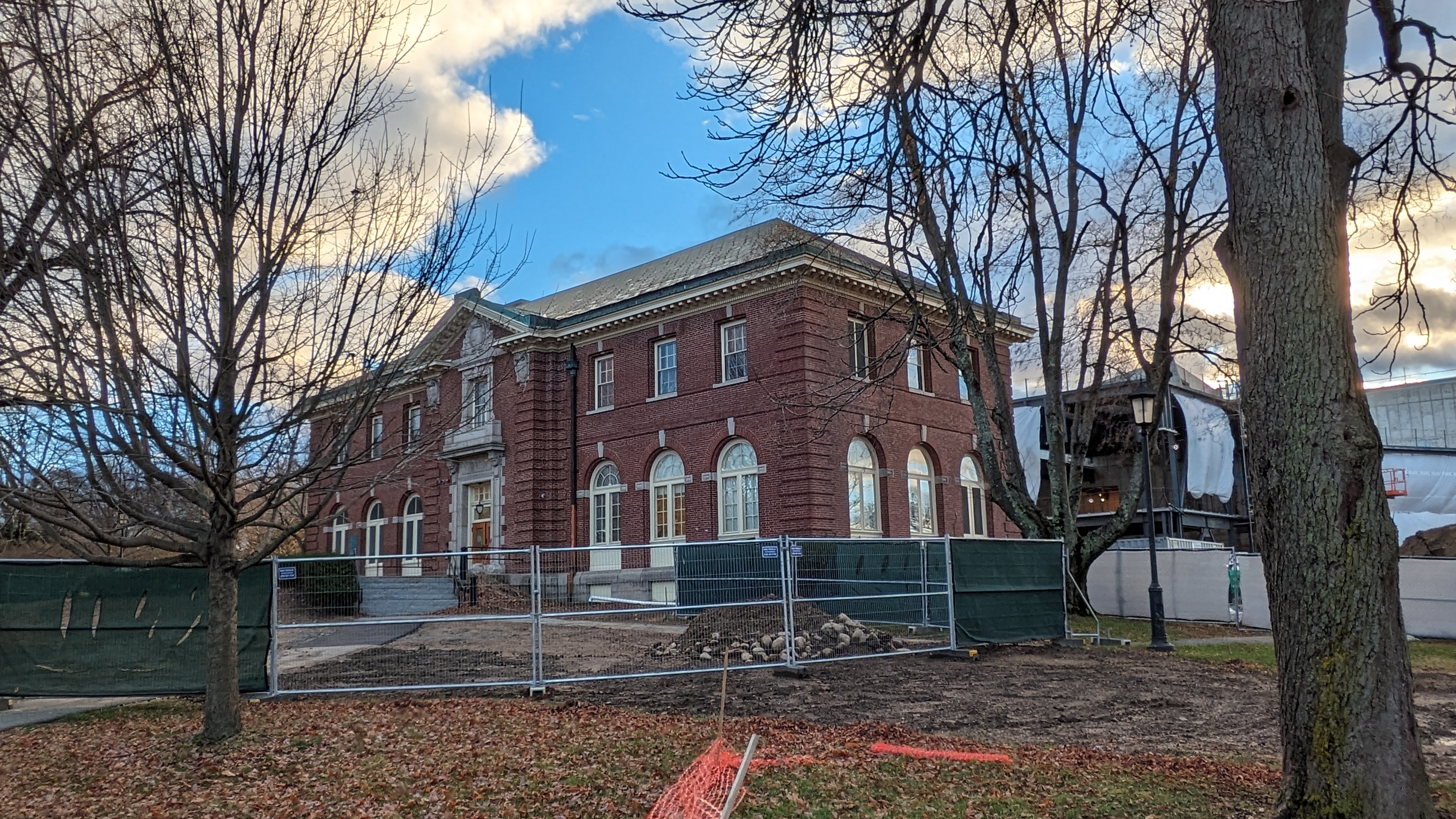
The fence around the Peabody is gone and there are no more contractors in the building.  It has been great to be back in the space for the past few days.

But, the work is nowhere near done!  Peabody staff are hard at work moving the collection back into the updated areas.  This is no easy task and won’t be complete for at least a couple months.

The Peabody looks forward to welcoming back the PA students and broader community in the spring term.  We can’t wait to show you what has been accomplished!

2023 ATALM Conference

Submitted by John Bergman-McCool

The 2023 International Conference of Indigenous Archives, Libraries and Museums was held in Oklahoma City at the end of October and hosted by the Association of Tribal Archives, Libraries and Museums (ATALM). ATALM is an international non-profit organization that maintains a network of support for Indigenous programs, provides culturally relevant programming and services, encourages collaboration among Tribal and non-Tribal cultural institutions, and articulates contemporary issues related to developing and sustaining the cultural sovereignty of Native Nations. The annual conference provides a venue for cultural institutions that seek to protect and advance Indigenous culture and lifeways to share best practices.

The conference included ninety-eight sessions and a host of keynote speakers organized around the theme “Honoring and Elevating Indigenous Culture and Knowledge Systems.” I was fortunate that the Peabody provided me with the opportunity to attend. It was an excellent opportunity to make connections and learn from people in my field who are working at the forefront of decolonizing institutions. The number of relevant conference sessions meant that choosing which to attend was extremely difficult. Luckily, I was there with Peabody curator Marla Taylor and we split-up to attend more sessions.

Within the sessions I experienced many inspirational and emotional moments. Indigenous and non-Indigenous presenters shared their experiences working at reversing centuries of colonial practices within cultural institutions. As an employee of a non-Indigenous research institution that houses Indigenous materials, it was an extremely powerful experience.

View from outside the conference after the first day of sessions.

Chief among my experiences was a day-long preconference workshop entitled “Tools and Strategies to Support Indigenous Intellectual Property.” The workshop was led by a team from Local Context, an organization that is focused on increasing Indigenous involvement in data governance and the integration of Indigenous values into data systems. You can find a much more detailed description of their work on their website.

The workshop introduced the participants to copyright law, how to identify copyrighted materials, and strategies for working with copyrighted Indigenous intellectual property (IP) held in museum collections. The copyright of Indigenous IP is particularly insidious, giving ownership, and control over access and circulation to the person who records, writes, or documents the Indigenous IP, not the creator. Prior to the workshop I didn’t know how copyright was created. I also considered the digitization process, the idea of the digital commons, and the transition of copyrighted material to the public domain as a democratizing force providing equal access to information. However, free use of these materials becomes complicated when they contain culturally sensitive or inaccurate information.

Copyright of Indigenous IP cannot be corrected retroactively and inclusion in the public domain cannot be avoided, but there are workarounds. Institutions can choose not to share Indigenous IP that they house without permission from relevant Tribal communities. Additionally, Local Context has created a series of labels that Indigenous communities can use to add additional context to collections held in non-Indigenous institutions. The labels help foster communication and collaboration between the institutions and Indigenous communities and are a pathway for inserting Tribal authority into institutional data systems.

The conference was a tremendous event and I came away with a renewed vigor for the work that we do at the Peabody.

Building Update – Phase I Nearly Complete!

Contributed by Marla Taylor

As 2023 comes to a close, so does Phase I of the Peabody building project. I am so excited and ready to get into our updated spaces and return to “normal” operations!

The elevator is in, the basement fire-suppression is in, the HVAC is in and the environmental controls have been adjusted, and the new shelving is nearly complete. It has been many months in the making and we are almost there!

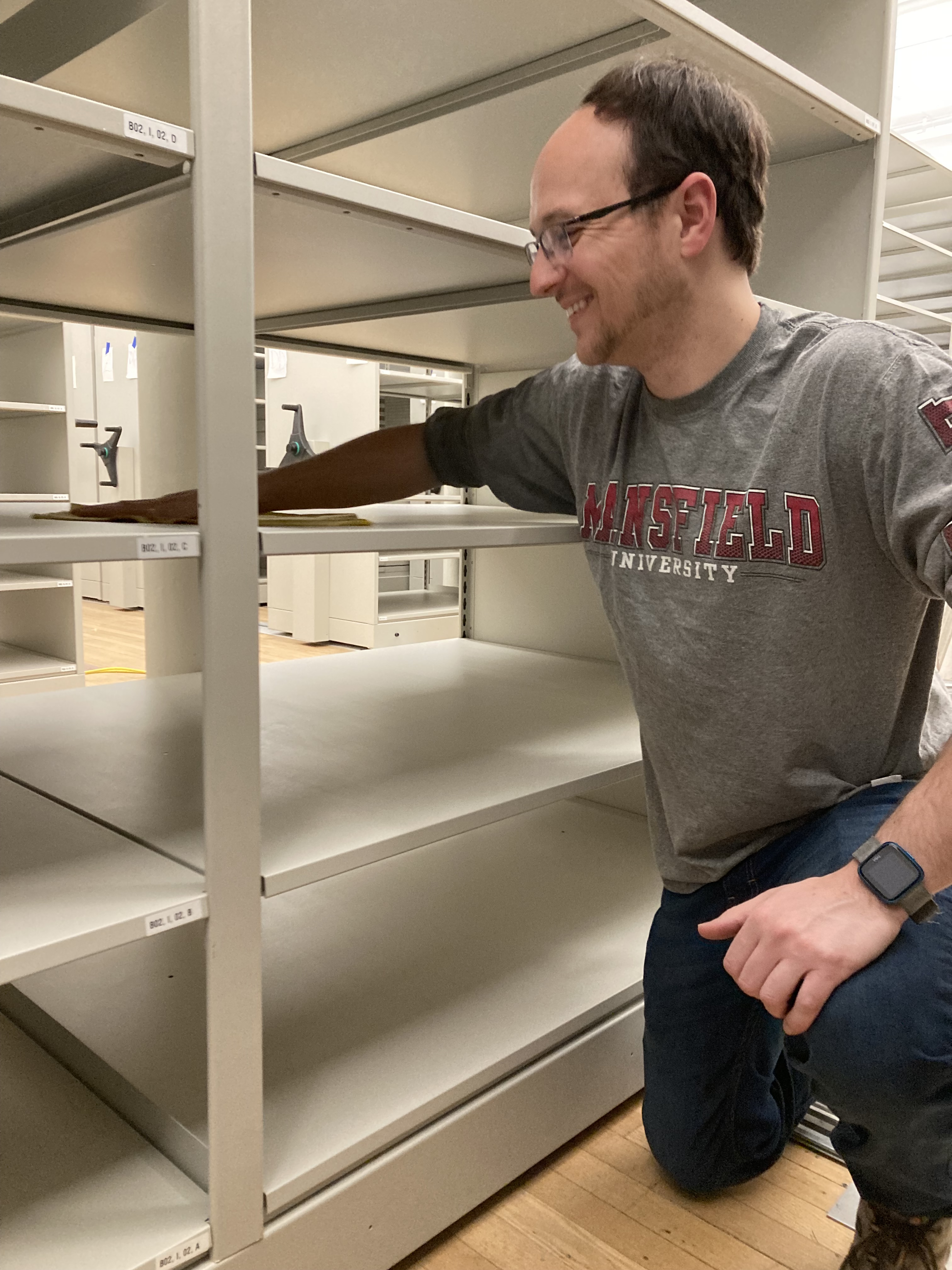
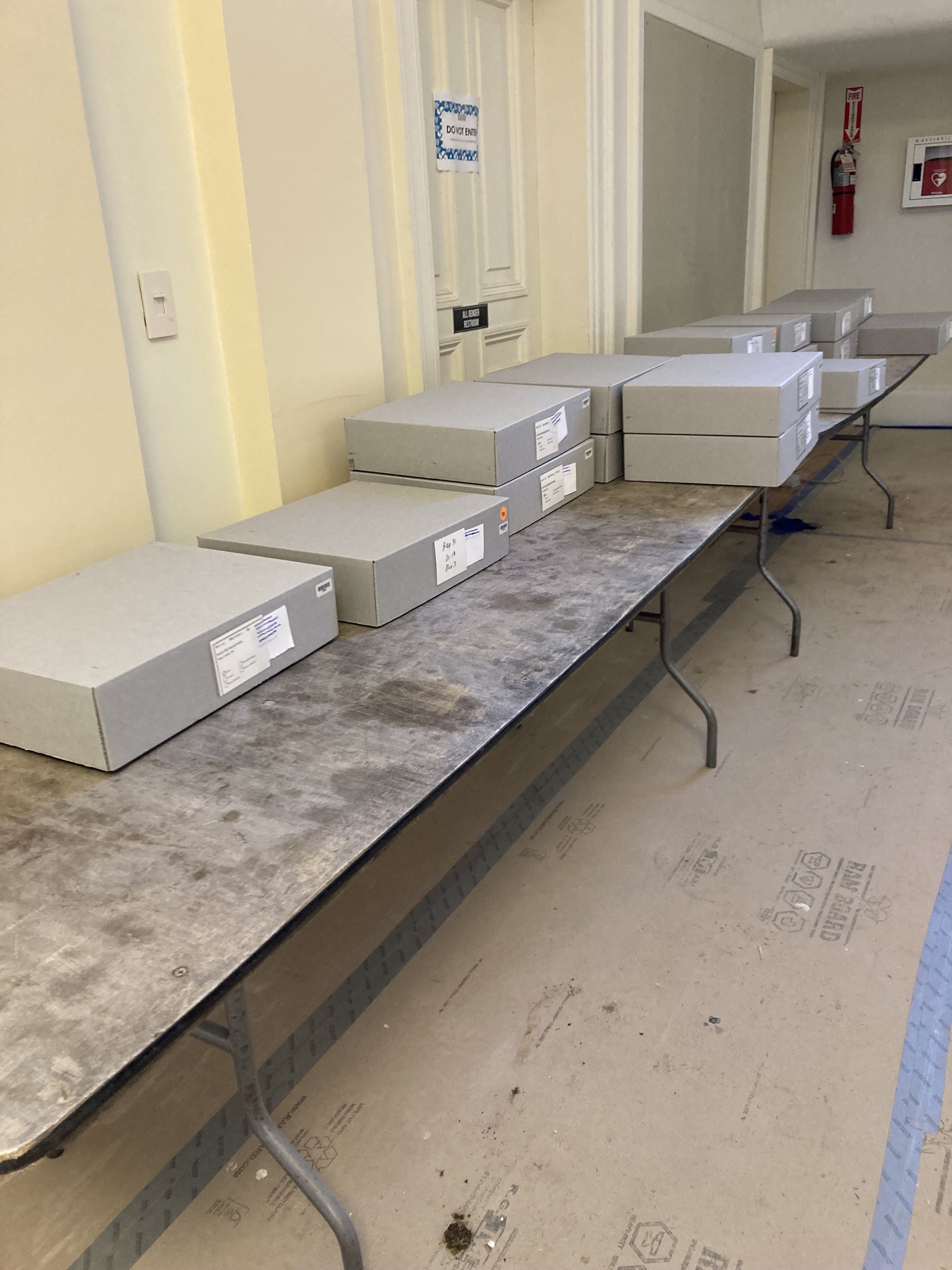
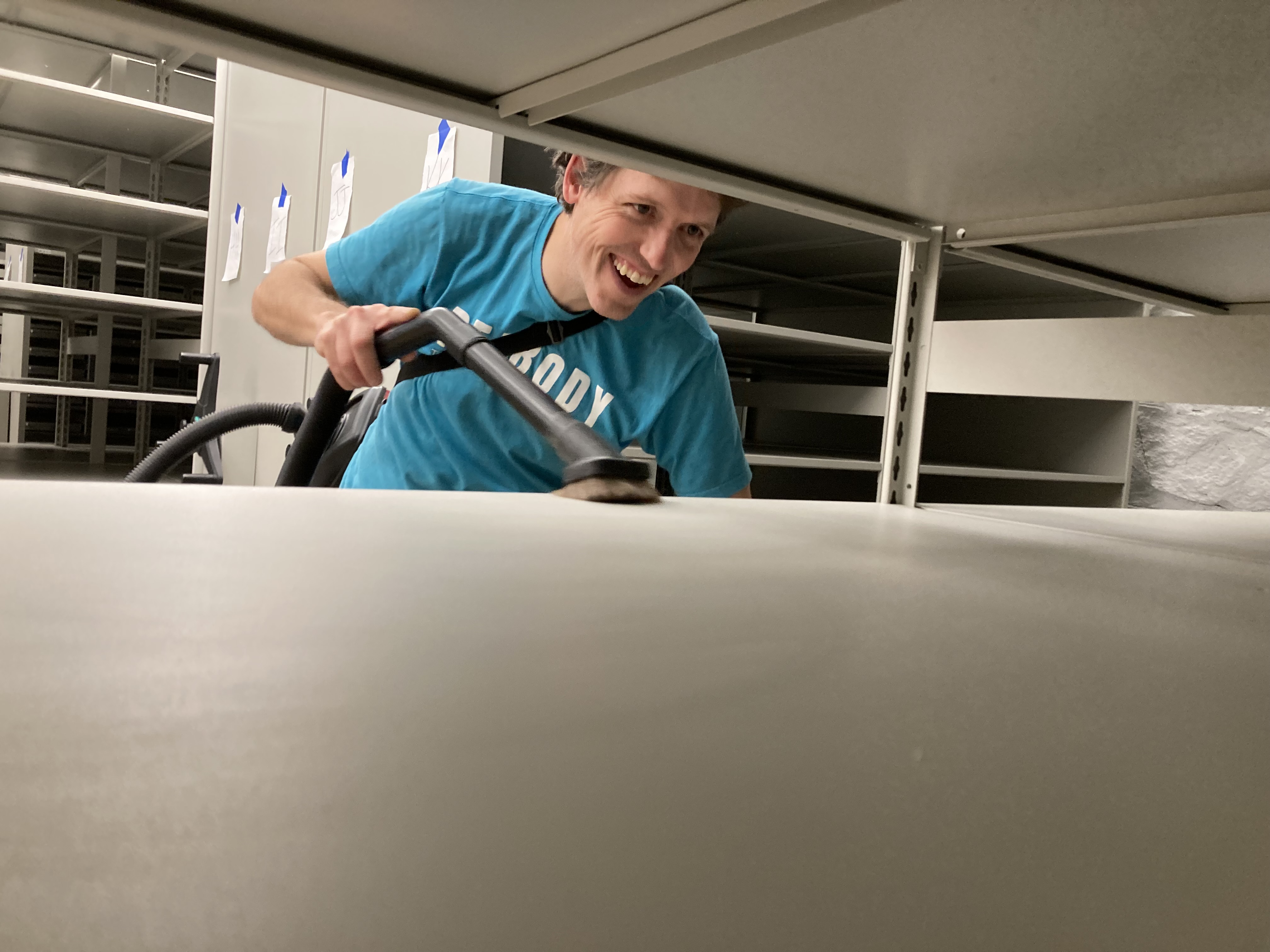
At this point, Peabody staff are cleaning collections spaces and beginning to move boxes back into the updated areas. This has been quite the logistical task as we need to coordinate with contractors in the space and ensure the appropriate security and care for the collection. So far, so good.

Hopefully, we will be back in the building and ready to welcome classes, researchers, and inquiries again in the spring of 2024. Thank you to everyone who supported this project with time or finances – we could not have done it without you.

I am looking forward (sort of) to Phase II!

This project will rely on philanthropic support from our donor community. To help advance this critical renovation, please contact Nicole Cherubini, director of development, at 978-749-4288 or ncherubini@andover.edu.

Reading Angeline Boulley

Contributed by Marla Taylor

Last November, I attended the AAIA Repatriation Conference in New Buffalo, Michigan. There were many tremendous speakers, but the one that really sticks out in my memory was Angeline Boulley. She does not work in the world of repatriation, but held the room in her hands as she spoke to us. I so vividly remember Angeline speaking to us all at the conference – she earned a standing ovation and my presentation had to follow that!

Angeline is a citizen of the Sault Ste. Marie Tribe of Chippewa Indians, and storyteller who writes about her Ojibwe community in Michigan’s Upper Peninsula. She had recently published her book Firekeeper’s Daughter (a #1 New York Times Bestseller) and was giving us a tease of her next book, Warrior Girl Unearthed.

At the time, I had not read Firekeeper’s Daughter and quickly purchased myself a copy. I LOVED it. The story was a fresh take on a murder mystery/adventure. The main character, Daunis, is a biracial unenrolled tribal member whose cultural knowledge can contribute to protecting her community. Sprinkled throughout the book are Ojibwe words, phrases, and cultural teachings in a way that only augments and enriches the story being told. I highly recommend it to you all! (and ignore the young adult classification – this is a complex story that is not always appropriate for younger readers)

Warrior Girl Unearthed is powerful in a different way. Grounded in the complicated reality of repatriation and missing and murdered Indigenous women (MMIW), this novel can feel a little heavy at times. Angeline uses the book in part to educate her readers about NAGPRA and repatriation and in part to build a new adventure around preventing a plot to profit off robbed Indigenous graves. While an explanation of NAGPRA does not always make compelling reading, the story itself is exciting and multi-faceted. Angeline once again interweaves Ojibwe words and cultural teachings in an effective way. And that is maybe the best thing about the book – the Ojibwe culture is just a part of who the main character is. She is just living her life and interfacing with her cultural teachings in a way that does not feel contrived but is instead natural. That feels novel and under-represented in young adult literature.

Her words and her books have left an impression on me and I encourage you to pick up a copy yourself.