Contributed by Sophia Lazar ‘26
Who knew that a statistics class could lead you to timing the cataloging of artifacts? That is exactly what happened to our group this spring, and we are so glad it did.
We are a group of Phillips Academy upperclassmen and seniors: Meara Wang, Jay Jung, Ayush Gupta, Tasnia Begum, and I, Sophia Lazar. We are enrolled in Mr. Noureddine El Alam’s Project-Based Statistics class, where students apply statistical methods to solve real-world problems for real partners. Rather than solely working through textbook exercises, we take on actual projects with organizations and institutions, gathering data, running analyses, and presenting findings that can make a tangible difference. Past classes have partnered with places like the Addison Gallery of American Art and the PA Admissions Office, and when Mr. El Alam introduced the Peabody as an option, our team knew right away that it was the one for us. We wanted to work on something that genuinely inspired us, and the Peabody fit perfectly.
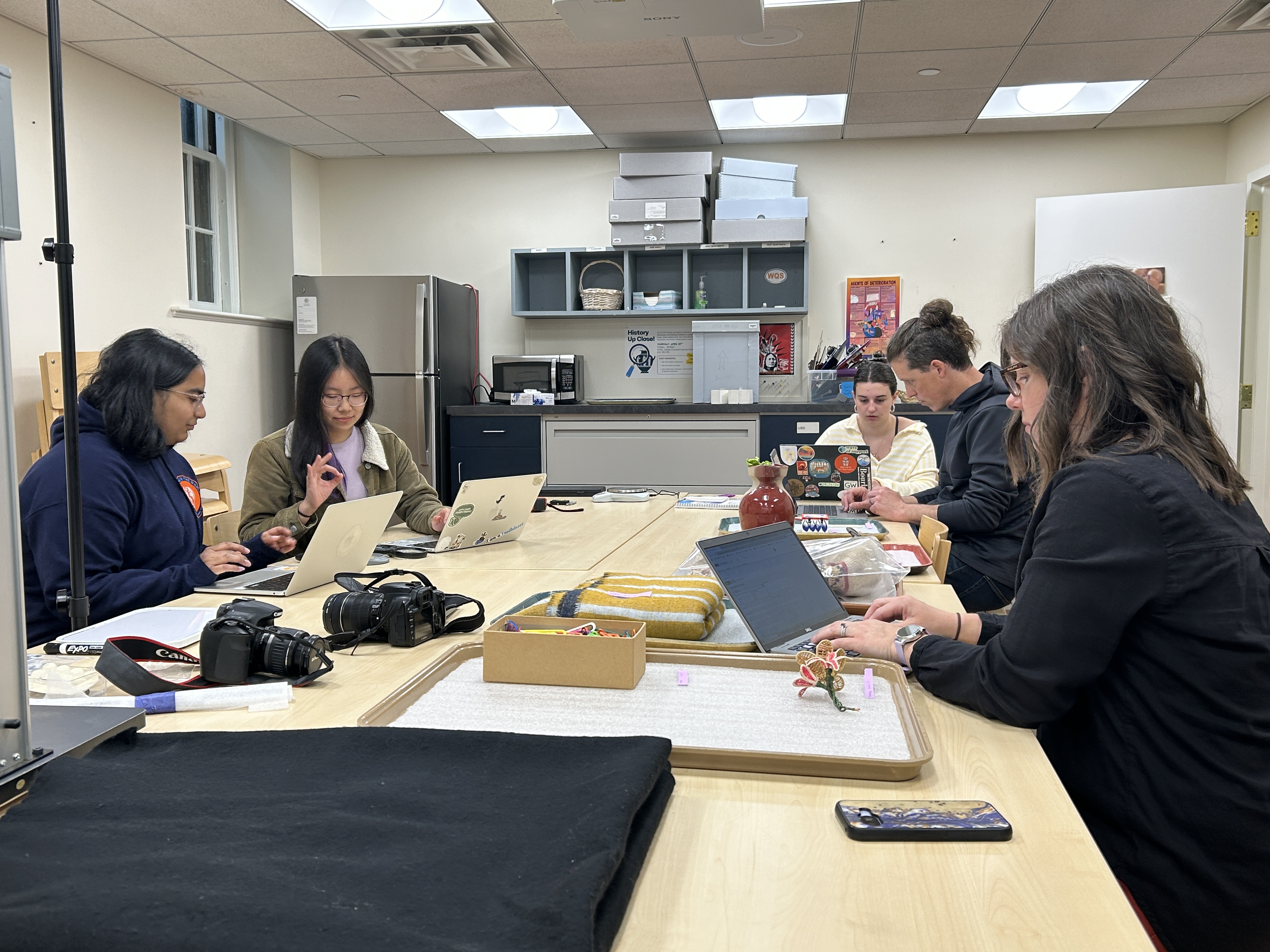
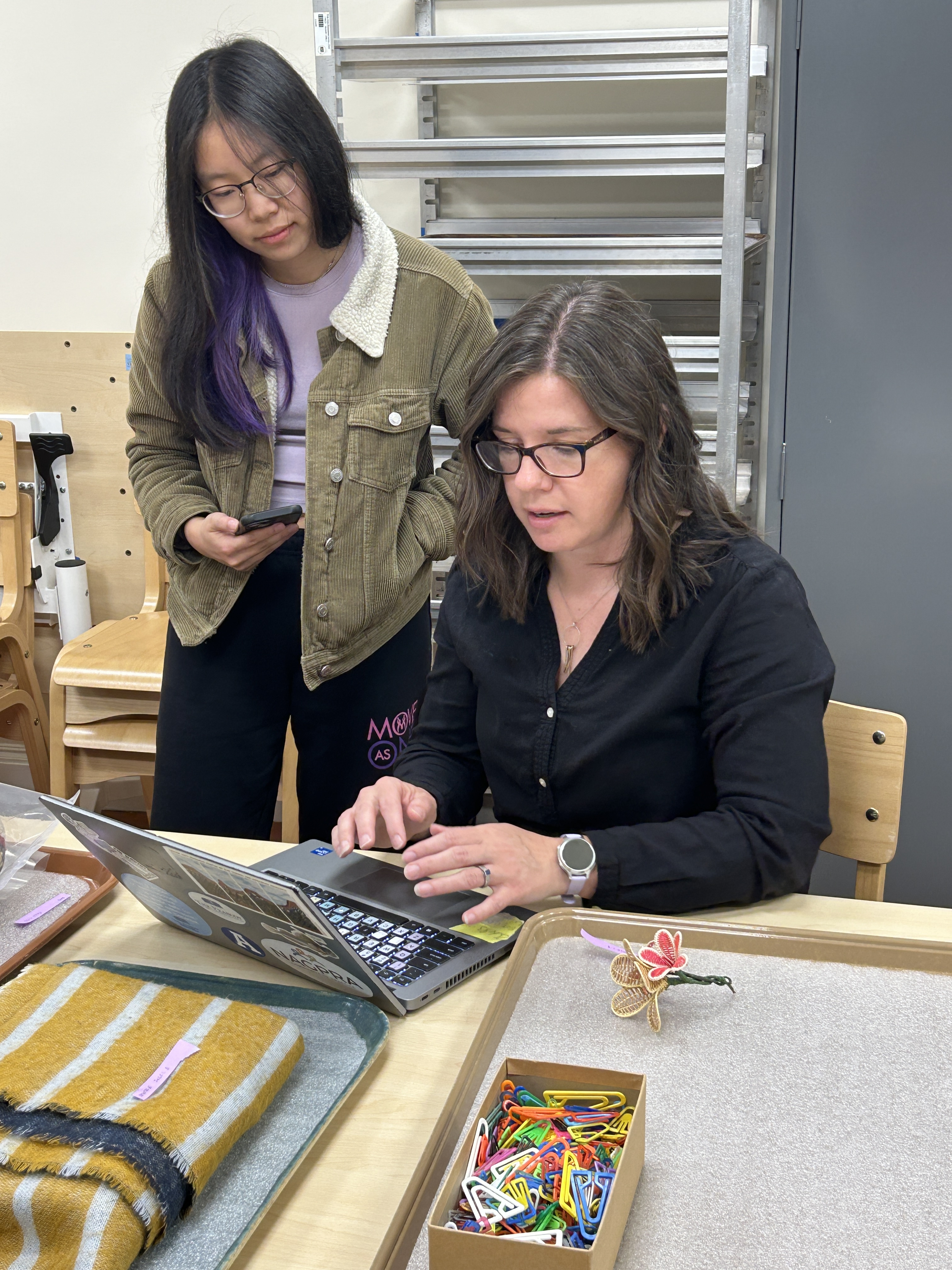
Our project centers on a question the Peabody has been grappling with: how long would it actually take to bring the museum’s artifact catalog up to an excellent standard, and what would better staffing make possible? To answer that, we needed data on the cataloging process itself, specifically how long it takes to catalog different types of artifacts. That meant a visit to the Peabody’s temporary location, where John Bergman-McCool and Marla Taylor walked us through a hands-on mock session. Because working directly with the real collection is not always feasible, John and Marla guided us through a range of representative mock artifacts so we could time the process across different object types and gather enough data points for a meaningful analysis. It was hands-on, eye-opening, and honestly a lot of fun.
With that data in hand, we are now building a statistical model to estimate how long a full cataloging effort would take under different staffing scenarios. The idea is to take our timing measurements, account for the variety of artifact types in the collection, and project out what various levels of staffing could realistically accomplish over time. The final report will go directly to the Peabody, and we hope it gives them something genuinely useful as they plan for the future.
What surprised me most was how much I came to care about the outcome. When you walk through a collection and realize just how much history is sitting there, waiting to be properly documented and shared with the world, the stakes feel very real. We came into this wanting to do meaningful work, and we are leaving with a much deeper appreciation for everything that goes into preserving and making accessible our shared cultural heritage. We hope our work makes a real difference!