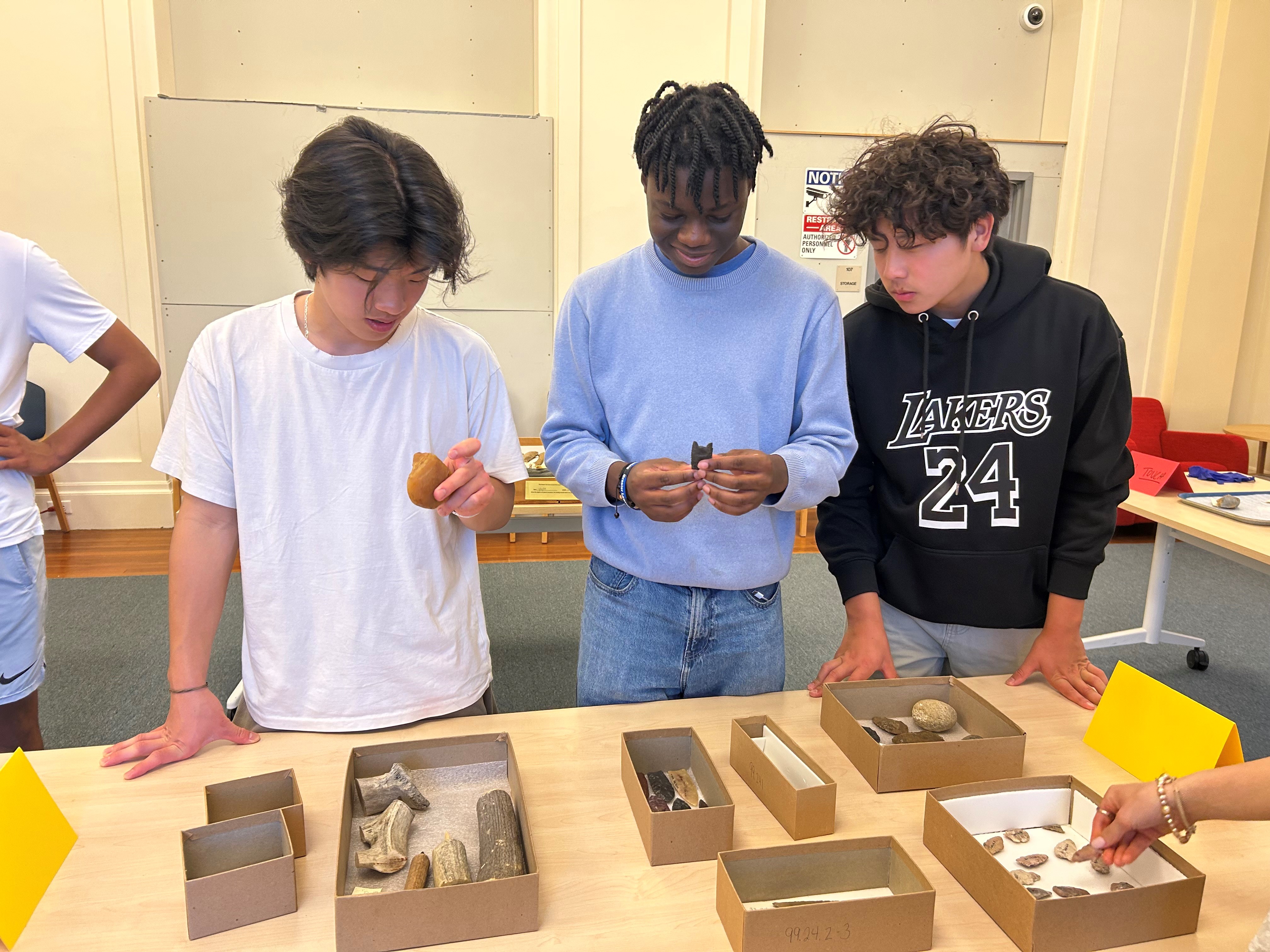
Contributed by Aaron Bai ’27 and Barrett Kim ’27
Hi, I’m Aaron Bai, and I’m an upper (11th grader) at Phillips Academy. I’ve always been interested in history and the humanities. As a child, I would spend hours in the school library reading books on mythology and history from cultures all around the world. As I grew older, I would read and even write about interesting topics in my free time, from the Garamantes during the Roman Empire to modern extremism in the Sahel. I have come to believe that only through studying human culture and society throughout its history can we better understand who we are and how we came to be. Though the present may differ considerably from the days of Lucius Cincinnatus or George Washington, for instance, their legacies and the similarities in the challenges and decisions we face make it such that uncovering their stories unmasks more of our own.
Following my interests, I chose to work at the Peabody for my work-duty requirement during my lower year (10th grade). This turned out to be a great decision— I had the rare opportunity to help organize, document, and analyze the Peabody’s vast collection of artifacts, from Neolithic stone tools to Native American ceramics. Working closely with these objects allowed me to engage directly with material history and learn the stories behind them in a unique and deeply meaningful way. This year, with work duty completed, I have continued to volunteer at the Peabody every week, helping research and document its collection of coinage from the Ancient Mediterranean, which serves as an amazing window into the societies and belief systems of the ancient world.
Given my interest in anthropology, I joined the Andover Anthropological Society last year, a student club here on campus, and later applied to take on a leadership position. Now serving as co-president of the club, I hope to raise awareness of this remarkable resource at our school and expand opportunities for students to engage with the Peabody and the collections there, whether through open houses, workshops, or research projects. It may even be worthwhile exploring engagement beyond the student body, such as inviting local schools to participate in open houses or lectures. In any case, I am very excited and look forward to working with the Peabody on these initiatives.
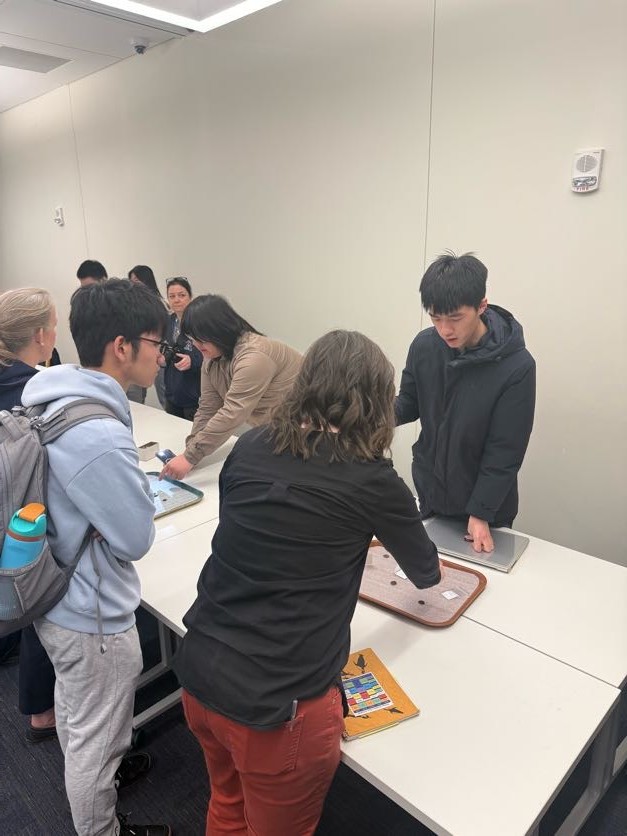
My name is Barrett Kim, and I’m an upper (11th grader) at Phillips Academy interested in biological sciences, though what draws me most isn’t exclusively the science, but the philosophical questions of how we got here.
I came across anthropology very spontaneously. A friend mentioned a research project through the Andover Anthropological Society, specifically exploring gender dynamics in Indigenous artifacts. Their hard work and insightful research immediately fascinated me. Around the same time, I was reading Orwell, Bradbury, and Salinger, writers who kept returning to the same warning: societies fail when they forget their own past. Anthropology felt like the applied, real-life version of the messages those books portrayed. If you want to understand where humans are going, you must understand where we’ve been. Anthropology turned out to be the perfect intersection of biology and sociology, two fields most people treat as completely separate.
Coming into Phillips Academy, I had no idea what anthropology was; however, after exploring the field and its importance, I felt like I had to help share what I learned. This desire to inspire others made me pursue a leadership role with the club and the Peabody Institute, not because I had everything figured out, but because I wanted to guide others into learning anthropology’s importance.
Looking ahead, I’m really excited to work with the Peabody. We have a professional archaeological institute on our campus, and most students walk right past it. Next year I want to help encourage students to use this valuable resource to explore our past and shape the understanding of our futures. Working with Aaron, we envision a place where genuine questions can be passionately explored, and where the work we do helps expand people’s worldviews.